
Sep 5, 2026Buying Guides
Water Treatment Control Panel RFQ Guide: What Buyers Should Send Before Requesting a Quote
A water treatment control panel RFQ should define environment, enclosure, sealing, cooling, control scope, certificates, and documents before suppliers quote.
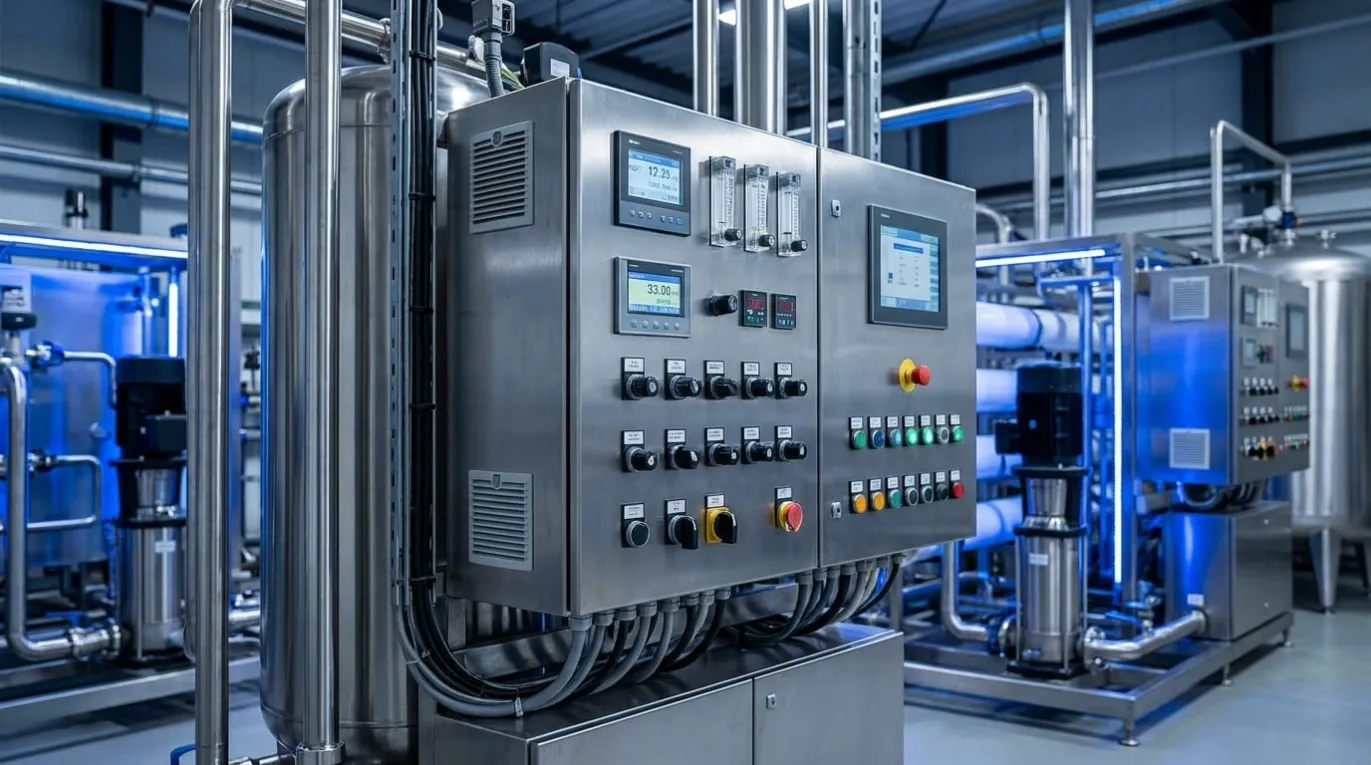
Water Treatment Control Panel RFQ Guide: What Buyers Should Send Before Requesting a Quote
A water treatment control panel is not difficult to quote when the supplier understands the site. The problem is that many RFQs only say “PLC control panel for water treatment,” and then the supplier has to guess the most expensive details: enclosure material, corrosion risk, VFD heat, cable sealing, certificates, and whether the box and wiring belong to one responsibility.
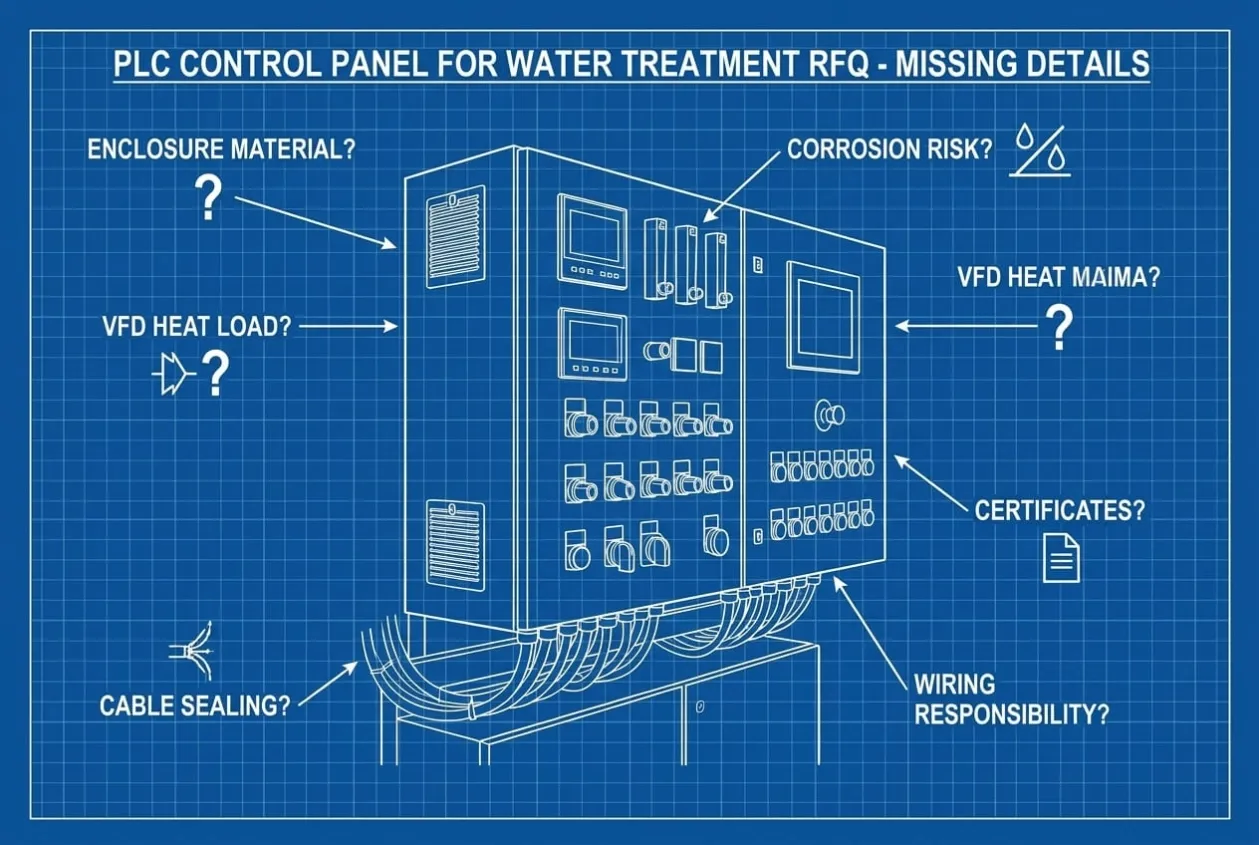
For water and wastewater plants, the buying decision usually starts with one question:
Where will this panel live?
A panel in a dry control room and a panel beside a chlorination room are not the same purchase. A cabinet near wastewater gas, outdoor rain, spray, and humidity cannot be specified like a normal factory panel. If the enclosure corrodes, the PLC, VFDs, terminals, and instruments inside will suffer with it.
The practical RFQ answer is this: for water and wastewater projects, tell suppliers the site environment first, then specify the enclosure material, IP/NEMA rating, cable sealing, cooling method, control components, certificates, and documents. That is how buyers get quotations they can actually compare.
Why Water Plants Are Harder on Panels Than Factories
A painted carbon-steel cabinet can run for years in a clean indoor factory. In a water plant, the same cabinet may start looking tired much earlier. Chlorine, chloramine, hydrogen sulfide, humidity, spray, and outdoor exposure are not friendly to electrical equipment.
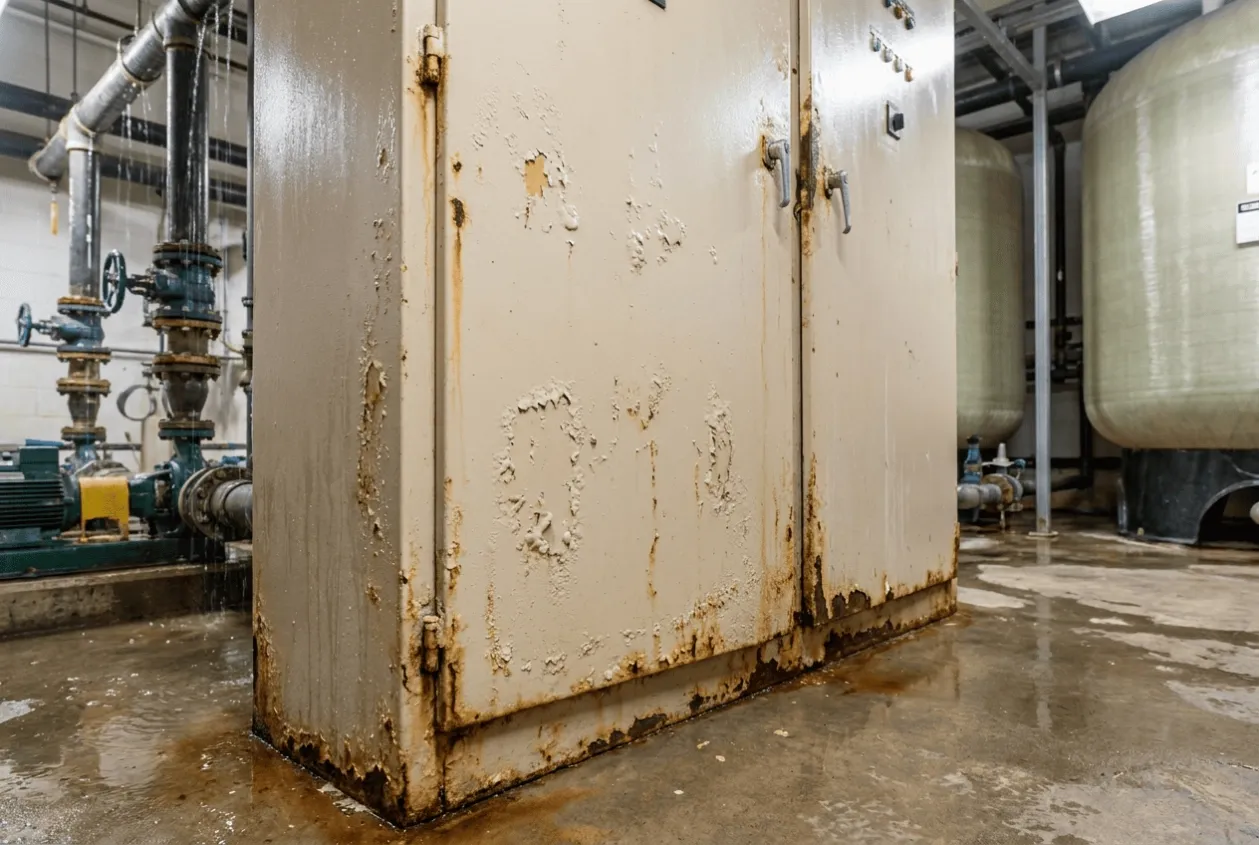
This is why I do not like starting the RFQ with only the PLC brand. Siemens, Mitsubishi, ABB, Omron, or Schneider can all be discussed later. The first buying decision is the enclosure and environment.
Our water treatment enclosure guide covers the enclosure alone; this article focuses on what buyers should send when requesting the complete control panel quotation.
A simple line in the RFQ helps a lot:
Panel installed in wastewater pump station, outdoor humid area, near chemical dosing. Please quote enclosure and panel build together.
That sentence already tells the supplier much more than “outdoor PLC panel.”
Step 1—Tell the Supplier the Enclosure Material You Expect
For most water and wastewater control panels we review, 316 stainless steel with IP66 or NEMA 4X protection is the safer starting point. It is not always the cheapest option, but it is often easier to defend when the panel sits near chlorine, H₂S, outdoor humidity, or washdown areas.
Environment | Better RFQ Direction | Buyer Reason |
|---|---|---|
Potable water, chlorinated rooms | 316 stainless | Chlorine exposure can punish weaker material choices. |
Wastewater, headworks, H₂S areas | 316 stainless | Corrosive gas and moisture increase failure risk. |
Indoor dry control room | 304 stainless or painted carbon steel | Lower corrosion risk |
Lightweight or non-metallic requirement | FRP | Useful where non-metallic corrosion resistance is preferred |
The buyer does not need to become a material expert. But the RFQ should not leave the material open if the site is corrosive. The price difference between painted steel and 316 stainless is visible before purchase. Corrosion cost usually appears after installation, when it is much harder to fix.
Step 2—Lock the Protection Rating Before Price Comparison
For water and wastewater panels, IP66 or NEMA 4X is often the level buyers discuss first. IP66 helps protect against dust and powerful water jets. NEMA 4X adds corrosion resistance requirements, which is why it is commonly requested for US-bound water projects.
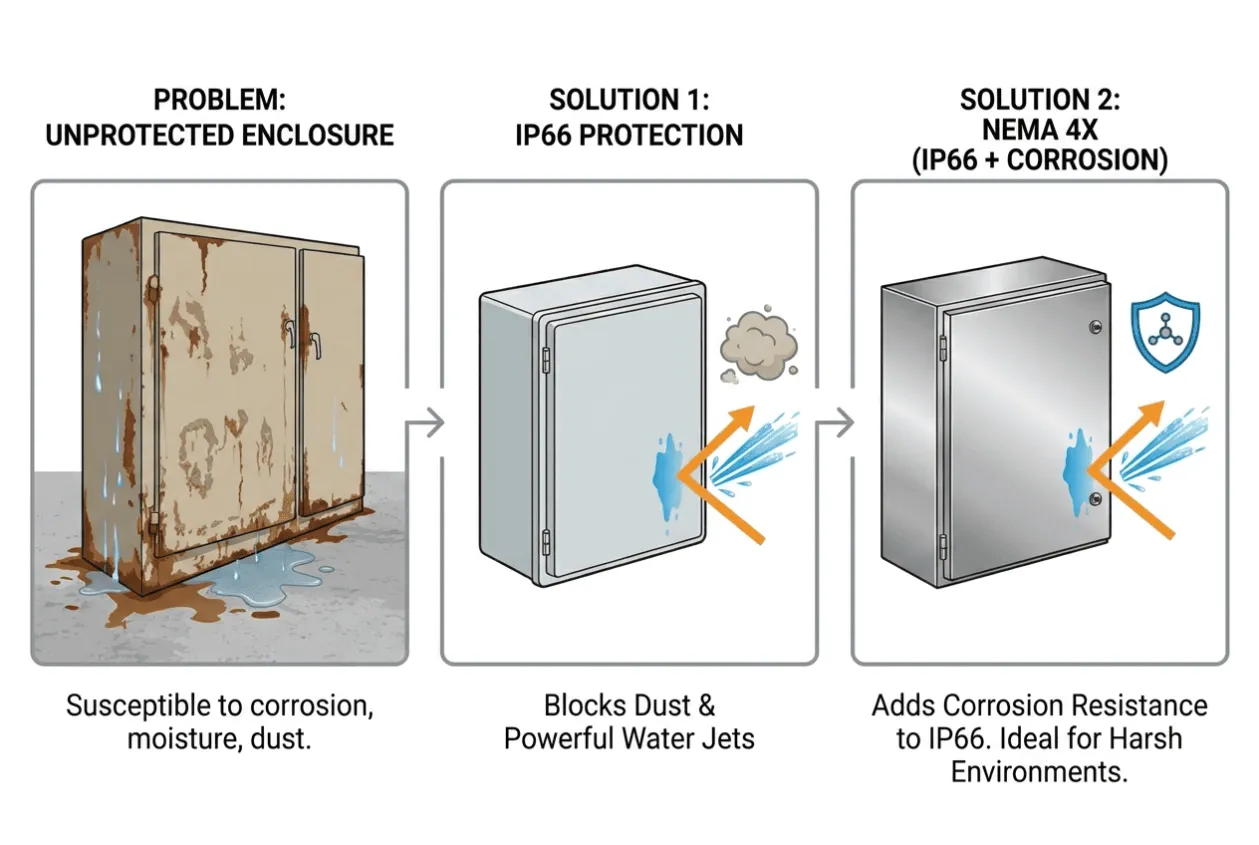
The key buying point is simple: do not compare one supplier quoting a normal outdoor cabinet with another quoting NEMA 4X stainless and call them the same.
If the project is for the US market, say so early. If UL, CE, IP test reports, or NEMA requirements are needed, include them before the supplier prices the panel. Certificate requirements affect supplier selection, lead time, and cost.
Step 3—Seal the Entry Points
One small water plant case still comes to mind. The enclosure body was stainless and looked good, but moisture still appeared inside after several months. The problem was not the cabinet wall. It was the cable entry.
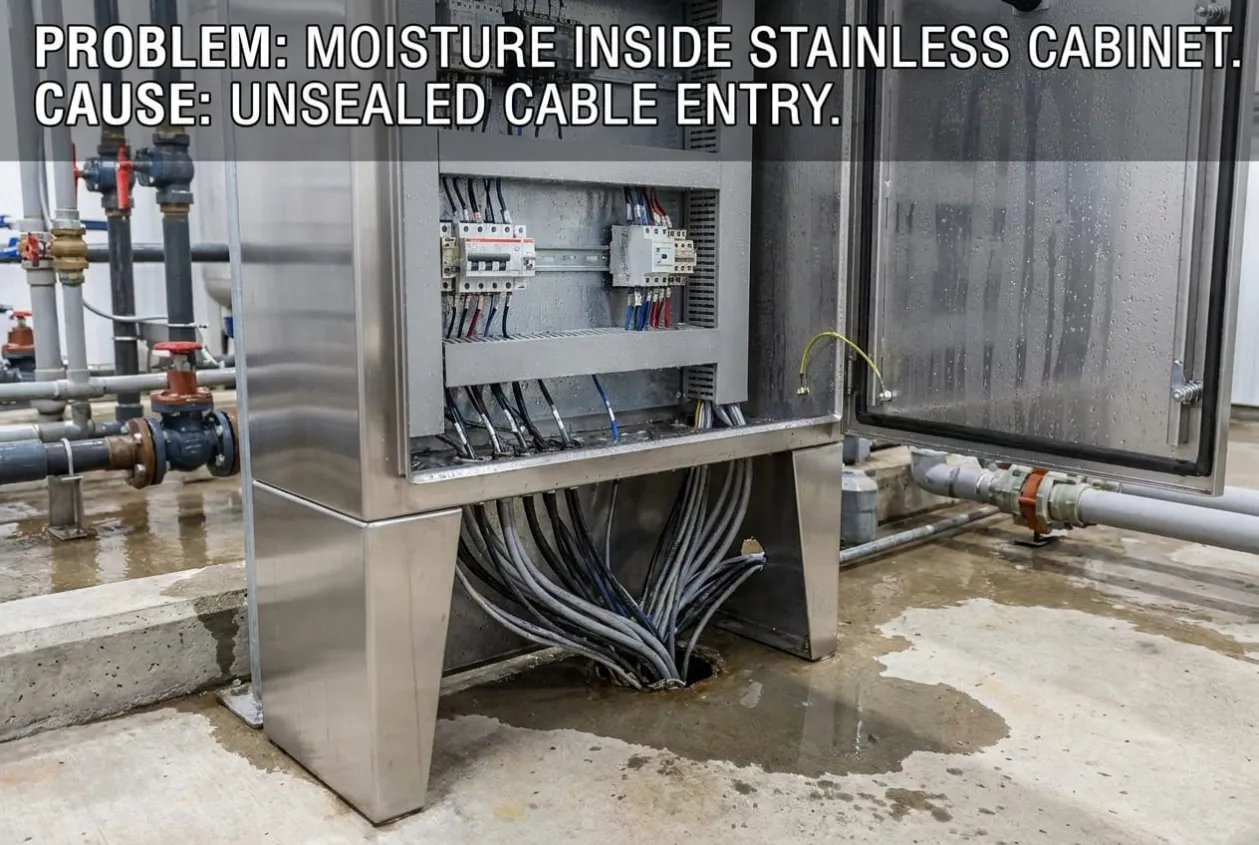
Water usually finds the small places buyers do not write clearly: cable glands, gasket edges, gland plates, vents, and bolt holes.
For water treatment control panels, I would specify:
- IP68-rated cable glands where required
- Replaceable door gasket
- Sealed gland plate, preferably bottom entry when suitable
- Proper sealing around HMI and door-mounted devices
- No plain louvered vent in wet or exposed areas
A cheap gland can make an expensive enclosure look guilty.
Step 4—Tell the Supplier About VFD Heat
Water treatment panels often include VFDs for pumps, blowers, and dosing-related equipment. The buying risk is that a sealed stainless enclosure protects against water but also keeps heat inside.
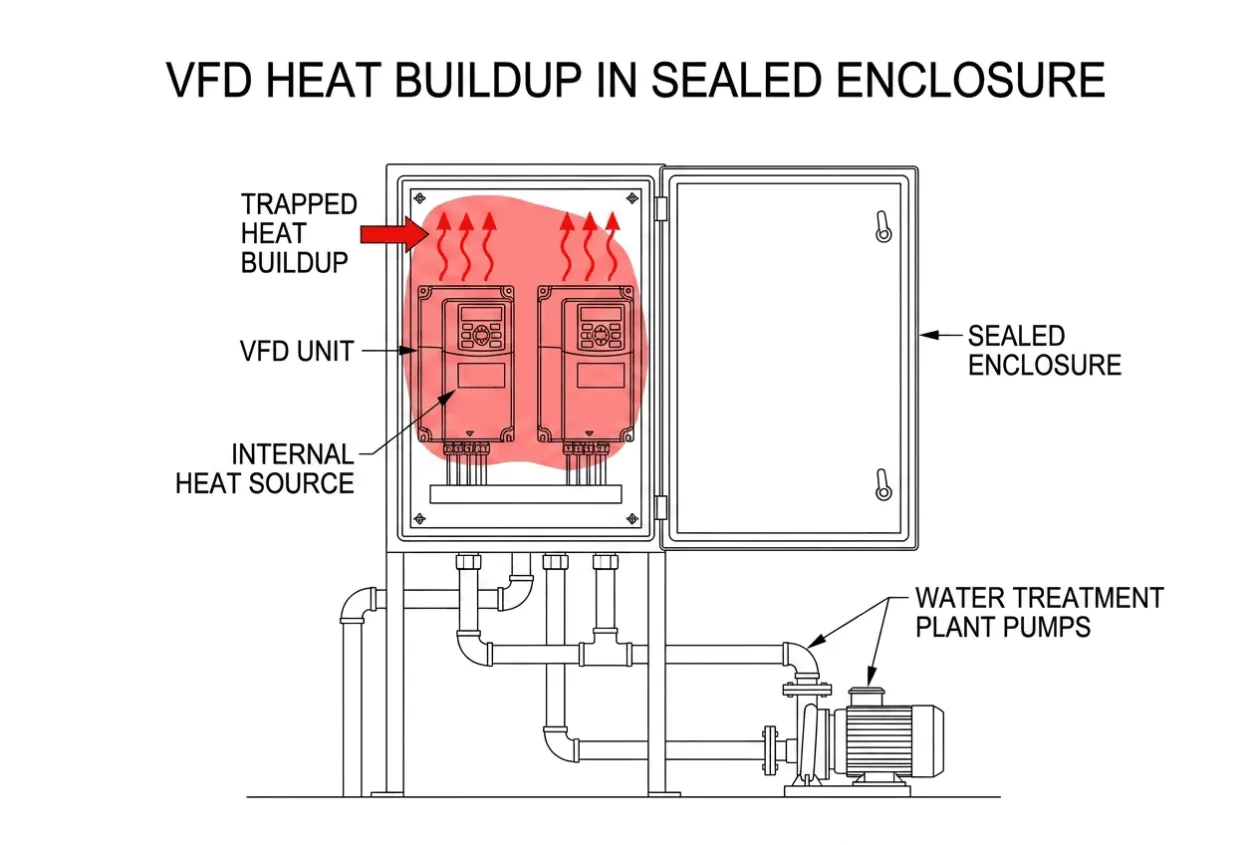
If the panel includes drives, send the total motor power, number of VFDs, ambient temperature, and whether the panel is indoor or outdoor. The supplier should then confirm the cooling method instead of casually writing “fan included.”
For indoor dry rooms, a filtered fan may be acceptable. For sealed outdoor panels, an air-to-air heat exchanger may be safer. For hot climates or dense VFD panels, a cabinet air conditioner may be needed.
Our best cooling options for outdoor electrical cabinets, outdoor cabinet air conditioner guide, and how to prevent condensation inside an outdoor cabinet explain these choices in more detail.
Step 5—Specify the Control Scope in Plain Language
The panel components may be standard, but the control responsibility is not. Tell the supplier what the panel must control: pumps, VFDs, dosing pumps, valves, instruments, alarms, standby logic, bypass requirements, and communication with other systems.
If you already use Mitsubishi, Siemens, ABB, Omron, or Schneider, say that in the RFQ. A good supplier can build around your installed base instead of forcing another brand into the plant.
Buyers should also mention whether redundancy is required. For lift stations, clarifiers, and 24/7 water processes, dual feeds, drive bypass, standby pump logic, or manual emergency operation may be more important than saving a small amount on the first quotation.
Step 6—Keep the Box and Build Under One Responsibility
This is a buying point I care about.
For water treatment projects, I prefer the enclosure and panel build to be quoted together when possible. If one supplier makes the cabinet and another wires the panel, responsibility can split when corrosion, leakage, cooling, or cable entry problems appear.
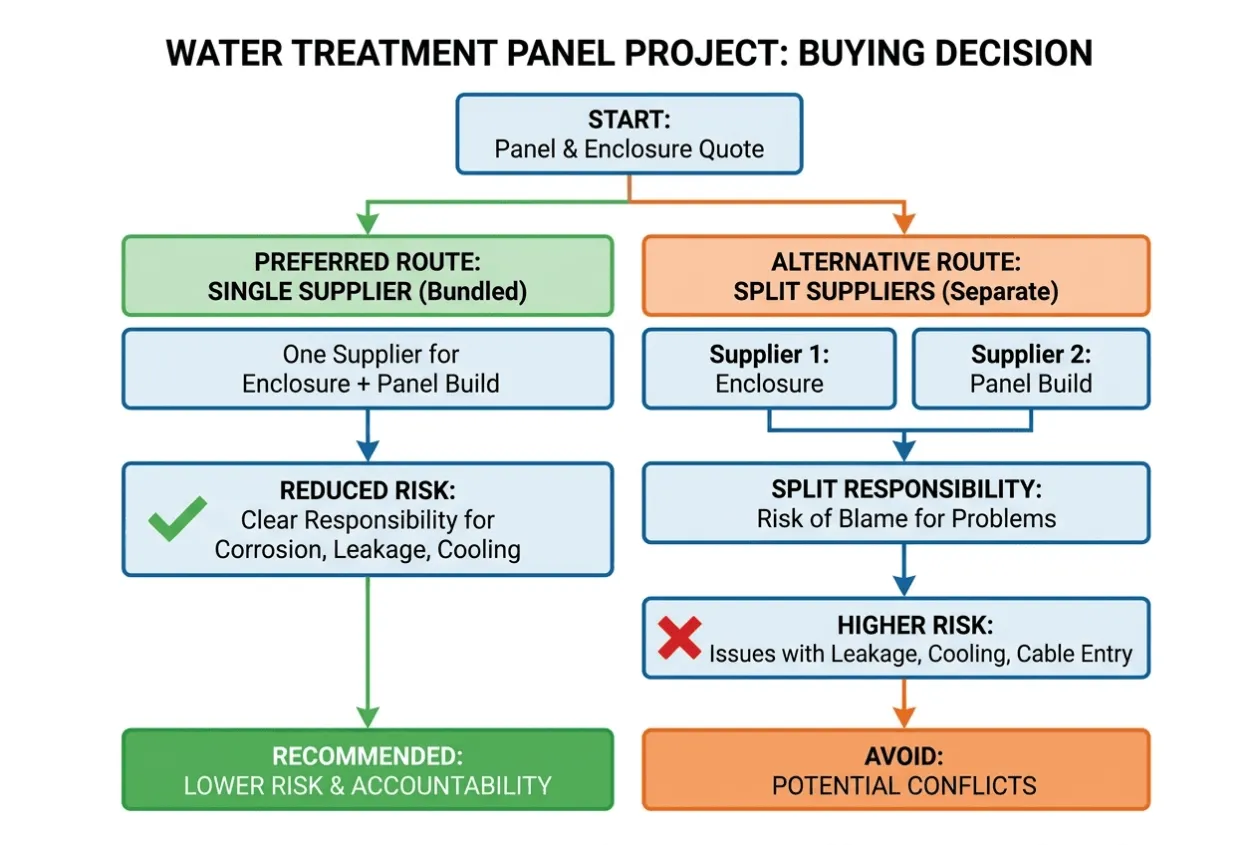
Nobody wants to hear, “That part was supplied by someone else.”
Buying the enclosure and control panel as one package can make the quotation look less like the cheapest component price, but it gives the buyer a clearer responsibility line. One supplier handles enclosure, layout, wiring, cooling, sealing, testing, and documents.
Before drafting the RFQ, the control panel build spec checklist is useful. The control panel FAQ also answers common questions about lead time, certification, and testing.
RFQ Checklist Before You Contact a Supplier
Send these details before asking for the final price:
RFQ Item | What to Send |
|---|---|
Site environment | Potable water, wastewater, outdoor, washdown, chlorination, H₂S |
Enclosure | 316 stainless, 304 stainless, painted steel, FRP, IP66, NEMA 4X |
Heat load | Total VFD quantity, motor kW, ambient temperature |
Control scope | Pumps, dosing, valves, instruments, alarms, standby logic |
Brand preference | PLC, HMI, and VFD brands are already used in the plant. |
Certificates | UL, CE, IP/NEMA test reports, project requirements |
Documents | Wiring diagrams, BOM, I/O list, FAT report, manuals |
Delivery needs | Quantity, target lead time, destination, MOQ expectations |
When buyers bring these answers, suppliers can quote accurately instead of guessing. We typically see custom enclosure builds start from an MOQ of 5 cabinets, with enclosure lead time around 15 days and stock components around 3–5 days, depending on the final specification.
At UniRegal, we can quote the enclosure and panel build together from our Foshan supplier network, so the box and wiring stay under one responsibility. Buyers can submit requirements with drawings, load lists, site conditions, or even a rough project description. For outdoor cabinet projects, our RFQ guide for outdoor electrical cabinets is also helpful.
FAQ
Do I really need 316 stainless for a water treatment control panel?
For chlorination rooms, wastewater areas, H₂S exposure, outdoor humidity, and corrosive environments, 316 stainless is usually the safer starting point. 304 or painted steel may be acceptable in dry control rooms.
Can I use a painted carbon-steel box with an IP66 rating?
Yes, but IP rating and corrosion resistance are not the same thing. IP66 helps against water ingress, but painted steel can still corrode if the environment is aggressive.
Why do VFD water treatment panels need cooling?
VFDs generate heat. In a sealed IP66 or NEMA 4X enclosure, that heat can build up and cause drive trips or shorter component life.
What should I send before requesting a quote?
Send the site environment, enclosure requirement, control scope, motor/VFD list, cooling condition, brand preference, certificate requirement, and documents needed before shipment.
Can UniRegal build around the VFD or PLC brand we already use?
Yes. Mitsubishi, Siemens, ABB, Omron, and Schneider can be discussed based on your installed base and project requirements.
Final Thought
A water treatment control panel RFQ should not start with “PLC panel, outdoor type.”
It should start with the environment, because the environment decides the enclosure, sealing, cooling, certificates, and responsibility. The clearer the RFQ, the easier it is for suppliers to quote the same job—and the easier it is for the buyer to approve the right one.
When you have the seven answers above, submit your requirements with your panel drawing, and we will quote the enclosure and the build together from our Foshan supplier network. For a full checklist of what to include, see our RFQ guide for outdoor electrical cabinets.