
Oct 12, 2026Buying Guides
Water Treatment Control Panels: A Buyer's Guide to PLC-Based Automation
Water treatment control panel quotes vary when RFQs miss pump sequence, dosing logic, SCADA scope, FAT, and documentation details suppliers need to quote accurately.
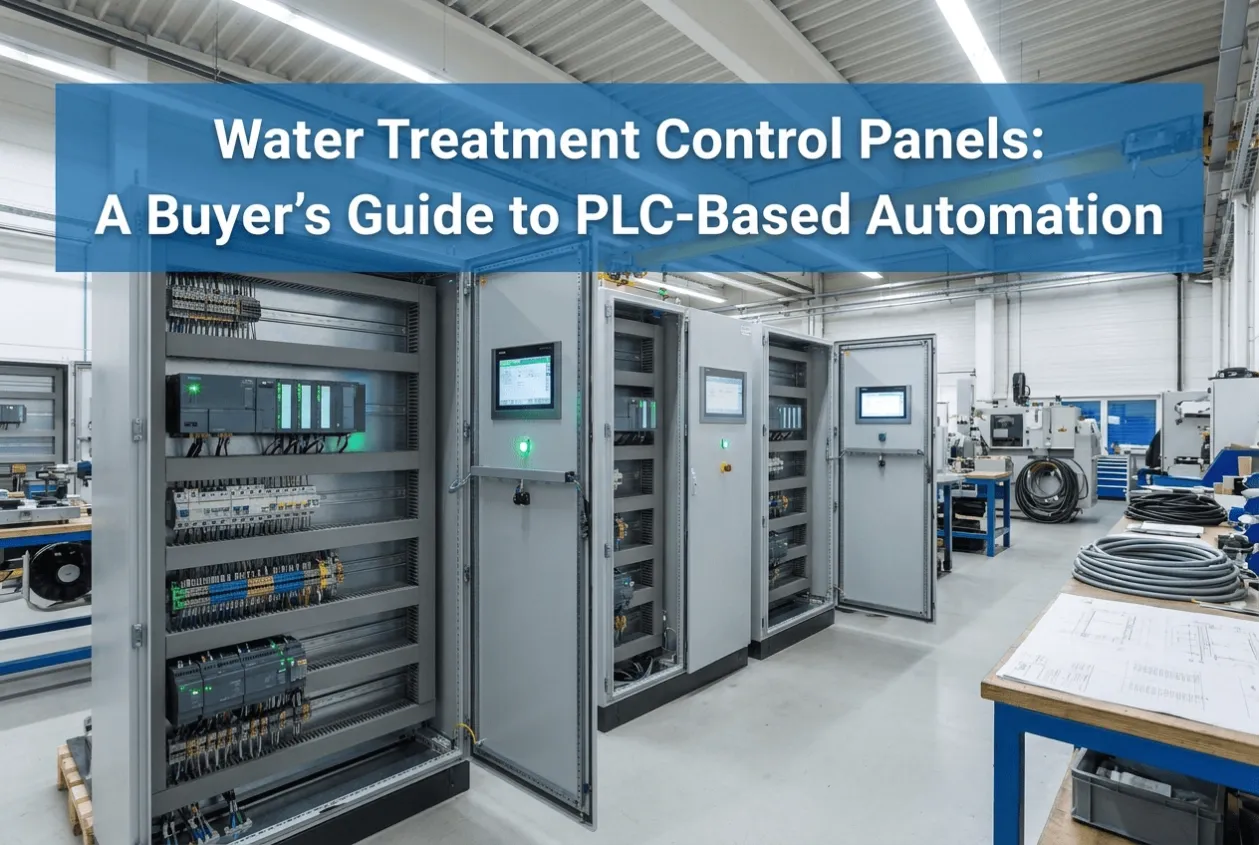
Why Water Treatment Control Panel Quotes Differ So Much
A contractor once sent me an inquiry for a water treatment control panel. The equipment list looked complete: two transfer pumps, one blower, two dosing pumps, several automatic valves, a PLC, an HMI, and an SCADA connection.
The contractor thought the inquiry was complete.
The supplier thought it was incomplete.
Both were right.
The contractor had listed the equipment. But the supplier still did not know how the plant should run. Should the two pumps work duty/standby or duty/assist? Should Pump 2 start automatically if Pump 1 fails, or only after the tank reaches a high level? Should dosing follow flow, pH, ORP, or a manual setting? Should alarms only warn the operator or stop equipment automatically?
This is why two suppliers can quote the “same” water treatment control panel and give very different prices.
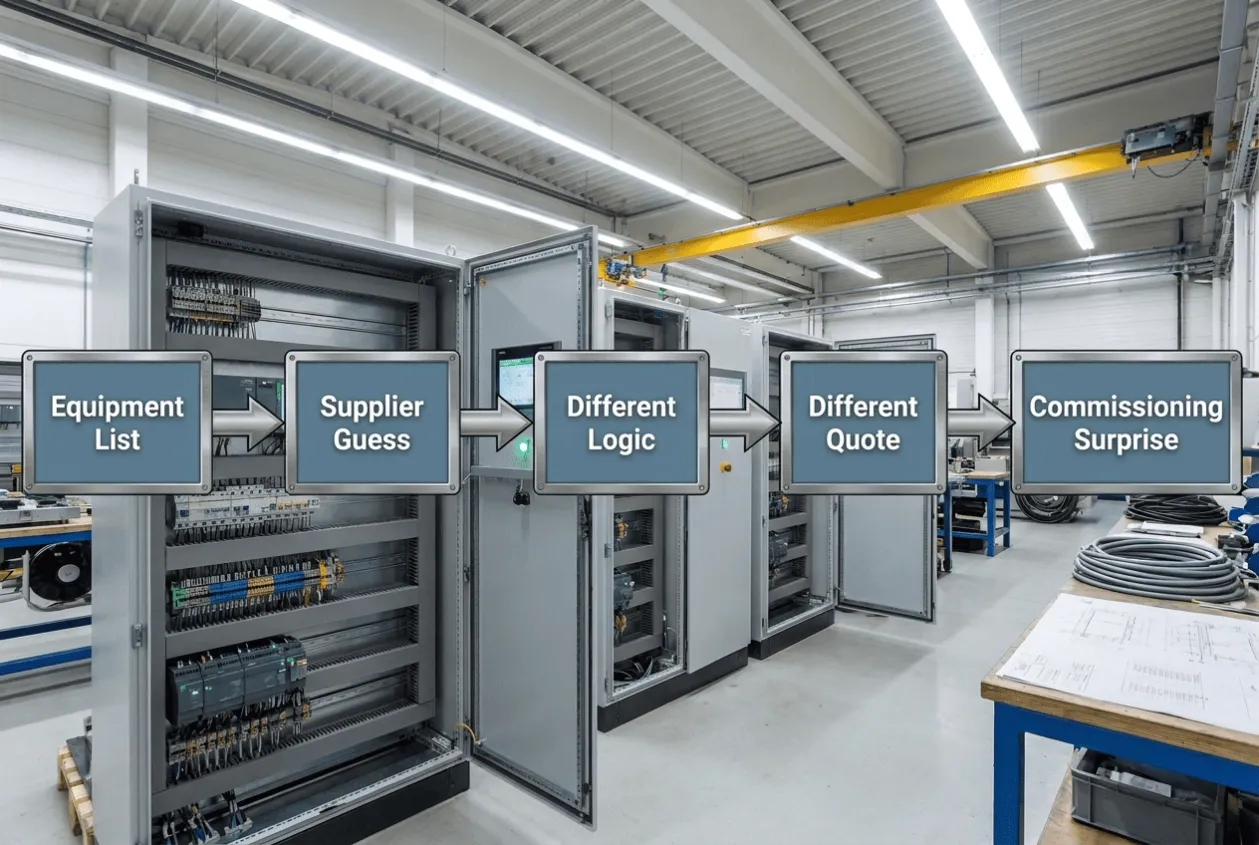
The buyer’s real question is not “Which PLC brand should I choose first?”
The real question is, will this quote still work after I award the PO?
Why Water Treatment Panel Quotes Drift Apart
A water treatment control panel is not only a PLC, HMI, breakers, terminals, and an enclosure. It is the operating logic of the plant packed into hardware, wiring, screens, alarms, and documents.
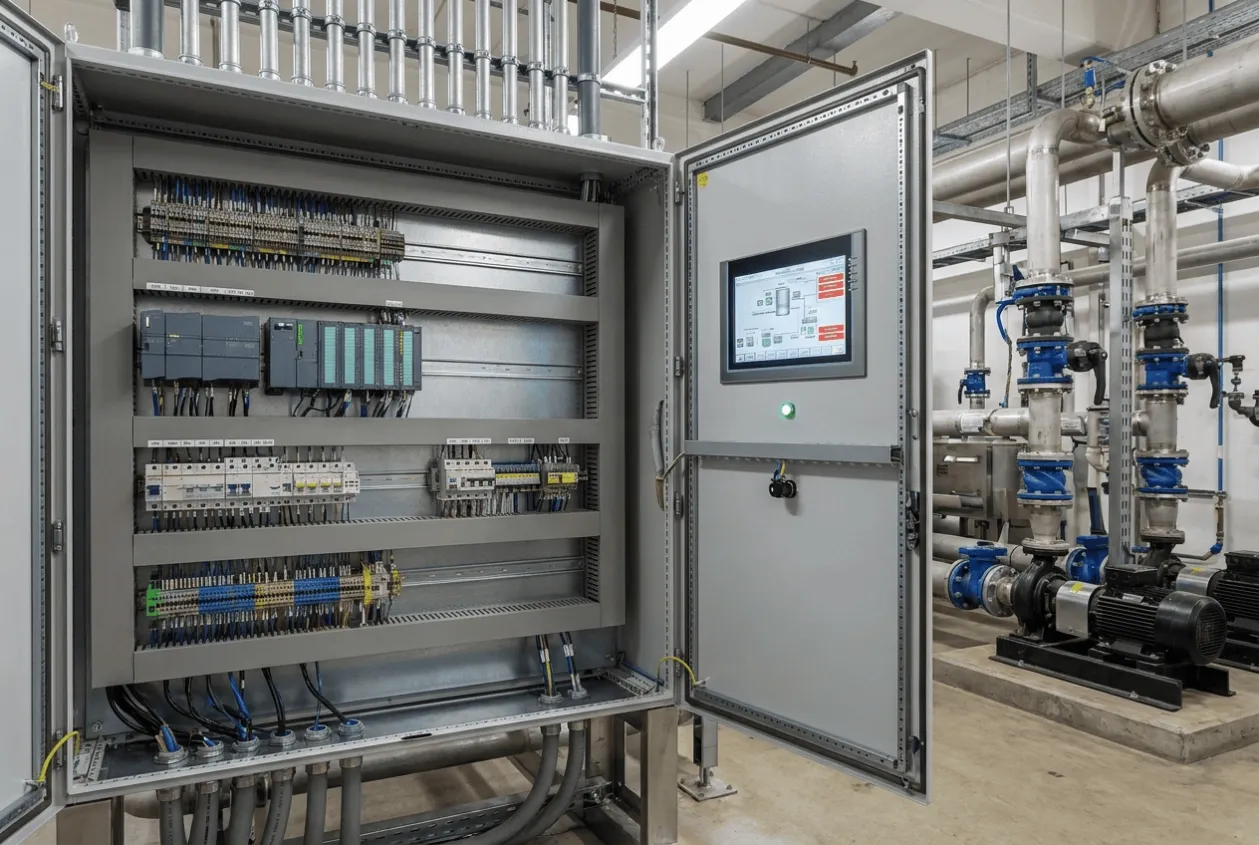
If the RFQ only says “PLC control panel for water treatment,” every supplier has to guess. One supplier may quote simple start/stop control. Another may include pump alternation, dosing logic, alarm history, SCADA, functional testing, and final documentation.
On a spreadsheet, both lines may say “PLC control panel.”
In reality, they are not the same product.
Quote Type | What You See | What You Don’t See |
|---|---|---|
Basic Quote | PLC, HMI, enclosure, wiring | No clear sequence, limited testing, missing alarm logic |
Better Quote | Complete control scope, FAT, documents | Higher initial cost, but fewer site surprises |
Unclear Quote | Nice component list and attractive price | Hidden scope gaps that appear during commissioning |
A cheaper quote is not always wrong. But if the price is low because control logic, SCADA mapping, FAT, and documentation were never included, then the buyer is not saving money. The buyer is just moving the cost to the site.
Three Small Cases Buyers Should Remember
In one project, the buyer assumed Pump 2 would start automatically if Pump 1 failed. The RFQ only said “two pumps controlled by PLC.” The supplier programmed manual selection. During commissioning, Pump 1 stopped, Pump 2 stayed quiet, and everyone looked at the panel like it had personally betrayed them.
The supplier said, “Duty/standby was not specified.”
The buyer said, “I thought that was obvious.”
That sentence is expensive.
Another project required a SCADA connection. The quotation said “SCADA ready.” Later, the site engineer found that it only meant the PLC had an Ethernet port. No tag list, no protocol confirmation, no communication test, no mapping. Technically, the panel had a port. Commercially, the buyer had a problem.
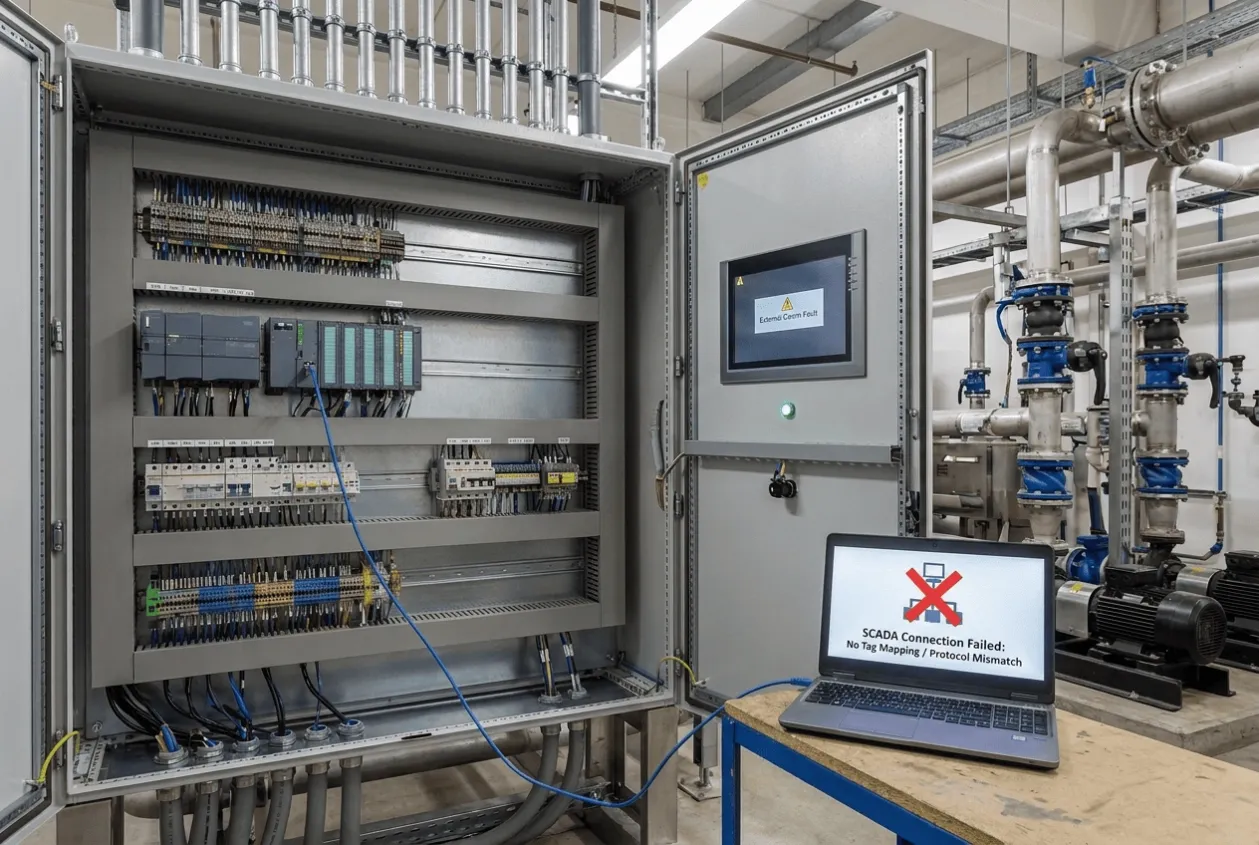
A third case involved an outdoor control panel near a chemical dosing area. The quotation said “outdoor enclosure.” Nobody discussed corrosion, chlorine atmosphere, humidity, or whether the panel was under a roof. The cabinet was outdoor-rated, but the environment was nastier than the wording.
This is why I do not like vague words in RFQs. They sound harmless, but they let every supplier imagine a different project.
Three Questions That Change the Price
Before I compare water treatment control panel quotes, I want these three questions answered.
Question | Why It Changes Price | Buyer Risk If Missing |
|---|---|---|
Should pumps alternate automatically? | Requires PLC logic, HMI settings, fault transfer, and FAT testing | The standby pump may not start when expected. |
Should dosing follow a process signal? | Requires analog input, control logic, setpoints, and testing | Dosing may become manual or too simple. |
Should alarms stop equipment or only warn operators? | Changes interlocks, shutdown logic, and HMI alarm design | Operators may not know what action the panel will take. |
These are not small programming details. They decide what the supplier is quoting.
A motor list tells the supplier what exists. A sequence tells the supplier what should happen.
What I Want Before I Trust the Quote
Before I read the final price too seriously, I want to see the basic buying information. Not a perfect engineering package. Just enough detail to stop suppliers from guessing.
What I Ask For | Why I Ask |
|---|---|
P&ID or process flow | Shows how water moves through the system |
Equipment list | Confirms pumps, blowers, valves, dosing units, and instruments |
I/O list | Helps size PLC modules and avoid missing signals |
Control sequence | Explains how the plant should operate |
SCADA requirement | Defines protocol, tags, and communication scope |
Panel location | Decides enclosure, cooling, and corrosion protection |
FAT requirement | Confirms what must be tested before shipment |
The I/O list is often the first document I ask for, but I do not treat it like homework for the buyer. Even a rough list helps. A missing I/O list usually means the quotation is still full of assumptions.
What Makes Me Nervous
Three phrases make me slow down in a water treatment control panel quote.
- “Standard water treatment program.”
- “SCADA ready.”
- “Outdoor enclosure.”
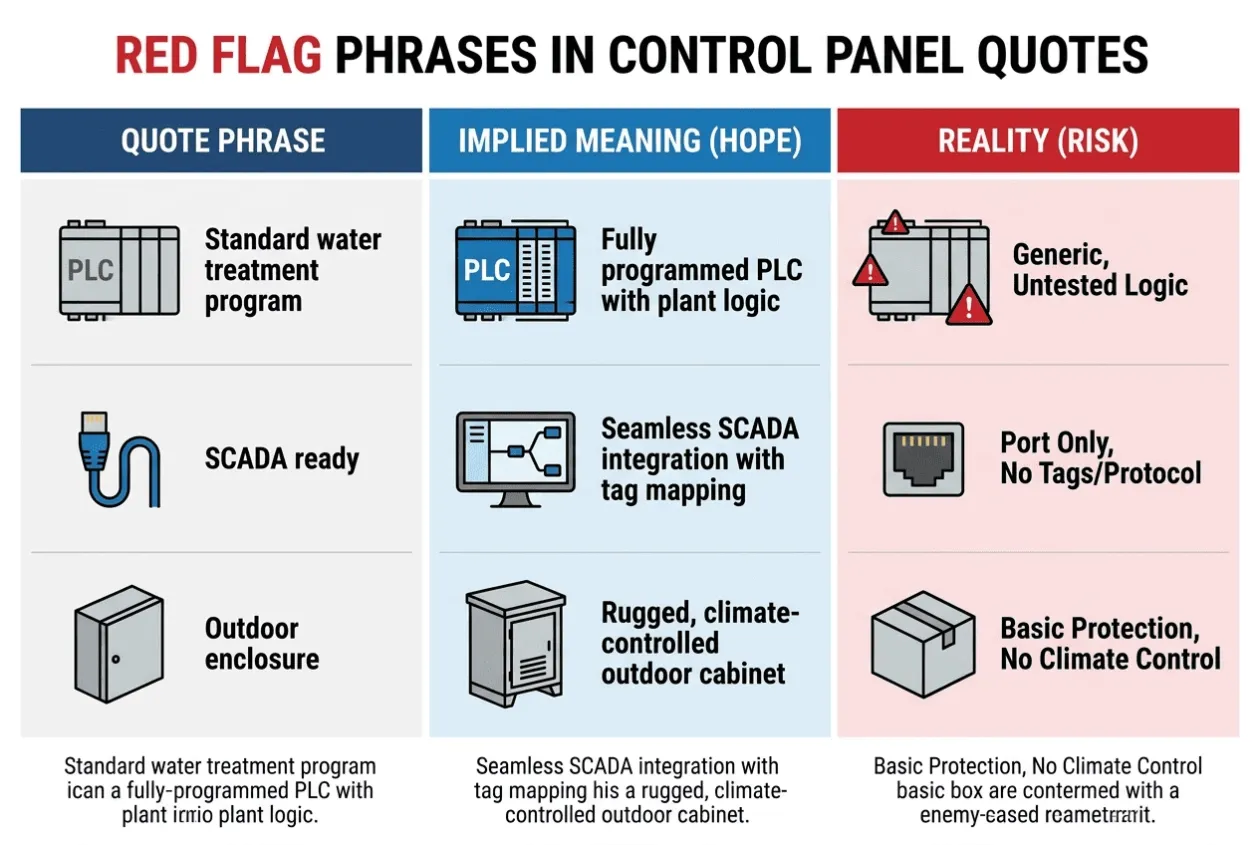
None of these phrases are automatically wrong. They are just too comfortable. A standard program may not match your pump duty. " SCADA ready" may only mean an Ethernet port. Outdoor enclosure may not be suitable for a humid pump room, direct sun, chlorination area, or coastal site.
When a supplier uses those phrases without asking follow-up questions, I do not reject the quote immediately. But I do not approve it quickly either.
A Better RFQ Example
A useful RFQ does not need to be long. It just needs to remove the biggest guesses.
PLC-based water treatment control panel for transfer and dosing system. Includes two duty/standby pumps with automatic alternation, one blower with timer control, two dosing pumps controlled by flow signal, automatic valves with open/close feedback, pH transmitter, tank level switches, HMI with manual/auto operation, alarm page, and trend page. Modbus TCP connection to existing SCADA required. Panel installed in indoor humid area. Supplier to include FAT, wiring diagram, BOM, I/O list, and O&M manual.
This is not fancy. It is clear.
And clear RFQs get better quotations.
What We Normally Clarify Before Quoting
When we receive a water treatment control panel inquiry at UniRegal, we usually clarify the process before pricing the cabinet. We want to know what the panel controls, how the pumps should run, whether dosing is manual or automatic, whether SCADA communication is required, where the panel will be installed, and what documents the buyer needs before shipment.
Buyers can send a P&ID, I/O list, equipment list, motor list, or even a rough process description. We can review the missing points before quotation, so the buyer is comparing a real scope instead of several supplier guesses.
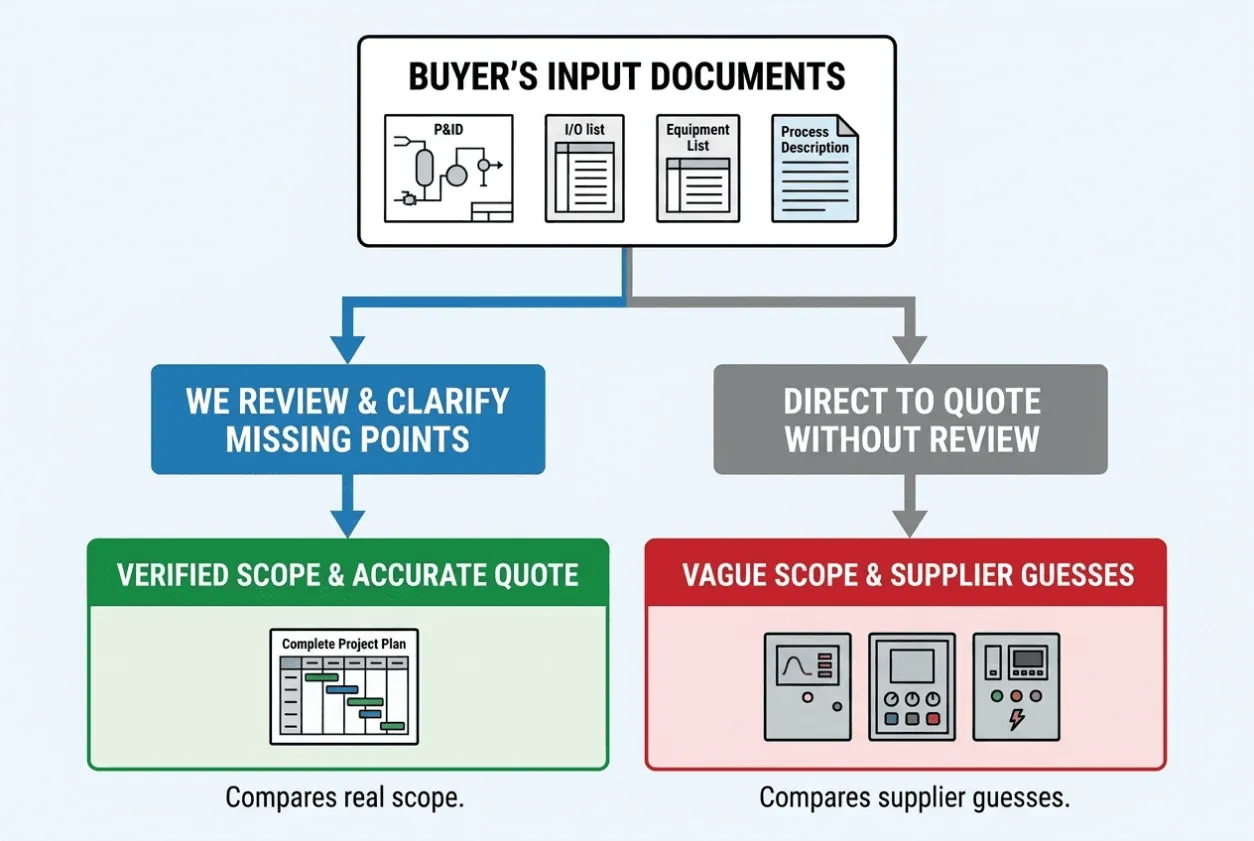
That is the kind of inquiry we like to receive because it leads to a quotation the buyer can actually approve.
FAQ
Why do water treatment control panel prices vary so much?
Because suppliers may be quoting different scopes. One quote may include only hardware and basic wiring, while another includes PLC logic, SCADA mapping, FAT, alarms, and documentation.
What is the most important information to send before requesting a quote?
The control sequence and I/O list are usually the most useful. They help the supplier understand what the panel must do, not only what equipment it contains.
Do I need to specify the PLC brand?
Yes, if your plant has a preferred platform or local maintenance team. Siemens, Mitsubishi, ABB, Schneider, and Omron can all work, but support and spare parts matter more than the logo.
Final Thought
Suppliers cannot quote the process you forgot to describe.
The biggest cost in a water treatment project is rarely the PLC. It is the assumption nobody wrote into the RFQ.
Related Guides:
Related Solutions:
Need help specifying or sourcing this for your project? Request a quote - we reply within 1-2 working days with a technical review.