
Aug 27, 2026Buying Guides
Best Cooling Options for Outdoor Electrical Cabinets
A buyer-focused guide to outdoor cabinet cooling options, showing how heat load, layout, sun exposure, fan filters, heat exchangers, and air conditioners affect reliable selection.
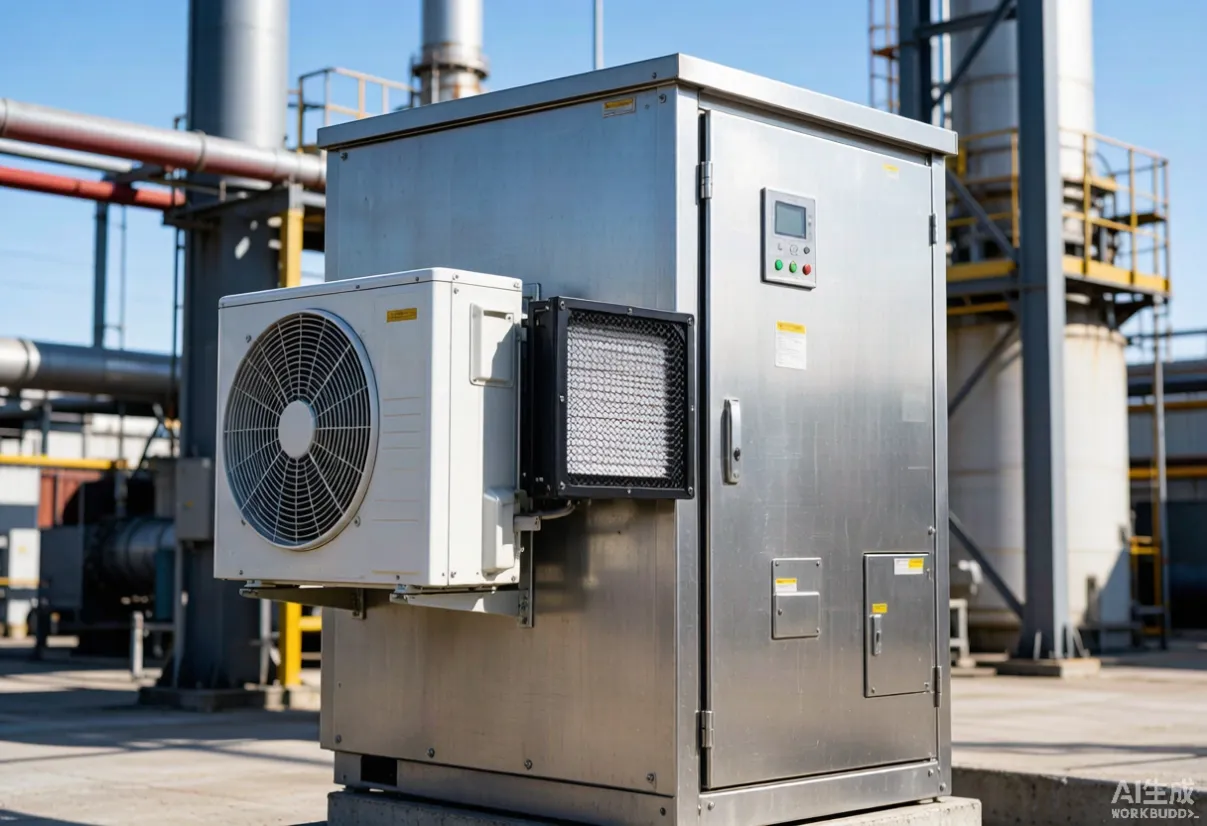
Best Cooling Options for Outdoor Electrical Cabinets: How I Choose the Right Method
The best cooling option for an outdoor electrical cabinet is not always an air conditioner. It depends on heat load, ambient temperature, direct sunlight, dust, humidity, IP/NEMA rating, and how sensitive the internal components are.
I once reviewed a pump control cabinet where the outdoor temperature was about 36°C, but the internal cabinet temperature reached around 57°C in the afternoon. The VFD kept tripping, and the first reaction was to blame the drive. The drive was healthy. The cabinet was simply too hot.
The most expensive cooling system is sometimes installed to solve a layout problem.
That is why I do not start with a cooling product. I start with the heat problem.
My Cooling Selection Process
I rarely start with an air conditioner.
For outdoor cabinets, I normally review cooling in this order:
- Reduce internal heat load where possible.
- Improve component layout and airflow.
- Block direct sunlight with a sun shield or better cabinet position.
- Check whether natural convection is enough.
- Consider a fan/filter only if the outside air is clean and suitable.
- Review heat exchanger when the cabinet should remain more sealed.
- Select an air conditioner only when active cooling is truly required.
Buying a larger air conditioner is often easier than fixing a poor cabinet layout, but not always smarter.
1. Natural Convection — Buyer Mistake
Natural convection looks attractive because there is almost nothing to maintain. For low heat-load cabinets in mild environments, it can work well.
The mistake is assuming “no fan” means “no thermal problem.” If the cabinet is full of power supplies, PLCs, relays, or VFDs, natural convection may only slow down overheating. It does not remove enough heat from a crowded outdoor cabinet under direct sun.
2. Fan and Filter — Hidden Risk
Fan/filter units are common because they are cost-effective and easy to specify. They can work in clean environments where outside air is cooler than the target internal temperature.
The hidden risk is that the cabinet is now breathing site air. Dust, salt mist, humidity, oil vapor, and corrosive gas may enter with the airflow. I would be careful using fan/filter cooling near coastal sites, wastewater plants, mining areas, or dusty outdoor locations.
3. Heat Exchanger—Engineering Myth
A heat exchanger helps remove heat while keeping internal and external air separated. That makes it useful when the cabinet needs better protection than a simple fan/filter system.
The myth is that a heat exchanger solves every sealed-cabinet cooling problem. It does not. If ambient temperature is too high, or internal heat load is too large, the heat exchanger may not have enough temperature difference to work effectively.
4. Cabinet Air Conditioner—Procurement Advice
A cabinet air conditioner is useful for hot sites, high heat loads, and sensitive electronics. It can cool the cabinet below ambient temperature, which fans and heat exchangers cannot do.
But I would not approve an air conditioner by cabinet size alone. Buyers should ask for heat load, maximum ambient temperature, sun exposure, voltage, condensate handling, maintenance access, and IP rating. No free lunch there. Air conditioning solves heat, but adds cost, power consumption, spare parts, and maintenance.
5. Sun Shield — Low-Cost First Check
A sun shield does not remove internal heat, but it can reduce solar heat gain. For outdoor cabinets exposed to strong afternoon sun, this is often one of the first things I check.
If the cabinet only overheats during certain hours, sunlight may be part of the problem. In that case, adding a sun shield or adjusting cabinet position may reduce thermal stress before active cooling is added.
6. Double-Wall Cabinet — Useful, Not Magic
Double-wall construction can reduce solar heat transfer and improve thermal stability. It is useful for outdoor electrical cabinets installed in hot, exposed locations.
But double-wall design does not replace thermal calculation. If the cabinet contains VFDs, UPS units, transformers, or large power supplies, internal heat still needs a path out. A second wall does not cancel heat load.
7. Layout Improvement — Project Lesson
Sometimes the best cooling option is not a cooling product. It is a better layout.
Move high-heat components away from PLCs and communication devices. Leave clearance around VFDs. Avoid blocking airflow with wiring ducts. Keep power supplies out of dead corners. One layout change can reduce hot spots without adding another device to maintain.
Cooling Option Comparison
Cooling Option | Do I Normally Start Here? | Best For | Buyer Risk |
|---|---|---|---|
Layout improvement | Yes. | Hot spot reduction | Often ignored too late |
Sun shield | Yes. | Direct sunlight | Does not remove internal heat |
Natural convection | Depends | Low heat-load cabinets | Limited cooling capacity |
Fan/filter | Depends | Clean moderate sites | Brings outside air inside |
Heat exchanger | Depends | More sealed cooling | Limited by ambient temperature |
Double-wall cabinet | Depends | Solar heat reduction | Adds cost and size |
Air conditioner | Last option | High heat load or hot sites | Higher cost and maintenance |
What I Would Not Recommend
- I would not recommend fan/filter cooling in coastal air without reviewing corrosion and humidity risk.
- I would not recommend an oversized air conditioner without a heat-load estimate.
- I would not recommend double-wall construction without checking internal heat.
- I would not recommend adding active cooling before reviewing layout, sunlight, and cabinet location.
These are not strict rules, but they are good buyer filters.
Standards and Buyer Verification
Standards define enclosure protection, but they do not decide the cooling strategy. IEC 60529 defines IP protection for enclosures, and NEMA 250 is commonly used for enclosure type ratings. If the cabinet becomes an industrial control panel, UL 508A may also apply depending on the project market.
The buyer still needs to ask the real engineering question: will the cooling method keep the internal components within their operating limits without breaking the cabinet’s environmental protection?
FAQ
Can a fan cool below ambient temperature?
No. A fan only moves air. It cannot cool the cabinet below the surrounding air temperature.
When is an air conditioner necessary?
An air conditioner is necessary when heat load, ambient temperature, and solar exposure make passive or ventilated cooling insufficient.
Is stainless steel better for cooling?
Not automatically. Stainless steel may improve corrosion resistance, but cooling still depends on heat load, airflow, sunlight, cabinet structure, and layout.
Before You Request a Quote
Before asking for a cooling recommendation, send UniRegal the cabinet size, component list, estimated heat load, maximum ambient temperature, sun exposure, IP/NEMA requirement, material, installation site, and maintenance expectations.
At UniRegal, we review outdoor cabinet cooling as part of the full enclosure design, not as an accessory added at the end.
The best cooling system is not the most expensive one. It is the one that solves the real heat problem without creating a new maintenance problem.