
Aug 24, 2026Buying Guides
Why the Lowest-Priced Water Treatment System Was Not the Lowest-Cost Option
The lowest-priced water-treatment system often costs more overall. A breakdown of hidden costs — enclosures, spares, commissioning — and how to compare real total cost.
Representative Case Study:
This case reflects recurring issues found during industrial water treatment quotation reviews. The project details have been generalized to protect commercial confidentiality while preserving the engineering decision process.
Project Background
An industrial manufacturer was preparing to purchase a new water treatment system for a production facility where water quality affected both process stability and environmental compliance.
The buyer received two technically acceptable proposals.
Both suppliers offered the required treatment capacity. Both proposals included the main process equipment, and both stated that the treated water could meet the specified outlet requirement.
The difference was commercial.
One proposal carried a noticeably lower purchase price. The second included more extensive pretreatment, additional online instruments, PLC-based automation, commissioning support and a recommended spare-parts package.
During the first internal review, the lower quotation appeared to offer the stronger business case. It met the approved capital budget, contained fewer optional items and looked easier to justify to management.
From the purchasing team’s perspective, the choice seemed straightforward.
Why approve the more expensive system when both suppliers appeared to be offering the same treatment capacity?
That question shaped the first meeting, but it did not survive the second one.
The Initial Price Advantage
The lower-priced proposal was well presented.
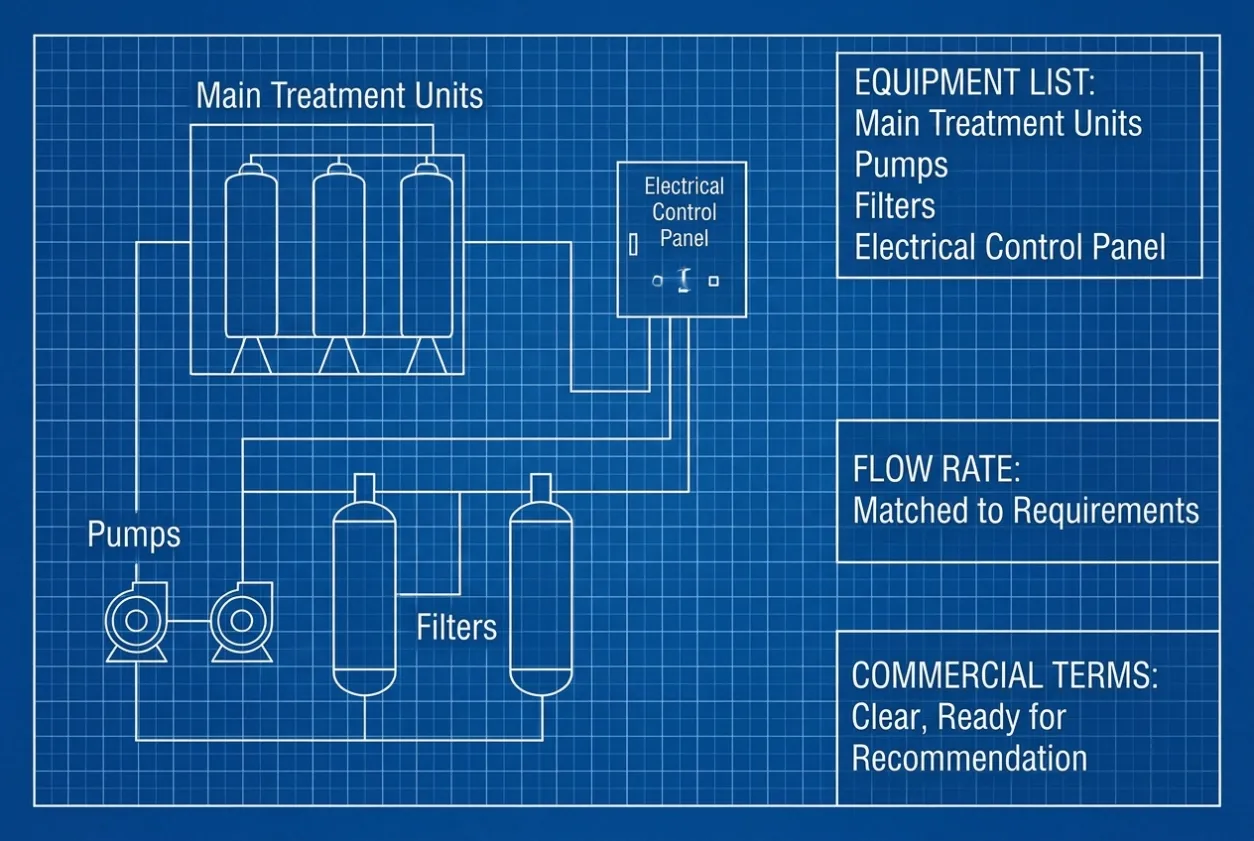
The equipment list included the main treatment units, pumps, filters and electrical control panel. The quoted flow rate matched the project requirement, and the commercial terms were clear enough for the buyer to begin preparing an internal recommendation.
The higher-priced proposal was more difficult to approve.
It included several items that the purchasing team initially viewed as additions rather than necessities. These included stronger pretreatment protection, more process instrumentation, automatic control functions, startup spare parts and structured commissioning support.
At that stage, the difference between the two quotations appeared to be a familiar procurement problem: one supplier had offered a practical system, while the other seemed to have added a more sophisticated specification.
The lower quotation moved closer to approval.
Before the decision was finalized, however, the project engineer requested one additional review. Rather than comparing the total prices again, the team asked both suppliers to explain how their proposed systems would behave under the buyer’s actual operating conditions.
That request changed the direction of the project.
The Question That Changed the Review
During the second review meeting, the project engineer asked both suppliers to explain three points:
- How the system would respond when inlet-water quality changed.
- What the expected annual chemical and consumable costs would be.
- Who would be responsible for bringing the system into stable operation after installation.
The lower-priced proposal could explain the main equipment, but several operating assumptions had not been defined.
Its design had been based largely on average inlet-water values. The proposal did not clearly show how the treatment process would respond when contaminant loading increased. Annual chemical use had not been estimated, membrane and filter replacement intervals were not stated, and commissioning was described only as remote technical support.
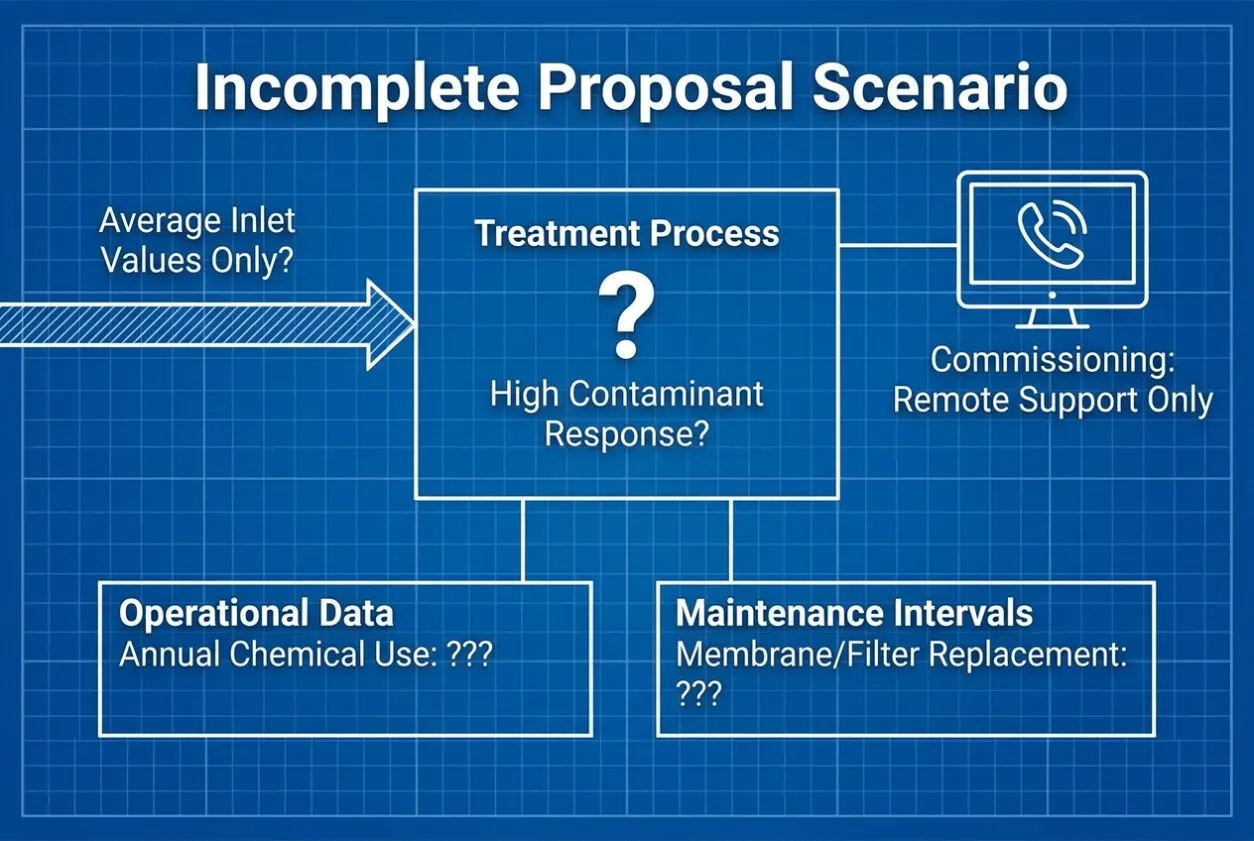
The second supplier had documented these areas in more detail.
Its proposal used a wider inlet operating range, included additional pretreatment to protect downstream equipment and specified online measurements that would allow operators to detect process deterioration before output quality was affected.
The buyer had initially assumed that the second supplier was simply selling more equipment.
The review showed that the two suppliers were not pricing the same responsibility.
The Purchase Was Paused
The purchasing team did not reject the lower quotation immediately, but the approval process was paused.
Both suppliers were asked to revise their proposals against the same design basis. The buyer issued one set of inlet-water data, operating conditions, outlet requirements and scope boundaries so that each supplier would be responding to the same project.
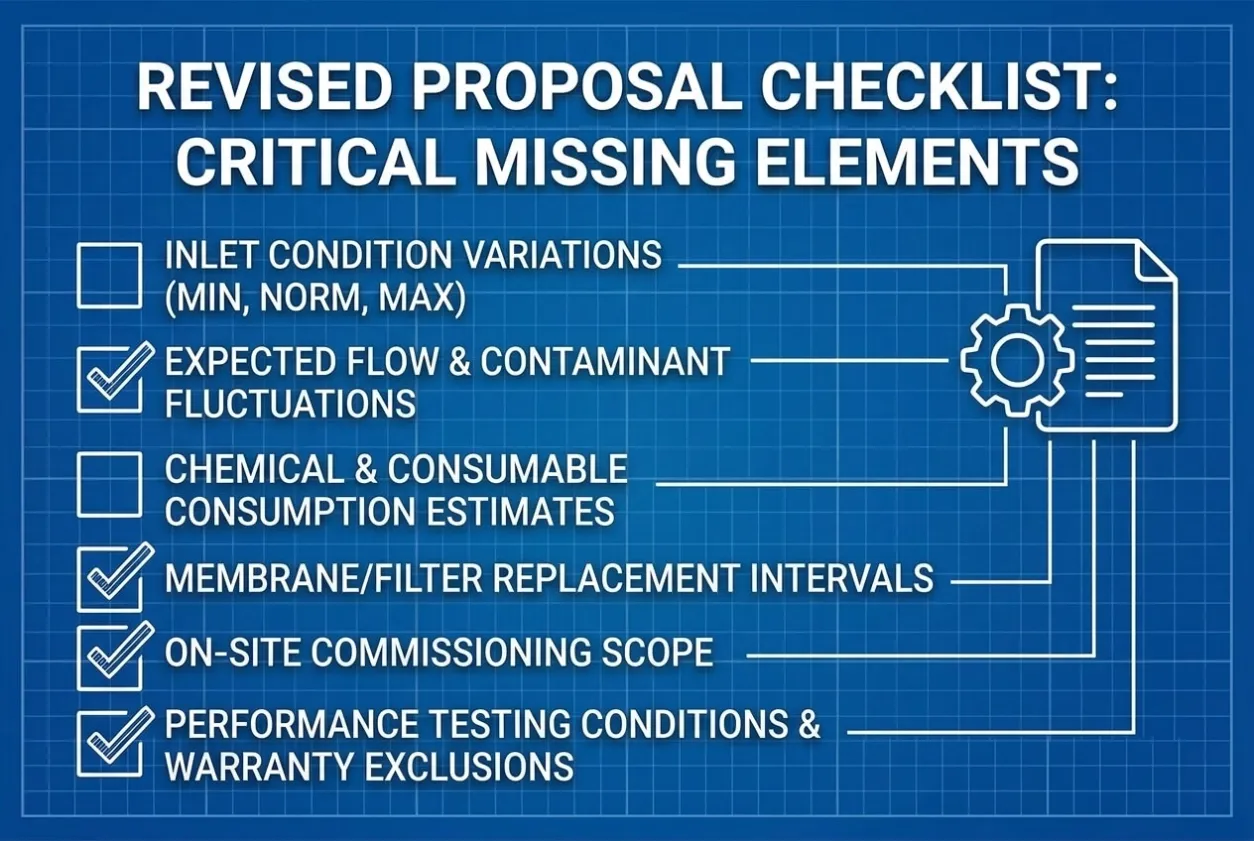
The revised request required both suppliers to define:
- Minimum, normal and maximum inlet conditions
- Expected flow and contaminant variation
- Treatment stages and their purpose
- Pretreatment scope
- Instrumentation
- Control philosophy
- Estimated energy and chemical consumption
- Consumable replacement assumptions
- Recommended spare parts
- Installation responsibility
- Commissioning activities
- Performance-testing conditions
- Warranty exclusions
This was the first major turning point.
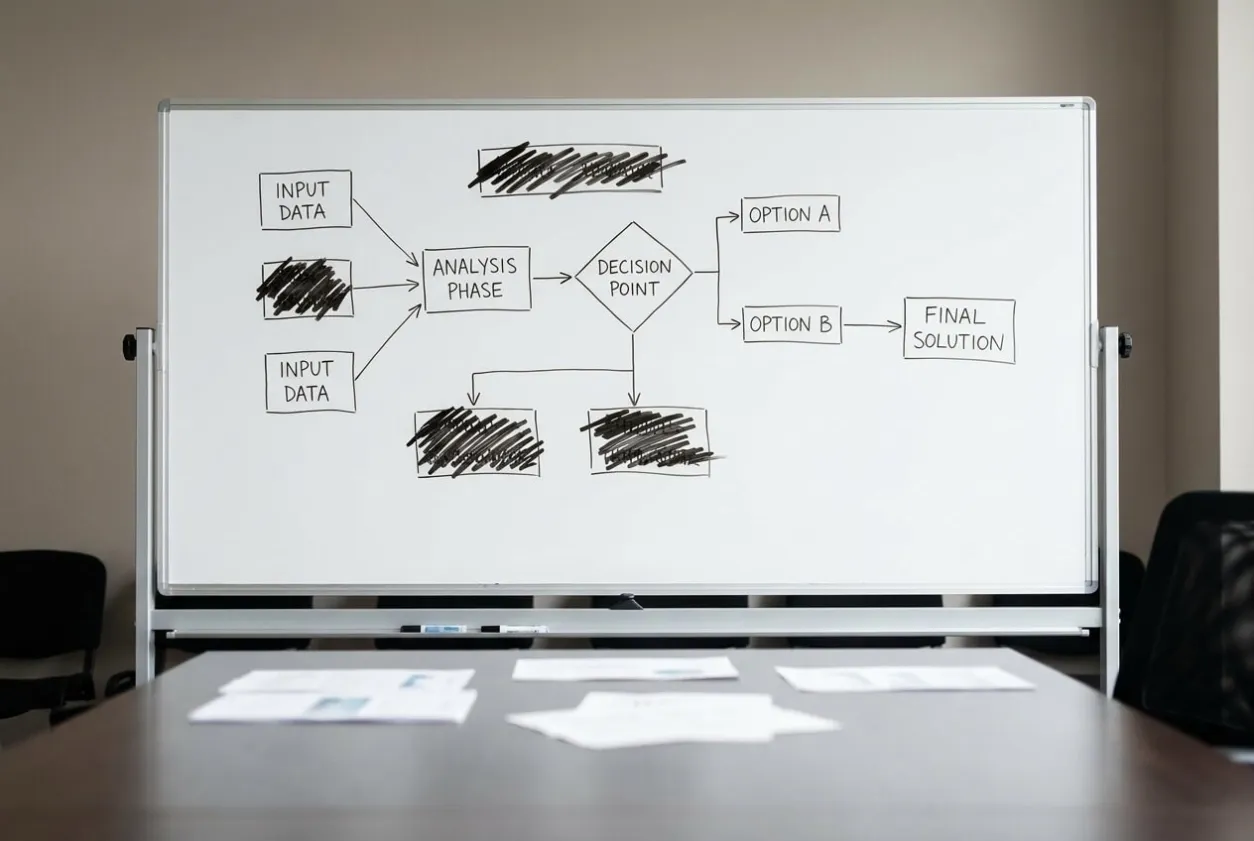
The buyer was no longer asking which supplier had submitted the lower number. The team was asking which supplier had accepted the operating responsibilities required to make the system work.
What the Lower Price Did Not Include
Once both proposals were reviewed line by line, several differences became visible.
The lower-priced proposal was not based on inferior equipment across the entire system. Its price advantage came mainly from a narrower scope and more optimistic operating assumptions.
Several items had either been excluded or left to the buyer:
- Additional pretreatment for inlet-water variation
- Online monitoring beyond basic pressure and flow
- Chemical consumption estimates
- Startup and critical spare parts
- Membrane and filter replacement assumptions
- Duty and standby logic for selected equipment
- Detailed process alarms and interlocks
- Operator training
- On-site commissioning
- Performance verification under actual operating conditions
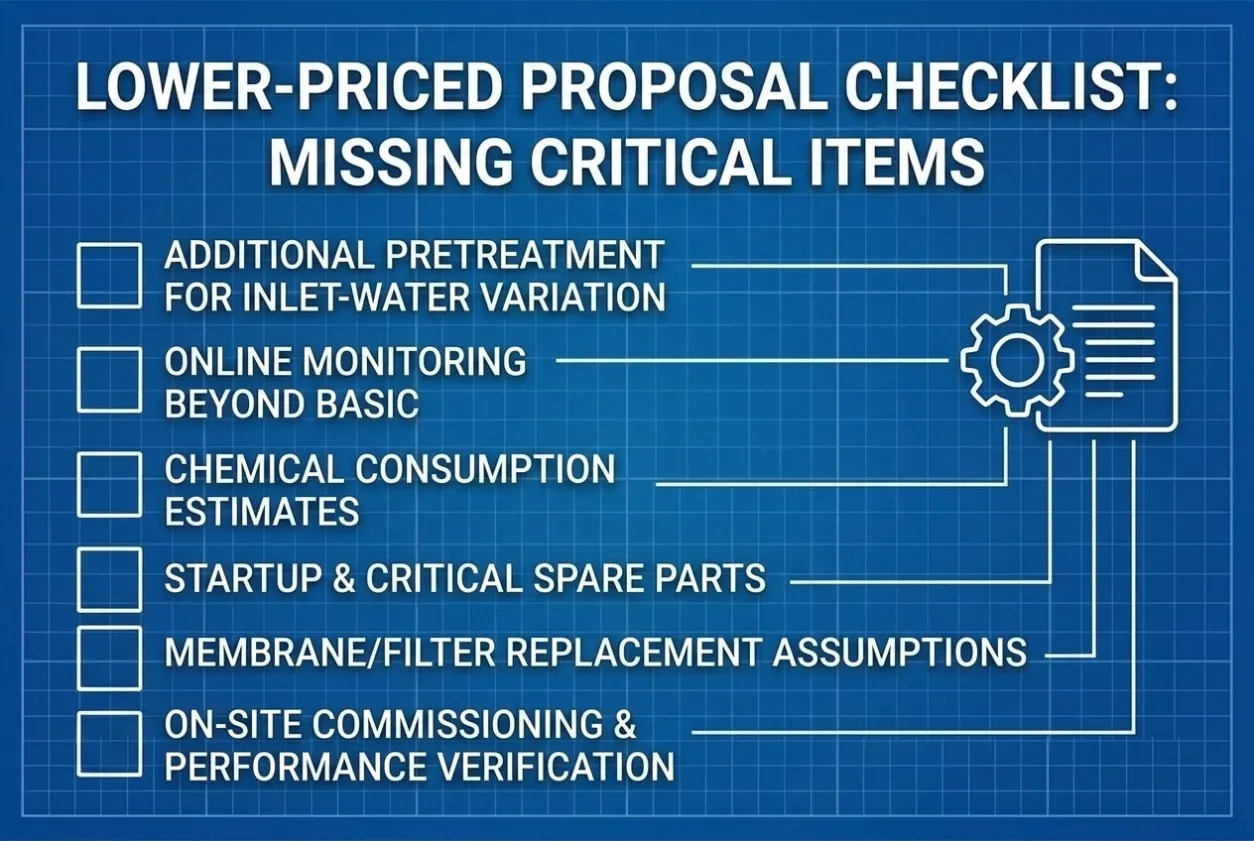
None of these items appeared as immediate costs on the quotation summary.
They would appear later through additional purchases, higher operator involvement, more frequent replacement, process instability or commissioning delays.
The cost had not necessarily disappeared.
It had moved beyond the purchase order.
The First Hidden Cost: Pretreatment
The most important technical difference was pretreatment.
The buyer’s inlet-water quality was reasonably stable during normal production, but several production batches created temporary increases in contaminant loading. These changes did not last long enough to dominate the average water analysis, yet they were significant enough to affect downstream treatment performance.
The lower-priced system had been selected mainly around the average values.
Under normal conditions, it could probably have operated acceptably. During higher loading periods, however, the downstream filters and membranes would have received less protection.
The second proposal included additional equalization and pretreatment control intended to reduce the effect of those variations.
That scope increased the purchase price, but it also reduced the likelihood of:
- Rapid filter blockage
- Higher membrane fouling
- Increased cleaning frequency
- Unstable operating pressure
- Reduced treatment output
- Early consumable replacement
Pretreatment did not produce the final treated water, so it had initially looked like an area where the buyer might save money.
In lifecycle terms, it was protecting the most sensitive and expensive parts of the system.
The Second Hidden Cost: Limited Process Visibility
Instrumentation created another important difference.
The lower-priced system included enough instruments to operate the equipment, but not enough to provide a clear picture of gradual process deterioration.
Operators would be able to see basic pressure and flow conditions. They would have less information for distinguishing between changing feed conditions, filter blockage, chemical imbalance, instrument error and declining membrane performance.
This mattered because the buyer’s maintenance team did not expect water treatment problems to arrive as obvious failures.
Most process problems would begin with smaller changes. Differential pressure might rise gradually. Conductivity might drift. Chemical demand might increase. A tank might take longer to refill, or a filter might require cleaning more frequently.
Without adequate monitoring, these changes could remain unnoticed until treated-water quality declined or the system stopped.
The additional instruments in the higher-priced proposal were not included merely to make the control system more advanced. They gave the operating team a way to identify deterioration earlier and intervene before the issue became a shutdown.
The buyer began to understand that visibility was not an optional feature.
It was part of maintenance control.
The Third Hidden Cost: Operator Dependence
The lower-priced system also relied more heavily on manual operation.
Several adjustments would need to be made by operators, while the control panel provided only essential equipment protection and basic alarms.
This reduced the original automation cost, but it increased dependence on the experience and attention of the operating team.
The plant would need operators to monitor process conditions, adjust dosing, respond to changes and maintain consistent records. The system could still work, but its performance would depend more strongly on who was present and how quickly that person recognized a problem.
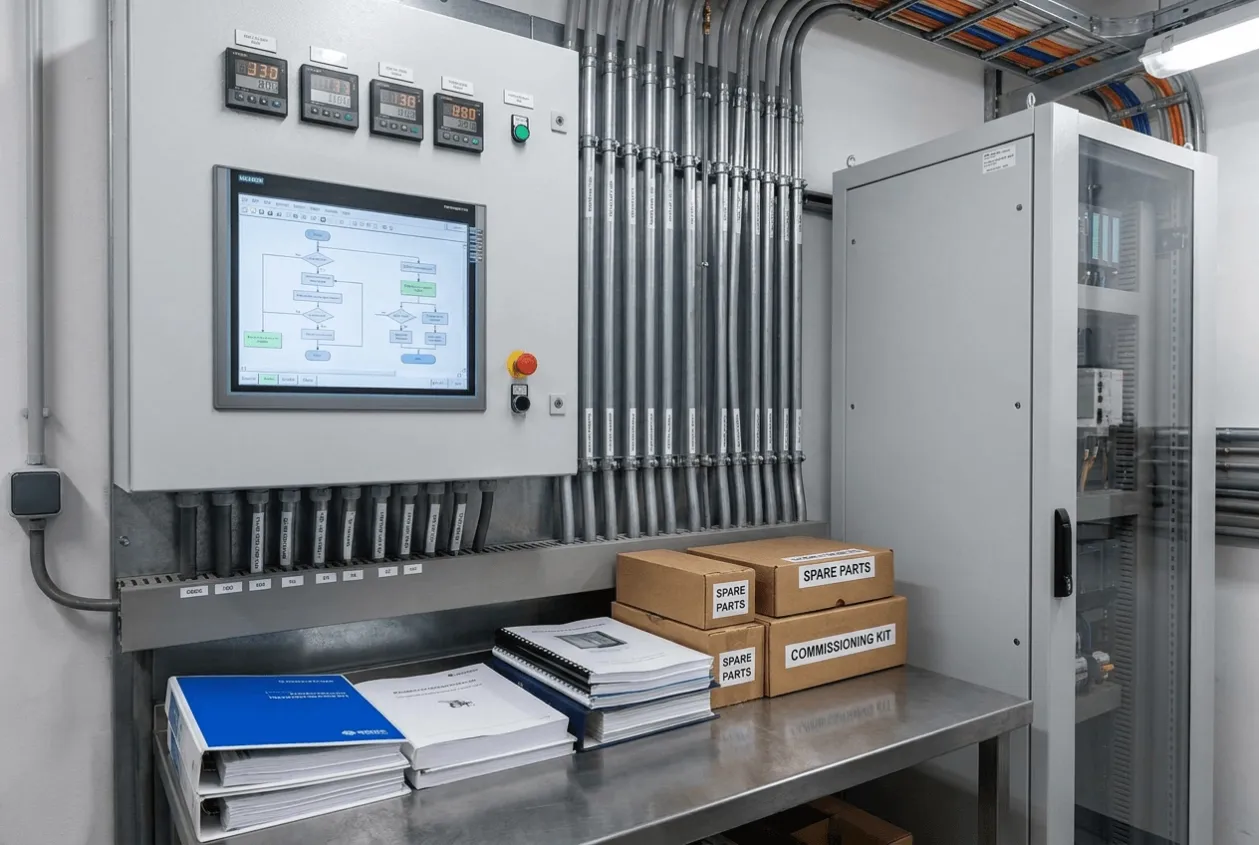
The more complete proposal used PLC[^1] and HMI[^2] automation to manage routine sequences, equipment permissives, alarm handling and selected process adjustments.
It did not remove the need for operators. It reduced the number of routine judgments they would need to make during every shift. Therefore, the buyer was not deciding between automation and no automation. He was deciding where the operating responsibility should sit. It could be built into the control system, or it could remain with the plant team every day after commissioning, following recognized alarm management[^3] and human factors engineering[^4] practices.
The Fourth Hidden Cost: Commissioning Responsibility
Commissioning became the commercial issue that management understood most quickly.
The lower quotation included remote technical support, but the actual startup responsibilities were not clearly defined.
It did not specify who would:
- Verify instrument calibration
- Test control logic
- Establish operating setpoints
- Tune chemical dosing
- Confirm interlock behaviour
- Train operators
- Demonstrate stable treated-water performance
The more complete proposal included a structured commissioning plan with defined activities and performance checks.
This increased the project price, but it also reduced uncertainty during the period when the buyer would be under the greatest schedule pressure.
The purchasing manager asked a simple question during the review:
If the equipment arrives and the process does not stabilize, who is responsible for making it work?
The lower-priced proposal could not answer that clearly.
That was the second major turning point.
The buyer had been comparing equipment cost, but management was now looking at startup accountability.
Building the Five-Year Cost Model
The project team decided to test both proposals using a five-year lifecycle cost model.
Their purpose was not to predict every future expense with artificial precision. The available data did not justify that level of certainty.
Instead, the model was used to make the assumptions visible.
The team reviewed:
- Initial equipment cost
- Installation requirements
- Annual operating hours
- Electricity consumption
- Chemical consumption
- Filter replacement
- Membrane or media replacement
- Instrument calibration
- Routine maintenance
- Operator time
- Planned shutdowns
- Corrective maintenance
- Service attendance
- Waste disposal
- Likely downtime exposure
The buyer originally expected the higher-priced system to remain substantially more expensive throughout the review.
That did not happen.
Under optimistic operating conditions, the lower-priced system retained a clear commercial advantage. This assumed stable inlet water, predictable consumable life, limited operator intervention and few unplanned interruptions.
Under expected operating conditions, the difference narrowed once chemical use, consumables, labour and maintenance were included.
Under difficult conditions, the proposal with stronger pretreatment, monitoring and commissioning support carried lower financial risk because it was better equipped to identify and control deterioration before it became a larger operating problem.
The most useful result was not one final five-year total.
It was seeing which assumptions controlled the outcome.
Membrane life, chemical consumption, operator involvement and downtime had a much larger effect than several of the smaller equipment savings being discussed during procurement.
The Revised Commercial Comparison
After both suppliers submitted revised proposals against the same scope basis, the original price difference became much smaller.
The lower-priced supplier added several items that had previously been excluded. The higher-priced supplier removed some features that the buyer did not consider necessary for the actual project.
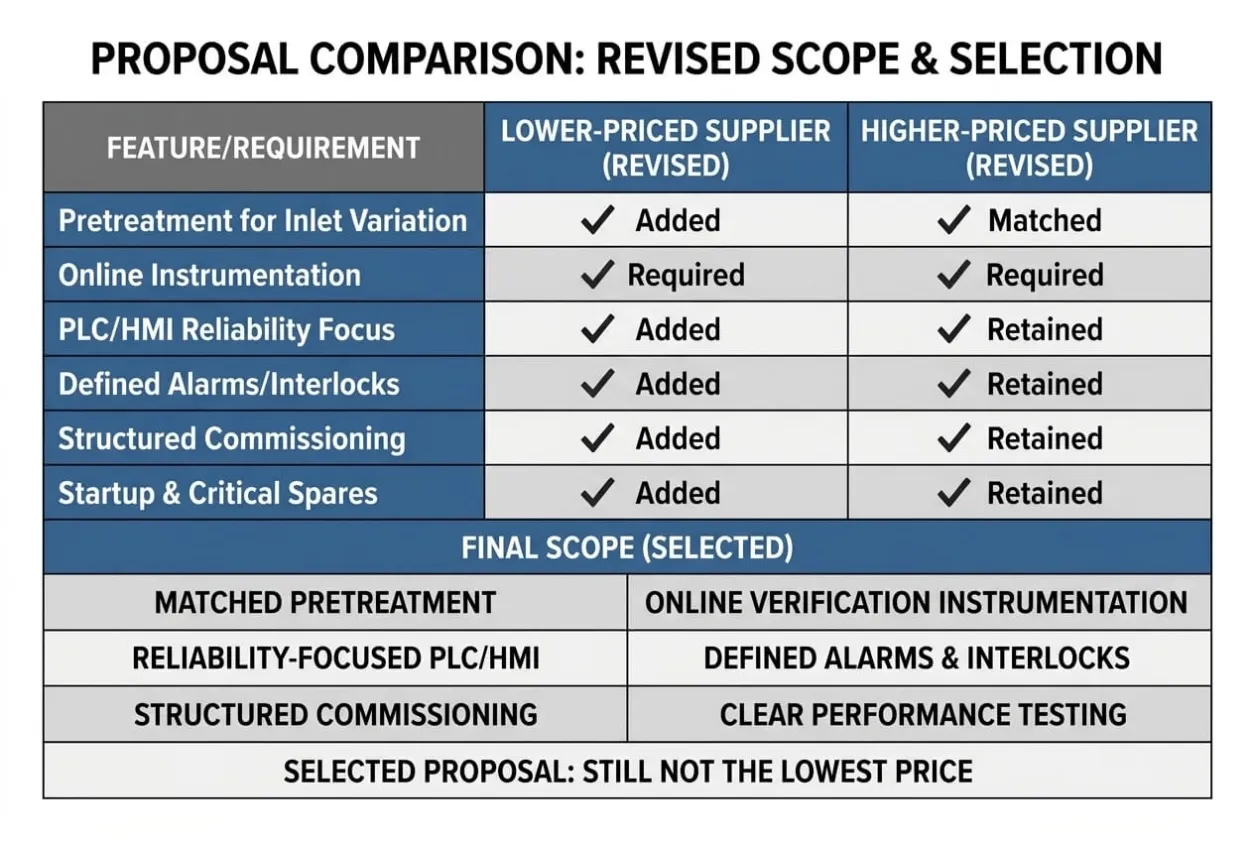
This was important because lifecycle analysis was not used as an excuse to purchase the most expensive option.
The project team challenged both proposals.
Some higher-priced features could not demonstrate enough operating value and were removed. Other items remained because their contribution to reliability, maintenance or startup performance was clear.
The final scope retained:
- Pretreatment matched to the expected inlet variation
- Online instrumentation required for process verification
- PLC and HMI functions focused on operating reliability
- Defined alarm and interlock behaviour
- Structured commissioning responsibilities
- Startup and critical spare parts
- Consumable and maintenance assumptions
- Clear performance-testing conditions
The selected proposal was still not the lowest-priced option.
The difference, however, was no longer as large as the original quotations suggested.
More importantly, the buyer understood what the remaining price difference was buying.
The Buyer’s Decision
The buyer selected the proposal that provided the strongest balance between capital cost, operating visibility and process risk.
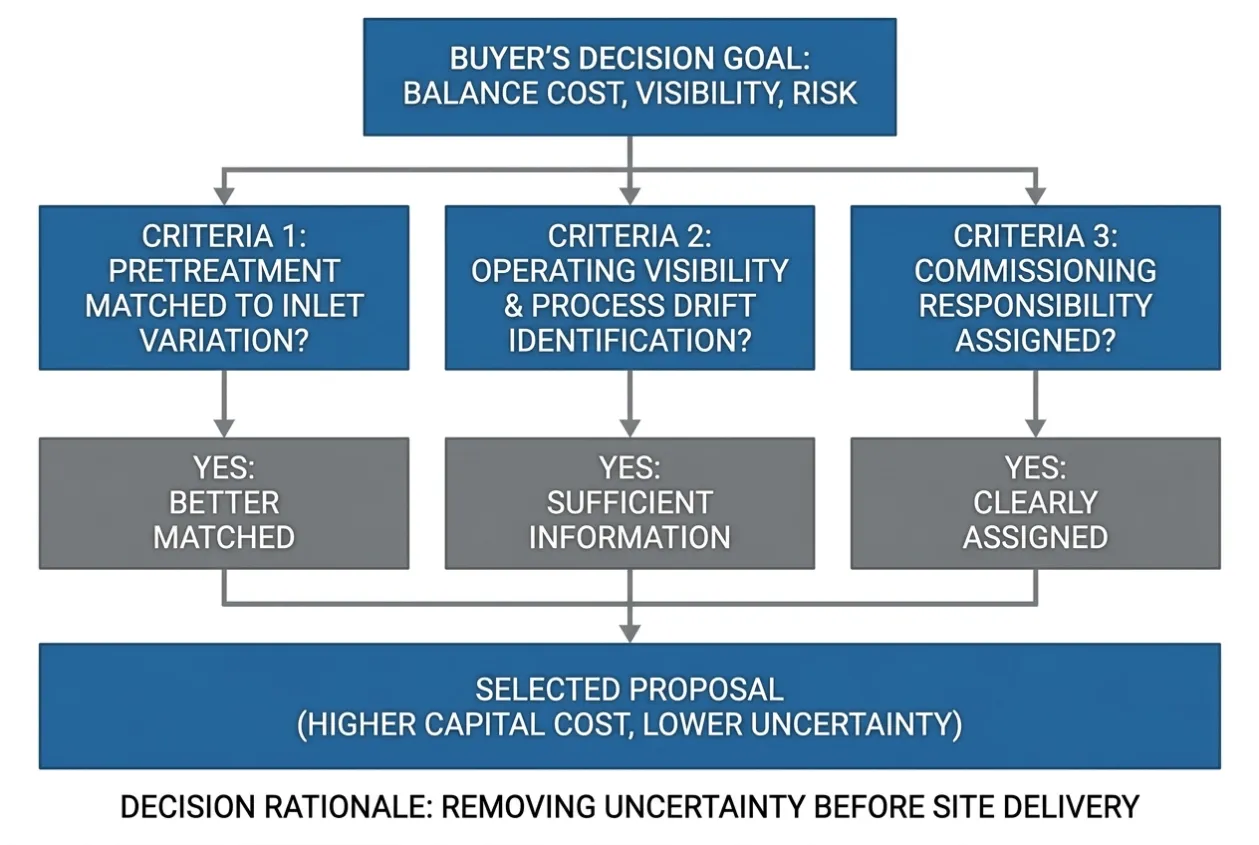
The decision was not based on choosing the largest system or the most advanced control package.
It was based on three conclusions.
First, the selected pretreatment arrangement was better matched to the buyer’s actual inlet variation.
Second, the instrumentation and control system gave operators enough information to identify process drift before it affected treated-water quality.
Third, commissioning responsibility was clearly assigned rather than being left for the buyer to coordinate after delivery.
The selected system therefore cost more to purchase, but it gave the buyer more control over the costs that would continue after the purchase order was closed.
The project team did not describe this internally as choosing the expensive supplier.
They described it as removing uncertainty before the system reached the site.
Lessons Learned
The lowest quotation may contain the highest uncertainty
The original price advantage was partly created by leaving operating assumptions, commissioning tasks and future costs undefined.
A low quotation can still represent good value, but only when the buyer understands which responsibilities remain outside the supplier’s scope.
Lifecycle analysis should expose assumptions, not manufacture certainty
The five-year model was useful because it showed which variables had the greatest financial effect.
It would have been less useful if the team had focused only on producing one precise total without explaining the assumptions behind it.
Higher specification does not always mean higher value
Several options were removed from the more expensive proposal because they did not support the buyer’s actual operating requirements.
Lifecycle thinking is not a reason to buy more equipment. It is a method for deciding where additional investment is justified.
Pretreatment should be evaluated through what it protects
The value of pretreatment was not measured only by its own purchase price.
It was measured through the membrane life, cleaning frequency, process stability and downtime risk it could influence downstream.
Instrumentation should support operating decisions
Every instrument should help the operating team control, verify or diagnose the process.
More instruments do not automatically create a better system, but insufficient process visibility makes deterioration harder to identify before performance is affected.
Automation transfers routine decisions into the system
A less automated design may reduce capital cost while increasing long-term operator dependence.
The correct automation level should reflect the operating team, process variability and consequence of delayed response.
Commissioning is part of lifecycle cost
Poor startup, incomplete calibration and weak control tuning can create inefficiency that remains for years.
Commissioning should therefore be evaluated as part of system ownership, not only as a temporary project service.
Comparable quotations require a common engineering basis
The buyer could not make a defensible decision until both suppliers used the same inlet conditions, outlet requirements, operating assumptions and responsibility boundaries.
Without that common basis, the price comparison was misleading.
What Actually Reduced the Lifecycle Cost
The lifecycle cost was not reduced through one component change.
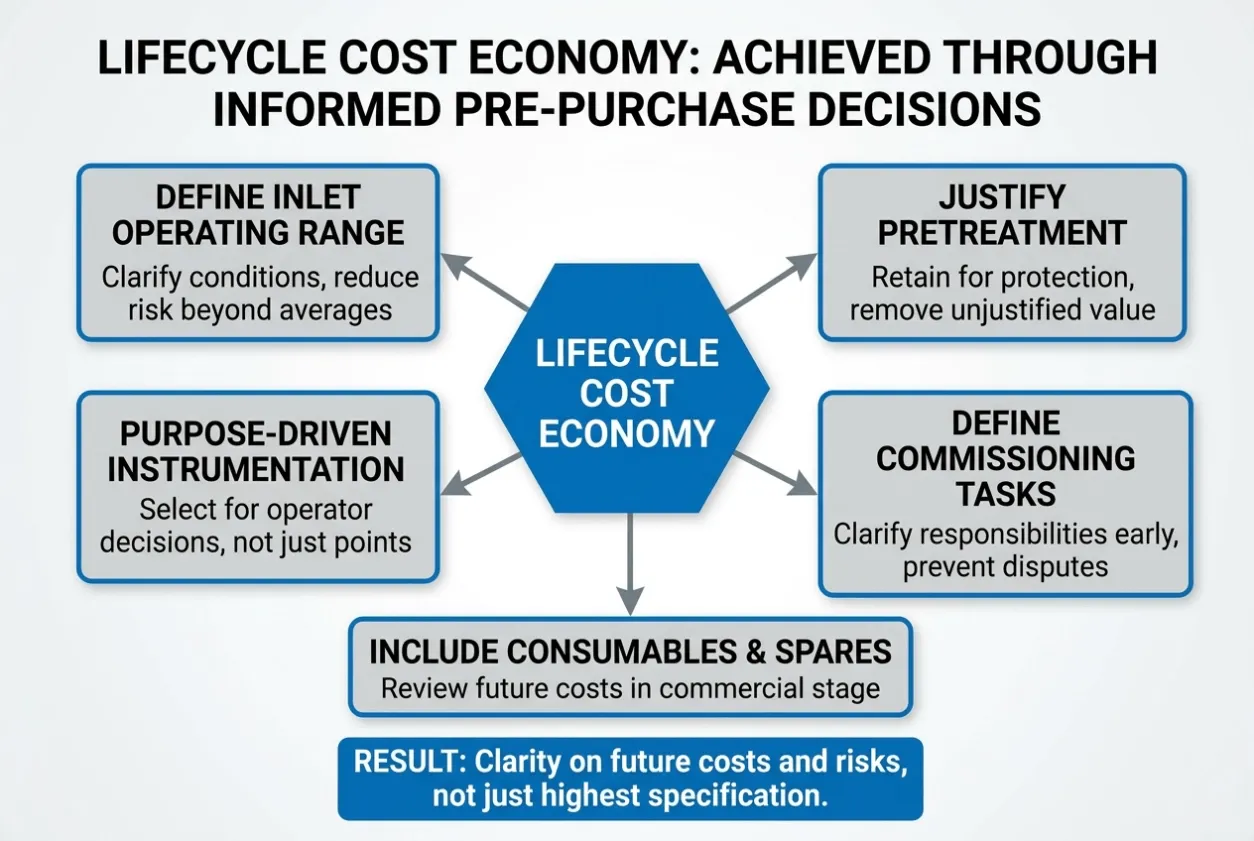
It was reduced through a series of decisions made before purchase.
The buyer defined the inlet operating range more clearly, which reduced the risk of selecting around average conditions alone.
Pretreatment was retained where it protected downstream equipment and removed where the value could not be justified.
Instrumentation was selected according to the decisions operators would need to make rather than according to the number of available measuring points.
Automation was matched to the process and the operating team rather than specified as a general upgrade.
Commissioning tasks were defined before the order, which prevented startup responsibility from becoming an argument after installation.
Consumables, spare parts and maintenance assumptions were included in the commercial review, allowing future costs to be considered before the supplier was selected.
The system did not become more economical because the buyer chose the highest specification.
It became more economical because the buyer could see where each cost and risk would appear over time.
How Buyers Can Evaluate Water Treatment Lifecycle Cost
A practical lifecycle review should begin with the way the system will actually operate.
1. Standardize the design basis
All suppliers should use the same inlet-water data, flow range, operating schedule, site conditions and required outlet quality.
Where assumptions differ, they should be identified clearly.
2. Define the comparison period
Choose a realistic period such as five, eight or ten years, depending on the project life and the reliability of the available cost data.
3. Separate capital cost from operating cost
Capital cost includes equipment, installation and commissioning. Operating cost includes electricity, chemicals, consumables, labour, maintenance and waste disposal.
4. Review replacement intervals
Compare expected replacement frequency for filters, membranes, media, sensors, dosing components and other service items.
5. Estimate operator involvement
Include routine inspection, sampling, manual adjustment, cleaning, reporting and troubleshooting.
6. Evaluate downtime separately
Do not hide production loss or compliance risk inside a general maintenance allowance. One significant interruption may outweigh the original equipment saving.
7. Compare commissioning responsibility
Define who will verify instruments, test control logic, establish setpoints, train operators and demonstrate process performance.
8. Test more than one operating scenario
Review optimistic, expected and difficult conditions rather than relying on one forecast.
9. Identify the assumptions that control the result
The model should show which factors have the greatest effect on lifecycle cost and where further data is needed before a decision can be made.
Questions Buyers Should Ask Before Choosing the Lowest Price
Before approving the lowest-priced water treatment proposal, buyers should ask:
- Are all suppliers using the same inlet-water analysis?
- Has the expected variation been defined, or only the average condition?
- Which treatment risks are controlled by the pretreatment?
- What energy and chemical consumption has been assumed?
- Which filters, membranes or media will require replacement?
- How often are those replacements expected?
- What process data will operators be able to monitor?
- Which adjustments will remain manual?
- What happens when a pump or instrument fails?
- Which startup and critical spare parts are required?
- Who is responsible for installation verification?
- Who is responsible for commissioning and process stabilization?
- How will performance be tested?
- Which items are excluded?
- Which costs remain with the buyer after delivery?
- What would one day of unplanned downtime cost the plant?
The lowest price may still be the correct choice.
It becomes a defensible decision only when the buyer understands the operating responsibilities and risks included with it.
Engineering Takeaway
The lowest-priced water treatment system is not necessarily poor value, and the highest-priced proposal is not automatically the best investment.
The real comparison is between complete lifecycle responsibilities.
Purchase price shows what the system costs to acquire. Lifecycle analysis shows what the system may cost to operate, maintain and depend on.
In this case, the buyer did not reduce lifecycle cost by purchasing more equipment.
The buyer reduced it by making assumptions visible, aligning the quotation scopes and assigning responsibility before the system reached the site.
Planning a Water Treatment Project?
A price comparison alone cannot show whether a proposed system has enough pretreatment, instrumentation, control logic or commissioning support for reliable operation.
Uniregal can review the control and automation scope behind your water treatment proposal, including PLC and HMI functions, instrumentation, interlocks, alarm strategy, operating responsibility and commissioning boundaries.
Send us your process flow diagram, equipment list or competing technical proposals. We will help identify unclear assumptions, missing control functions and lifecycle risks before they become additional site costs or startup delays.
Request a Water Treatment Proposal Review
The purpose is not to replace your process designer. It is to help your engineering and purchasing teams verify whether the proposed control, instrumentation and automation scope can support the way the treatment system will actually be operated.
Related Articles:Related guides
Comparing water-treatment quotes? We itemise enclosure, spares and commissioning so the total cost is clear before you commit. Talk to our team about your project.