
Aug 27, 2026Case Studies
How to Prevent Condensation Inside an Outdoor Electrical Cabinet
A project story on outdoor cabinet condensation, showing how dew point, humidity, temperature swings, IP rating limits, heaters, vents, drainage, and supplier review affect reliability.
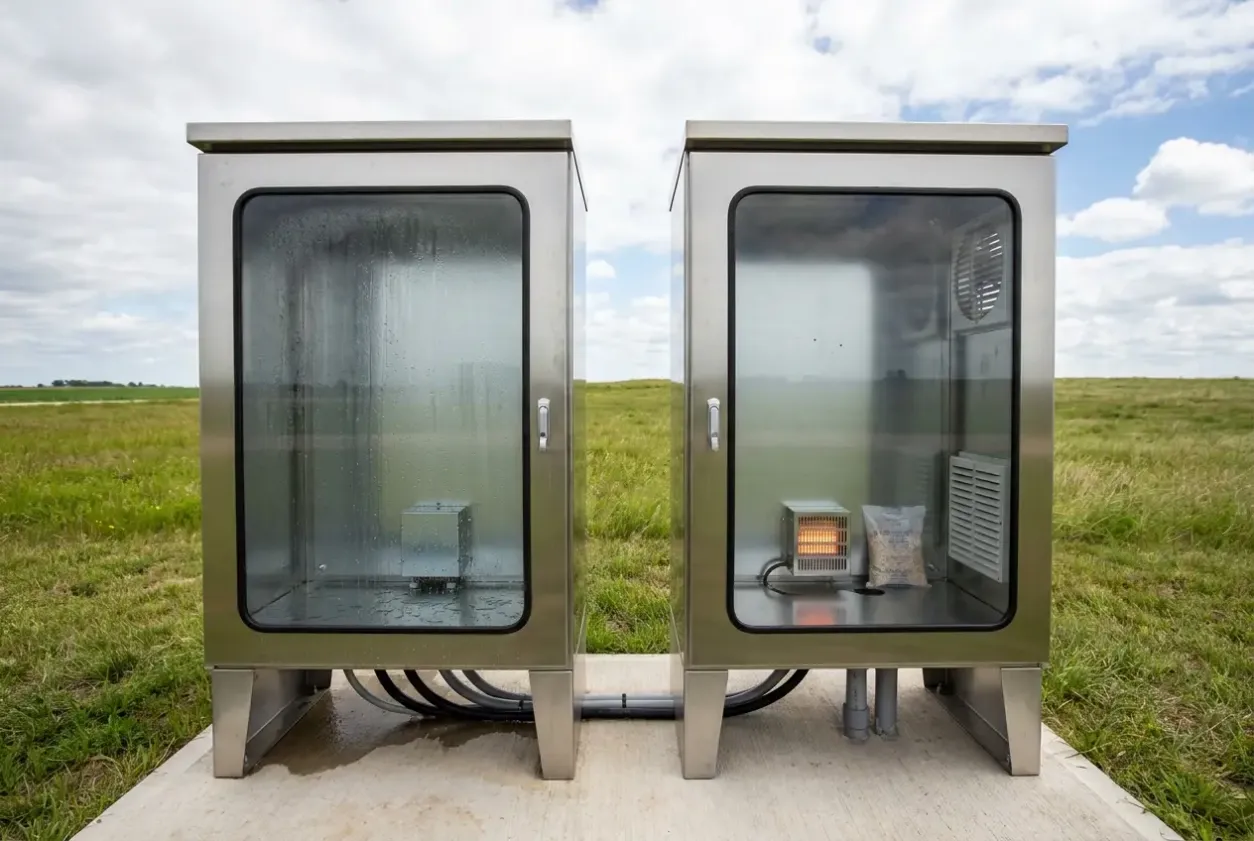
How to Prevent Condensation Inside an Outdoor Electrical Cabinet: A Project Story for Buyers
The Morning Everything Looked Wrong
On one water treatment project, the outdoor electrical cabinet looked correct on paper. It had the required IP rating, the door gasket was in good condition, the cable glands were specified for outdoor use, and the cabinet had passed visual inspection before shipment.
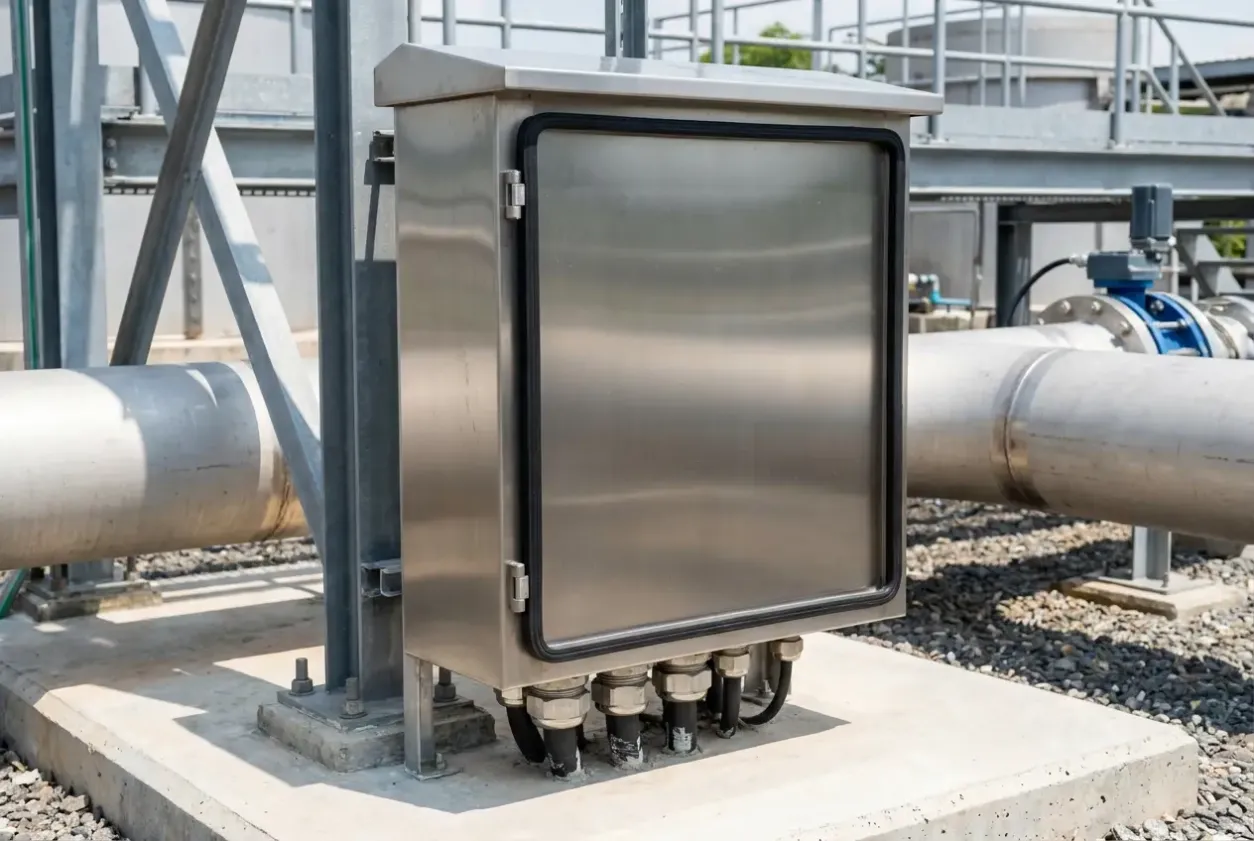
The first few days after startup were normal. Then, one morning, the maintenance team found moisture inside the cabinet, and a sensor signal started drifting. A relay fault appeared later the same day. The first assumption was simple: water must be entering from outside.
The team checked the door seal first. Nothing unusual was found. They checked the cable glands and bottom entry points. They were dry. They inspected the cabinet roof and side panels. There was no visible leak path. One relay was replaced because it looked suspicious, but two mornings later the same alarm came back.
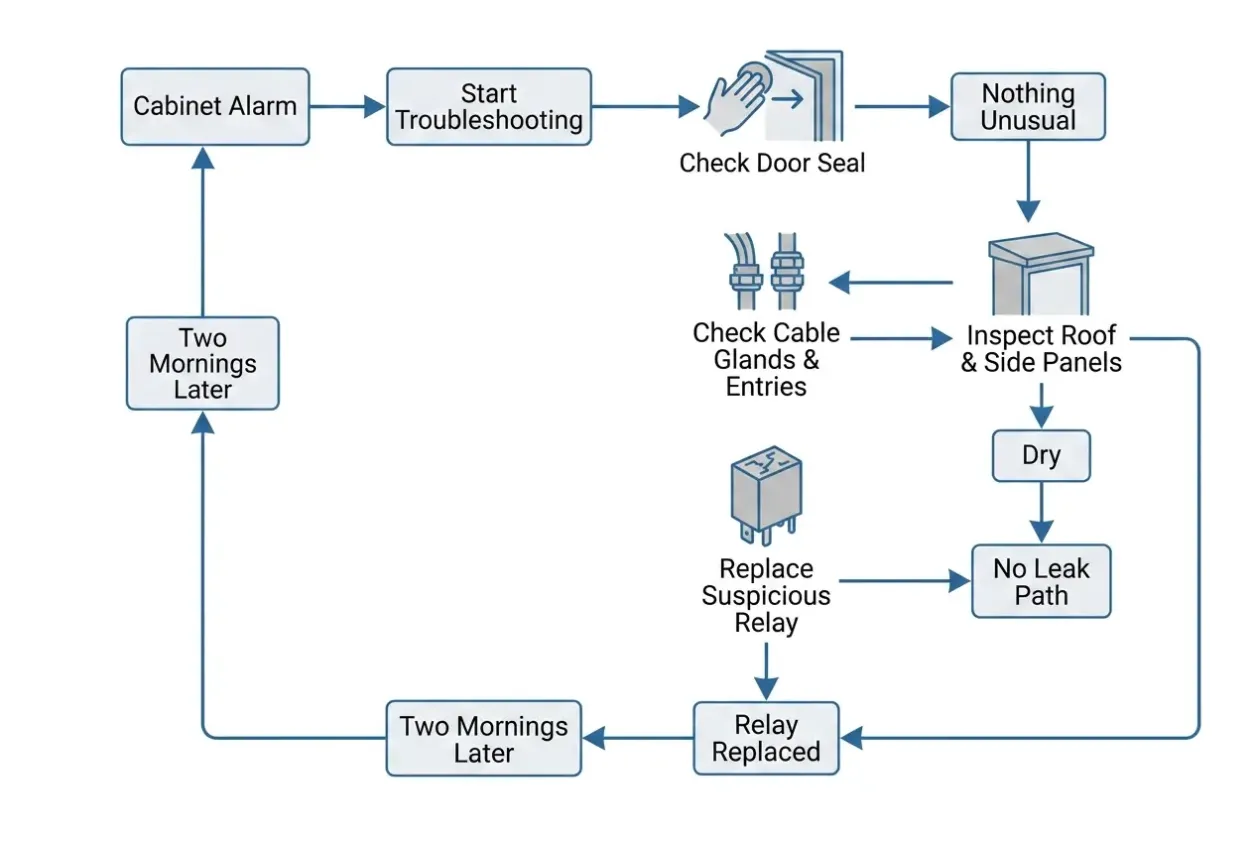
Only after reviewing the cabinet temperature pattern did the real problem become clear.
The cabinet was not leaking. It was breathing.
The Investigation
During the day, direct sunlight heated the metal enclosure. At night, the cabinet cooled quickly. Humid air trapped inside the cabinet reached the dew point, and water droplets formed on the inner wall and near the terminals.
That explained why the cabinet looked dry during the afternoon but showed moisture in the morning. It also explained why the problem was intermittent. Rain was not the main cause. Temperature swing and humidity were.
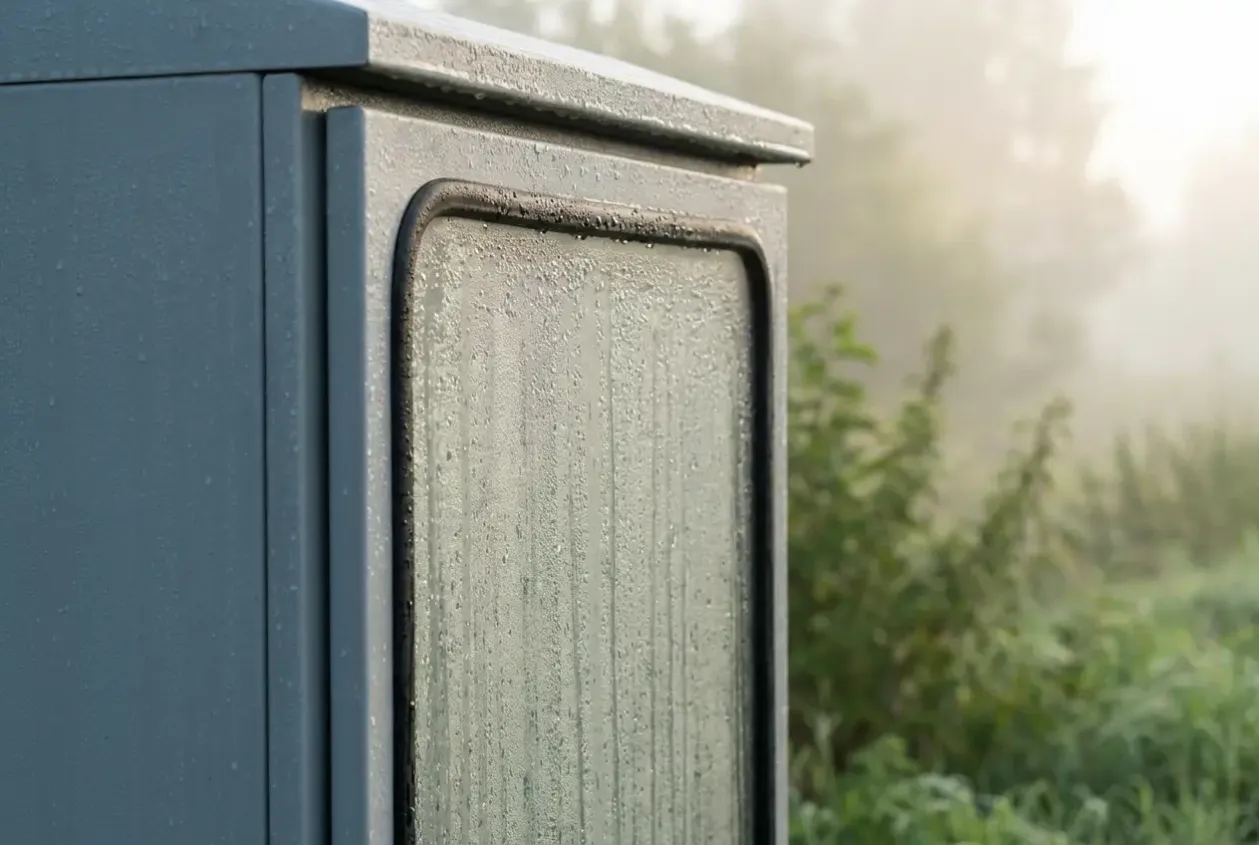
Many outdoor cabinet failures are caused by moisture that never came from outside.
The Real Cause
The real issue was not a bad enclosure shell. It was an incomplete outdoor electrical enclosure design. The buyer had approved the IP rating, but nobody had asked how the cabinet would handle dew point conditions.
That is a common procurement mistake. Most buyers approve IP65 or IP66 and feel protected. Few buyers ask whether the cabinet needs a heater, hygrostat, breathable vent, drain plug, insulation, sun shield, or different cable-entry layout.
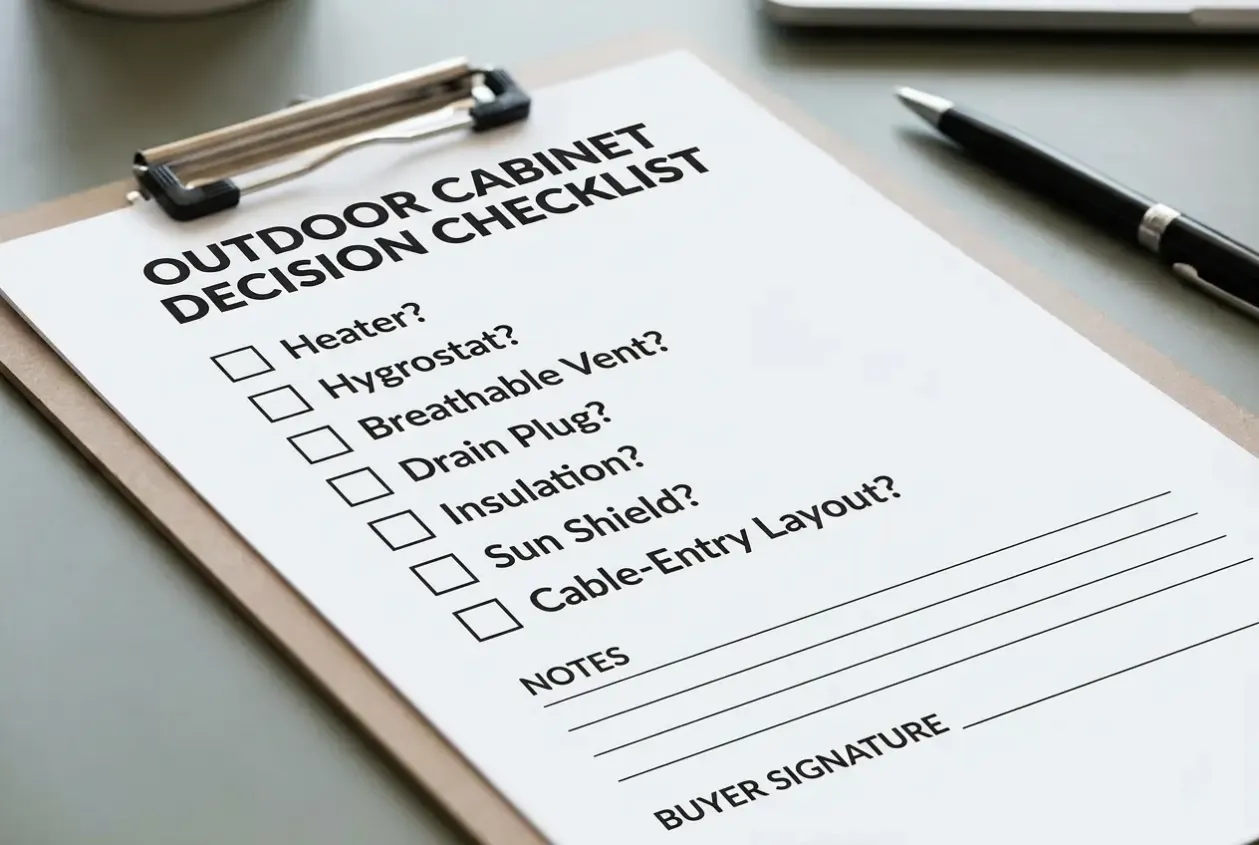
The highest IP rating cannot prevent water that forms inside the cabinet.
Why IP66 Did Not Solve the Problem
IP66 helps protect against external dust and strong water jets. It does not remove humidity already inside the cabinet, and it does not stop condensation caused by temperature change.
In fact, a tightly sealed outdoor cabinet can sometimes trap humid air more effectively. If there is no humidity-control strategy, the cabinet may be well protected from rain and still wet inside in the morning.
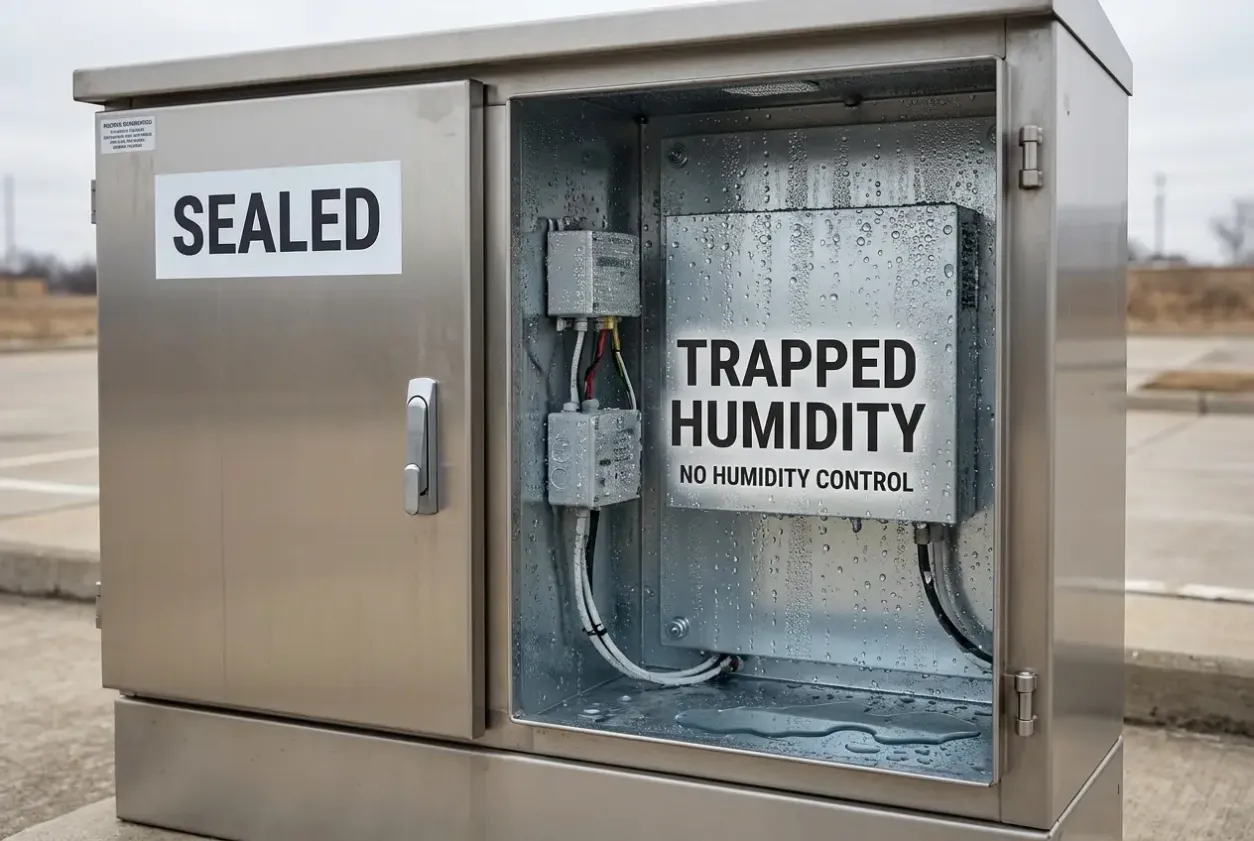
This is why an outdoor electrical cabinet supplier should not only ask for an IP rating. They should ask about installation location, sun exposure, ambient temperature, humidity, cable entry direction, internal heat load, and maintenance conditions.
Condensation Review Framework
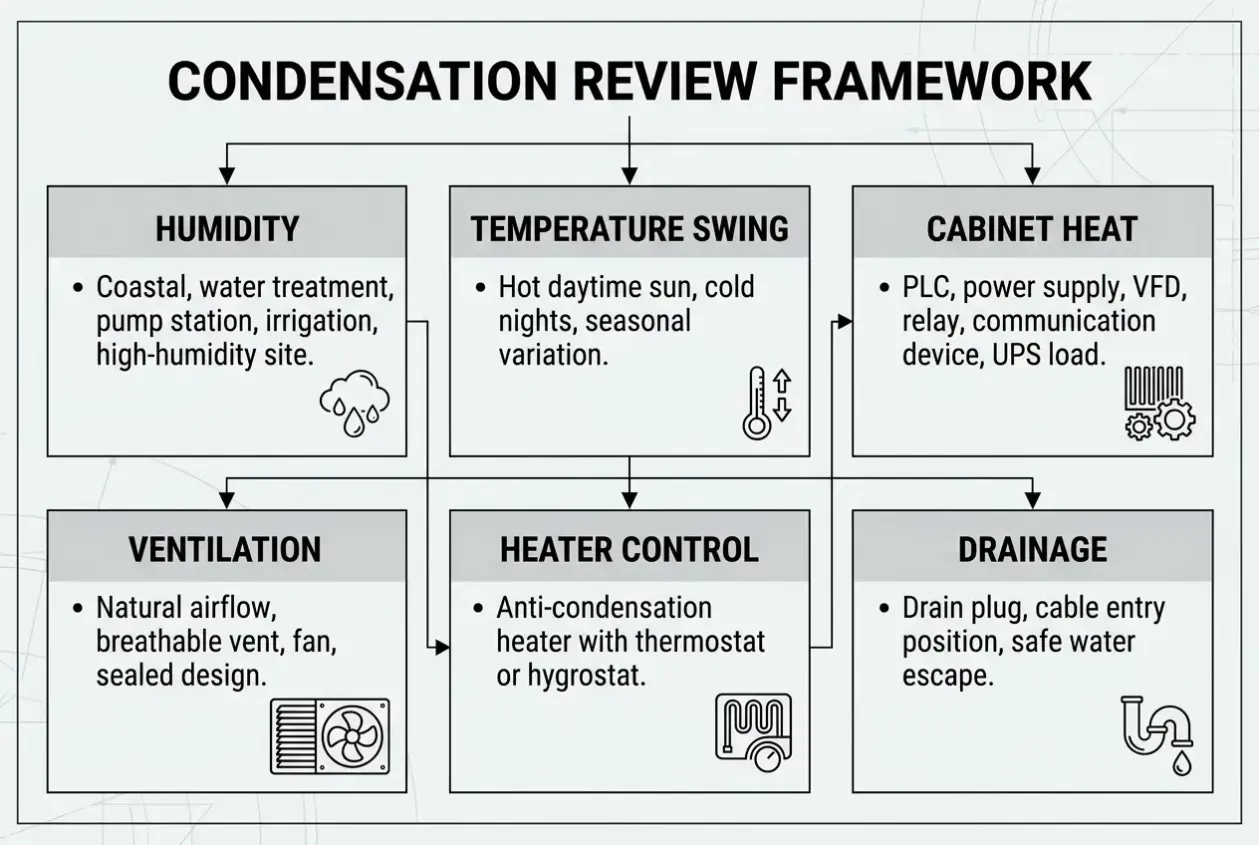
For condensation prevention design, I normally review six items before recommending accessories.
Review Item | What I Check |
|---|---|
Humidity | Coastal, water treatment, pump station, irrigation, or high-humidity site |
Temperature Swing | Hot daytime sun, cold nights, seasonal variation |
Cabinet Heat | PLC, power supply, VFD, relay, communication device, or UPS load |
Ventilation | Natural airflow, breathable vent, fan, or sealed design |
Heater Control | Anti-condensation heater with thermostat or hygrostat |
Drainage | Drain plug, cable entry position, and whether water can escape safely |
This framework is more useful than choosing a heater blindly. The goal is not to make the cabinet hot. The goal is to keep the internal temperature slightly above the dew point when condensation risk is highest.
What We Changed
In this project, the cabinet did not need to be replaced. The solution was to correct the moisture-control design.
A small anti-condensation heater was added and controlled by a hygrostat. Cable-entry sealing was checked again, not because it was the main fault, but because any weak entry point would make humidity worse. A pressure compensation vent was reviewed to reduce breathing caused by temperature swings, and the buyer also added a simple sun shield to reduce daytime heating.
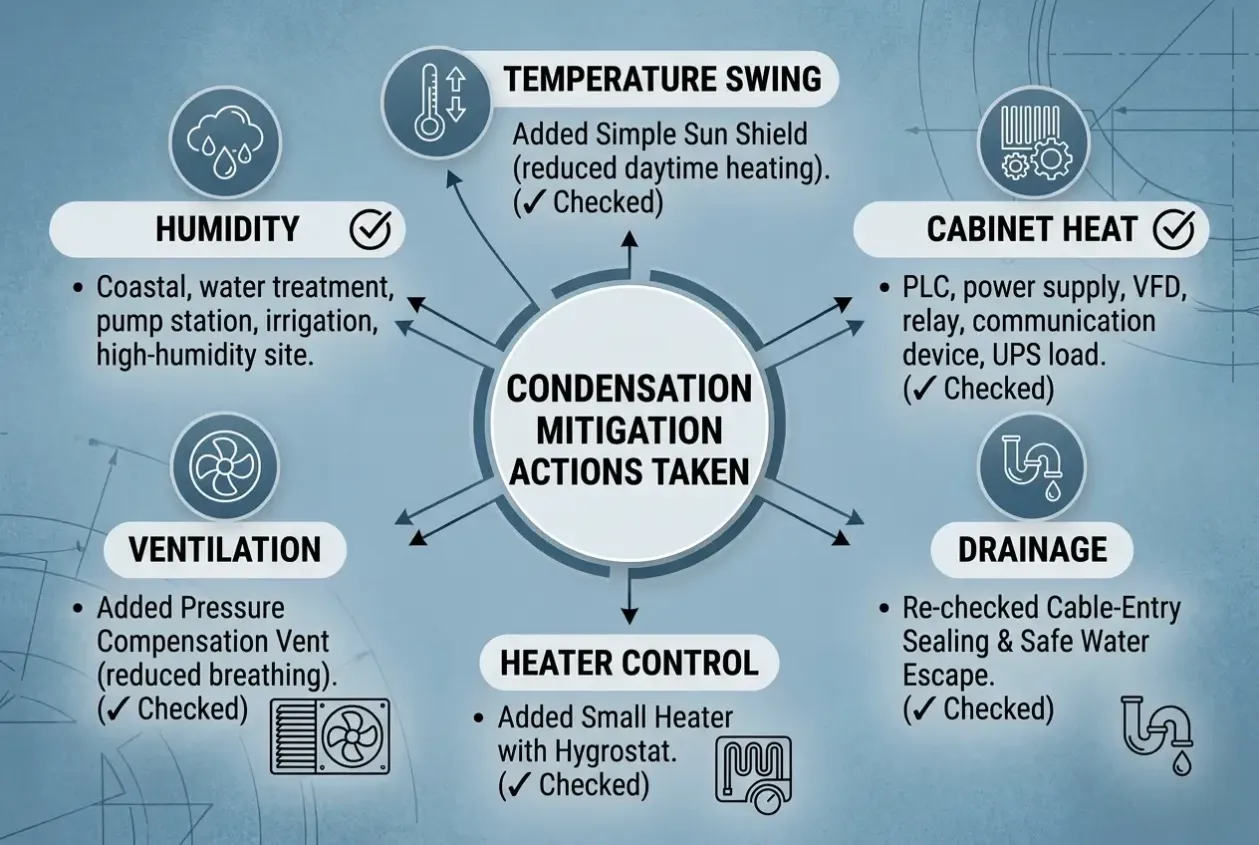
After these changes, the morning moisture disappeared and the unstable signal problem stopped.
The cabinet never leaked. The weather never changed. The design did.
When I Recommend a Cabinet Heater
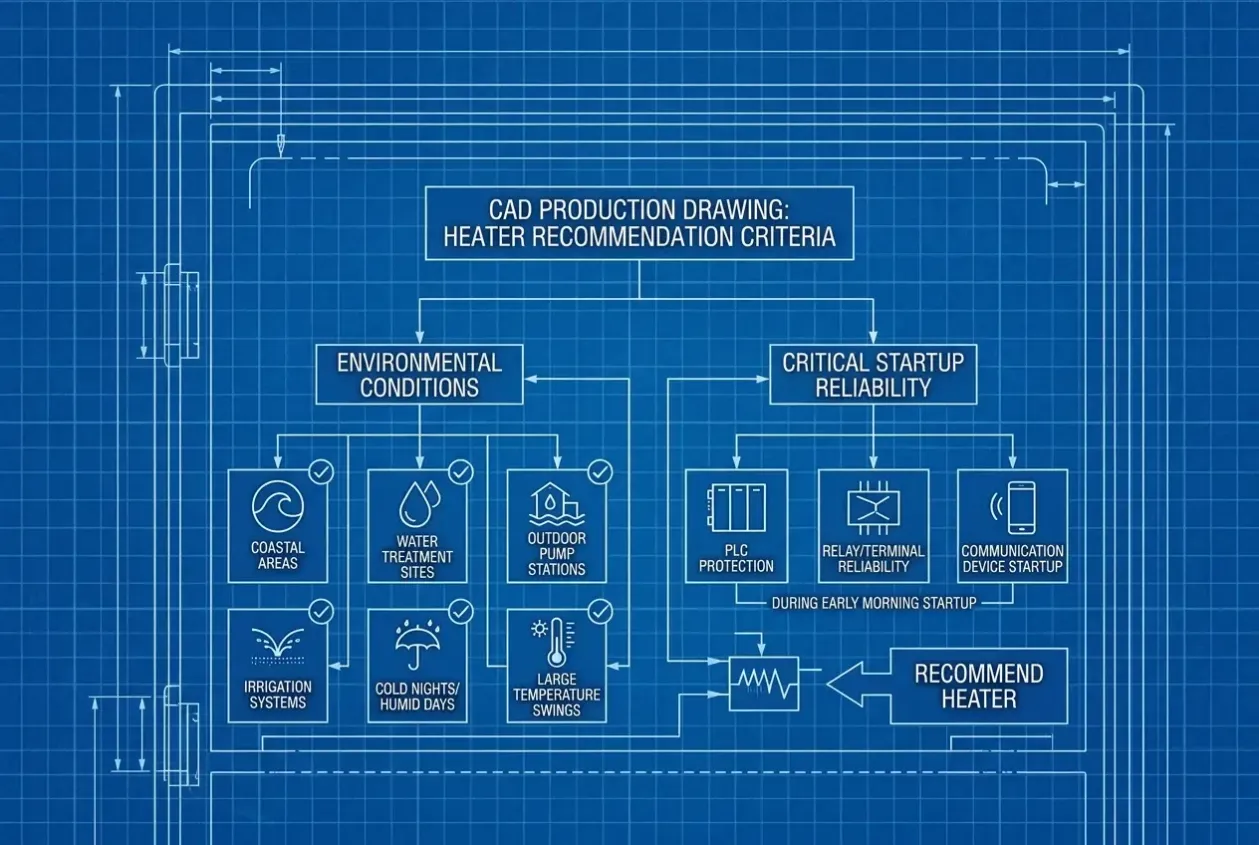
I normally recommend a heater when the cabinet is installed in coastal areas, water treatment sites, outdoor pump stations, irrigation systems, cold nights with humid days, or locations with large temperature swings. A heater is also useful when PLCs, relays, terminals, or communication devices must remain reliable during early morning startup.
I usually do not recommend a heater automatically for indoor cabinets, air-conditioned electrical rooms, dry climates, or panels with enough internal heat and low humidity risk. In those cases, ventilation, spacing, or basic sealing review may be enough.
UniRegal Engineering Note
For UniRegal, condensation prevention is part of outdoor electrical cabinet design, not an accessory decision after the cabinet is built. When we review a custom outdoor cabinet, we look at IP rating, stainless steel grade, cable glands, cabinet size, heat load, sun exposure, heater selection, venting, drainage, and site maintenance access together.
A reliable outdoor cabinet is not only sealed against rain. It must also manage the moisture it creates inside.
FAQ
Does IP66 prevent condensation?
No. IP66 protects against external water ingress, but condensation is caused by humidity and temperature change inside the cabinet.
Should every outdoor cabinet use a heater?
Not every cabinet needs one. Heaters are most useful in humid, coastal, cold-night, water treatment, or outdoor utility environments.
Can ventilation solve condensation?
Sometimes, but ventilation can also bring humid air into the cabinet. The design must match the site conditions.
Final Recommendation
Condensation prevention should be reviewed before the outdoor electrical cabinet is built. Before requesting a quotation, send the supplier your installation location, IP rating requirement, ambient temperature, humidity conditions, sun exposure, cabinet size, cable-entry direction, internal heat load, and maintenance expectations.
A serious outdoor electrical cabinet supplier should quote a condensation prevention design, not only a sealed metal box.
Related Guides & Solution Centers
Standards & compliance
Specify enclosures to recognized standards: NEMA 250 (enclosure types) and UL 508A for industrial control panels.