
Aug 23, 2026Buying Guides
Outdoor Electrical Cabinet Air Conditioner: Procurement Checklist for Buyers
A buyer-focused guide on outdoor cabinet air conditioners, showing how heat load, sun exposure, ambient temperature, sealing, VFD trips, and supplier review determine whether active cooling is require
Outdoor Electrical Cabinet Air Conditioner: Procurement Checklist for Buyers
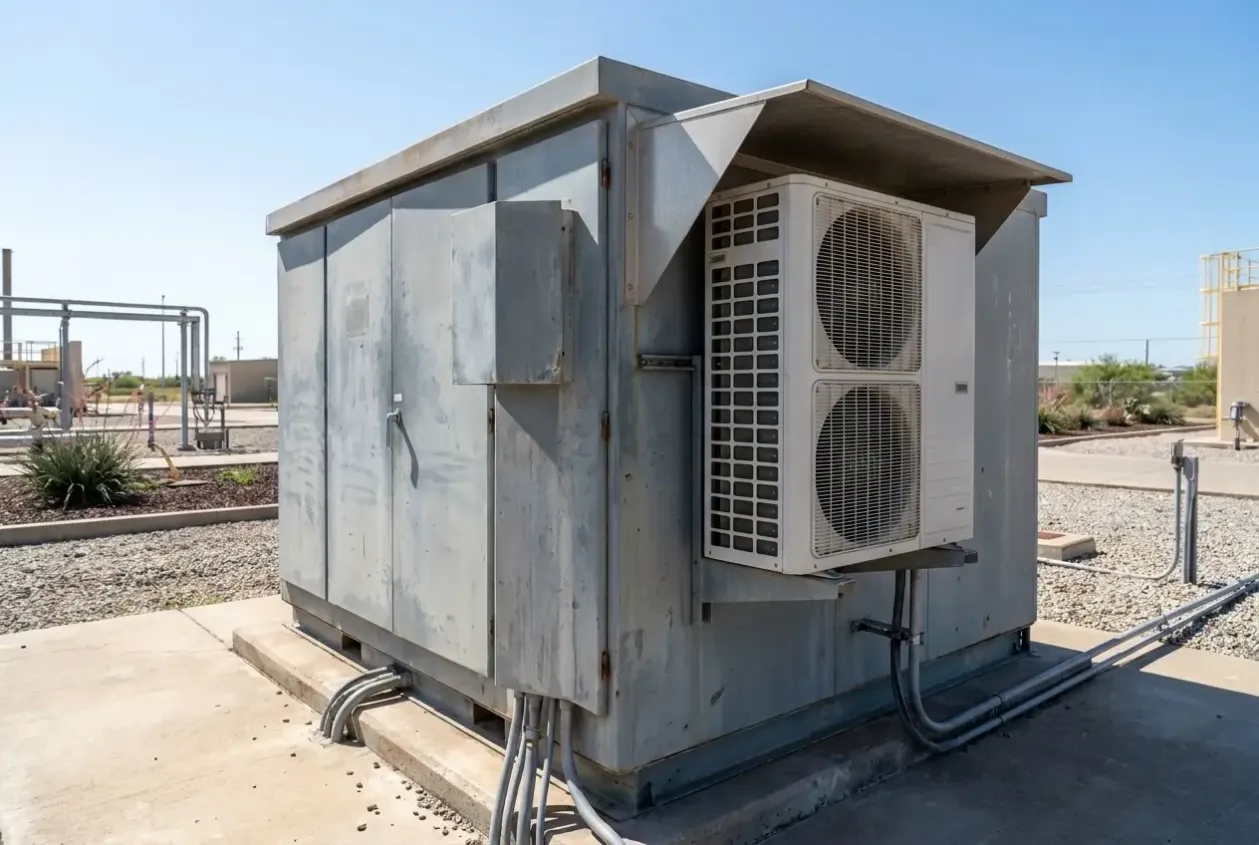
A buyer once asked whether a cabinet air conditioner was really necessary. The outdoor cabinet looked large, the IP66 enclosure was new, and the site temperature rarely exceeded 36°C. During the hottest week in July, however, the VFD began tripping almost every afternoon between 2:00 and 4:00 PM.
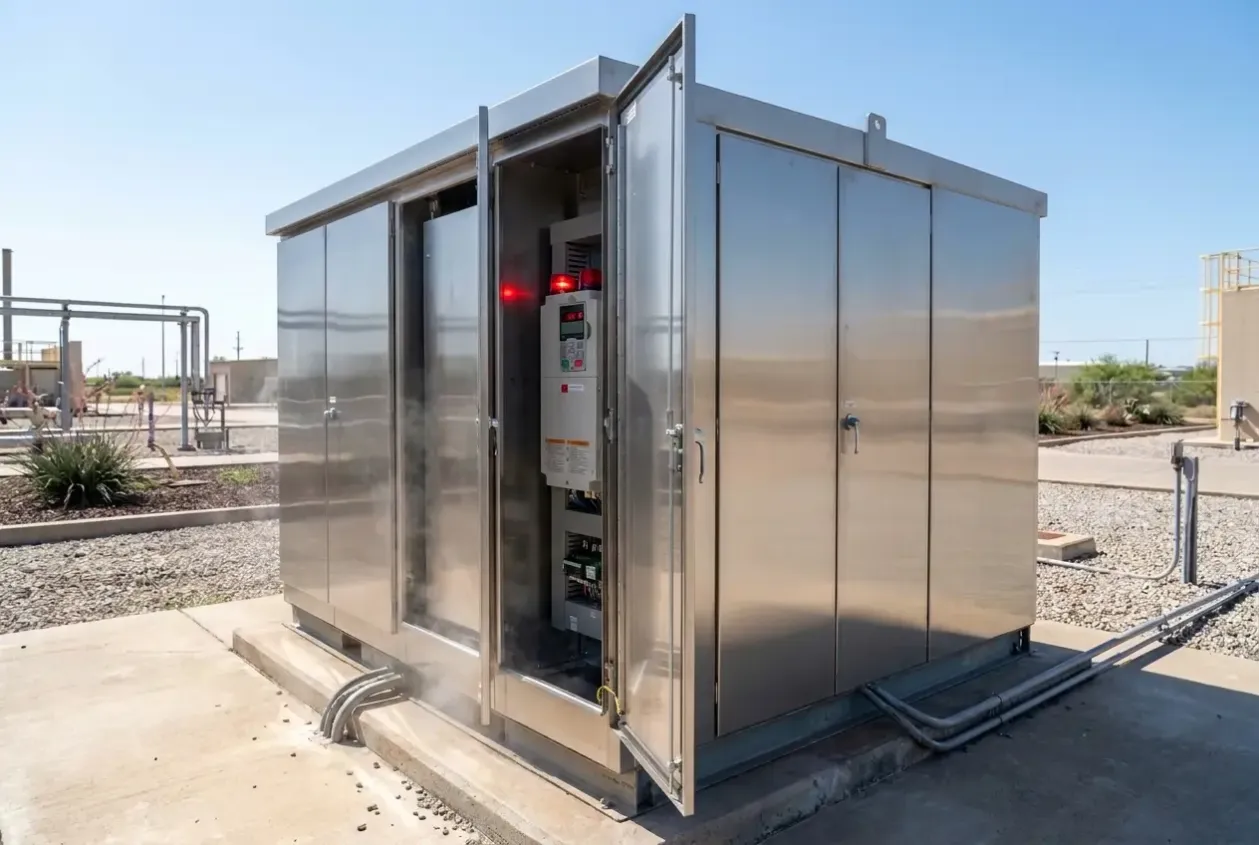
At first, the buyer suspected the VFD. Then they checked the wiring, ventilation space, and parameter settings. Nothing obvious was wrong. When the enclosure temperature was measured, the cabinet had reached 57°C while the ambient temperature was only 36°C. The problem was no longer an opinion about cooling. It was a thermal limit problem.
The cabinet had internal heat from the VFD and power supplies, direct afternoon sun exposure, and no effective way to remove heat while keeping the enclosure sealed.
The purpose of a cabinet air conditioner is not to make the enclosure cold. It is to keep the hottest component within its operating limit on the hottest day of the year.
Before I Recommend an Air Conditioner
I rarely recommend an outdoor electrical cabinet air conditioner first. I usually review the thermal problem in this order:
Step | What I Review | Why It Matters |
|---|---|---|
1 | Heat load from VFDs, PLCs, power supplies, UPS, relays, and IPCs | Internal heat is the starting point. |
2 | Highest expected ambient temperature | Average temperature is not enough for thermal design. |
3 | Sun exposure and cabinet location | Afternoon sun can change the result completely. |
4 | Sealing requirement | A sealed cabinet limits fan/filter options. |
5 | Passive cooling options | Spacing, a sun shield, a double-wall cabinet, a fan, or a heat exchanger may be enough. |
6 | Active cooling requirement | Air conditioning is selected when passive methods cannot control temperature. |
The decision is rarely between “air conditioner” and “no air conditioner.” It is usually between passive cooling, heat exchange, or active cooling after the thermal load has been reviewed.
A Common Engineering Misunderstanding
Many buyers calculate thermal risk from the average ambient temperature. That is not how outdoor cabinet failures usually happen. The cabinet fails during the hottest operating period, when internal heat, direct sunlight, poor airflow, and sealed construction all work together.
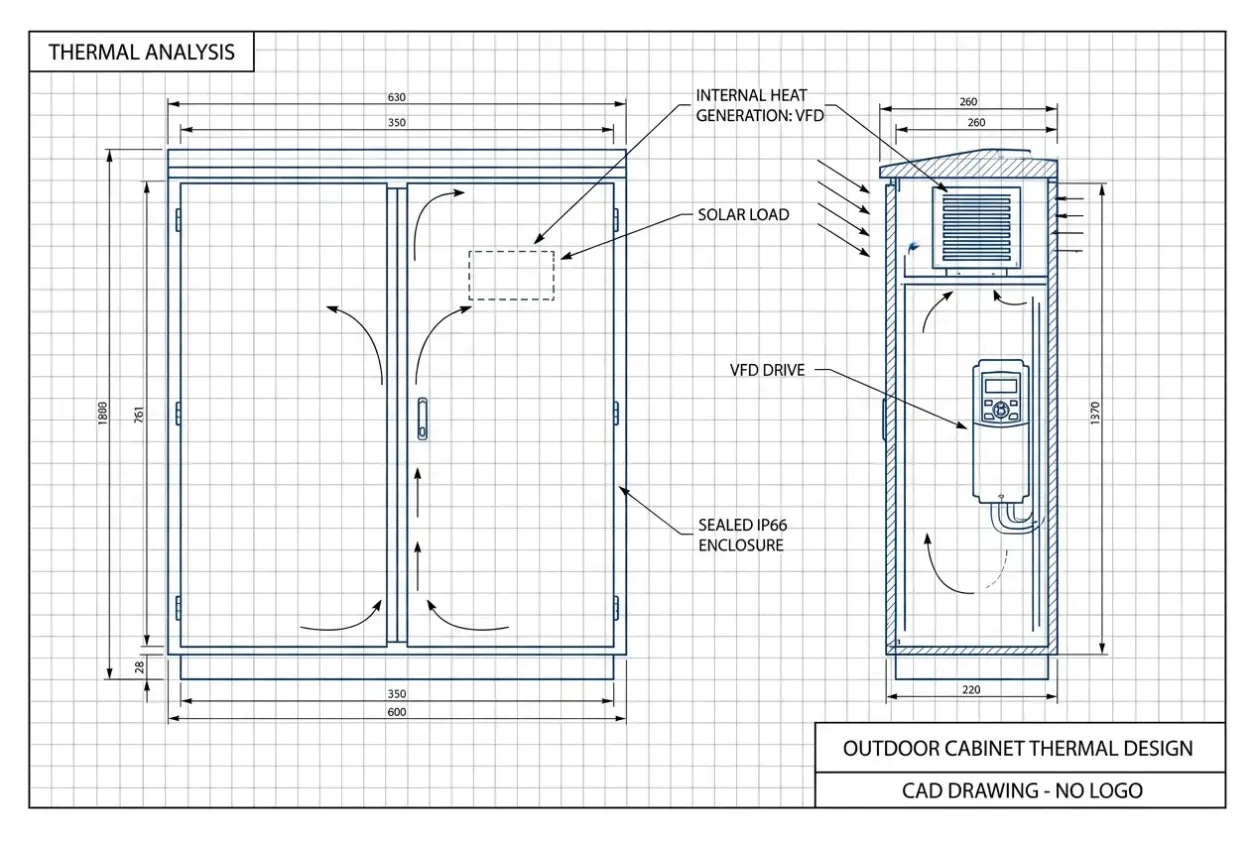
A larger cabinet can delay heat buildup. It does not remove heat.
When an Air Conditioner Is Usually Required
I would seriously consider a cabinet air conditioner when the cabinet contains VFDs, soft starters, industrial PCs, UPS units, dense power supplies, or sensitive communication devices in a hot outdoor location. It becomes more important when the enclosure must remain sealed against dust, humidity, coastal air, chemical vapor, or rain.
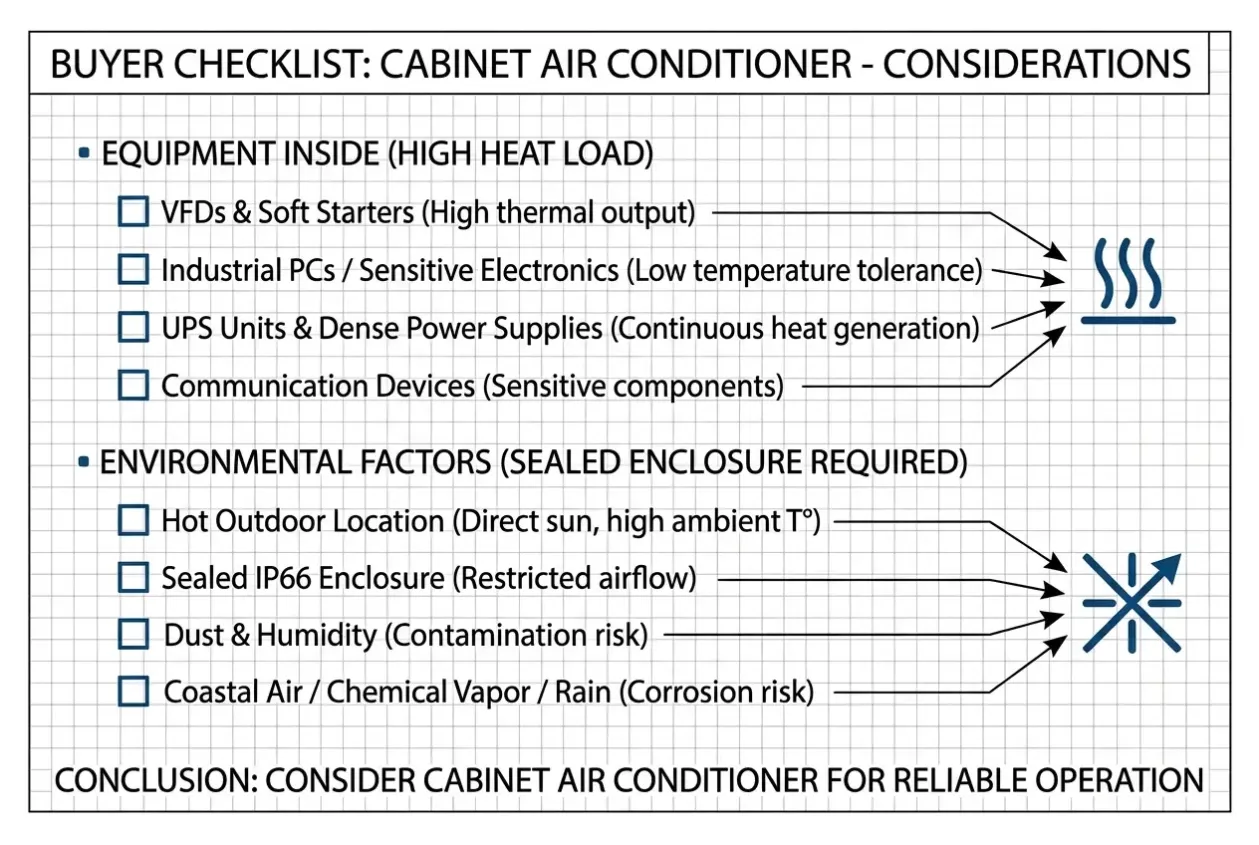
In clean indoor environments, I often start by checking whether a fan is enough. Once the cabinet is sealed for outdoor exposure, dust, humidity, or corrosive air, that conversation changes completely. A fan/filter unit may reduce temperature, but it also pulls outside air into the cabinet. A heat exchanger can help when the cabinet must stay sealed, but it cannot cool below ambient temperature.
Supplier Red Flags
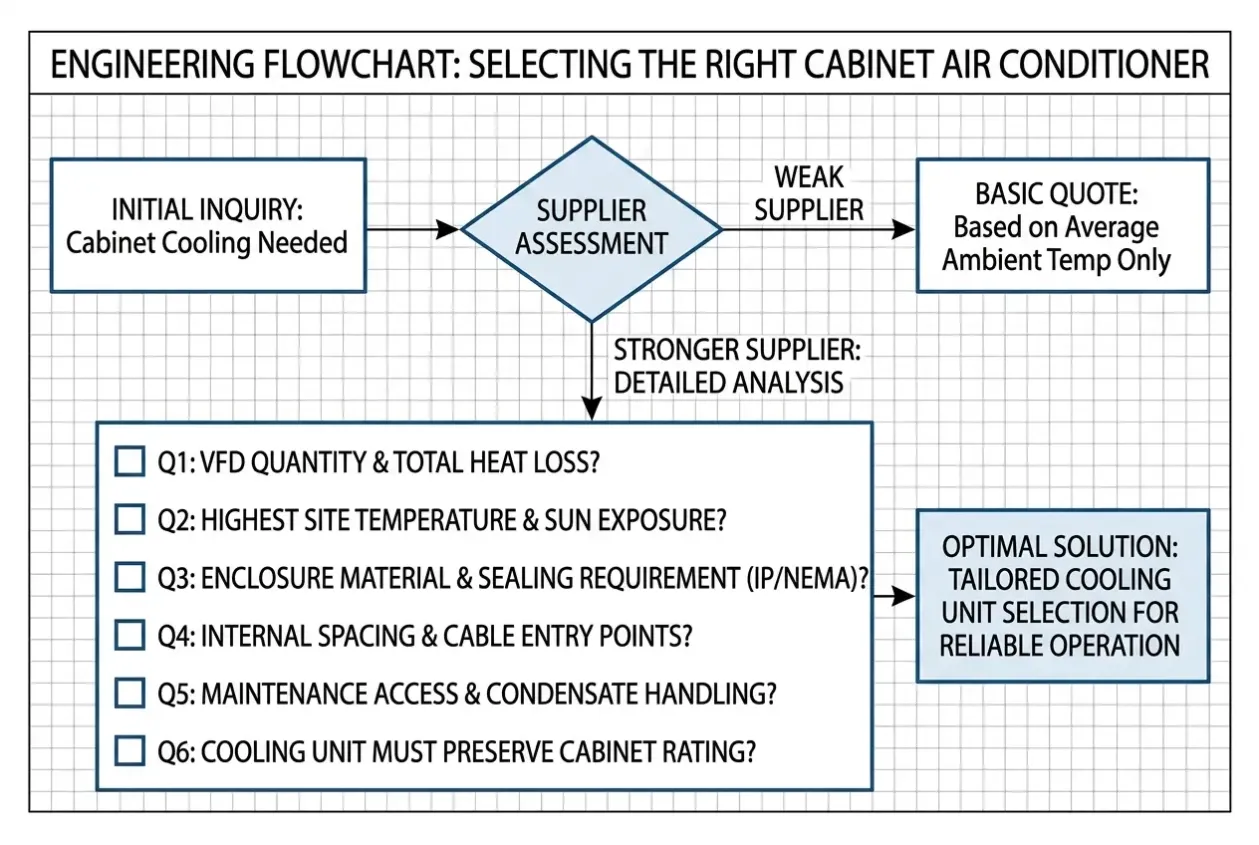
If a supplier can recommend an air conditioner without asking about heat load, I would question the quotation before approving it. Cabinet size, IP rating, and component list are not enough.
A stronger supplier will ask about VFD quantity, total heat loss, highest site temperature, sun exposure, enclosure material, sealing requirement, internal spacing, cable entry, maintenance access, condensate handling, and whether the cooling unit must preserve the cabinet’s IP or NEMA rating.
UniRegal Engineering Note
At UniRegal, we almost never recommend an air conditioner first. We review whether enclosure layout, component spacing, sun shielding, double-wall construction, fan/filter ventilation, or a heat exchanger can solve the problem before introducing active cooling.
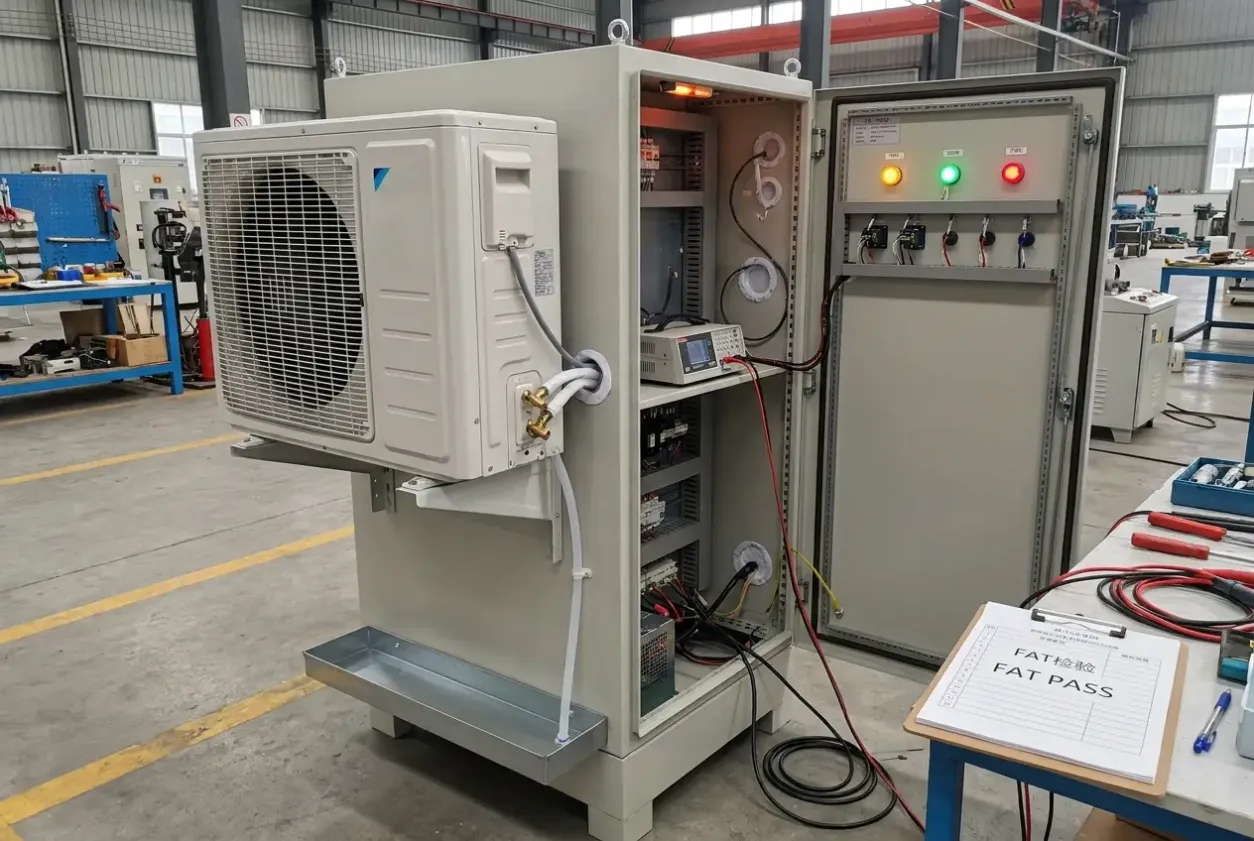
When air conditioning is necessary, we treat it as part of the cabinet system, not as a part bolted onto the door. The final design should consider cutouts, sealing, condensate drainage, maintenance clearance, power supply, alarms, and FAT inspection.
FAQ
Can I use a fan instead of an air conditioner?
Yes, if the outside air is clean and cool enough. A fan cannot cool the cabinet below ambient temperature, and it may introduce dust or humidity.
Does a cabinet air conditioner keep the IP rating?
Only if the unit is rated and installed correctly. The final cabinet rating depends on the enclosure, seals, cutouts, cable glands, and cooling accessory together.
Do outdoor VFD cabinets always need air conditioning?
Not always. They need thermal review. If the VFD heat load is high, the site is hot, and the cabinet must remain sealed, air conditioning may be required.
Final Recommendation
If your RFQ only specifies “IP66 outdoor cabinet,” there is still not enough information to determine whether an air conditioner is required. The supplier also needs to know the component list, estimated heat load, highest ambient temperature, installation photos, sun exposure, cabinet size, IP/NEMA requirement, sealing requirement, and maintenance expectations.
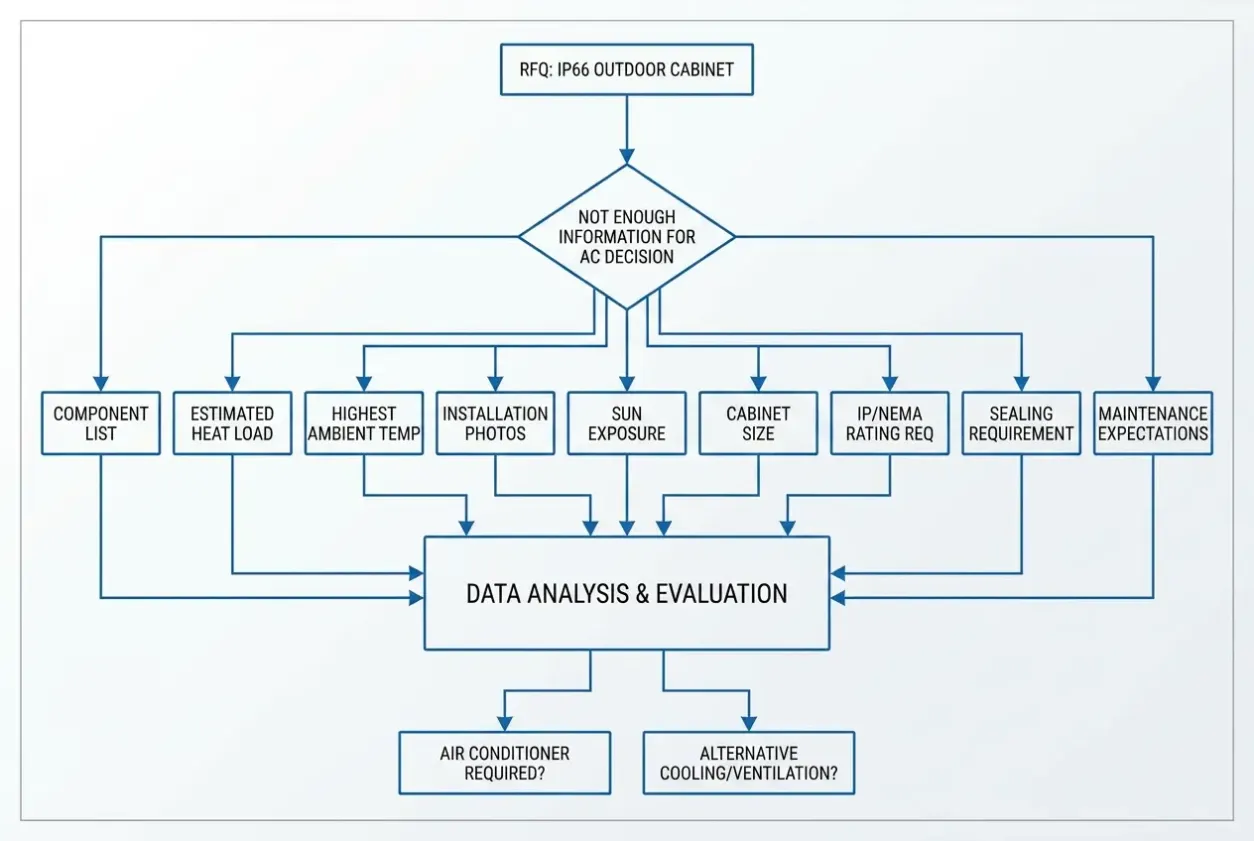
A serious outdoor electrical cabinet supplier should help you decide whether air conditioning is truly required, not simply add a cooling unit to increase the quotation.
Related guides
Standards & compliance
Specify enclosures to recognized standards: NEMA 250 (Enclosure Types) and UL 508A for Industrial Control Panels.