
Oct 15, 2026Case Studies
Industrial Enclosure Brands Compared: 7 Makers We Source and When to Pick Each
Brand on the box isn't the spec. Here are 7 enclosure makers we source, what each is strong at, and how to match the maker to your site — from a sourcing partner, not a ranking.
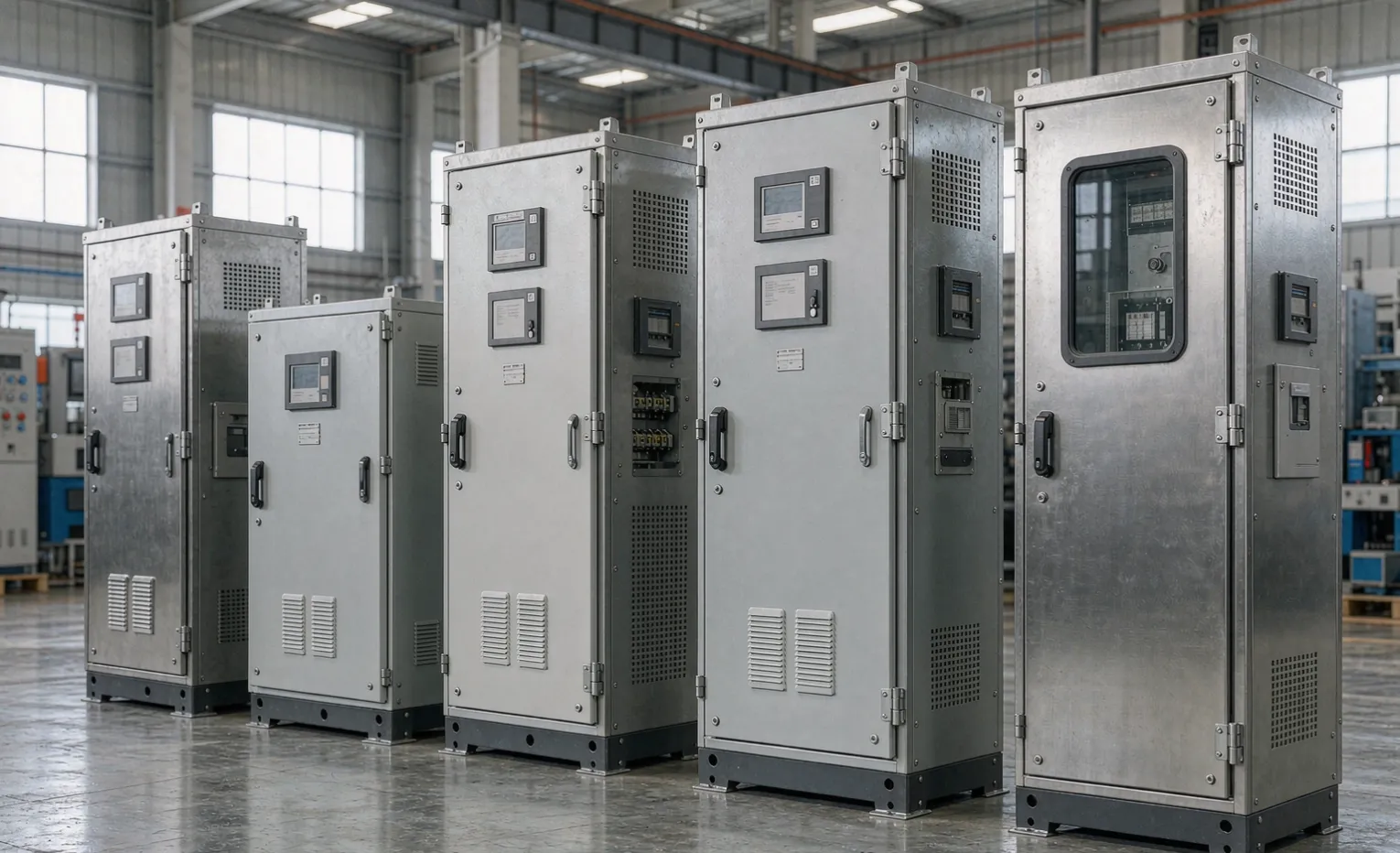
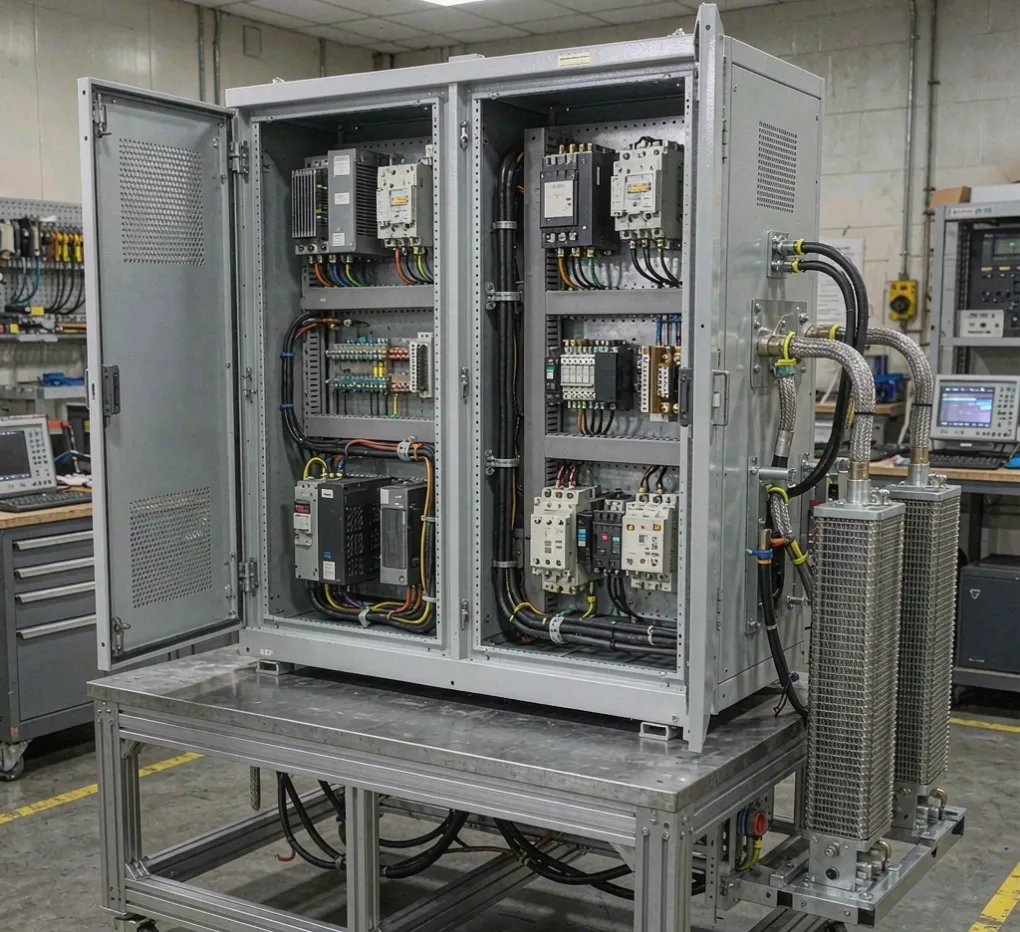
Picking an enclosure by brand name is how buyers overpay or under-spec. The logo doesn't stop corrosion, and it doesn't match your site's rating. What matters is which maker's catalog fits your application, your lead time, and your spare-parts reality. We're a sourcing partner and panel-build shop, not one of these manufacturers—we source enclosures from several of them and build panels around them, so here's the honest match-up we actually use.Spec the drive spacing wrong and the panel becomes unserviceable before it ships. We see it constantly: a neat-looking servo panel passes the bench test in a cool room, then the first 30 °C summer in the plant trips the over-temperature fault every afternoon. The box wasn't designed around the heat the drives actually shed.
We source the enclosure and build the panel around the drive models you name — we're a sourcing partner, not the drive maker, so this guide is about layout, not brand loyalty.
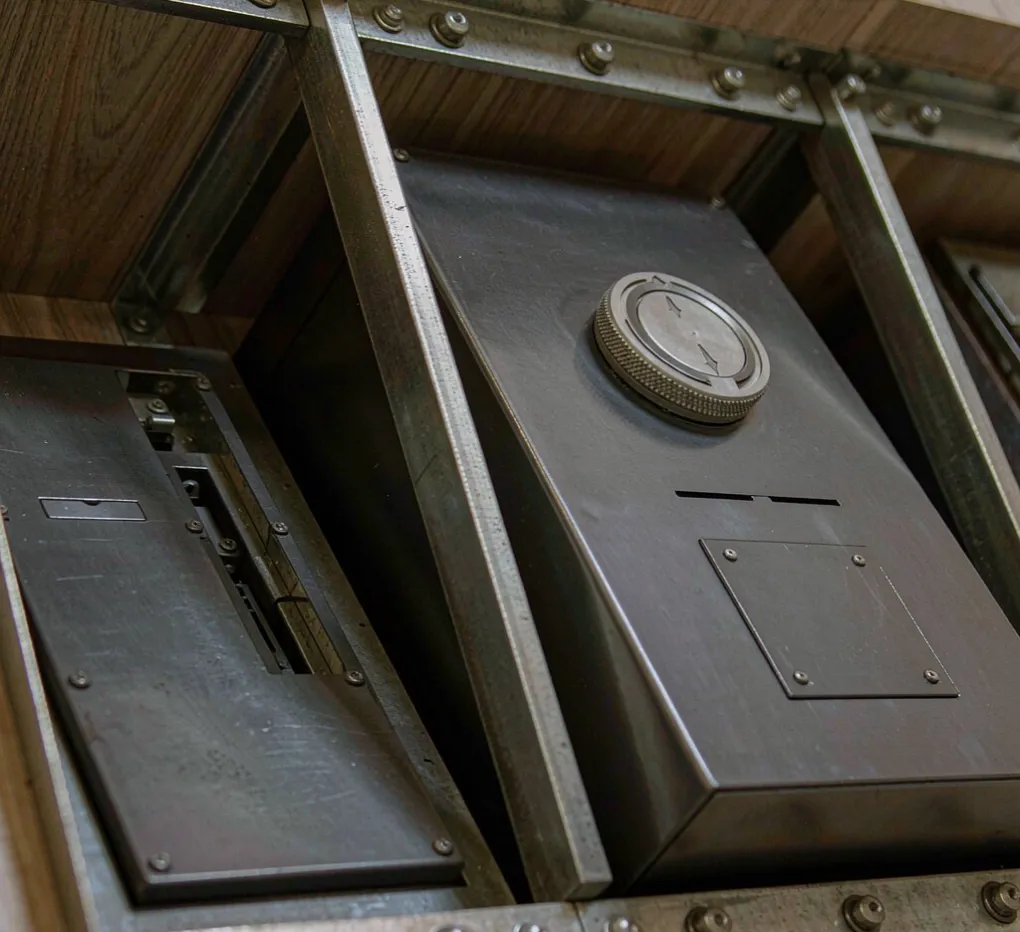
Why servo panels are a different heat problem
A servo drive doesn't just dissipate a steady wattage like a VFD on a pump. During deceleration it pushes energy back onto the DC bus, and if that energy has nowhere to go it becomes heat in the braking device or, worse, over-voltage on the bus. So a servo panel has two heat sources to plan for: the drive's own losses, and the regenerated energy you have to absorb or share.
The mistake most layouts make is treating the panel like a VFD panel — give it some ventilation and move on. Servo axes clustered together with no bus sharing and no braking plan will cook the innermost drive no matter how big the fan is.
The spacing and ventilation numbers that matter
Parameter | Rule we build to | What breaks if you ignore it |
|---|---|---|
Drive side clearance | ≥40 mm free air each side for forced-cooled units | Hot air recirculates; neighboring drive overheats |
Panel internal ΔT budget | Keep internal air ≤15 °C above ambient | Fan runs constant; life drops sharply |
Enclosure volume per kW | ~30 L per kW of drive rating as a first cut | No fan size saves an undersized box |
Braking resistor location | Outside the main enclosure or in a vented compartment | Resistor heat re-enters the drive bay |
If you're sizing from scratch, start with the drive's worst-case losses from its datasheet, not the nameplate. A 2 kW servo drive can shed 150–200 W continuously once you add regen losses — that's a small radiator's worth of heat, not a "little warmth."
Shared DC bus vs independent axes
When you have two or more axes that decelerate at different times, a shared DC bus lets one axis's regen power feed another axis that's accelerating. That cuts the total braking load and the heat. The trade-off is wiring complexity and a common-mode fault path you have to isolate properly.
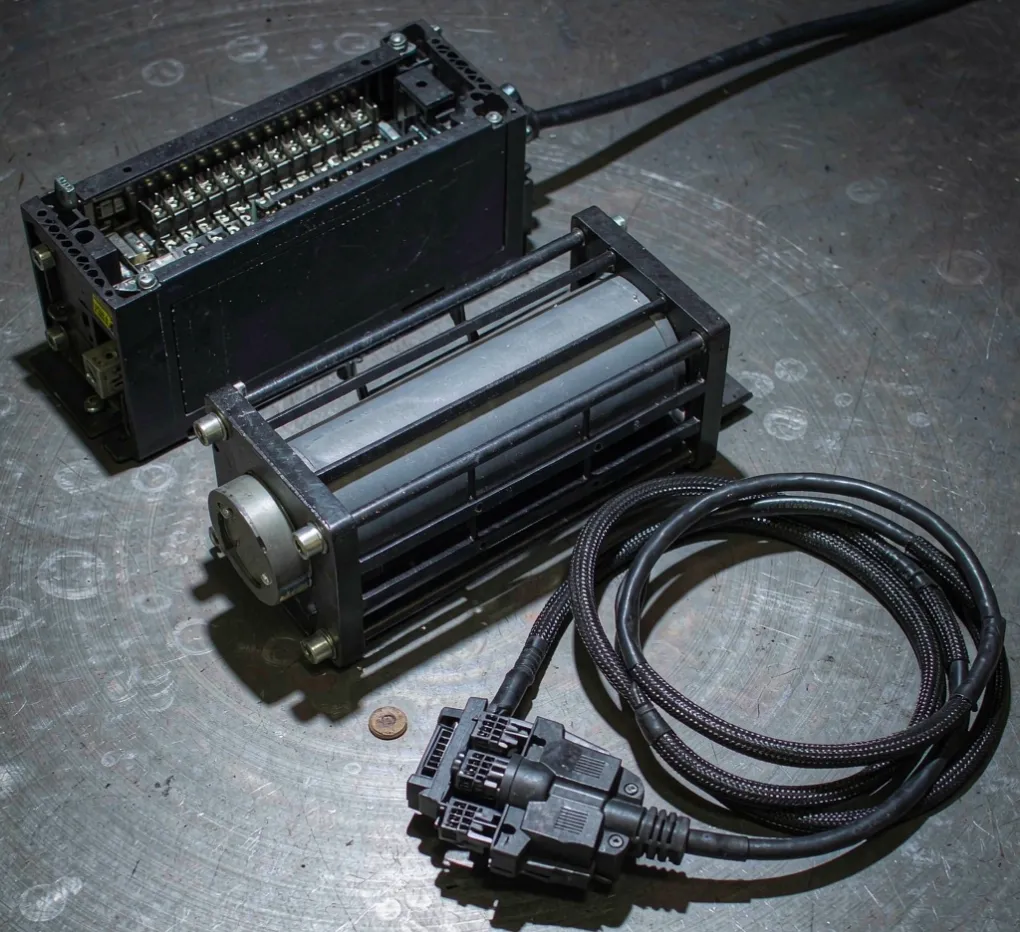
We generally recommend a shared bus for 3+ axes moving complementary loads (a pick-and-place cell is the classic case). For a single axis or two independent machines, independent braking resistors sized to the deceleration energy are simpler and cheaper to service.
Braking: resistor or regen unit
Option | When it's right | Watch-out |
|---|---|---|
Dynamic braking resistor | Short, frequent decel; energy dumped as heat | Must be vented away from drives |
Regen (active) unit | Many axes, high duty, energy recovery pays back | Adds cost; needs its own fusing |
No braking, just oversize bus | Tiny inertial loads only | Fails the moment cycle time tightens |
The sizing question is always how much energy per decel × how many decels per minute. A resolver or encoder fault that forces a hard stop can dump a full kinetic-energy pulse in under a second — size for that event, not the steady state.
Encoder and signal routing
Servo feedback cables carry high-frequency signals next to switched power. Route encoder and comms cables in a separate tray, crossed at 90° if they must cross power, and keep them away from the DC bus bars. A noisy feedback line shows up as position error faults that no one traces back to cable routing until the third site visit.
Grounding the noise out
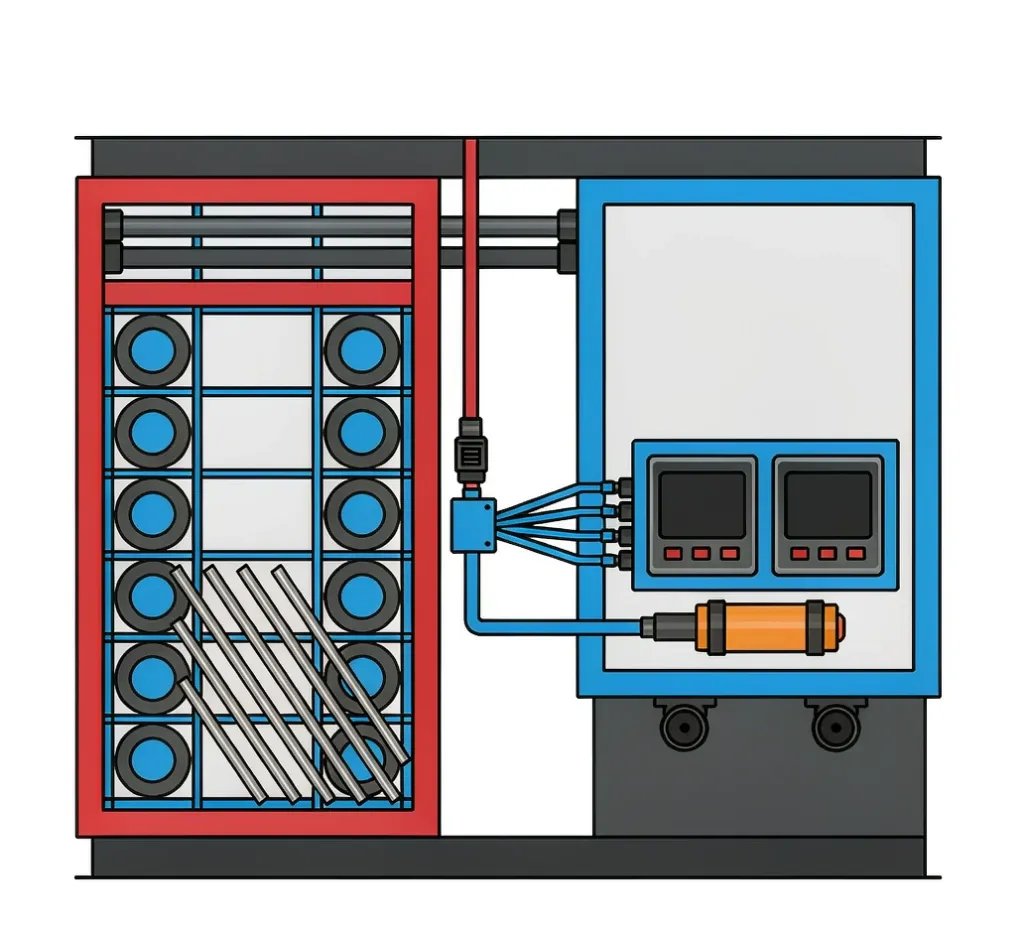
Servo panels are where poor grounding bites hardest. A single-point ground for the drive heatsink and a clean separation between signal and power returns cut most of the "phantom" faults. We always document the ground scheme on the panel drawing so your electrician doesn't "helpfully" tie everything to the door. The panel build itself follows UL 508A and the equipment wiring follows IEC 60204-1 — both are standards we build to, not claims we make.
Engineering takeaway
The panel that survives is the one laid out around worst-case regen heat, not nameplate watts. Before you release the drawing, check three things: drive side clearance, braking energy path, and encoder routing. Change those on the drawing and the box stays serviceable for years instead of tripping every hot afternoon.
FAQ
Do I need a separate enclosure for the braking resistor? Not always, but the resistor must vent its heat outside the drive bay. For high-duty cycles we put it in a separate vented compartment or a remote location.
Can one drive's regen power damage a neighboring drive on a shared bus? Only if the bus is oversized wrongly or a drive is enabled out of sequence. Proper fusing and a documented enable order prevent it.
How do I know if my panel is under-ventilated? If the internal fan runs continuously at ambient 30 °C and the drive still reports over-temp, the box volume or clearance is the problem, not the fan.
Does servo layout change for 400 V vs 200 V drives? Yes — 200 V systems push roughly double the current for the same power, so bus-bar and cable sizing shift even when the enclosure looks identical.
Should encoder cables be shielded and grounded at both ends? Ground the shield at the drive end and terminate it properly at the motor end; grounding at both ends creates a ground loop. The datasheet's shielding note is the rule.
Related guides
Next step
Send us the drive model numbers and axis count and we'll lay out the enclosure, bus sharing, and braking path around them — upload your panel drawing for a layout review.
Quick boundary: we don't crown a "best" brand. We match the maker to the job. A maker that's perfect for a structured European line is the wrong call for a quick US spare-panel order.
Match the maker to the job, not the logo.
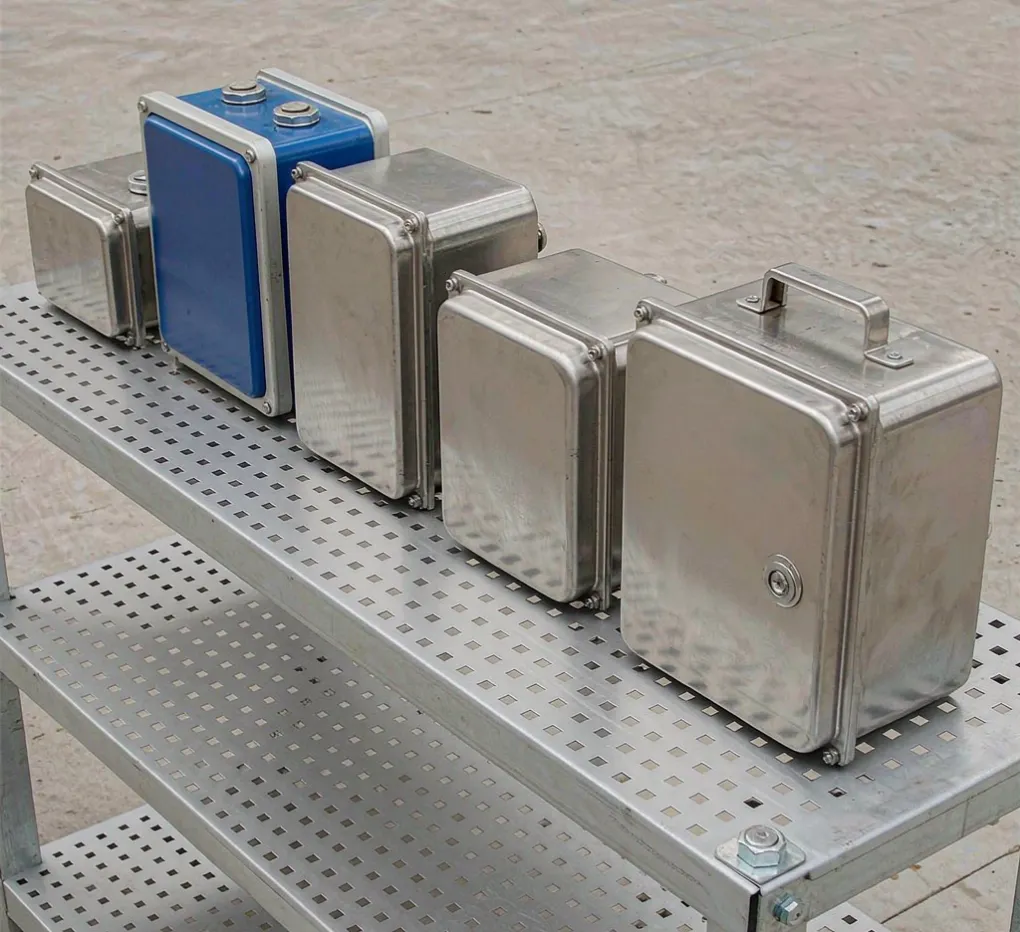
Maker | Best-fit job | What to know |
|---|---|---|
Rittal | Large, modular, structured projects | The global default for TS 8-style systems; deepest accessory ecosystem |
nVent Hoffman | North American wall/floor, fast local support | Strong US availability and NEMA/disconnect enclosures |
Schneider Electric (Special) | One ecosystem with your electrical gear | Pairs with their breakers/drives if you standardize on them |
Saginaw | US-made heavy-gauge NEMA steel | Fast US spares; workhorse for domestic panels |
Hammond | Cost-effective, broad catalog | Global, wide range from small to floor-standing |
BUD Industries | Lightweight / small control and electronic boxes | Aluminum and steel options, budget-friendly |
Eaton (Crouse-Hinds) | Hazardous / classified locations | Explosion-protected lines for oil, gas, dust |
A few notes that change your RFQ

Rittal and nVent Hoffman: the structured-project default. If your panel is part of a documented, modular system—multiple sizes, lots of accessories, a known global standard—these two are where we start. Rittal leads on the modular ecosystem; nVent Hoffman leads on North American lead time and local support.
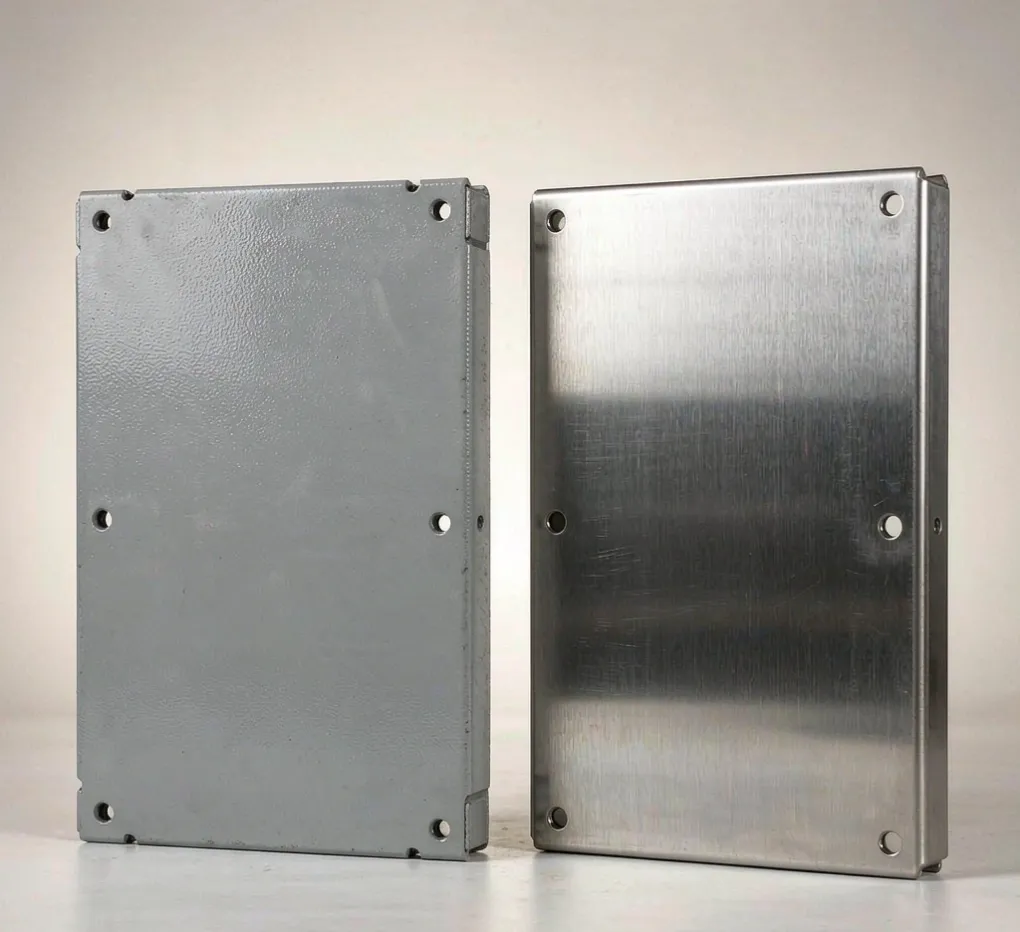
Saginaw and Hammond: the spare-part safety net. For panels built and serviced in the US, sourcing a domestic heavy-gauge steel enclosure means your electrician can find a replacement door or gland plate locally, not via a six-week import. That's worth more than a fancier badge.
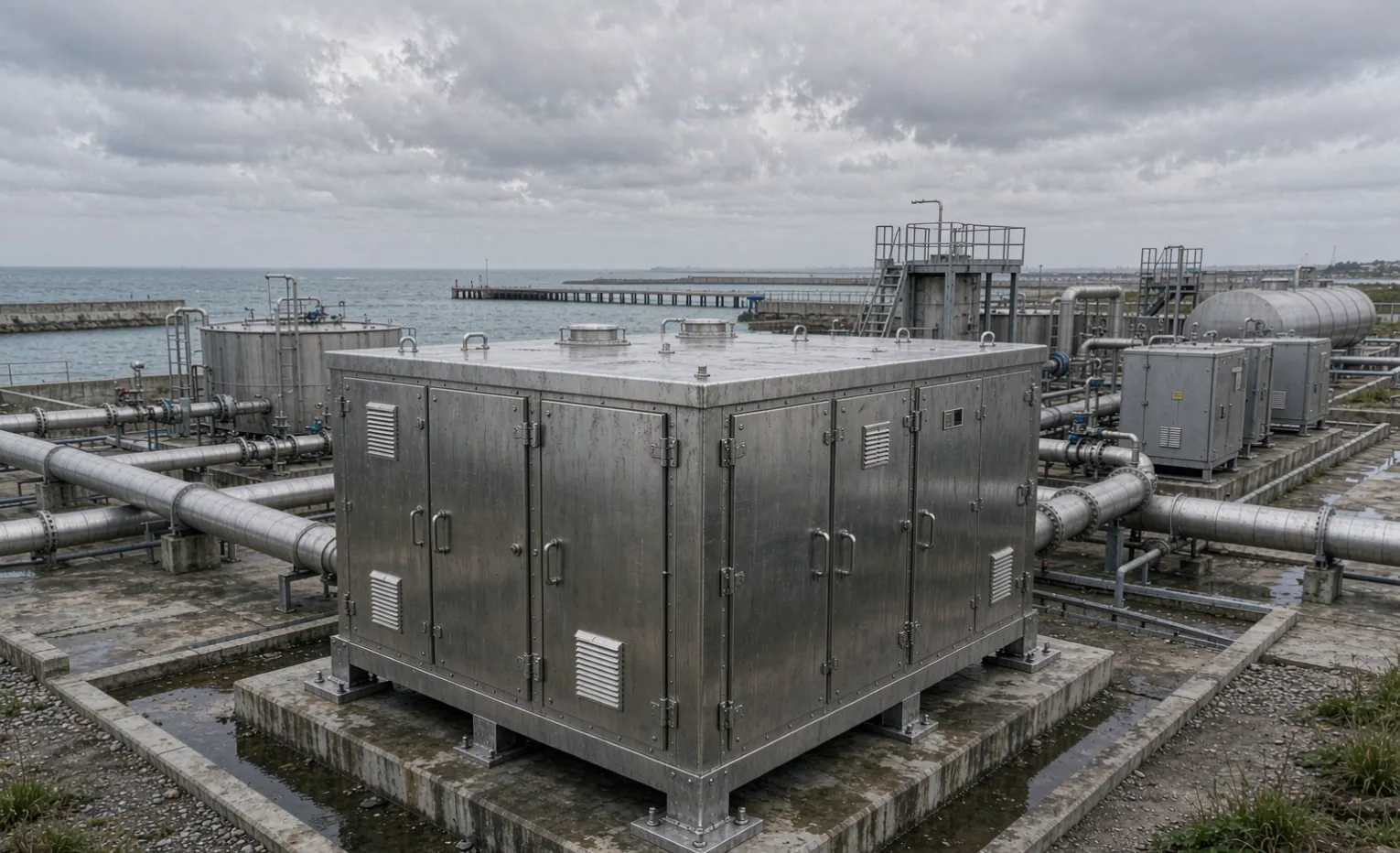
Don't confuse brand with rating. A premium brand in painted carbon steel still rusts at a coastal site. Whatever maker you pick, the rating — NEMA 4X or IP66 — and the material (304/316 stainless, galvanized, or coated carbon) decide survival, not the name on the door. We build in 304 or 316 stainless, galvanized, or painted carbon depending on the corrosion load—no aluminum, because it doesn't hold up in most industrial atmospheres we see.
What we do as your sourcing partner
You send the drawing and the site conditions; we pick the maker and material that fit, source the enclosure, and build the panel around it—UL 508A is listed on a per-project basis when the destination requires it. The brand is a means, not the point. The point is a box that matches the site and a panel you can actually service.
FAQ
Which enclosure brand is the best?
There isn't one. Rittal and nVent Hoffman lead on structured projects and North American support; Saginaw and Hammond on US spares; and Eaton on hazardous locations. Pick by application, not by logo.
Do you only use one brand?
No. We're a sourcing partner and panel-build shop, so we source from several makers and choose per job. Tell us your site and lead time and we'll match it.
Does the brand affect the UL 508A listing?
The enclosure must be suitable, and the assembly is built through a UL 508A listed shop. The maker matters for fit and spares, not for the listing itself—that follows the build.
Can you get a stainless enclosure fast?
An empty cabinet runs a 5-piece minimum and about 15–20 days. If you only need the enclosure, that's your clock; a full panel build from a reviewed drawing is typically 35–40 days after sign-off.
What about hazardous / explosion-proof sites?
Use a maker with a classified-location line—Eaton (Crouse-Hinds) is our usual go-to—and pair it with the right rating. Don't put a standard enclosure in a classified area.
Is a premium brand worth the premium?
Only if its catalog fits your job and your spare reality. A premium badge on the wrong material or rating is money spent on the label, not the protection.
Buyer's takeaway
Stop ranking enclosure brands and start matching them. Write the site conditions and lead time into your RFQ, pick the maker that fits, and let the rating and material—not the logo—carry the protection. A sourcing partner's job is to make that match for you, not to sell you one catalog.
Related guides
Before you pick the box, see our control panel main disconnect guide — the panel and its shutoff have to match the site too.
We cover the broader build-and-ship process in our electrical enclosure supplier's guide to sourcing from China, and our electrical enclosures solution page shows what we source and build.
Ready to match the right enclosure to your site? Upload your drawing for an engineering review — we'll tell you the maker and material that fit, not just the one we like.