
Oct 6, 2026Buying Guides
Galvanized vs Stainless Steel Enclosures: A 2026 Cost and Lifecycle Comparison
Galvanized or stainless for your outdoor enclosure? A 2026 buyer's cost and lifecycle comparison with a decision matrix you can apply to your own site.
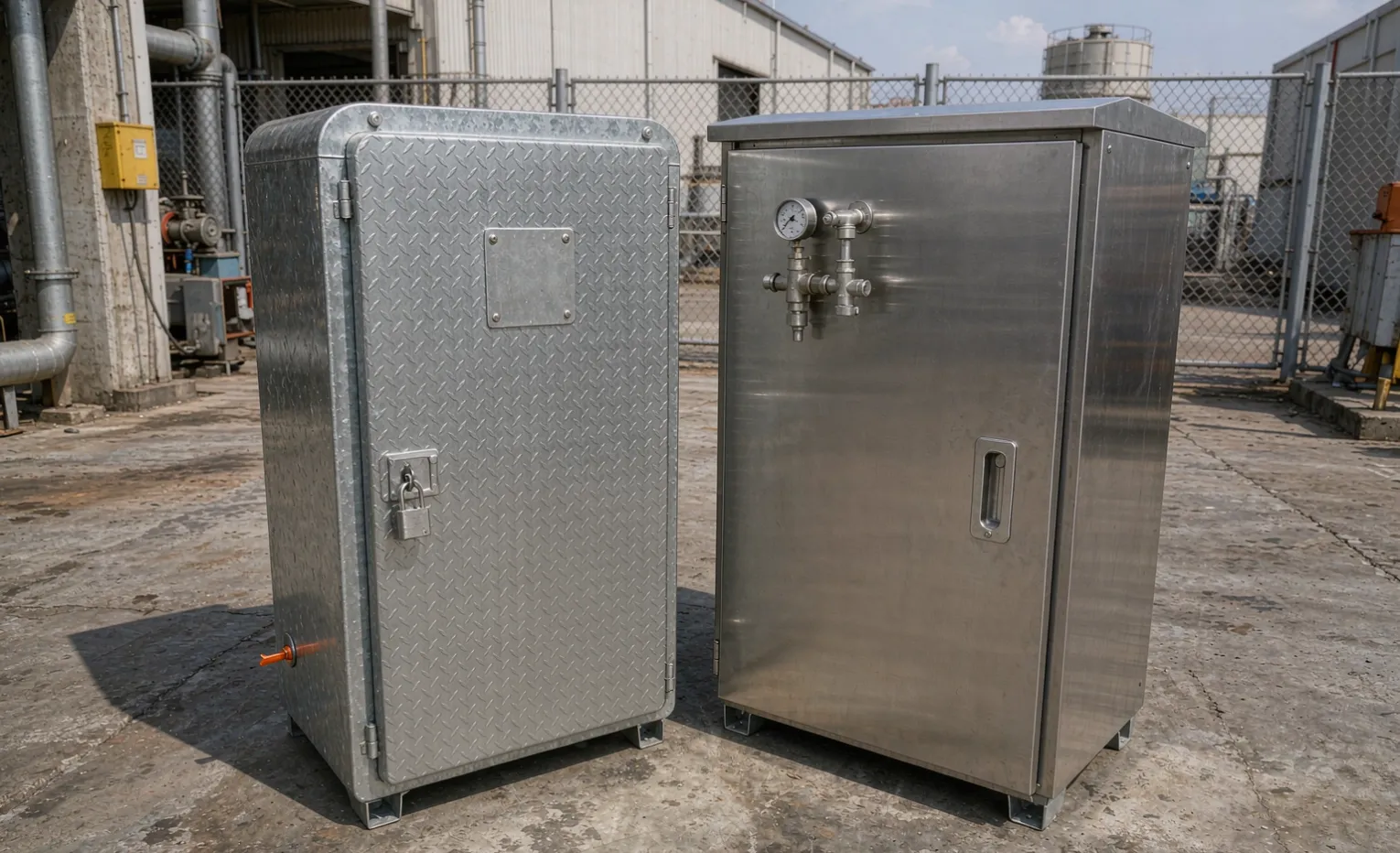
Galvanized vs Stainless Steel Enclosures: A 2026 Cost and Lifecycle Comparison
When you specify an outdoor electrical enclosure, the materials question usually lands as a simple either/or: galvanized or stainless steel. Both keep weather, dust and corrosion away from your controls — but they do it in different ways, and the lifetime cost gap between them is wider than most specifiers expect on day one.
This article is the engineering companion to our broader ranking, the best materials for outdoor electrical cabinets. There we rank materials by application; here we go deep on the single most common buyer decision — hot-dip galvanized carbon steel versus stainless steel — with the cost math and a selection matrix you can drop straight onto your own specification.
The buyer's real question isn't "which is better"
It is "which is right for this site, at this budget, over this service life." A stainless enclosure that outlives the project by thirty years is overspending if a galvanized unit would have survived the full plant life with a repaint cycle. A galvanized enclosure that rusts through in a coastal plant in year six is a false economy that costs you a shutdown.
Buyer Decision: Write down your environment first — distance to coast, chemical exposure, washdown frequency, and how long the enclosure must last without major intervention. The material choice follows the environment, never the other way around.
Most buyers frame the choice as a price fight. It isn't. It is a lifecycle math problem, and the two materials sit at opposite ends of the curve: galvanized wins on first cost and is serviceable; stainless wins on maintenance-free life in harsh chemistry. Your job is to find the crossover point.
What "galvanized" and "stainless" actually mean for enclosures
Before any cost talk, the terms have to mean the same thing to you and your supplier, because "stainless" and "galvanized" each cover a range.
Hot-dip galvanized carbon steel
The base metal is ordinary carbon steel — strong, cheap, easy to weld and fabricate. The protection comes from a thick zinc coating applied by hot-dip galvanizing (HDG): the steel is dipped in molten zinc, forming a metallurgically bonded, sacrificial layer. When scratched, the zinc corrodes first and protects the steel underneath. That sacrificial behavior is the whole point — it is why a gouge in galvanized steel is far less catastrophic than a gouge in painted steel.
304 stainless steel
304 is the workhorse austenitic grade: roughly 18% chromium, 8% nickel. It forms a thin, self-healing chromium-oxide film that resists most atmospheric and many mild-chemical environments without any coating. It is not magic — in chloride-rich or high-saline air it can still pit.
316 stainless steel
316 adds about 2–3% molybdenum, which sharply improves resistance to chlorides and many industrial chemicals. If 304 is the workhorse, 316 is the marine-grade animal. The molybdenum is the difference between "fine near the sea" and "fine on the sea."
Engineering Note: We source carbon steel (painted or hot-dip galvanized) and 304/316 stainless enclosures through our Foshan production partners. We do not fabricate aluminum enclosures. Aluminum's galvanic-compatibility and structural trade-offs don't fit the duty our buyers run, so we keep the line to carbon and stainless where the industrial evidence is unambiguous.
Specifying the coating mass and surface finish
The material grade is only half the specification. Two details quietly decide whether the enclosure performs as quoted — and most RFQs leave both blank.
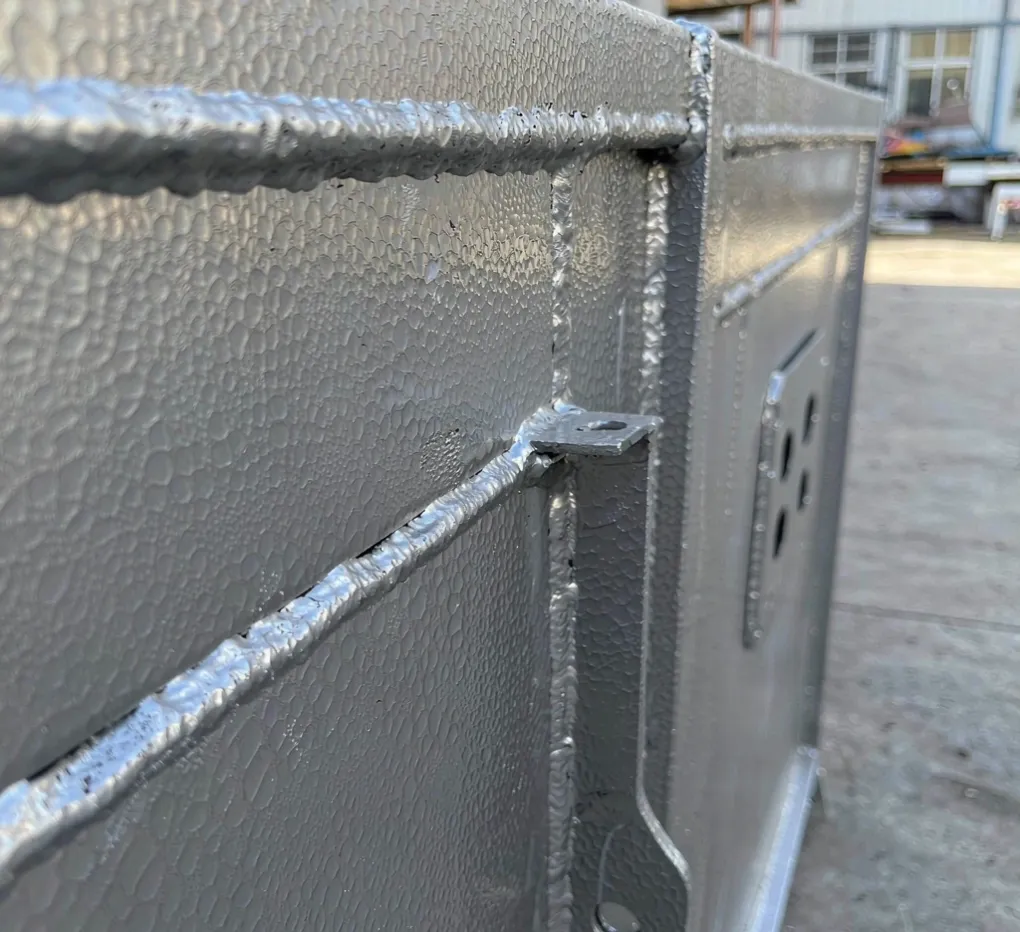
For galvanized steel, the protection lives in the zinc mass, not just the word "galvanized." Under ISO 1461 the coating thickness scales with the base steel thickness, so a heavy 3 mm door receives more zinc than a thin bracket — which is correct, because the thick section is what you most need protected. When corrosion risk is high, ask your supplier for a specified minimum coating mass (for example ≥ 600 g/m² on thicker sections) rather than accepting "hot-dip galvanized" as a blanket term. Seams and cut edges should be specified for full immersion and good drainage so zinc reaches the corners where rust otherwise begins.
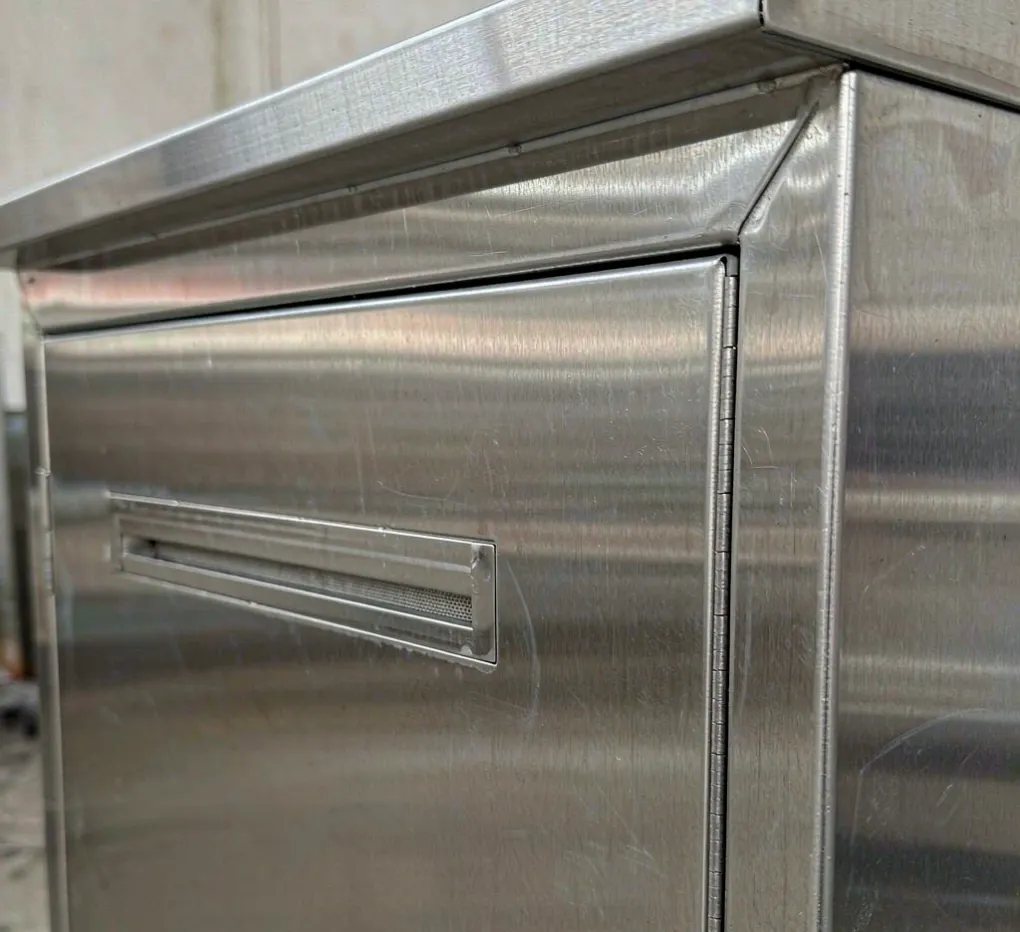
For stainless, the surface finish matters as much as the alloy. A 2B finish is the as-rolled dull surface straight from the mill; a No.4 brushed finish is the one you normally see on enclosures, and — importantly for buyers — it cleans far more easily under washdown and in food or pharma duty. Specifying "316, No.4 finish" tells the build shop exactly what to deliver; "316" alone leaves the finish, and your cleanability, to chance.
Cost comparison — not just the sticker price
The mistake is comparing the two on the fabrication quote alone. Galvanized looks cheaper because the steel is cheap and the zinc process is mature. Stainless looks expensive because the alloy costs more per kilogram and machines slower. But the real comparison has four layers.
Cost layer | Hot-dip galvanized carbon steel | 304 stainless | 316 stainless |
|---|---|---|---|
Material + fabrication (first cost) | Lowest | ~30–60% higher | ~60–100% higher |
Coating / finish | Zinc (included) | None needed | None needed |
Maintenance over 15 yr | 1–2 repaint/retouch cycles in harsh sites | Minimal | Minimal |
End-of-life residual | Low | Higher (scrap value) | Highest |
The crossover is environment-driven. In a benign inland site with a 10–15 year horizon, galvanized almost always wins on total cost because the coating lasts the whole life and a single repaint extends it further. In a coastal or chemical plant, stainless pulls ahead because the "free" maintenance of galvanized (repaints, inspections, early replacement risk) quietly exceeds the stainless premium.
Lifecycle and corrosion performance by environment
The single variable that decides the material is what the air and water actually contain.
Coastal and salt-spray sites
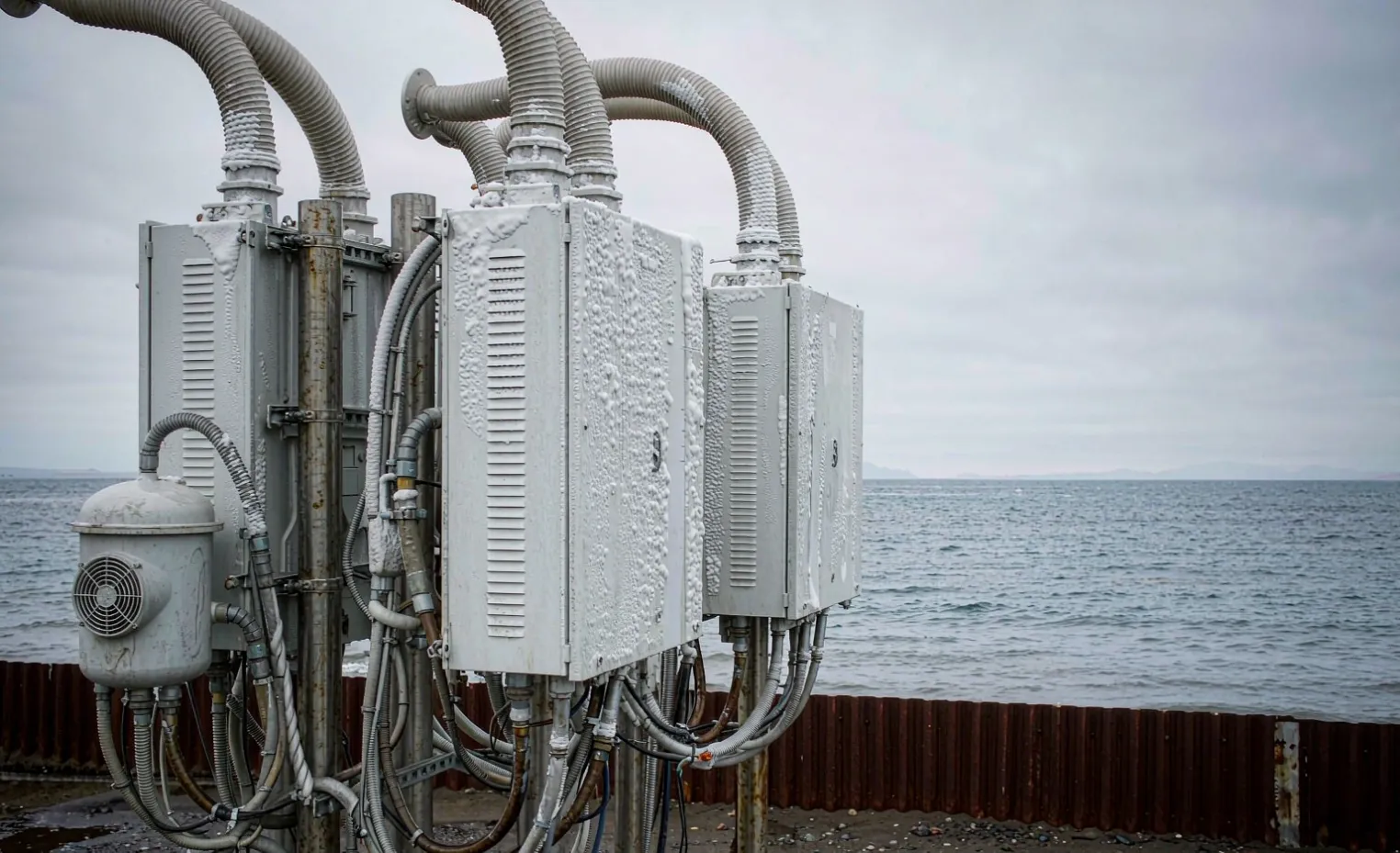
Salt is the enemy. Galvanized steel survives for years in moderate coastal air, but continuous salt spray accelerates zinc consumption and edge corrosion at cut seams. 316 is the safe call here; 304 is a gamble that sometimes pays off and sometimes pits within a few seasons.
Industrial and chemical atmospheres
Acid fumes, solvents, and process chemicals attack zinc faster than they attack a passive stainless film — but the specific chemical matters. Some strong oxidizers actually favor certain stainless grades and destroy zinc. This is where a one-line material guess becomes expensive, and where a specification review earns its keep.
Temperate outdoor and washdown
Mild outdoor air with periodic washdown is galvanized territory. Hot-dip galvanized steel with proper seam drainage handles rain and hose-down well, and IP65 / NEMA 4X ratings (per NEMA) are routinely achieved on both materials.
Indoor and benign
If the enclosure lives in a clean indoor panel room, material choice barely matters for corrosion. Here, galvanized or even painted carbon steel is the rational, cost-efficient pick — specifying 316 indoors is pure overspend.
The decision matrix — which one should you specify
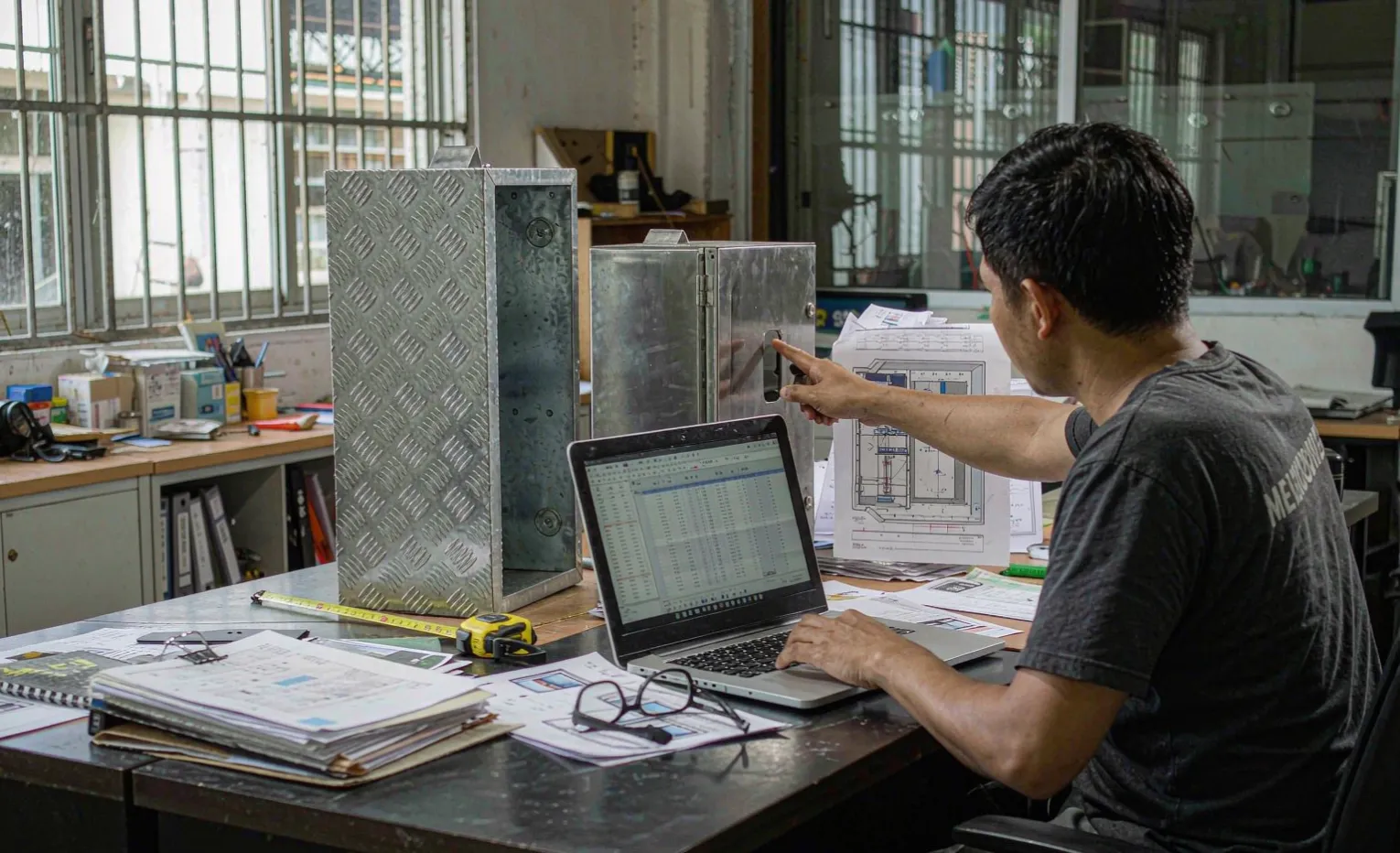
Apply this to your own site before you ask for a quote.
Your environment | Recommended material | Why |
|---|---|---|
Inland, clean, indoor or mild outdoor | Painted or galvanized carbon steel | Lowest cost, corrosion risk is minimal |
Outdoor temperate, periodic washdown | Hot-dip galvanized carbon steel | Zinc + IP65/NEMA 4X handles rain and hose-down |
Coastal within ~1 km of shore | 316 stainless | Chloride resistance prevents pitting and seam rot |
Chemical / process fume exposure | 304 or 316 (chemical-specific) | Passive film beats zinc under many reagents |
Washdown food / pharma (corrosive cleaners) | 316 stainless | Cleaner, resists aggressive sanitizers |
Long life, zero-maintenance mandate | 316 stainless | Maintenance-free service life justifies premium |
Buyer Decision: If two rows in that table describe your site, the harsher row wins. A galvanized enclosure specified for a "mostly indoor" plant that later gets moved near a loading dock with road salt will fail early — design for the worst condition it will actually see.
Three specification mistakes that quietly cost money
These show up constantly in RFQs we receive, and each one inflates either first cost or lifecycle cost.
Engineering Note 1: Specifying 316 everywhere "just to be safe." It feels conservative but adds 60–100% to fabrication on every enclosure, including the dozens that only needed galvanized. Match the grade to the duty.Engineering Note 2: Forgetting seam and fastener metallurgy. A 316 body with carbon-steel hinges and un-coated cut edges will corrode at those points first. The enclosure is only as good as its weakest joined metal.Engineering Note 3: Treating IP rating and material as separate decisions. A flawless 316 body with a poorly sealed gland plate leaks exactly like a galvanized one would. Sealing design and material are partners, not alternatives.
What this looks like from a sourcing partner
We are a China-based industrial automation supplier and sourcing partner, not a company that runs its own single production line — and that shapes the advice above. Because we source enclosures and components across multiple Foshan partners, a few realities are worth stating plainly:
- Material range: carbon steel (painted or hot-dip galvanized) and 304/316 stainless enclosures. No aluminum — by design, not by accident.
- Ratings we build to: IP65 and NEMA 4X are our standard outdoor specifications; we confirm the rating against the actual ingress and washdown duty you describe.
- UL listing is per order: we don't hold a single UL file for every variant. When your project requires a UL-listed enclosure, we route the build through a UL-listed fabrication partner (see UL) and document it for that order — our complete China enclosure sourcing guide covers how that workflow protects your lead time.
- Lead time reality: custom enclosures carry a minimum order of 5 units with about a 15-day build; loose components from brands such as Mitsubishi, Siemens and ABB typically ship in 3–5 days. That split is why a "just the panel, components later" plan rarely saves time.
Engineering Takeaway
- Galvanized carbon steel wins on first cost and is the rational choice for inland, mild, and short-to-medium-life duty — budget one repaint cycle in harsh sites.
- Stainless (304 or 316) wins on maintenance-free life where salt, chemicals, or a zero-maintenance mandate dominate; 316 is the marine and aggressive-chemical grade.
- The decision is environment-first, never price-first. Build the matrix above from your worst real condition, not your average one.
- Material and sealing are partners: a perfect alloy with a poor seal still leaks.
- For a turnkey view of how we scope, source and document enclosures, see our electrical enclosures solutions overview.
Frequently asked questions
Is galvanized always cheaper than stainless for the same enclosure? On the fabrication quote, yes — usually 30–100% cheaper depending on whether you compare to 304 or 316. Over a 15-year life in a harsh site, the gap narrows or reverses once you add repaints, inspections, and early-replacement risk.
Will a galvanized enclosure rust? Eventually, yes — zinc is sacrificial and consumes itself to protect the steel. In benign sites that takes decades; in heavy salt spray it can be years. The question is whether the zinc lasts longer than your required service life, not whether it lasts forever.
Do I need 316, or is 304 enough? If the enclosure sits within roughly a kilometer of the coast, sees road salt, or faces aggressive cleaners, 316 earns its premium. Inland and mild-chemical sites are usually fine with 304. When in doubt, specify for the worst condition the enclosure will actually encounter.
Can I get a UL-listed galvanized or stainless enclosure? Yes, but it is handled per order. We route the build through a UL-listed fabrication partner and document the listing for that specific order rather than holding one blanket UL file. Tell us the UL requirement up front so it is designed in, not added later.
How long does a custom enclosure take to build? Custom enclosures have a minimum order of 5 units with about a 15-day build window. Loose components (Mitsubishi, Siemens, ABB and similar) typically ship in 3–5 days, which is why component lead times rarely drive the enclosure schedule.
Why don't you offer aluminum enclosures? Aluminum's galvanic-compatibility and structural trade-offs don't fit the duty most of our buyers run, and the industrial evidence for carbon and stainless is unambiguous. We keep the line to carbon steel (painted or galvanized) and 304/316 stainless so the recommendation is always backed by field behavior, not a catalog.
Need a second opinion before you order?
Send us your drawing, single-line diagram, or even a photo of the installation site. Our engineers will run an enclosure review and come back with three things: a material and IP/NEMA recommendation, a list of specification gaps that cause field failures, and a realistic lead time. No obligation — you keep the review even if you buy elsewhere.
Related guides
Need help specifying or sourcing this for your project? Request a quote - we reply within 1-2 working days with a technical review.