
Oct 6, 2026Buying Guides
VFD Control Panel Buyer's Guide: How to Specify a Drive Panel That Won't Trip
A VFD panel trip often starts before commissioning, when cooling, bypass logic, cable length, reactors, harmonics, and FAT scope are left unclear in the quotation.
VFD Control Panel Buyer’s Guide: How to Specify a Drive Panel That Won’t Trip
The failure report looked like a normal VFD problem at first. One drive panel kept tripping during afternoon production, the motor load looked reasonable, and the fault code pointed toward over-temperature. The buyer’s first reaction was also normal: maybe the drive was poor quality.
The maintenance team had already replaced one drive. It changed nothing.
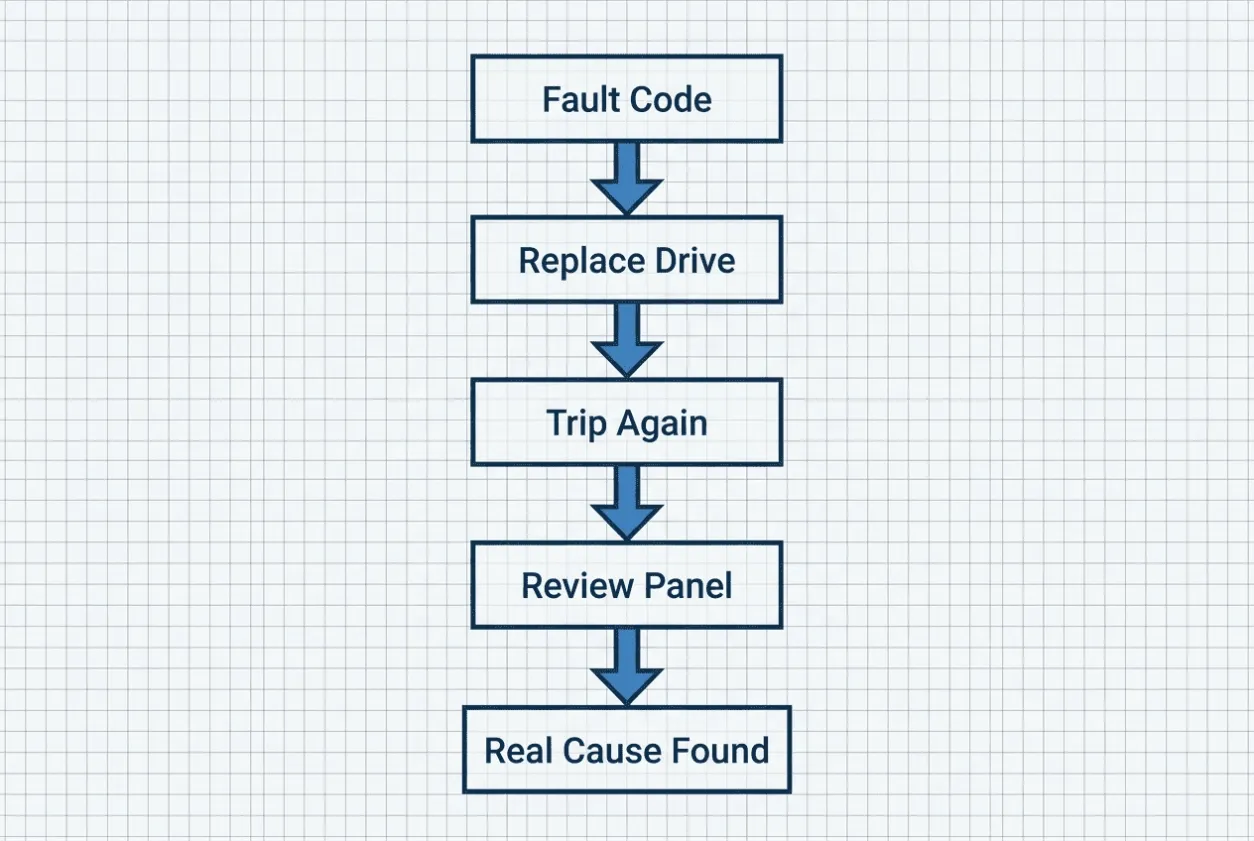
That was when the review became more interesting. Everyone was looking at the fault code, but the enclosure, cooling method, bypass arrangement, motor cable distance, and harmonic impact had not been reviewed together. One component was showing the alarm. Several components had created it. A VFD control panel is a coordinated assembly, not just a drive installed inside a cabinet, and that is exactly where many quotations hide risk.
Buyer Insight Most VFD problems are not drive problems. They are specification problems.
The Panel Wasn’t Running Hot. It Was Running Blind.
The cabinet had enough space for the hardware, which made the original design look acceptable. The VFD was mounted neatly, the wiring looked clean, and the door closed without anyone feeling nervous. The problem was that the panel had only been reviewed as a layout, not as a heat source.
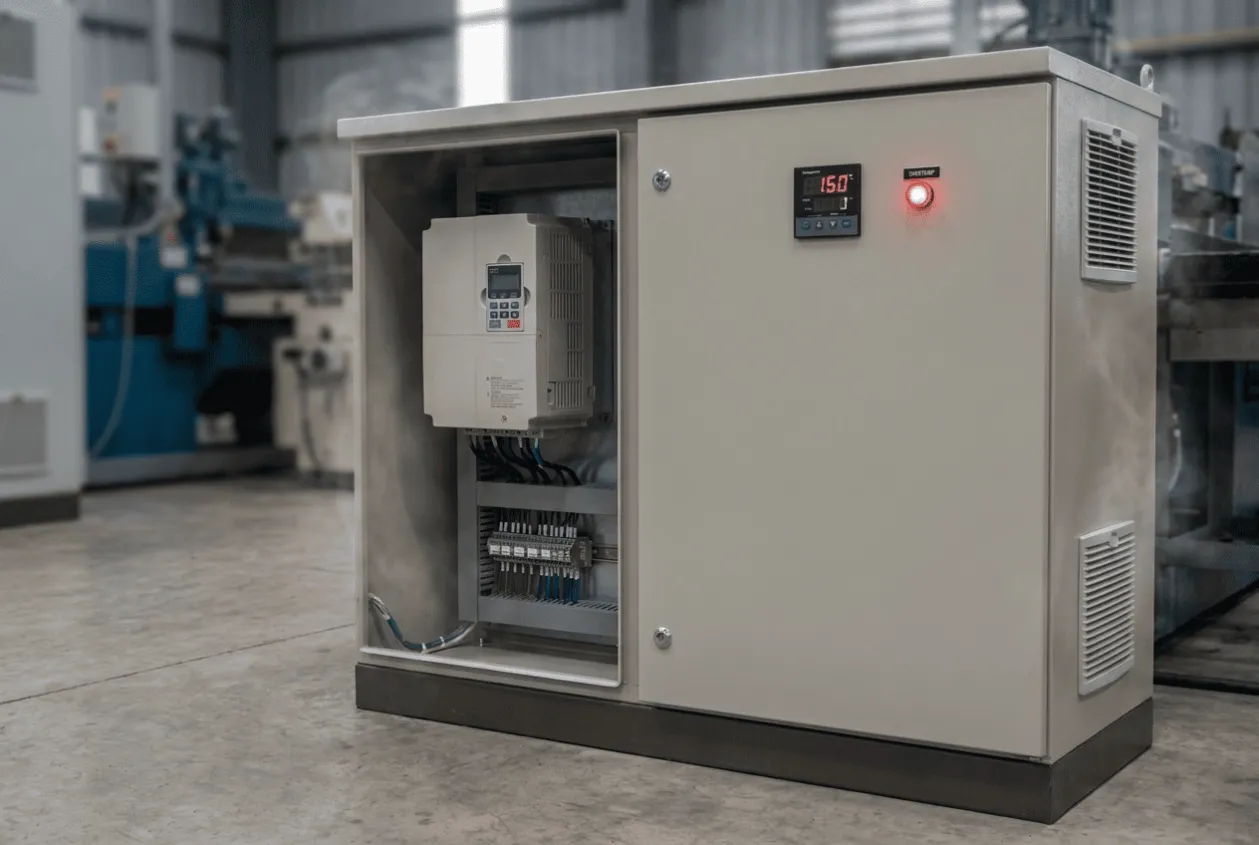
The VFD generated heat, the enclosure kept it, and the quotation never mentioned either.
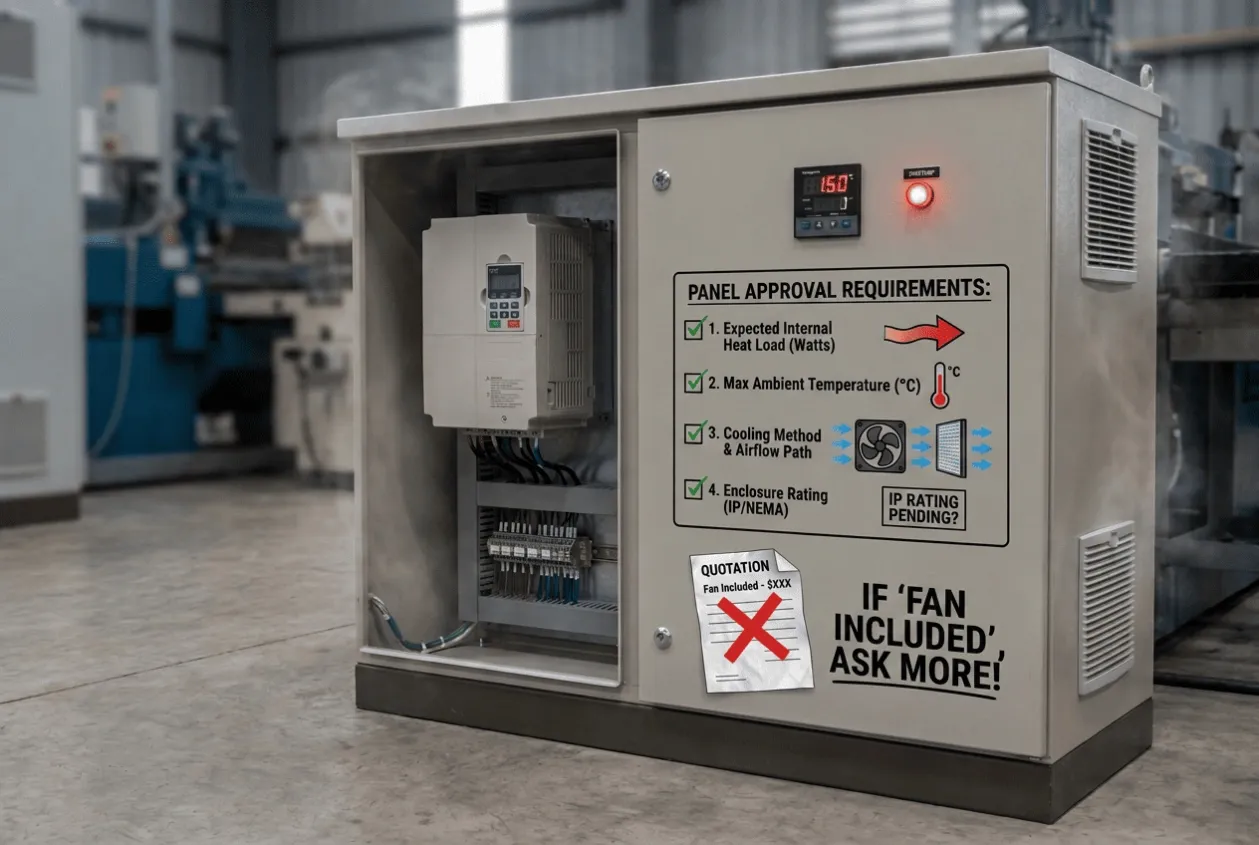
Most buyers see a 22 kW drive and think about motor power. I usually see several hundred watts of heat that must leave the enclosure somehow, especially when the panel is sealed, installed outdoors, or placed near a warm production area. In this case, the supplier had included a fan, but the site required better sealing because of dust and washdown exposure. That made the fan less useful than it looked on paper.
Before approving a VFD panel, I want the supplier to explain the expected internal heat load, maximum ambient temperature, cooling method, airflow path, and whether the enclosure rating still holds after the cooling equipment is added. If the quotation only says “fan included,” I keep asking.
The Bypass Existed. Nobody Knew How to Use It.
The quotation mentioned a bypass contactor, so the buyer assumed production could continue if the drive faulted. That sounds comforting in a meeting, but it does not mean much until the sequence is clear enough for the operator to trust.
The bypass looked reassuring on the drawing. During a real fault, nobody wanted to touch it.
I understand why. If the logic is unclear, the interlock is not explained, or the operator procedure is missing, a bypass becomes a risky button in a stressful moment. Nobody wants to guess while the line manager is standing behind them asking how long production will be down.
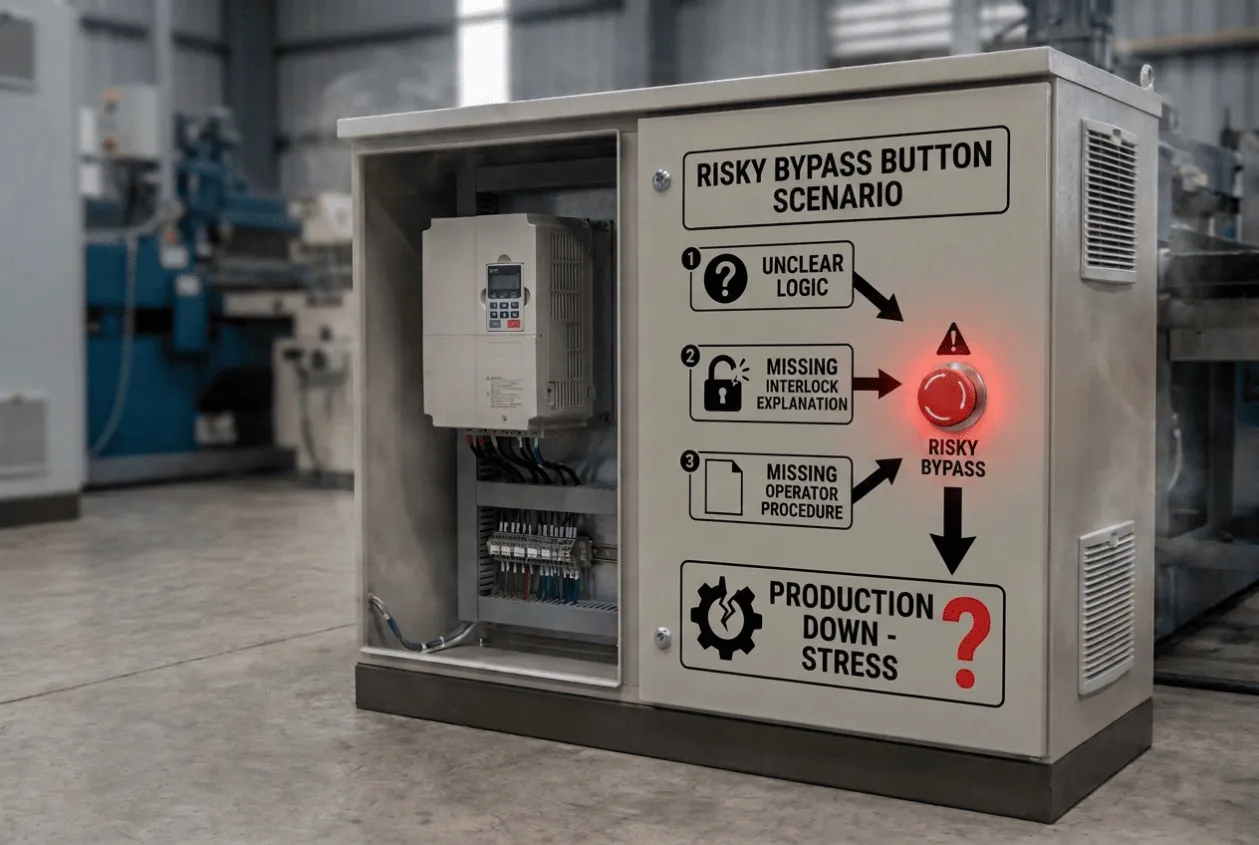
A useful bypass should be electrically and mechanically interlocked, shown clearly in the drawings, tested during FAT, and explained well enough that maintenance can use it without calling the panel builder first. A bypass that only works on drawings is not really a backup. It is a purchasing assumption.
Buyer Insight A bypass you cannot explain during FAT is unlikely to help during a real fault.
The Cable Was Longer Than the RFQ.
Motor cable length is one of those details that never seems important until the motor is already running.
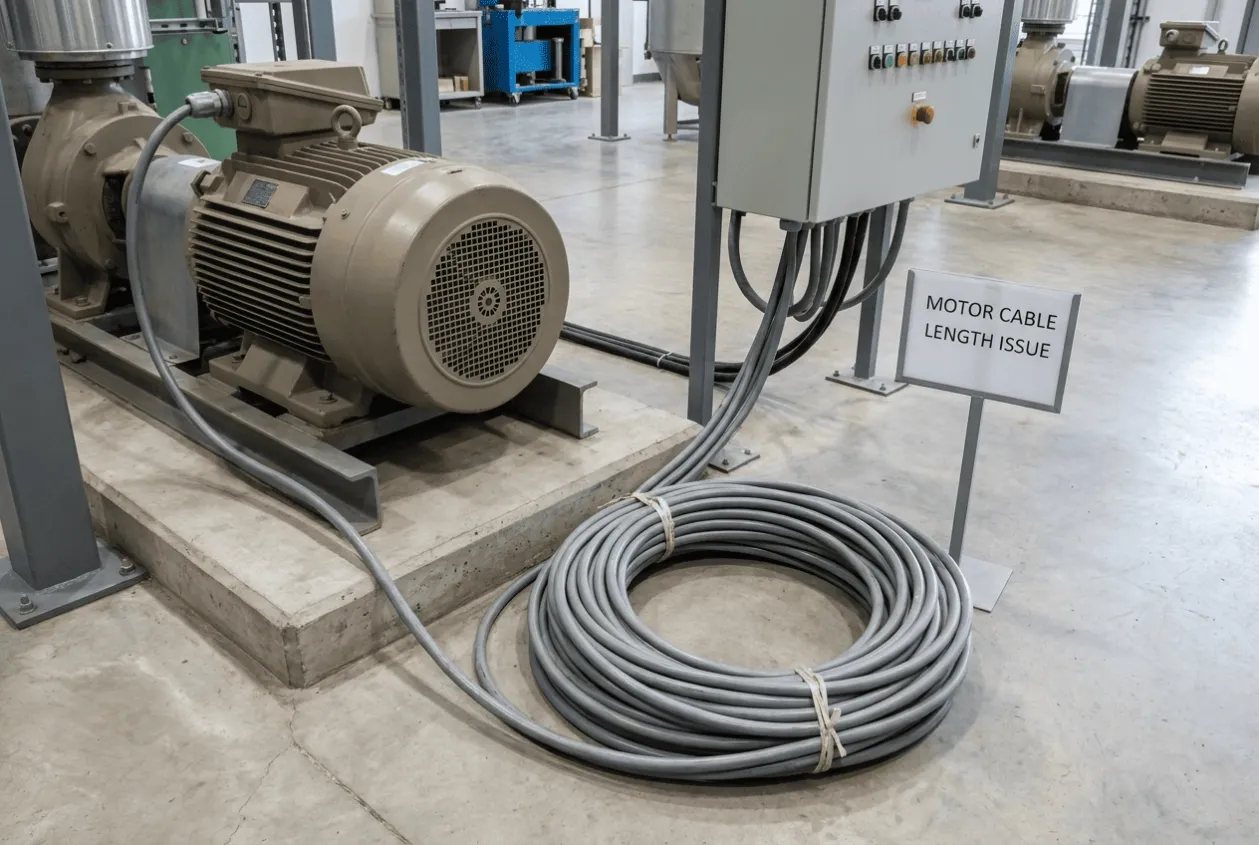
In this project, the motor was farther from the panel than the quotation had assumed. That changed the discussion around output reactors and dv/dt filtering. A long cable between the VFD and motor can increase voltage stress at the motor terminals, depending on the drive, cable type, motor insulation, and distance.
The supplier had not included an output reactor. To be fair, the RFQ had not clearly stated the cable distance either, so I do not like turning this kind of review into a simple supplier blame session. Sometimes the supplier cuts scope to protect price, but sometimes the buyer never gives enough information for the supplier to quote correctly.
The quotation did not ignore the reactor. The RFQ ignored the cable length.
Buyer Insight Cable length is not a commissioning detail. It is a quotation detail.
Harmonics Didn’t Disappear. They Just Moved Upstream.
Nobody noticed the harmonics during quotation. The utility engineer noticed them after commissioning.
That is usually how this problem enters the room. One small drive may not create much concern, but several drives sharing a transformer or running near a sensitive incoming supply can make power quality part of the project whether the buyer planned for it or not. By then, adding reactors, filters, or a different front-end arrangement is usually more expensive and more annoying than discussing it during RFQ review.
I do not think every VFD panel needs an expensive harmonic solution. That would be overkill, and buyers have budgets for a reason. What I do expect is that the supplier asks whether harmonic limits matter, whether the plant has had power-quality issues before, and whether input reactors or line filters should be included.
If the quotation is cheap because the harmonic review was never included, it is not really cheap. It is unfinished.
Before I approve the PO
For a VFD panel, I do not like a lump-sum line that only says “VFD control panel.” It hides too many decisions behind a clean price. Before I approve the PO, I want these items clear enough that the supplier and buyer are not guessing from different sides of the same drawing.
✓ Drive sized by motor full-load current, not only kW
✓ Heat load reviewed against ambient temperature
✓ Cooling method matched to enclosure rating
✓ Motor cable distance confirmed
✓ Output reactor or dv/dt filter decision explained
✓ Input reactor, EMC filter, or harmonic review considered where needed
✓ Bypass logic, interlock, and operator procedure defined
✓ Communication protocol confirmed
✓ Grounding and shield termination reviewed
✓ FAT includes drive run, fault response, alarms, and bypass sequence.
This is also how we normally review VFD panel quotations at UniRegal. The discussion usually starts with the process rather than the drive itself. Once the application is clear, the specification becomes much easier to defend.
Questions Buyers Often Ask Me
“Why does my VFD trip when the motor load looks normal?”
When the motor load looks normal, I check enclosure temperature, cooling capacity, drive clearance, airflow, cable length, grounding, and fault history before blaming the drive. A fault code tells you where the alarm appeared, not always where the problem began.
“Do I always need a bypass?”
Not always. If the motor is non-critical and can stop safely, a bypass may not be worth the extra cost. For pumps, fans, compressors, and production motors where downtime hurts, I would review bypass seriously and make sure it is tested, not just listed.
“Do I need an output reactor?”
If the motor is far from the panel, the cable route is long, or the motor insulation is older, an output reactor or dv/dt filter should be discussed. The supplier cannot judge this properly if the RFQ does not include motor cable distance.
“Is an EMC filter necessary?”
If the panel sits near PLCs, analog instruments, communication devices, or sensitive signals, EMC filtering and grounding deserve attention. Noise problems are not fun to troubleshoot because they rarely behave on command.
“What should I send before requesting a quote?”
Send the motor power, full-load current, voltage, load type, cable distance, enclosure environment, cooling requirement, bypass need, communication protocol, harmonic requirement, preferred brands, and FAT expectation.
Final Thought
A VFD panel trip rarely begins with one dramatic mistake. More often, it begins with several small decisions that were never forced to agree with each other.
Most service calls begin long before commissioning. They begin when the quotation leaves too many decisions unmade.
Related guides
Get a VFD panel specification that holds up in the field.
Tell us the motor data, duty, and environment, and we will turn it into a coordinated VFD panel specification—drive, bypass, reactors, enclosure, and cooling itemized—sourced from Foshan-area suppliers with the component brands you already use (Mitsubishi, Siemens, ABB, and others). Start on our requirements page, and we will return a matched bill of materials and lead time.
Need help specifying or sourcing this for your project? Request a quote - we reply within 1-2 working days with a technical review.