
Oct 6, 2026Buying Guides
Electrical Enclosure Selection Guide: 7 Checks Before You Spec
Seven checks every buyer should run before specifying an electrical enclosure — environment, rating, material, size, mounting, certifications, and customization scope.
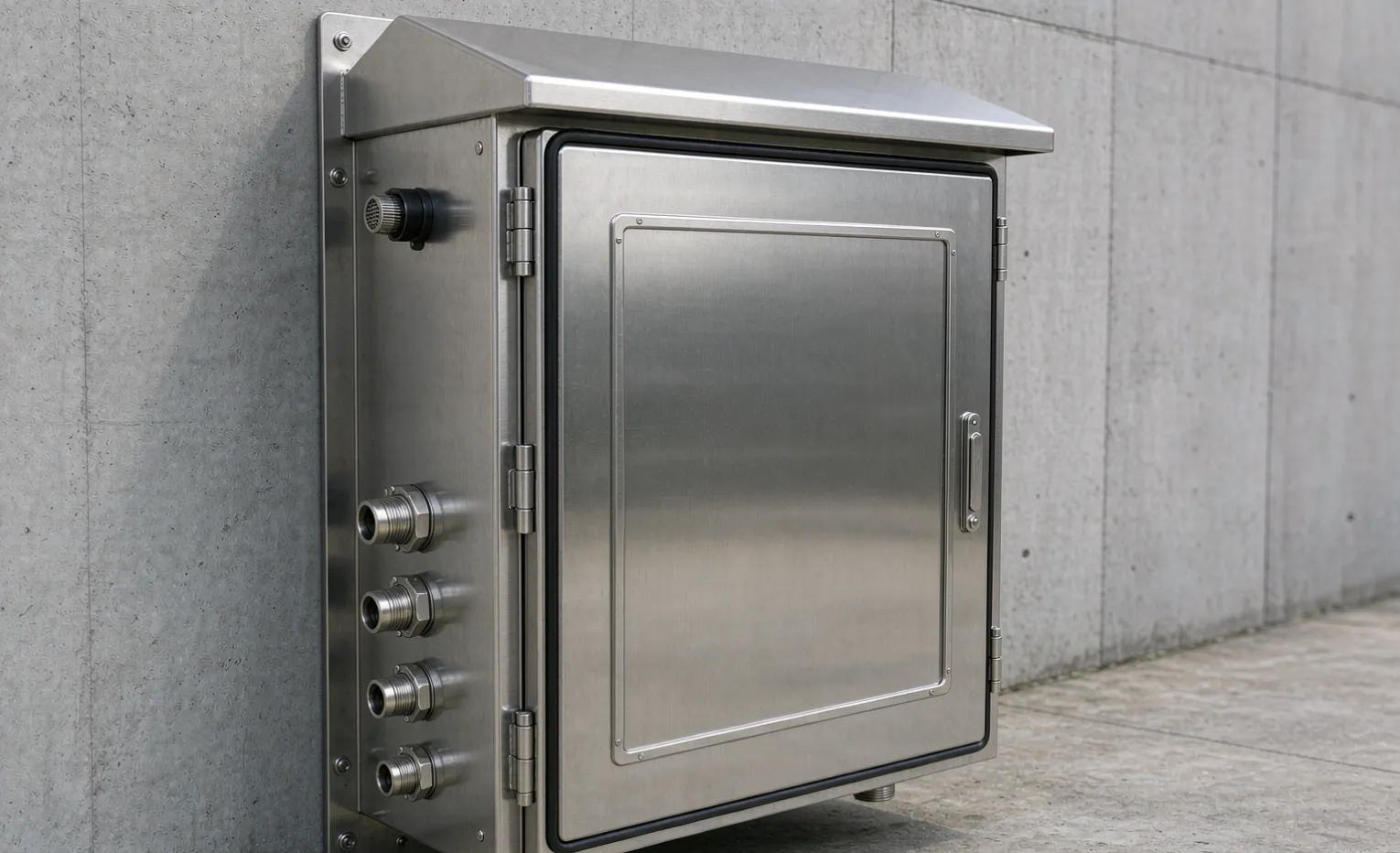
Start With the Environment, Not the Catalog
The fastest way to spec the wrong enclosure is to start from a price list. Start from where the box actually lives. Indoor panel room, washdown food line, coastal pump station, and desert solar site each point to a different rating, material, and seal — and getting the environment wrong is the single most expensive mistake buyers make. Run these seven checks in order; each one narrows the field.
1. Define the Installation Environment
List what the enclosure faces: rain and sun (outdoor), high-pressure washdown (food, pharma), corrosive vapor (chemical, coastal), dust (grain, cement), or a benign indoor room. One environment can carry several hazards — an outdoor coastal site is both wet and corrosive, which changes both the rating and the material. Write the environment down as a sentence; it becomes the test every later choice must pass.
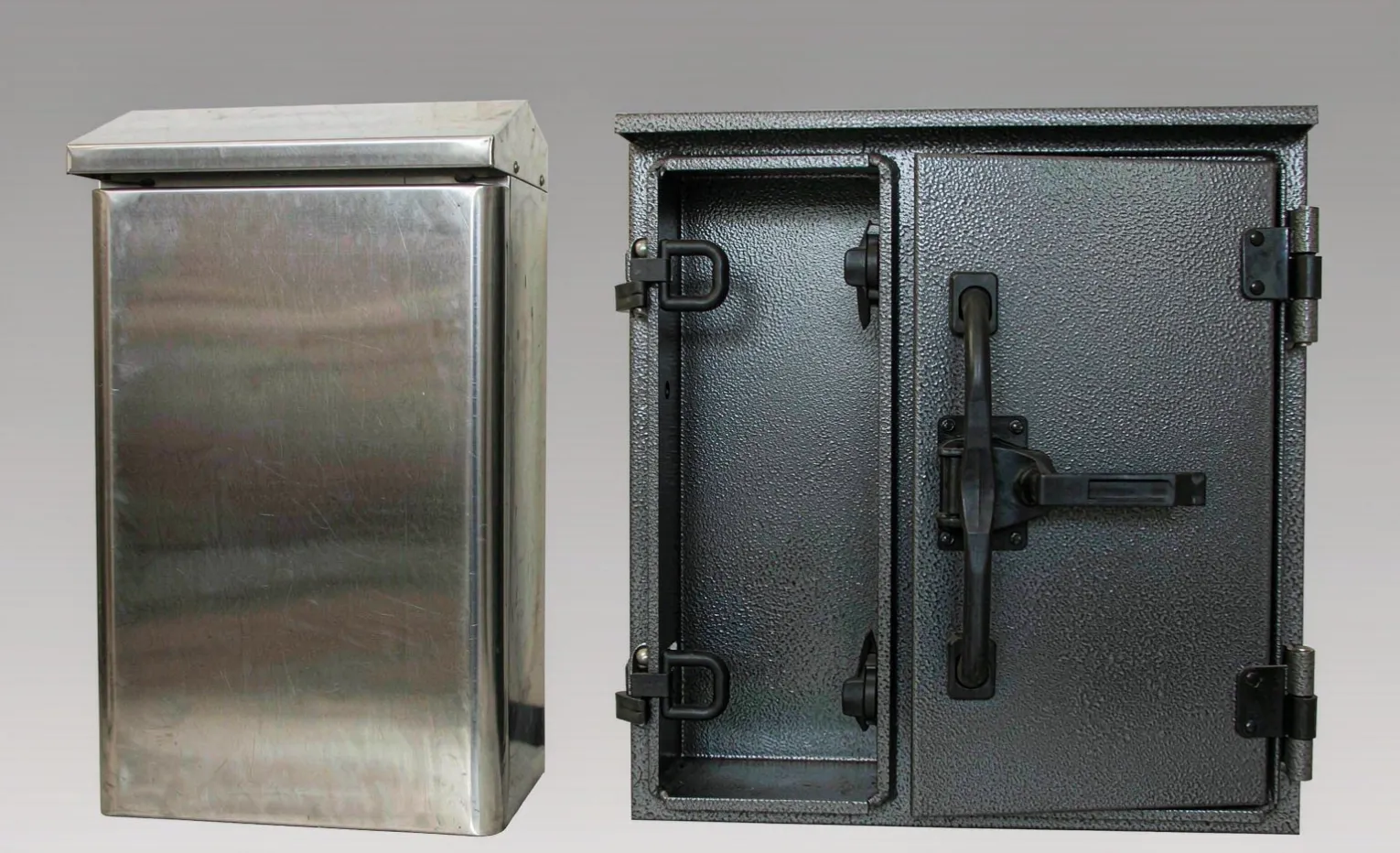
2. Pick the Ingress Rating (IP vs NEMA)
Ingress protection ratings tell you what the enclosure keeps out. The NEMA standard and the IEC 60529 (IP) standard describe the same idea in two dialects — North America reads NEMA, most of the world reads IP.
IP Ratings
- IP65 — dust-tight, low-pressure water jet. Common for indoor and light outdoor.
- IP66 — dust-tight, high-pressure washdown. Used on food and washdown lines.
NEMA Ratings
- NEMA 4 — indoor/outdoor, splash and hose-directed water.
- NEMA 4X — adds corrosion resistance on top of NEMA 4; the default for stainless coastal and washdown.
Buyer Decision: If you are selling into North America, spec the NEMA rating your customer's electrical code expects. If the project is international, IP ratings map closely but are not identical — confirm both before you freeze the drawing.
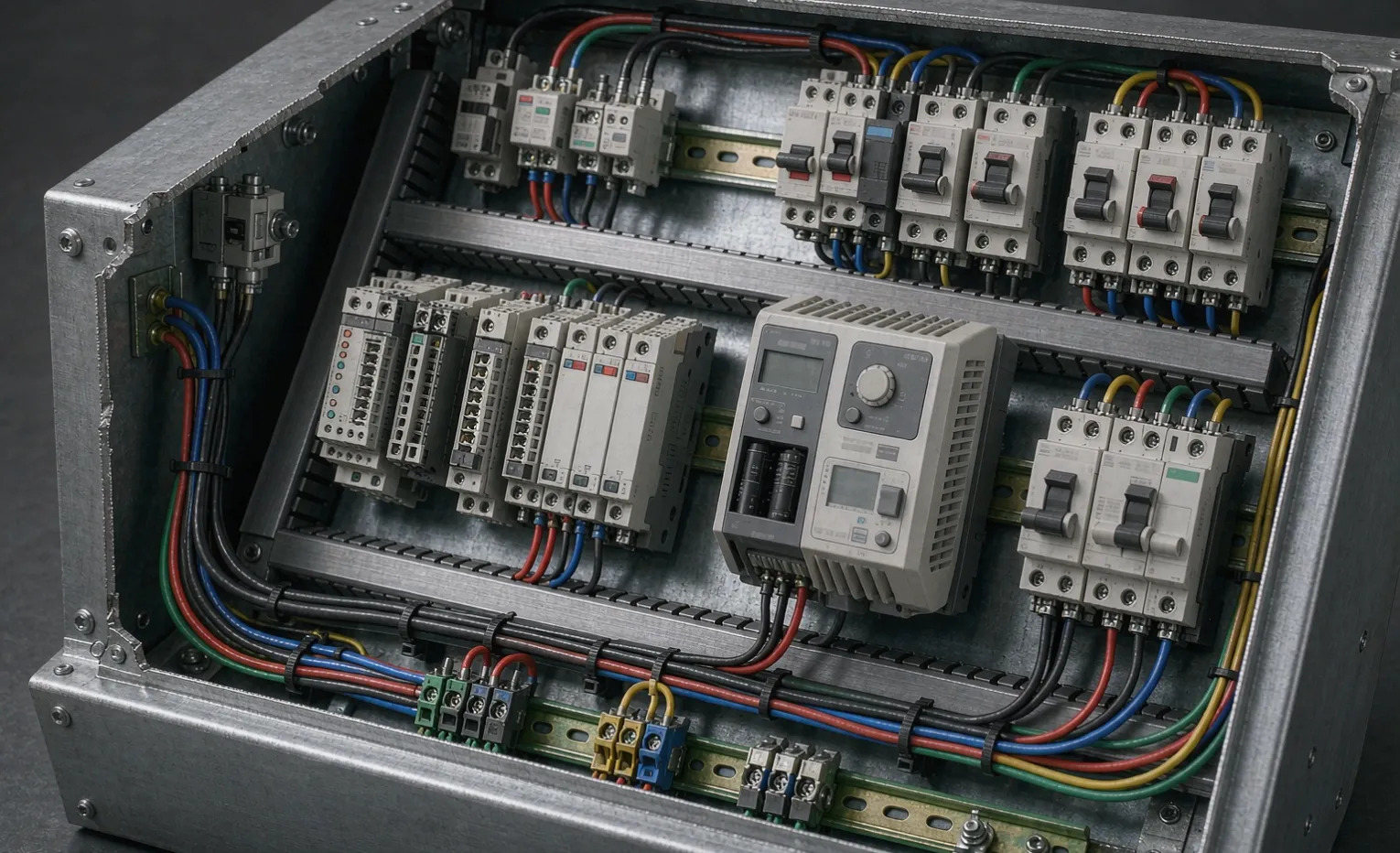
3. Choose the Material
Painted Carbon Steel
Lowest cost, fine for dry indoor use; the paint is the only corrosion barrier. Do not put it where water or vapor reaches the bare metal.
304 Stainless
Handles most washdown and indoor corrosive duty; the workhorse for food and pharma. Good for most non-coastal sites.
316 Stainless
Adds molybdenum for chloride resistance; specify it for coastal, salt-spray, and chemical exposure where 304 would pit.
The material decision is driven by the environment from Step 1, not by budget alone. A 304 box in a salt-spray site will fail faster than a 316 that costs a little more.
4. Size for Heat and Future Space
An enclosure is also a thermal box. Count the heat your devices dissipate (VFDs and power supplies dominate), then check the ambient and the cooling path — passive, filtered fan, air conditioner, or heat exchanger. Undersized cooling cooks the electronics; oversized cooling wastes money. Also leave 20–30% internal space for future devices; a box that is full on day one cannot absorb the next change.
5. Mounting — Wall, Floor, or Pole
- Wall-mount — small panels, easy access, saves floor space.
- Floor-standing (free-standing) — larger systems, MCCs, and where internal cooling and cable routing need room.
- Pole-mount — remote and outdoor single-device sites.
Match mounting to service access. A floor frame nobody can open is worse than a wall box that is too small.
6. Certifications Buyers Actually Need
Do not assume — ask the end customer which mark the inspector will want.
- NEMA — rating standard (see Step 2).
- IEC 62208 / IEC 60529 — international enclosure and ingress standards.
A supplier should hand you the certificate, not just a claim on the datasheet. For UL-listed enclosures sourced from China, ask specifically how the listing applies — component vs complete assembly changes what you can legally ship.
Engineering Note: "UL listed" and "UL recognized" are not the same. A recognized component still needs to be built into a listed assembly. Buyers specifying panels should confirm which they need before the enclosure is cut.
7. Confirm the Customization Scope
Most buyers do not want a bare box. Confirm what the supplier will do: cutouts for glands and displays, painted RAL color, printed labels, internal mounting plate, and FAT (build-site acceptance test) before shipment. Custom cutouts done at the source beat field drilling — they protect the coating and the ingress rating. Put the cutout drawing in the RFQ; vague "a few holes" leads to rework.
The Buyer's Selection Matrix
Check | Indoor dry | Washdown / food | Outdoor coastal | Dusty / industrial |
|---|---|---|---|---|
Rating | IP54 / NEMA 12 | IP66 / NEMA 4X | IP66 / NEMA 4X | IP65 / NEMA 12 |
Material | Painted steel | 304 stainless | 316 stainless | Painted steel |
Cooling | Passive | Fan / A/C | A/C / exchanger | Filtered fan |
Mount | Wall | Wall / floor | Floor / pole | Wall / floor |
Cert | UL 508A | UL 50 / NSF where required | UL 50 | UL 508A |
Frequently Asked Questions
IP65 or IP66 — which do I need? If the box faces hose-directed washdown (food, pharma, wash bays), IP66. For rain and dust only, IP65 is enough. The jump from 65 to 66 is about water pressure, not just "more waterproof."
304 or 316 stainless for an outdoor site? Away from salt and heavy chemicals, 304 is sufficient and cheaper. Within sight of the coast or in chemical vapor, 316 resists pitting that 304 will not. When in doubt on a corrosive site, pay for 316.
Do I need UL listing if I am exporting? For North America, yes — UL 508A / UL 50 is what inspectors expect. For Europe and most of Asia, IEC-rated enclosures are accepted. Confirm the destination's rule before you freeze the spec; switching later is a rework.
Engineering Takeaway
Spec the enclosure from the environment outward: rating first, material second, then cooling and size, then mounting, then the certificate the inspector wants, then the cutouts. A box that matches the hazard beats a cheaper box that does not — and confirming customization scope up front prevents the field drilling that ruins both the coating and the ingress rating.
Related Guides
Talk to a Sourcing Partner
If you have the environment and the rating but need a supplier to build the enclosure — cutouts, paint, and FAT included — send us the drawing and the certification you must meet. We will match the material and rating to the hazard and quote a UL/IEC-ready box. Share your requirements.
Need help specifying or sourcing this for your project? Request a quote - we reply within 1-2 working days with a technical review.