
Oct 5, 2026
Do You Need a Vent in Your Electrical Enclosure?
A breather fixes pressure and condensation, but it trades away ingress protection. Here is when to add one — and when a sealed, heated box is the safer call.
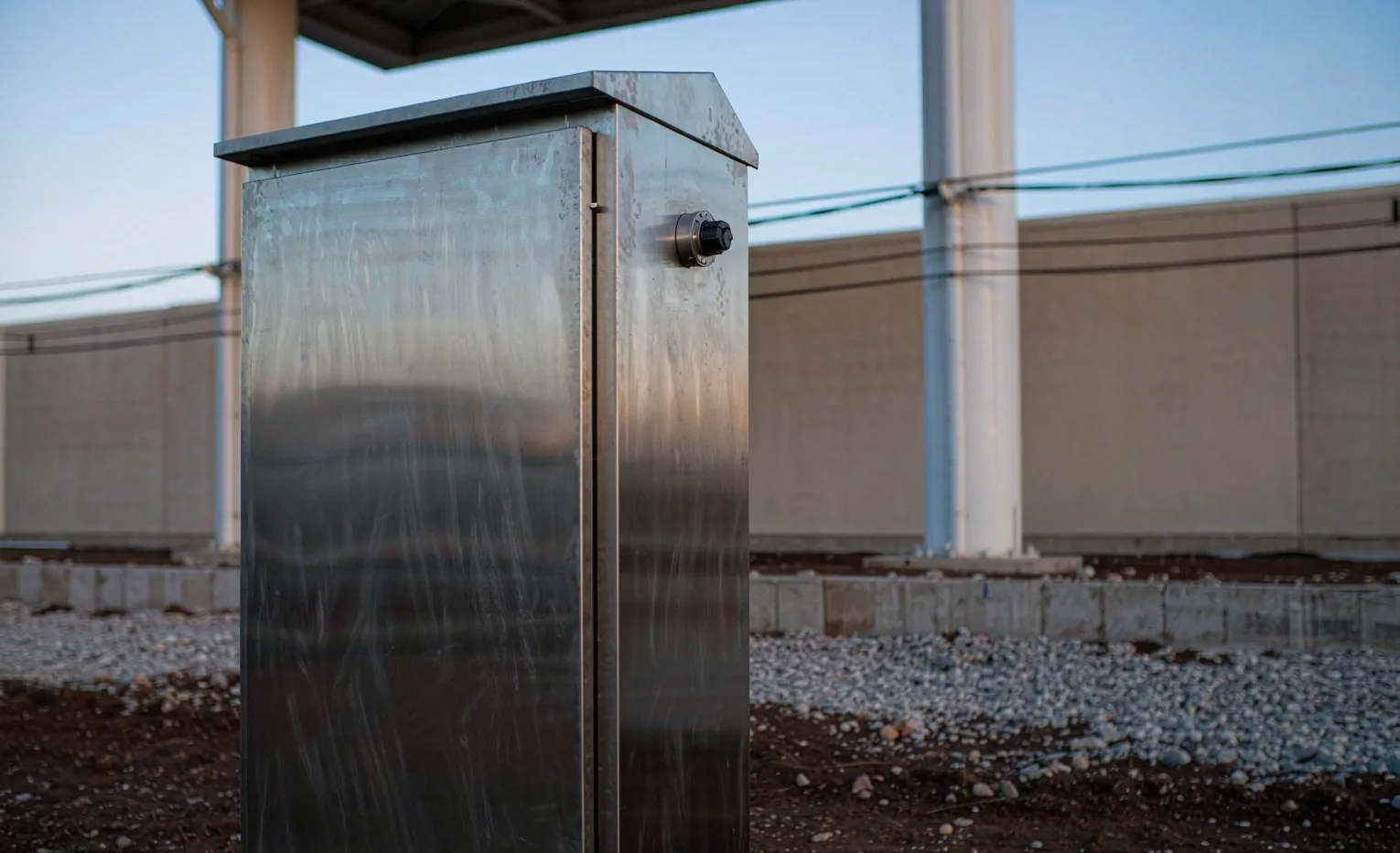
Do You Need a Vent in Your Electrical Enclosure?
Short answer: most enclosures don't need a vent. A sealed, well-gasketed box with the right heater beats a vented one in nine out of ten outdoor and washdown jobs we see. You add a breather only when the thermal cycle or altitude swing is large enough that pressure equalization matters more than keeping every drop of water out. Get that trade backwards and you swap a cheap membrane for a corroded terminal block.
I'll walk through how a vent actually changes your protection rating, the three situations where it earns its place, and the cheaper fixes you should try first. We're a sourcing partner and panel-build shop — this comes from spec'ing and assembling a few hundred cabinets a year, not a textbook. If you want the fuller sourcing picture, start with our China electrical enclosure sourcing guide.
Why a sealed box "breathes" anyway
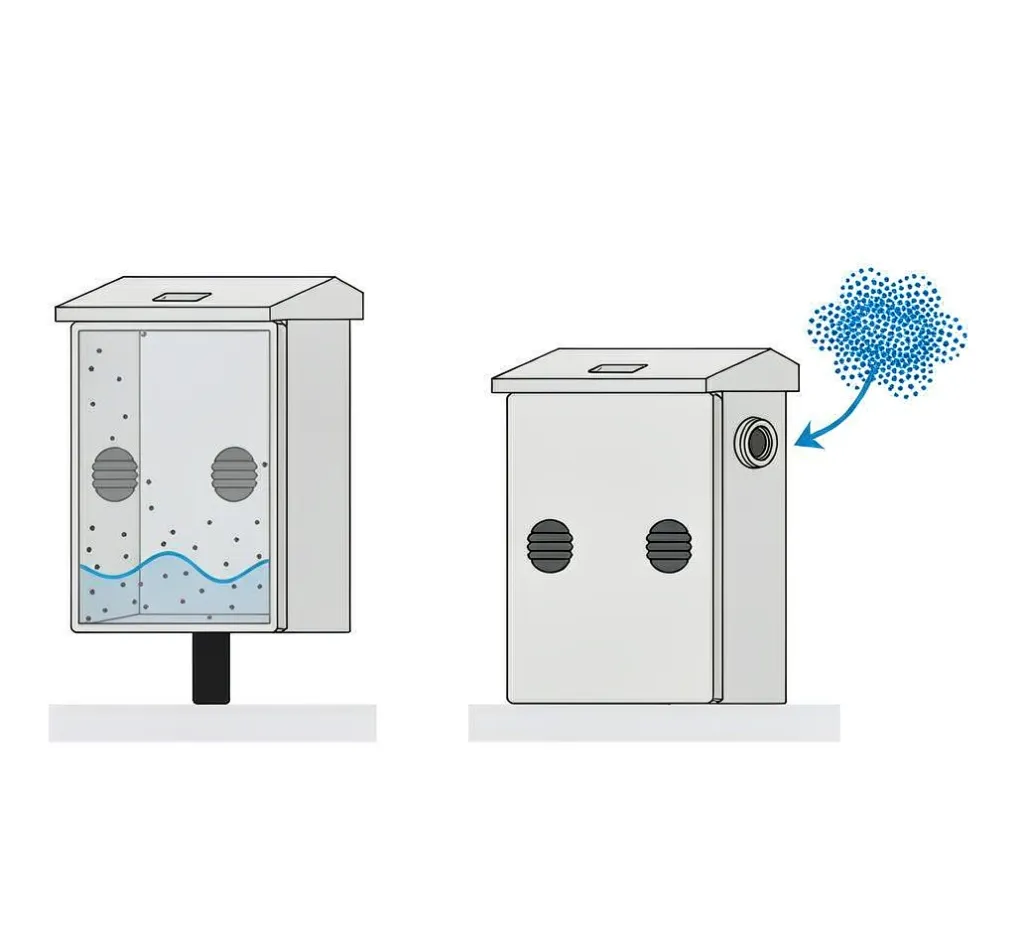
Here's the physics most buyers miss. Seal an enclosure at 25°C, then let the sun or a cold night swing the internal air by 20°C, and you've changed the internal pressure by roughly 7% — pressure tracks absolute temperature, that's ideal gas law, not opinion. On a 1 m³ cabinet that's enough negative pressure to suck moist ambient air straight past a marginal gasket. That's how you get the morning dew film on the inside of a "perfectly sealed" NEMA 4X box.
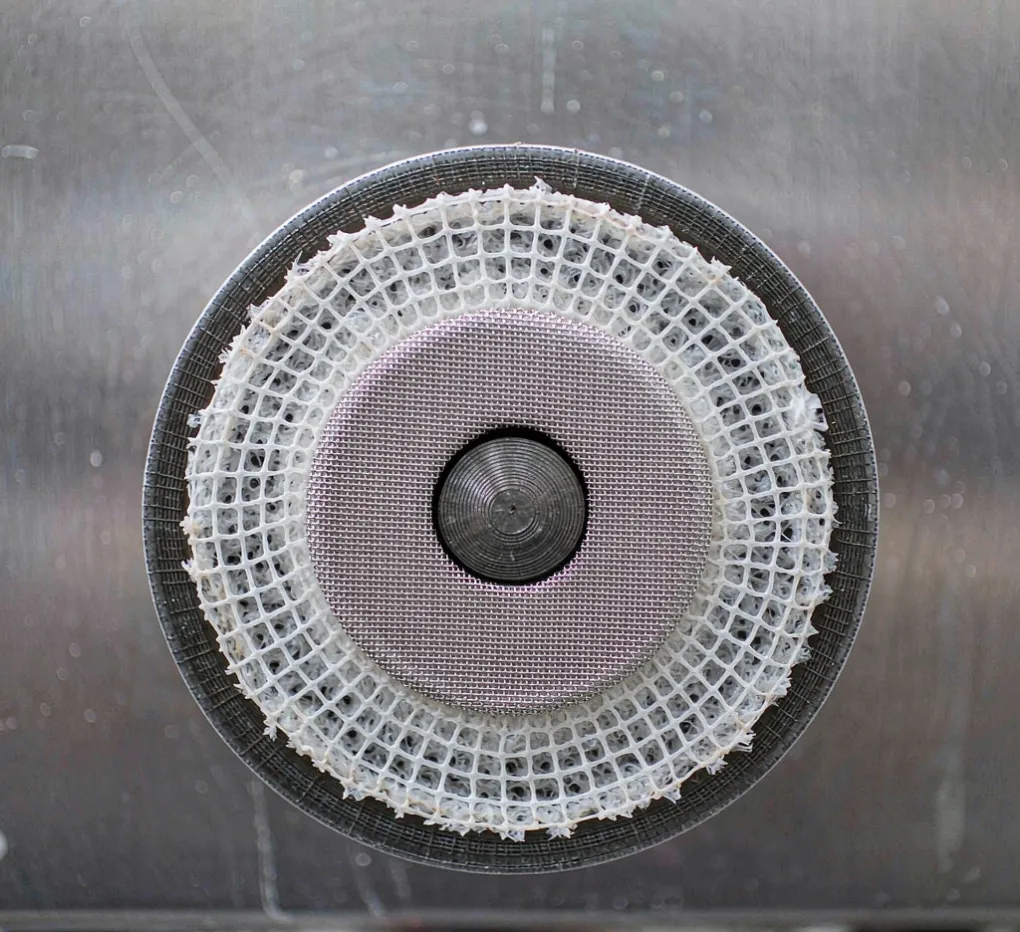
The instinct is to drill a hole and fit a breather. Makes sense. But a standard breather with a membrane typically drops you from IP65 / NEMA 4X down to around IP54 / IP55 — and NEMA 4X, per NEMA 250, allows no openings that defeat hose-down and corrosion resistance. So the vent fixes the pressure problem and creates a water-intrusion problem. You have to decide which one actually bites you on site.
Buyer Decision: If water ingress will shut your line down, keep it sealed and manage condensation another way. If pressure equalization is the real killer — high altitude, fast thermal cycles, sealed battery bays — a rated pressure-compensating membrane is worth it.
The three cases where a vent earns its place
1. Large altitude or rapid thermal swings. Cabinets shipped from sea level to a mountain site, or sitting in a desert with 40°C day-to-night swings, will pump air in and out constantly. A pressure-compensating membrane (IP67-rated membrane, not a simple hole) lets that equalize without drawing in dust and water.
2. Sealed compartments around batteries or sealed electronics. VRLA battery compartments off-gas slightly and build pressure as they age. A membrane breather is standard here. (We cover battery life cycles in our industrial UPS battery guide.)
3. Enclosures opened often in dirty air. If your tech pops the door weekly in a dusty plant, a filtered breather keeps the inside from becoming a vacuum that inhales grit every time the door shuts.
Everything else — a steady indoor motor control center, a coastal panel that just needs to stay dry — does better sealed.
Try these three fixes before you vent
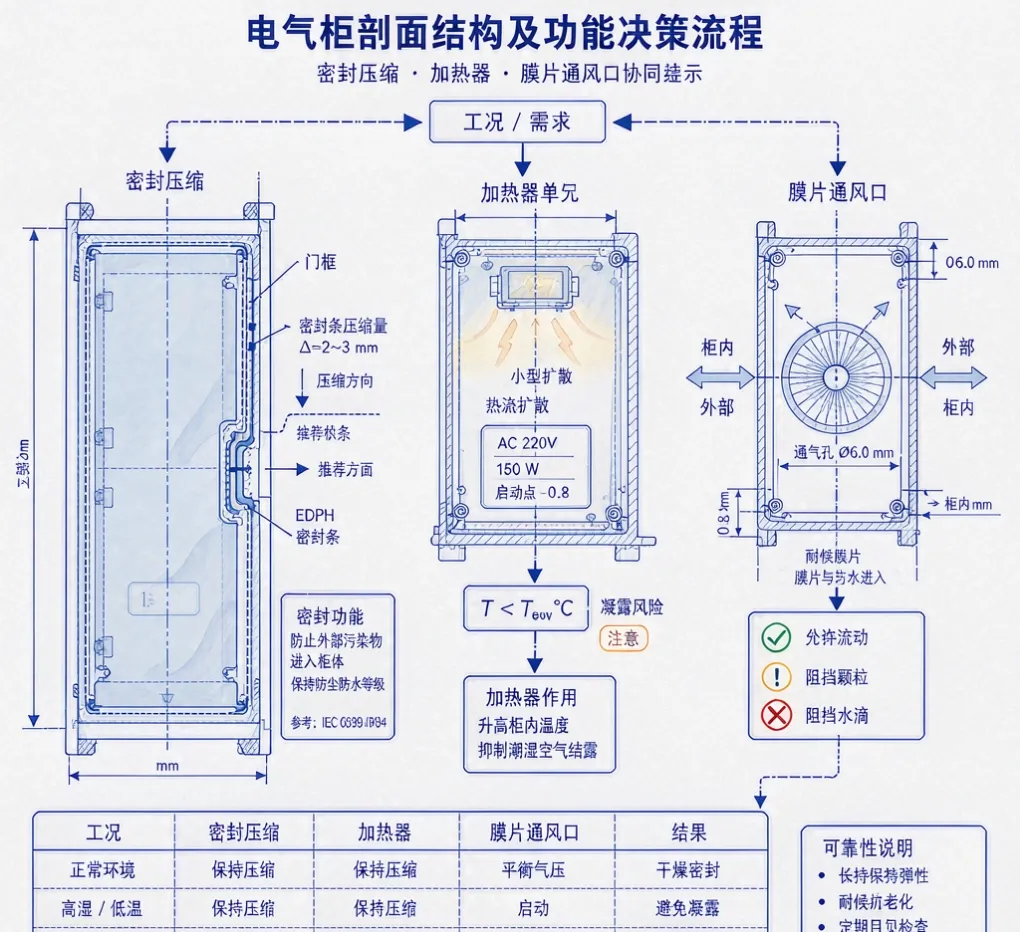
A. Spec the right gasket and compress it properly. Most "sealed" boxes fail because the EPDM or silicone gasket was pinched or the door compression was set wrong — not because the box needed to breathe. We use continuous EPDM on outdoor carbon-steel and 304 / 316 builds; silicone where temperature swings are extreme. A correctly compressed gasket holds IP65 through years of cycles. See our gasket selection guide.
B. Add a small anti-condensation heater with a thermostat. This is the fix we reach for most. A 10–30 W heater on a hygrostat keeps the internal dew point below the wall temperature, so moisture never condenses even when the box "breathes" slightly. It costs less than a rated membrane and keeps your NEMA 4X intact. We size these on every outdoor carbon-steel and stainless build.
C. Fix the thermal load instead. If the box is hot enough to need pressure relief, the real problem is heat, not air. Our outdoor cooling selection guide covers fan-filter, heat exchanger, and air-conditioner options. Venting won't cool a cabinet — it just lets humid air in.
Engineering Note: On a coastal food plant we reviewed, the original spec called for vented 304 boxes "to stop condensation." Within 14 months three had rust streaks at the membrane. We rebuilt them sealed with 316, EPDM, and a 20 W thermostat heater. Two years later, zero condensation calls. The vent was the problem, not the cure.
The material and rating reality
We build in carbon steel, 304, 316 stainless, and galvanized — and we don't touch aluminum for outdoor enclosures; it pits in coastal and chemical air faster than buyers expect. Whatever the shell, the rule holds: a vent is a deliberate downgrade of ingress protection in exchange for pressure relief. Don't let a supplier bolt one on by default and still stamp NEMA 4X — that's a compliance gap waiting for an inspector (UL 50E and IEC 60529 set the test criteria).
Situation | Our default | Add a vent only if |
|---|---|---|
Outdoor, washdown, coastal | Sealed 316 + EPDM + heater | Keep sealed |
Desert / large day-night swing | Sealed + passive vent membrane (IP67) | Pressure swing defeats the gasket |
Battery / sealed electronics bay | Sealed + membrane breather | Standard practice |
Indoor MCC, stable temperature | Sealed, no vent | Rarely |
What to send us for a quote
If you're stuck on the call, send the drawing or even a photo of the existing box and tell us: where it sits (indoor / outdoor / coastal), the day-night temperature range, and whether anyone opens it regularly. We'll tell you whether you need a vent, a heater, or just a better gasket — and we'll build it to the rating you actually need. Browse the electrical enclosures we supply. Empty enclosures run a 5-unit minimum with about a 15-day turn; components ship in 3–5 days if you're patching an existing panel.
FAQ
Do I need a breather if my enclosure already has a heater? Usually no. A thermostat heater keeps the dew point below the wall temperature, which removes the condensation driver. A breather helps with pressure, not moisture — they solve different problems.
Will a vent ruin my IP65 rating? A simple vented hole drops you to roughly IP54. A pressure-compensating IP67 membrane keeps you close to IP65 / IP66 but is still not NEMA 4X-compliant as an opening. Check the membrane's own rating, not the box's.
Can I add a breather to an existing NEMA 4X box? You can, but it's no longer NEMA 4X by definition — NEMA 250 allows no defeating openings. For most sites IP55 is fine; just don't claim 4X on the label.
What gasket material should I use outdoors? Continuous EPDM for most carbon and 304 / 316 builds; silicone for extreme temperature ranges. Avoid open-cell foam in wet or UV-exposed sites — it saturates.
How do I know if my box is "breathing" badly? A morning condensation film on the inside, dirty streaks at the door, or a gasket that looks sucked inward are the tells. An internal dew-point check during a cold night confirms it.
Is aluminum okay for an outdoor vented enclosure? We don't use aluminum outdoors — it pits in coastal and chemical atmospheres. Carbon, 304, or 316 with the right coating lasts longer.
Engineering Takeaway
A vent is a pressure fix, not a moisture fix, and it always costs you ingress protection. Default to a sealed, properly gasketed, heated enclosure; reach for a rated pressure-compensating membrane only when altitude or thermal swing genuinely defeats the seal. Spec the rating you'll actually stand behind.