
Oct 7, 2026Buying Guides
Outdoor Enclosure Sun Shield and Rain Hood: What to Put in Your RFQ
A sun shield and rain hood are the cheapest insurance for an outdoor enclosure in hot or rainy sites. Here's what to specify so your supplier doesn't skip them.
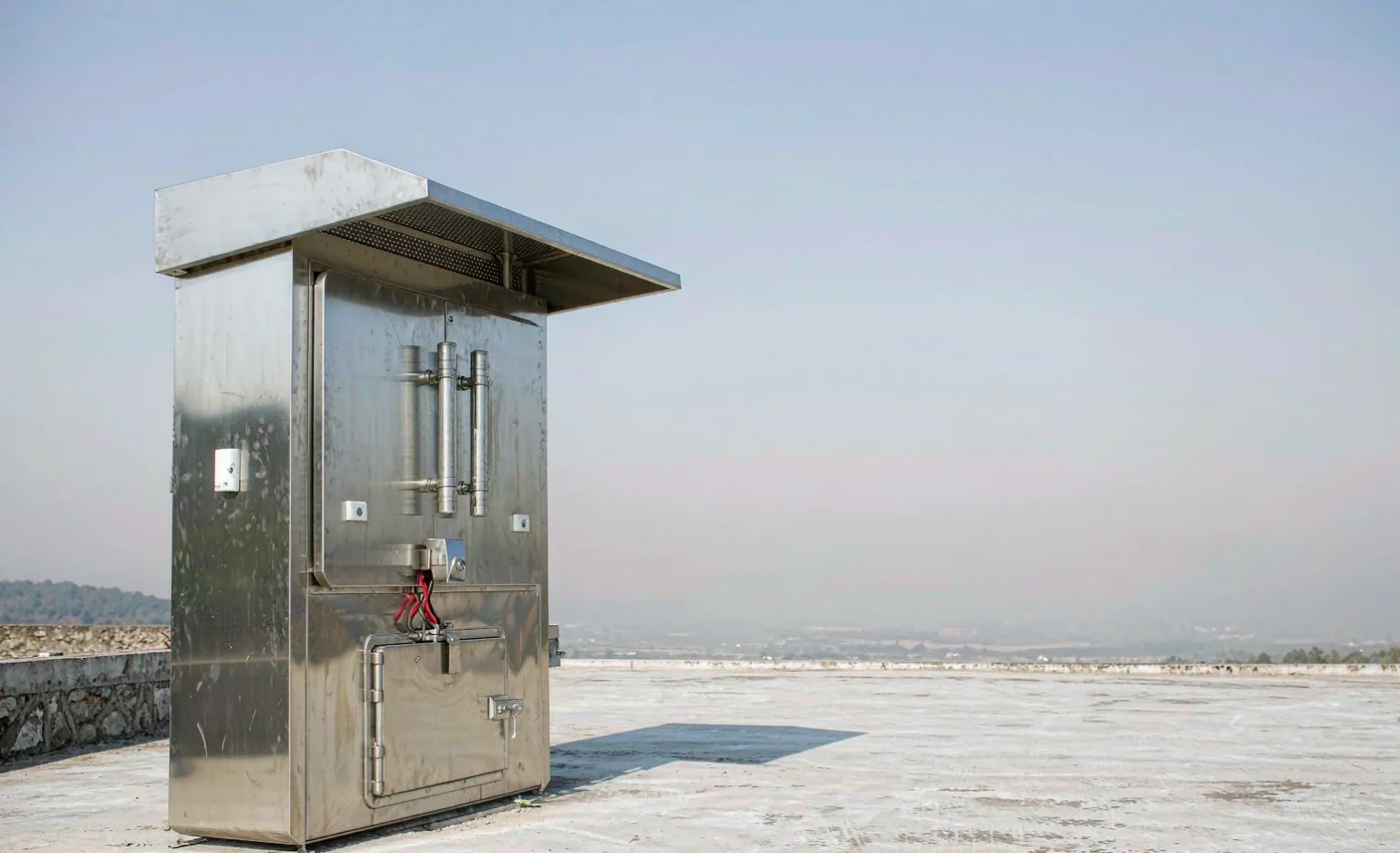
Every summer I get the same call: a panel that's overheating, or a door that leaks at the top corner. Nine times out of ten, the fix is two cheap parts the original RFQ never mentioned—a sun shield and a rain hood.
If you're putting an enclosure outside, the roof takes a beating. Direct sun can push the internal temperature 10–20°C above ambient before you've added any heat from the gear inside. And rain, especially wind-driven, finds the top seam every time. Both are solved with parts that cost a fraction of the enclosure. The trick is making sure they're in the spec.
What a sun shield actually does
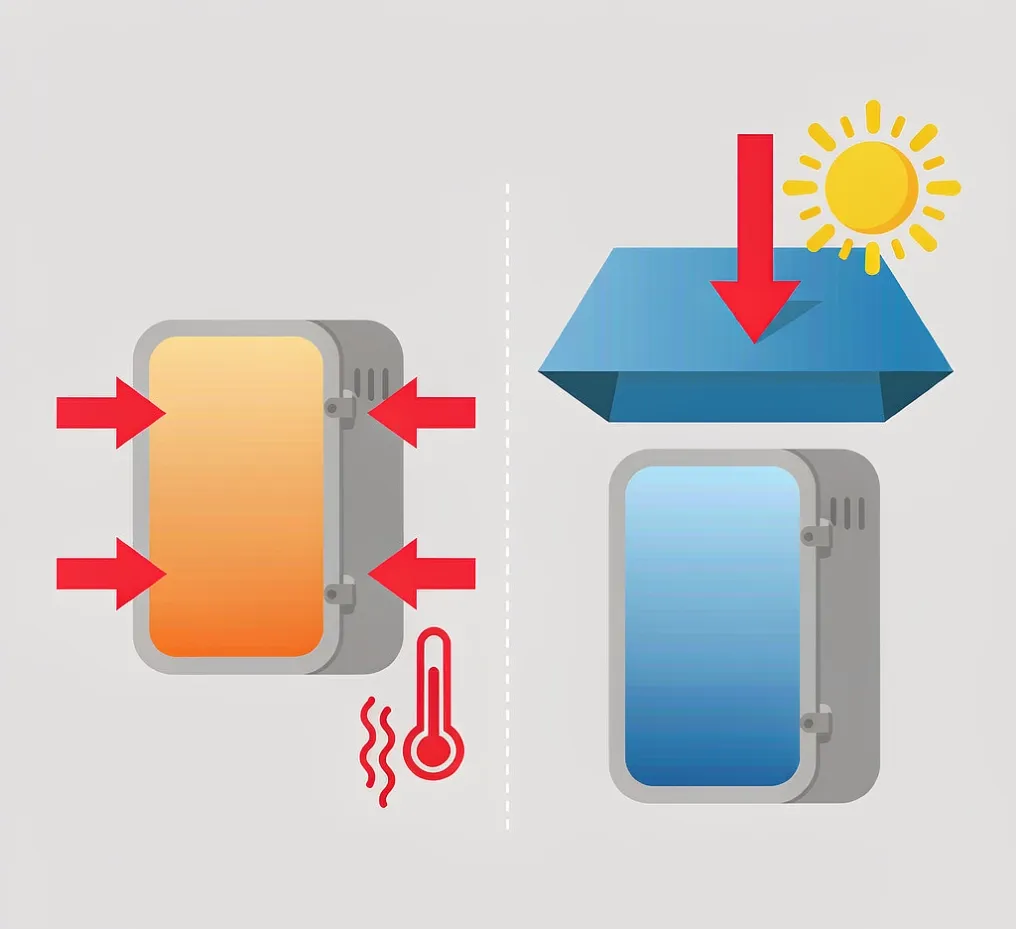
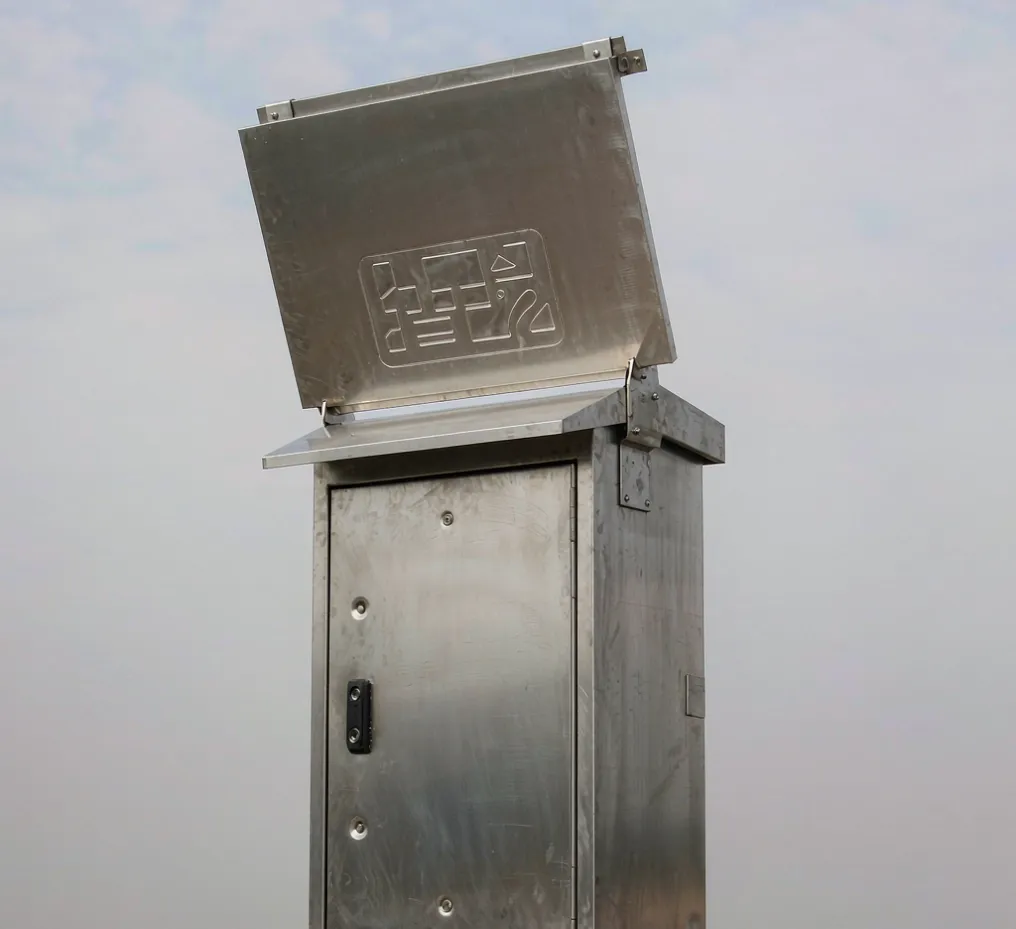
A sun shield is a stand-off roof above the enclosure. It shades the box and, because it's lifted off the surface, lets air move between shield and lid—so the heat the shield catches never reaches the steel. On a 35°C day, an unshielded dark enclosure in full sun can hit 60–70°C inside. Add a shield with a proper gap and you can knock 15°C off that.
The gap matters more than the shield. A shield bolted flat to the lid is just a second lid. You want a stand-off of at least 50 mm and vented edges so air actually circulates.
What a rain hood actually does
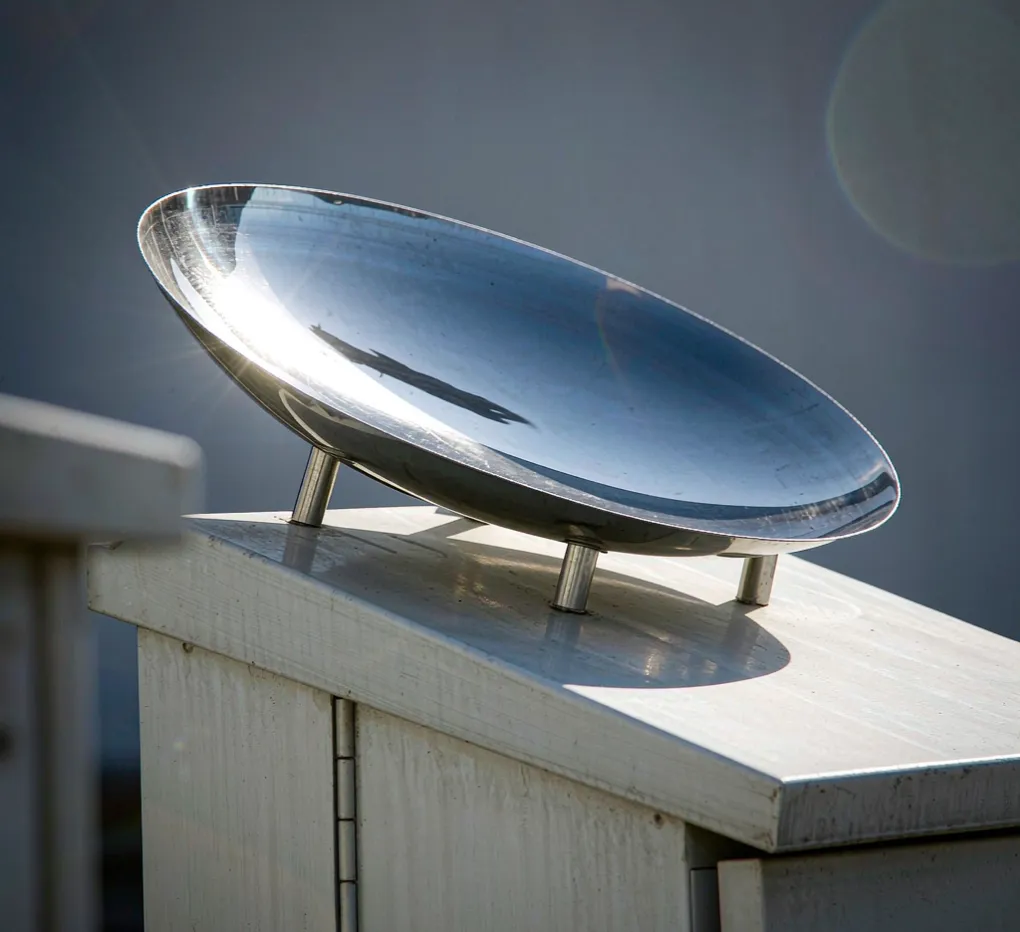
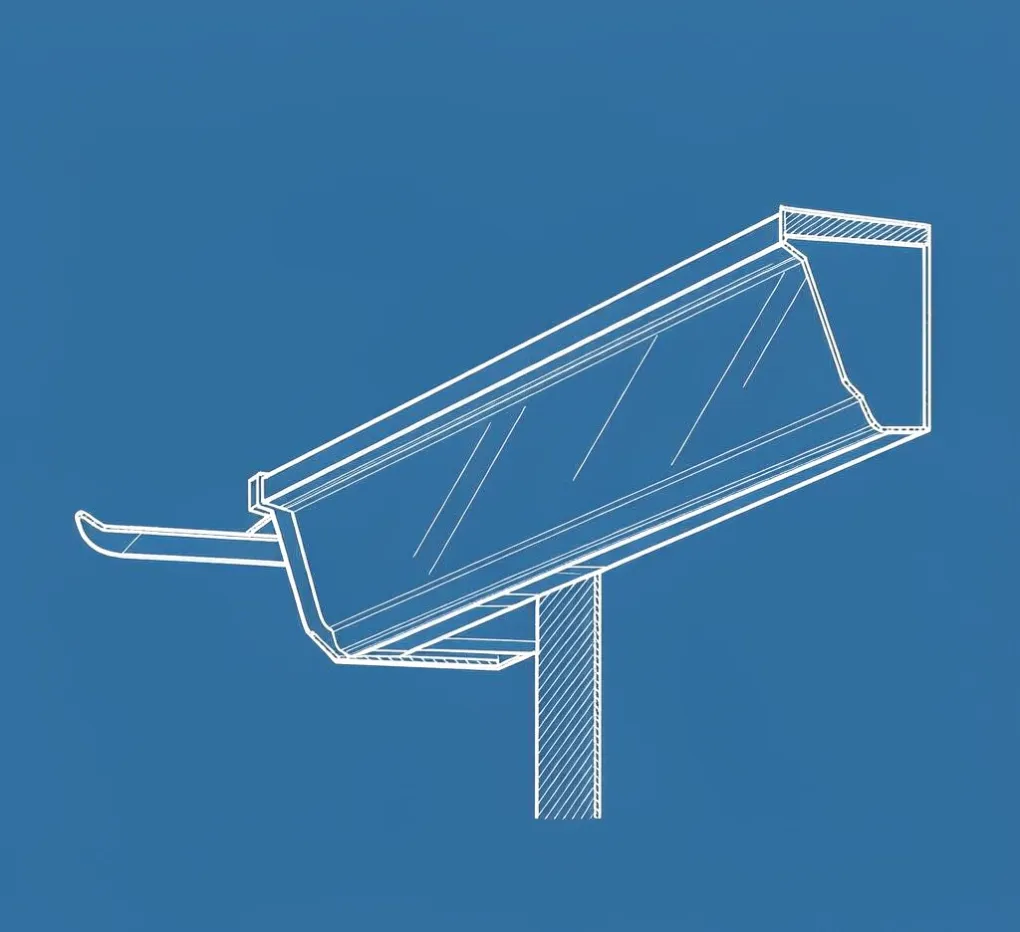
A rain hood is an overhang at the top—a drip lip that throws water clear of the lid and the door opening. It matters most during maintenance, when someone has the door open and the sky opens up. Even a 100 mm overhang cuts top-seam ingress dramatically, because wind-driven rain hits the lip and runs off instead of curling under the seam.
This is separate from the IP or NEMA rating. IP66, defined by IEC 60529, stops water that reaches the gasket; a rain hood stops the water from reaching the seam in the first place. They do different jobs, and you want both outside.
What to specify in your RFQ
Here's the line-item list. If the quote doesn't show each row, the supplier is probably planning to skip it — and a skipped shield is the one that costs you in August.
Item | What to specify | Why it matters |
|---|---|---|
Sun shield | Stand-off ≥ 50 mm, vented edges, same grade as box | Shade plus convection, not a second lid |
Rain hood | Overhang ≥ 100 mm, formed drip lip, sealed to roof | Deflects wind-driven rain from the seam |
Material | Match the enclosure — 304/316 or coated carbon | No galvanic mismatch, no two-tone fade |
Coating | UV-stable polyester powder, same as body | Survives years of sun without chalking |
Mounting | Bolt-through, not adhesive | Stays put through a storm |
Verification | Confirm at FAT | A part nobody asked for gets omitted |
A build we caught at FAT
A coastal-site quote came in without a sun shield to hit a price point. At pre-shipment review we ran the internal-temperature math: on a summer afternoon the gear would sit 18°C above ambient, right at the edge of the VFD's rating. We added the shield and a rain hood, re-checked, and the buyer avoided a meltdown he'd never have traced back to a missing line item.
Mistakes buyers make
- "The enclosure is IP66, it'll be fine." IP is about ingress, not heat. A sealed box in the sun is a sealed oven.
- "We'll add a shield later." Retrofitting an external shield is ugly, rarely done, and costs more than specifying it up front.
- "Any overhang works." It needs a stand-off and a real drip lip, not a flat cap someone welded on.
Shade and rain protection keep the box alive mechanically — but the electrical side needs its own defence. Our control-panel surge protection guide covers the transient side of the same outdoor problem.
How to read a supplier's offer
Three tells that the protection is real: the shield is listed as a line item with a stand-off dimension, the material matches the box (no cheaper mild-steel cap on a 316 unit), and the rain hood has a formed drip lip rather than a flat flange. If the shield isn't on the drawing, it isn't on the box.
For the record, we're a sourcing partner and panel-build shop — so this is practical buying advice, not a catalogue pitch. If you're specifying an outdoor enclosure, our electrical enclosure supplier's guide to sourcing from China covers the full process, and our electrical enclosures solution page shows what we build and ship.
FAQ
Do I need a sun shield in a temperate climate?
If the enclosure sees direct afternoon sun for part of the year, yes. Even mild climates have heatwaves, and the shield is cheap insurance against a single bad week.
Can a rain hood replace a proper IP or NEMA rating?
No. The hood keeps water off the seam; the rating keeps it out past the gasket. They solve different problems, and outside, you want both.
What material should the shield be?
The same as the enclosure. A 316 box deserves a 316 shield—mixing in mild steel invites galvanic corrosion at the bolts.
How much stand-off do I need?
At least 50 mm, with vented edges. Less than that and you've added a second lid that traps heat instead of shedding it.
Will a shield void the NEMA rating?
Not if it's designed as part of the enclosure. A bolt-on shield that doesn't break the door or gasket seal leaves the rating intact. Ask the supplier to confirm in writing—the rating itself is defined by NEMA 250.
Can I add these to an enclosure that's already installed?
You can, but it's a field job—drilling, sealing, and a climb. Specifying it at order time is faster and cheaper, and you actually get it.
Buyer's takeaway
A sun shield and a rain hood are the cheapest line items on an outdoor enclosure, and the ones most often quietly dropped. Stand-off ≥ 50 mm, overhang ≥ 100 mm with a drip lip, material matched to the box, and a FAT check that confirms all three. Write them into the RFQ or don't expect them on the box.
Related guides - Why outdoor enclosures fail prematurely — the full failure story behind a missing shield - Best materials for outdoor electrical cabinets — 304, 316, or coated carbon, by site - Outdoor enclosure cooling selection guide — when a shield isn't enough and you need active cooling - Electrical enclosure vent and breather guide — managing the air the shield traps - NEMA 4X enclosure buying guide — what the rating does and doesn't promise - IP65 vs IP66 outdoor electrical cabinets — picking the ingress grade for your site
Planning an outdoor enclosure? Upload your drawing for an engineering review — we'll check the sun, rain, and rating details, then send suggestions back.