
Oct 2, 2026Buying Guides
How to Evaluate a Motor Control Panel Supplier
A practical motor control panel review guide covering motor duty, protection, enclosure size, heat, feeder labels, PLC/MCC interface, FAT, supplier red flags, and RFQ preparation.
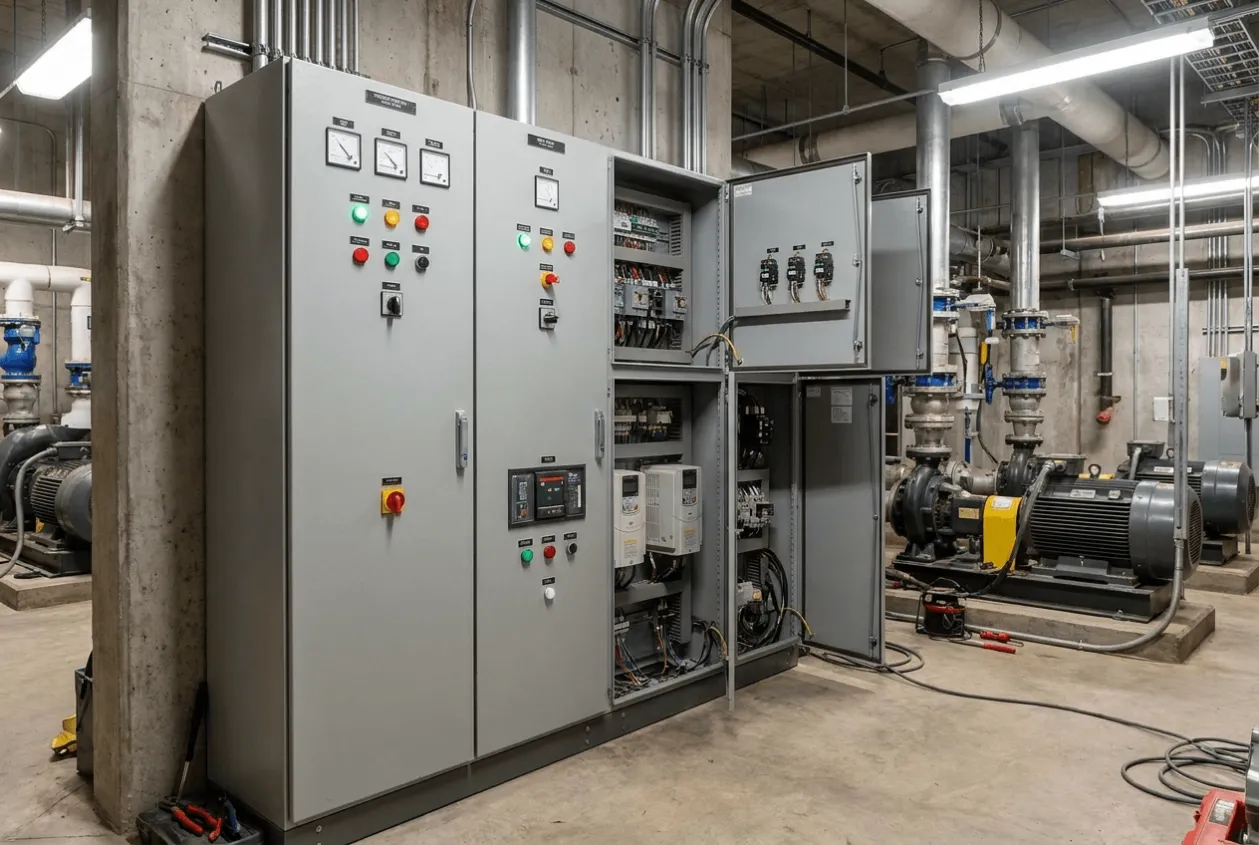
How to Evaluate a Motor Control Panel Supplier Before Approving a Quote
Quick Answer
The best motor control panel supplier is not the one with the lowest quotation. It is the one that understands how your motor will start, run, trip, and be serviced.
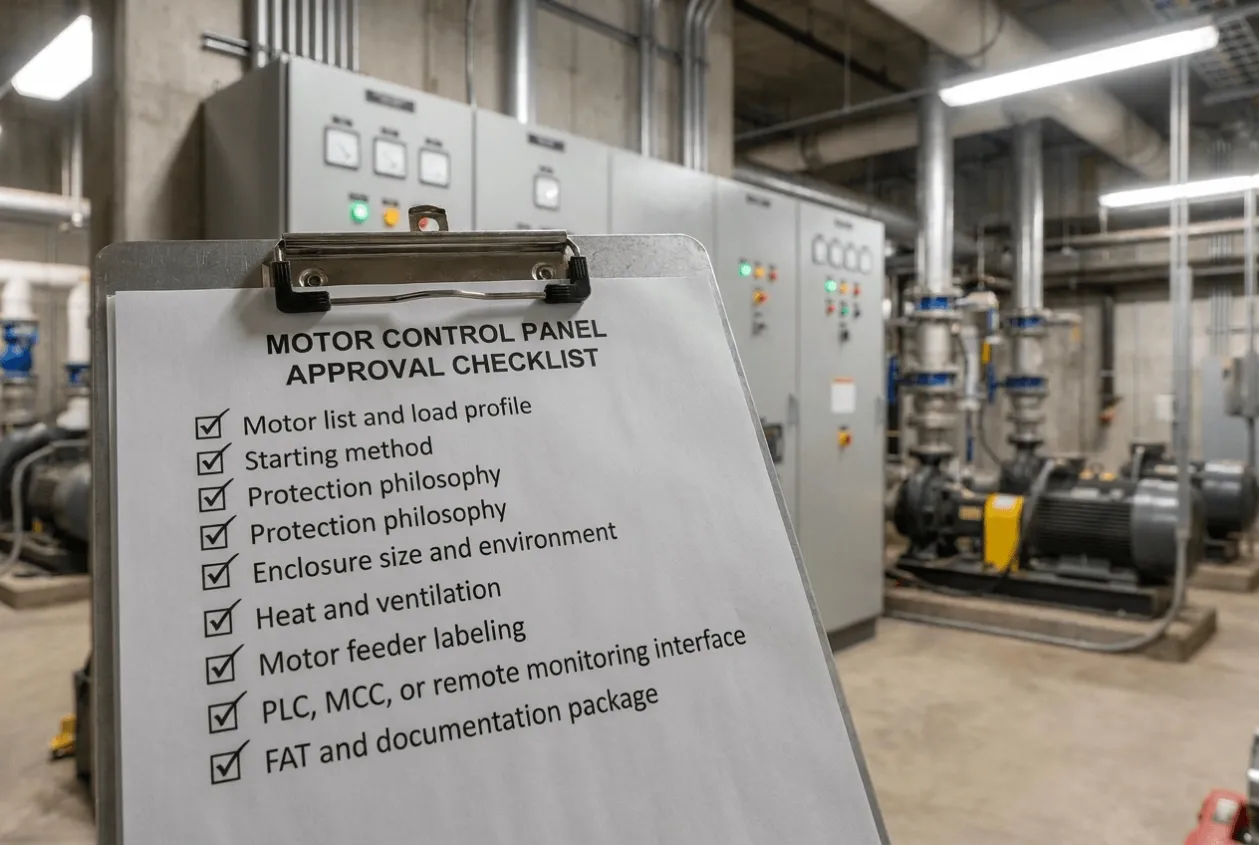
Before approving a motor control panel manufacturer, supplier, builder, or panel company, I always review eight items:
- Motor list and load profile
- Starting method
- Protection philosophy
- Enclosure size and environment
- Heat and ventilation
- Motor feeder labeling
- PLC, MCC, or remote monitoring interface
- FAT and documentation package
A motor control panel can look simple from the outside. But once it controls several pumps, fans, conveyors, compressors, or VFD-driven motors, the real risk is no longer only component selection. The real risk is downtime.
Buying Tip A good motor control panel should make failures easier to find. When a motor trips, the maintenance team should know which feeder, which protection device, which signal, and which drawing page to check first.
The Big Idea: A Motor Control Panel Is Bought for Downtime Risk
Many buyers ask: “Who is the best motor control panel manufacturer?”
I usually ask a different question: “What happens when one motor stops?”
That question changes the review.
If the panel has weak feeder labels, the maintenance team loses time. If the enclosure is too small, VFD heat becomes a reliability problem. If the PLC interface is unclear, troubleshooting becomes a discussion between electrical and automation teams. If FAT only checks power-on status, commissioning becomes the real test.
A motor control panel is not only a box for starters, breakers, overloads, and drives. It is part of the plant’s recovery logic.
The right supplier helps reduce downtime before the first wire is cut.
Before Asking for Quotations
Most buyers contact motor control panel suppliers too early.
They send a motor list and ask for a price. The supplier quotes the visible parts. Then, after approval, the real questions appear: outdoor or indoor? DOL or VFD? PLC interface or standalone? NEMA or IP rating? Cable entry from top or bottom? FAT required or not?
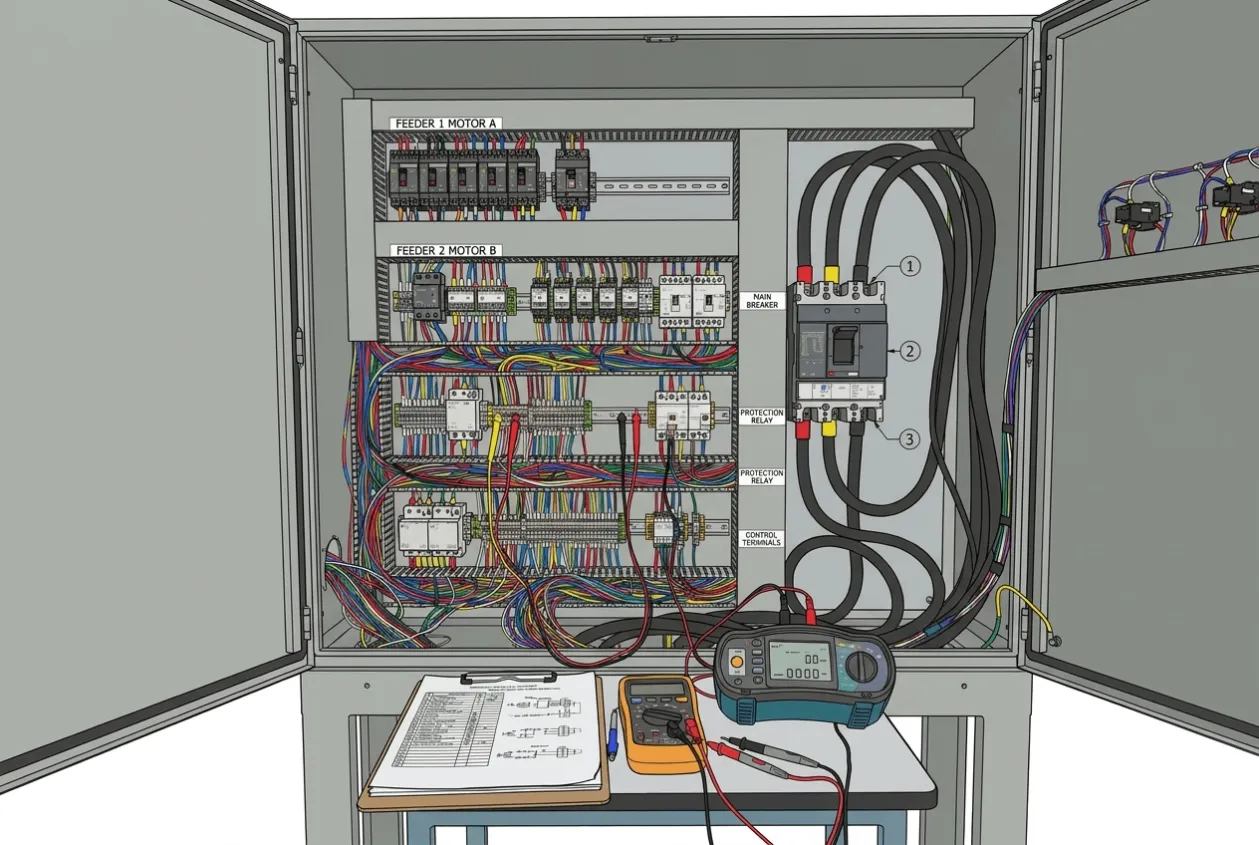
Before requesting a quotation, confirm these items:
- Motor list with power rating, voltage, quantity, and duty
- Starting method: DOL starter, soft starter, or VFD
- Protection requirements
- Indoor, outdoor, washdown, dusty, hot, humid, or corrosive environment
- Enclosure material and rating
- Standalone panel, MCC interface, or PLC interface
- Run status, fault feedback, alarms, and reset signals
- FAT scope
- Required drawings, BOM, labels, and inspection records
- Delivery target and export packing needs
This is where commercial intent becomes real. A serious quotation needs project context, not only part numbers.
Procurement Advice A motor list tells the supplier what to control. It does not explain how the panel will live on site. For a reliable quotation, include the environment, duty cycle, communication needs, and maintenance expectations.
The 8 Items I Review Before Approving a Motor Control Panel
1. Motor List and Load Profile
I start with the motor list, but I do not stop there.
A useful motor list should include motor power, voltage, quantity, load type, duty cycle, starting frequency, running condition, and future spare positions.
A pump, fan, conveyor, mixer, and compressor do not behave the same way. Their starting current, torque demand, overload risk, and service expectations are different.
Supplier Red Flag
The supplier quotes only from horsepower and quantity without asking about load type, duty cycle, or operating condition.
Supplier Green Flag
The supplier asks how often the motor starts, what the load actually does, whether future motors may be added, and whether the motor duty affects protection or enclosure design.
2. Starting Method
The starting method changes the whole panel design.
A simple DOL starter may be enough for some motors. A soft starter may be better when smoother acceleration is needed. A VFD is usually selected when speed control, process control, or energy savings matter.
But VFDs also introduce heat, wiring separation, parameter setup, and service space requirements.
Supplier Red Flag
Every motor is quoted with the same starting method without discussion.
Supplier Green Flag
The supplier reviews whether each motor should use DOL, soft starter, or VFD control based on duty, process requirement, starting current, and maintenance expectation.
3. Protection Philosophy
Motor protection is not just adding breakers and overload relays.
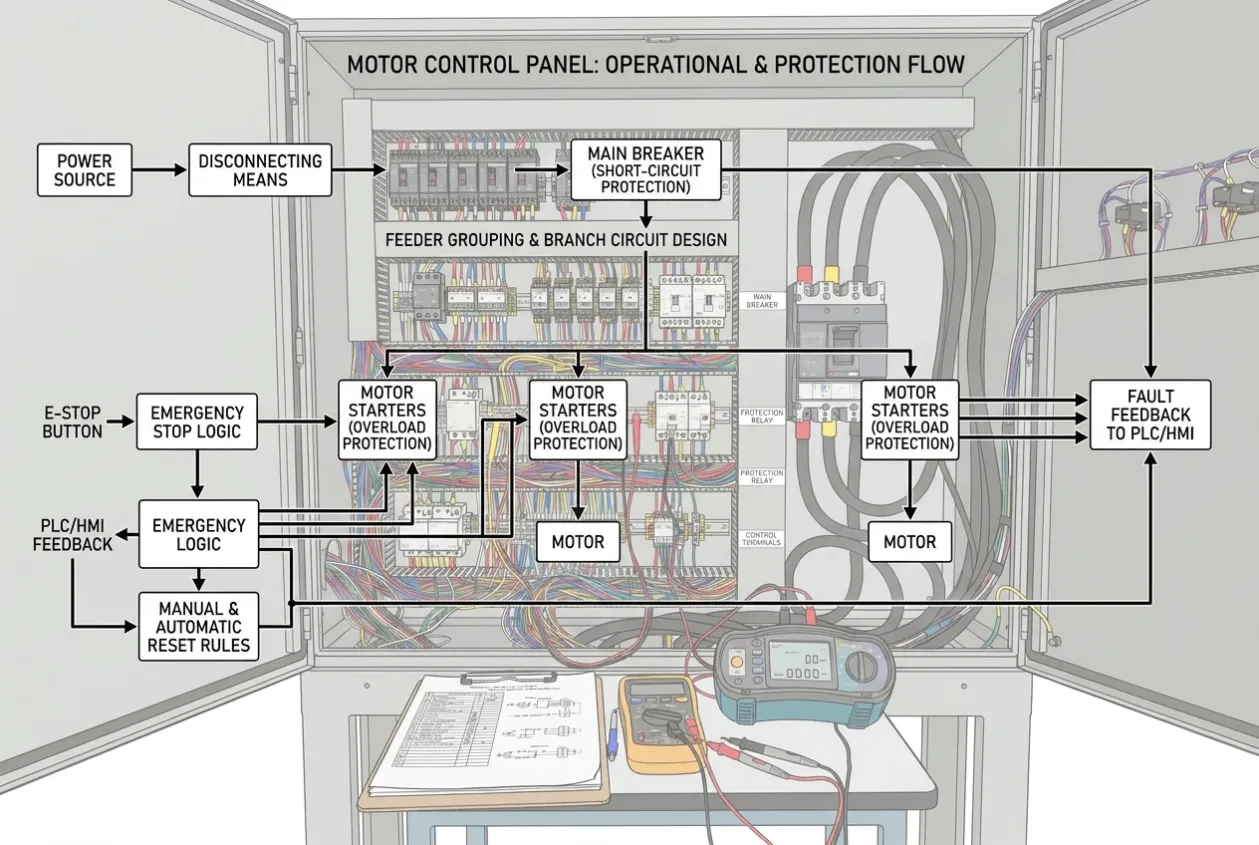
The panel should consider short-circuit protection, overload protection, disconnecting means, branch circuit design, feeder grouping, emergency stop logic, manual and automatic reset rules, and fault feedback to PLC or HMI.
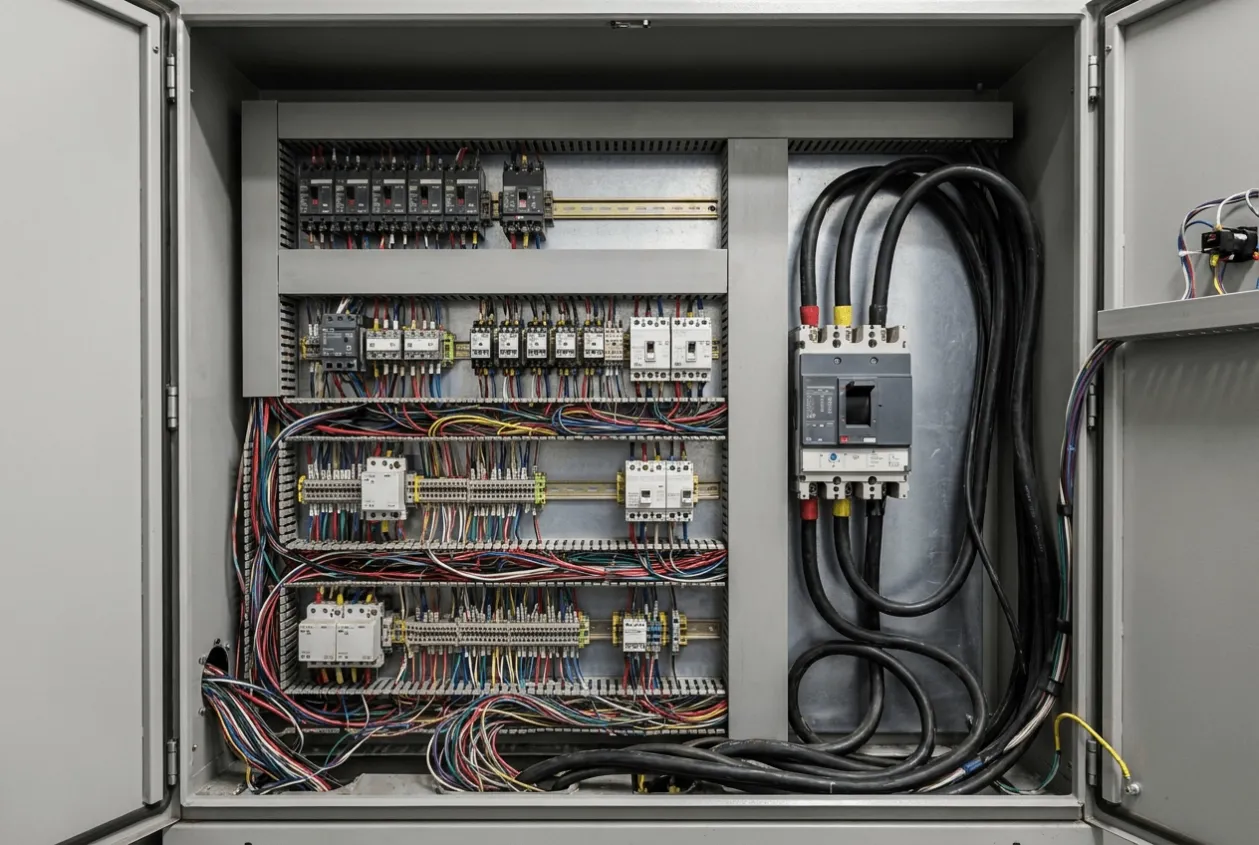
For North American projects, UL 508A industrial control panel requirements may be relevant. For machinery-related systems, NFPA 79 and IEC 60204-1 are also useful references.
Supplier Red Flag
The quotation lists components but does not explain protection logic.
Supplier Green Flag
The supplier explains how each motor feeder is protected, isolated, reset, tested, and reported back to the control system.
Engineering Note Motor protection is not only about protecting equipment. It also affects how quickly maintenance can understand why the motor stopped.
4. Enclosure Size and Environment
This is one of the most common sources of hidden cost.
A smaller enclosure may reduce the quote. Later, the panel becomes crowded. Cable bending is uncomfortable. Heat is harder to manage. There is no room for future feeders. Maintenance becomes slower.
Review indoor or outdoor installation, dust, water, washdown, humidity, sunlight, corrosion, enclosure material, IP rating, NEMA enclosure rating, cable entry direction, and future expansion space.
Supplier Red Flag
The layout is already full before future changes are considered.
Supplier Green Flag
The supplier reviews the installation environment, cable entry, cooling method, maintenance clearance, and spare space before confirming enclosure size.
5. Heat and Ventilation
Heat is not always caused by bad components. Often, it is caused by poor layout decisions.
This is especially important for VFD panels, outdoor motor control panels, and panels installed in hot or dusty environments.
Review VFD quantity, motor load, ambient temperature, ventilation path, cooling fan, filter, air conditioner, heat exchanger, component spacing, and separation of hot zones and control zones.
Supplier Red Flag
A VFD-heavy panel has no clear heat strategy.
Supplier Green Flag
The supplier checks heat load, ambient temperature, airflow path, cooling method, and whether filters or fans will be easy to maintain.
6. Motor Feeder Labeling
Feeder labeling looks small until a motor trips.
A good motor control panel should make each feeder easy to identify. The motor name, feeder number, terminal reference, protection device, and drawing page should connect clearly.
Supplier Red Flag
Labeling is “handled during assembly” without a defined rule.
Supplier Green Flag
The supplier defines motor feeder labels, wire numbers, terminal references, device tags, and drawing references before production starts.
7. PLC, MCC, or Remote Monitoring Interface
Many motor control panels are not standalone anymore.
Common signals include start command, stop command, run feedback, fault feedback, trip indication, speed reference, auto/manual mode, emergency stop status, remote reset, and communication status.
Supplier Red Flag
PLC or MCC signals are left for commissioning.
Supplier Green Flag
The supplier confirms all start, stop, run, fault, trip, reset, speed, alarm, and communication signals before wiring begins.
8. FAT and Documentation Package
A serious motor control panel builder should not treat FAT as a formality.
A useful Factory Acceptance Test should verify power circuit wiring, control circuit wiring, motor feeder labels, protection devices, starter or VFD operation, PLC signal interface, alarms, terminal references, drawing match, visual inspection, and customer-specific requirements.
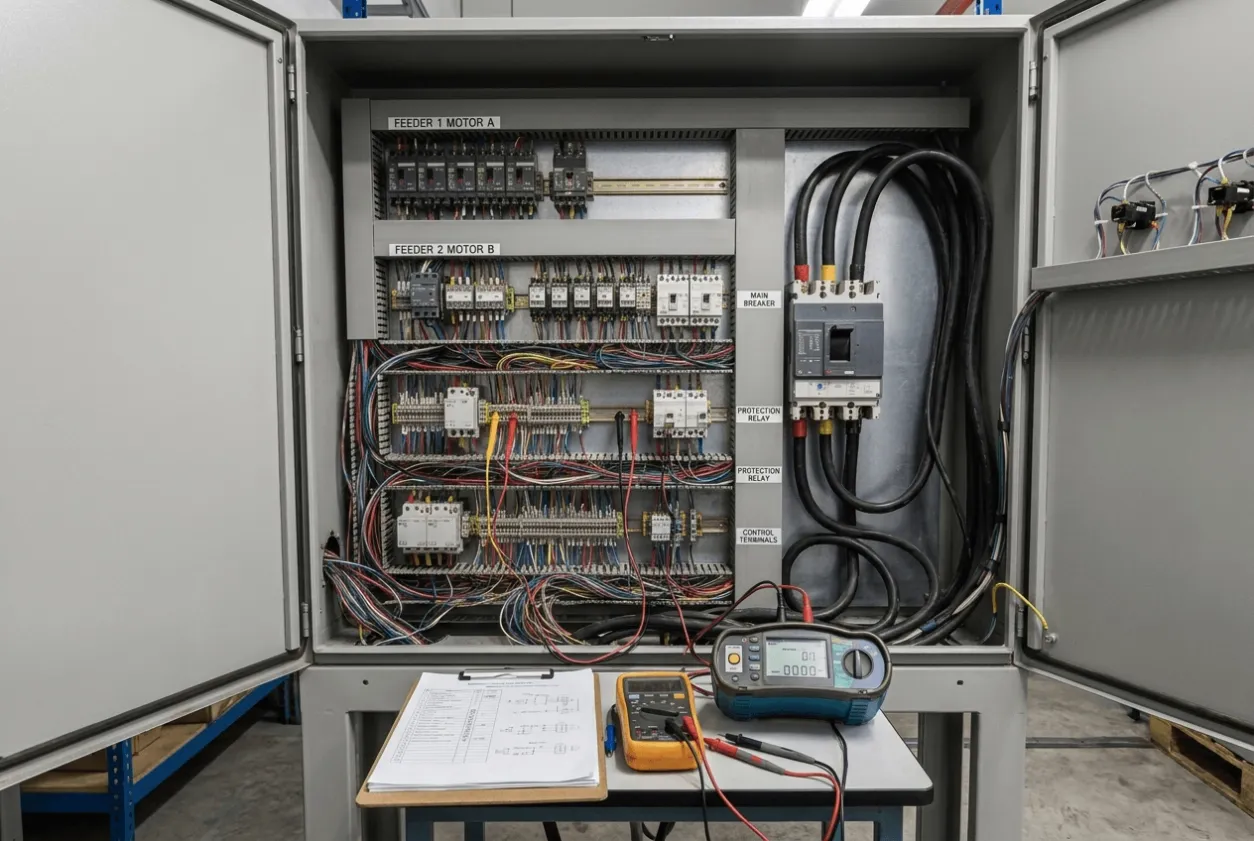
The documentation package should include electrical schematics, BOM, panel layout, terminal plan, wire numbers, device labels, feeder list, FAT checklist, inspection photos, and revision record.
Supplier Red Flag
FAT means only “power on and take photos.”
Supplier Green Flag
The supplier provides a clear FAT checklist before production and links the test items to the motor feeders, protection devices, PLC signals, and project requirements.
Common Mistake Many buyers ask for FAT after the panel is built. It should be discussed before quotation, because FAT scope affects wiring checks, documentation, time, and responsibility.
Quote Review: Three Quotations, Which One Would I Approve?
Imagine a food factory needs a motor control panel for:
- 8 motors
- Outdoor installation
- Stainless steel enclosure
- Several VFDs
- PLC start/stop control
- Run and fault feedback
- FAT before shipment
Three suppliers quote the project.
Supplier A: Lowest Price
Supplier A gives the lowest quotation. The enclosure is compact, the VFDs fit on paper, and the quote includes basic wiring.
But there is no clear heat review, no cable entry discussion, and FAT is described only as a power-on test.
My decision: Be careful. The price is attractive, but the risk is hidden in heat, wiring space, and testing.
Supplier B: Good Components, Weak Scope
Supplier B uses good brands and a better enclosure. But the quotation does not clearly define PLC signals, feeder labels, drawing package, or inspection records.
My decision: Request revision before approval. Good components are not enough if the project scope is unclear.
Supplier C: Higher Price, Better Review
Supplier C asks about motor duty, ambient temperature, washdown risk, cable route, PLC signal list, future expansion, FAT checklist, and enclosure service access.
My decision: Shortlist Supplier C first.
Not because it is the most expensive, but because it is the only supplier reviewing the real project instead of only quoting the cabinet.
How I Eliminate Motor Control Panel Suppliers
Supplier Situation | My Decision | Why |
|---|---|---|
No clear FAT scope | Remove or request revision | Testing is too weak for a serious motor panel |
No drawing package | Remove | Future troubleshooting becomes risky |
No enclosure review | Be careful | Heat, cable entry, and service space may be underestimated |
No PLC/MCC signal discussion | Be careful | Interface problems may appear during commissioning |
No labeling standard | Be careful | Maintenance time may increase later |
Quotes only from part numbers | Be careful | Supplier may not understand the application |
Asks about duty, environment, protection, and service | Shortlist | Supplier is thinking like an engineering partner |
A good motor control panel manufacturer should ask better questions before sending a final price.
Procurement Decision Box
If the Supplier Asks Only About... | My Reaction |
|---|---|
Motor quantity | Be careful |
Horsepower only | Be careful |
Component brand only | Be careful |
Cabinet size only | Be careful |
Price target only | Be careful |
If the Supplier Also Asks About... | My Reaction |
|---|---|
Motor duty and starting method | Shortlist |
Site environment and enclosure rating | Shortlist |
Heat load and ventilation | Shortlist |
Protection philosophy | Shortlist |
PLC, MCC, or monitoring interface | Shortlist |
Cable entry and service access | Shortlist |
FAT and documentation scope | Shortlist |
Future expansion | Shortlist |
This is one of the simplest ways to judge a motor control panel supplier. Weak suppliers quote parts. Strong suppliers review risk.
From Our Experience
One mistake we repeatedly see is that buyers approve enclosure size before confirming heat load, VFD quantity, cable entry direction, and maintenance space.
At first, the smaller enclosure looks like a saving. Later, the same decision becomes a problem. The VFD area runs hot. The cable bend radius is uncomfortable. Terminals are crowded. A small site change becomes difficult.
The problem is not always the VFD brand or PLC brand.
Sometimes the cabinet is simply too small for the real job.
That is why UniRegal encourages buyers to share the motor duty, site condition, load profile, control interface, and service expectation before quotation. A good supplier can often prevent expensive changes before production starts.
Buyer Checklist Before Sending an RFQ
Before you shortlist anyone, work through the seven questions to ask a motor control panel supplier in China — it covers factory verification, certification traceability, per-unit test records, lead time, transit risk and true landed cost.
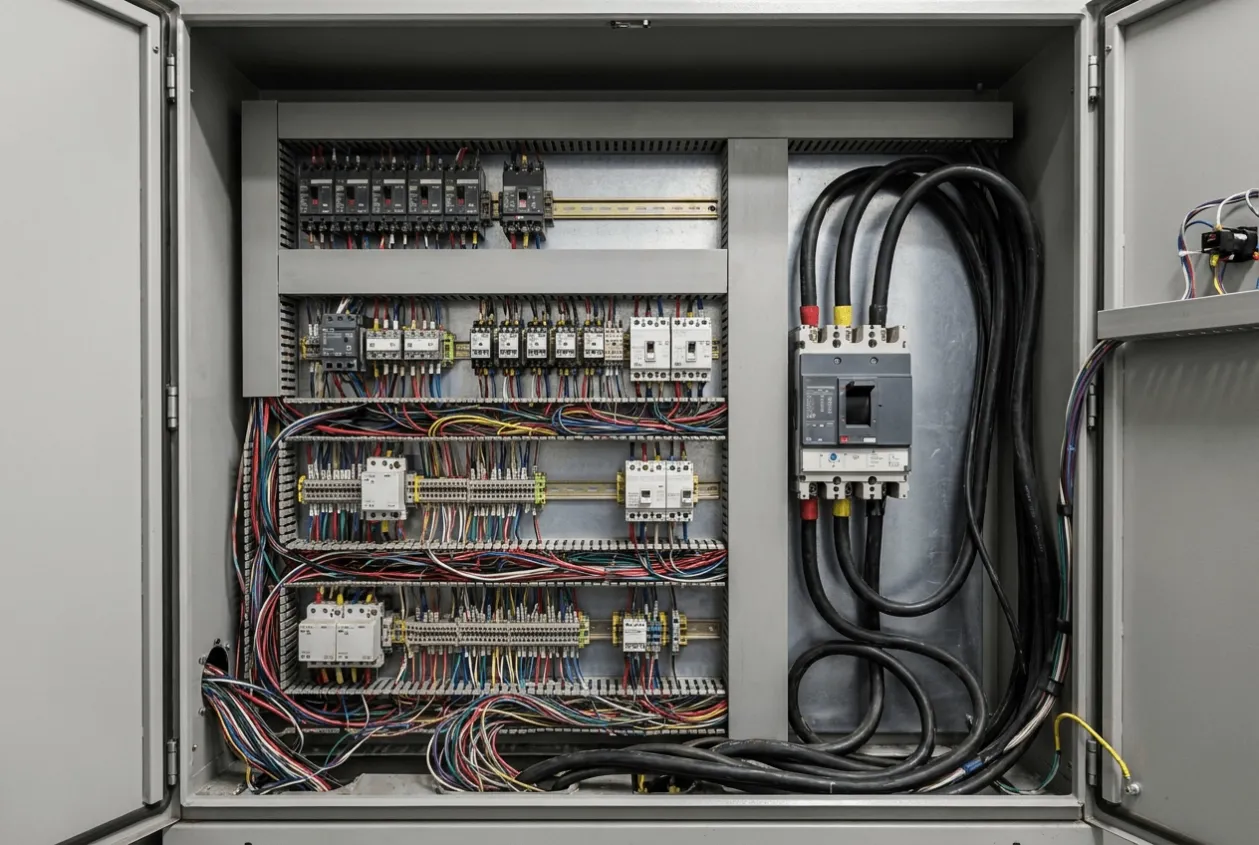
Before asking a motor control panel supplier for quotation, prepare:
- Motor list
- Load profile
- Starting method
- Protection requirements
- Preferred component brands
- Enclosure material and rating
- Indoor or outdoor installation
- Site temperature, humidity, dust, water, or corrosion risks
- Cable entry direction
- PLC, MCC, SCADA, or remote monitoring interface
- Run, fault, alarm, reset, and speed signals
- FAT requirements
- Drawing and documentation requirements
- Target delivery date
- Export packing requirements
This information helps a serious motor control panel company quote the project correctly and identify risks early.
Related Guides
FAQ
What should I check before approving a motor control panel?
Check the motor list, starting method, protection scheme, enclosure size, heat dissipation, feeder labeling, PLC or MCC interface, FAT scope, and documentation package.
What makes a good motor control panel supplier?
A good supplier understands motor duty, protection logic, enclosure environment, service access, documentation, FAT, and future maintenance. They ask engineering questions before giving a final quotation.
When do I need a custom motor control panel manufacturer?
You need a custom motor control panel manufacturer when the project involves multiple motors, VFDs, soft starters, outdoor installation, stainless steel enclosures, PLC interface, MCC coordination, remote monitoring, or special documentation requirements.
What should be included in a motor control panel RFQ?
A motor control panel RFQ should include motor list, voltage, load profile, starting method, enclosure environment, component preferences, protection requirements, PLC/MCC signals, FAT scope, documentation requirements, and delivery schedule.
Why is FAT important for motor control panels?
FAT helps verify wiring, feeder labels, protection devices, starter or VFD operation, PLC signals, alarms, documentation, and customer-specific requirements before shipment.
Final Recommendation
Before approving a motor control panel, do not only ask who can build it.
Ask who understands how your motors will start, run, trip, and be serviced.
That is the difference between buying a cabinet and buying reliability.
A reliable motor control panel supplier should help you review motor duty, protection, enclosure size, heat, feeder labeling, PLC interface, FAT, and documentation before production starts.
If a supplier cannot explain these items clearly, the quotation may be cheap, but the project risk is not.
Need a Motor Control Panel Quotation?
Before requesting a quotation, prepare these six items:
- Motor list
- Load profile
- Starting method
- Enclosure environment
- PLC, MCC, or remote monitoring interface
- Target delivery date
Send UniRegal your drawings, BOM, motor list, load profile, preferred brands, enclosure requirements, FAT expectations, and delivery schedule. Our team can help review panel layout, protection scheme, enclosure suitability, component selection, documentation scope, and long-term maintenance risks before production begins.
A better motor control panel starts with a better review before quotation.
Related Guides & Solution Centers
Use the checklist above during supplier audits. Our motor control panel manufacturer scope covers starter combos, VFD integration and pre-shipment FAT — request a motor control panel quote to compare against your shortlist.