
Oct 6, 2026Buying Guides
NEMA 12 vs NEMA 4X: Which Enclosure Rating Do You Actually Need?
A buyer-focused comparison of NEMA 12 and NEMA 4X, explaining how site location, washdown, weather, corrosion, materials, and accessories determine the correct enclosure rating.
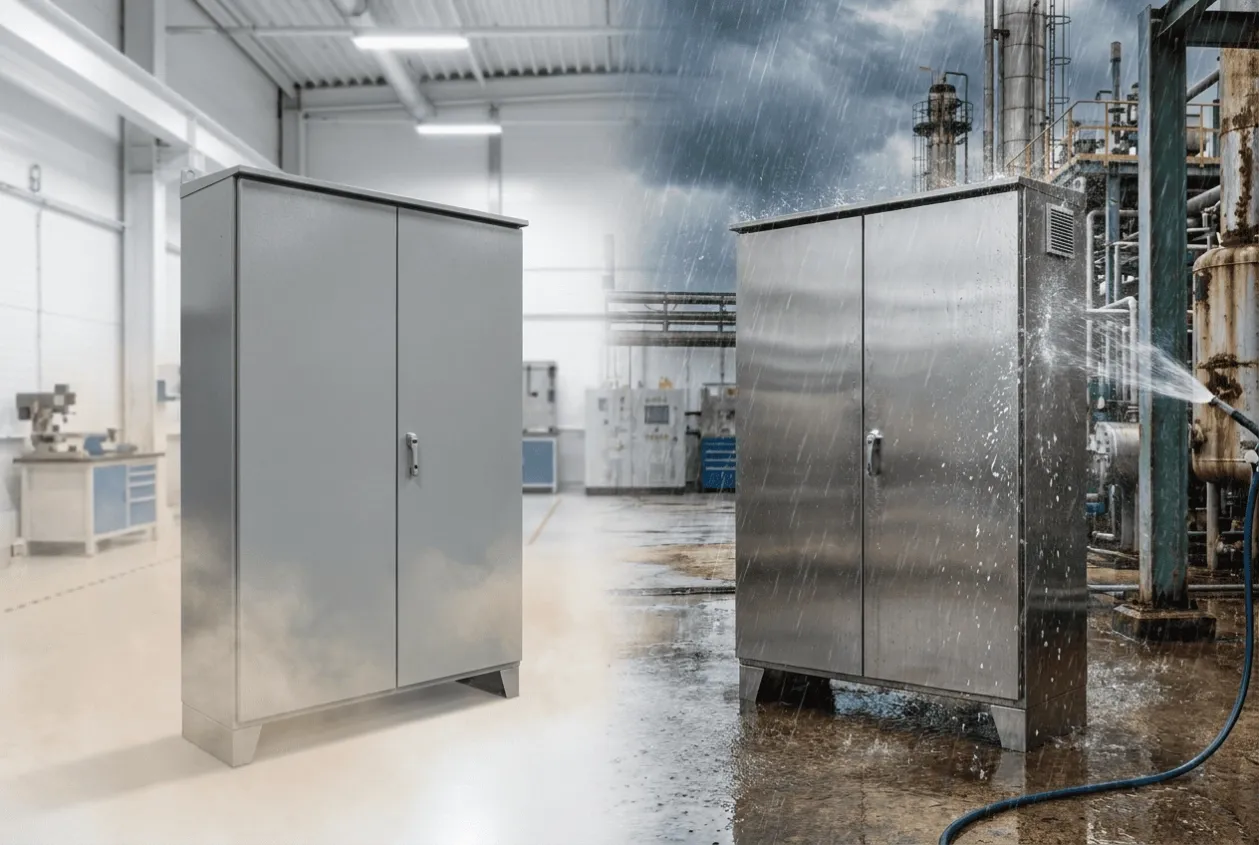
NEMA 12 vs NEMA 4X: Which Enclosure Rating Should Buyers Choose?
One conversation has stayed with me for years.
A buyer looked at the quotation and said,
“We’ll use NEMA 4X everywhere. It’s the safest option, right?”
I asked him another question.
“Which cabinets will actually see water?”
He paused. Then we opened the site layout together. One cabinet was outdoors near a pump station. Two were in a washdown area. But six machine-side panels were inside a dry production room, with dust and only occasional dripping risk.
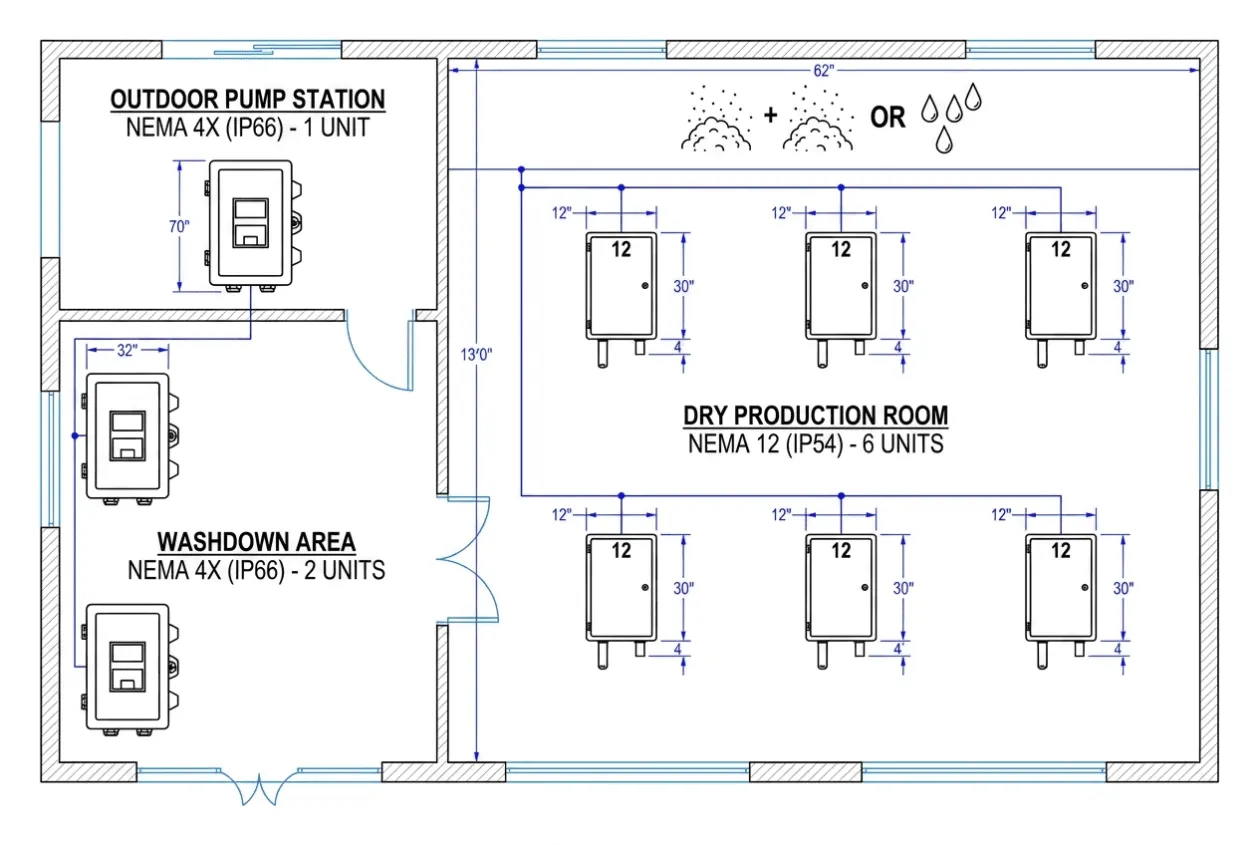
That question saved the buyer from buying six unnecessary NEMA 4X cabinets.
The project did not need one enclosure rating. It needed the right rating for each location.
People do not usually confuse NEMA 12 and NEMA 4X because the standards are difficult. They confuse them because industrial projects are rarely built in only one environment.
The Real Difference
On paper, the difference is straightforward.
NEMA 12 is mainly for indoor industrial locations, where the cabinet needs protection against dust, falling dirt, and dripping non-corrosive liquids.
NEMA 4X is for tougher locations, where rain, hose-down water, splashing, and corrosion resistance matter.
In real projects, however, the decision is rarely about definitions.
It is about the environment.
Here's how I normally explain it to buyers:
NEMA 12 is for dry indoor protection. NEMA 4X is for water, weather, and corrosion.
When I Review a Quotation
When I review a quotation, I almost never look at the enclosure rating first.
I look at the site layout.
Where is each cabinet installed? Which one is indoors? Which one is outdoors? Which one is washed down? Which one is near salt air, chemicals, or humidity? Only then do I decide whether NEMA 12 or NEMA 4X even deserves a discussion.
Sometimes the site walk tells me more than the RFQ.
That small habit prevents a lot of unnecessary cost.
I have seen more money wasted by choosing the wrong enclosure rating than by choosing the wrong enclosure supplier.
NEMA 12 vs. NEMA 4X Comparison
Buyer Question | NEMA 12 | NEMA 4X |
|---|---|---|
Where will this cabinet work? | Indoor industrial locations | Indoor washdown or outdoor locations |
Will people wash it down? | No | Yes, if hose-down or splashing water is expected. |
Can it handle outdoor weather? | No | Yes, when properly specified |
Can it resist corrosion? | Not as its main purpose | Yes, corrosion resistance is part of the rating. |
What material usually follows? | Painted carbon steel | Stainless steel or corrosion-resistant construction |
What happens if I choose the wrong one? | Outdoor or washdown failure risk | Unnecessary stainless-steel cost in dry indoor areas |
NEMA 4X is not “better” in every situation. It is better when the environment needs it. If the cabinet is indoor, dry, and not exposed to washdown or corrosion, NEMA 12 may be the more economical and correct choice.
What I Would Check Before Choosing
For a dry indoor machine room, I would usually start with NEMA 12. It gives practical protection against dust, dirt, and light dripping without forcing the buyer into stainless construction.
For a food processing washdown zone, I would review NEMA 4X. Water, cleaning chemicals, gasket performance, hinges, locks, and cable glands all matter there.
For an outdoor pump station, I would also review NEMA 4X. Rain, humidity, sun, and corrosion risk are not small details.
For coastal or chemical exposure, I would not stop at “4X.” I would ask whether 304 stainless is enough or whether 316 stainless is the safer choice.
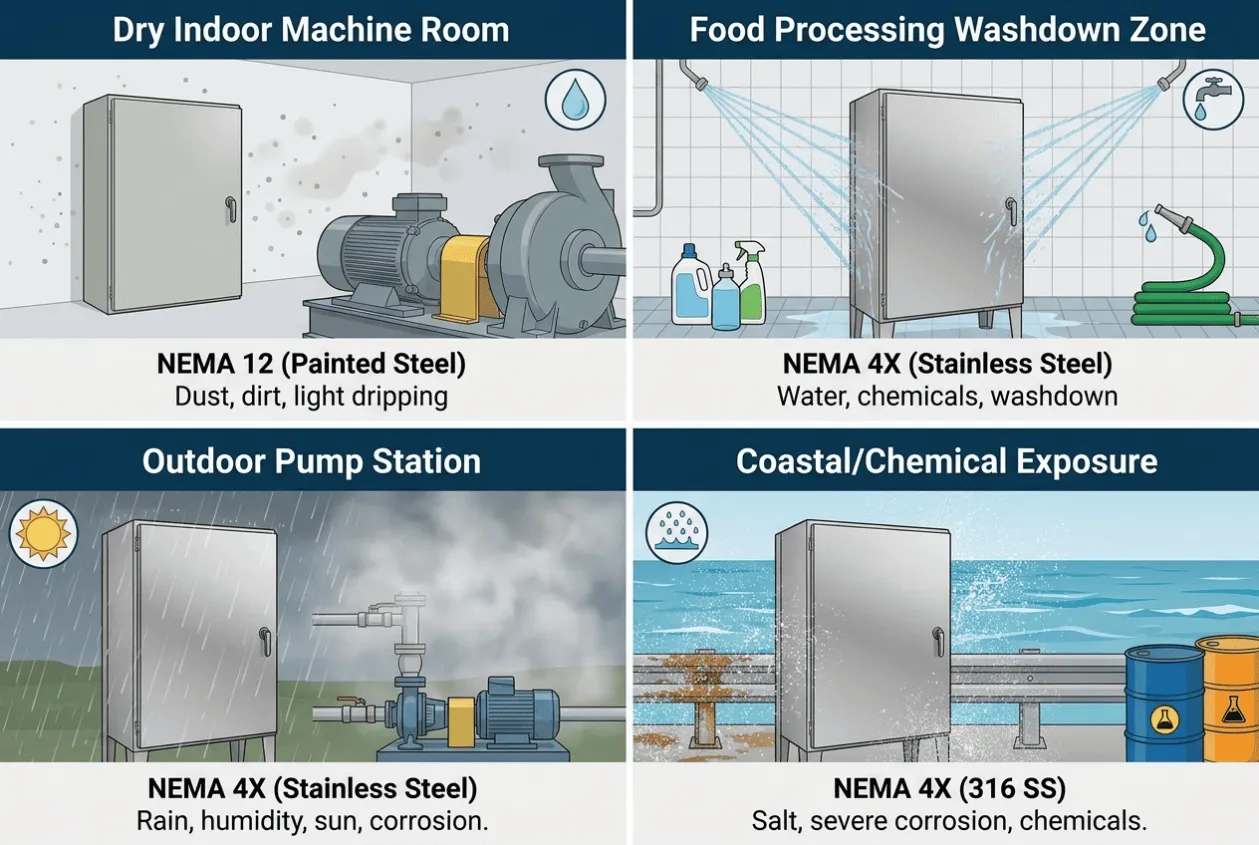
That is where the supplier should earn their keep. They should not simply quote the highest rating and call it safe.
What I Would Not Do
Using NEMA 4X everywhere may feel safe.
It is also one of the easiest ways to spend money without reducing risk.
I would not specify NEMA 4X across the whole project just because one panel is outdoors. I would also not use NEMA 12 outdoors and hope the paint survives. That is not value engineering. That is rolling the dice.
I would not approve a NEMA 4X cabinet without checking accessories either.
A NEMA 4X nameplate cannot protect a cabinet with the wrong cable glands.
FAQ
Can I mix NEMA 12 and NEMA 4X in the same project?
Yes. In many projects, this is the most sensible choice. Indoor dry panels may use NEMA 12, while washdown or outdoor panels use NEMA 4X.
Is NEMA 4X always the safer choice?
Not always. It is safer for water, weather, and corrosion exposure. It may be an unnecessary cost for dry indoor locations.
Is NEMA 12 weatherproof?
I would be careful. A roof may reduce direct rain, but humidity, wind-driven water, condensation, and corrosion can still create problems. If the cabinet is outdoors, review NEMA 4X.
Should I choose 304 or 316 stainless for NEMA 4X?
304 stainless is common for many washdown and outdoor applications. 316 stainless is usually reviewed for coastal, chemical, high-chloride, or more aggressive environments.
Before You Request a Quote
Before asking for a NEMA 12 or NEMA 4X cabinet quote, send UniRegal the site layout, installation location, indoor or outdoor condition, washdown requirement, corrosion risk, material preference, cabinet size, cable entry, accessories, and component layout.
At UniRegal, we almost never recommend an enclosure rating before we understand where each cabinet will actually work, but we will review enclosure ratings by cabinet location, not by habit. Some panels need NEMA 4X. Some only need NEMA 12. The right choice helps buyers avoid both field failure and unnecessary stainless-steel cost.
After enough quotations, I have learned that buyers rarely regret choosing the correct enclosure rating.
They usually regret paying for the wrong one.
Related guides
What to send your supplier
Tell us the environment—indoor dry, washdown, or outdoor—and we will specify the right rating and stainless grade and quote a standard stainless build with a typical 15-day lead. Submit your requirements.
Need help specifying or sourcing this for your project? Request a quote - we reply within 1-2 working days with a technical review.