
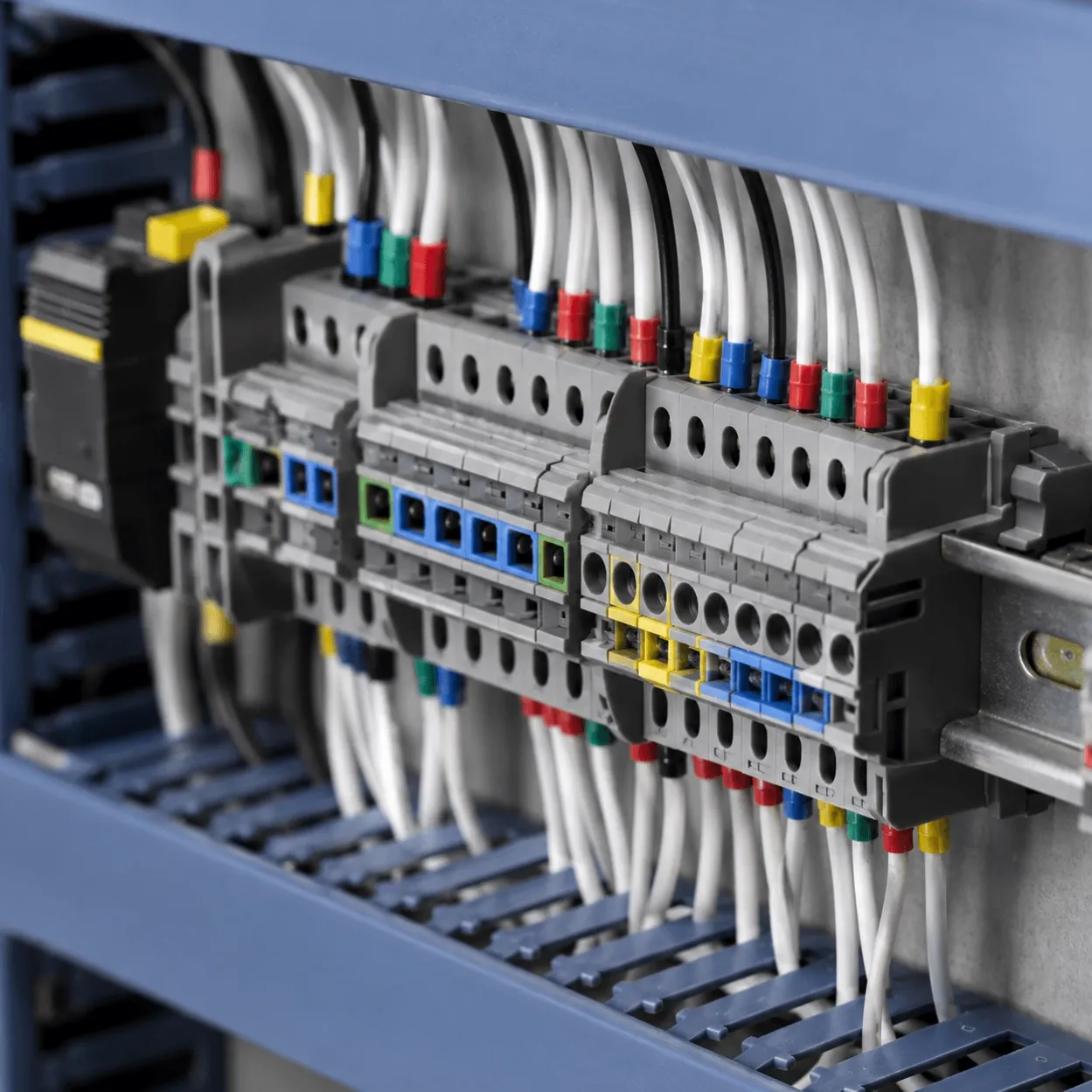
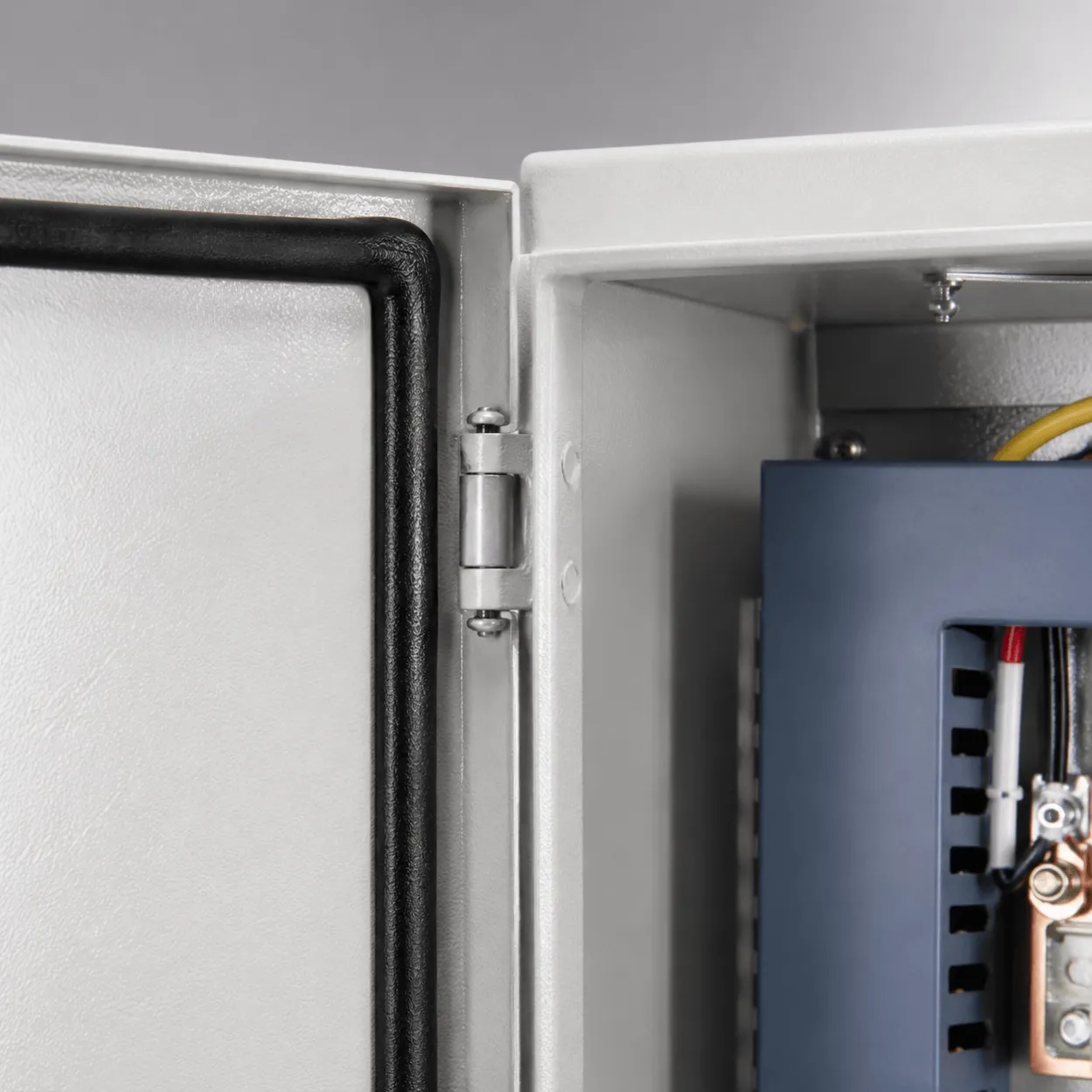
MCC Panels
Custom Motor Control Panel Supplier | UniRegal
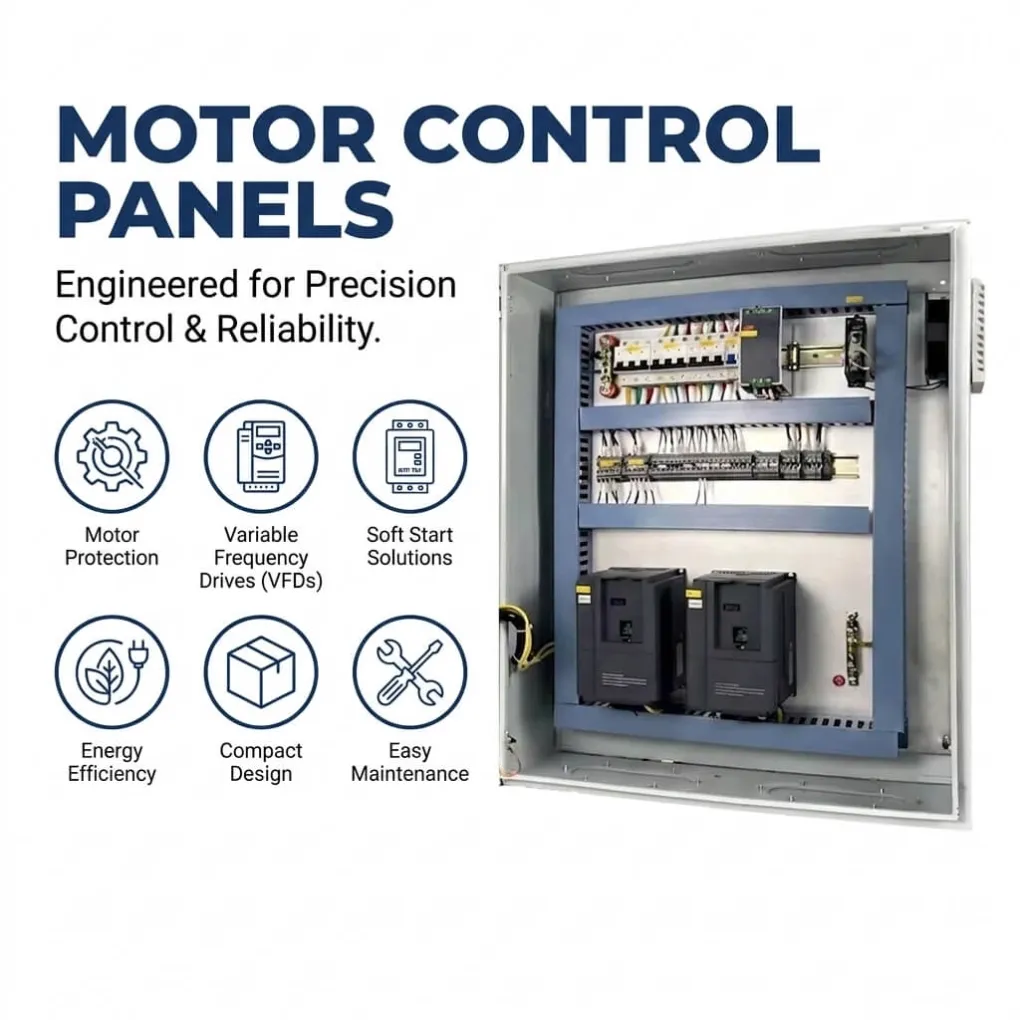
Motor control panels for pumps, fans and conveyors — VFD or soft-start, protection, enclosure sized to your site. From 1 unit, 35-40 days after drawing review.
Quick Answer
A motor control panel starts and protects a single motor or small group using DOL, star-delta, soft-start or VFD, matched to your load. UniRegal selects breaker, contactor and overload by your specification, multi-brand, ~15-day lead time, UL 508A on request. MOQ from 5 units.
Motor Control Panel for Reliable Starting, Protection, and Speed Control
UniRegal supplies custom motor control panels for industrial motors used in machinery, pumps, fans, conveyors, compressors, mixers, HVAC equipment, water treatment systems, and production lines.
A motor control panel should not be selected by motor horsepower alone. The correct configuration depends on the motor's full-load current, driven load, required starting torque, starts per hour, acceleration time, direction control, speed-control requirement, available power supply, and installation environment.
Panels can be configured with DOL, reversing, star-delta, soft starter, or VFD control, together with the required protection, local controls, remote signals, and optional PLC interface.
Send us the motor nameplate and load application to start the technical review.
Available Motor-Mechanical Configurations
DOL Motor Control Panel
A direct-on-line panel applies the full supply voltage to the motor during startup. It is suitable when the electrical supply and driven equipment can tolerate the resulting starting current and torque.
DOL should not automatically be selected only because the motor is considered small. The available supply capacity, motor starting current, load inertia and start frequency must still be checked.
Reversing Motor Control Panel
An inertia panel allows a motor to operate in forward and reverse directions. It is commonly used for conveyors, mixers, doors, positioning equipment, and machinery requiring directional movement.
The design must include suitable electrical and mechanical interlocking so that the forward and reverse contactors cannot energize simultaneously. The stopping time and permitted reversing frequency must also match the mechanical application.
Star-Delta Motor Control Panel
A star-delta starter reduces motor voltage and starting current during the initial acceleration period before changing the motor connection to delta for normal operation.
This method cannot be used with every three-phase motor. The motor must have the correct winding voltage, six accessible motor terminals, and a driven load that can accelerate with the reduced starting torque available in star connection.
Soft Starter Motor Control Panel
A soft starter gradually controls motor voltage or current during acceleration and, where required, deceleration. It is suitable for fixed-speed applications that need lower electrical or mechanical stress during starting and stopping.
Typical applications include pumps, fans, compressors, and conveyors. Soft-starter selection must consider starting load, acceleration time, starts per hour, duty rating, bypass arrangement, and required motor protection.
A soft starter does not provide continuous motor-speed control after the motor reaches full operating speed.
VFD Motor Control Panel
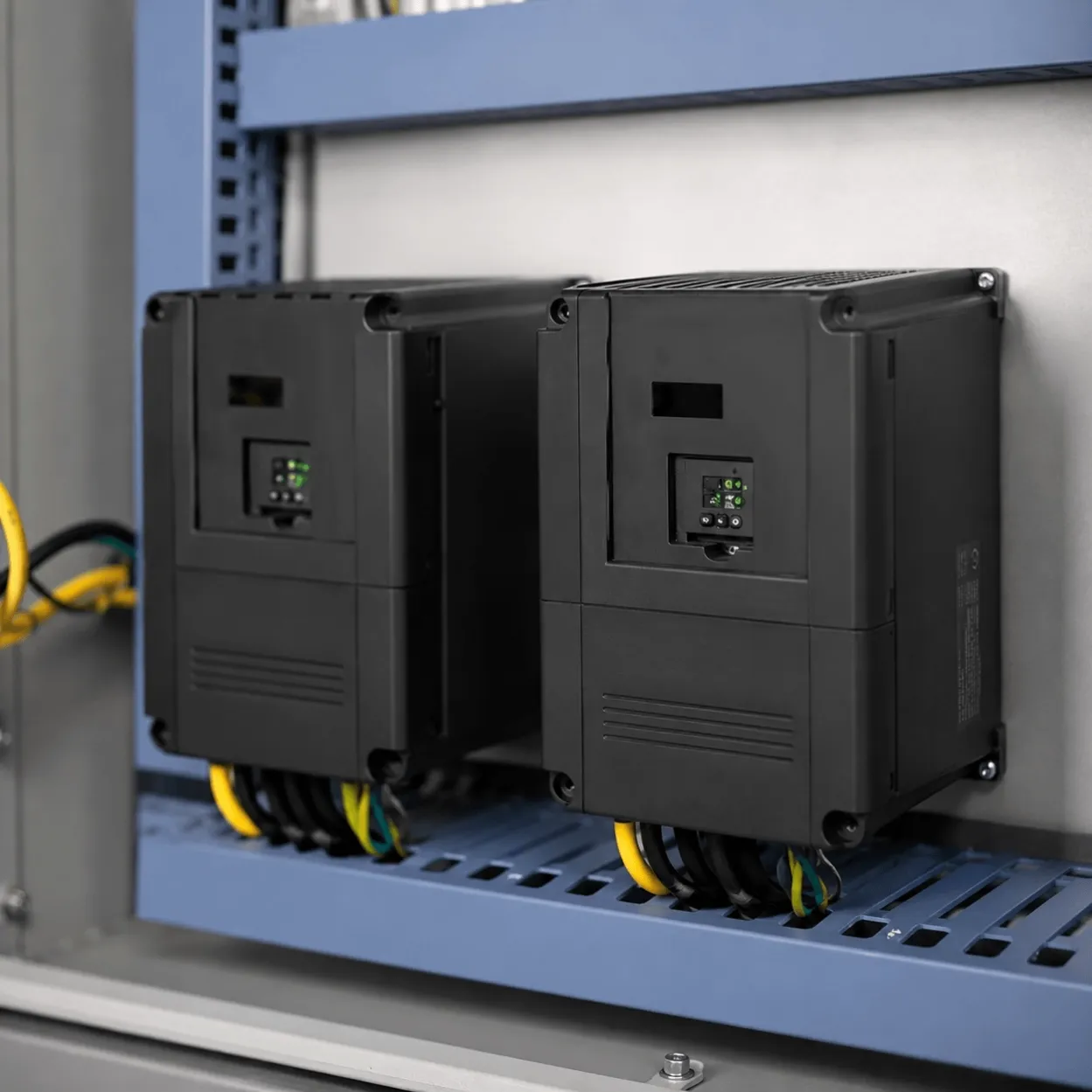
A variable frequency drive panel controls motor speed by adjusting output frequency and voltage. It is suitable when the process requires variable speed, controlled acceleration, pressure or flow regulation, torque adjustment, or communication with a PLC or automation system.
VFD selection must consider motor current, normal or heavy-duty rating, required overload capacity, acceleration torque, ambient temperature, motor cable length, heat dissipation, EMC, harmonics, and any bypass requirement.
Buyer Decision Information: How to Choose the Starting Method
The starting method should be selected around the motor, driven load, and operating duty rather than motor kW or HP alone.
Starting Method | Best-Fit Situation | Speed During Operation | What Must Be Confirmed |
|---|---|---|---|
DOL | Simple fixed-speed operation where full-voltage starting is acceptable | Fixed | Starting current, starting torque, supply capacity, and starts per hour |
Reversing Starter | Equipment that must run in both directions | Fixed | Stop-before-reverse logic, interlocking and reversing frequency |
Star-Delta | Fixed-speed motor requiring reduced starting current | Fixed | Motor winding, six terminals, load starting torque, and transition behavior |
Soft Starter | Fixed-speed load requiring smoother acceleration or stopping | Fixed after startup | Starting duty, starting per hour, current limit, bypass, and cooling |
VFD | Process requiring variable speed or controlled acceleration | Variable | Motor current, duty rating, heat, EMC, cable length, and drive parameters |
Why Motor Power Alone Is Not Enough
Two motors with the same horsepower can require completely different control panels.
A 10 HP motor driving a lightly loaded fan may operate successfully with DOL starting if the power supply can tolerate the starting current. Another 10 HP motor driving a high-inertia conveyor, loaded mixer, or process pump may require controlled acceleration, current limitation, or speed regulation.
Before selecting the panel, the following information should be reviewed:
- Motor voltage, phase, kW or HP, and full-load current
- Motor winding connection and terminal arrangement
- Driven equipment and expected starting load
- Required starting torque and acceleration time
- Number of starts and stops per hour
- Fixed-speed or variable-speed operation
- Forward-only or forward-and-reverse movement
- Normal-duty or heavy-duty operation
- Emergency stop and restart requirements
- Local, remote, or automatic control
- Ambient temperature and enclosure environment
- Motor cable length, especially for VFD applications
The motor nameplate provides the starting point, but the load determines how the motor must operate.
Motor Control Panel vs MCC Panel
Motor control panels and MCC panels may contain similar starters and protection devices, but they solve different project requirements.
Item | Motor Control Panel | MCC Panel |
|---|---|---|
Primary Purpose | Controls one motor or a small motor group | Centralizes multiple motor feeders |
Main Design Focus | Starting method, protection, direction, and speed control | Busbar system, feeder organization, fault isolation, and expansion |
Typical Installation | Individual machine, pump, fan, conveyor, or compressor | Factory, treatment plant, or facility with many motors |
Common Construction | Wall-mounted or compact floor-standing panel | Sectional or multi-compartment assembly |
Main Buyer Question | How should this motor start, run, stop and remain protected? | How should multiple motors be distributed and controlled centrally? |
If the project contains many motor feeders supplied from a common busbar system, an MCC Panel is normally more appropriate.
Engineering Checks Before the Panel Is Built
A reliable motor control panel begins with a technical review before component purchasing or assembly.
Motor and Load Review
The motor nameplate must be checked against the driven equipment, starting load, duty cycle, and required acceleration. This determines whether the proposed starter can supply sufficient starting torque without creating excessive current or mechanical stress.
Protection Coordination
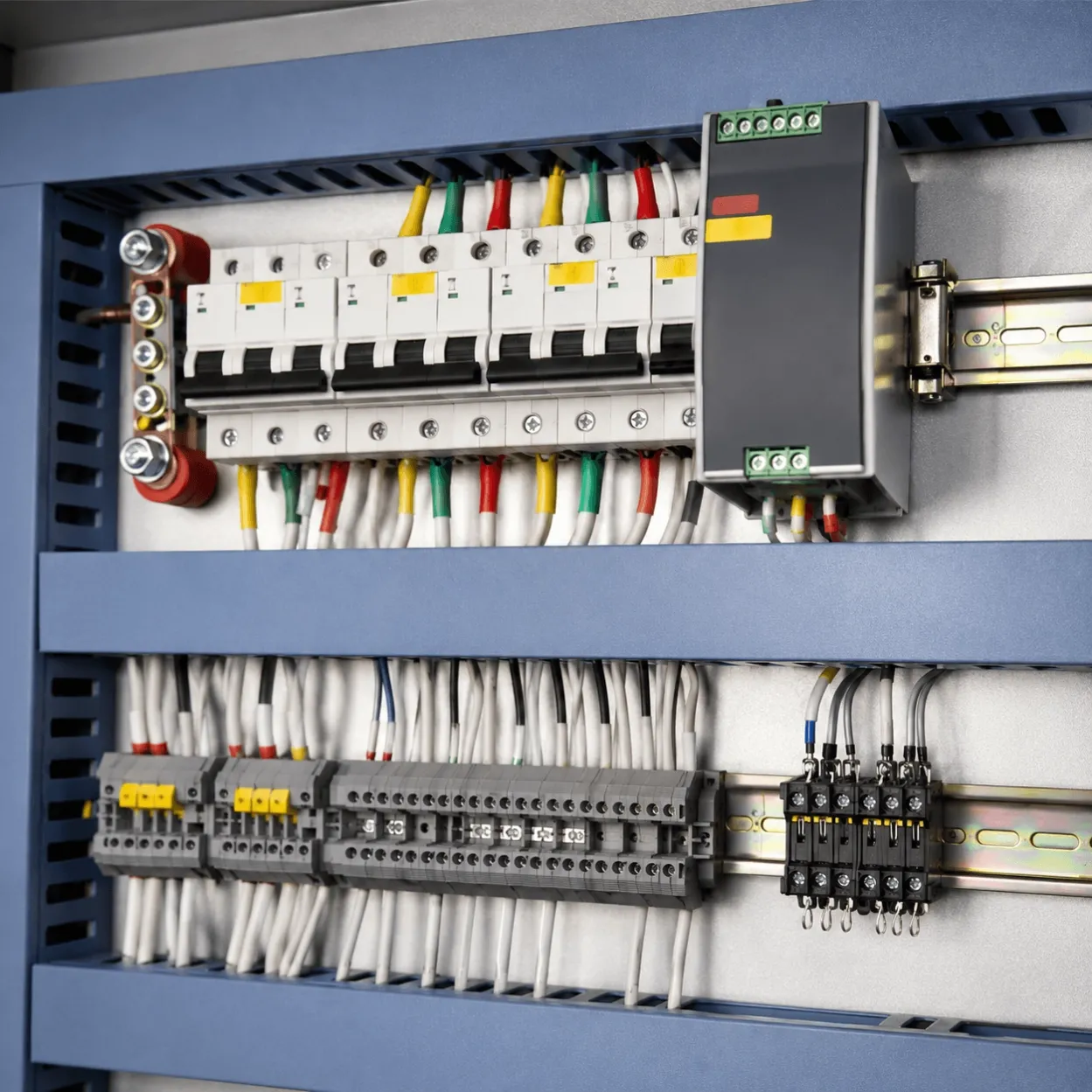
The breaker, fuse, contactor, motor protection device, and overload relay must be selected as a coordinated system. The overload range and trip characteristics should match the motor current and expected starting time.
A larger breaker is not a solution for repeated nuisance tripping until the motor load, starting method, overload setting, and fault condition have been reviewed.
Short-Circuit Rating
The panel short-circuit rating, or SCCR, must be suitable for the available fault current at the installation point. This requirement should be defined in the project specification rather than assumed from the rating of one internal component.
Control and Interlock Logic
Start, stop, reset, jog, forward, reverse, local, remote, and automatic commands must follow a defined operating sequence.
For reversing and star-delta applications, the interlocking and timing logic must prevent conflicting contactor operation. For automatic systems, the response after power restoration, communication loss, or external permissive failure must also be confirmed.
VFD and Soft-Starter Integration
Electronic motor starters generate heat and require suitable spacing, ventilation and component derating. VFD applications may also require review of EMC filters, line reactors, output reactors, harmonic mitigation, screened cables or motor-protection measures depending on the project.
Enclosure and Installation Environment
Thecables,sure should be selected according to ambient temperature, dust, humidity, water exposure, corrosion, ventilation, installation position, and maintenance access.
A high IP rating does not automatically solve an environmental problem. A tightly sealed enclosure containing a VFD may still overheat unless the internal heat load and cooling method have been reviewed.
What Buyers Should Compare Between Two Quotations
Two motor control panel quotations may look similar while containing different engineering and supply scopes.
Comparison Point | Why It Matters |
|---|---|
Proposed Starting Method | Determines motor starting behaviour and process control capability |
Breaker and Contactor Models | Affects protection coordination, replacement, and service life |
Overload Relay Range and Trip Characteristics | Must match motor current and starting duty |
VFD or Soft-Starter Duty Rating | Normal-duty and heavy-duty ratings are not interchangeable. |
Short-Circuit Rating | Must match the available fault current at the installation |
Control Voltage | Must be compatible with the machine and external control system |
Enclosure and Thermal Design | Determines whether the panel can operate in the actual environment |
Interlock and Safety Scope | Prevents conflicting commands and unexpected motor operation |
Bypass Arrangement | Affects continuity of operation and maintenance strategy |
FAT Scope | Defines which functions are verified before shipment |
Drawings and Documentation | Affects installation, troubleshooting, and future replacement |
Component Availability | Influences maintenance support and repeat-order consistency |
A quotation that lists only the cabinet size, motor horsepower, and component brands is not enough to confirm that two suppliers are offering the same control solution.
Technical Configuration Options
Parameter | Available Configuration |
|---|---|
Motor Supply | Single-phase or three-phase, according to the project |
Typical Voltage | 220V / 380V / 400V / 415V / 480V or customized |
Frequency | 50 Hz / 60 Hz |
Starting Methods | DOL / Reversing / Star-Delta / Soft Starter / VFD |
Control Modes | Local / Remote / Manual / Automatic / PLC Command |
Operator Controls | Start, Stop, Reset, Jog, Forward/Reverse, Speed Setting |
Status Indication | Power, run, stop, fault, trip, and project-specific alarms |
Protection | Short-circuit, overload, phase loss, and additional project-defined protection |
Communication | Hardwired I/O or industrial communication when specified |
Enclosure | Wall-mounted or floor-standing |
Material | Powder-coated carbon steel or stainless steel |
Environment | Indoor, outdoor, dusty, humid or corrosive, subject to review |
Component Brands | Customer-specified or selected according to project requirements |
Documentation | Schematics, layout, BOM, terminal plan and test records as agreed |
Final ratings, standards, certification, protection functions and documentation are confirmed during the technical review.
Typical Applications
Custom motor control panels can be configured for:
- Pumps and water systems
- Fans and ventilation equipment
- Compressors and refrigeration equipment
- Conveyors and material-handling systems
- Mixers, agitators and process equipment
- Industrial machinery
- HVAC equipment
- Water and wastewater treatment
- Production lines
- OEM- packaged equipment
The same equipment category may require different starting methods depending on load, duty and process requirements. A pump operating at constant speed may use a soft starter, while a pump maintaining variable pressure may require VFD control.
Testing Before Shipment
The testing scope should be agreed before production so the buyer knows which functions will be verified at the factory and which must be confirmed during site commissioning.
Typical motor control panel FAT items may include:
- Component model and rating verification
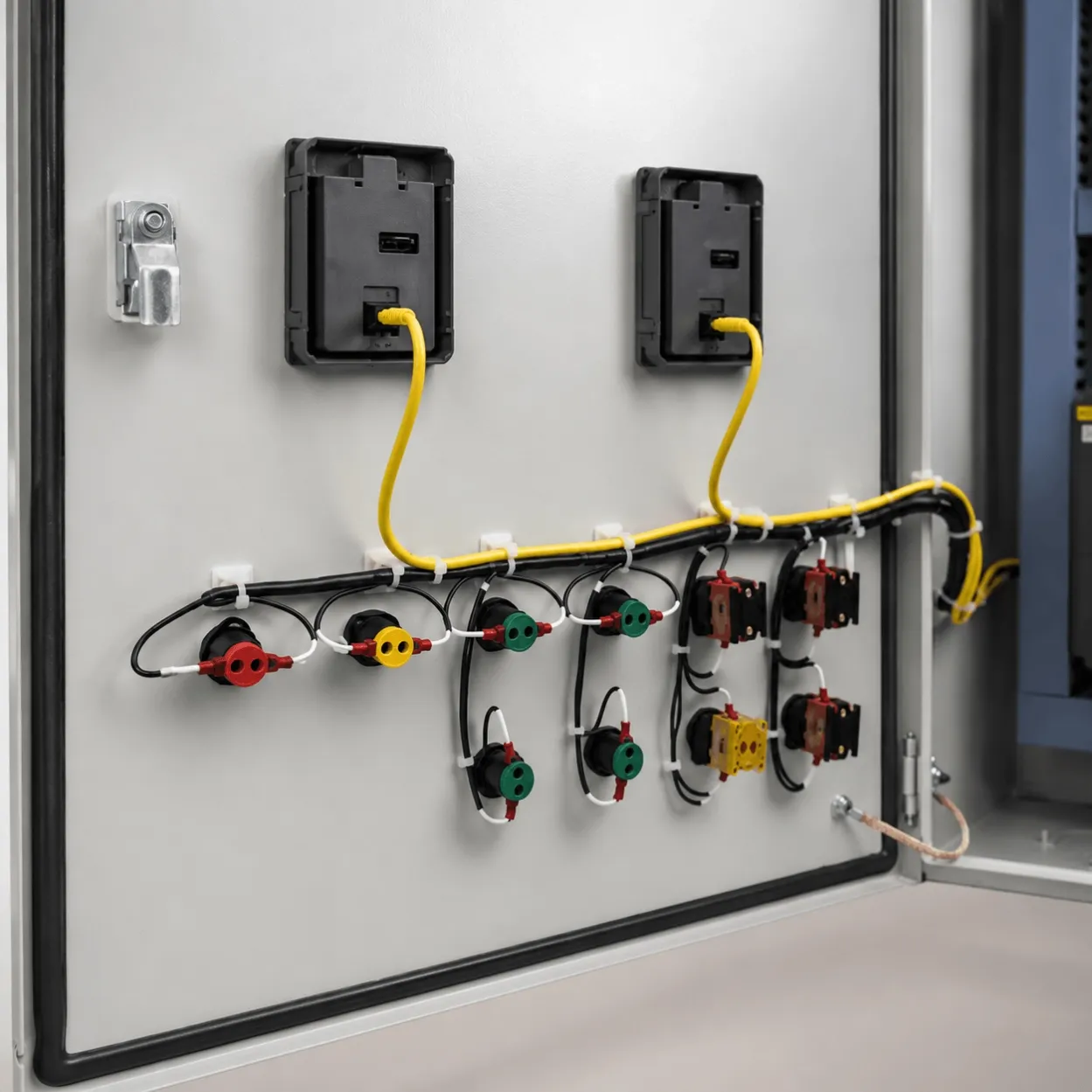
- Wiring continuity and terminal inspection
- Grounding and protective bonding inspection
- Control-voltage verification
- Start, stop, reset and jog function checks
- Forward and reverse interlock testing
- Star-delta timing and transition simulation
- Soft-starter command and bypass checks
- VFD start, stop, speed-reference and fault checks
- Local, remote and automatic mode verification
- Overload and fault-signal simulation
- Indicator, selector-switch and alarm testing
- PLC or remote-signal interface checks when included
- Label and drawing consistency review
What FAT Does Not Automatically Prove
If the actual motor and driven equipment are not available during factory testing, FAT cannot fully reproduce the site load, acceleration time, mechanical behavior, or operating current.
In this situation, FAT verifies the panel wiring, control logic, interlocks, outputs and agreed simulated functions. Motor rotation, final overload settings, VFD tuning and performance under real load must still be confirmed during commissioning.
This distinction should be agreed before the order rather than discovered after the panel reaches the site.
Documentation and Delivery Scope
Depending on the quotation, the project documentation may include:
- Approved electrical schematic
- As-built wiring diagram
- Panel layout
- Bill of materials
- Terminal plan
- Cable connection schedule
- Motor and load schedule
- VFD or soft-starter parameter record
- PLC or HMI backup when included
- FAT or inspection report
- Component datasheets
- Packing list
The required format, language and number of document copies should be confirmed before production.
Information Required for a Quotation
For a faster technical review, please provide:
Required Information | Example |
|---|---|
Motor Nameplate | Voltage, phase, kW/HP, FLA, RPM and frequency |
Load Application | Pump, fan, conveyor, compressor, mixer or machine |
Operating Duty | Continuous, intermittent, frequent starting or heavy-duty |
Starting Requirement | DOL, reversing, star-delta, soft starter, VFD or evaluation required |
Speed Requirement | Fixed speed or variable speed |
Control Mode | Local, remote, manual/automatic, or PLC command |
External Signals | Permissives, alarms, feedback and emergency stop |
Installation Environment | Indoor, outdoor, hot, dusty, wet or corrosive |
Enclosure Requirement | Material, IP/NEMA rating and mounting method |
Power System | Supply voltage, frequency and available fault current |
Preferred Components | Approved brands or part numbers |
Documentation | Required drawings, reports and file formats |
Quantity | Prototype, project batch or repeat production |
Destination | Country and project location |
If the full specification is not ready, send a clear motor nameplate photograph and describe what the motor drives, how often it starts and whether the speed needs to change. These details are usually enough to begin the clarification process.
Frequently Asked Questions
1. How do I choose between DOL, star-delta, soft starter and VFD?
The decision depends on the motor, load, starting torque, allowable starting current, starts per hour and whether variable speed is required. DOL provides full-voltage starting, while a VFD is normally selected when speed must change during operation.
2. Can a star-delta starter be used with any three-phase motor?
No. The motor must have a compatible winding voltage and six accessible terminals. The load must also be able to accelerate with the reduced starting torque available during star connection.
3. Does a soft starter control motor speed?
A soft starter controls acceleration and, where supported, deceleration. After startup, the motor normally runs at supply frequency and full speed. Continuous speed control requires a VFD.
4. What should be checked for a 10 HP motor control panel?
Confirm the motor voltage, full-load current, load type, starting torque, starts per hour, required starting method, control voltage, protection, enclosure environment and available fault current. The 10 HP rating alone does not define the correct panel.
5. Can one VFD operate several motors?
It is possible in some applications, but all motors generally receive the same frequency and cannot be controlled independently. Individual motor protection, total current, switching arrangement and operating sequence must be reviewed before using one VFD for multiple motors.
6. Why does a VFD motor control panel need thermal and EMC review?
A VFD generates heat and high-frequency electrical switching. Poor ventilation, incorrect cable screening, long motor cables or unsuitable component layout can cause overheating, interference, nuisance faults or motor-insulation stress.
7. Can the panel be supplied for IEC or UL project requirements?
Share the destination country and required standard before quotation. The applicable design, build, documentation and labeling scope must be confirmed for the complete assembly. Using certified internal components alone does not automatically certify the finished panel.
8. What does the Factory Acceptance Test verify?
FAT can verify components, wiring, control logic, interlocks, alarms, communication and simulated motor commands. When the actual motor and mechanical load are unavailable, final rotation, current, acceleration and drive tuning must be completed during commissioning.
Request a Motor Control Panel Quotation
Send us a motor nameplate photograph together with the load application and starting requirements.
Sourcing motor control panels? We size drives and protection to your motor duty and source enclosures from Foshan suppliers with short lead times. Talk to our team about your project. requirement, operating duty, control method and installation environment.
UniRegal will review how the motor needs to start, run, stop and remain protected before defining the panel configuration. This helps prevent a quotation based only on motor horsepower while the actual load, control and site requirements remain unclear.
Email: info@uniregal.com
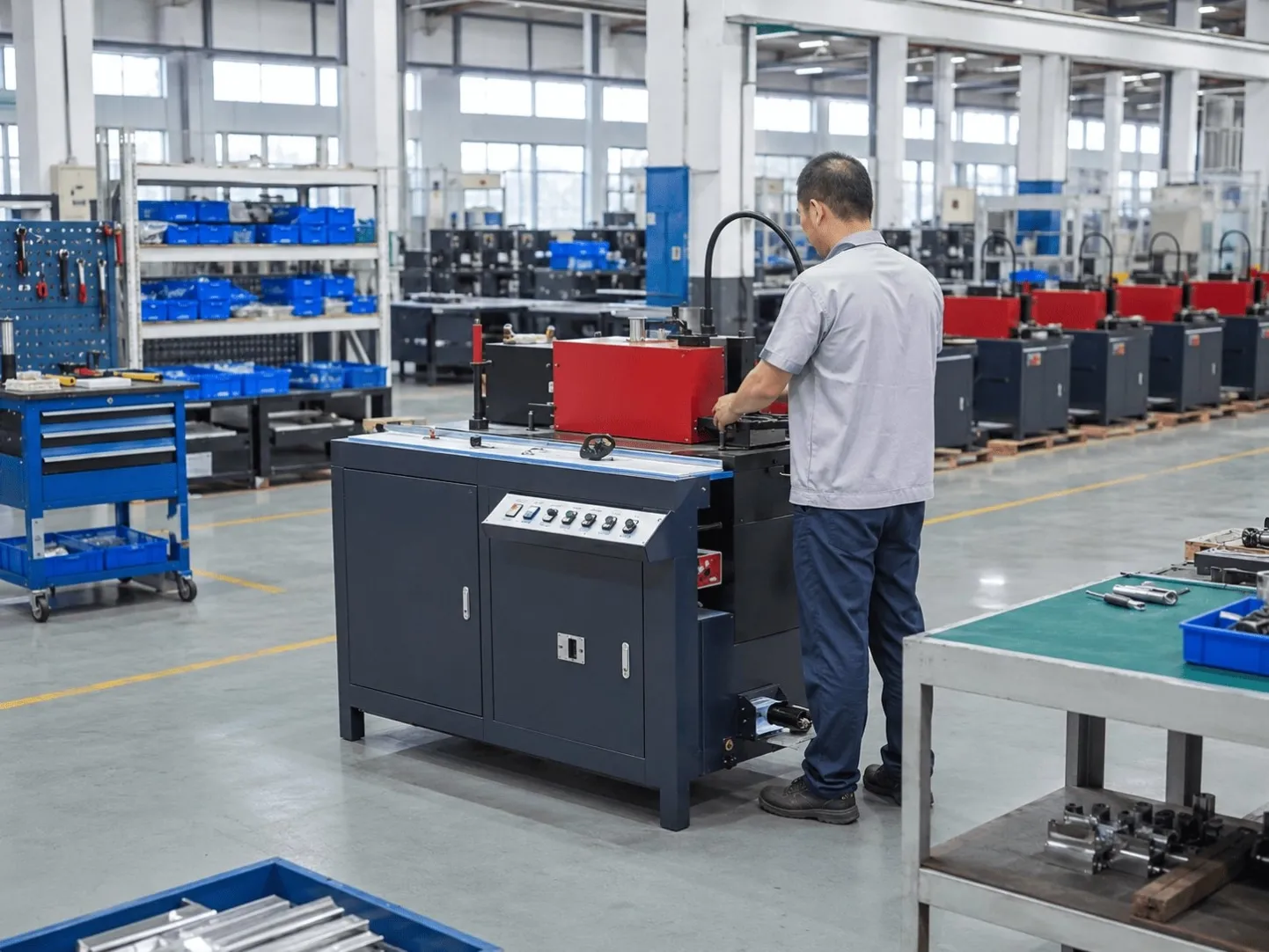
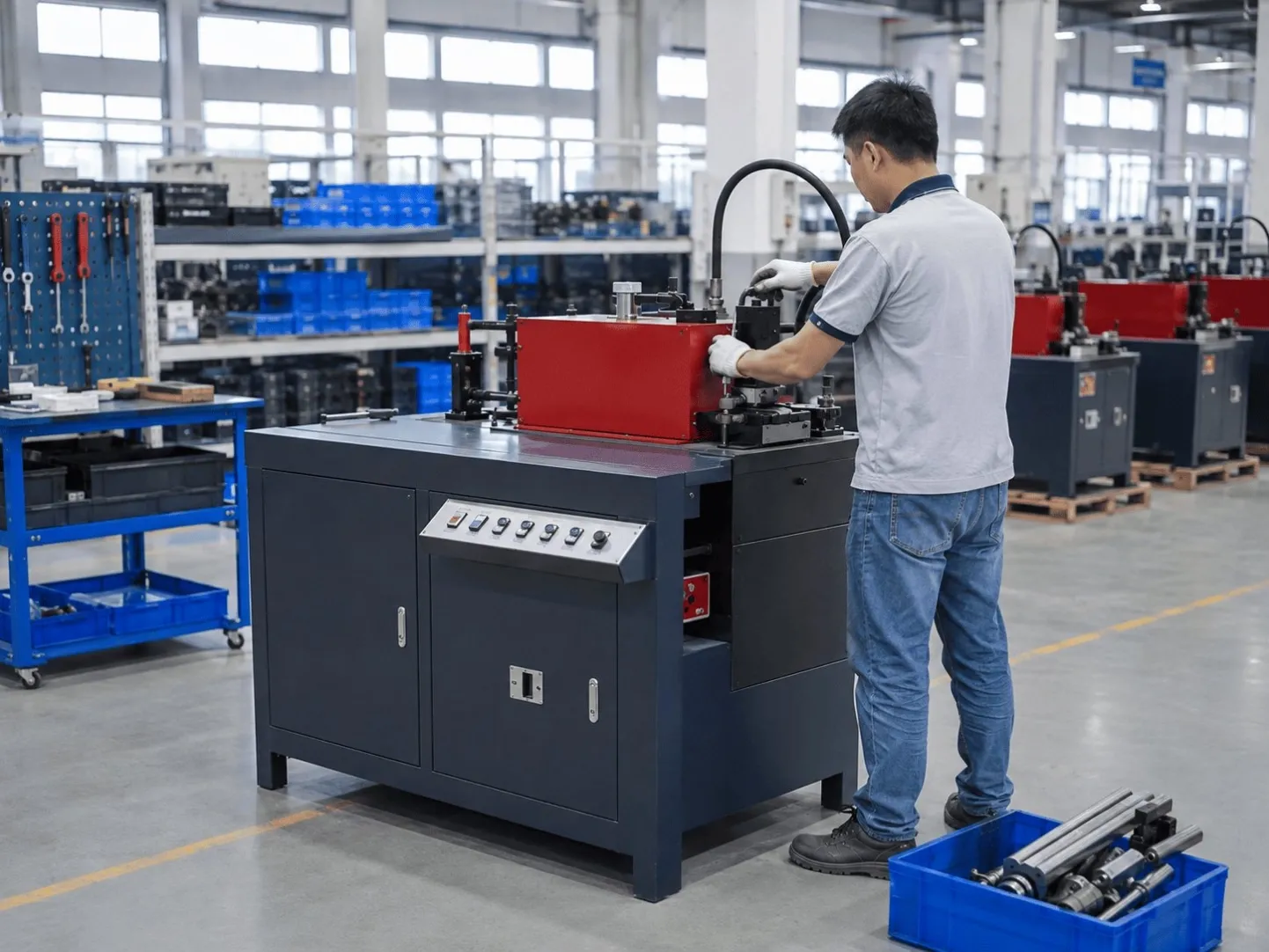
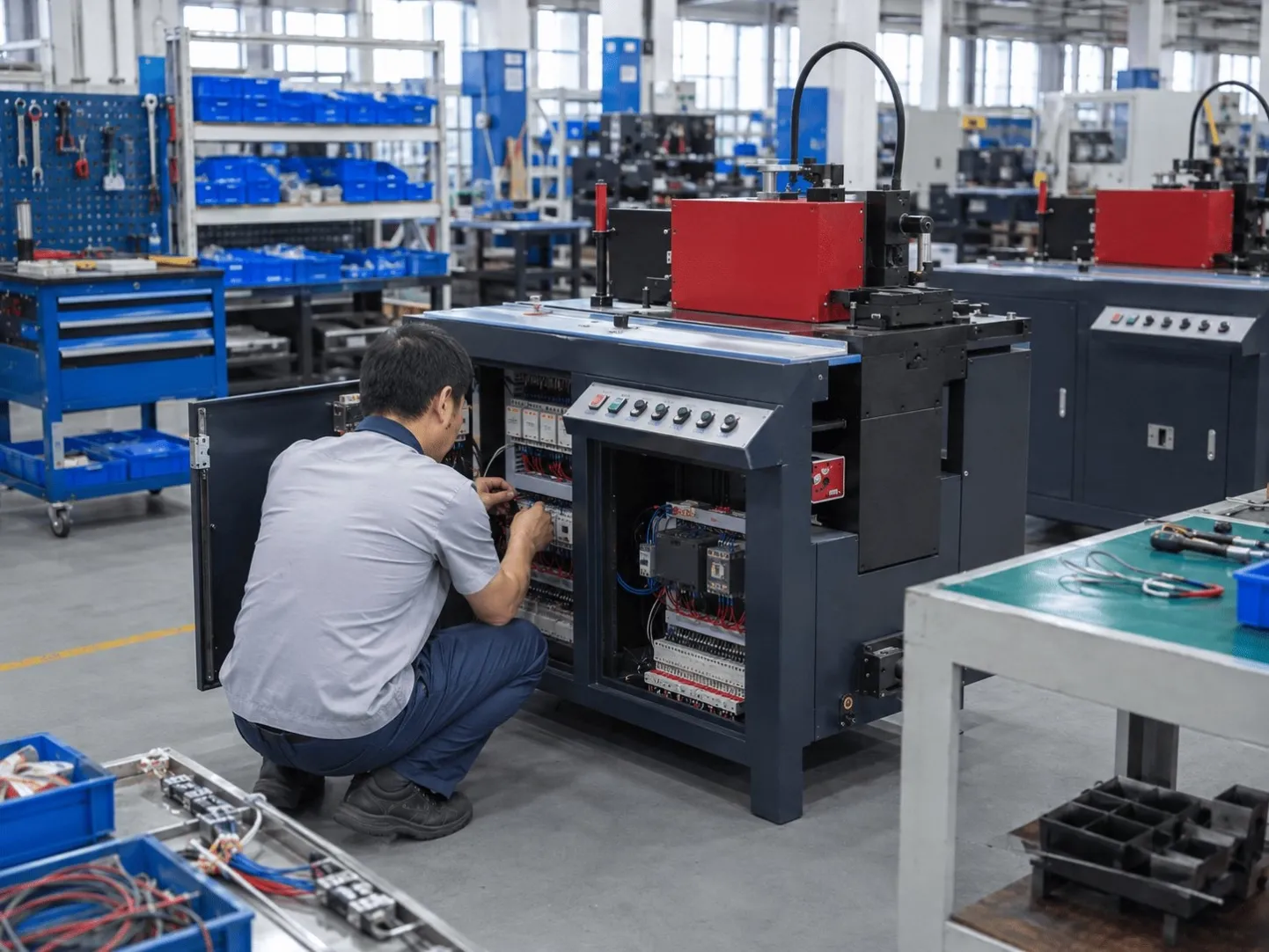
Website: www.uniregal.comFrom our Foshan supplier network — these photos show typical enclosure fabrication and panel-assembly steps carried out by our inspected production partners.
Recent Projects (Anonymous)
Real deliveries through our Foshan sourcing network. Client names withheld by request.
Project Example — Motor Control Panel for a Water Pump Station, 2026
- Scope: 4× motor control panels (VFD + soft-start) for a lift-station upgrade.
- Panel: carbon-steel enclosures, IP65, VFD + soft-starter + overload + local/remote selector, Mitsubishi / Siemens drives.
- Country: Middle East.
Engineering Review Example
- Customer Requirement: 4 pumps with mixed duty (2 duty / 1 standby + 1 standby) and a strict starting-current limit on a weak local supply.
- Our Suggestion: VFD on the duty pumps for soft accel + flow control, soft-starter on the jockey, staged start to cap inrush.
- Final Design: IP65 carbon-steel panels, VFD + soft-starter, current-limited staged start; FAT with each motor sim-load + trip test.
Why Choose UniRegal for Motor Control Panels
- Foshan multi-supplier sourcing — enclosure + drives + protection sourced together, build-to-print.
- P; VFD / contactors / overload ship in 3–5 days.
- Starting method matched to load & supply — VFD / soft-start / DOL mixed in one panel, not one-size-fits-all.
- UL 508A routed per project — built with UL-listed partner shops, build-to-print.
- FAT before shipment — each motor circuit point-checked, photos on request.
Lead Time & FAT
- Motor control panel / enclosure: ~15 days
- VFD / contactors / overload: 3–5 days
- FAT + inspection: before shipment, photos available
FAT checklist:: power-up test / per-motor circuit check / overload and trip test / label verification / photo before packing.Prototype & project orders from 1 unit; lead time confirmed after drawing & BOM reviewrototype & project orders from 1 unit; lead time confirmed after drawing & BOM review
FAQ — Motor Control Panels
Q: VFD, soft-start, or DOL?
A: Depends on the load and supply. Fans / pumps → VFD for soft accel + energy saving; fixed-speed → soft-start to cap inrush; simple duty → DOL.
Q: Can you match our existing drive brand?
A: Yes — Mitsubishi / Siemens / ABB / Schneider; we source the brand you standardize on.
Q: Do you FAT the panel?
A: Yes — each motor circuit point-checked, overload / trip test, inspection photos on request.
Applicable Industries
Water & wastewater, HVAC, pumping, material handling, process, OEM machinery.
Request Engineering Review
Have a motor list or single-line diagram? Upload it → we return an engineering review + quotation in 1–2 working days.