
Oct 12, 2026Buying Guides
How to Specify a PLC Control Panel: I/O Count, Module Selection, and Build Standards
A buyer's guide to specifying a PLC control panel: how to count I/O, choose controller and modules, set enclosure and wiring standards (UL 508A / IEC 60204), and verify before shipment.
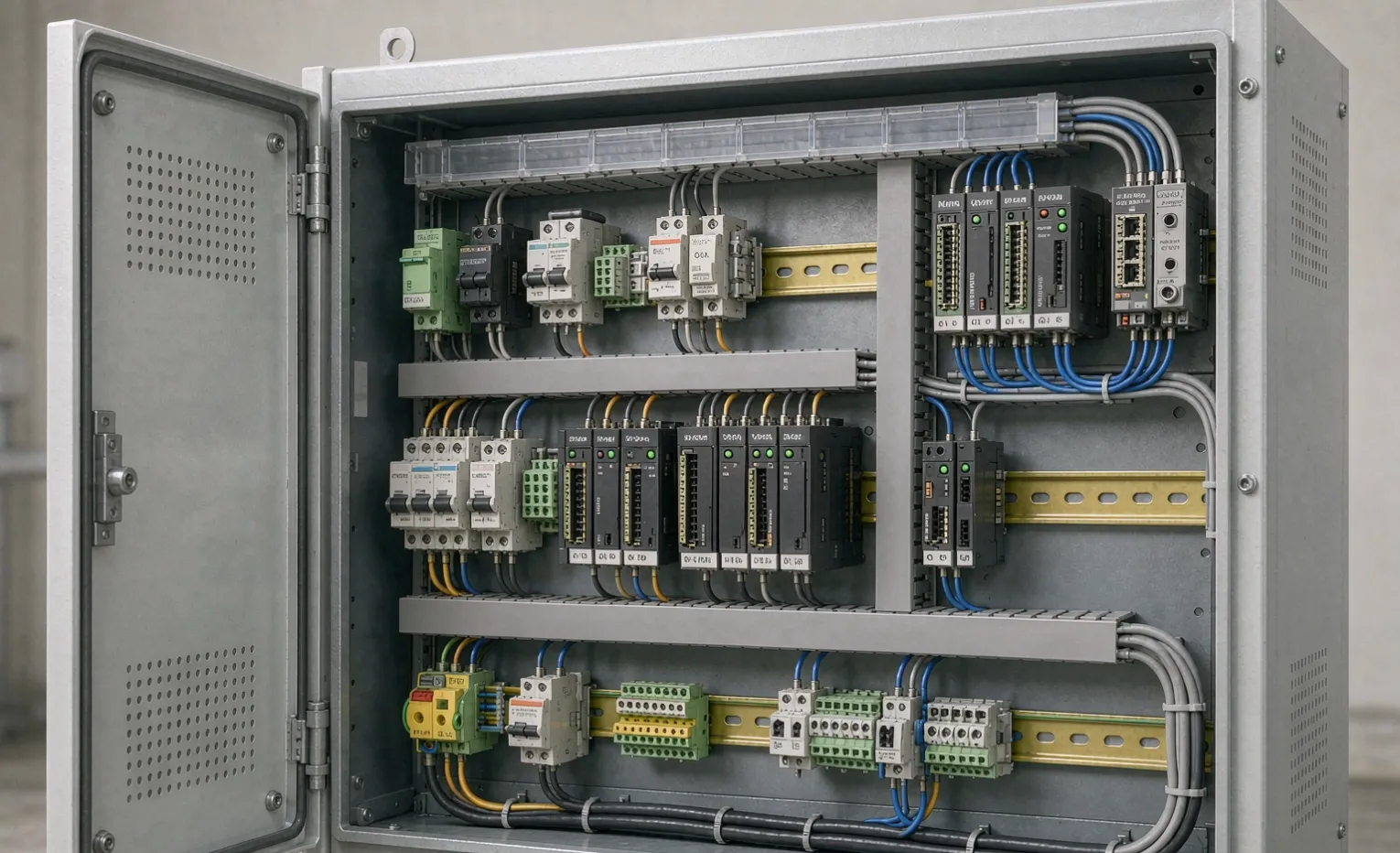
You receive three quotes for the same "PLC control panel." One comes back at half the price of the other two. The cheap one ships on time; the expensive ones are late. Six months later, the cheap panel's I/O count is short by four points, the spare modules are a brand no local supplier stocks, and the wiring diagram does not match what is physically inside the box.
The problem was never the price. It was the specification. A vague RFQ lets every supplier fill the gaps with the cheapest interpretation. This guide shows you how to write a PLC panel specification that makes three quotes comparable, protects you on spare parts, and catches the gaps before the panel leaves the build shop.
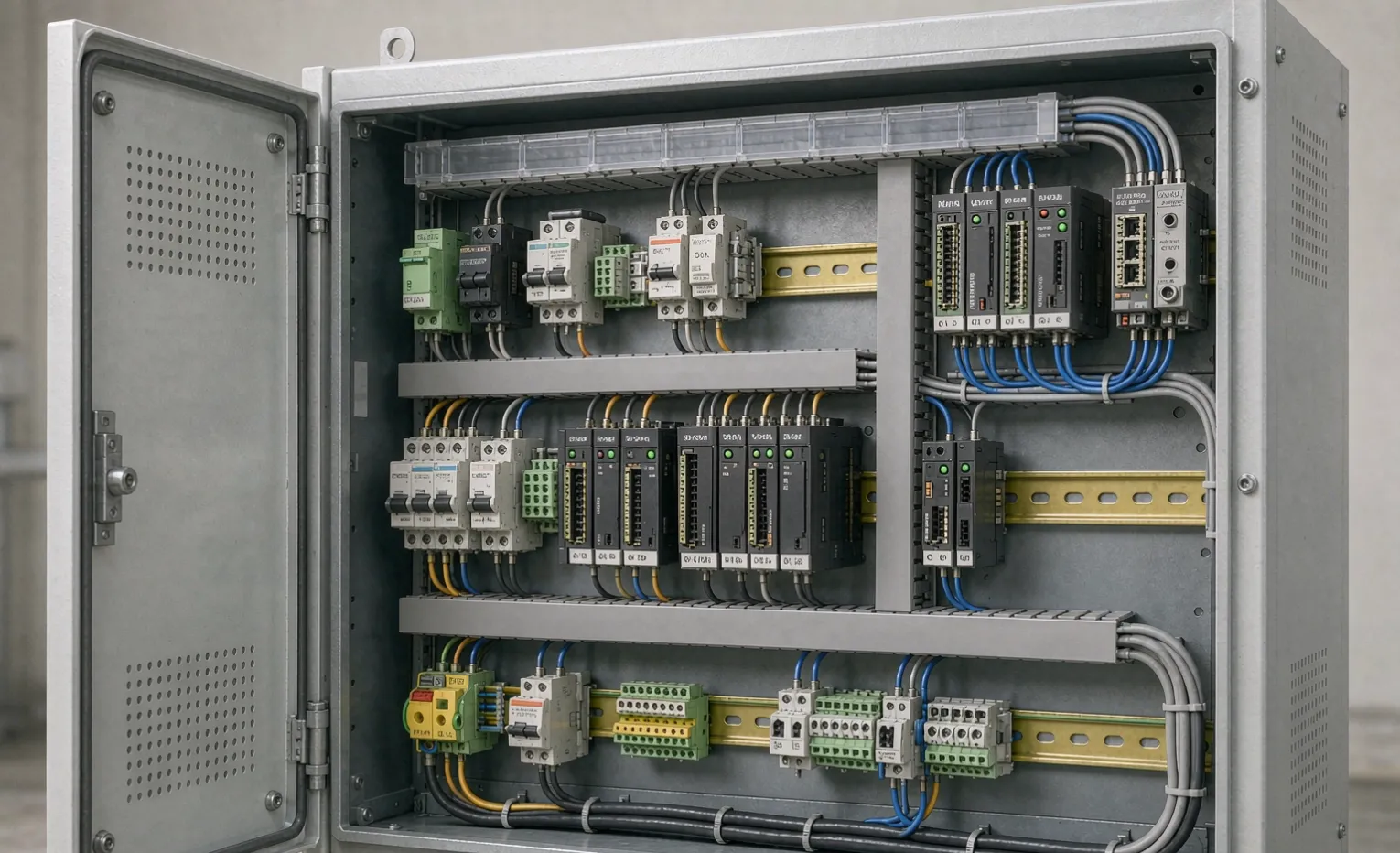
Start with the process, not the panel
The single most common specification mistake is describing the hardware before describing the job. A control panel is a translation layer between a process and the people who monitor it. If you start from the process, the I/O list writes itself.
List every signal the panel must touch
Walk the process and write down, for each device, what the panel must do: - Digital inputs (DI): sensors that are on/off — limit switches, pushbuttons, proximity sensors, dry contacts from protection relays. - Digital outputs (DO): things the panel turns on/off — contactors, solenoids, stack lights, alarm bells. - Analog inputs (AI): 4–20 mA or 0–10 V signals from transmitters — pressure, level, temperature, flow. - Analog outputs (AO): setpoints to drives or control valves — speed reference to a VFD, position to a positioning controller. - Communications: fieldbus or Ethernet nodes — Modbus RTU/TCP, PROFINET, EtherNet/IP, CANopen — plus any peer controllers or SCADA links.
Count each category, then add headroom. A working rule we use with buyers: add 15–20% spare I/O and at least one spare communication port. Commissioning always reveals a signal nobody wrote down, and retrofitting a full rack later costs more than the spare points did upfront.
Digital vs analog is not the only split that matters
Two signals can both be "digital" but behave very differently in the panel: - Sinking vs sourcing 24 VDC inputs must match the sensor wiring. Mixing them without a plan forces extra interface relays. - AC vs DC outputs. A 230 VAC contactor coil and a 24 VDC solenoid are both "outputs" but live in different safety circuits and need different protection. - Isolated vs non-isolated analog. A noisy 4–20 mA loop next to a VFD can drift by several percent if the analog cards are not isolated. For process signals (level, flow, pressure) where a few percent matters, specify isolated analog input cards.
Buyer Decision: Write the I/O table as a deliverable in the RFQ, not as a note. "Approximately 30 DI / 20 DO" invites under-counting. "32 DI / 24 DO / 8 AI isolated / 4 AO / 2 Ethernet" lets three suppliers quote the same panel.
A practical I/O estimation matrix
Use a table like this to force the numbers out of the process and into the quote. This is the same structure we ask buyers to fill before we scope a panel.
Process area | DI | DO | AI (isolated?) | AO | Comms |
|---|---|---|---|---|---|
Local controls & emergency stop | 10 | 6 | 0 | 0 | 0 |
Pump / motor starters | 8 | 8 | 0 | 0 | 2 × Modbus |
Tank level & pressure | 0 | 0 | 4 (yes) | 2 | 0 |
VFD speed control | 2 | 2 | 0 | 2 | 1 × Ethernet |
Subtotal | 20 | 16 | 4 | 4 | 3 nodes |
+20% spare | 24 | 20 | 5 | 5 | 4 nodes |
The "subtotal" row is what the process needs today. The "spare" row is what you buy. If a supplier quotes the subtotal without the spare and another quotes the spare row, their prices are not comparable — and the cheap one is the one shipping the short panel.
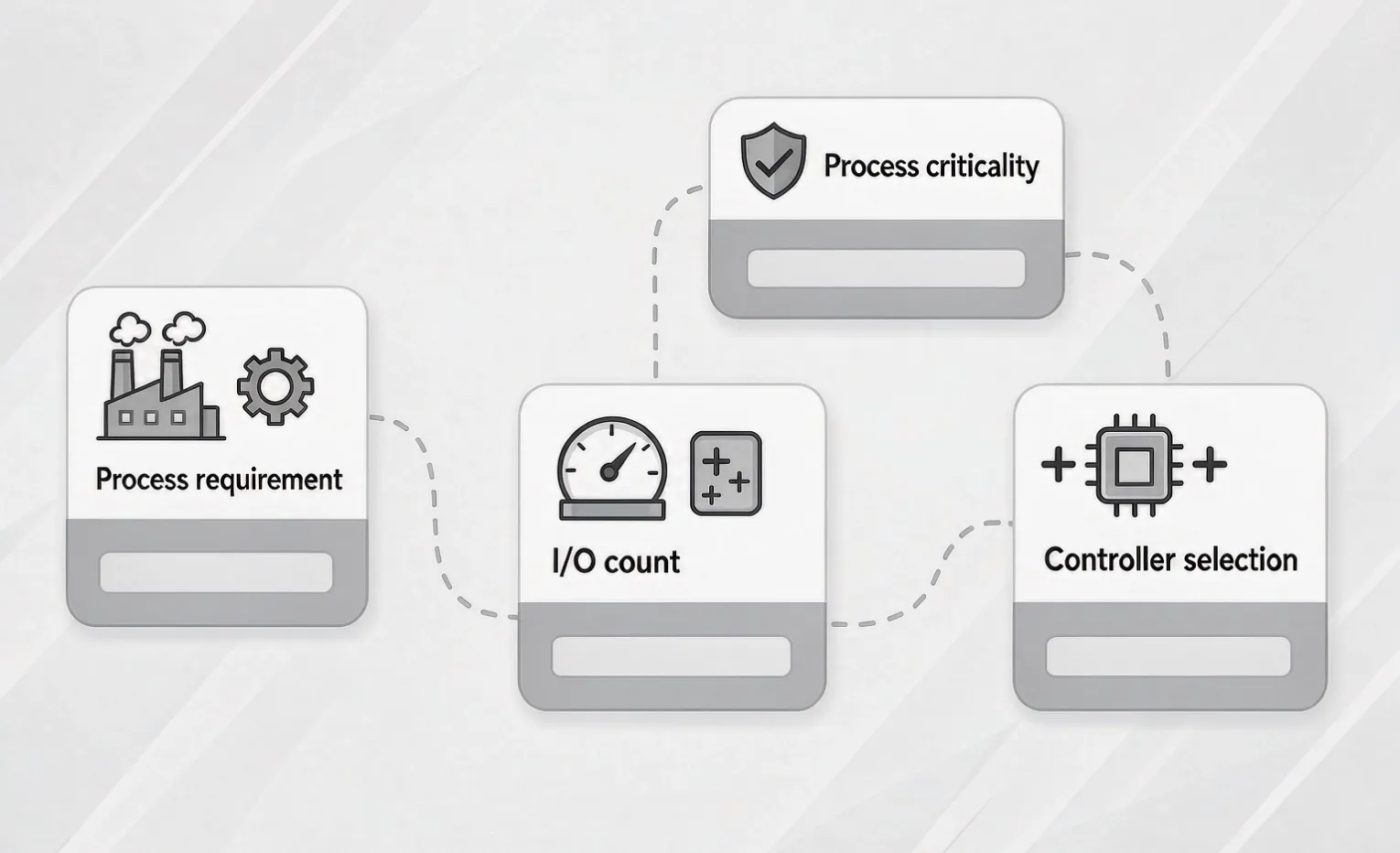
Choosing the controller platform
Once the I/O is on paper, the controller choice becomes a sizing problem, not a brand argument.
When a compact PLC is enough
If your I/O fits on a fixed, non-expandable controller with integrated I/O — typically under roughly 40 points total and one or two communications ports — a compact PLC is the right call. It is cheaper, smaller, and has fewer parts to fail. For machine builders shipping repeat units, this is usually the sweet spot.
When you need a modular rack
If the I/O count, mix of signal types, or future expansion pushes past a compact unit, you need a modular rack: a base controller plus separate I/O, communication, and specialty modules clipped onto a DIN rail. Modular costs more per point but lets you match each card to its signal and add points without redesigning the panel.
Engineering Note: The hidden cost of "too small" is not the second controller — it is the rewiring, the larger enclosure, and the re-test that follows when you outgrow a compact unit three months after install. Size for the spare row, not the subtotal.
Component brand availability is a sourcing decision
Buyers often ask which controller "we use." The honest answer for a sourcing supplier is: the panel should use the platform your local support and spares already cover. We routinely build around platforms such as Mitsubishi, Siemens, and ABB because their modules are widely stocked and documented — but the brand is your decision, driven by what your maintenance team already knows and what your regional distributors stock. Specify the brand and family in the RFQ so spares are never a custom import.
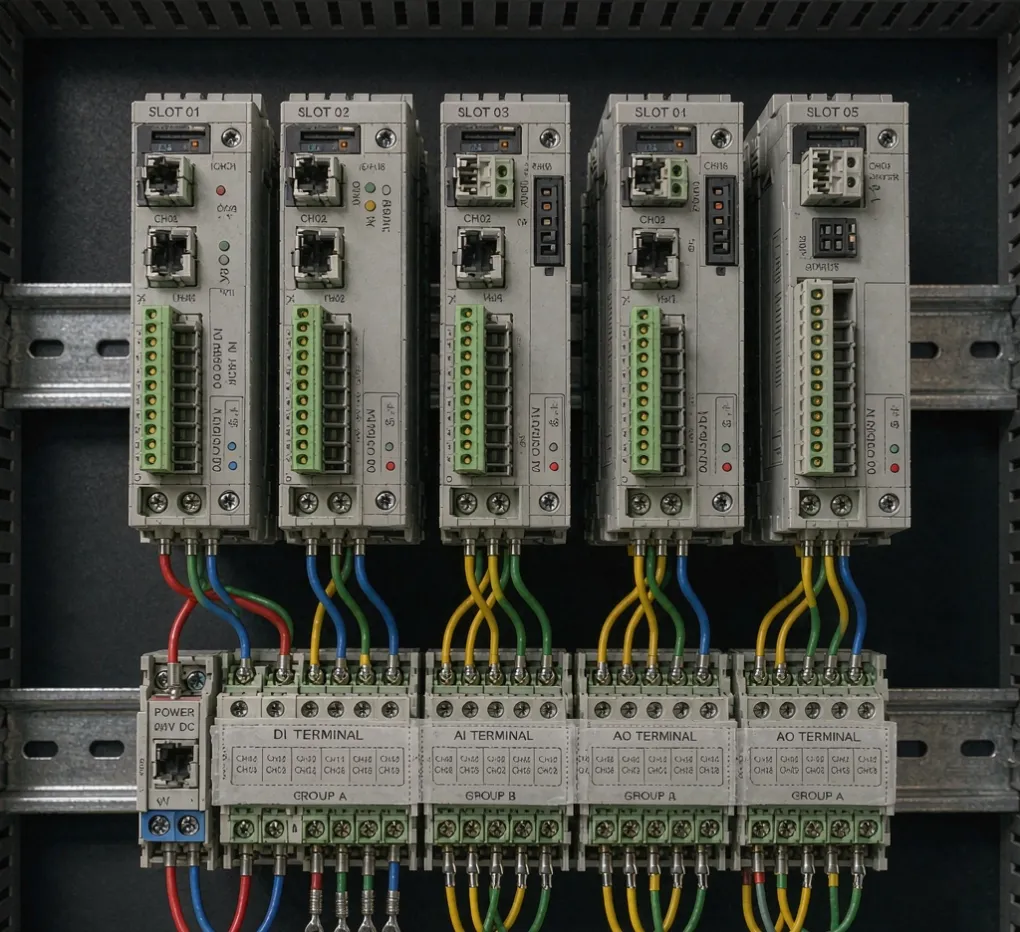
Enclosure and environment rating
The controller and modules decide what the panel does; the enclosure decides how long it survives. Match the box to the environment, not to the budget.
- Indoor, clean, climate-controlled: a painted carbon-steel enclosure is usually sufficient.
- Washdown, dusty, or damp: stainless steel (304 or 316) with a higher ingress rating.
- Outdoor or coastal: stainless plus a corrosion-class coating system; see our guide on choosing the right electrical enclosure for the coating and rating detail.
- Hazardous area: only enclosures and builds certified for that zone — do not field-retrofit a standard panel.
For the ingress rating itself, decide between IP (IEC) and NEMA (common in North America) deliberately; they are not directly equivalent and a supplier quoting one while you expected the other will not match your existing installed base.
Build and wiring standards: the part that protects you
Two standards govern how a panel is built and documented. Put both references in your specification so "built to standard" means something.
- UL 508A — the U.S. standard for industrial control panels. It covers construction, wiring methods, component spacing, and short-circuit ratings. If your panel ships to North America, require a UL 508A build and, where relevant, a listed panel. Reference: UL 508A.
- IEC 60204-1 — the international standard for electrical equipment of machines, covering protective earthing, emergency stop, and control circuit design. Common outside North America. Reference: IEC 60204-1.
Buyer Decision: Do not accept "built to standard" without the standard named and the documentation to prove it. A panel built to IEC 60204-1 and one built to UL 508A look similar on the outside and behave differently under fault. Name the standard, and require the electrical schematic, bill of materials, and test record with delivery.
Verification before shipment: FAT and the document pack
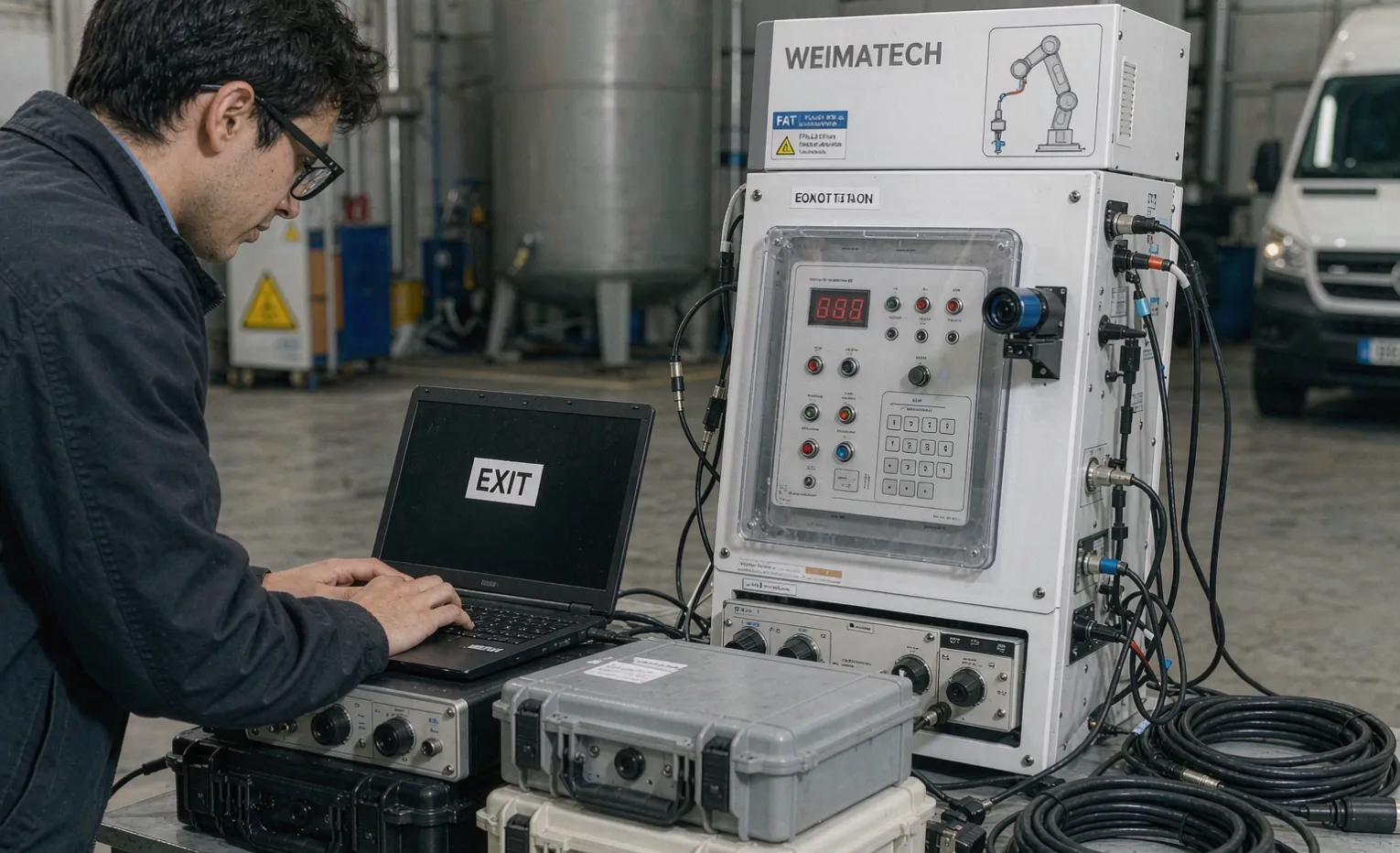
A panel that powers up on the bench is not a panel that will run your process. The checkpoint is the build-shop acceptance test (FAT), where the builder simulates inputs and confirms outputs, interlocks, and alarms behave as specified.
Require a FAT before the panel leaves the build shop. At minimum it should cover: - Every I/O point driven and confirmed against the schematic. - Interlocks and emergency stop functionally tested, not just visually inspected. - Communication links to drives and SCADA exercised with the real protocol. - A written FAT report signed against your specification.
The FAT is only as good as the documents behind it. Our control panel documentation checklist lists exactly what should ship with the panel — schematic, BOM, I/O schedule, setpoint sheet, and test records. Insist on receiving them before you pay the balance.
A one-page specification checklist
If you take nothing else from this guide, put these lines in every PLC panel RFQ:
Specification item | What to write |
|---|---|
Process & I/O table | DI / DO / AI (isolated?) / AO / comms, with +20% spare |
Controller platform | Brand + family, compact vs modular, stated |
Enclosure | Material, ingress rating (IP or NEMA), environment class |
Build standard | UL 508A or IEC 60204-1, named |
Spares policy | Acceptable module brand(s) for local stock |
Verification | FAT scope + required delivery documents |
Three suppliers quoting against this table will return numbers you can actually compare. The one that cannot meet the table is telling you something before any money changes hands.
Frequently asked questions
How many spare I/O points should I specify? A practical minimum is 15–20% spare across each type, plus at least one spare communication port. If your process is likely to expand (extra tanks, extra motors, a future SCADA node), spec closer to 25–30%. The spare points are cheap; a panel rebuild six months later is not.
Compact PLC or modular rack — which do I need? If total I/O is under roughly 40 points with one or two comms ports and no planned expansion, a compact PLC is usually enough. Beyond that, or whenever you need to mix many signal types or leave room to grow, a modular rack is the safer buy.
Why does the controller brand matter for spares? Because a panel is only as serviceable as its least-stocked module. If the builder uses a brand your regional distributors do not carry, a single failed card becomes an international emergency order. Specifying a widely-stocked platform (for example Mitsubishi, Siemens, or ABB) keeps spares local and lead times short.
UL 508A or IEC 60204-1 — which should I require? It depends on destination and your installed base. North American projects usually require UL 508A; most other markets use IEC 60204-1. The key is to name one explicitly and require the documentation to match, because the two standards differ in earthing, emergency-stop, and control-circuit rules.
What exactly is a FAT and do I need it? FAT (build-shop acceptance test) is a controlled test at the build shop where every I/O point, interlock, and communication link is exercised against your specification before shipment. You need it. It catches wiring errors and missing points for the cost of a day on the bench instead of a week of unplanned downtime on site.
How long does a custom PLC panel take to build? Typical build and FAT for a standard custom panel runs one to three weeks after the specification is locked, depending on enclosure fabrication and component lead times. The biggest schedule risk is a late or changing specification — locking the I/O table early is the single best way to protect your date. Our lead-time guide goes into the detail.
Engineering Takeaway
A PLC control panel is only as good as the specification that scopes it. Count the I/O from the process with real headroom, size the controller for the spare row not the subtotal, name the enclosure and build standard, and require a FAT with documents before you pay. Do that, and three quotes become comparable — and the cheap one can no longer hide a short panel behind a low number.
Explore more in our VFD control panel buyer's guide, the control panel documentation checklist, and what a custom control panel build involves.
Related guides
Request your specification review
If you have a process and a rough I/O list but are not sure the panel is scoped right, send it over. We will review the specification, flag the gaps that usually surface at commissioning, and return a comparable quote — not a lowest-number gamble. Submit your requirements and we will come back with a build-ready scope.
Turning this specification into a build scope is our daily work. See how we handle PLC control panel manufacturer projects — Mitsubishi or Siemens architecture, MOQ from 5 units, 15-20 day build — or request a PLC panel quote.