
Oct 14, 2026Control Panels
When to Specify a Custom Control Panel: A Buyer's Checklist
Standard panels are fast, but they stop fitting the moment your load is unusual. Here's the buyer's checklist for when a custom panel pays for itself.
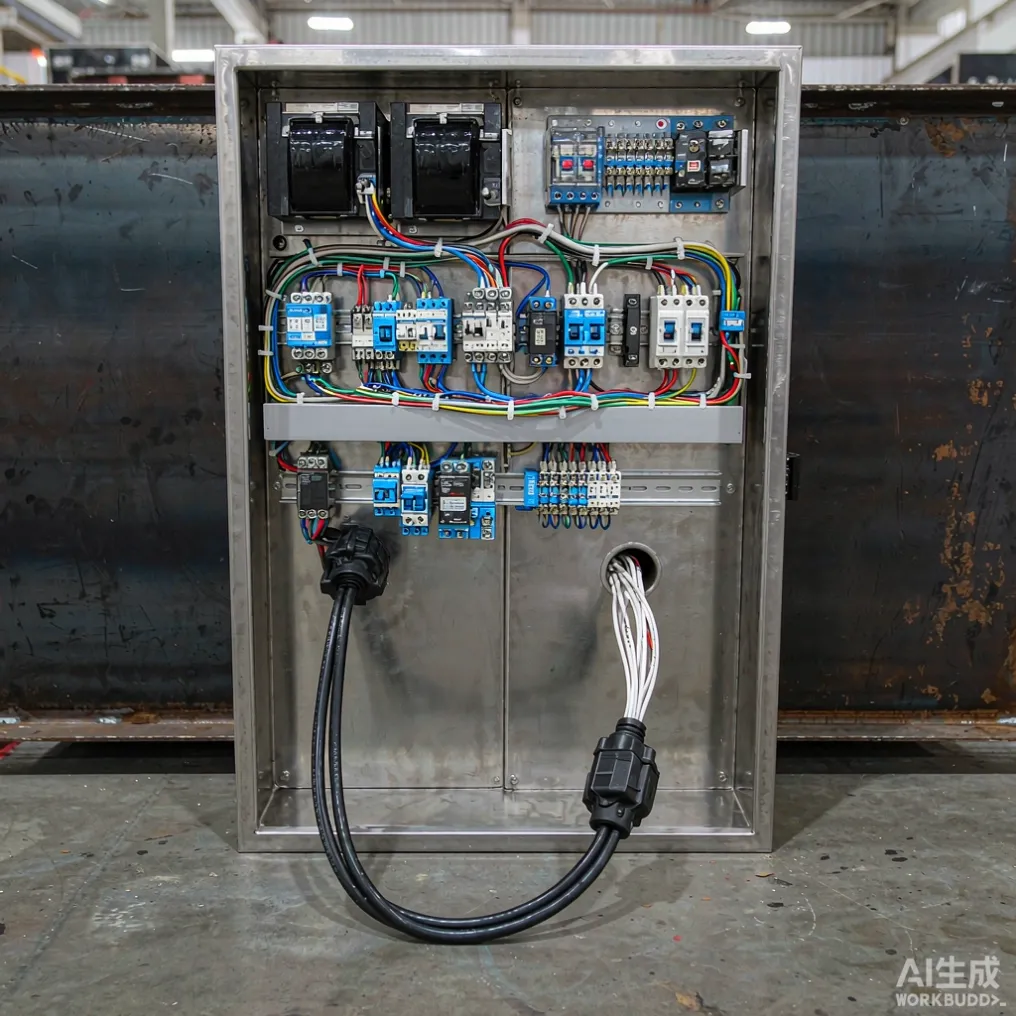
A standard catalog panel gets you running fast—until your load doesn't match the catalog. The question isn't "custom or standard"; it's "at what point does a standard panel start costing you more in rework than a custom one would have?" I've seen buyers order three off-the-shelf starters and bolt them into a rig that needed one integrated panel, then spend more fixing the gaps than the custom build would have cost. Here's the checklist we use to decide before the purchase order.
Quick boundary: we're a sourcing partner and panel-build shop. We assemble and integrate panels from the components you need—Mitsubishi, Siemens, ABB, and others among them. We don't run a factory, and we don't design your machine's logic; we build the panel that houses and wires it, to your drawing.
Start with the enclosure the site demands.
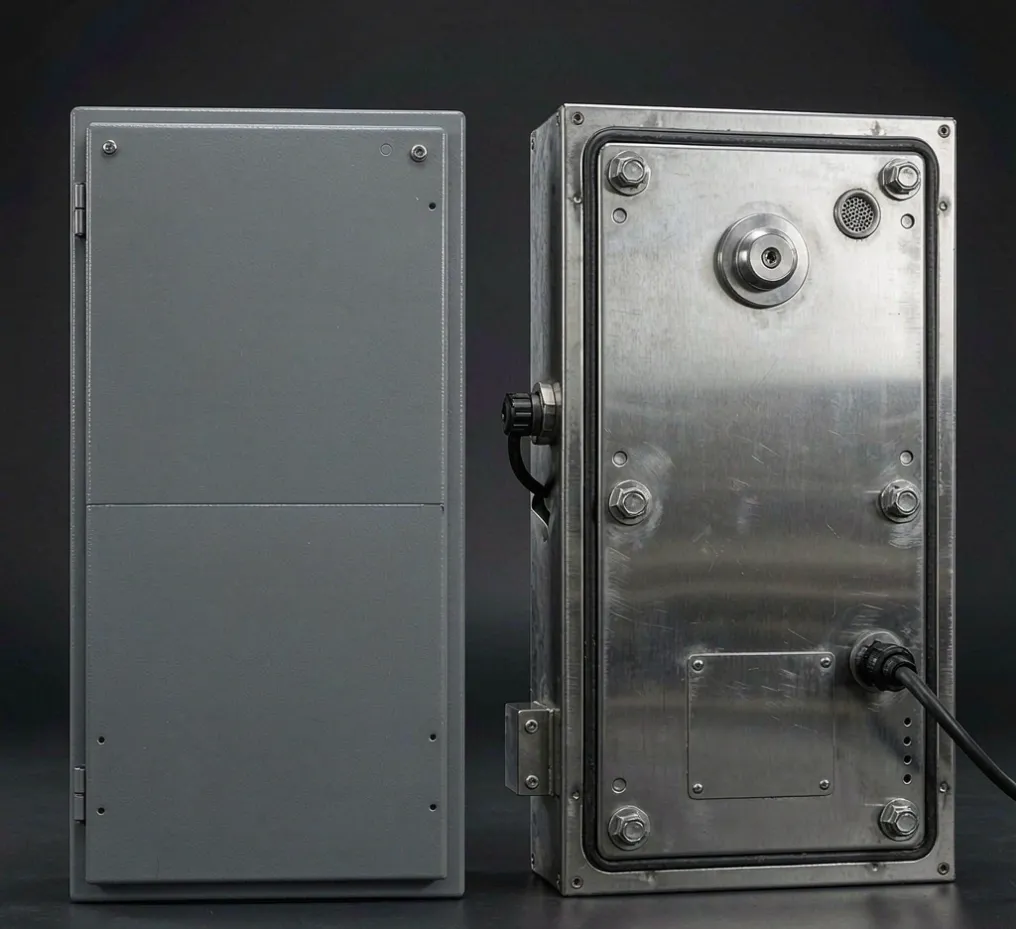
If the site is coastal, washdown, or outdoor, a catalog panel in painted carbon steel won't last. We build enclosures in painted carbon steel, galvanized, 304, or 316 stainless steel depending on the corrosion load—no aluminum, because it doesn't hold up in most industrial atmospheres we see. A NEMA 4X or IP65/IP66 rating (IP per IEC 60529) isn't a line item you add later; it's the box the whole panel lives in. If the environment is unusual, the panel is already custom-made at the enclosure.
Count the functions before you count the dollars.
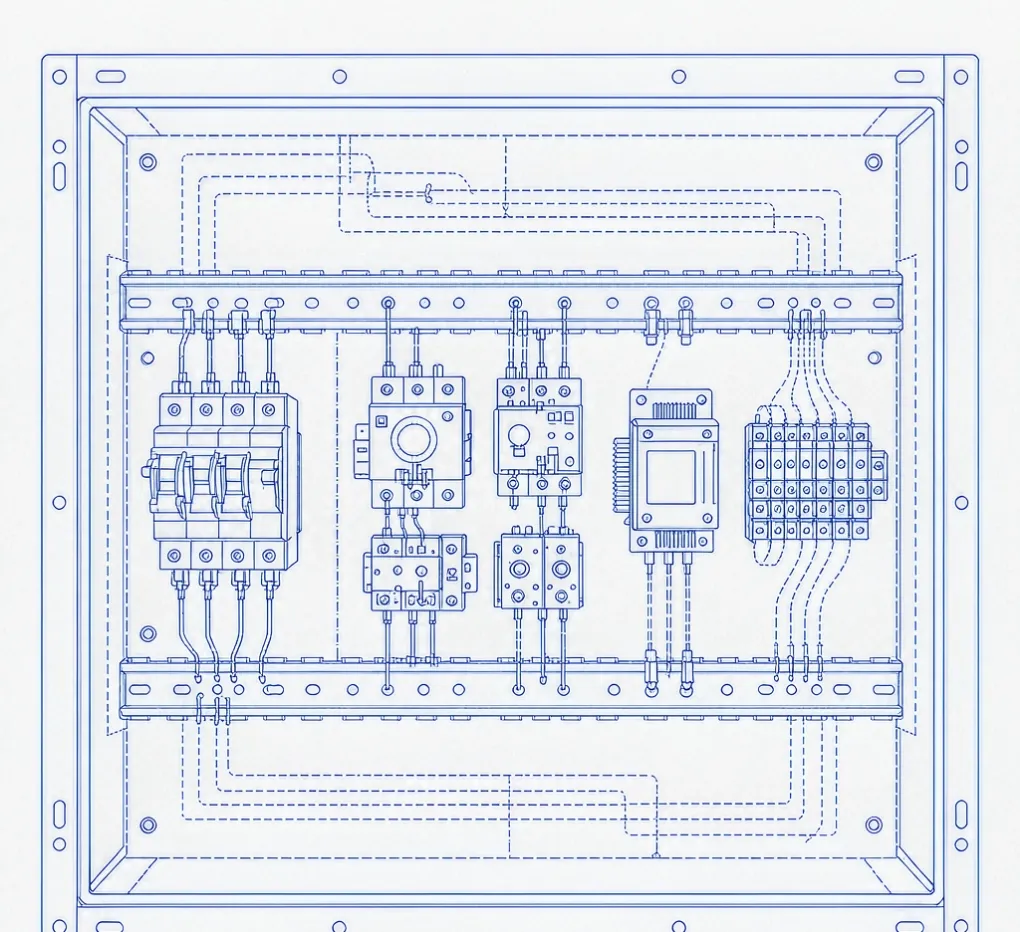
A single pump starter off a shelf is fine. The moment you're combining a VFD, a PLC, IO, and a UPS into one coordinated panel, you've left the catalog behind—not because custom is better, but because nobody stocks that exact combination. Custom isn't about showing off; it's about one panel that does the job instead of three that almost do.
The decision table
If this is true | Go custom. | Why |
|---|---|---|
The site is coastal/washdown/outdoor. | Yes. | Needs 316 or NEMA 4X, not catalog steel |
One panel must combine several functions. | Yes. | The catalog doesn't stock the combo. |
You need a UL 508A listed assembly. | Yes. | Listed build, not loose components |
FAT records are required for your audit | Yes. | We document every test before shipping. |
It's a simple, standard single starter. | No | A shelf unit is faster and cheaper. |
You have the exact drawing already. | Maybe | Custom still beats bolting shelves together. |
FAT is where custom earns its keep.
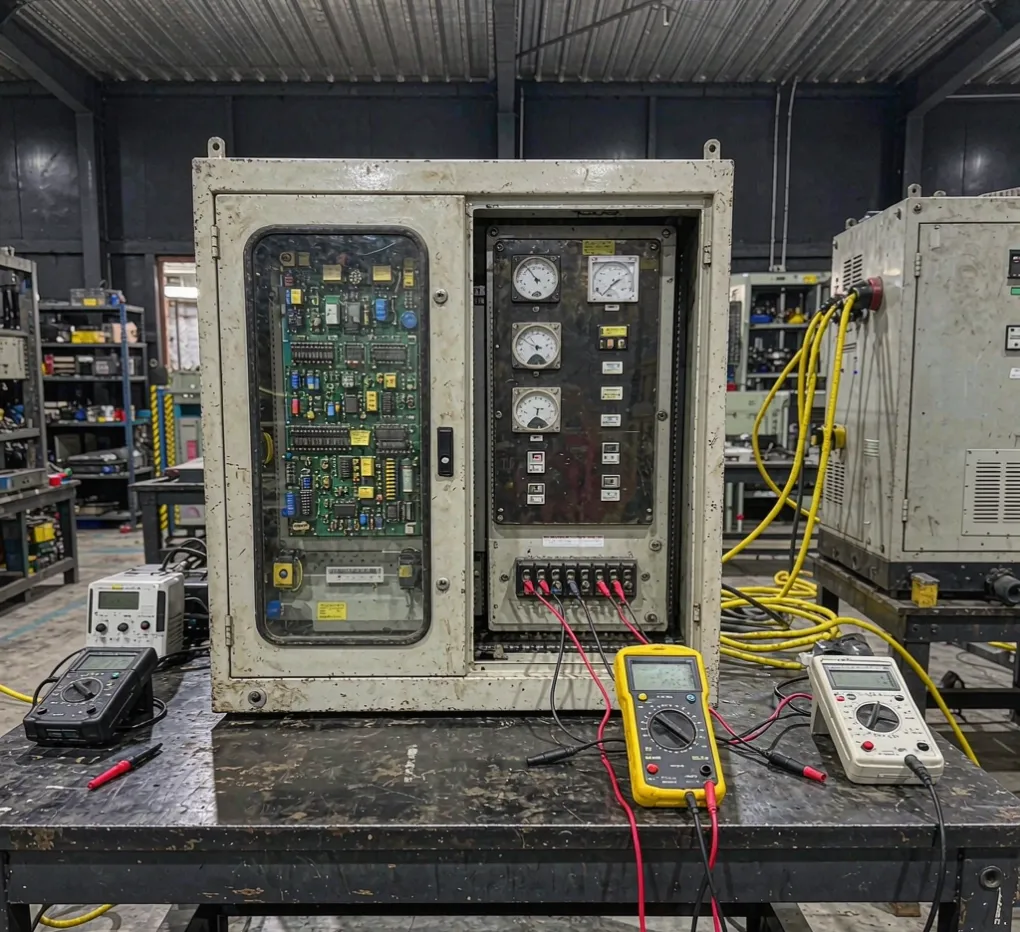
A catalog panel ships as-is. A custom panel we build gets a Factory Acceptance Test before it leaves: every circuit energized, every IO confirmed, every trip verified, and the record travels with the panel. For sites that can't afford a startup surprise—food lines, water treatment, offshore—that FAT record is the difference between "it worked on day one" and "we lost a week finding the bad wire." We cover our pre-shipment process in our control panel pre-shipment checklist.
A rework we stopped.
A packaging OEM kept buying catalog starters and mounting them in their own frame. Every machine needed different IO and a different cutout, so every install meant field rework—drilling, rewiring, delaying the line. We built one custom panel to their drawing with the exact IO and cutout, UL 508A listed, and FAT-documented. The install became "bolt it in and run." The panel cost more than a shelf unit; the field rework it removed cost more than the panel.
FAQ
When should I not bother with custom?
If it's a simple, standard single function—one starter, one pump, no special environment—a catalog panel is faster and cheaper. Don't over-spec.
How long does a custom panel take?
An empty cabinet runs a 5-piece minimum and about 15–20 days. A full panel build from a reviewed drawing is typically 35–40 days after you sign off. Loose components we source ship in 3–5 days if you're only buying parts.
Do you make the panel yourself?
We're a sourcing partner and panel-build shop. We integrate and wire the components you specify; we don't run a manufacturing plant for the devices themselves.
What if my site is coastal?
We build the enclosure in 316 stainless or galvanized with a NEMA 4X / IP66 rating. A painted carbon-steel catalog box won't survive that environment.
Can you get a UL 508A listed assembly?
Yes—we build through a shop listed under UL508A on a per-project basis and document it. Ask for the listing and scope in the quote.
Is custom always more expensive? Up front, often yes. But once you add field rework, downtime, and failed startups, the catalog "savings" disappear. The checklist above tells you which side you're on.
Buyer's takeaway
Don't default to standard and don't default to custom. Run the checklist: unusual environment, combined functions, certification, or FAT records push you to custom; a simple standard load keeps you on the shelf. The right answer is the one that costs less after installation, not before.
Related guides
If your panel needs a UPS with a service bypass, see our UPS maintenance bypass guide — that's a custom integration, not a shelf item.
We cover the broader build-and-ship process in our electrical enclosure supplier's guide to sourcing from China, and our custom control panels solution page shows what we integrate and ship.
Ready to find out if your next panel should be custom? Upload your drawing for an engineering review — we'll tell you straight whether a shelf unit will do.