
Oct 14, 2026Integration & Compatibility
UPS Maintenance Bypass: What It Is and When Your Load Can't Run Without One
A maintenance bypass lets you service a UPS without dropping the load. Here's when your critical equipment needs one — and the two kinds that exist.
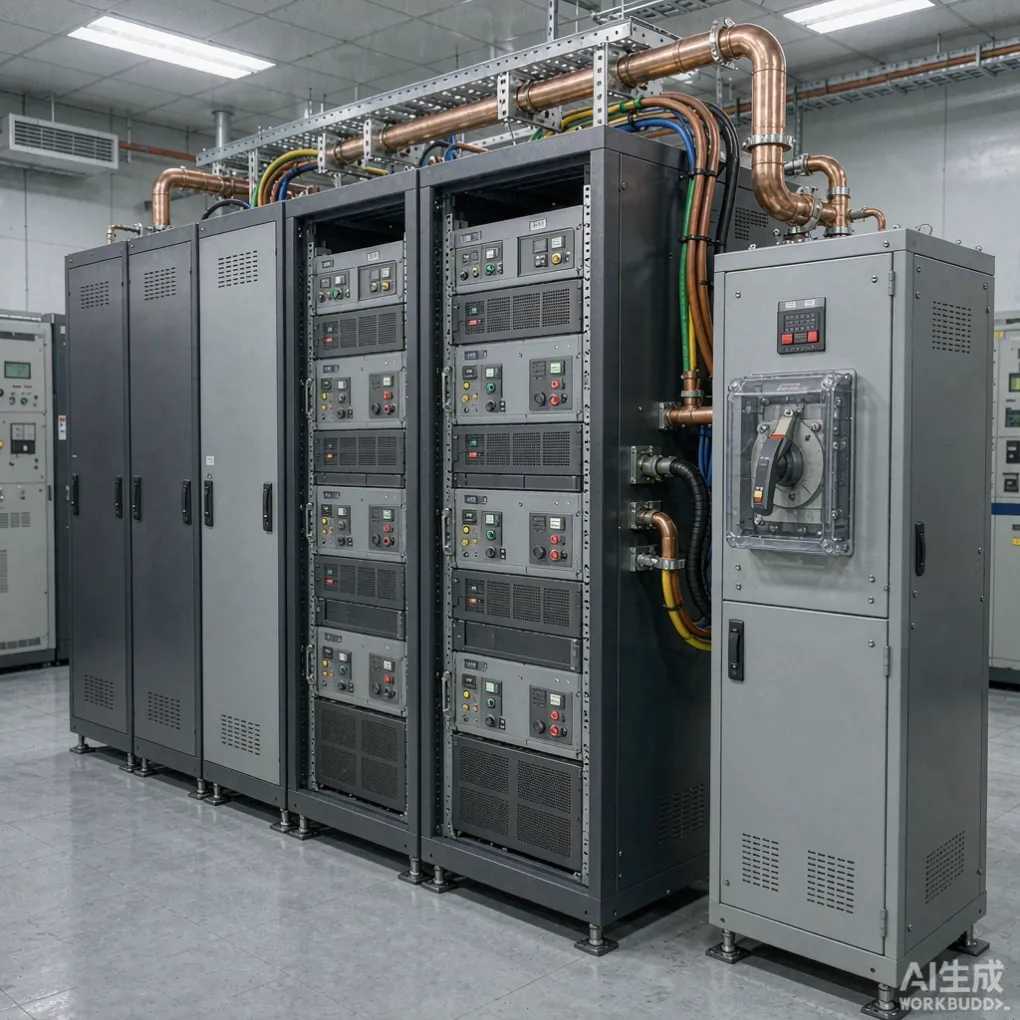
A maintenance bypass is the switch that lets you take a UPS out of the circuit to service it while the load keeps running on raw utility power. If you've ever stared at a UPS with a failing battery and thought, "I can't power this line down to swap it," the bypass is the answer—provided it was specified in the first place. Too many panels arrive with a UPS bolted in and no clean way to isolate them, and that's when a routine battery change becomes an unplanned stop.
Quick boundary: we size and integrate UPS systems into panels as a sourcing partner and panel-build shop. We're not a UPS manufacturer, and we don't run the load—we make sure the bypass path exists so your maintenance crew isn't forced to choose between a dead battery and a dead process.
Two kinds of bypass, and they are not the same.
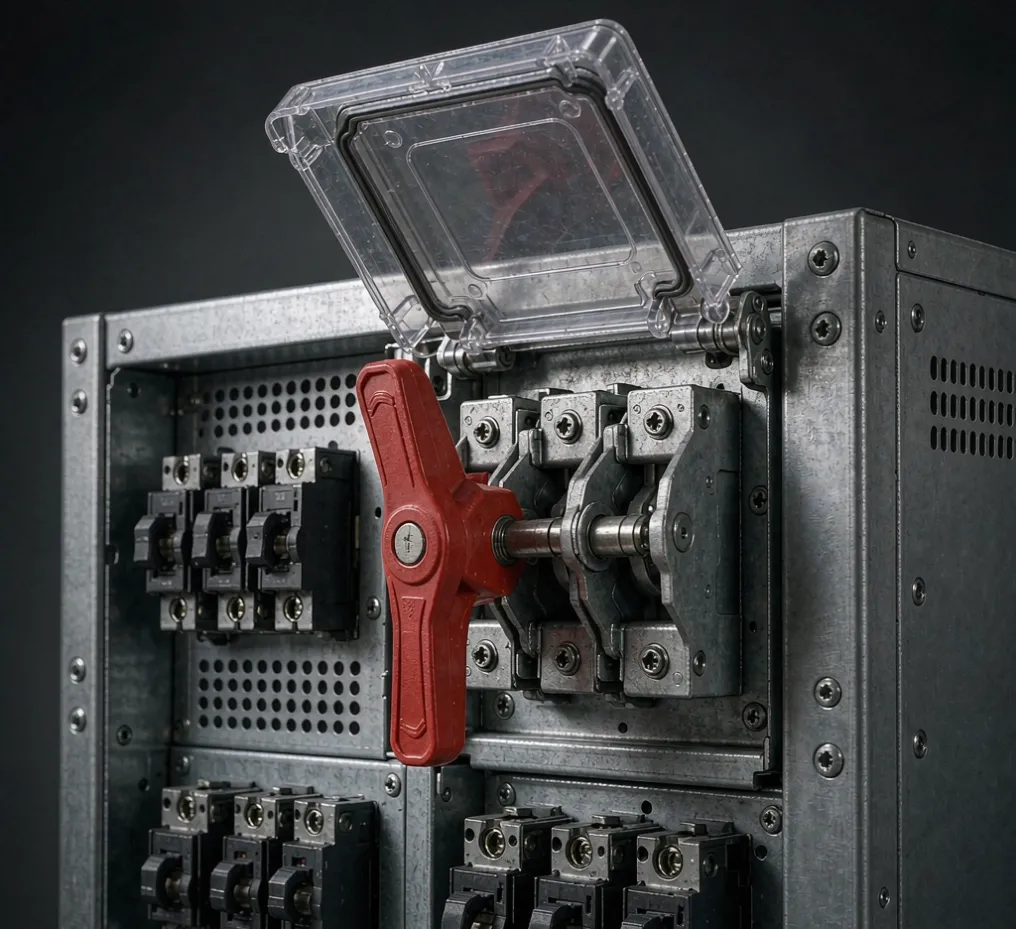
The first kind is a manual maintenance bypass—a separate rotary or breaker assembly, usually wall-mounted next to the UPS, that physically routes the load around the UPS onto utility. You throw it; the UPS goes cold and safe to work on, and the load never blinks. The second kind is an internal (static) bypass built into the UPS itself: If the UPS faults, it auto-transfers the load to the utility through a solid-state switch so the load survives the UPS failure. They solve different problems. The internal one saves you when the UPS dies; the manual one lets you work on the UPS on purpose. You want both, and a lot of cheap builds only give you the internal one.
When you actually need the manual bypass
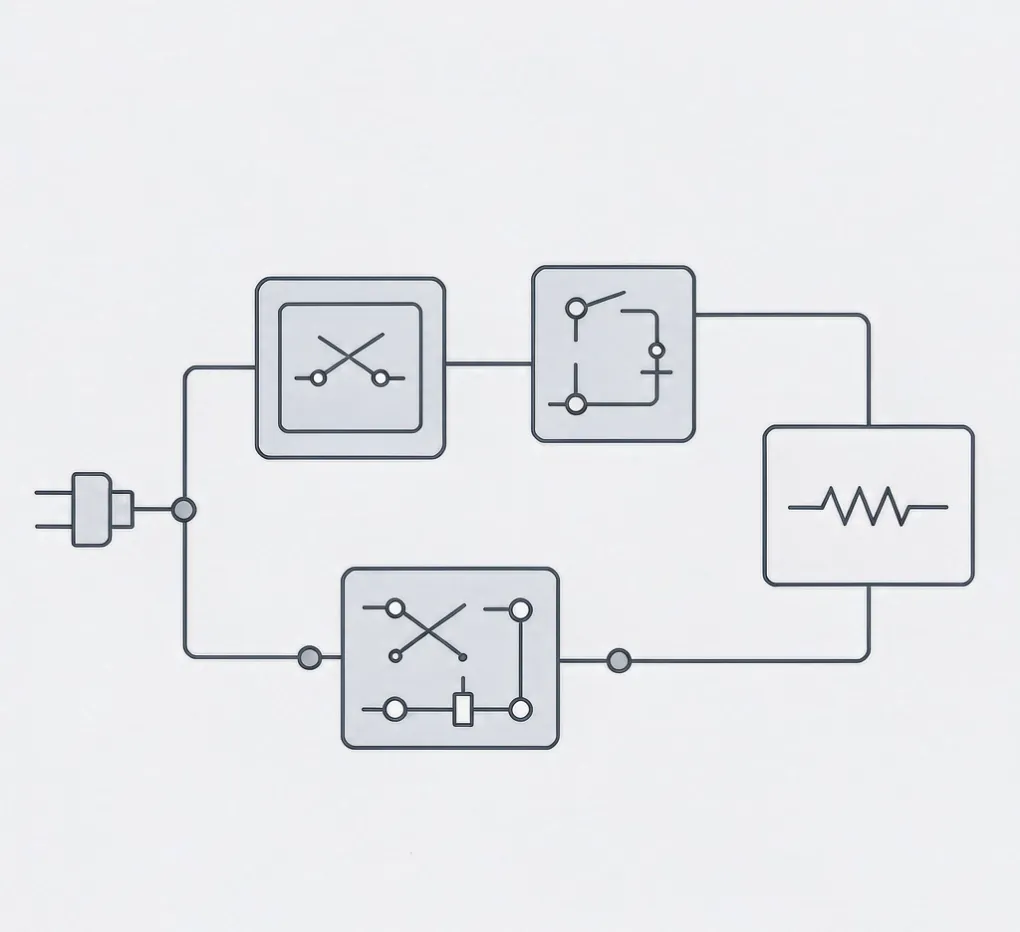
The test is simple: can you afford to power the load down to service the UPS? If the answer is no, you need a manual bypass. That's true for a continuous process line whose PLC and drives must stay up, a site with no redundant feed, or any panel where the UPS sits in front of controls you can't restart cleanly. A packaging line that takes twenty minutes to re-home after a power cycle doesn't get "twenty minutes of downtime for a battery swap" as an option—the bypass is what makes the swap a non-event.
I'll be blunt: the places that skip it are the ones that think "the internal bypass is enough." It isn't, because the internal bypass only kicks in on a fault. It doesn't let you deliberately open the UPS to replace a battery or fan. Without the manual path, servicing means a planned stop.
The transfer has to be sequenced.
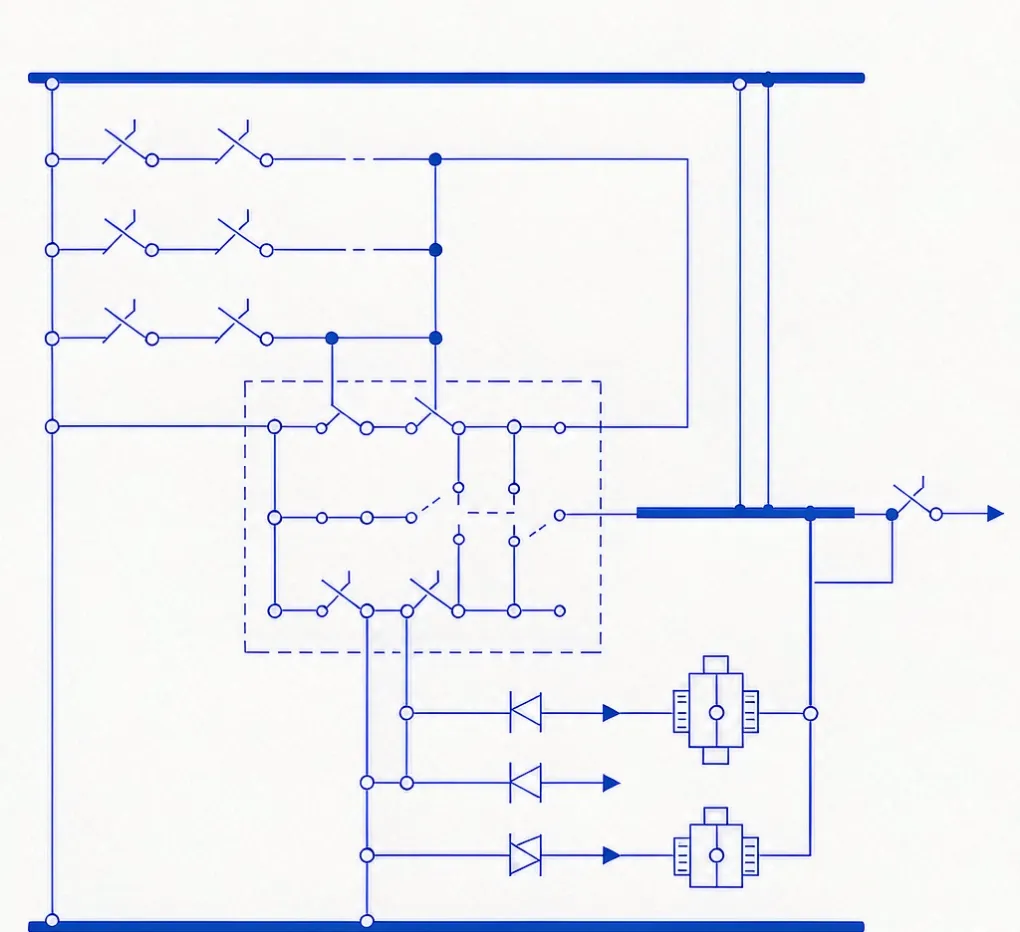
This is where people get hurt or drop the load. Moving between utility and UPS isn't a single throw on a random switch—it's a sequence, and doing it backwards can momentarily parallel two sources or open the load entirely. A proper manual bypass is interlocked so you can't land both sources at once, and the make-before-break or break-before-make order is fixed by the assembly. If your "bypass" is a maintenance tech with a screwdriver and a spare breaker, that's not a bypass—that's a gamble.
For the safety and performance references we build to: UPS safety is covered under UL 1778 in North America, and performance and classification under IEC 62040-3 internationally. We don't write the standard; we build to it and document the transfer sequence on the panel.
What we put in the panel
Decision | What to specify | Why it matters |
|---|---|---|
Manual bypass | Separate interlocked assembly | Let you service the UPS on purpose. |
Internal static bypass | Built into the UPS | Keeps load up if the UPS faults |
Interlock | Break-before-make, source-isolating | Prevents paralleling or dropping the load |
Labeling | Transfer sequence on the panel | Stops a wrong-order throw |
Rating | Match UPS current and site IP. | Survives the environment and the load |
A stop we prevented
A food plant ran a single UPS in front of its line controller. During a scheduled battery swap they'd been powering the whole line down—twenty minutes of lost production, every time. We integrated a manual maintenance bypass into the panel so the controller stayed on utility while the battery was changed and documented the one-throw transfer on the door. Same UPS, same battery, zero line stops since. The hardware didn't change; the path did.
FAQ
What is a maintenance bypass?
It's the switch that routes your load around the UPS onto utility power so you can service or replace the UPS without powering the load down.
Internal bypass versus manual bypass—do I need both?
The internal one saves you if the UPS fails; the manual one lets you take it down on purpose. If you can't afford a planned stop, you need the manual one. Most cheap builds skip it.
Can I just power down to swap a battery?
Only if the load can tolerate the downtime and a clean restart. Process lines, controls with long re-home sequences, and sites with no redundant feed usually can't.
Is the transfer safe to do yourself?
Only with a proper interlocked bypass that prevents paralleling two sources. A panel with no documented sequence is a hazard, not a feature.
Does this apply to every UPS?
Any UPS feeding a load you can't drop should have a manual bypass. A small desktop UPS behind an office PC doesn't—but an industrial UPS in front of controls does.
How long does a panel with an integrated UPS take to build?
An empty cabinet runs a 5-piece minimum and about 15–20 days. A full panel build from a reviewed drawing is typically 35–40 days after you sign off, with the bypass path designed in from the start.
Engineering takeaway
Specify the bypass before the UPS goes in the panel, not after. You need the manual path to service it on purpose and the internal path to survive a fault—and you need both interlocked so the transfer can't go wrong. If your panel can't be powered down, the bypass isn't optional.
Related guides
-Industrial UPS battery replacement lifecycle — when the battery you're bypassing actually needs changing
If your UPS feeds controls that can't stop, also see our control panel specification guide — a custom panel is where the bypass path actually gets built in.
We cover the broader build-and-ship process in our electrical enclosure supplier's guide to sourcing from China, and our industrial UPS systems solution page shows what we integrate and ship.
Ready to make sure your UPS can be serviced without stopping the line? Upload your drawing for an engineering review — we'll confirm the bypass path is in the panel before it ships.