
Oct 7, 2026Control Panels
Control Panel Grounding: The Mistakes That Trip Breakers (or Worse)
Most panel faults start at the ground bar, not the components. Here's what UL 508A actually requires and the five grounding mistakes that cause noise, nuisance trips, and unsafe doors.
The short answer
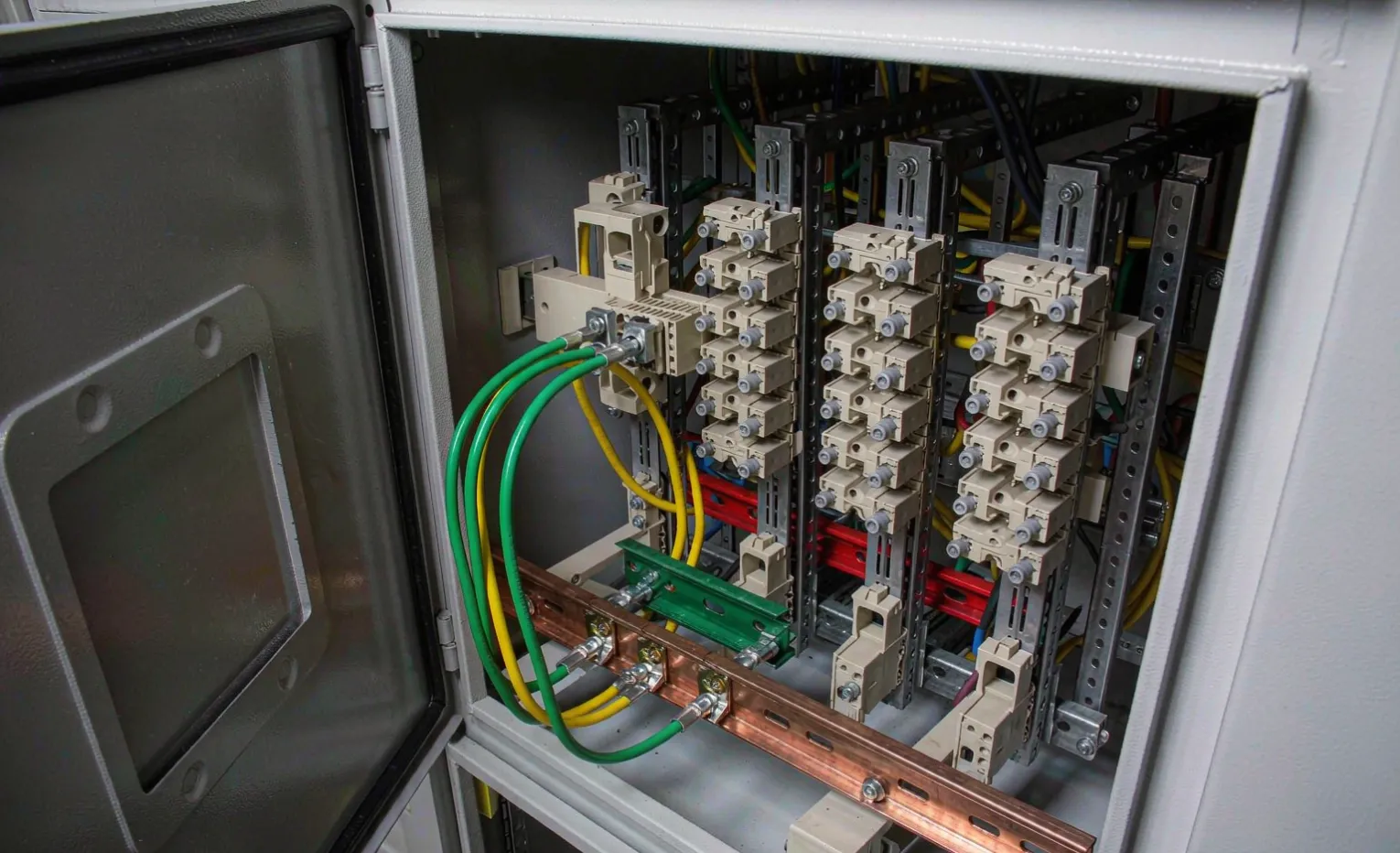
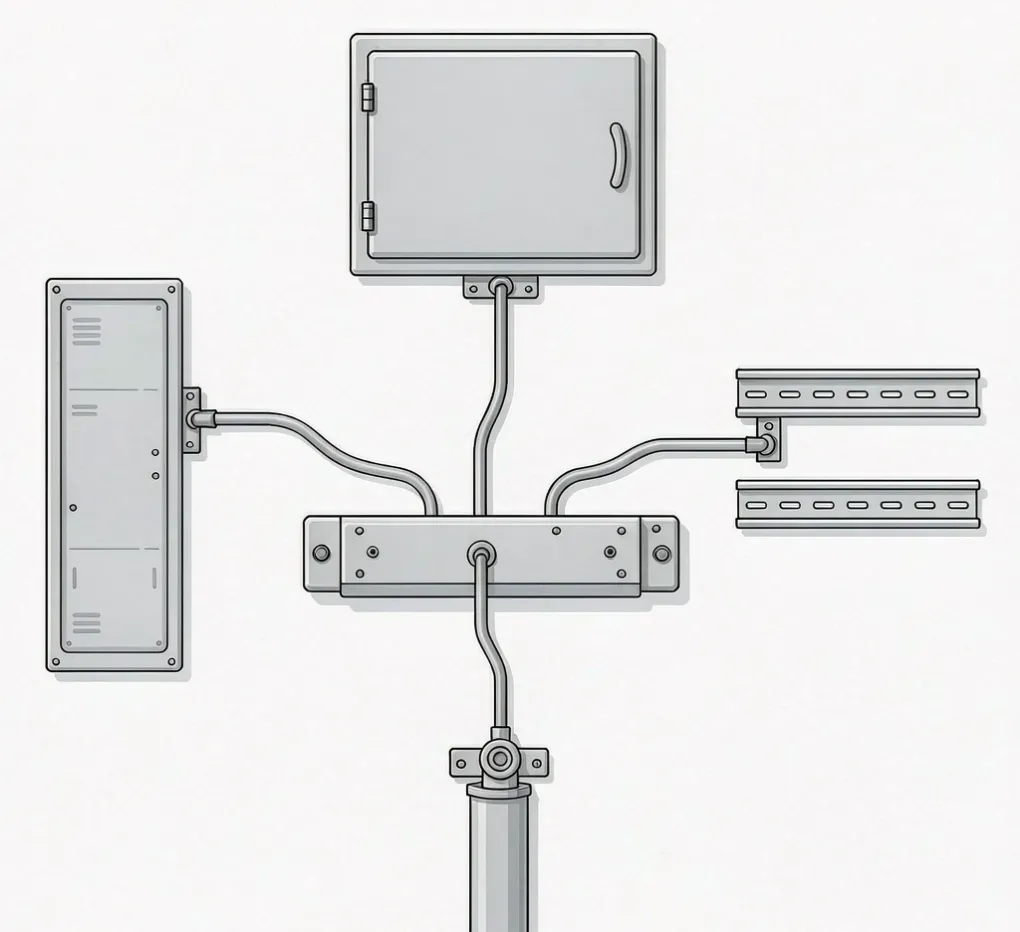
A control panel's grounding is not "one green wire to the box." Under UL 508A, every exposed metal part—enclosure, doors, backpan, DIN rails, mounting plates—must be bonded with its own low-impedance conductor back to a single system ground bar, and that bar must be sized to carry fault current. The enclosure is a grounded component, not a ground conductor. Treat it like a wire, and you get noise, nuisance trips, and doors that can bite you.
We are a sourcing partner and panel-build shop, not a manufacturer. Below is how we spec and verify bonding on the cabinets we build—and the five mistakes we see most often in panels that arrive on our bench for rework. For the wider sourcing picture—material grades, ratings, and how to qualify a build shop — see our China electrical enclosure supplier sourcing guide.
Why the enclosure can't be your ground wire
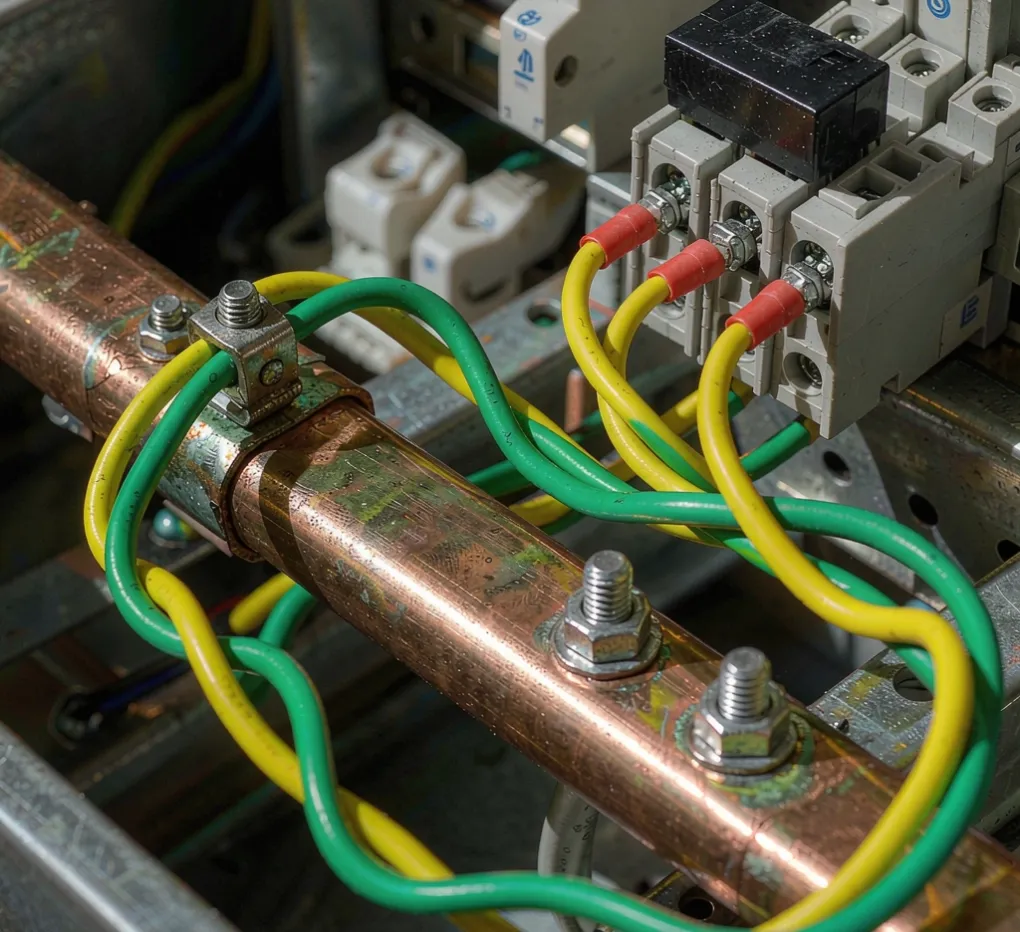
UL 508A §34 is blunt about this: the enclosure metalwork is a grounded component, not an approved bonding path. Paint, powder coating, and oxide layers all form high-resistance joints. A thread-through mounting stud is not a reliable bond—it can read megohms, not milliohms.
The fix is simple to state and easy to skip: run a dedicated copper bonding conductor from every bonded point to the system ground bar. For DIN rails and most bonds, that means a minimum 6 mm² (10 AWG) copper conductor landed on the bar—not a hope that the screw threads will carry fault current.
Engineering Note: In a residential panel, a metal outlet box needs its own bonding conductor — it does not rely on the box metal to carry fault current to the next connection. Scale that same rule up to an industrial enclosure and you have UL 508A §34.
The five mistakes we see most
1. Relying on paint for continuity
This is the most common one. A rail clamped to a painted backpan looks bonded. It isn't. The coating between the clamp and the steel is an insulator.
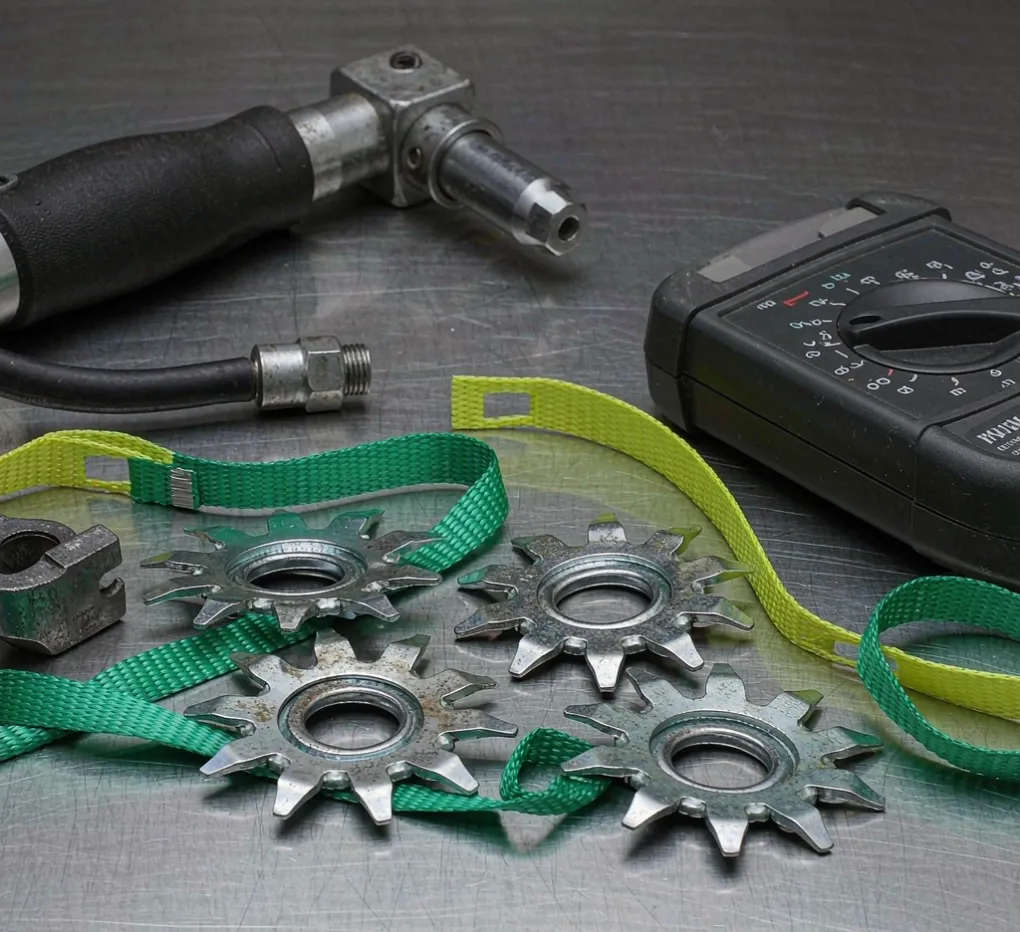
What to do: Remove paint in a 5 mm ring around each bonding point with a rotary tool, clean with isopropyl alcohol, and apply conductive anti-oxidant grease before torquing. Where you can't strip paint, use star (toothed) washers that bite through the coating—acceptable per IEC 60204-1 and common on Rittal-style frames.
2. Door studs with no bonding jumper
A hinged door with an HMI or breaker on it needs its own flexible bonding strap to the ground bar. Hinges are not an approved bond—they're moving, painted, and loose by design.
What to do: Size the door jumper by the ampere rating of the OCPD protecting the door-mounted circuit (UL 508A §15.2), not the main breaker. A 3A control-circuit breaker can use a small flexible conductor; a door-mounted disconnect needs a properly sized strap. Verify continuity with a milliohm meter—we target < 0.1 Ω.
3. Ground loops from shielded cables
Shielding is good. Grounding both ends of a shield in a panel with mixed AC/DC grounds creates a loop, and loops inject noise that makes analog signals jitter.
What to do: Ground cable shields at one end only (typically the source end), unless the application explicitly calls for both-end grounding at high frequency. Keep your safety earth separate from your signal reference, and tie them at a single star point—never let signal ground wander through the enclosure body.
4. Forgetting the SCCR link
Bonding isn't only about shock safety. UL 508A §66 requires the Short-Circuit Current Rating (SCCR) to be marked on the nameplate, and the available fault current at the install site must not exceed it. A weak bond lets conductors move under fault, which can compromise the very devices that are supposed to clear the fault.
What to do: Get the utility's available fault current at the point of connection—don't estimate from transformer impedance alone (the utility source contributes too). Mark SCCR on the nameplate and confirm the panel's rating covers the site.
5. VFD PE left floating
A variable-frequency drive throws high-frequency common-mode noise. If the drive's protective earth, the motor frame, and the cable shield aren't all bonded to the same bar, you get EMI, bearing currents, and tripped drives.
What to do: Bond the VFD PE to the panel ground bar, ground the motor frame, and ground the shield at the designated end. Don't let the DC bus common become a stray ground path.
A practical pre-power bonding checklist
Check | Pass criterion | Tool |
|---|---|---|
Every metal part bonded | Door, backpan, rails, and plates each have a dedicated conductor to the bar. | Visual + continuity |
Bond conductor size | ≥ 6 mm² (10 AWG) copper for DIN/structural bonds | Caliper / spec |
Paint removed or star washer used | Bare metal-to-metal at every bond point | Visual |
Door jumper sized to its OCPD | Not main-breaker size | Drawing |
Continuity to bar | < 0.1 Ω from each point to bar | Milliohm meter |
SCCR marked and adequate | Site fault current ≤ nameplate SCCR | Nameplate |
Real-world timing
When you order panels from us, the clock starts after drawings and BOM sign-off. Empty cabinets run a 5-unit MOQ with about 15–20 days lead time; a full build from 1 unit takes roughly 35–40 days because engineering and FAT are on the critical path. Loose components from our stock—breakers, relays, drives—typically ship in 3–5 days. FAT records are included on every build.
Engineering Takeaway
Grounding is the one system in a panel that fails quietly and hurts loudly. Bond every metal part with its own conductor to a single ground bar, strip the paint or bite through it, keep signal ground at one star point, and mark your SCCR. Do those five things, and most "mystery" noise and trip calls will never happen.
If you want a second set of eyes on your panel's bonding scheme before you cut steel, send us the drawings. When you're ready to scope a full build, our custom control panel solutions cover enclosure, engineering review, and FAT.
Related guides: - MCC Drawout vs Fixed Starter: Which to Specify - Control Panel Short-Circuit Current Rating (SCCR) Guide - OEM Machine Control Panel Cost Drivers - UL Listed Control Panels from China: A Partner's Guide - Top 10 MCC Panel Specification Mistakes - Electrical Enclosure Supplier Qualification Checklist
FAQ
Do I need to sand paint off under every grounding point for UL 508A?
Not always. You can use star washers that penetrate the coating, which the standard accepts. But paint removal plus conductive grease gives the lowest, most durable resistance—we do it on every bond we care about.
Can the enclosure body carry the ground between two points?
No. UL 508A §34 treats the enclosure as a grounded component, not a conductor. Each bonding point needs its own conductor to the system ground bar.
What size bonding conductor do I need for a DIN rail?
Minimum 6 mm² (10 AWG) copper for DIN rails and structural bonds. Size door jumpers by the OCPD protecting the door-mounted circuit.
Why does my shielded cable cause noise instead of killing it?
Likely because the shield is grounded at both ends, forming a ground loop. Ground at one end (usually the source) unless the application calls for both-end grounding.
Is grounding the same as bonding? Close, but not identical. Bonding connects all metal parts into one low-impedance path; grounding connects that path to earth. You need both—bonding first, then the connection to earth at the service entrance.
Does grounding affect my panel's SCCR?
Yes. A sound bond keeps conductors from moving under fault, which protects the devices that clear the fault. UL 508A §66 requires SCCR on the nameplate, and the site fault current must not exceed it.
Standards we build to
Panel grounding and bonding in this article follow UL 508A (industrial control panels) and IEC 60204-1 (machine electrical safety). Enclosure and rating references trace to NEMA 250 and IEC 60529. We cite the current edition of each standard and confirm against your local code before build.
Ready to verify your panel build?
Upload your drawings, and we'll review the bonding, SCCR, and enclosure spec against your site — submit your requirements here.
We are a sourcing partner and panel-build shop, not a manufacturer. Specifications above follow UL 508A / IEC 60204-1; confirm against your local code and the current edition of the standards.