
Sep 25, 2026Buying Guides
Choosing a Food Processing Panel Builder: 9 Checks
A buyer-focused food processing control panel checklist covering washdown zones, 316L stainless, IP69K, hygienic design, sealing, condensation, FAT, and supplier review.
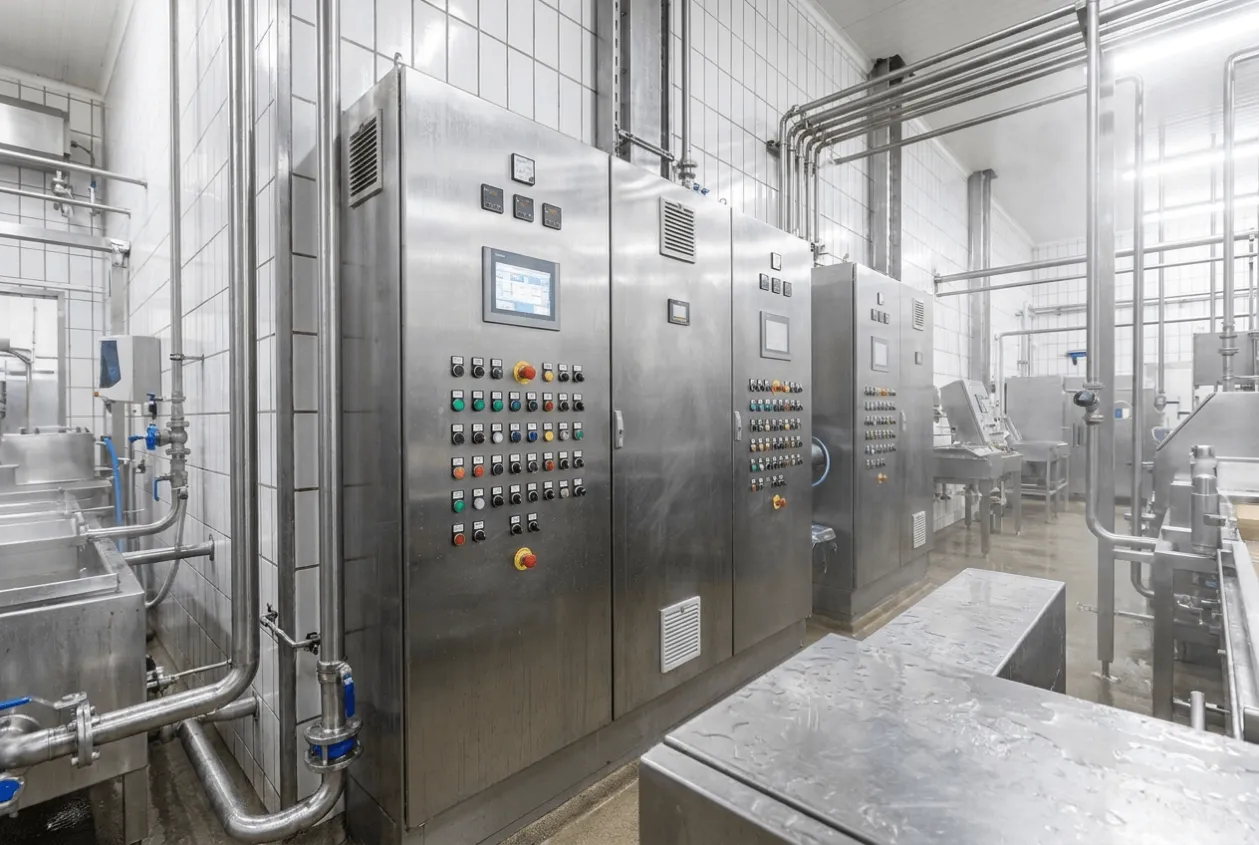
Before Approving a Food Processing Control Panel, I Always Review These 9 Washdown Details
Food Processing Control Panel Checklist for Buyers: A Procurement Guide for Washdown PLC Panels
Quick Answer
A food processing control panel is not specified by the controls first. It is specified by what it has to survive.
That is the core idea of this guide.
A panel on a food line lives beside conveyors, fillers, cookers, mixers, pumps, and washdown crews. It may face high-pressure water, caustic cleaners, acidic rinse, humidity, condensation, temperature changes, and daily sanitation. If the enclosure or internal layout is wrong, the first problem may not be electrical. It may be corrosion at the seam, water tracking behind the door, condensation inside the panel, or a line stoppage during production.
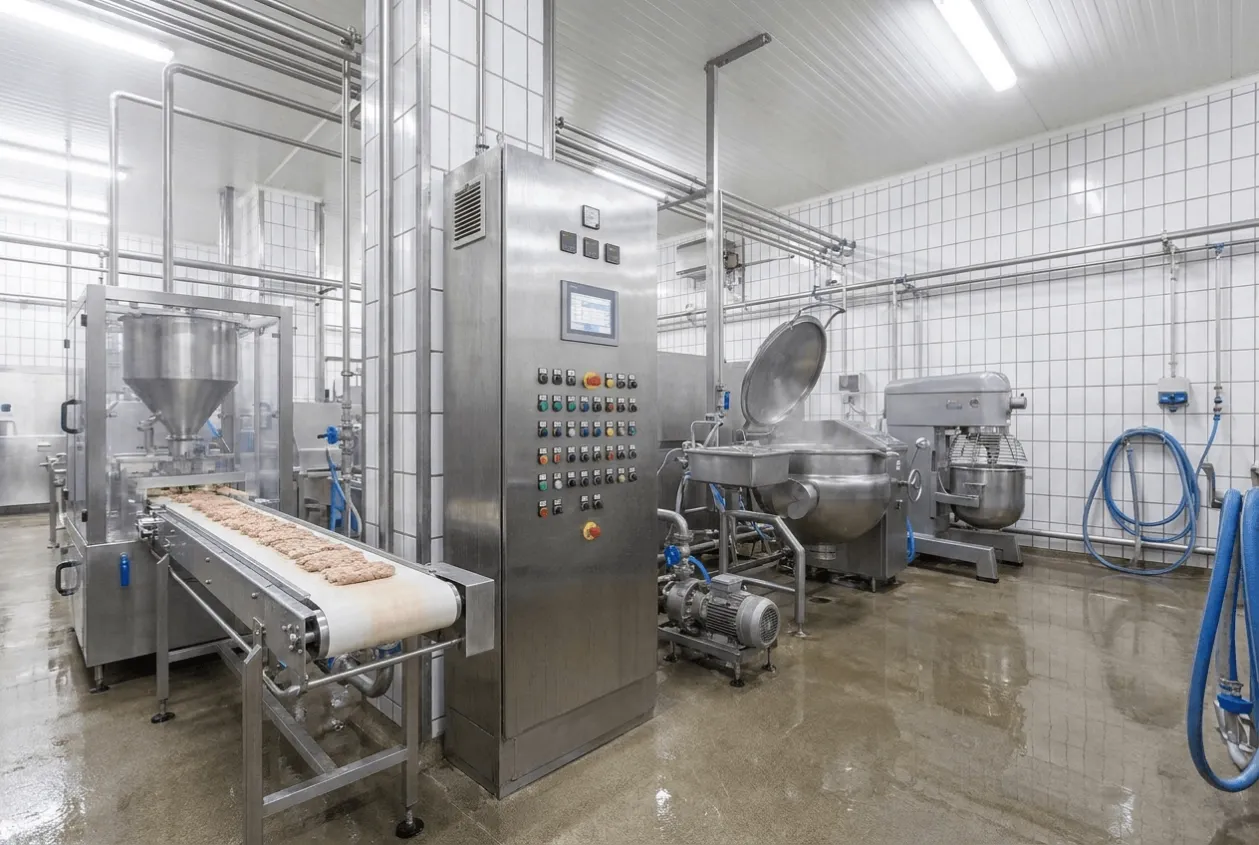
Before approving a food processing control panel supplier, I always review these nine items:
- Process zone
- Enclosure material
- IP or NEMA rating
- Hygienic design details
- Cable entry and sealing
- Condensation control
- Internal layout and heat
- Controls, drives, and safety
- Hygiene verification before shipment
Buying Tip In food processing, the enclosure is not an accessory. It is the first line of defense. If the cabinet cannot survive the washdown environment, the PLC brand inside will not save the project.
The Big Idea: Food Panels Are Bought for Survival First
Many buyers begin with this question: “Which control panel do we need?”
For food processing lines, I prefer a different question:
“What will this panel face every day?”
A dry warehouse panel may only need basic dust protection and clean wiring. A food line panel may be installed in a Hygienic Zone, Raw Area, High Care area, Low Care area, Ready-to-Eat production space, packing corridor, or utility room. Each area creates a different cleaning, corrosion, audit, and maintenance risk.
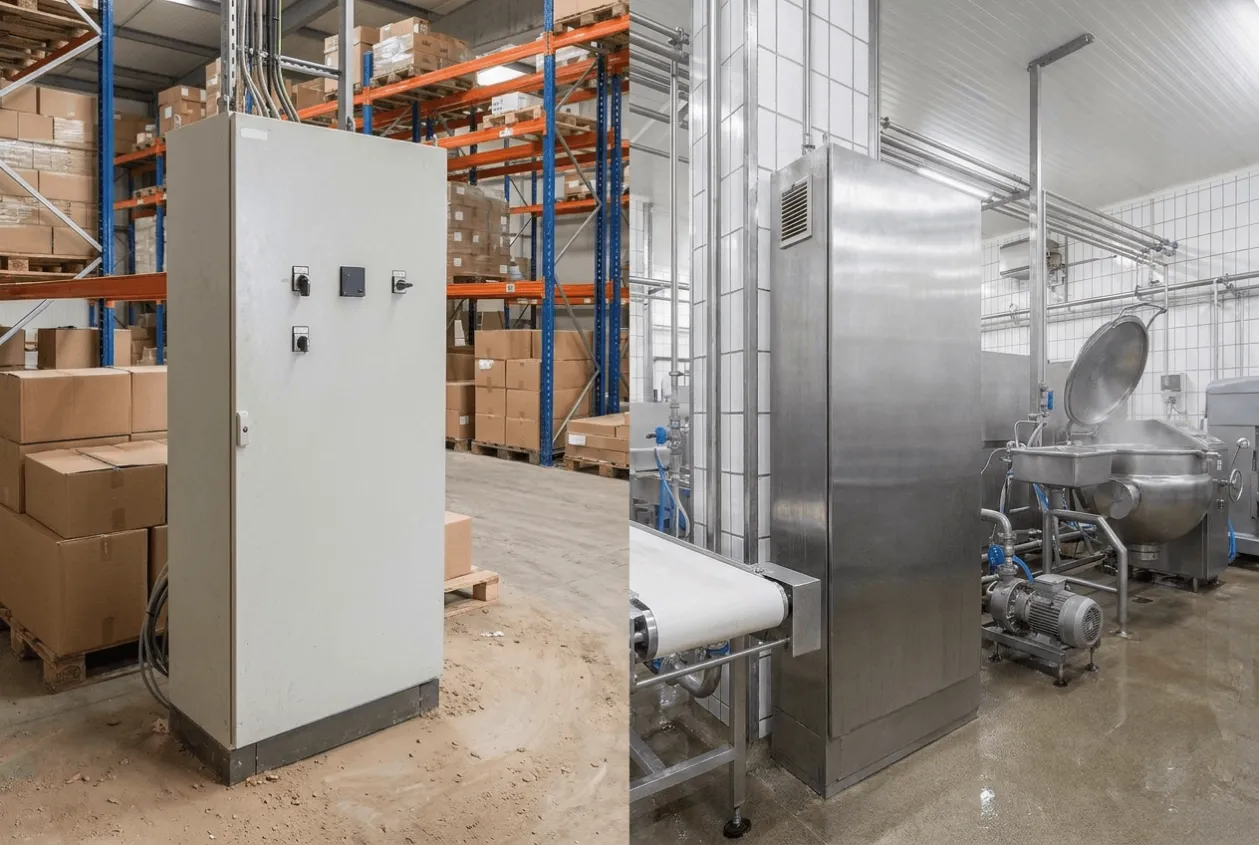
That changes the buying decision.
You should not choose the PLC, HMI, or VFD first and then look for a box. You should define the process zone, enclosure material, sealing method, cable entry, and hygiene details first. Then you choose the controls inside.
That sequence prevents many expensive mistakes.
UniRegal Food Processing Framework
For food control panels, we use a simple review framework before discussing the final BOM.
Step | What to Review | Why It Matters |
|---|---|---|
Process Zone | Raw Area, High Care, Low Care, Ready-to-Eat, packing, utility | Different zones have different hygiene and washdown expectations |
Cleaning Method | Hose, high-pressure washdown, steam, CIP, caustic, acidic rinse | Cleaning method decides enclosure rating and sealing risk |
Chemical Exposure | Caustic cleaner, acidic rinse, humidity, salt, sanitation frequency | Chemical exposure affects stainless grade and corrosion resistance |
Material | 304 stainless, 316L stainless, painted steel, fiberglass | Wrong material can shorten enclosure life |
Sealing | Gaskets, glands, windows, HMI cutouts, door seal | Most water ingress starts at weak sealing points |
Heat | VFDs, power supplies, sealed stainless cabinet, ambient temperature | Sealed washdown panels often need heat review |
Maintenance | Access, labels, drainability, cleaning access, FAT records | Good design reduces downtime and audit pressure |
Engineering Judgment
Food processing panels are not only electrical panels. They are sanitation-zone equipment with controls inside.
If the enclosure cannot be cleaned, drained, sealed, inspected, and maintained, the automation design is already carrying risk.
Before Asking for Quotations
Most buyers contact food processing control panel suppliers too early.
They send a component list and ask for a quotation. The supplier can price the parts, but the important questions are still missing:
- Is this a primary washdown zone?
- Is it near acidic rinse?
- Does the plant require 316L stainless steel?
- Is IP66 enough, or is IP69K needed?
- Will cables enter from the bottom or rear?
- Does the panel need a sloped top?
- Is UL 508A required, or only UL-listed components?
Before requesting a quotation, prepare:
- Process zone: primary washdown, occasional clean, dry packing, Raw Area, High Care, Low Care, or Ready-to-Eat area
- Enclosure material: 304 stainless, 316L stainless, powder-coated steel, or other
- Rating requirement: IP66, IP69K, NEMA 4X, or project-specific
- Cleaning method: hose, high-pressure washdown, steam, caustic, acidic rinse, or CIP area
- Mounting: wall-mounted, floor stand, machine-mounted, or remote cabinet
- Cable entry direction and gland requirements
- Certification: UL 508A, CE, 3-A alignment, or self-declaration
- FAT and documentation expectations
- Target delivery and export requirements
A serious quotation needs the food environment, not only the electrical BOM.
Procurement Advice A component list tells the supplier what goes inside the cabinet. It does not explain what the cabinet must survive outside.
The 9 Items I Review Before Approving a Food Processing Control Panel
1. Process Zone
The first review is always the process zone.
A food plant usually has different cleaning risks in different areas:
Zone | Typical Condition | Practical Panel Decision |
|---|---|---|
Primary washdown | Daily high-pressure water, chemical cleaners, wet surfaces | 316L stainless + IP69K is usually the safer direction |
Secondary washdown | Regular cleaning but less direct spray | 316L or 304 stainless + IP66/IP69K depending on exposure |
High Care / Ready-to-Eat | Higher hygiene expectation and stricter cleaning discipline | Hygienic enclosure design and easier cleaning access matter |
Packing corridor | Occasional cleaning, lower chemical exposure | 304 stainless + IP66 may be enough |
Dry warehouse or utility room | Low moisture, limited washdown | Standard industrial enclosure may be acceptable |
Supplier Red Flag
The supplier quotes one enclosure type without asking where the panel will be installed.
Supplier Green Flag
The supplier asks for process zone, cleaning method, site photos, chemical exposure, and mounting location before confirming the enclosure.
2. Enclosure Material
For food processing, stainless steel is usually expected. The question is whether 304 is enough or 316L is worth the upgrade.
My practical rule is simple:
- Use 316L stainless steel for primary washdown, caustic cleaners, acidic rinse, high humidity, or aggressive sanitation.
- Use 304 stainless steel for drier secondary areas, packing zones, or light cleaning exposure.
- Avoid mild steel in exposed food washdown areas unless the panel is clearly outside the hygiene zone.
Procurement Scenario
A food plant once selected a 304 stainless enclosure for a wet processing area because the quotation looked better. The panel worked at the start. Months later, corrosion appeared near seams and hardware. The issue was not the PLC. It was not the wiring. The material was simply wrong for the washdown chemistry.
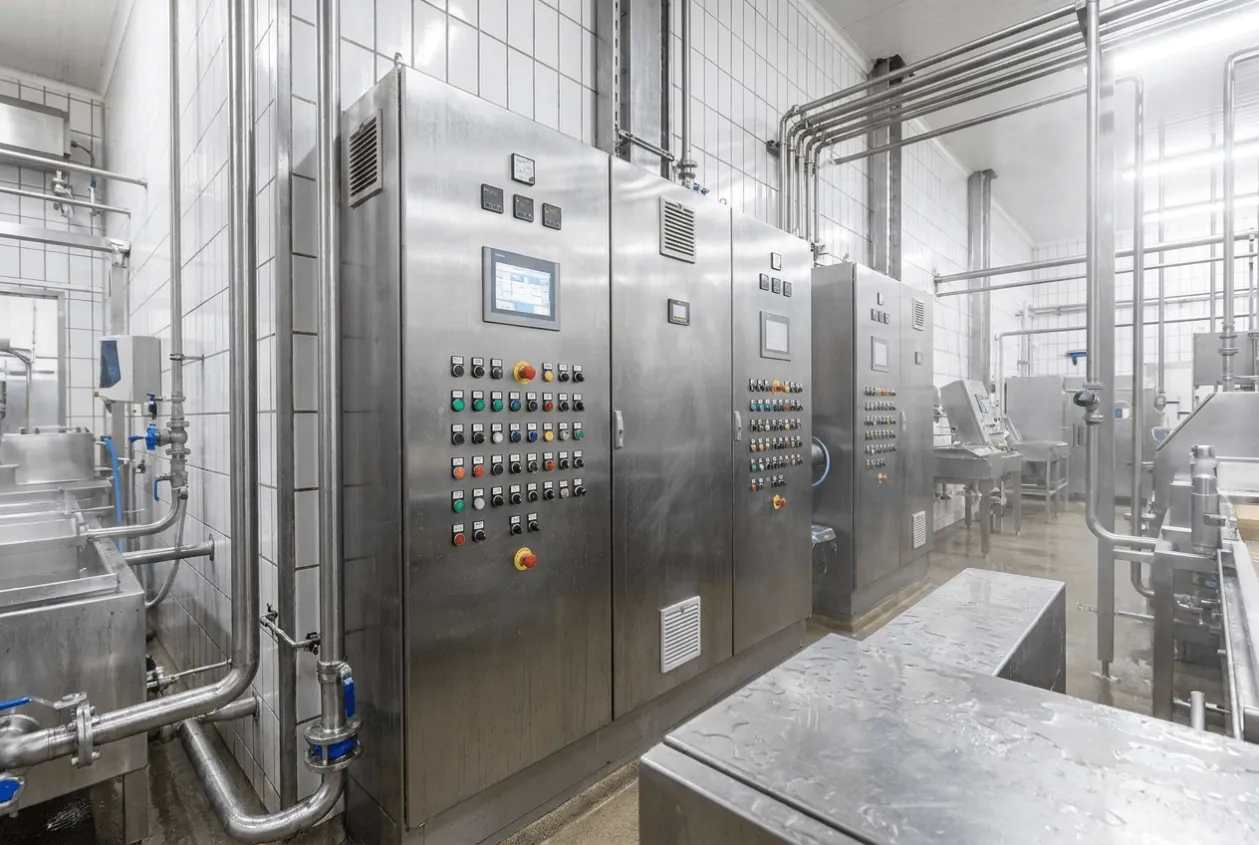
The cost difference between 304 and 316L looked important during purchasing. It looked much smaller when the line needed repair planning.
Supplier Red Flag
The supplier recommends 304 stainless for heavy washdown without asking about chemicals.
Supplier Green Flag
The supplier asks about caustic cleaners, acidic rinse, humidity, salt exposure, and sanitation frequency before choosing 304 or 316L.
3. IP or NEMA Rating
Food washdown areas often need more than a basic enclosure rating.
For many washdown locations, IP66 is a practical minimum. For high-pressure, high-temperature cleaning, IP69K may be more appropriate. For North American projects, NEMA 4X is often discussed for washdown and corrosion-resistant environments.
Useful external references include IEC 60529 for IP code, ISO 20653 for IP protection of electrical equipment, and NEMA enclosure types.
Supplier Red Flag
The supplier says “waterproof” without clearly stating IP or NEMA rating.
Supplier Green Flag
The supplier confirms the cleaning pressure, water direction, temperature, chemical exposure, and audit requirement before recommending IP66, IP69K, or NEMA 4X.
Engineering Note “Washdown” is not a rating. It is a site condition. The rating must match how the cleaning team actually works.
4. Hygienic Design Details
The rating on the datasheet is only half the story. In food processing, structural details decide whether the panel is easy to clean.
I review:
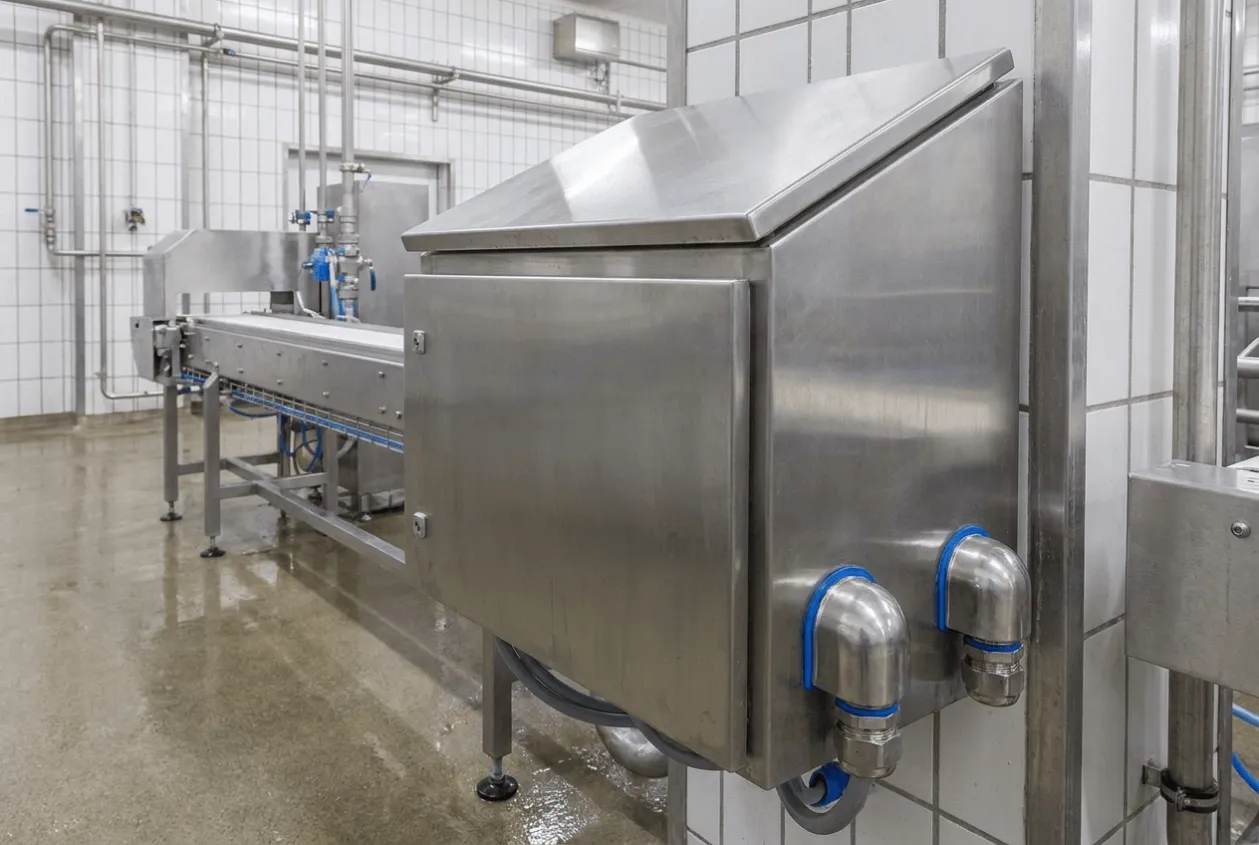
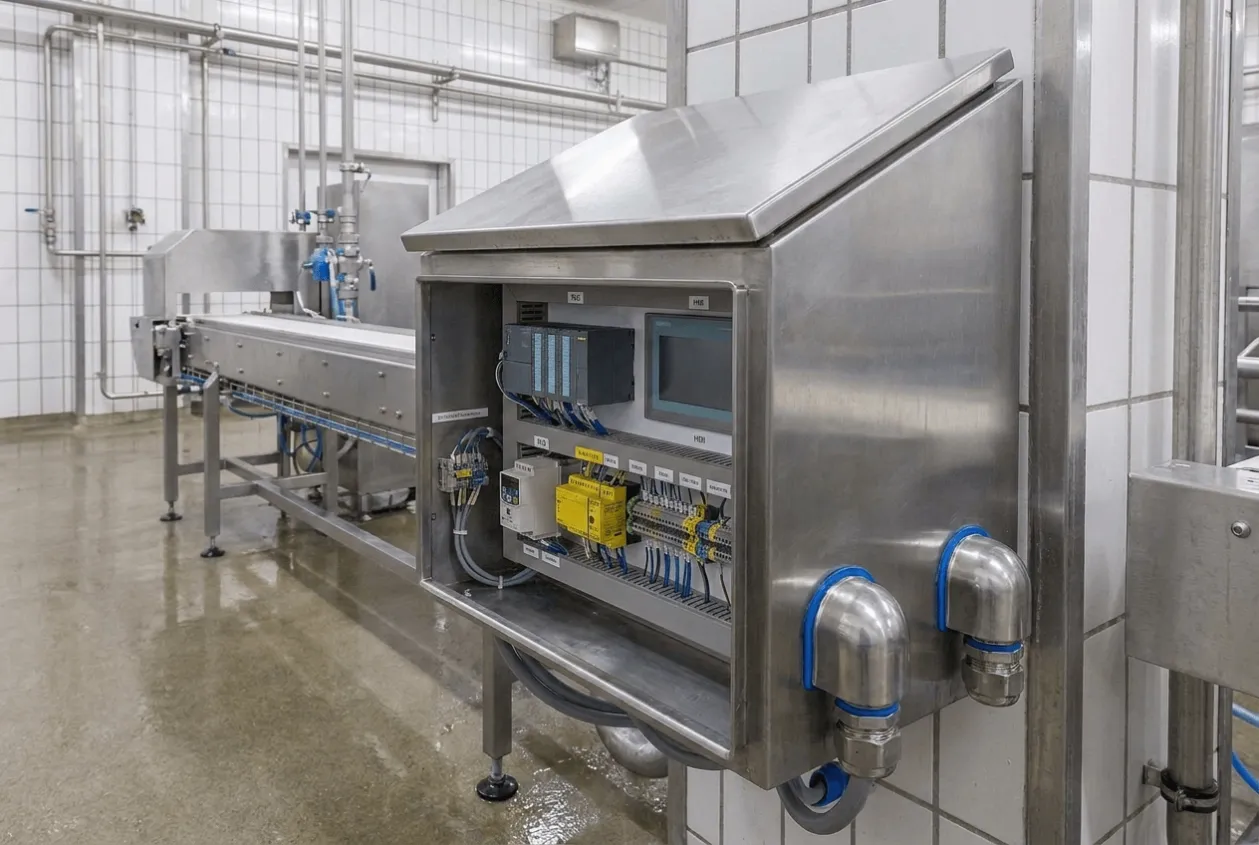
- Sloped top to prevent liquid or product from pooling
- Smooth welded seams
- Minimal external bolts
- Hygienic fasteners where needed
- No unnecessary ledges or dirt traps
- Brushed or passivated stainless finish
- Easy-to-clean door surface
- Proper sealing around windows, pushbuttons, and cable glands
- Drainability around mounting and enclosure base
3-A Sanitary Standards are not electrical control panel standards, but 3-A’s focus on sanitary design, fabrication, installation, and cleanability is useful when food plants care about hygienic surfaces.
Supplier Red Flag
The supplier focuses only on IP rating and ignores sloped top, seams, fasteners, drainability, and cleanability.
Supplier Green Flag
The supplier discusses hygienic design before quoting the enclosure, especially for panels near open product zones.
5. Cable Entry and Sealing
Many washdown failures begin at cable entry.
A good enclosure can still fail if glands, knockouts, conduits, or field cables are handled poorly. Water usually finds the weakest point.
I review:
- Cable entry direction
- IP-rated cable glands
- Hygienic cord grips
- Sealing around HMI, pushbuttons, and pilot lights
- Whether unused openings are eliminated
- Drip loops and cable routing
- Bottom entry versus rear entry
- Field installation responsibility
Supplier Red Flag
The enclosure is rated correctly, but cable glands are not specified.
Supplier Green Flag
The supplier confirms every cable entry point, gland type, sealing method, and field cable route before production.
6. Condensation Control
Food plants often create condensation problems because of temperature changes, humidity, washdown cycles, and cold-room transitions.
Condensation is dangerous because it may appear even when the enclosure is sealed. The panel can be dry outside and wet inside.
I review:
- Ambient temperature range
- Washdown frequency
- Cold room or warm process area
- Membrane breather requirement
- Drain path
- Low-watt anti-condensation heater
- Internal air circulation
- Whether the panel is opened frequently
Supplier Red Flag
The supplier treats sealing as the only moisture strategy.
Supplier Green Flag
The supplier discusses condensation control separately from ingress protection.
Common Mistake Buyers often assume a tighter enclosure always solves water problems. In humid food plants, sealing helps against spray, but condensation still needs its own strategy.
7. Internal Layout and Heat
Inside the enclosure, a food processing control panel may look like a normal automation panel: PLC, HMI, drives, safety relays, terminals, power supplies, and network hardware.
The difference is that a stainless sealed enclosure may have less natural heat dissipation than a standard ventilated cabinet.
I review:
- VFD quantity and kW rating
- Heat load
- PLC and power supply position
- Separation between drives and low-voltage control
- Cable routing
- Terminal access
- Maintenance clearance
- Future space
- Cooling method suitable for washdown
Supplier Red Flag
The supplier places VFDs into a sealed stainless enclosure without heat review.
Supplier Green Flag
The supplier checks heat load, ambient temperature, component spacing, and whether the cooling method is suitable for a food washdown environment.
8. Controls, Drives, and Safety
The controls inside the food panel should match the plant’s existing maintenance standard.
You can specify common automation families such as Siemens, Allen-Bradley, Mitsubishi, Omron, Schneider, Yaskawa, or other approved platforms. The brand is less important than plant acceptance, spare-parts access, and clear documentation.
I review:
- PLC family
- HMI size and front rating
- VFD quantity
- Safety relay or safety PLC
- Emergency stop circuit
- Door interlock
- Industrial UPS if control power must survive short power dips
- Remote monitoring or Ethernet communication
- Plant-approved component list
Supplier Red Flag
The supplier changes PLC, HMI, or VFD brands without approval to reduce cost or lead time.
Supplier Green Flag
The supplier confirms approved brands, acceptable substitutions, spare-parts logic, and FAT tests before production.
9. Hygiene Verification Before Shipment
For food processing panels, I do not only review electrical testing before shipment. I also review whether the enclosure is hygienically ready for the line.
This is where food projects are different from ordinary industrial control panels.
Before shipment, the supplier should check:
- Hygienic inspection of enclosure structure
- Surface finish and visible defects
- Weld quality around seams, brackets, and sloped top
- Drainability around the top, base, glands, and mounting points
- Seal condition around door, HMI, pushbuttons, and cable glands
- Cleaning access around external hardware
- No unnecessary ledges, dirt traps, or open knockouts
- Passivation or surface treatment records when required
- Cleaning validation expectations if the plant requires them
Only after the hygiene review is clear should the supplier move into the electrical FAT package.
- Wiring
- Power-up
- I/O
- HMI operation
- VFD operation
- Safety circuit
- Door interlock
- Emergency stop
- Labels
- Gland sealing review
- Documentation match
- Customer-specific requirements
Supplier Red Flag
The supplier only offers electrical FAT and does not inspect surface finish, weld quality, sealing, drainability, or hygienic details.
Supplier Green Flag
The supplier separates hygiene verification from electrical FAT and provides photos, inspection records, test reports, and final documentation before shipment.
Quote Review: Three Food Panel Suppliers, Which One Would I Approve?
Imagine a food plant needs a control panel for a conveyor and filling line.
The panel will be installed near washdown equipment. It needs stainless steel, VFDs, PLC, HMI, emergency stop, cable glands, FAT, and export documentation.
Three suppliers quote.
Supplier A: Lowest Price
Supplier A offers a 304 stainless IP66 enclosure. The price is attractive. But they do not ask about cleaning chemicals, washdown pressure, cable entry, or condensation.
My decision: Be careful. The quote may be cheap because the supplier did not review the real washdown risk.
Supplier B: Good Controls, Weak Enclosure Review
Supplier B uses approved PLC and VFD brands. The BOM looks strong. But the enclosure is standard, the top is flat, and the cable gland details are unclear.
My decision: Request revision. Good controls inside do not fix weak hygienic design outside.
Supplier C: Higher Price, Better Engineering Review
Supplier C asks for process zone, cleaning method, chemical exposure, site photos, cable entry direction, enclosure material, IP rating, condensation control, FAT scope, and certification requirement.
My decision: Shortlist Supplier C first.
Not because it is the highest price. Because it is the only quotation built around what the panel must survive.
When I Reject a Supplier
I usually stop technical review when:
- The supplier never asks about washdown conditions
- The supplier ignores cleaning chemicals
- The supplier only compares PLC brands
- The supplier has no hygienic enclosure experience
- The supplier says “waterproof” without IP or NEMA clarity
- The supplier recommends 304 stainless for heavy washdown without asking why
- The supplier has no plan for cable glands, sealing, condensation, or drainability
- The supplier only offers electrical testing and no hygiene verification
- The supplier cannot explain surface finish, weld quality, or cleaning access
A food processing control panel supplier does not need to sound complicated. But they must ask the right questions before quoting.
Procurement Decision Box
If the Supplier Asks Only About... | My Reaction |
|---|---|
PLC brand | Be careful |
HMI size | Be careful |
Enclosure dimensions | Be careful |
Component list | Be careful |
Price target | Be careful |
If the Supplier Also Asks About... | My Reaction |
|---|---|
Process zone | Shortlist |
Cleaning method | Shortlist |
Chemical exposure | Shortlist |
IP/NEMA rating | Shortlist |
304 vs 316L stainless | Shortlist |
Cable entry and glands | Shortlist |
Condensation control | Shortlist |
Surface finish and weld quality | Shortlist |
Drainability and cleaning access | Shortlist |
Hygiene verification before shipment | Shortlist |
FAT and certification scope | Shortlist |
Site photos and mounting method | Shortlist |
Weak suppliers quote the cabinet. Strong suppliers review the washdown environment.
From Our Experience
One mistake we repeatedly see is that buyers approve the control components before confirming the enclosure.
At first, that feels logical. The PLC, HMI, and VFD look like the “important” parts. But in food processing, the enclosure often decides whether the panel survives the line.
A panel can have the correct PLC and still fail because water enters through poor cable glands. It can use a good VFD and still fault because a sealed stainless enclosure holds too much heat. It can pass electrical testing and still disappoint the plant because the flat top collects water and residue during cleaning.
That is why UniRegal reviews the process zone before the component list. In food plants, hygiene and survival come before automation preference.
What to Send Your Food Panel Supplier
A useful spec pack should include:
- Process zone Primary washdown, occasional cleaning, dry packing, cold room, Raw Area, High Care, Low Care, Ready-to-Eat, or utility area.
- Cleaning method Hose, high-pressure washdown, hot water, steam, caustic cleaner, acidic rinse, or CIP area.
- Enclosure requirement 304 or 316L stainless steel, IP66, IP69K, NEMA 4X, sloped top, wall or floor mounting.
- Controls PLC family, HMI size, VFD count and kW, safety circuit, industrial UPS, communication protocol.
- Brand constraints Approved PLC, HMI, VFD, relay, terminal, power supply, and enclosure brands.
- Certification UL 508A listed panel, UL-listed components only, CE, 3-A alignment, or self-declaration.
- Utilities and site details Control voltage, ambient temperature, cable entry direction, mounting photos, and maintenance access.
- Hygiene verification and FAT Surface finish, weld quality, drainability, sealing check, schematics, BOM, terminal plan, wire labels, inspection photos, signed FAT report, and packing documents.
A one-page internal checklist can save many emails. If you already have drawings or a rough BOM, send them with the process zone and cleaning method. That is enough for a serious supplier to start asking the right questions.
Lead Time and MOQ Planning
For custom food-grade control panels, lead time depends mostly on the enclosure, cutouts, stainless finish, hygienic details, and certification scope.
A panel with custom hygienic cutouts, passivation, IP69K sealing details, 316L stainless construction, and customer-witness FAT will naturally require more manufacturing time than a standard enclosure.
Typical planning items include:
- Custom stainless enclosure quantity
- 304 vs 316L material
- Sloped top or special hygienic structure
- IP66 or IP69K sealing
- HMI window and gland cutouts
- Passivation or surface finish requirement
- PLC, HMI, VFD, safety, and UPS availability
- Hygiene verification and documentation time
- FAT and customer witness inspection
- Export packing and shipping documents
Why does 316L sometimes take longer? Because material availability, surface finish, welding quality, and passivation requirements may need tighter control.
Why does IP69K take longer? Because sealing details, gland selection, HMI cutouts, and inspection standards are more demanding than a basic enclosure.
Why do hygienic cutouts take longer? Because every hole in a food panel is a potential water-entry or cleaning-risk point. It should be planned, sealed, and inspected carefully.
Do not treat FAT as extra time after assembly. It should be included in the project schedule from the beginning.
Related Guides
FAQ
What IP rating do I need for a food processing control panel?
For washdown areas, IP66 is often a practical minimum. Use IP69K where the panel faces high-pressure, high-temperature washdown. For dry packing corridors, IP65 or IP66 may be enough depending on cleaning exposure.
Is 304 or 316L stainless steel better for food washdown?
Use 316L stainless steel for primary washdown zones, caustic cleaners, acidic rinse, and high humidity. Use 304 stainless steel in drier secondary areas where corrosion risk is lower.
Do food processing control panels need UL 508A?
Many North American food plants request UL 508A listed industrial control panels. Some projects only require UL-listed components inside the panel. Confirm the requirement before quotation because the cost and workshop process can be different.
What hygienic design details matter most?
Sloped top, smooth seams, minimal external bolts, sealed glands, proper HMI sealing, condensation control, surface finish, weld quality, drainability, and easy-to-clean stainless surfaces matter more than many buyers expect.
Can Siemens or Allen-Bradley be integrated into a washdown enclosure?
Yes. A washdown enclosure can contain Siemens, Allen-Bradley, Mitsubishi, Omron, Schneider, Yaskawa, or other plant-approved automation brands. The key is matching the enclosure, sealing, heat management, and documentation to the food environment.
Do food panels near washdown need backup power?
Some do. If the panel must keep PLC, network, or control circuits alive during short power interruptions, an industrial UPS or DC UPS may be useful. Size it based on the actual control load and required ride-through time.
Final Recommendation
Before approving a food processing control panel, do not start with the PLC brand.
Start with the environment.
Ask what the panel must survive: washdown pressure, cleaning chemicals, humidity, condensation, cable entry, corrosion, heat, hygiene inspection, surface finish, weld quality, drainability, audits, and maintenance habits. Then choose the enclosure. Then choose the controls inside.
That is the difference between buying a cabinet and buying line reliability.
Need a Food Processing Control Panel Quotation?
Before requesting a quotation, prepare these six items:
- Process zone
- Cleaning method
- Enclosure material and rating
- PLC, HMI, VFD, and safety requirements
- Certification, hygiene verification, and FAT requirements
- Target delivery date
Send UniRegal your drawings, BOM, process zone, cleaning method, preferred automation brands, enclosure requirement, certification needs, hygiene verification needs, FAT expectations, and delivery schedule. Our team can help review enclosure selection, hygienic design, cable entry, heat control, component layout, documentation scope, and export feasibility before production starts.
Contact UniRegal Team here, a better food processing control panel starts with a better washdown review.
Before you send the RFQ
Most of the checks above fail for the same reason: the RFQ never said which zones are washdown and which are not. Fix that one line and the quotes you receive become comparable. The zone table in our food processing control panels guide is the shortest version I know — attach it to your drawings and you will usually get a usable price in the first round rather than the third.