
Sep 29, 2026Integration & Compatibility
Control Panel Short-Circuit Current Rating: What the SCCR Label Must Actually Prove
SCCR decides whether your control panel survives a fault or starts an arc flash. Here is how to read the label, pick the right method, and avoid the inspection failure most buyers walk into.
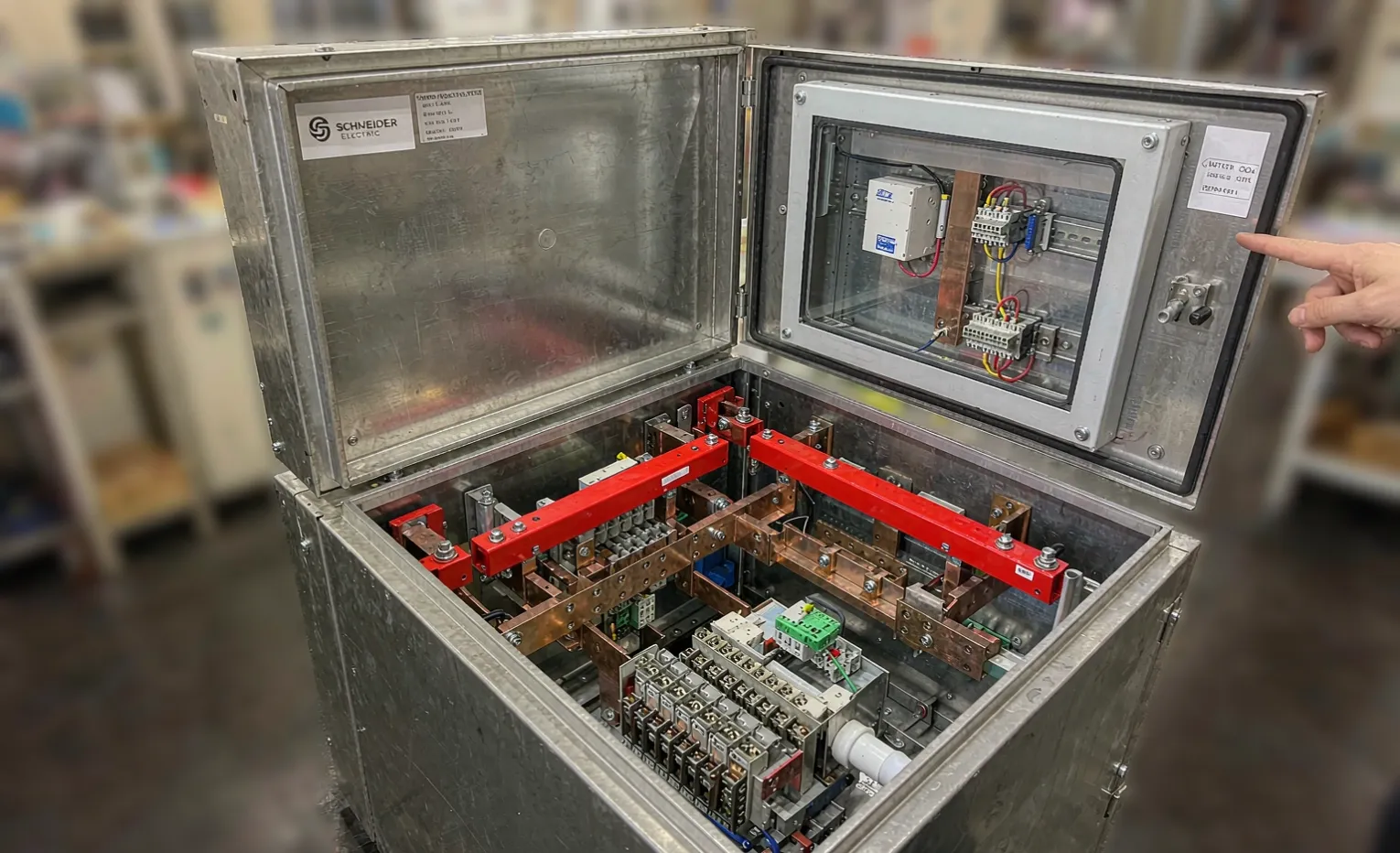
If you are shopping for a control panel, the spec sheet obsesses over the PLC brand, enclosure rating, and price. The number that actually decides whether your panel is safe and passes inspection is smaller and easier to miss: the Short-Circuit Current Rating, or SCCR. Our guide to the top industrial control panel manufacturers helps you compare who builds the panel—but once you have picked a builder, the SCCR is the single value that tells the electrical inspector your panel will not explode or ignite an arc flash under a fault.
Most buyers never see the problem until commissioning. The panel arrives, the inspector asks one question—"What is the available fault current at the line side, and does your label prove the panel can take it?"—and the job stops. This guide is the engineering review. I wish more procurement teams read before they sign the PO.
What "Short-Circuit Current Rating" Actually Means
SCCR is the maximum root-mean-square (RMS) symmetrical fault current, in kiloamperes (kA), that the control panel can withstand at its line terminals without sustaining damage that could injure someone or start an arc flash. It is a withstand number, not a trip number. Your breakers still do the tripping; the SCCR is the ceiling. The whole assembly is certified to survive.
Engineering Note: Think of SCCR as the panel's crash rating. A 10 kA SCCR panel is fine on a feeder that can only deliver 8 kA. Put that same panel on a 25 kA service and you have a panel rated for a crash it will lose.
The two numbers that decide it
Two values have to meet: 1. Available fault current (AFC) at the panel's line terminals—set by the upstream utility transformer, the service, and the feeder length. 2. The panel's SCCR—the lowest withstand of any branch or the assembly as a whole.
The rule is simple and non-negotiable: panel SCCR must be greater than or equal to the available fault current. If AFC is 22 kA and your label says 10 kA, you fail. Not ""maybe"—you fail, and the panel cannot be energized.
Why a missing or wrong label fails you at inspection
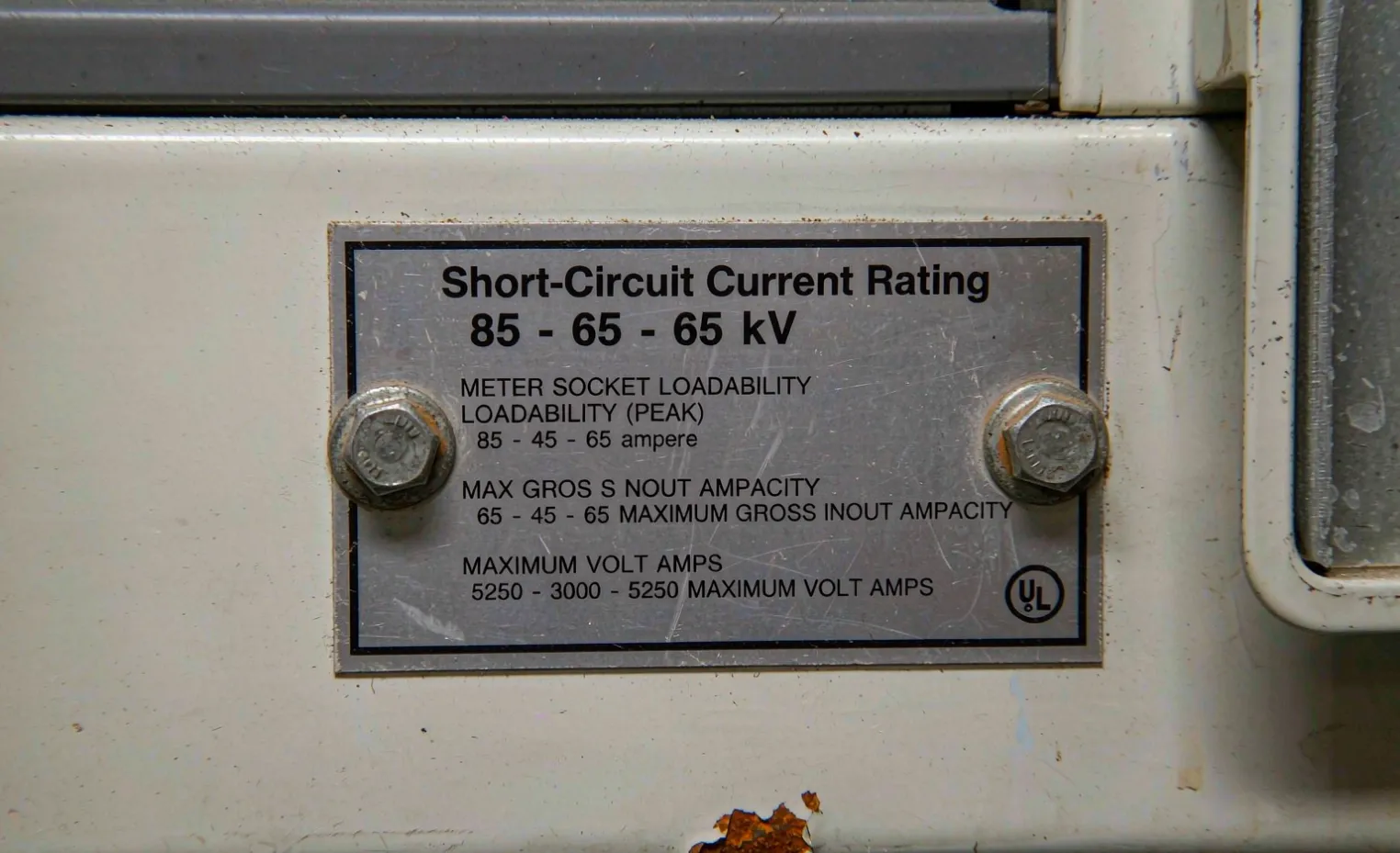
Under the US model codes (NEC Article 409 for industrial control panels, harmonized with UL 508A for the construction standard), the panel must carry a marked SCCR. NEMA publishes the enclosure and general equipment context in its standards library at nema.org. The label is not decoration—it is the document that lets the authority having jurisdiction (AHJ) sign off. No label, or a label that your feeder outranks, and the panel sits dead until it is re-rated.
The Four Ways to Establish an SCCR
You do not get an SCCR by hoping. There are four recognized paths, and they are not equal in effort or in what they prove.
Method | What you need | Best when | The catch |
|---|---|---|---|
Component rating | Add the individual short-circuit ratings of each branch device (per its listing). | Simple panels, low fault environments | The assembly rating is capped by the weakest link; often lands low (5–10 kA) |
Existing rating (UL 508A) | Use published combination ratings from a recognized testing agency. | You are mixing listed components in known combinations. | Only valid for the exact combination published—no substitutions |
Tested combination | A lab-tested assembly rating from the panel builder | High-fault sites, custom panels | Costs time and money; must match your actual build |
Both, combined | Component method where tested data exists, tested method where it does not | Real-world mixed builds | Requires a documented worksheet, not a guess |
Buyer Decision: If your available fault current is above 10 kA, the component-rating method will almost always fall short. Ask for a tested or existing-rating combination before you accept a quote — it is cheaper to spec it up front than to re-rate a finished panel.
How to Read the Label
The label is where buyers get burned, because two phrases look identical and are not.
"Provided by" vs. "Based "on"—the trap
A label that says the SCCR is "provided by" a tested combination means the builder actually verified that assembly. A label that says "based on" component ratings means someone added numbers from catalogs. Both are legal; only one proves the panel was built and rated as a system. When the fault current at your site is high, "based on" is the version that gets you into trouble.
The rating must match your site, not the catalog.
A common failure: the panel is labeled 10 kA; the builder's quote looked fine, but nobody checked the available fault current at your service. Utility upgrades and closer transformers raise AFC every year. The rating on the door has to clear your number, confirmed with a one-line diagram from your electrical engineer.
Common SCCR Mistakes Buyers Make
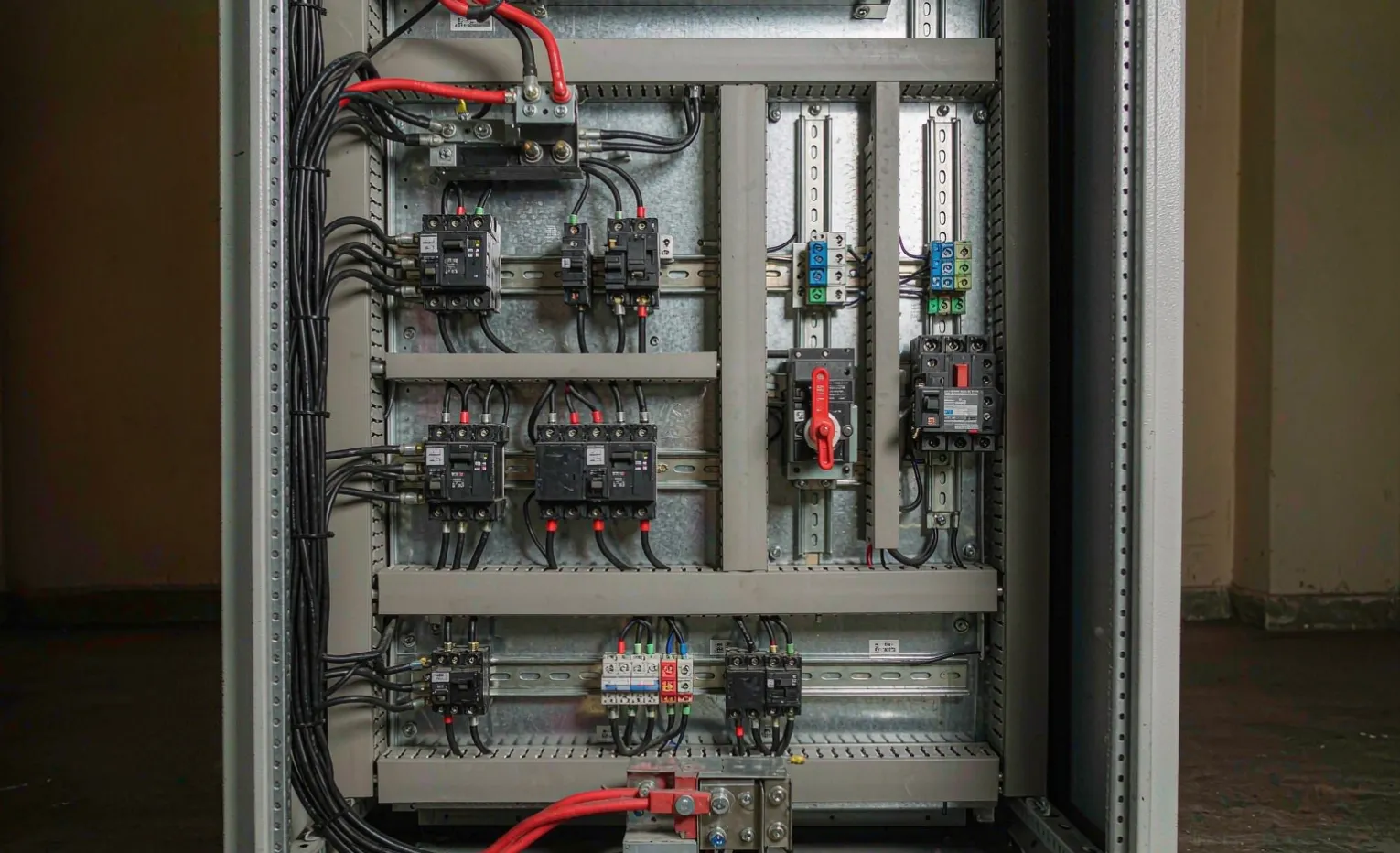
These are the four I see most, and every one is avoidable on the PO.
Assuming the builder's nameplate is enough
The nameplate proves the panel was built. It does not prove the panel was rated for your fault current. Those are different documents. Ask for the SCCR worksheet, not just the stamp.
Forgetting the upstream feeder can change the number.
Move the panel six meters or land it on a different transformer, and the available fault current shifts. The SCCR that passed last year at Plant A can fail this year at Plant B. Re-verify per installation, not per panel type.
Mixing components from different listings without a combination rating
Swapping a branch protector for a "same spec" part from another maker voids the existing-rating combination. The assembly is no longer the one that was rated. This is the silent killer on panels that get field-modified after delivery.
Treating SCCR as the builder's problem, not yours
The AHJ holds you, the owner, responsible for an installable, code-compliant panel. A builder who hands you a 10 kA label for a 25 kA service has not helped you—they have handed you a panel you cannot energize.
Where a Sourcing Partner Fits
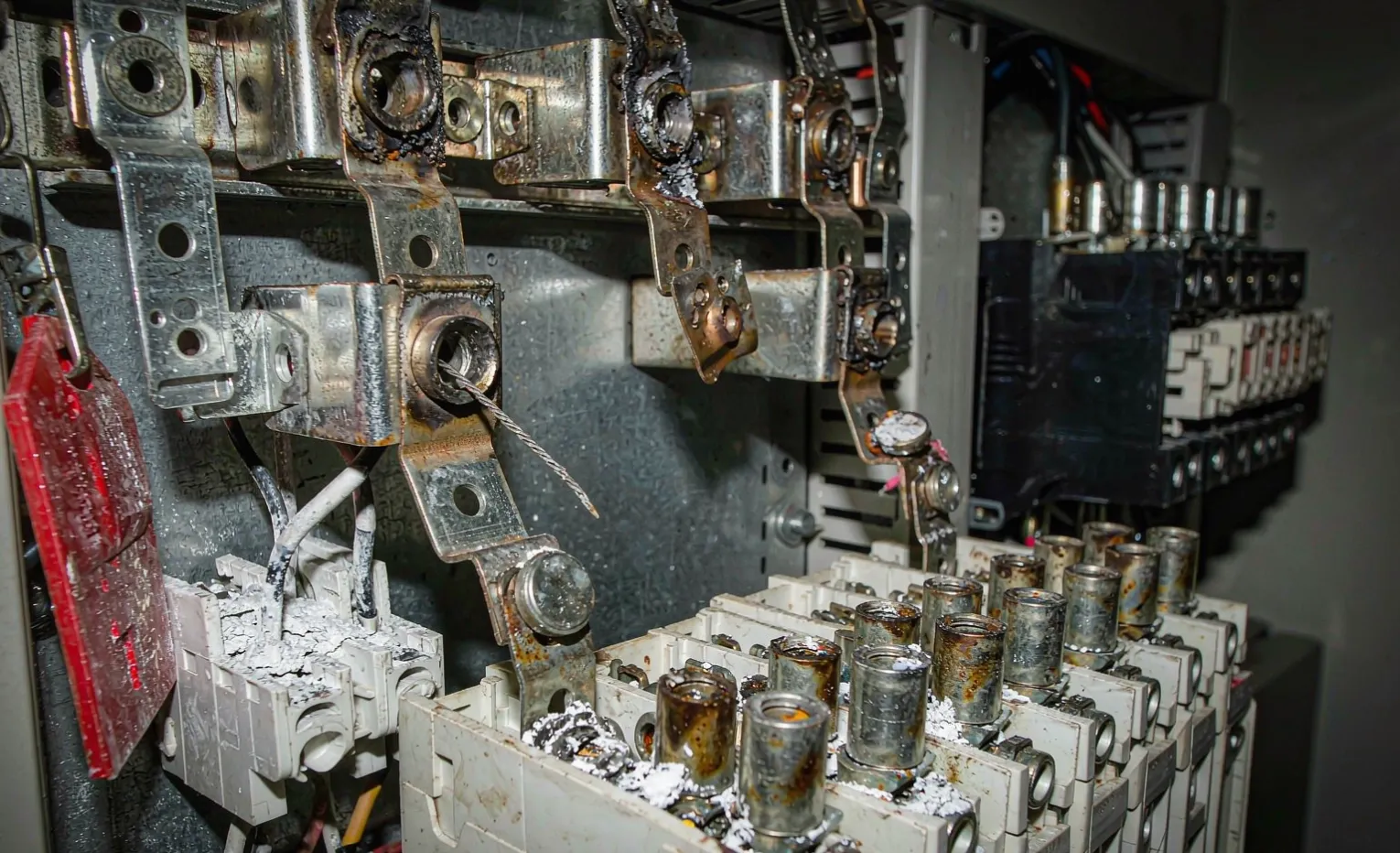
We are a sourcing partner and panel-build service, not a panel manufacturer and not one of the shops we help you evaluate. When you send us a drawing, we build the panel to spec, pull the control components from the brands you already run—Mitsubishi, Siemens, ABB, and others—and have the enclosure and assembly produced at a UL-listed shop on a per-order basis. The SCCR worksheet and the marked label are part of the package we hand back, not an extra you chase down later.
A few facts that matter when you plan lead time and budget: - Enclosures: carbon steel, 304 or 316 stainless, or galvanized. We do not build in aluminum — it does not suit the washdown and corrosion duty our buyers see. - Protection ratings: IP65 as standard, NEMA 4X where the site needs corrosion and hose-down resistance. - Quantities and lead time: empty enclosures from 5 units (about 15 days); in-stock components typically ship in 3–5 days. - Compliance: UL listing is arranged per order through a UL-listed shop; we document the combination so your label is defensible.
If you want the enclosure and component strategy behind a panel that passes first time, our electrical enclosure sourcing guide walks through material and rating trade-offs. For the panel build itself, see our custom control panel solutions.
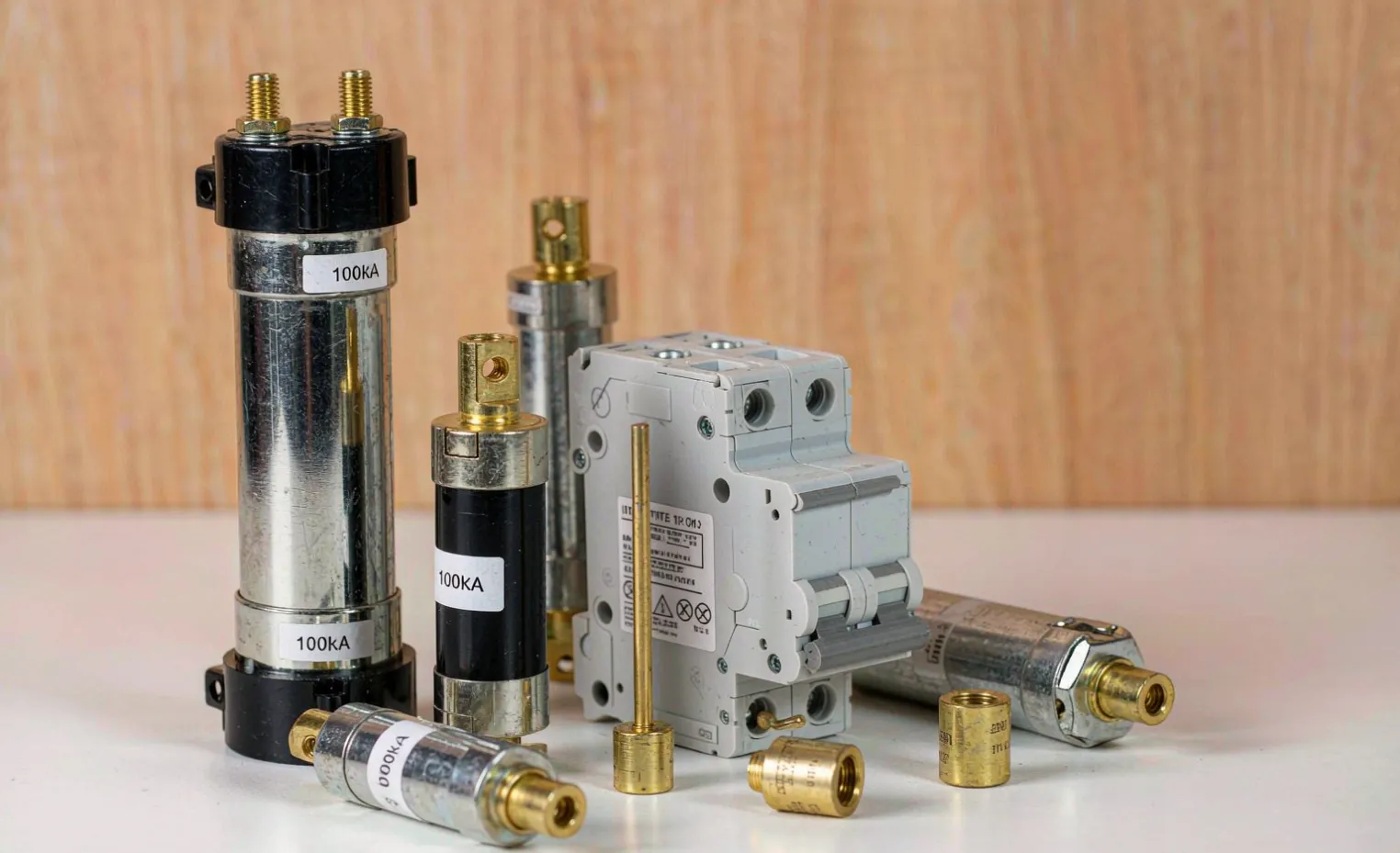
SCCR Buyer Checklist
Before you release a control panel PO, confirm all six:
# | Check | Why it matters |
|---|---|---|
1 | Available fault current at line terminals confirmed | Sets the bar the label must clear |
2 | Panel SCCR ≥ AFC | The single pass/fail rule |
3 | The label says "provided by" a tested combination (if AFC > 10 kA). | Proves a system rating, not a catalog add-up |
4 | SCCR worksheet supplied with the panel | Your evidence for the AHJ |
5 | No unlisted component substitutions | Keeps the combination valid |
6 | Rating re-verified per installation site | AFC changes with the feeder. |
FAQ
What is a good SCCR for a control panel?
There is no single "good" number—it has to clear your available fault current. For most light-industrial sites, that is 10–14 kA; for large services and close utility transformers, it can be 25 kA, 42 kA, or higher. Spec to the site, not to a default.
Is SCCR the same as the breaker's interrupting rating?
No. The breaker's interrupting rating is what that one device can clear. The panel SCCR is the lowest withstand of the whole assembly, including buses, terminals, and every branch. The panel rating is usually the limiting number, not the breaker.
Do I need an SCCR label if my panel is only 480 V or less?
Yes. NEC Article 409 applies to industrial control panels regardless of voltage, and the AHJ will ask for the marked rating at inspection. Low voltage does not exempt you.
Can I raise the SCCR after the panel is built?
Sometimes, by replacing branch protectors with higher-interrupting-rated, listed devices and issuing a new combination rating—but only within what the assembly can physically withstand, and you need a new worksheet. It is far cheaper to spec it before building.
Who is responsible if the SCCR is wrong? The owner is responsible for a code-compliant installation. A label that does not clear your fault current means the panel cannot be energized until re-rated, which is your delay and your cost. Make it a contract requirement up front.
Does IEC equipment use the same SCCR concept?
The IEC world expresses it through short-circuit withstand and conditional ratings under IEC 61439, but the underlying idea is the same: the assembly must survive the fault the supply can deliver. If you build to IEC and ship to a NEC jurisdiction, the NEC/UL 508A label is what the AHJ checks.
Why do component brands like Mitsubishi or Siemens matter to SCCR? Because the individual interrupting ratings of those branch devices roll up into the panel rating. A builder who sources from documented, listed lines can assemble a defensible combination rating; one who substitutes unknown parts cannot. The brand on the device is part of your proof.
Engineering Takeaway
SCCR is not a line item—it is the proof your panel will survive the worst day on your electrical system. Get the available fault current at the line terminals, demand a panel SCCR that clears it, insist on a tested "provided by" combination above 10 kA, and keep the worksheet as your evidence. The buyers who never see an inspection stop are the ones who treated SCCR as a spec, not an afterthought.
Related guides
- Top 10 industrial control panel manufacturers — how the shops behind your panel compare
- Siemens vs Mitsubishi PLCs for your control panel — picking the controller that feeds your SCCR worksheet
- UL 508A control panel suppliers: an export buyer's guide — what a real listing mark does and does not prove
- Motor control panel supplier checklist — the 7 questions to ask before you order
- Best PLC panel manufacturers for OEM machines — sourcing for built-in machinery
- Top 10 MCC panel manufacturers in the world — motor control centers and their rating demands
Get your panel rated before you build it
Upload your drawing and we will run an engineering review — available fault current, component coordination, and the SCCR worksheet your inspector will ask for.
Upload Drawing → Engineering Review → Receive Suggestions