
Sep 30, 2026Buying Guides
What Actually Drives the Cost of Your OEM Machine Control Panel
Two quotes for the same machine panel can land 40% apart. The gap is rarely the builder—it is the spec. Here are the seven cost drivers that move the number, and where you can pull it back without
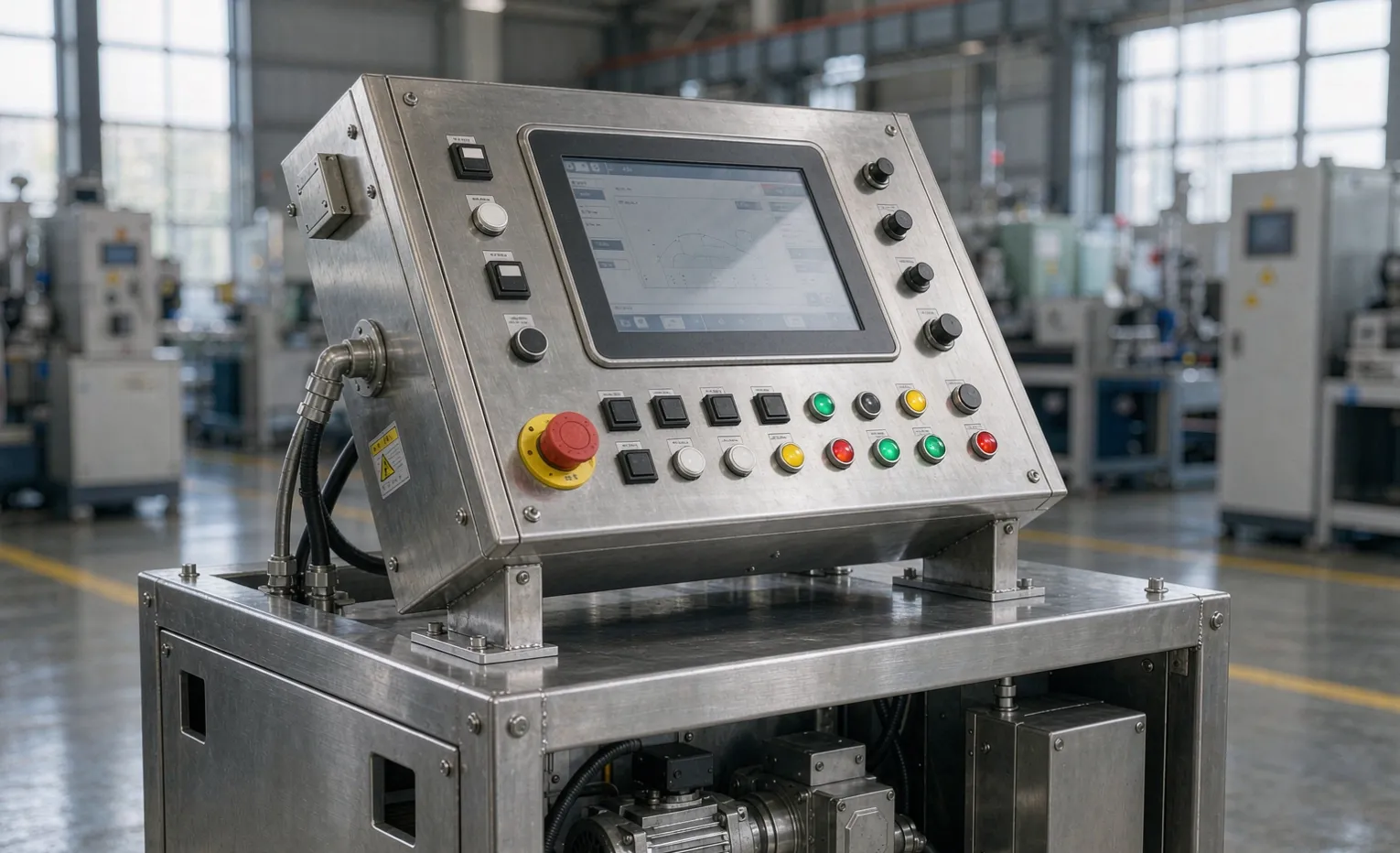
Our guide to the best PLC panel manufacturers for OEM machines helps you shortlist who builds the panel. But once you have sent the drawing out for quotes, the number that comes back is decided by what goes into the panel—not by the logo on the door. Buyers are routinely shocked when three shops return quotes 30–40% apart for what looks like the same panel. The difference is almost never greed. It is the spec, interpreted differently by each builder.
This is the buyer review. I wish more OEM procurement teams ran before they issued the RFQ. Get the seven drivers below under control, and your quotes stop moving.
The seven cost drivers, ranked by how much they move the quote
Not every line item matters equally. Here they are in the order I see them blow up a budget.
1. Enclosure material and size
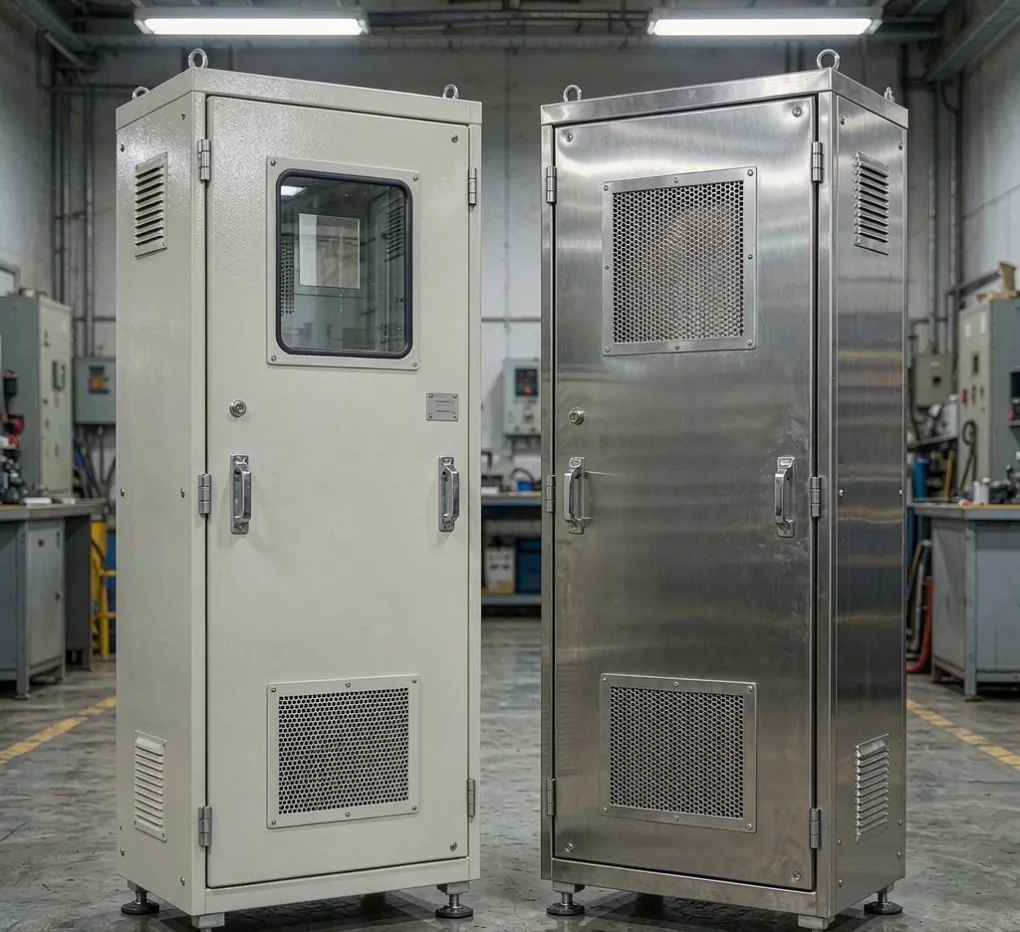
This is the single biggest swing. Carbon steel is the cheap baseline. 304 stainless adds a moderate premium. 316 stainless—the grade you want for coastal, chemical, or washdown duty—sits highest. Galvanized lands between carbon and 304 for mild outdoor use. We do not build in aluminum; it does not suit the washdown and corrosion duty our buyers see, so we will steer you to steel or stainless instead.
Size and weld complexity matter too. A deep floor-standing cabinet with custom cutouts costs more than a compact wall-mount box, simply because there is more metal and more labor to finish it.
Buyer Decision: If your machine ships to a food plant, a coastal site, or anywhere with washdown, 316 pays for itself in avoided corrosion callbacks. On a dry indoor cell, carbon steel with a good powder coat is the honest cheap answer — do not let anyone sell you stainless you will never need.
2. Ingress and corrosion rating (IP65 / NEMA 4X)
IP65 is our standard for most industrial machine panels—dust-tight and protected against low-pressure water jets. Step up to NEMA 4X, and the cost climbs because you now need a higher-grade gasket, stainless hardware throughout, a sealed window, and a drain path that survives hose-down and corrosion. It is worth every cent where the panel lives outdoors or in a washdown area and a waste of money in a climate-controlled cell.
3. Component brand and availability
The PLC, HMI, and VFD are where brand choice moves both cost and lead time. Mitsubishi, Siemens, ABB, and the other major lines each carry a price tier and, more importantly, an availability tier. A component that is allocation-limited can quietly add weeks to your delivery even when the panel build is fast.
Engineering Note: A "same-spec" no-name VFD can look 30% cheaper on paper and cost you a week of site commissioning when it will not talk cleanly to the Mitsubishi PLC. The brand on the device is part of your risk, not just your cost. Sourcing from documented, listed lines keeps the quote — and the startup — stable.
4. UL 508A listing and the compliance package
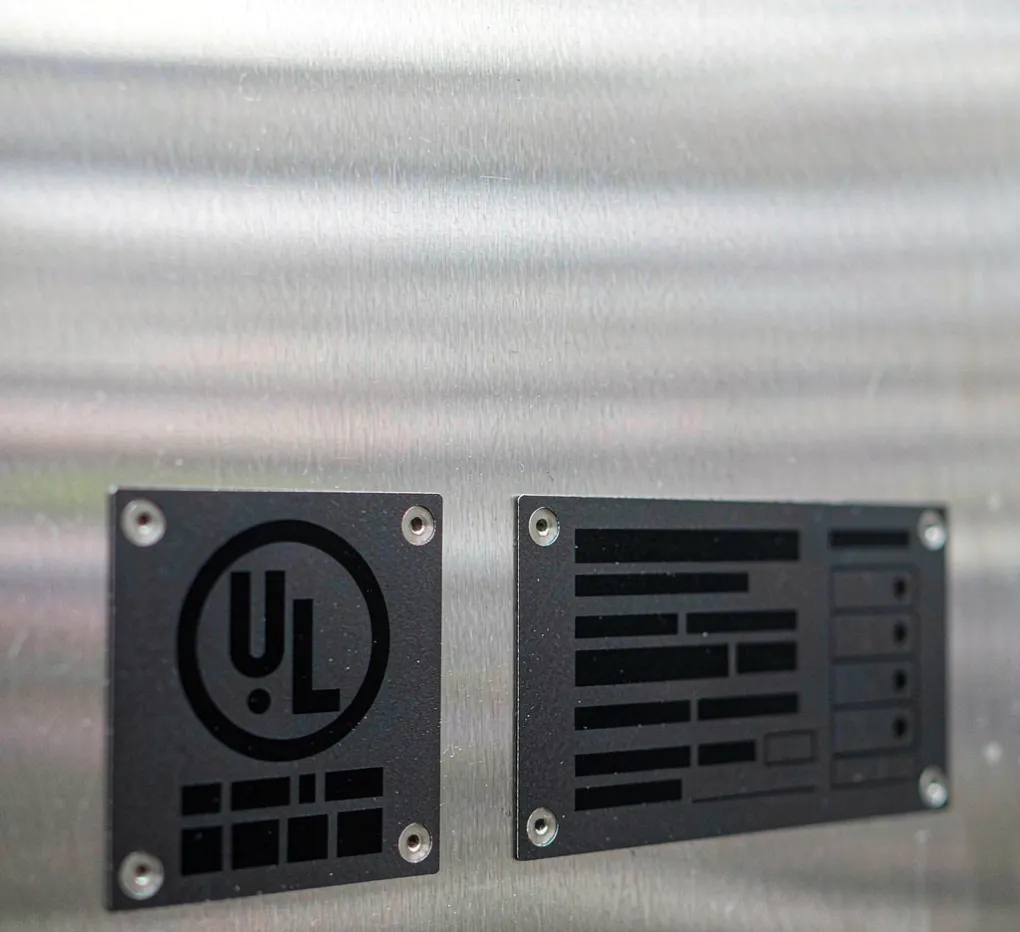
If your machine ships to a NEC jurisdiction, the panel needs a marked rating built and documented under UL508A. We arrange UL listing per order through a UL-listed shop, and that adds real cost: a combination-rating worksheet, a documented build, and a defensible label. NEMA frames the general equipment context in its standards library at nema.org. Skipping the listing to save now is the most expensive shortcut in this list—it is the one that gets your panel rejected at the border or at inspection.
5. Wiring, termination, and labeling labor
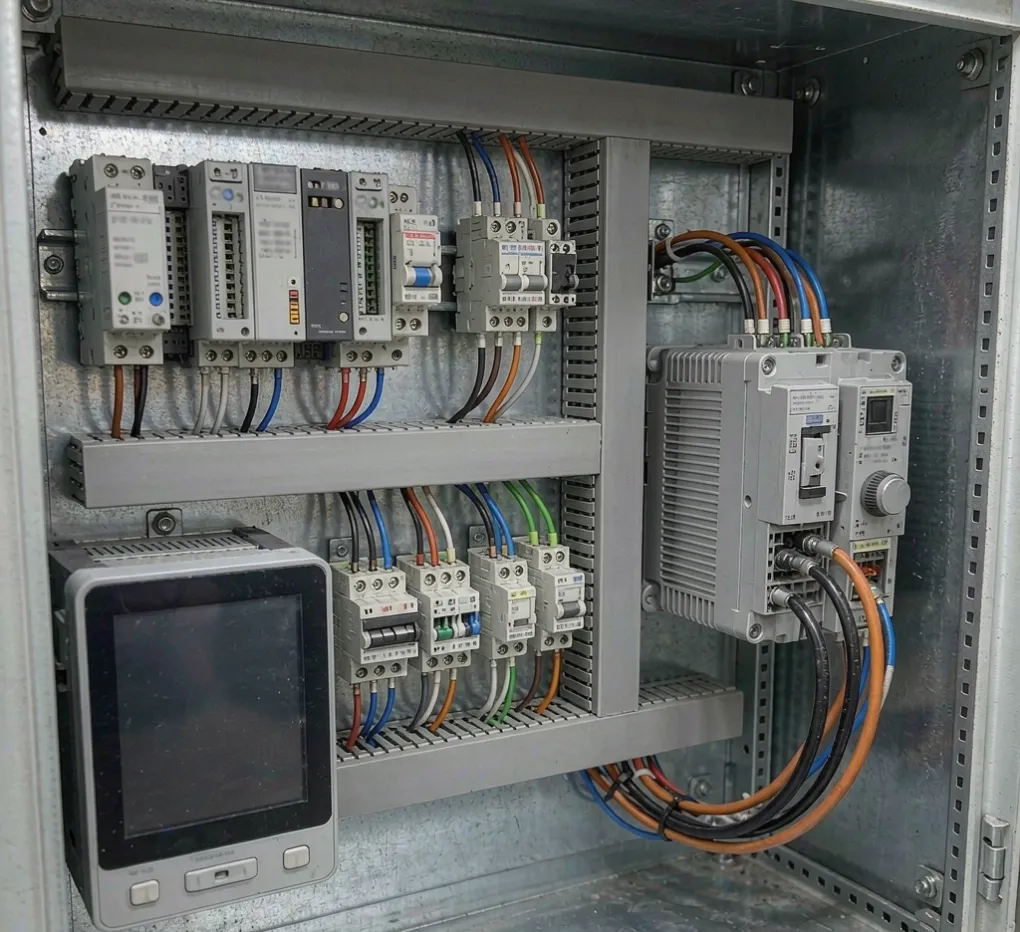
This is the quiet line item. DIN rail layout, ferrules, cable management, terminal blocks, wire length, and custom cutouts are mostly labor, and labor scales with how tidy and how custom the build is. A panel with point-to-point labeling and ferrule-terminated wires costs more to build and far less to commission. The IEC world expresses the same discipline through IEC 61439 assemblyrules.
6. Testing and FAT
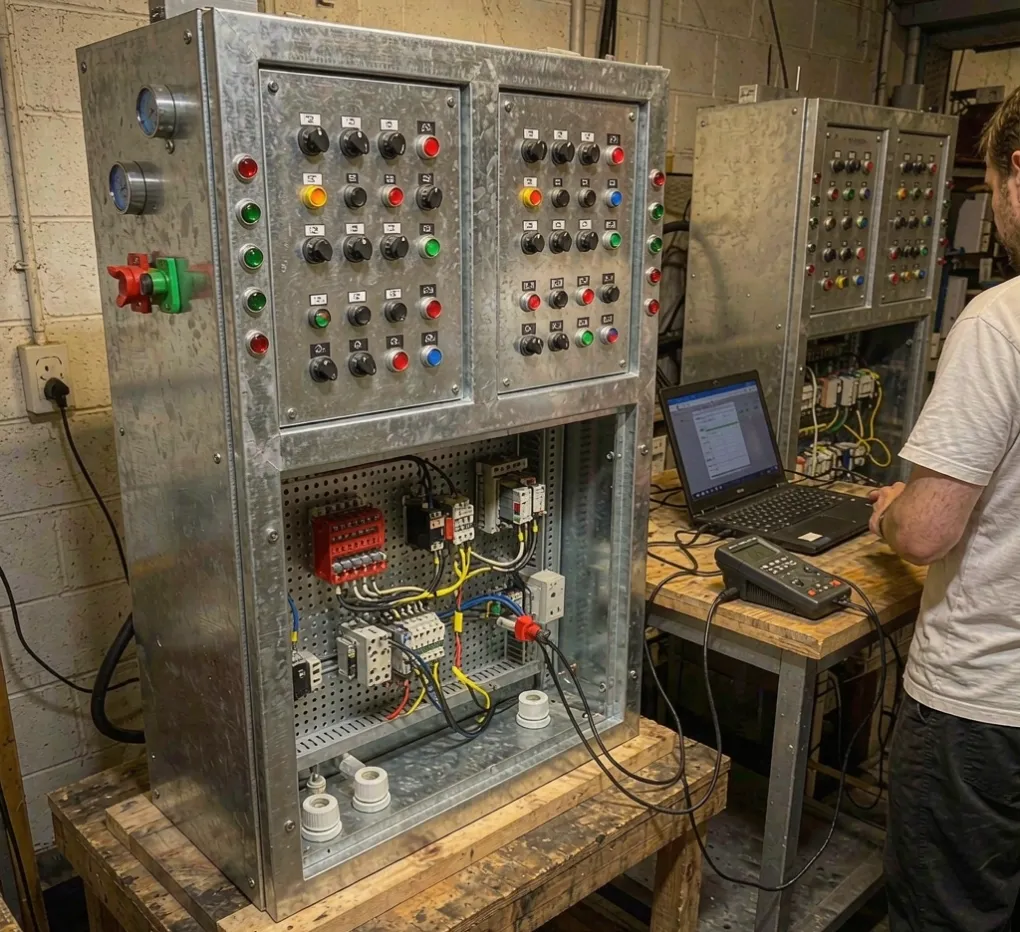
Factory acceptance test (FAT)—powering the panel, running point-to-point checks, and documenting the result—is the difference between "it arrived" and "it works." Skipping FAT saves a little now and bills you on site. We include FAT records with every panel because a fault caught in Foshan costs a phone call; the same fault caught in your customer's plant costs a flight.
7. Volume, MOQ, and shipping
Empty enclosures start from 5 units, typically about 15 days. In-stock components ship in 3–5 days. Below that MOQ, per-unit cost climbs because the enclosure is a one-off build. Export crating and weight-based freight are the final, easy-to-forget line. If you build the same machine in runs, batching the enclosures is the cleanest way to pull unit cost down.
Where you can pull cost back without risking the build
You do not have to accept the high quote. You have to accept the spec that produced it. Four moves pull cost back safely:
- Fix the spec early. A drawing review before the RFQ kills 80% of the "why is this so expensive" moments. Most overspending is a rating or material nobody actually needed.
- Supply your own components if you stock them. If you already run a specific Mitsubishi or Siemens line across your fleet, shipping us the PLC and HMI (customer-supplied) removes that margin from our quote.
- Right-size the enclosure. A cabinet one size smaller, with no unused cutouts, is cheaper metal and cheaper freight.
- Standardize on one PLC platform. One platform across your machine range means one spares kit, one commissioning routine, and better component pricing from volume.
Cost driver snapshot
Driver | What it adds | Spend it when |
|---|---|---|
Enclosure material | Low (carbon) → high (316 SS) | The site is wet, coastal, or washdown. |
IP65 vs. NEMA 4X | Moderate step-up | Outdoor or hose-down duty |
Component brand | 10–30% swing | You need proven comms and availability. |
UL 508A listing | Fixed compliance cost | NEC jurisdiction / export |
Wiring & labeling | Scales with complexity | You value fast commissioning. |
FAT & docs | Small, high-leverage | Every panel, always |
MOQ & freight | Per-unit + weight | Batch runs of 5+ |
Where a sourcing partner fits
We are a sourcing partner and panel-build service, not a panel manufacturer and not one of the shops ranked in the guides above. When you send us a drawing, we build the panel to spec, pull the control components from the brands you already run—Mitsubishi, Siemens, ABB, and others—and have the enclosure and assembly produced at a UL-listed shop on a per-order basis. The rating worksheet, the marked label, and the FAT record are part of the package we hand back, not extras you chase down later.
A few facts that matter when you plan budget and lead time: - Enclosures: carbon steel, 304 or 316 stainless, or galvanized. No aluminum. - Protection ratings: IP65 as standard, NEMA 4X where the site needs corrosion and hose-down resistance. - Quantities and lead time: empty enclosures from 5 units (about 15 days); in-stock components typically ship in 3–5 days. - Compliance: UL listing arranged per order through a UL-listed shop; we document the combination so your label is defensible.
If you want the enclosure and component strategy behind a panel that passes first time, our electrical enclosure sourcing guide walks through material and rating trade-offs. For the panel build itself, see our custom control panel solutions.
FAQ
Why does my panel quote vary 40% between suppliers?
Almost always spec interpretation. One shop quotes carbon steel and IP65; another assumes 316 and NEMA 4X "to be safe." One includes UL listing and FAT; another quotes the bare build. Put the exact material, rating, listing, and test scope in the RFQ, and the quotes converge.
Is stainless (304/316) worth the premium over carbon steel?
For dry indoor cells, no—carbon steel with a good powder coat is the honest cheap answer. For food, coastal, chemical, or washdown sites, 316 pays for itself by avoiding corrosion callbacks. 304 is the middle ground for mild indoor humidity.
Does the UL 508A listing double the price?
No, but it is a real, fixed cost—a combination-rating worksheet, a documented build, and a defensible label arranged through a UL-listed shop per order. It is a small fraction of the total on a properly specified panel, and it is non-negotiable for NEC jurisdictions and most exports.
Can I save by supplying my own PLC and HMI?
Yes, if you already stock a specific line across your machine range. Shipping us customer-supplied components removes that margin from our quote and guarantees brand consistency with your other machines. We integrate and document them like any other build.
How does order quantity (MOQ 5) change unit cost?
Empty enclosures start from 5 units at roughly 15 days. Below that, the enclosure is a one-off build and per-unit cost climbs. If you build the same machine in runs, batching the enclosures is the cleanest way to lower unit cost.
Do component brands (Mitsubishi vs. Siemens vs. ABB) change panel cost much? The device cost differs by a tier, but the bigger lever is availability—an allocation-limited part adds lead time, not just price. Standardizing on one platform across your range improves both pricing and commissioning speed.
Engineering Takeaway
The cost of your OEM machine control panel is decided by the spec, not by the builder. Lock the material, the rating, the component brand, and the compliance scope before you issue the RFQ, supply your own components where you can, and demand FAT and a defensible label in the package. The buyers who never see a 40% spread are the ones who treated cost as a spec decision, not a negotiation after the fact.
Related guides
- Best PLC panel manufacturers for OEM machines—shortlist the shops that build your panel
- Siemens vs Mitsubishi PLCs for your control panel—pick the controller that feeds your cost model
- Control panel short-circuit current rating guide—the SCCR value that affects both safety and price
- Motor control panel supplier checklist—the 7 questions to ask before you order
- UL 508A control panel suppliers: an export buyer's guide—what a real listing mark does and does not prove
- Top 10 industrial control panel manufacturers—how the shops behind your panel compare
Get a costed panel spec before you quote your customer.
Upload your drawing, and we will run an engineering review—material, rating, component sourcing, and the compliant build path your machine needs.
Upload Drawing → Engineering Review → Receive Suggestions