
Sep 15, 2026Buying Guides
UPS Redundancy Selection Guide: N+1 vs Parallel Redundant Configurations
Decide between N+1 and parallel redundant UPS before you size the unit. A buyer-side guide to what redundancy protects, bypass paths, dual-feed topologies, and writing the RFQ.
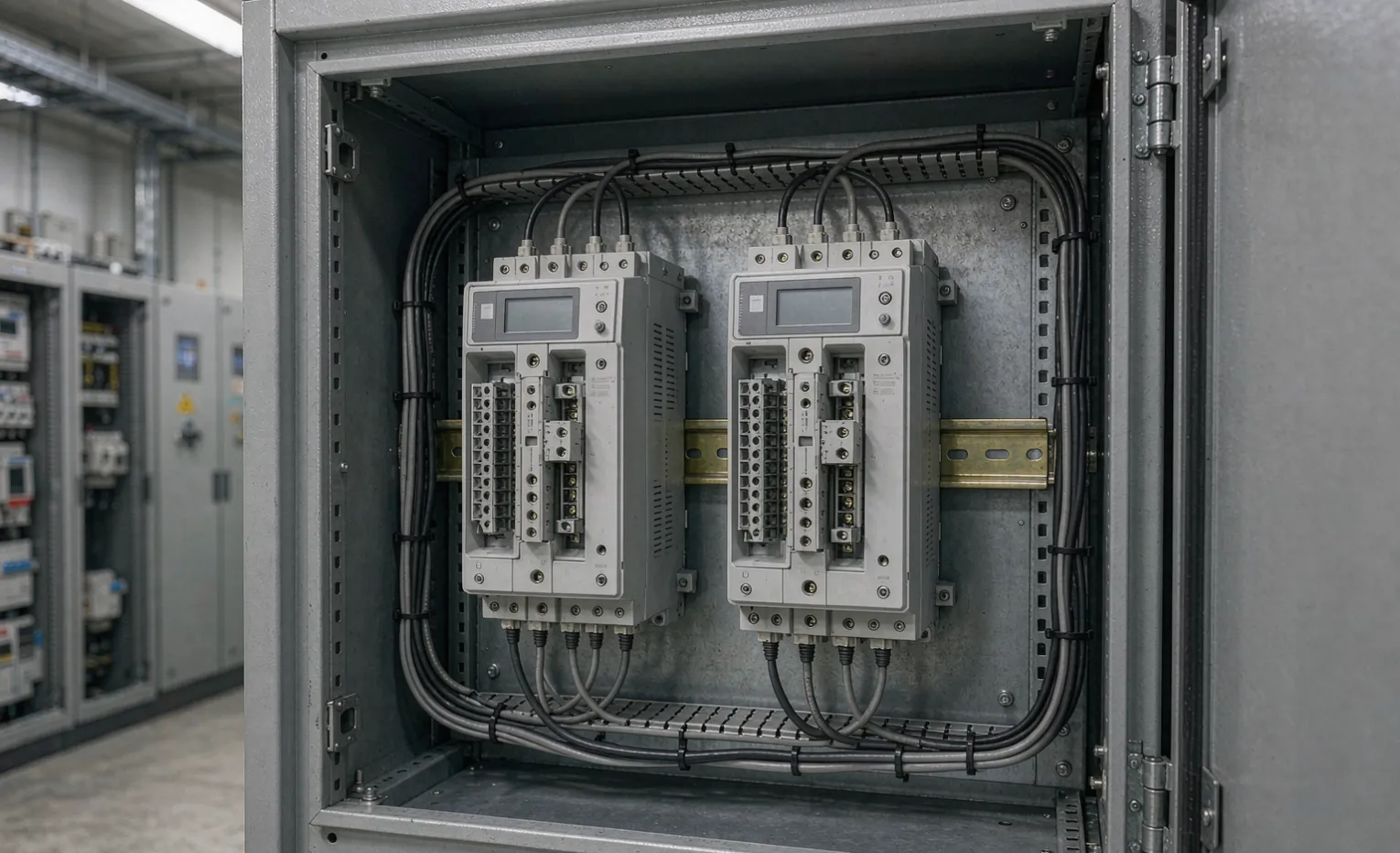
UPS Redundancy Selection Guide: N+1 vs. Parallel Redundant Configurations
Most buyers ask, "Do I need redundancy?" at the end of the spec, after the VA, runtime, and topology are already fixed. By then the cabinet is laid out, and there is no room to add a second module. The question is better asked first: what is allowed to fail, and how fast do you find out?
As a sourcing partner, we build UPS into industrial control panels every week, and redundancy is one of the few decisions that changes the whole layout—not just the battery. If you are comparing brands first, our 2026 ranking of the leading industrial UPS brands is the place to start; this guide is about the configuration decision those brands sit inside. Our industrial UPS systems page covers how we integrate them into panels end to end.
Engineering Note: Redundancy is not about uptime math alone. It is about mean-time-to-repair. A second unit only helps if the first can fail, alert, and be swapped while the load stays up.
What redundancy actually protects against
A single UPS can fail in three ways that matter to you:
- A hardware fault—a power stage, fan, or control board. The load drops the moment the unit stops inverting.
- A battery fault—one weak cell takes the whole runtime with it.
- A service window—you cannot take the load down just to replace a unit, but the unit still has to come out.
Redundancy answers all three. The spare carries the load through a fault, and a maintenance bypass lets you pull the faulty unit without ever opening the cabinet to a dead bus.
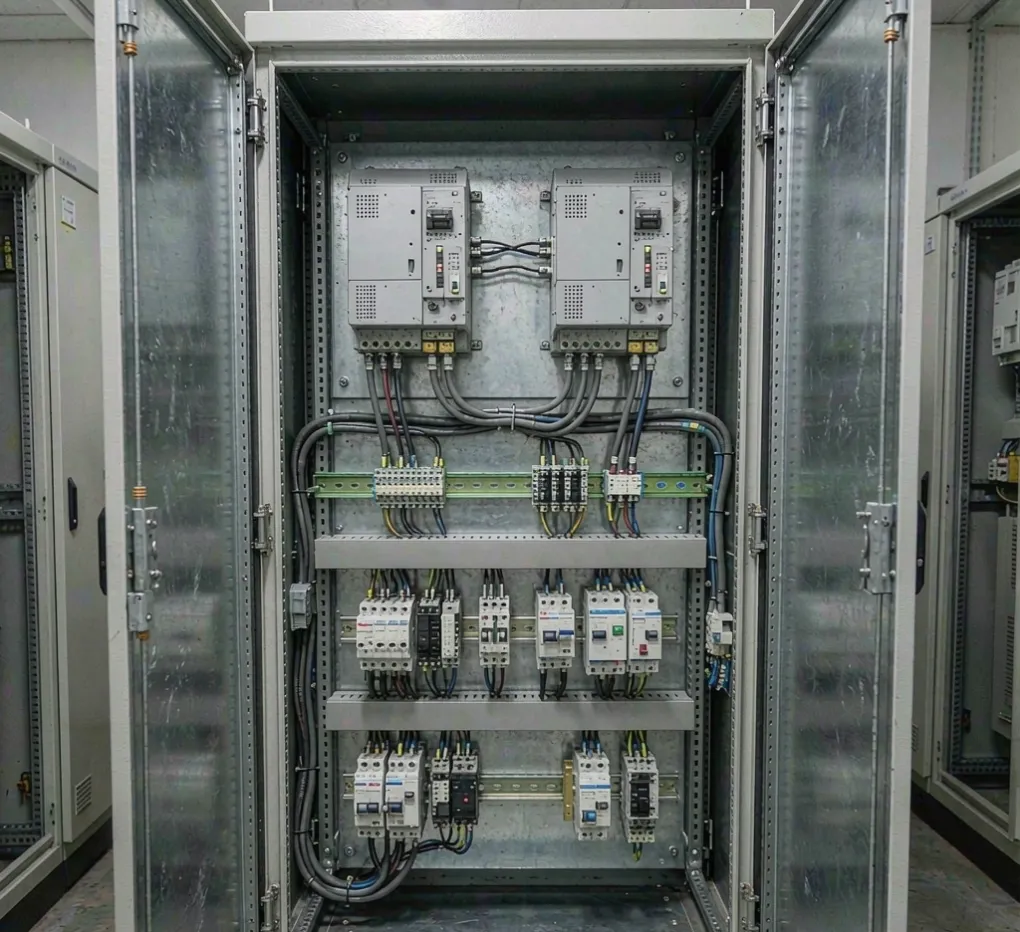
N+1: the minimum worth considering
N+1 means size the system so N modules carry the full load, then add one online spare. If one module fails, the spare is already sharing the load, so nothing blinks.
- Where it fits: a single control cabinet where a manual swap during the next planned stop is acceptable.
- What you give up: during the repair, you are running at N with no spare—a second fault in that window is not covered.
- Cost: roughly 1.5× the single-module price, because you buy one extra module and the framing to parallel it.
For most skid-mounted and machine-control panels, N+1 is the right floor. It removes the single biggest cause of unplanned stops—a one-off unit dying with no backup.
Parallel redundant (N+X): when one spare is not enough
Parallel redundant adds X spares, often two or more, sharing the load across the whole string.
- Where it fits: continuous processes with no planned stop — a line that runs 24/7, or a site where even a second failure during the first repair is unacceptable.
- What you gain: a second module can fail, and the load still rides. The system degrades gracefully instead of dropping.
- Trade-off: more modules, more communication bus, more cost — often 2× or more of the single unit.
Which configuration fits your load?
If your load is… | Choose | Why |
|---|---|---|
Single cabinet, can tolerate a manual swap at the next stop | N+1 | Cheapest spare; one module online |
Multiple cabinets on one bus, one spare acceptable | N+1 parallel | Spare shared across the string |
Continuous process, no planned stop | N+2 / parallel redundant | Survives a second fault during repair |
Must be serviced without dropping load | + maintenance bypass | Makes the spare serviceable |
Upstream feed fault is the real risk. | + dual feed | Unit redundancy alone will not catch it |
Buyer Decision: If you can name a planned maintenance window, N+1 is enough. If you cannot, size for N+2 and stop arguing with the catalog.
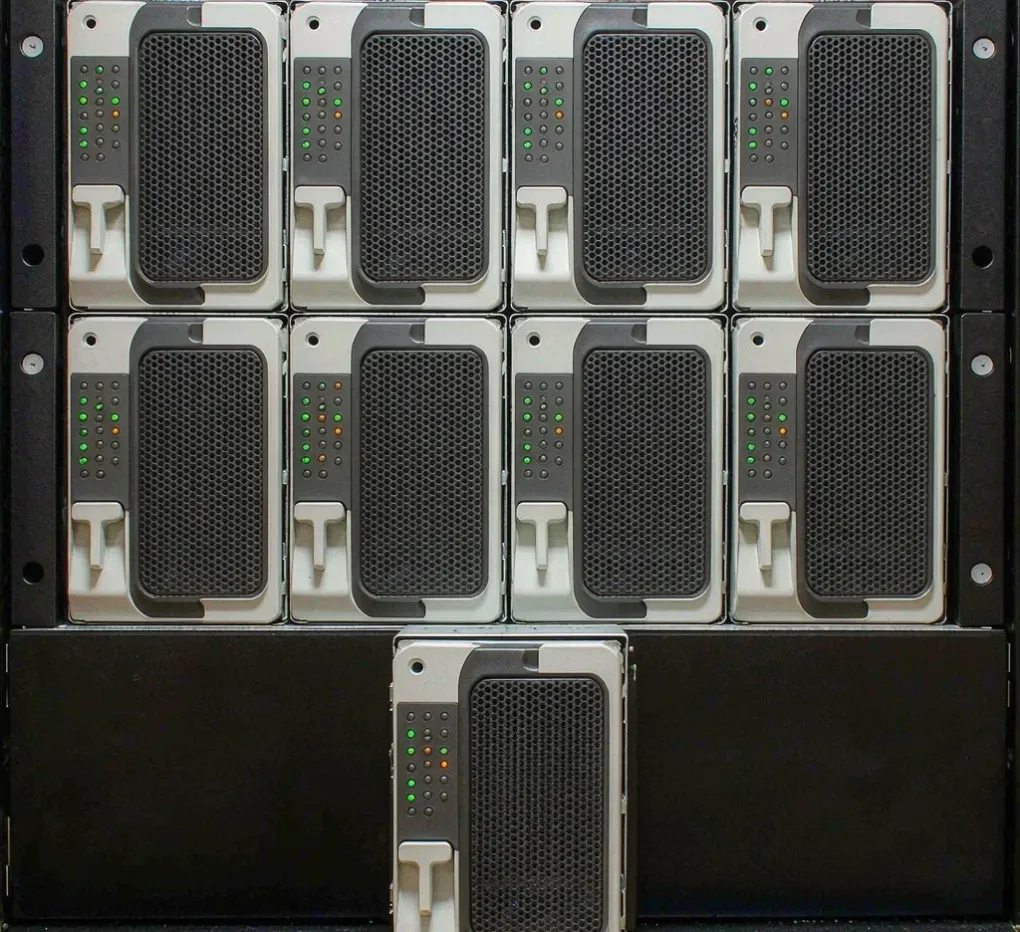
Hot standby vs. internal dual power
Redundancy shows up in two physical forms, and buyers confuse them:
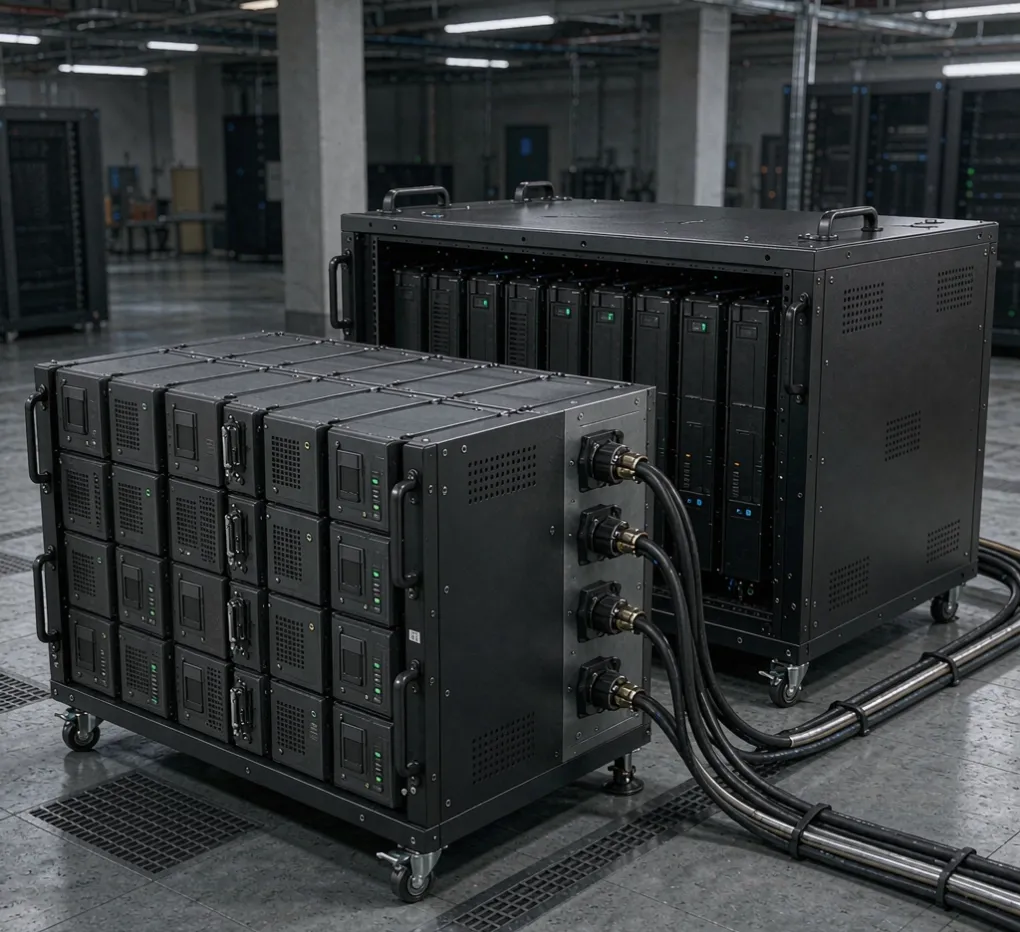
- External parallel units—two or more separate UPS modules on a common bus. This is true N+1: one can be removed entirely.
- Internal dual power supply—one chassis with two input feeds. This protects against a lost feed, not a dead unit. If the chassis fails, both feeds die together.
A dual-power supply is not N+1. It is a feed-redundancy feature. If your risk is "the unit itself fails," you need external parallel modules, not a second cord into the same box.
The bypass path you forget until you need it
Redundancy is half the story. The other half is how you service it.
- Static bypass—automatic, kicks in if the UPS faults, so the load rides raw mains instead of dropping.
- Maintenance bypass—a manual switch that lets you isolate and remove the UPS with the load still powered from the feed.
Without a maintenance bypass, "redundant" still means a ladder and a shutdown to swap a module. With it, you isolate, pull, replace, and re-close—the load never sees it.
Buyer Decision: Ask the build shop, in writing, whether a maintenance bypass is included. On a redundant UPS it is not optional; it is what makes the redundancy serviceable.
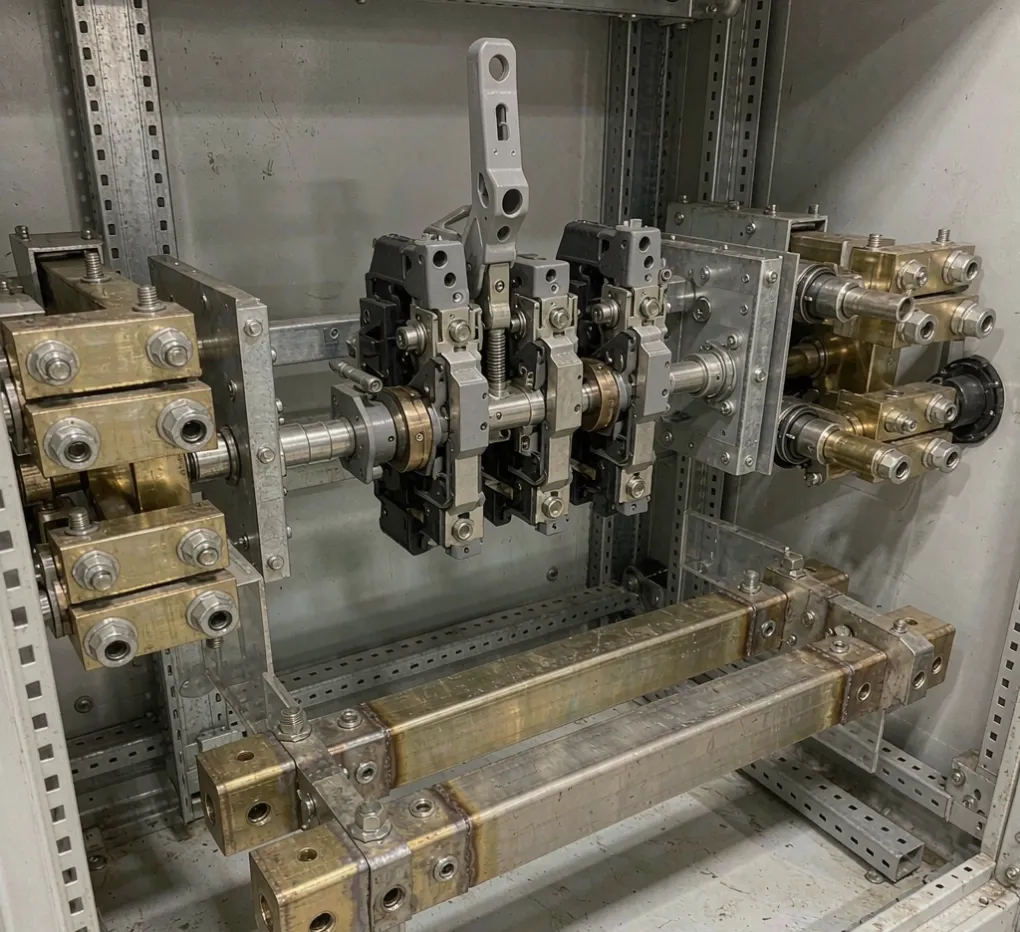
Dual feed: where the second source comes from
Redundancy inside the UPS does not help if both modules hang off the same breaker. For real resilience:
- Two separate feeds—utility plus generator, or two utility sources—into a transfer scheme ahead of the UPS.
- Dual input on the UPS—some units accept two sources directly, switching internally.
This is feed redundancy plus unit redundancy, and it is what keeps a panel up through a real upstream fault, not just a UPS fault.
How redundancy changes the sizing
Redundancy does not add load—it adds headroom. You size each module to N, not to N+1 total.
- A 10 kVA load on N+1 uses two 5 kVA-class modules, each running at part load in normal operation.
- The spare runs cooler and lasts longer because it is rarely at full output.
- Runtime is set per module, then the string shares the battery burden — so a redundant system often reaches the same minutes on a smaller pack per module.
Write the RFQ as "N+1, 10 kVA total, 15-minute runtime at full load," not "two big units." The build shop sizes each module from the N figure.
What it costs versus what it saves
A redundant UPS costs more up front—typically 1.5× to 2× a single unit of the same capacity, before the bypass and dual-feed hardware.
Against that, put the cost of one unplanned stop: a line down for an hour, a batch scrapped, a contract penalty. On a continuous process, a single avoided stop pays for the spare many times over. On a panel that is serviced monthly anyway, N+1 may be all you need and parallel redundant may be paid dead weight.
Common mistakes when specifying redundant UPS
- Forgetting the bypass. Redundant units you cannot service without a shutdown are not redundant in practice.
- Sizing the spare to full +1. You size each module to N; the +1 is headroom, not extra capacity you load.
- Mixing brands in parallel. Two UPSs rarely share a parallel bus cleanly. Pick one brand for the string — our UPS brand guide covers which to shortlist.
- Counting a dual-power supply as N+1. It is feed redundancy, not unit redundancy.
- Skipping the alarm path. Redundancy only helps if you know a module failed. Require SNMP or dry-contact alarms to your SCADA.
What to put in the RFQ
Send the build shop the decision, not a guess:
- Total load in W and VA, and whether it includes a VFD or servo (topology changes — see our panel integration guide).
- Configuration: N+1 or parallel redundant (N+X), with the value of X.
- Required runtime at full load, in minutes.
- Whether a maintenance bypass and dual feed are included.
- Alarm method (SNMP, dry contact, relay).
- Enclosure: we build in carbon steel or 304/316 stainless, IP65 / NEMA 4X (we do not work in aluminium), with panel build in roughly 15 days at MOQ 5, and source UL-listed UPS brands per project. For the enclosure side of the build, see our electrical enclosure sourcing guide.
UPS safety is governed by UL 1778 (UL 1778 on ul.com); performance and testing by IEC 62040 (IEC 62040 on iec.ch). Name the standard in the RFQ so quotes are comparable.
Engineering takeaway
Redundancy is a layout decision, not a checkbox. Choose N+1 when you have a service window; choose parallel redundant when you do not. Add a maintenance bypass so the spare is actually serviceable, feed it from two sources so an upstream fault does not defeat it, and size each module to N. Do that and the second unit earns its place; skip it and you have paid for a box you cannot use.
Related guides: - Industrial UPS Buying Guide - How to Choose an Industrial UPS System - Modular UPS Systems Guide - UPS Backup Time Sizing Guide - UPS Battery: VRLA vs Lithium - Add a UPS to a Control Panel
Need a redundant UPS specified to your actual load and service window — not a catalog default? Send us the load, the event, and whether you have a planned stop, and we will size N, the spare, the bypass, and the feed. Request a quote.
FAQ
What does N+1 actually mean for a UPS? N is the number of modules needed to carry the full load; +1 is one online spare. If a module fails, the spare is already sharing the load, so the protected equipment never sees the drop.
Do I need redundancy if I already have a generator? Often yes. The generator covers an upstream supply loss, but not a UPS hardware or battery fault. N+1 protects the unit itself; the generator protects the feed. They cover different failures.
Can I run two different UPS brands in parallel? Not cleanly. Parallel modules share a communication and load-sharing bus that is rarely cross-brand compatible. Keep one brand for the whole string, or run them as separately fed loads instead of a parallel string.
How do I know a module has failed if the load stays up? Through alarms. Require SNMP or dry-contact relays to your SCADA or BMS so a degraded module pages someone. Redundancy without alerting means the second fault lands before anyone notices the first.
Is an internal dual-power supply the same as N+1? No. A dual-power supply protects against a lost input feed; it does not survive the chassis itself failing. True N+1 uses separate external modules on a common bus, so one can be removed entirely.
Does a redundant UPS need a maintenance bypass? For it to be useful, yes. Without a maintenance bypass, you must drop the load to swap a faulty module, which defeats the point. Include it in the RFQ and confirm it on the drawings.