
Aug 22, 2026Buying Guides
How to Size an Industrial UPS for a Control Panel: A Buyer's Checklist | UniRegal
Size an industrial UPS by your panel's peak VA, not running watts: add inrush, derate 20-30%, and confirm the enclosure can house it. Use this checklist before you ask for a quote.
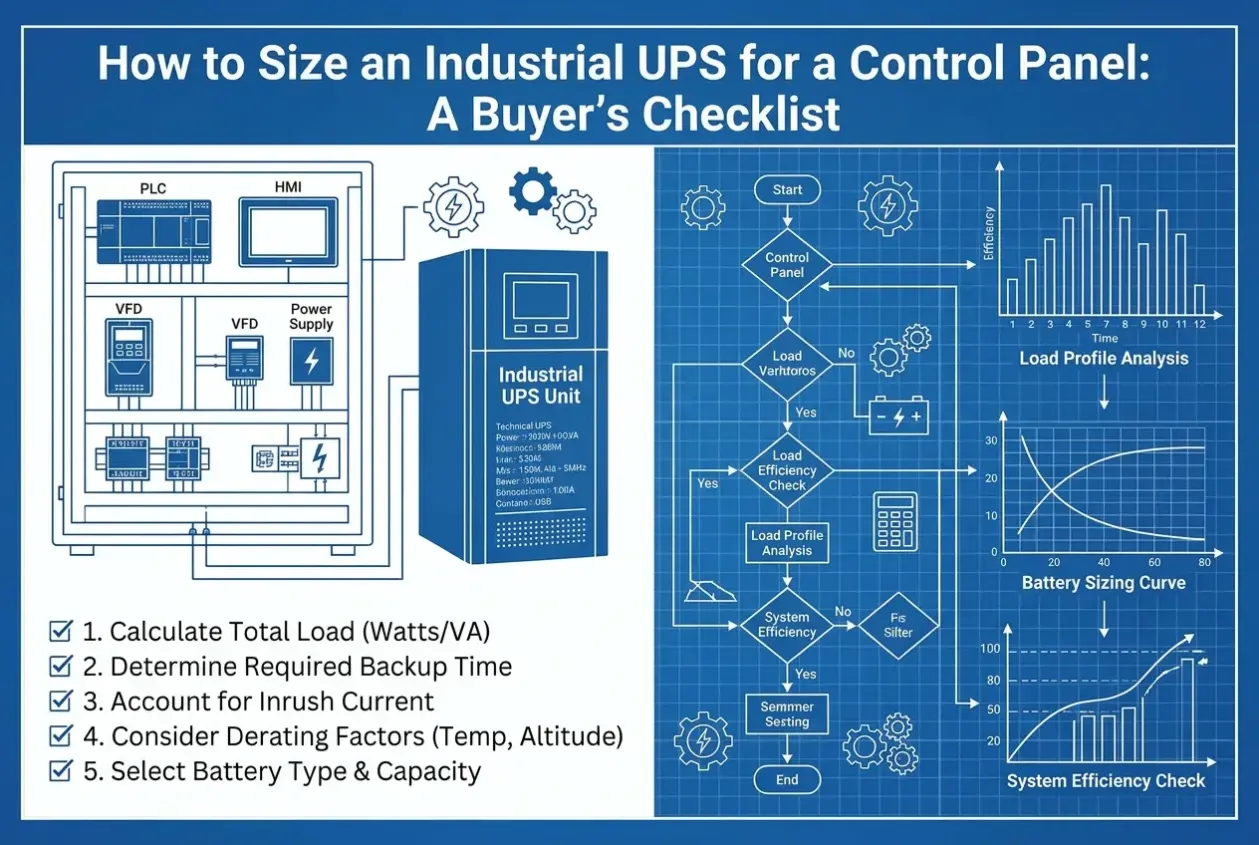
When a control panel loses mains power, the PLC, HMI, and sensors can drop out in milliseconds—and a restarted line costs more than the UPS that would have held it. The mistake most buyers make is sizing the UPS from the nameplate running watts. That under-specs the unit and shortens runtime. This guide gives you a practical checklist to size an industrial UPS for a control panel before you send an RFQ.
What "sizing" actually means for a control panel UPS
Sizing is not "find the wattage and buy that." You are matching three things: the load the UPS must carry (VA/W), how long it must carry it (runtime), and the environment it sits in (the enclosure). A UPS rated for 1000 VA does not deliver 1000 VA of usable power after you account for power factor and inrush.
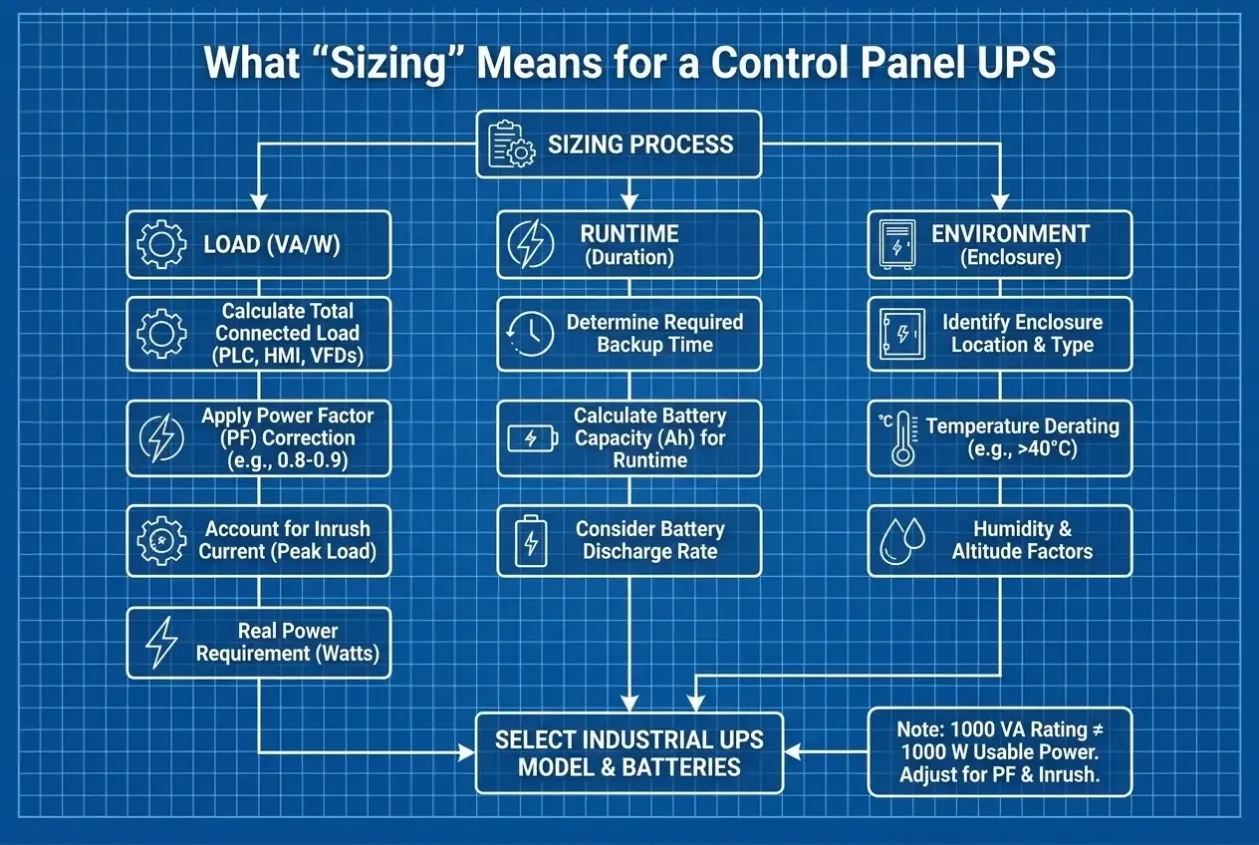
Step 1—Add up the real load, including inrush.
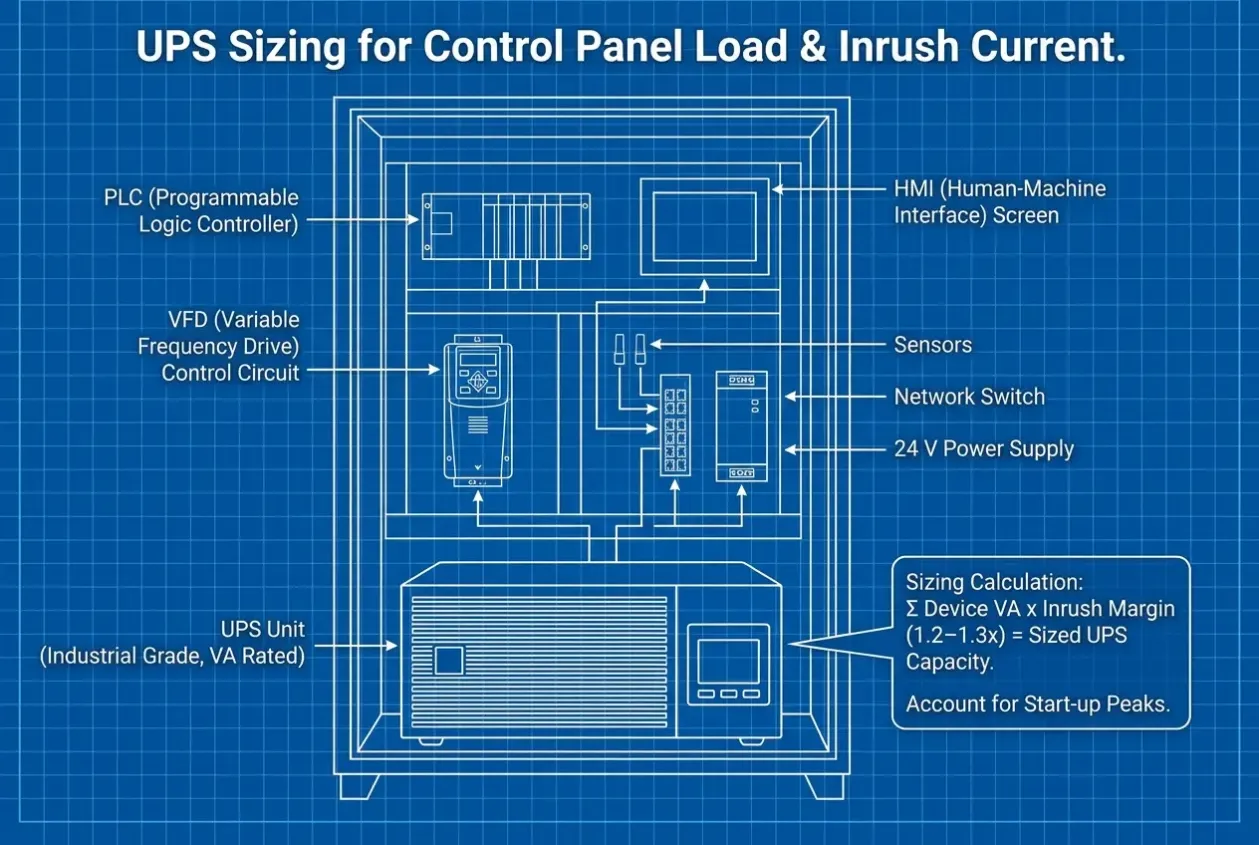
List every device in the panel that the UPS must keep alive: PLC, HMI, VFD control circuit, sensors, network switch, and any 24 V power supply feeding field devices. Use the VA (volt-ampere) rating, not just watts, because many control devices draw reactive current. Then add a margin: motors, contactors, and some power supplies pull 3–10× their running current for the first few cycles. A common rule is to size for 1.2–1.3× the steady VA to absorb inrush without the UPS tripping.
Step 2—Decide the runtime you actually need.
Industrial UPS units typically hold 5–15 minutes at full load on internal batteries—enough to ride through a flicker or reach a generator. If your site needs longer, specify external battery modules rather than a bigger UPS. Tell your supplier the runtime target in minutes; it changes the battery section, not the power section.
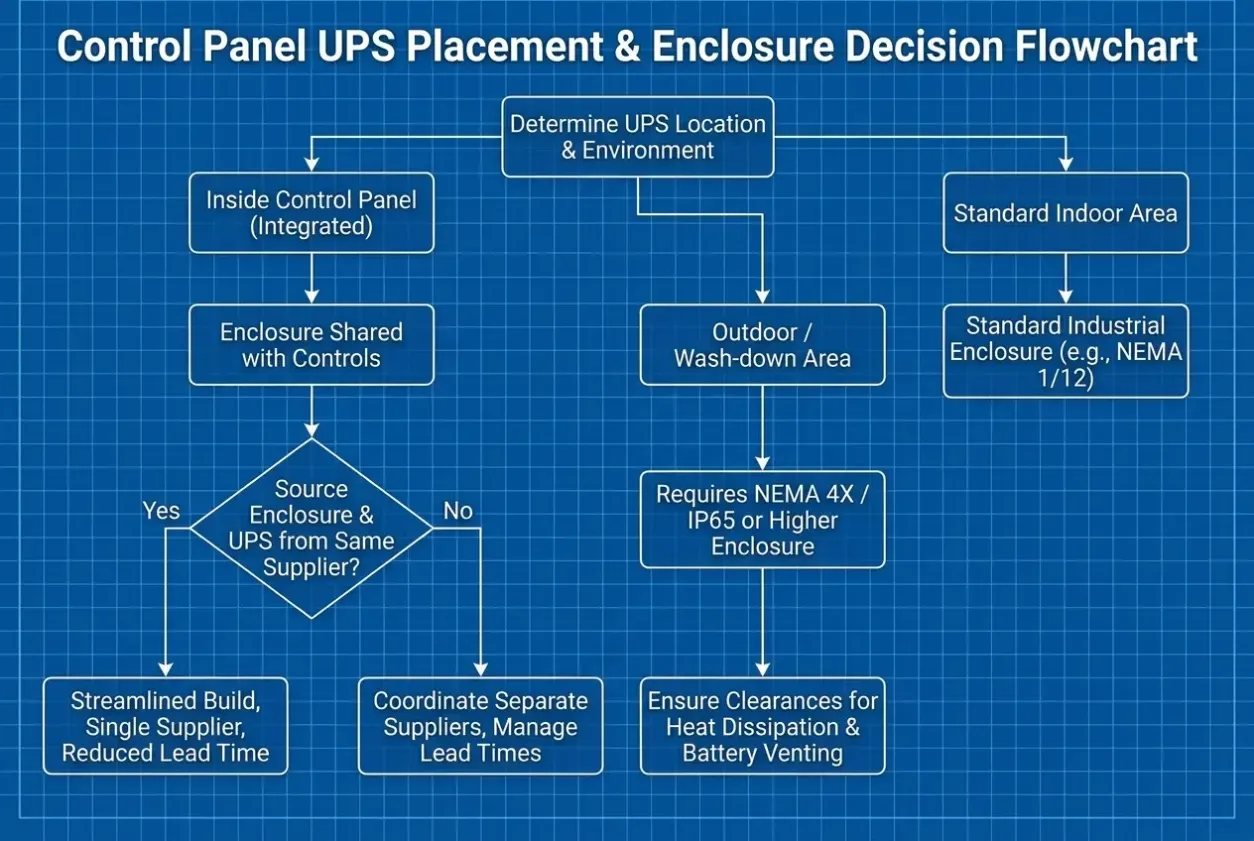
Step 3—Make sure the enclosure can house it.
The UPS lives inside the same cabinet as the controls. For outdoor or wash-down sites, the enclosure should be NEMA 4X / IP65 or higher, and you must leave clearances for heat and battery venting. If you are already sourcing the enclosure, folding the UPS into the same build avoids a second supplier and a second lead time. See how we source NEMA 4X enclosures from Foshan workshops in our electrical enclosure solutions guide, and the rating difference in our NEMA 4X enclosure explainer.
Component brands you can specify
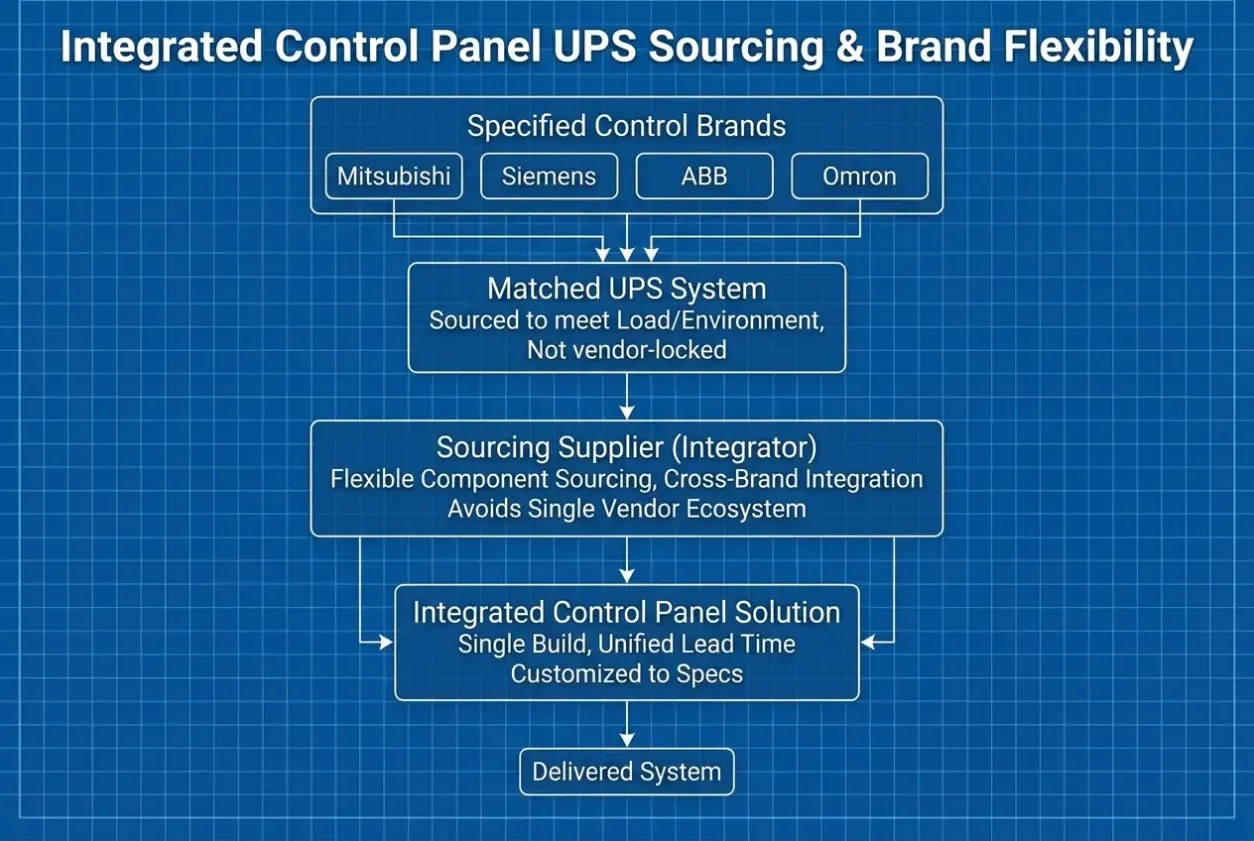
A UPS protects the controls, but the controls themselves often come from brands your plant already runs—Mitsubishi, Siemens, ABB, or Omron. As a sourcing supplier, we can build the panel around the component brands you specify and source the UPS to match, rather than forcing a single vendor's ecosystem. Our industrial UPS systems solution page shows typical integrated builds, and our industrial UPS manufacturers overview helps you compare units before specifying.
Standards to ask about
Two standards matter when you verify a unit: IEC 62040 covers UPS performance and testing, and UL 1778 covers UPS safety for the North American market. Ask the supplier which they certify to. Reference: IEC.
FAQ
Do I size the UPS for the whole panel or just the controls? Just the devices that must stay alive during an outage—usually the PLC, HMI, network gear, and a 24 V supply for sensors. Drives can be excluded if they are allowed to stop.
Why does my UPS trip at startup even though the load looks small? Inrush. A contactor or power supply can draw several times its running current for a few cycles; size for 1.2–1.3× steady VA to absorb it.
Can the UPS go in the same NEMA 4X enclosure as the PLC? Yes, if you plan clearances for heat and battery access. Sourcing the enclosure and UPS together keeps the build to one supplier.
Checklist before you request a quote
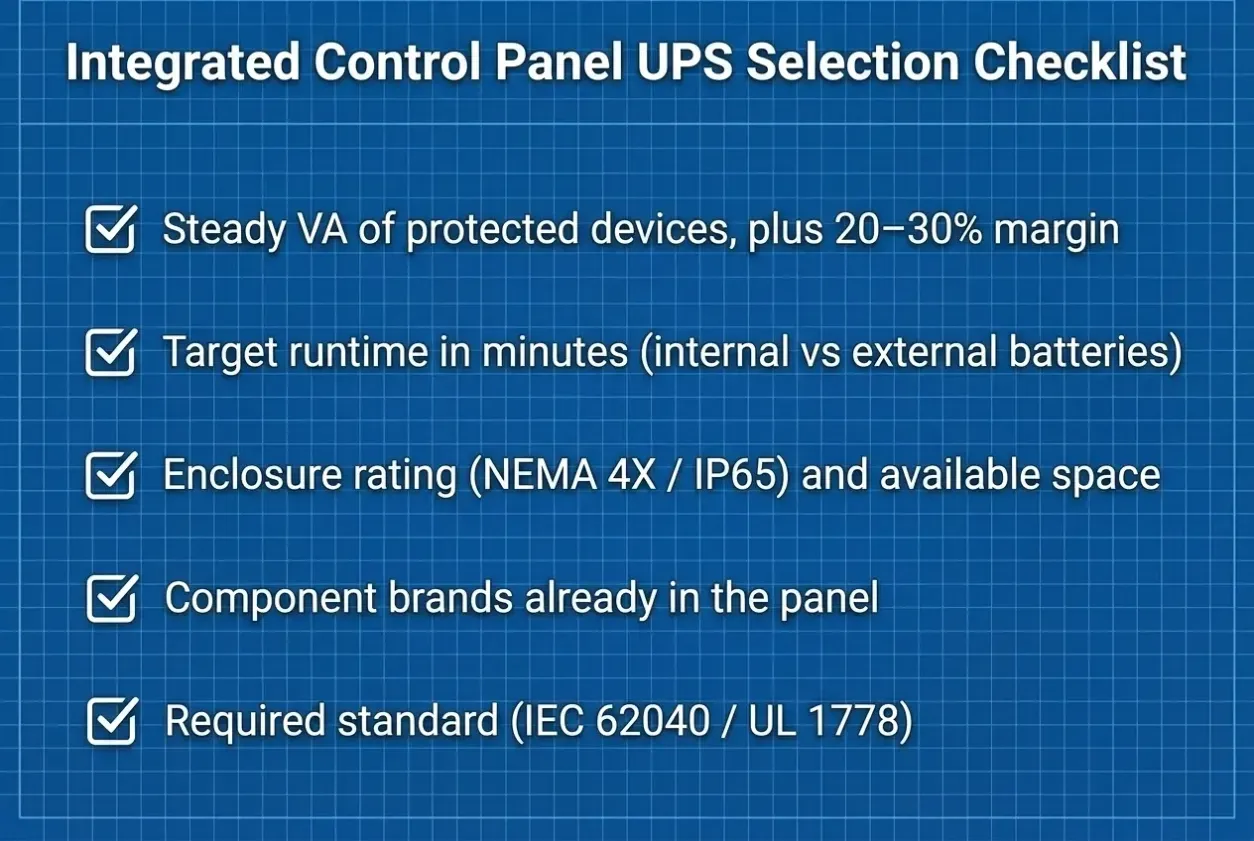
- Steady VA of protected devices, plus 20–30% margin
- Target runtime in minutes (internal vs external batteries)
- Enclosure rating (NEMA 4X / IP65) and available space
- Component brands already in the panel
- Required standard (IEC 62040 / UL 1778)
When you have those five numbers, you are ready to talk to a supplier instead of guessing. Bring your panel drawing and the load list and contact UniRegal Team—we will source the UPS and the enclosure as one build from our Foshan network and return a quote with lead time, typically 15 days for the enclosure and 3–5 days for stock components.
Related Guides: