
Sep 28, 2026Buying Guides
When to Replace Industrial UPS Batteries
A practical lifecycle guide to replacing industrial UPS batteries: how long VRLA and lithium last, the warning signs of failure, when to replace on a schedule, and what it really costs.
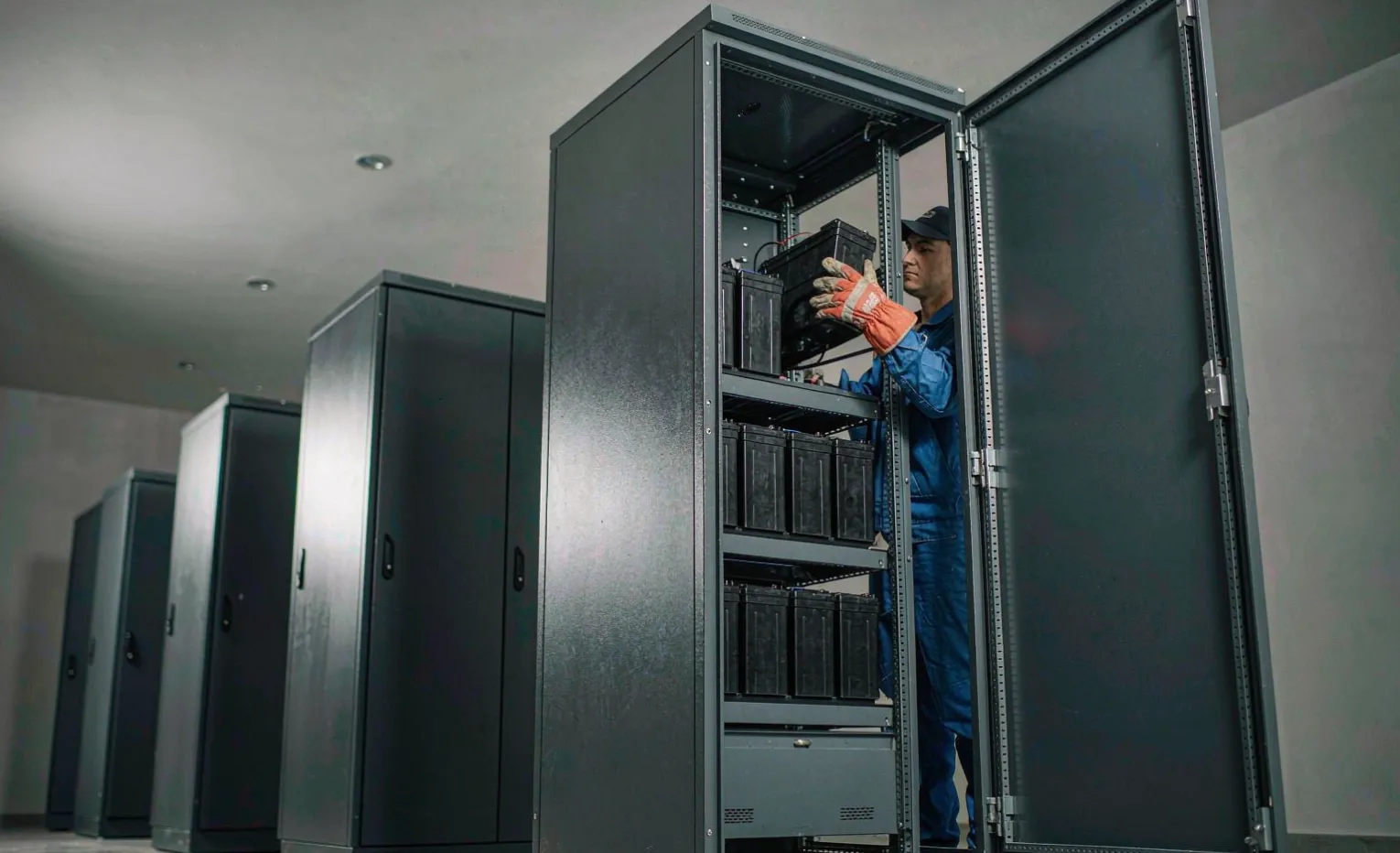
If you run any critical load on an industrial UPS—a control panel, a DCS cabinet, a server room, a process skid—the batteries are the part that will fail first, and they will not tell you they are about to. Most plants treat UPS batteries like the tires on a fleet car: ignored until something goes flat. By then you have already had the outage you bought the UPS to prevent.
This guide is the practical companion to our broader ranking of Top 10 Industrial UPS Manufacturers—if you are still choosing the UPS unit itself, start there. Here we go one level deeper, because the unit you buy is only as good as the battery string you maintain: once the UPS is on the wall, the real question is when do the batteries come out?
A note on who is writing this: we are a sourcing partner and panel-build service, not the company that makes the cells. We supply and integrate UPS systems from Vertiv, Schneider (APC), Eaton, Mitsubishi, Siemens, and others, and we replace battery strings on the systems we ship and on third-party units. The advice below is about keeping your load alive, not about pushing a particular brand. In the bigger picture a UPS is one piece of a resilient power strategy — see our Electrical Enclosure Sourcing Guide for the cabinet and cooling side, and our Industrial UPS Systems page for how we package and service them.
Why battery replacement is a schedule, not an event
The single most expensive UPS failure is the one that happens with no warning. Sealed lead-acid (VRLA) batteries—the AGM and gel blocks in 90% of industrial UPS cabinets—do not fail like a light bulb. They age quietly, and then they quit. A battery that tested "fine" on Monday can be dead on Tuesday's power blip.
You replace them on a calendar because you cannot reliably wait for a symptom. The cost of one surprise downtime event at a plant—a line stoppage, a corrupted control program, a spoilt batch—is almost always bigger than the entire battery-replacement bill for the year.
What "design life" actually means
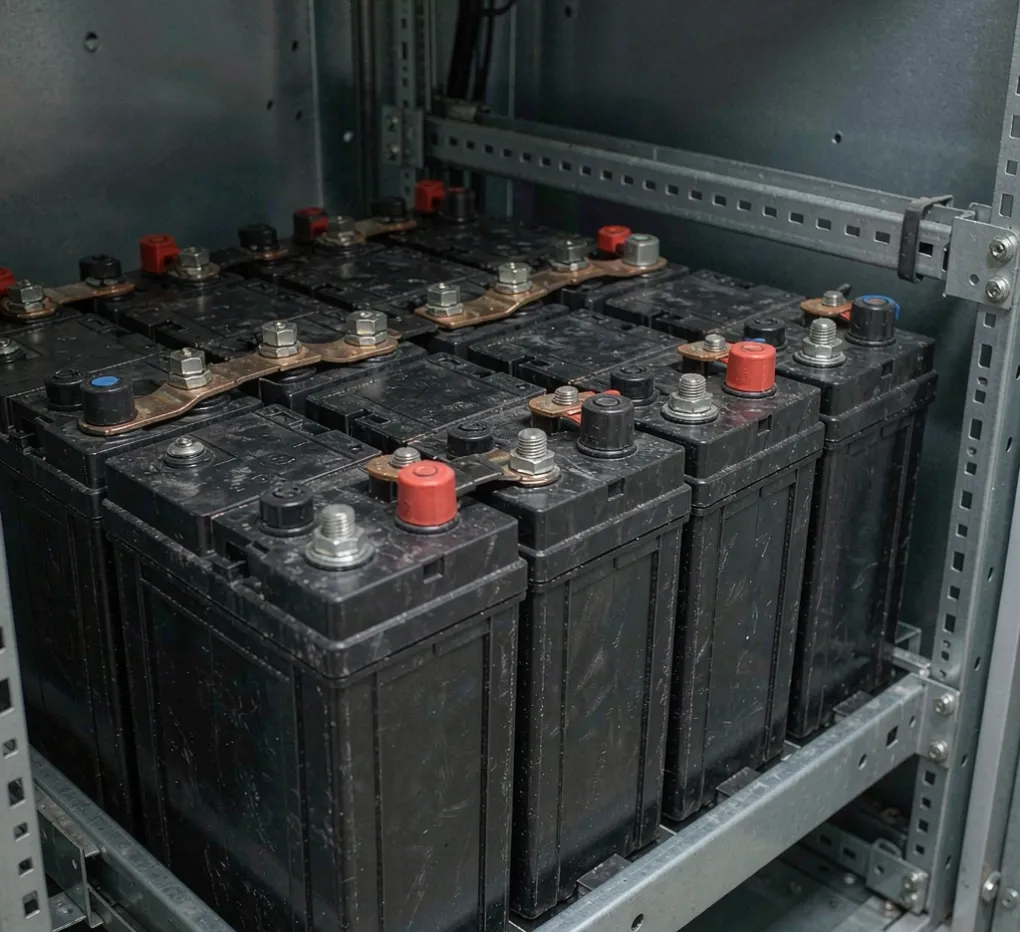
When a battery datasheet says "10-year design life," it does not mean the battery will last ten years in your plant. It means ten years at a perfect 25°C (77°F), floated correctly, and never cycled hard. Real industrial rooms are hotter, dirtier, and less gentle. Under typical indoor industrial conditions, a VRLA string delivers 3 to 5 years of dependable service before its failure rate climbs steeply.
Lithium (LiFePO₄) strings are a different animal: 8 to 10 years of service life, far better in heat, and no equalization fuss. We cover the swap decision below.
The temperature rule that decides your calendar
This is the part most buyers skip, and it is the one that matters most. For every roughly 10°C (18°F) above 25°C, a VRLA battery loses about half its service life. A cabinet in a 35°C motor control room is on a ~2.5-year clock, not a 5-year one. A battery in a sealed outdoor enclosure in summer may be effectively on an 18-month clock.
Buyer Decision: Read the room temperature, not the datasheet. If your UPS sits in a hot space, your replacement interval is set by the thermometer on the wall, not by the number printed on the battery.
The warning signs you should not ignore
Even on a schedule, you want to catch the early failures. Here is what a failing string actually looks like in the field.
Visible failure signs
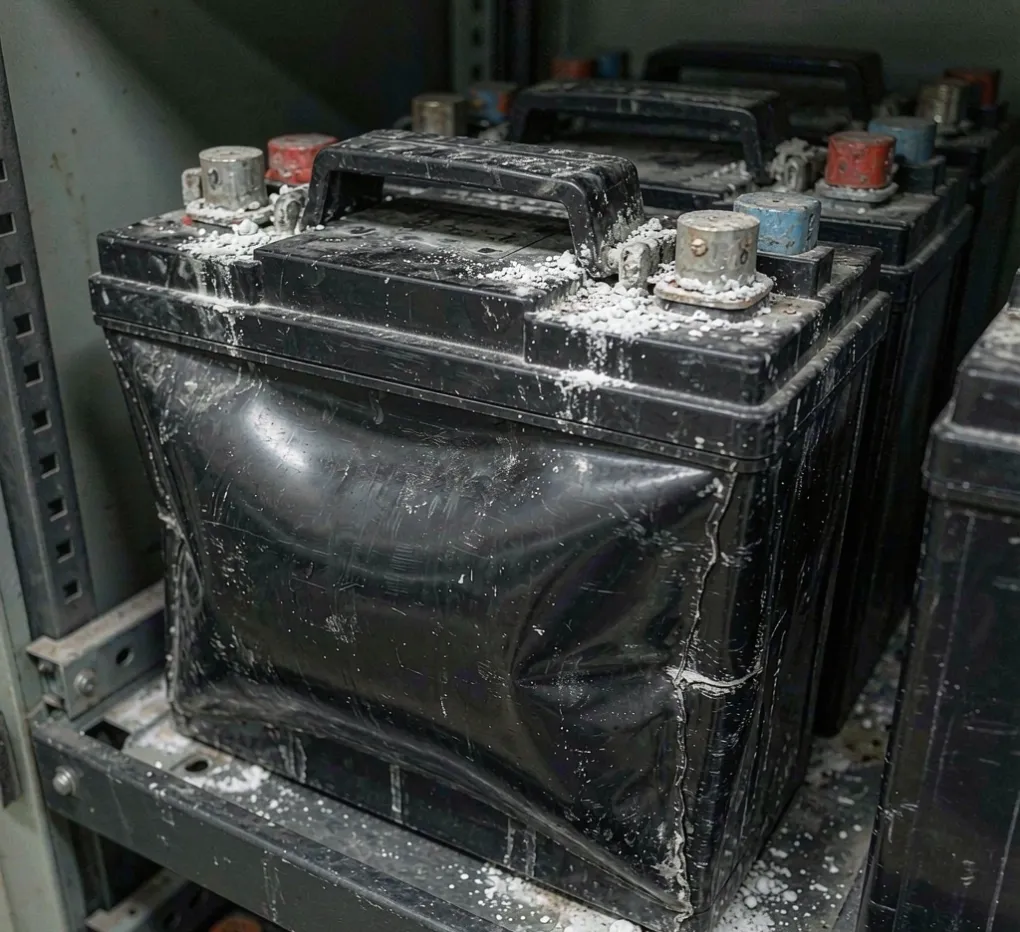
- Bulging or swollen case. A VRLA block that has puffed up has already vented internally. It is past useful life and a thermal risk—pull it.
- White powdery deposit on terminals. That is vented electrolyte (sulfation dust). It means the seal has failed and the cell is drying out.
- Hot individual block. In a healthy string every block runs near the same temperature. One block running hot is a dying cell dragging the rest.
Electrical warning signs (the ones that bite)
- Runtime dropping on self-test. If your UPS reports noticeably less backup time than when new, the string has lost capacity even if voltage looks normal.
- Frequent "battery needs replacement" alarms despite recent dates — often a single weak cell tripping the whole string.
- Post-outage failure to carry the load for the rated minutes. By the time this happens in production, you have already lost the load.
How to test batteries without guessing
Do not decide replacement on voltage alone. A dead VRLA cell can still show ~12V resting. You test capacity and internal resistance. UPS battery safety and performance are governed by IEC 62040 (iec.ch) and UL 1778 (ul.com)—we size and test to those, and you should expect the same from any supplier.
Impedance testing (the field standard)
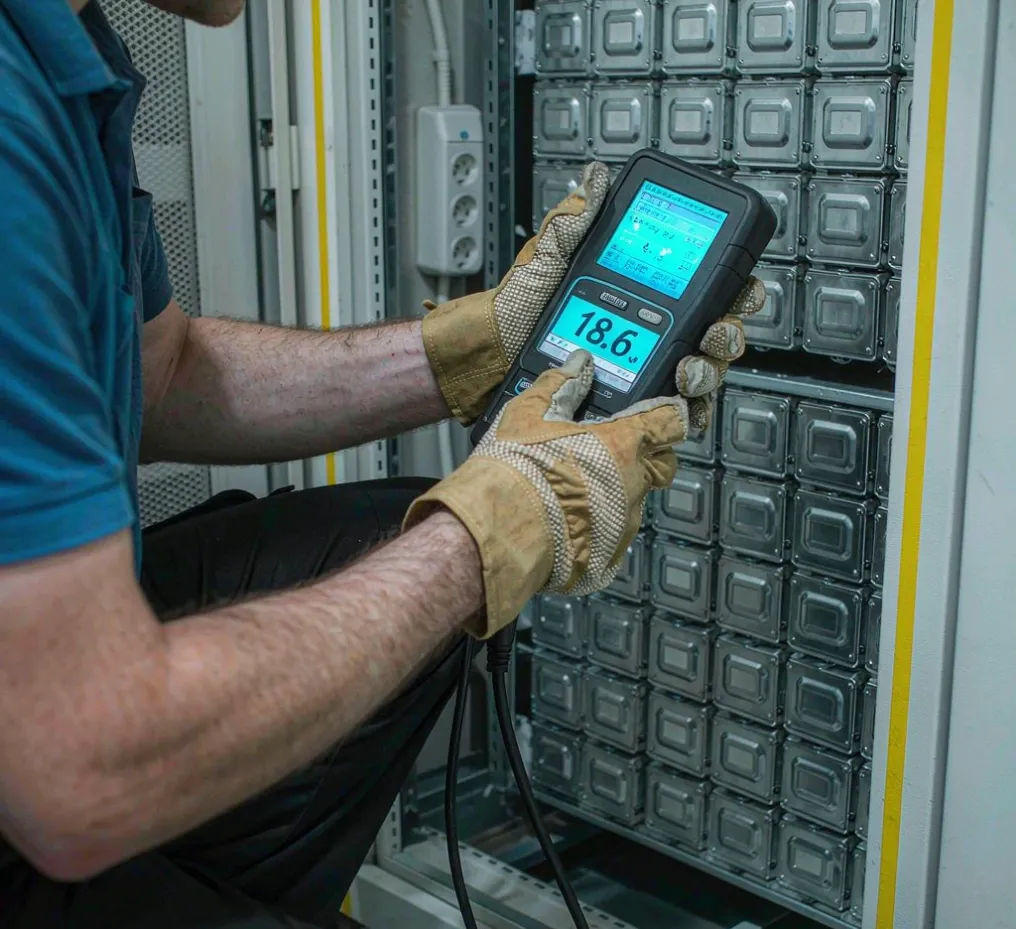
A handheld battery impedance tester compares each block's internal resistance to its baseline. As a VRLA cell ages, its impedance climbs—typically doubling by the end of life. When a block hits roughly 2× its new-impedance baseline, it is a replacement candidate. We run this on every system we service and log it so the next test is a comparison, not a guess.
Annual load test
Once a year, with the load actually on battery (or a simulated load bank), confirm the string holds rated minutes. This is the only test that proves runtime. Many sites skip it and discover the gap during a real outage.
Engineering Note: Impedance trends beat single readings. A block at 1.4× baseline that was 1.1× last year is telling you more than a block sitting at 1.8× that has always been high. Trend the numbers; replace on the slope, not just the threshold.
VRLA vs. lithium: what to replace with
When the string comes out, you have a choice. Most plants put VRLA back in because it is cheapest upfront. That is often right—but not always.
Factor | Replace with VRLA (AGM/Gel). | Replace with LiFePO₄. |
|---|---|---|
Upfront cost | Lowest | 2–4× VRLA |
Service life | 3–5 yr (indoor, 25°C) | 8–10 yr |
Heat tolerance | Poor (halves per 10°C) | Strong (minimal derating) |
Maintenance | Impedance test + annual load test | BMS monitors; lighter checking |
Weight / footprint | Heavy, large | ~1/3 weight, smaller |
Best fit | Stable, climate-controlled rooms; cost-first | Hot rooms, space-limited, hard-to-access sites |
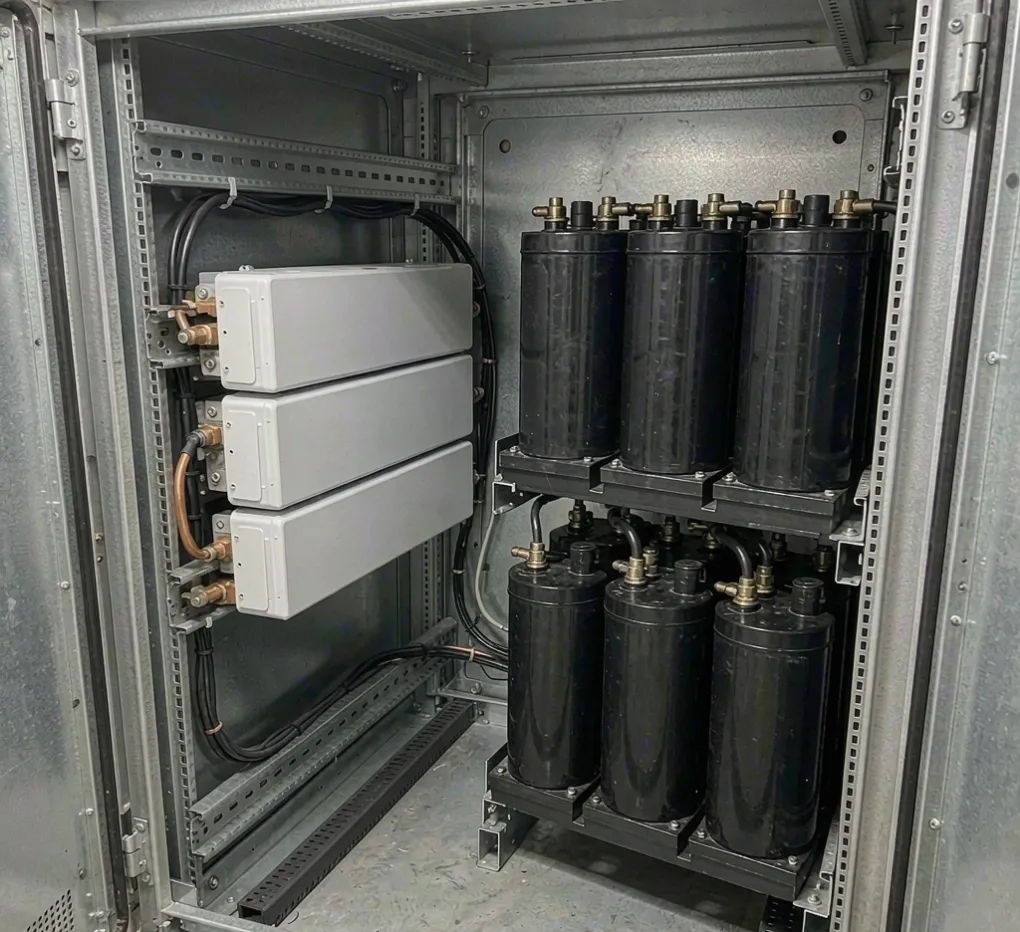
The honest call: if your UPS lives in a clean 22°C control room and you replace it on a 4-year cycle anyway, VRLA wins on cost every time. If the cabinet is hot, cramped, or in a location where a service visit is expensive, lithium pays for itself in fewer truck rolls and fewer surprises.
A simple replace-now vs. monitor decision table
Use this to triage a string during a service visit:
Condition | Action |
|---|---|
Any block swollen or venting | Replace string now—thermal risk. |
Impedance ≥ 2× baseline on any block | Replace that block (or string if several). |
Runtime < 80% of rated on load test | Replace string. |
Age ≥ 5 yr (indoor) / ≥ 2.5 yr (hot room) with no test history | Replace on schedule; start testing. |
All blocks < 1.5× baseline, good runtime, cool room | Monitor; retest in 12 months. |
What replacement costs—and why it is cheap insurance
Buyers flinch at the battery quote because it looks like "just some boxes." Reframe it: you are buying the difference between a planned Saturday morning swap and an unplanned Tuesday production loss.
A VRLA replacement string for a typical 10–20 kVA industrial UPS runs in the low thousands of dollars in most markets; lithium runs higher upfront but stretches the interval to a decade. Add a service visit, and you are still almost always under the cost of a single extended downtime event. We ship replacement batteries from regional stock and can usually have them in your hands within 3–5 days, so the planned swap rarely means a long wait.
Engineering Takeaway
Industrial UPS batteries fail on a calendar, not on a symptom—so you replace them on a schedule driven by age, room temperature, and impedance trend, not when the load already dropped. Treat 25°C as the clock: every 10°C hotter halves a VRLA string's life, so a hot motor-control room is on a 2–3 year interval, not five. Test with impedance plus an annual load test, replace a block at ~2× its baseline, and pick lithium over VRLA when heat, space, or hard access make truck rolls expensive. The battery quote is the cheapest insurance you will sign all year; the alternative is the outage you bought the UPS to prevent.
If you want us to trend your current string or size a replacement, send the drawings, and we will tell you what is actually in the cabinet and what it should become.
Frequently asked questions
How often should industrial UPS batteries be replaced?
On a schedule, not when they fail. For VRLA in a climate-controlled indoor room, plan replacement at 3–5 years; in hot industrial spaces, cut that to 2–3 years. Lithium (LiFePO₄) strings run 8–10 years. Base the date on room temperature and impedance trend, not just the calendar.
How do I know my UPS battery is failing before it dies?
Watch for bulging cases, white terminal corrosion, a single hot block, and—electrically—shrinking runtime on self-test and repeated "replace battery" alarms. None of these are reliable alone; confirm with an impedance test (replace at ~2× baseline) and an annual load test.
Should I replace it with VRLA or lithium?
VRLA wins on upfront cost for stable, cool, easy-access rooms on a 4-year cycle. Lithium pays off in hot rooms, tight spaces, or sites where a service visit is expensive, because it lasts longer, tolerates heat, and needs fewer truck rolls. Match the chemistry to the room, not the price tag.
Does heat really shorten battery life that much?
Yes, and it is the most overlooked factor. VRLA service life roughly halves for every 10°C above 25°C. A cabinet in a 35°C motor room is effectively on a 2.5-year clock. Measure the room before you set the replacement date.
Can I replace UPS batteries myself, or do I need a service visit?
Small single-block swaps a competent technician can do, but a full string replacement in a live critical system should be done by someone who will load-test and recommission it—and who will not short the DC bus. We do this as a planned visit, including impedance logging.
What does UPS battery replacement cost?
A VRLA string for a typical 10–20 kVA industrial UPS is usually in the low thousands of dollars; lithium costs more upfront but stretches the interval to a decade. Either way, it is almost always less than one unplanned downtime event. We ship from regional stock, typically within 3–5 days.
Do you make the UPS units or just the batteries?
Neither — we are a sourcing partner and panel-build service. We supply and integrate UPS systems and battery strings from major brands (Vertiv, Schneider/APC, Eaton, Mitsubishi, Siemens and others) and we replace them; we do not manufacture the cells. That keeps us neutral on what goes in your cabinet.
Related guides
Ready to plan your battery replacement?
Upload your drawing and we will review the current string, room temperature, and replacement options with you — no obligation.
Upload Drawing → Engineering Review → Receive Suggestions
- Start here: Submit your requirements
- Or talk to our team: Contact Uni Regal
- Explore UPS systems: Industrial UPS Systems