
Oct 6, 2026Buying Guides
Best Industrial UPS for Water Treatment Plants
Water treatment UPS choices are driven by humidity, load type, and runtime — not brand. Here are the five setups that actually hold up in a plant.
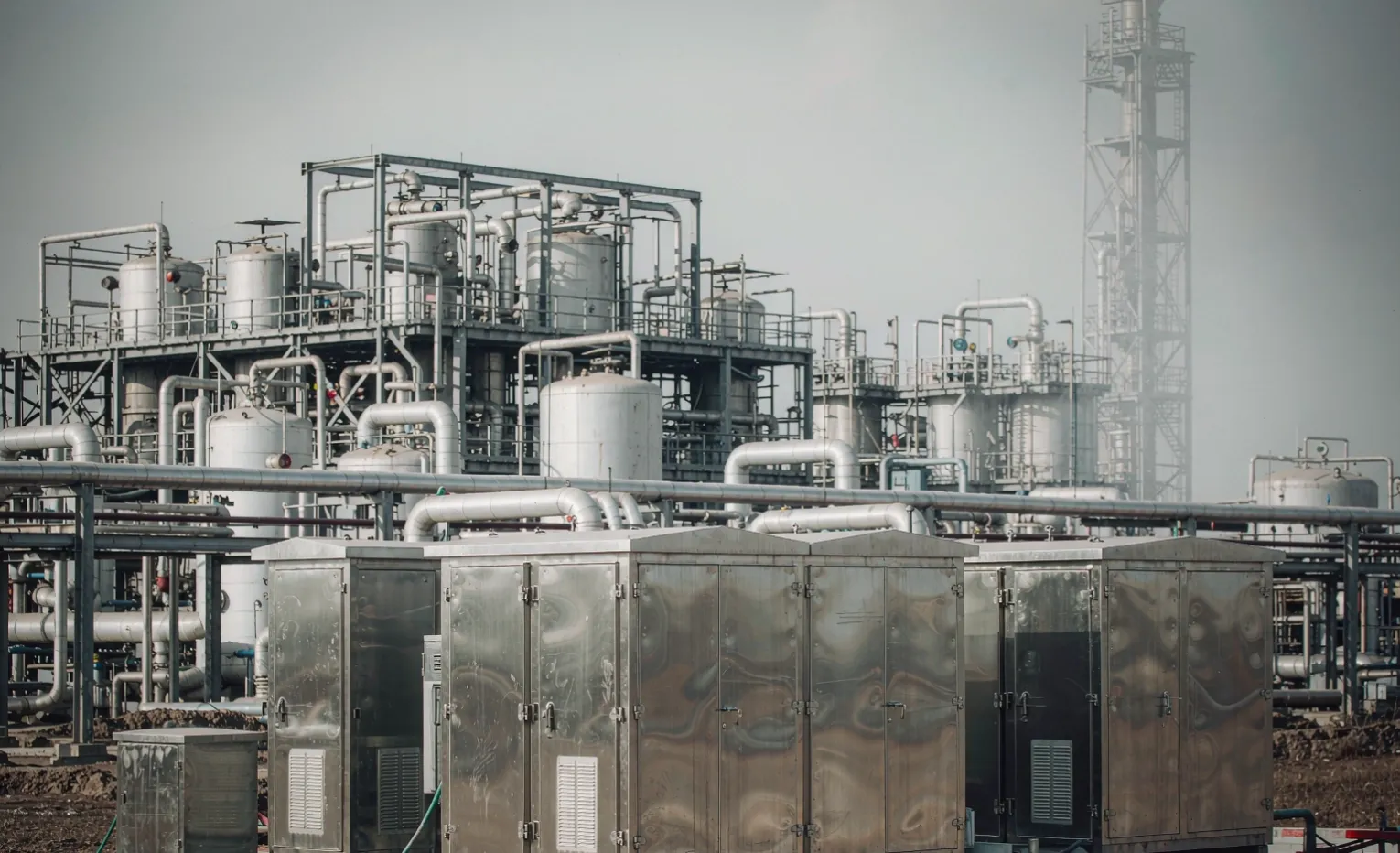
Best Industrial UPS for Water Treatment Plants
Short answer: the right UPS for a water treatment plant isn't a brand—it's a configuration matched to where it sits and what it protects. In a pump house you fight humidity and heat; at a remote lift station you fight temperature swings and no staff; for SCADA and instrumentation you fight dirty power. Pick the setup for the zone, and the brand becomes a second-order decision.
We're a sourcing partner and panel-build shop—we integrate UPS into control panels and enclosures, but we don't make the UPS units ourselves. This comes from building panels for food, water, and OEM jobs, not a catalog. For the broader sourcing picture, start with our China control panel sourcing guide.
Disclosure: We rank approaches here, not manufacturers. As a sourcing partner we integrate third-party UPS hardware into panels; we don't compete with the UPS brands themselves.
Why water treatment is a hard UPS environment
Three things bite UPS gear in a plant that don't bite in an office. First, humidity—pump houses and chemical rooms run 70–95% RH, and that condenses inside any cabinet that isn't sealed and heated. Second, temperature—a motor control center room swings 10–25°C across a day, and a remote wellsite hits −10 to +45°C. Third, the load is mixed: a few amps of SCADA and instruments that must never drop, plus large VFD-driven pumps where a ride-through of seconds matters more than minutes.
Buyer Decision: Match the UPS to the load it protects, not to the nameplate. A 10 kVA online UPS on the wrong (unsealed, uncooled) enclosure in a pump house will fail faster than a smaller, properly housed unit.
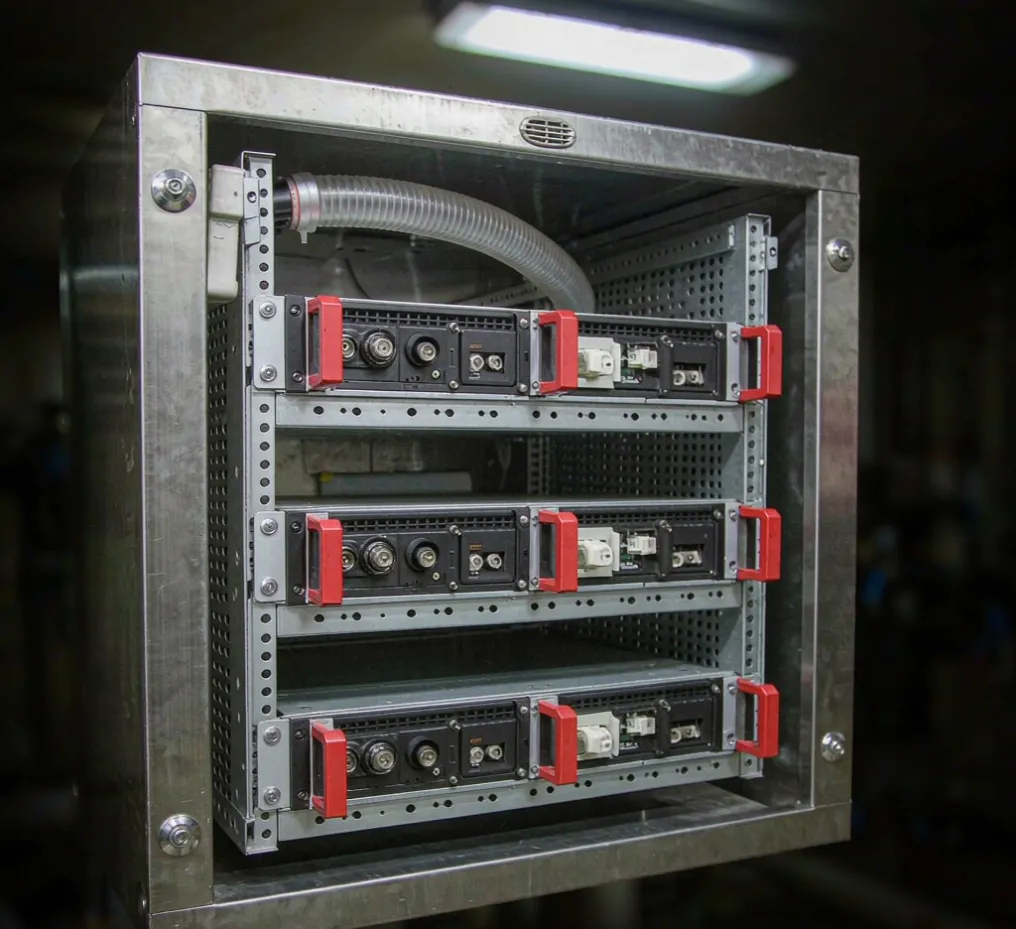
1. Online double-conversion UPS for SCADA, PLC, and instruments
For the control system itself—the PLC, HMI, analyzers, and telemetry—use an online (double-conversion) UPS. It rebuilds clean sine-wave power continuously, so a sagging or distorted plant supply never reaches your controls. This is the setup that protects the equipment that protects everything else.
Best for: SCADA racks, PLC panels, flow/pH/DO analyzers, RTU at well sites. Watch-outs: it runs warm, so house it in a ventilated or cooled enclosure; the size runtime for how long the process needs to stay "aware" is often 10–30 minutes. We integrate these into our custom control panels.
2. Modular N+1 UPS for pump VFD control panels
Where a pump VFD control panel can't tolerate any downtime, a modular UPS with N+1 redundancy lets one module fail without dropping the load, and you scale capacity as you add pumps. It's the right call for a treatment line where a 10-minute blackout would strand chemical dosing or backwash cycles.
Best for: main pump houses, multi-pump MCCs, plants with growth planned. Watch-outs: redundancy only helps if the modules share a common, monitored battery bus and you actually get the alarm. See our UPS redundancy guide.
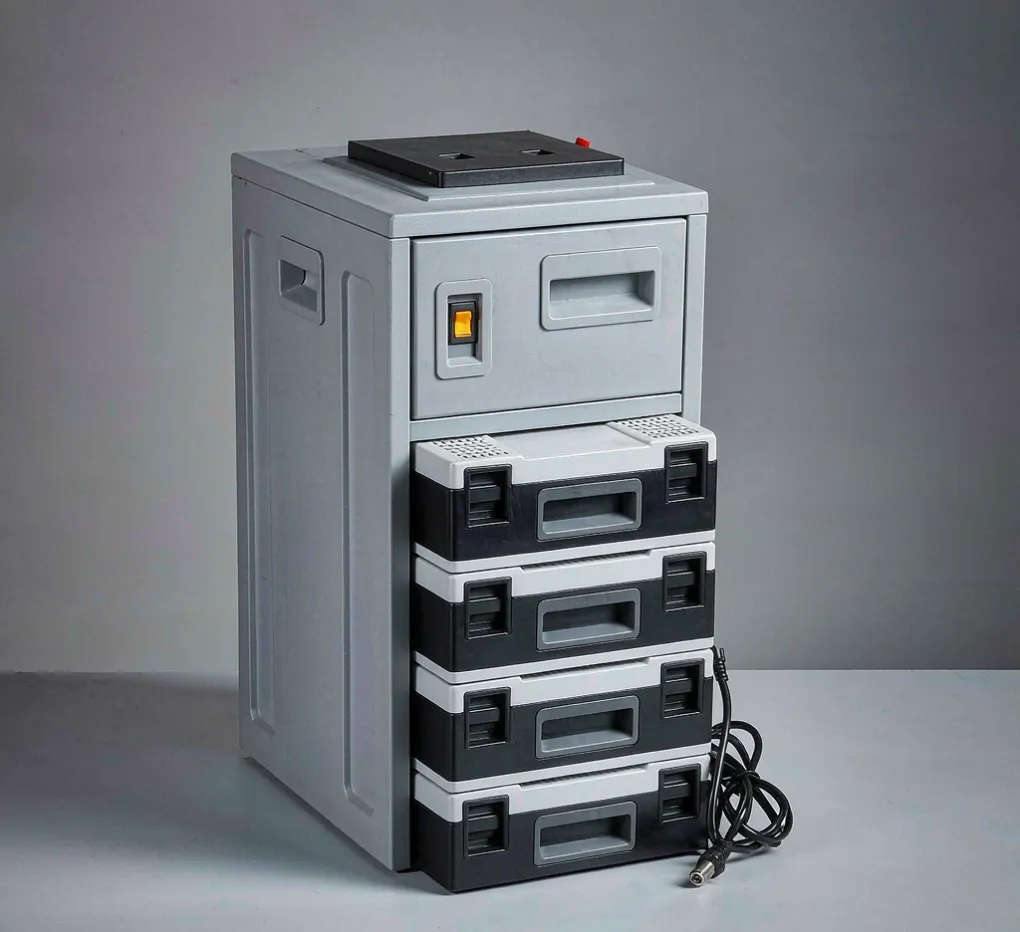
3. Outdoor-rated, enclosed UPS for remote lift stations and wells
Remote sites—lift stations, wellheads, package plants—have no climate control and no one on site. In a standard indoor UPS, there is a countdown timer. Use a unit rated for the site's temperature range, mounted inside a NEMA 4X / IP66 enclosure with a thermostat heater, per NEMA 250 and IEC 60529.
Best for: lift stations, well sites, and remote package plants. Watch-outs: confirm the operating temperature band (look for −10 to +50°C, not 0–40°C); add a heater below the dew point. Our outdoor UPS guide covers the enclosure side.
4. DC-UPS for field instruments and RTU
A lot of plant field gear runs on 24 VDC—transmitters, valve positioners, and RTUs. A DC-UPS (buffered DC supply) rides through the outage at the instrument without an inverter in the path, so there's one less failure point. For a few critical loops this is simpler and cheaper than an AC UPS.
Best for: instrument loops, RTU, and valve actuators on DC. Watch-outs: size the buffer cap for the loop's restart surge, not just steady draw. We cover battery selection in our VRLA vs lithium guide.
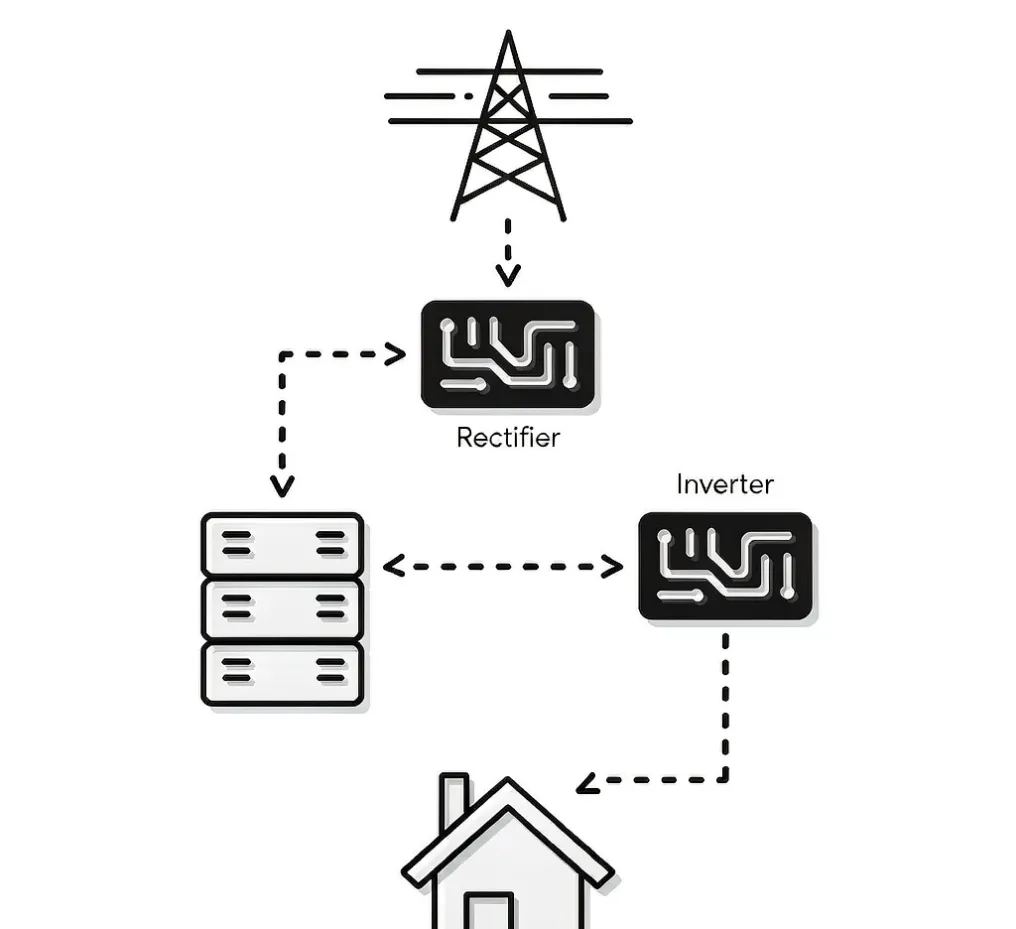
5. Extended-battery or hybrid for long outages
If your process needs more than 30–60 minutes of ride-through—say a site with an unreliable grid and no generator—add an external battery cabinet or a hybrid (battery plus solar-assist) setup. The UPS topology stays the same; you just extend the energy store.
Best for: off-grid or weak-grid plants, sites awaiting generator backup. Watch-outs: longer runtime means more battery to heat and maintain; budget for the battery replacementcycle. Lead-acid vs. lithium changes the footprint and life — compare them here.
The zone-by-zone cheat sheet
Plant zone | Load | Recommended setup |
|---|---|---|
Pump house MCC | VFD pumps | Modular N+1, sealed + cooled enclosure |
SCADA / control room | PLC, HMI, analyzers | Online double-conversion, 10–30 min |
Remote lift station | RTU, small controls | Outdoor-rated UPS in NEMA 4X + heater |
Field instruments | 24 VDC loops | DC-UPS buffer |
Weak-grid site | Whole process | Extended-battery / hybrid |
What to send us for a quote
Tell us the zone, the load (amps or kVA and whether it's AC or 24 VDC), the runtime you need, and the site temperature range. We'll spec the UPS configuration and build it into a panel rated for the environment—and we'll run FAT before it ships. Browse the industrial UPS systems we integrate. Empty enclosures run a 5-unit minimum with about a 15-day turn; UPS and control components ship in 3–5 days if you're patching an existing panel.
FAQ
Do I need online double-conversion, or is line-interactive enough?
For SCADA and analyzers on a dirty plant supply, online. For a single non-critical motor that just needs ride-through, line-interactive or even a DC buffer is fine—and cheaper.
How long should the runtime be?
Long enough to ride through the typical outage or reach generator start—often 10–30 minutes for controls, longer only if the process itself must keep running without power.
Can a UPS live inside the same enclosure as the VFD?
Only if the enclosure is cooled—VFDs throw heat, and UPS units are temperature-sensitive. Size cooling against summed losses, or split them.
What about humidity in the pump house? Seal and heat the enclosure; don't rely on the UPS's own rating. A NEMA 4X box with a thermostat heater beats a "humidity-rated" UPS in an open cabinet.
UL listed for export? The UPS unit and the panel are different certifications. For export you need the right UL 1778 listing on the UPS and a UL 508A listedpanel—confirm both before customs.
How often do the batteries need replacing?
VRLA typically 3–5 years; lithium 8–10, at a higher first cost. Heat is the killer—every 10°C over 25°C roughly halves life.
Buyer Takeaway
Pick the UPS by zone and load, not by brand. Online double-conversion for controls, modular N+1 for pump houses, outdoor-rated for remote sites, DC buffer for instruments, and extended battery for weak grids. House it right—sealed, cooled, heated—and the unit will outlast the warranty instead of the next humidity spike.