
Sep 25, 2026
How to Choose Between Siemens and Mitsubishi PLCs for Your Control Panel
A buyer's selection guide to Siemens vs Mitsubishi PLCs for control panels: programming, comms, spares lead time, migration, and how to standardize without lock-in.
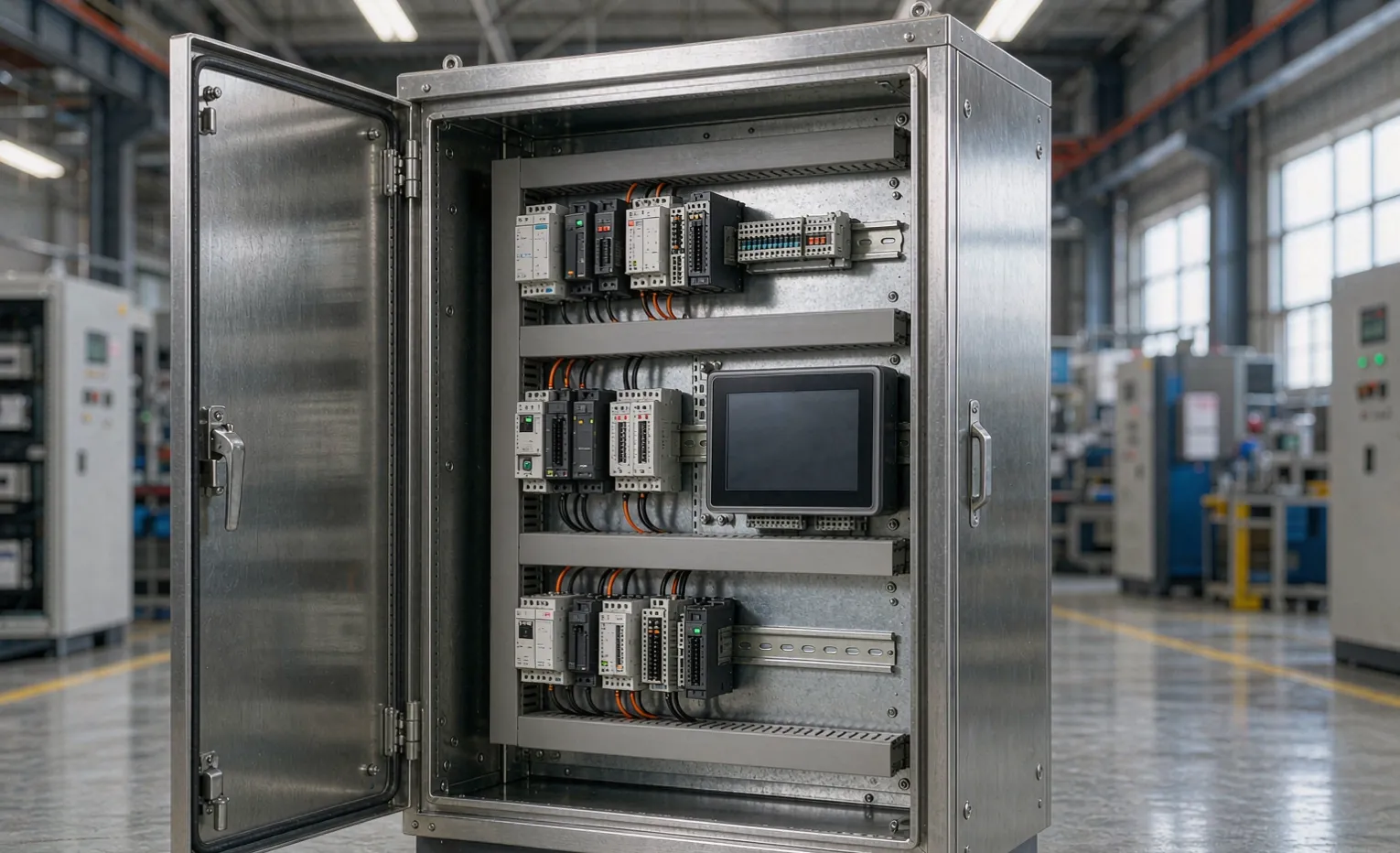
If you are building or sourcing a control panel, the question is rarely "which PLC is better" — it is "which platform keeps your line running, your spares cheap, and your electrician productive." Siemens SIMATIC and Mitsubishi MELSEC are the two names we are asked about most, and both are solid. The right pick depends on your existing site standard, your team's programming habits, and how fast you can get a replacement module when something fails at 2 a.m.
This guide is the practical companion to our broader ranking of panel builders — see Top 10 PLC Control Panel Manufacturers if you are still shortlisting who builds the enclosure and wiring. Here we go one level deeper: once the panel is specified, how do you decide the controller inside it?
A note on who is writing this: we are a sourcing partner and panel-build service, not the company that makes the controllers. We source and integrate both Siemens and Mitsubishi PLCs (and ABB drives, Schneider components, and others) into enclosures we build. That means the advice below is about fit, not brand loyalty — and it is the same advice we give before we quote a panel.
Why the brand question matters more than the spec sheet
Most buyers open a catalog, compare I/O counts and scan times, and pick the cheaper one. That is the wrong first move. A PLC is a 10- to 15-year commitment: the software your engineers learn, the spare modules you stock, and the fieldbus your whole plant speaks. The controller you "save" $200 on today can cost you a three-day stoppage if a spare is a six-week ocean shipment away.
What "choosing a PLC" actually decides for your panel
The controller choice ripples into four things you will feel later:
- The programming license and training your team needs. Siemens uses TIA Portal; Mitsubishi uses GX Works3. Both are capable; neither is free to master, and your electrician's muscle memory is worth real money.
- The fieldbus your panel must speak. A Siemens panel naturally speaks PROFINET; a Mitsubishi panel naturally speaks CC-Link IE. Mixing them adds gateways and points of failure.
- How fast a dead module comes back to life. This is the one buyers underestimate most (more on lead time below).
- Your migration path when the series goes obsolete. Every platform eventually does.
The trap of picking by catalog horsepower
Scan time, memory, and I/O density are table stakes. A $400 MELSEC and a $450 SIMATIC will both close a relay and run a PID loop. The decision that actually bites is the ecosystem around the chip — and that is what the rest of this guide covers.
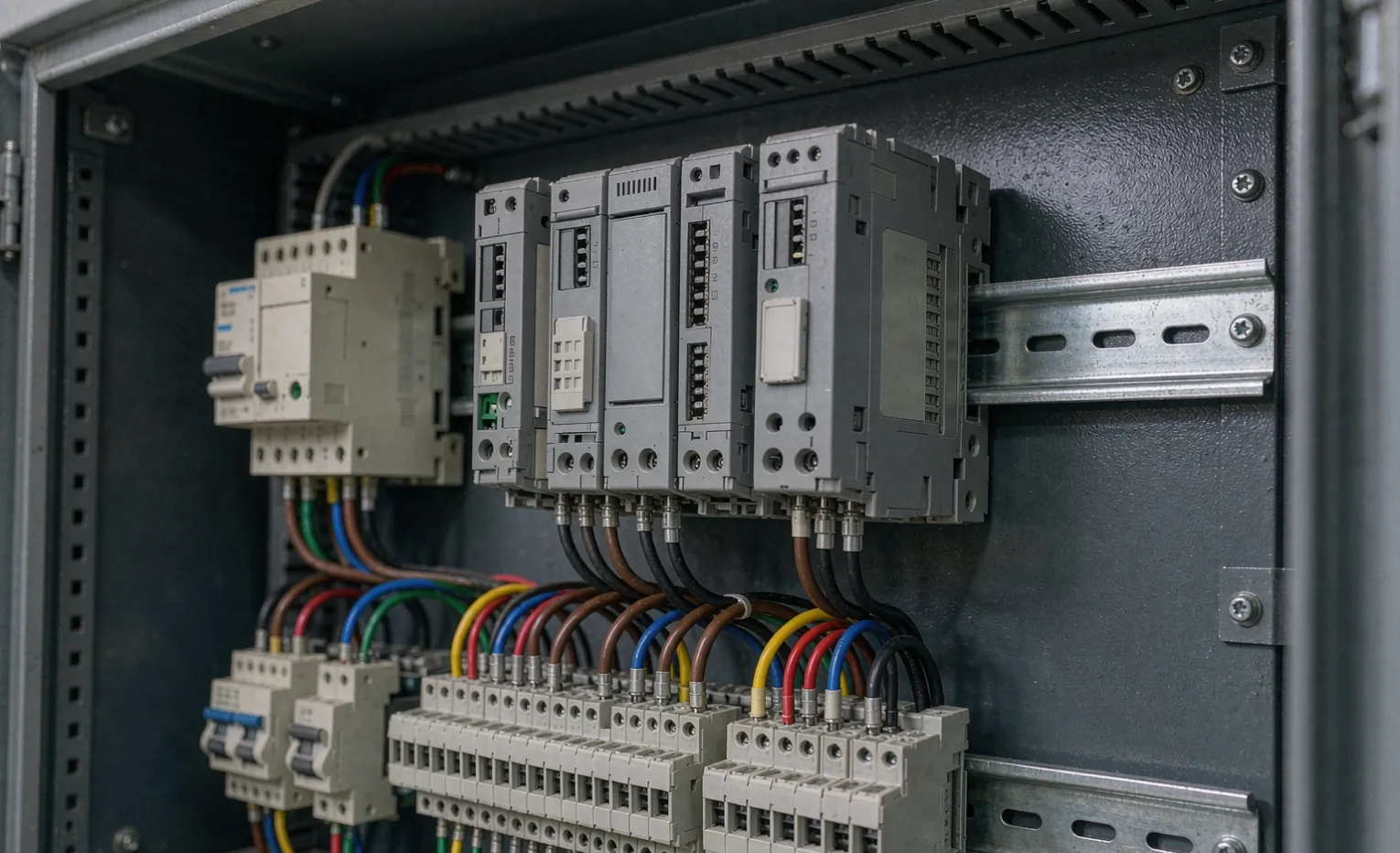
The five decision points that separate the two platforms
Forget the brochure. These are the five questions we walk every buyer through before we source a controller.
1. Programming environment and your team's muscle memory
Siemens SIMATIC S7-1200 and S7-1500 controllers are programmed in TIA Portal (Totally Integrated Automation Portal). It is a single engineering frame that also covers SINAMICS drives and HMI, which is a genuine advantage if your site is already Siemens-heavy. Mitsubishi MELSEC — the iQ-F (FX5) and iQ-R families — is programmed in GX Works3. GX Works3 is widely regarded as lighter and faster to learn for pure machine control, and many OEM machine builders standardize on it for exactly that reason.
The honest test: ask the person who will maintain the panel which software they already know. Retraining a crew onto a new environment costs more than any hardware price difference.
2. Communication backbone (CC-Link IE / Modbus vs PROFINET / PROFIBUS)
This is where panels quietly become incompatible. Siemens leans PROFINET and PROFIBUS; Mitsubishi leans CC-Link IE and Modbus TCP. Both speak Modbus, so simple register exchange is rarely a problem. The pain shows up when you need deterministic motion or fast distributed I/O across a line: PROFINET IRT on the Siemens side, CC-Link IE Field on the Mitsubishi side.
If your plant already runs one fieldbus as a standard, match it. Adding a protocol gateway to force a mismatch is a recurring maintenance tax you do not need.
3. Spare-parts logistics and lead time
Here is the part most spec sheets never show. A controller is only as reliable as the spare module sitting on your shelf. Both brands are globally available, but regional stock and import lead times vary enormously.
We source Mitsubishi and Siemens spares through our Foshan network and can typically ship replacement modules within 3–5 days to most Asian and Oceanian destinations, because we hold or route stock regionally rather than waiting on a single overseas distribution center. When you are quoting a panel, ask your supplier the same question we ask ourselves: "If this CPU dies, how many days until the replacement is in my hand?" A controller with a 6-week lead time is a single point of failure wearing a low price tag.
Buyer Decision: Write the spare-lead-time answer into your purchase order, not just the unit price. A 3–5 day spare versus a 6-week spare is the difference between a Tuesday restart and a lost production week.
4. Migration path and obsolescence risk
Every PLC series eventually reaches end-of-life. Siemens has a long, well-documented migration story: legacy STEP 7 (S7-300/400) programs can be staged into S7-1500, and TIA Portal manages the conversion tooling. Mitsubishi mirrors this with the FX-to-iQ-F and Q-to-iQ-R paths inside GX Works3.
The risk is not "will it obsolete" — it is "how painful is the jump." If your existing machines run FX-series controllers, standardizing new panels on iQ-F keeps your spares and your logic portable. If you are on S7-300, iQ-R is not your friend; S7-1500 is.
5. Local support and training ecosystem
A controller is only as good as the engineer who can debug it at midnight. Both brands have global support, but the local ecosystem — system integrators, training, and spare availability in your country — decides your real uptime. In many Asian and Southeast Asian markets, Mitsubishi has a dense base of machine-builder familiarity; in European-influenced plants, Siemens is often the entrenched standard. Match the ecosystem your maintenance team can actually call.
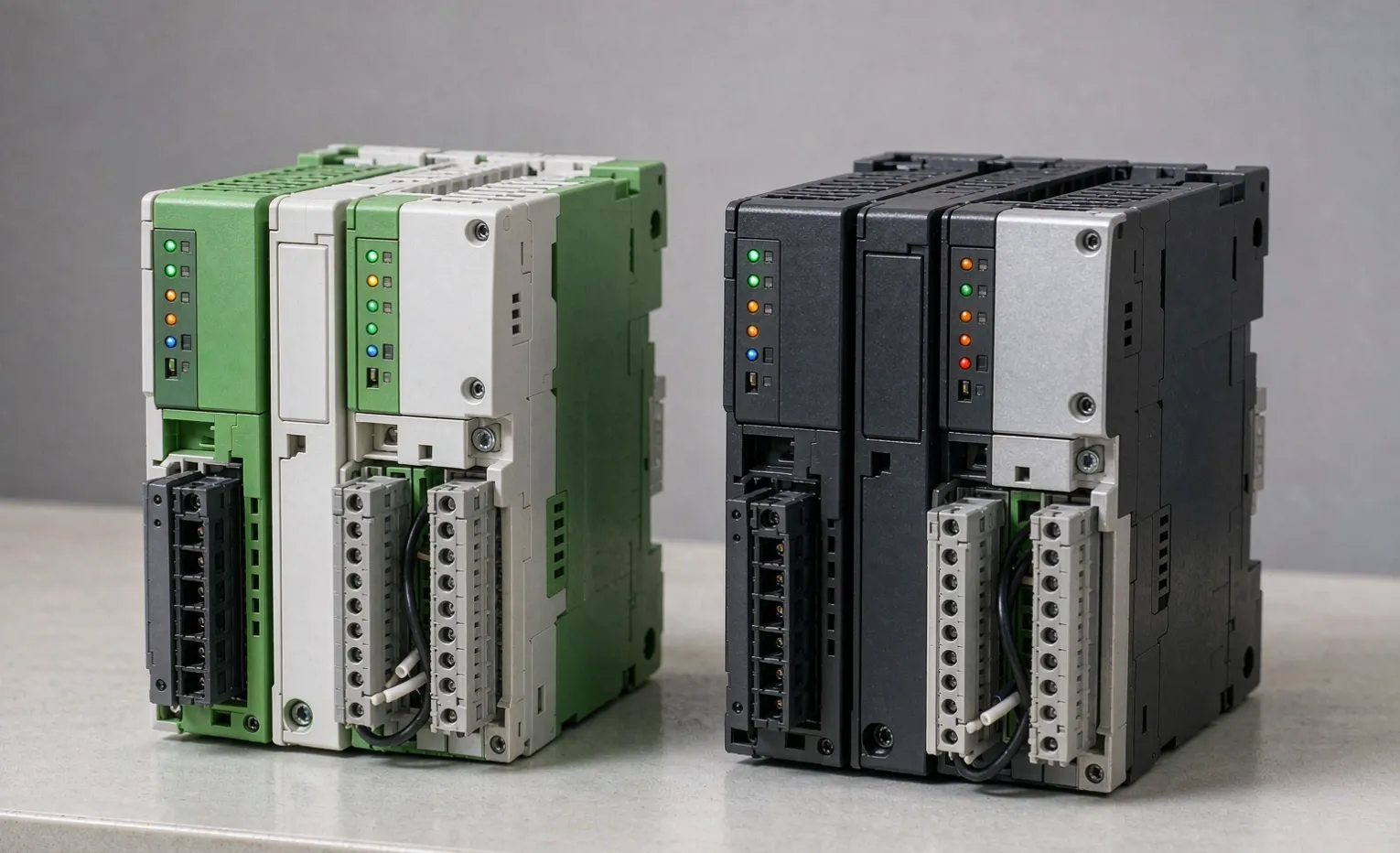
Siemens vs Mitsubishi — a side-by-side selection matrix
Use this as a first-pass filter, not a verdict. Most panels land clearly on one side once you answer the first two rows.
Decision point | Choose Siemens SIMATIC when… | Choose Mitsubishi MELSEC when… |
|---|---|---|
Programming software | your team already runs TIA Portal; you want one frame across S7-1200/1500, drives, and HMI | your team runs GX Works3; you want a lighter, fast-to-learn environment for machine control |
Fieldbus standard | PROFINET / PROFIBUS is your site backbone | CC-Link IE / Modbus TCP is your site backbone |
Spare-parts lead time | you can source S7 spares locally within days | you source MELSEC spares through a regional network with 3–5 day shipment |
Migration continuity | you are on legacy STEP 7 and want a staged S7-1500 path | you are on FX / Q and want iQ-F / iQ-R continuity |
Ecosystem fit | you need deep SINAMICS drive and WinCC HMI integration | you are a compact, cost-sensitive OEM machine builder |
Engineering Note: The matrix above assumes a new panel. If you are extending an existing line, the answer is usually "match what is already there" — the integration cost of a second fieldbus almost always outweighs a modest per-unit saving.
Common mistakes when standardizing on one platform
We see the same three errors repeatedly when buyers try to rationalize their controller choice.
Assuming one brand fits every machine
A compact iQ-F is perfect for a standalone packaging machine and overkill for a simple pump skid; an S7-1500 is ideal for a coordinated line and wasteful for a single motor starter. Standardize the brand for spares simplicity, but let the series follow the application. Forcing a flagship controller onto a trivial machine just inflates the bill of materials.
Ignoring the spare-parts clock
Buyers compare the listed unit price and stop. The total cost of ownership is dominated by what happens at failure: the spare's price, its lead time, and whether your electrician can swap it without a service call. This is why we treat 3–5 day regional spare availability as a design input, not an afterthought.
Letting the cheapest quote decide
The lowest controller quote often hides a longer spare lead time, a less familiar programming tool, or a series closer to obsolescence. A panel is a long-lived asset; optimize for the next ten years of maintenance, not the next ten minutes of procurement.
The pre-quote checklist we run with every buyer
Before we source a single module, we walk through five questions with the buyer. They settle the Siemens-vs-Mitsubishi debate faster than any spec comparison:
- Which software does your maintenance team already know? TIA Portal or GX Works3 — this usually decides it.
- What fieldbus does the rest of your line speak? Match PROFINET/PROFIBUS or CC-Link IE/Modbus; do not add a gateway unless forced.
- What is the spare-lead-time target, in writing? We treat 3–5 days as the bar for regional stock; anything longer is a design risk to flag.
- What series are your existing machines on? FX/Q suggests iQ-F/iQ-R; S7-300/400 suggests S7-1500. Continuity beats novelty.
- Is this a standalone machine or part of a coordinated line? Standalone favors a compact controller; a coordinated line favors the deeper ecosystem (drives, HMI, motion).
If you can answer those five, the "which brand" anxiety disappears and the panel spec writes itself.
How we help you source either platform into one panel
Whatever you decide, the controller is only one component of a working panel. We are a sourcing partner and panel-build service: we do not make the PLCs, but we integrate the platform you choose into a built enclosure with the wiring, HMI, and protection it needs. If you also need the enclosure itself sourced and built, our Electrical Enclosure Supplier China Sourcing Guide walks through material and rating choices, and our custom control panel build service covers what we deliver end to end.
What that looks like in practice:
- One enclosure, your controller. We build the cabinet — typically carbon steel, 304 or 316 stainless, or galvanized — to IP65 / NEMA 4X where the environment demands it, and mount your specified Siemens or Mitsubishi PLC inside.
- Realistic volumes and lead times. Empty enclosures are available from 5 units with about a 15-day build cycle after drawings and BOM are confirmed; the PLCs and components we source ship in 3–5 days through our regional network.
- UL-listed where required. For the North American market we source from UL-listed build shops per project and document the compliance path — we do not self-certify.
- FAT before it ships. Every panel passes a Factory Acceptance Test (FAT) record before it leaves, so what arrives on site is already verified, not a mystery.
We are deliberately not a one-brand shop. Standardizing on Siemens, Mitsubishi, or a mix across your fleet is your call — our job is to make whichever you pick arrive built, tested, and supported.
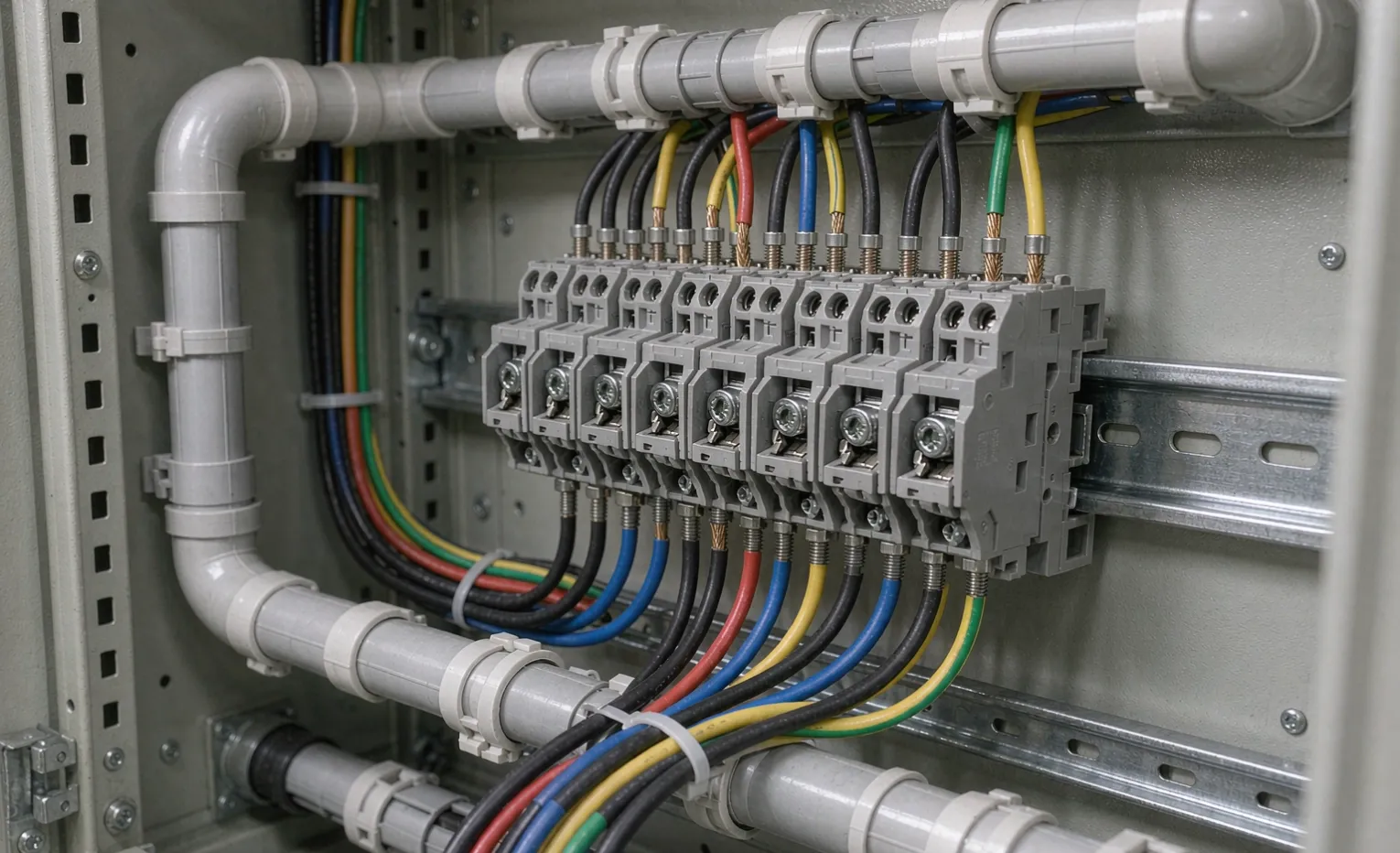
Engineering Takeaway
Choosing between Siemens and Mitsubishi is not a trophy contest — it is a fit decision driven by your team's programming tools, your plant's fieldbus, and your spare-parts clock. Standardize the brand for spares simplicity, let the series follow the application, and treat regional spare lead time (we target 3–5 days) as a design input, not a footnote. If you already run one ecosystem, match it; the cost of a second fieldbus gateway almost never pays back. And remember: a panel is a 10- to 15-year asset, so optimize for the next decade of maintenance, not the lowest line item today.
If you want a second opinion on your specific machine mix, send us the drawings and we will flag where standardizing helps and where it hurts.
Frequently asked questions
Which is better, Siemens or Mitsubishi? Neither is universally "better." Siemens SIMATIC (S7-1200/1500, TIA Portal, PROFINET) fits sites already standardized on its ecosystem and those needing deep drive/HMI integration. Mitsubishi MELSEC (iQ-F/iQ-R, GX Works3, CC-Link IE) is a favorite of compact OEM machine builders for its lighter programming environment. Pick by ecosystem fit, not brand prestige.
Can I mix Siemens and Mitsubishi in the same panel? Technically yes — both speak Modbus, so simple register exchange works. But running two fieldbuses (PROFINET and CC-Link IE) in one panel adds a gateway and a failure point. We recommend matching one controller family per panel and bridging at the line level only when a legacy machine forces it.
What lead time should I expect for spares? It depends entirely on your supplier's regional stock. Through our Foshan sourcing network we typically ship Mitsubishi and Siemens replacement modules within 3–5 days to most Asian and Oceanian destinations, because we route regionally rather than waiting on a single overseas hub. Always confirm the spare lead time in writing before you commit.
Which is easier to program for a small OEM? Most small OEM machine builders find Mitsubishi GX Works3 faster to learn and simpler for straight ladder logic, while Siemens TIA Portal is more powerful but heavier to master. If your team is new to both, the learning curve — not the hardware — is usually the deciding factor.
Do you make the PLCs yourself or source them? We source them. We are a sourcing partner and panel-build service, not the brand that makes them. We integrate Siemens, Mitsubishi, ABB, Schneider, and other brands into enclosures we build, and we are neutral on which platform you choose.
Can you build a UL-listed panel around these PLCs? Yes, for the North American market. We source from UL-listed build shops on a per-project basis and document the compliance path; we do not self-certify. Tell us the destination and applicable standard early so it is designed in from the start, not retrofitted.
Related guides
Ready to specify your panel?
Upload your drawing and we will review the controller choice, enclosure rating, and spare-parts plan with you — no obligation.
Upload Drawing → Engineering Review → Receive Suggestions
- Start here: Submit your requirements
- Or talk to our team: Contact Uni Regal
- Explore panel build options: Custom Control Panels