
Sep 21, 2026
Electrical Enclosure Gasket Selection Guide: EPDM vs Silicone vs Neoprene
Choose the right gasket for your electrical enclosure. Compare EPDM, silicone, and neoprene for IP65/NEMA 4X duty — temperature, chemical, and compression-set trade-offs.
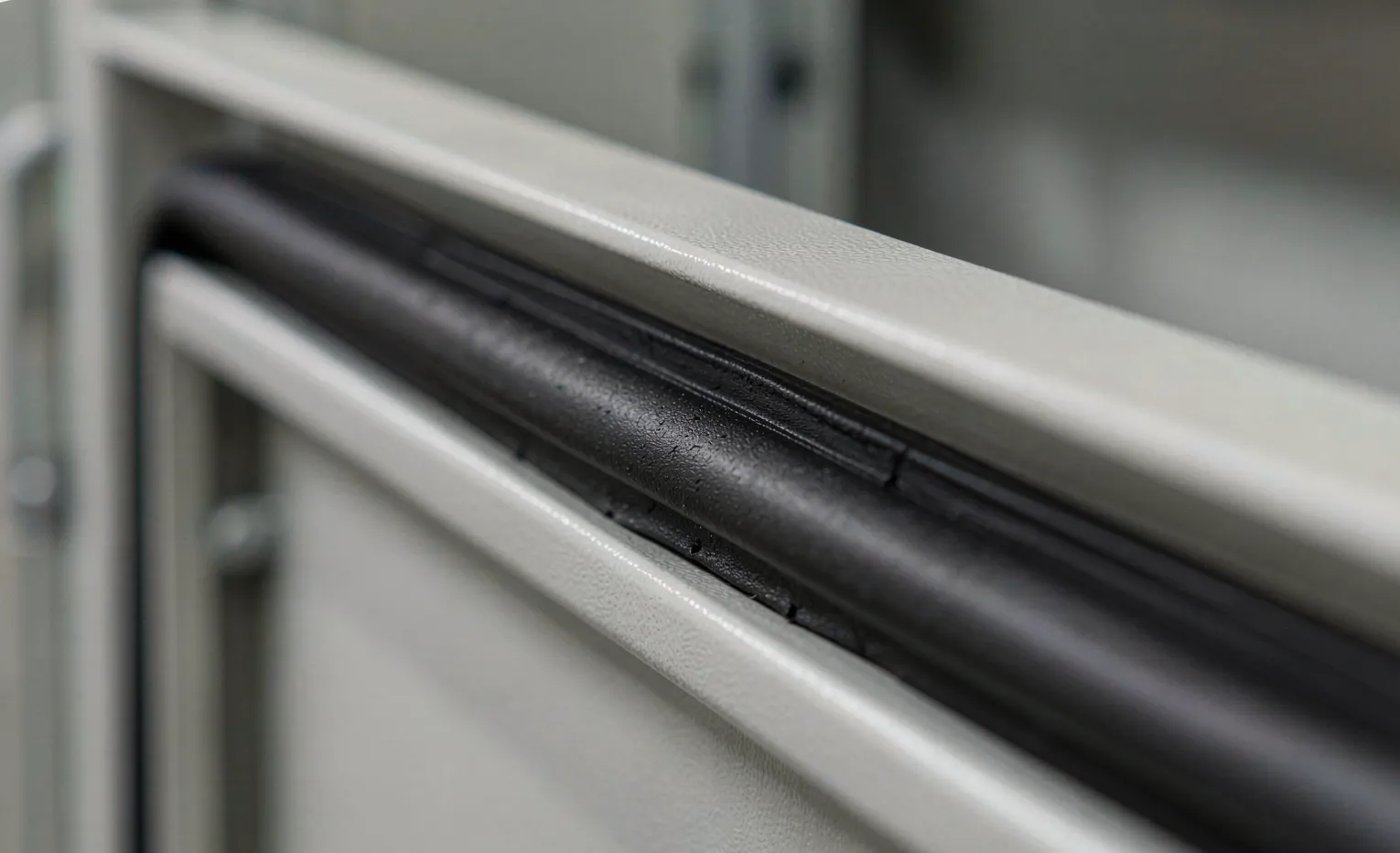
Electrical Enclosure Gasket Selection Guide: EPDM vs Silicone vs Neoprene
You can spec the thickest 316 stainless wall, the best IP66 latch, and a flawless powder coat — and still end up with a cabinet that weeps at the door seam in its second winter. In almost every field failure we see, the weak point is not the steel. It is the gasket.
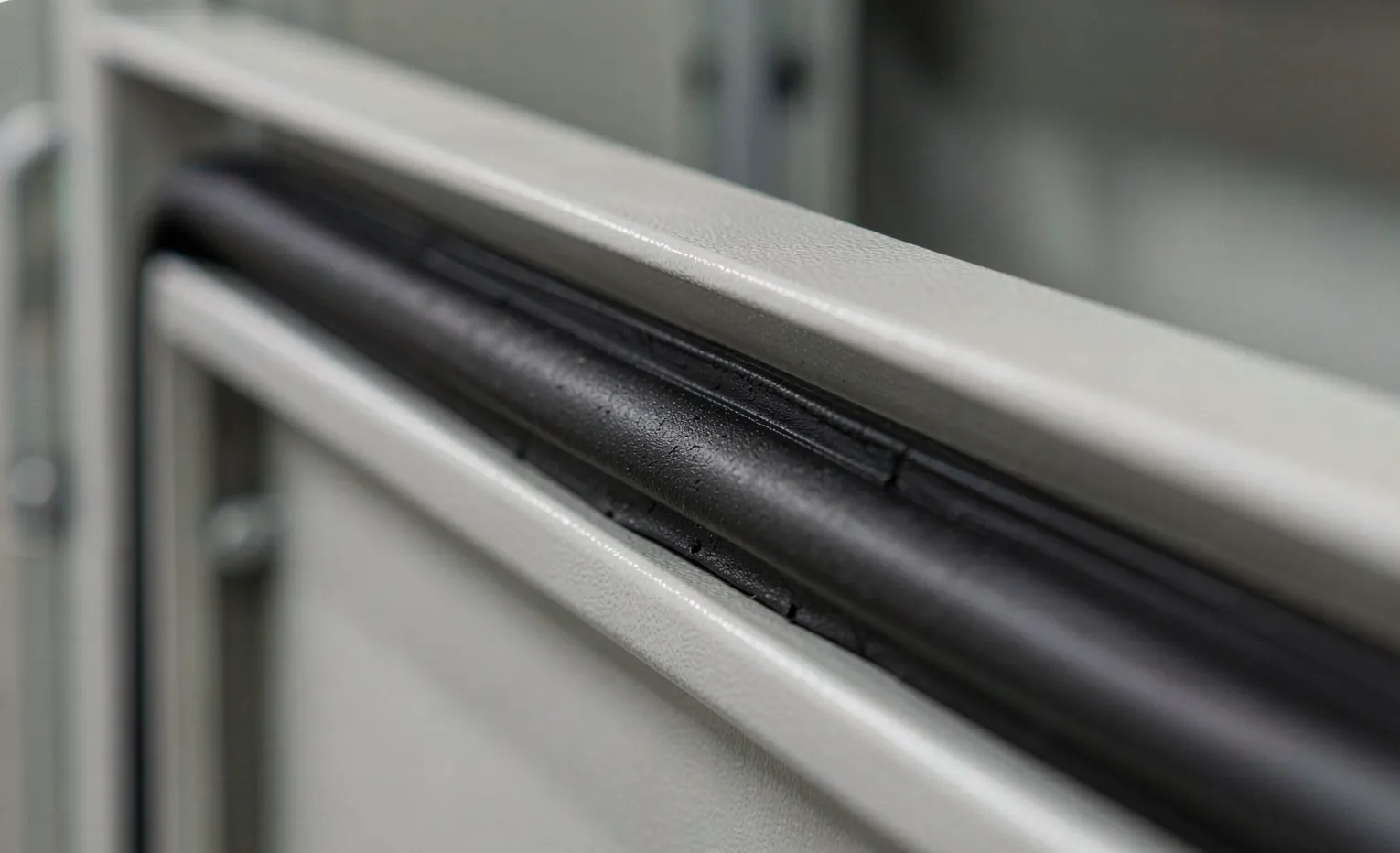
This is the sealing detail we ranked inside our outdoor electrical cabinet design-features guide, and it sits near the top of our most common mistakes when specifying outdoor cabinets. Here we go one level deeper: what the material actually is, how to read the spec, and how to match the seal to the environment your panel will live in.
Buyer Decision — If you only remember one thing: the gasket — not the enclosure body — is what limits your IP and NEMA rating in the real world. Spec the seal before you argue about steel grade.
Why the gasket — not the steel — decides your rating
IP and NEMA are gasket-limited, not metal-limited
An IP65 or NEMA 4X rating (defined under IEC 60529 and NEMA 250) describes the closed seam, not the panel metal. A well-built enclosure can have a perfect flange; the rating still collapses the moment the compressible seal loses contact. We source enclosures in carbon steel, 304/316 stainless, and hot-dip galvanized — never aluminum — and across all of those the door seal is the part that actually earns or loses the rating.
The failure you don't see until year two
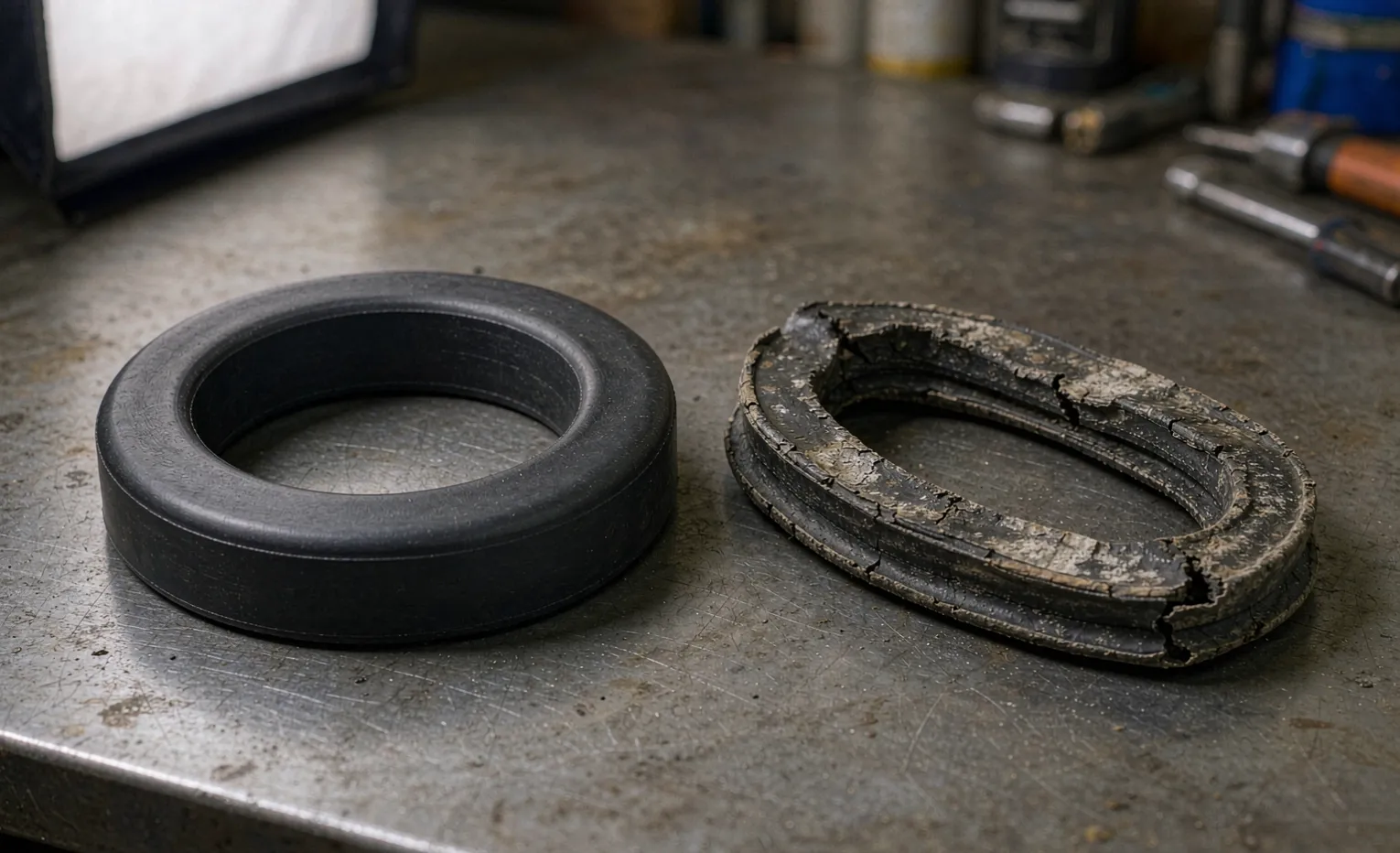
A gasket does not usually fail on day one. It fails by compression set: the material stays squashed and stops springing back, so the door no longer mates with even pressure. Once that happens, a cabinet that passed incoming inspection at the build shop starts pulling humidity, then condensation, then corrosion on the backplate. By the time you see it, the electronics inside have already taken the hit.
Engineering Note — Compression set is measured as the percentage of original thickness a gasket fails to recover after a fixed squeeze at temperature. A 30% set after 70 °C / 22 hours is a common pass line for EPDM; silicone typically holds better, neoprene worse. Ask for the number, not the marketing claim.
The three materials buyers actually specify
Most enclosures ship with one of three elastomers. They are not interchangeable, and the price difference is small — but the field outcome is large.
EPDM — the default workhorse
Ethylene propylene diene monomer (EPDM) is the most common enclosure gasket for good reason: excellent weather, ozone, and UV resistance, a wide temperature range, and low cost. If your panel sits outdoors in a temperate climate with no oil exposure, EPDM is the safe default.
- Temperature range: roughly −40 °C to +120 °C
- Strong against: rain, sun, ozone, steam, mild chemicals
- Weak against: petroleum oils, solvents, strong hydrocarbons
Silicone — heat and ozone
Silicone stays flexible at extremes — both cold and, more importantly, heat — and resists ozone and UV extremely well. It is the right call when the enclosure sits near a heat source or in a very hot region. The trade-off is lower tear strength and a higher price, and it is not oil-resistant either.
- Temperature range: roughly −60 °C to +200 °C
- Strong against: heat, ozone, UV, food-zone cleanliness
- Weak against: abrasion, oil, mechanical tearing
Neoprene (CR) — oil and weathering
Neoprene (polychloroprene) is the older standard that still earns its place where moderate oil mist or grease is present — think near compressors, hydraulics, or light industrial oil. It resists weathering and ozone better than natural rubber but worse than EPDM, and it costs a bit more than EPDM.
- Temperature range: roughly −40 °C to +100 °C
- Strong against: oil mist, grease, weathering
- Weak against: strong solvents, very high heat
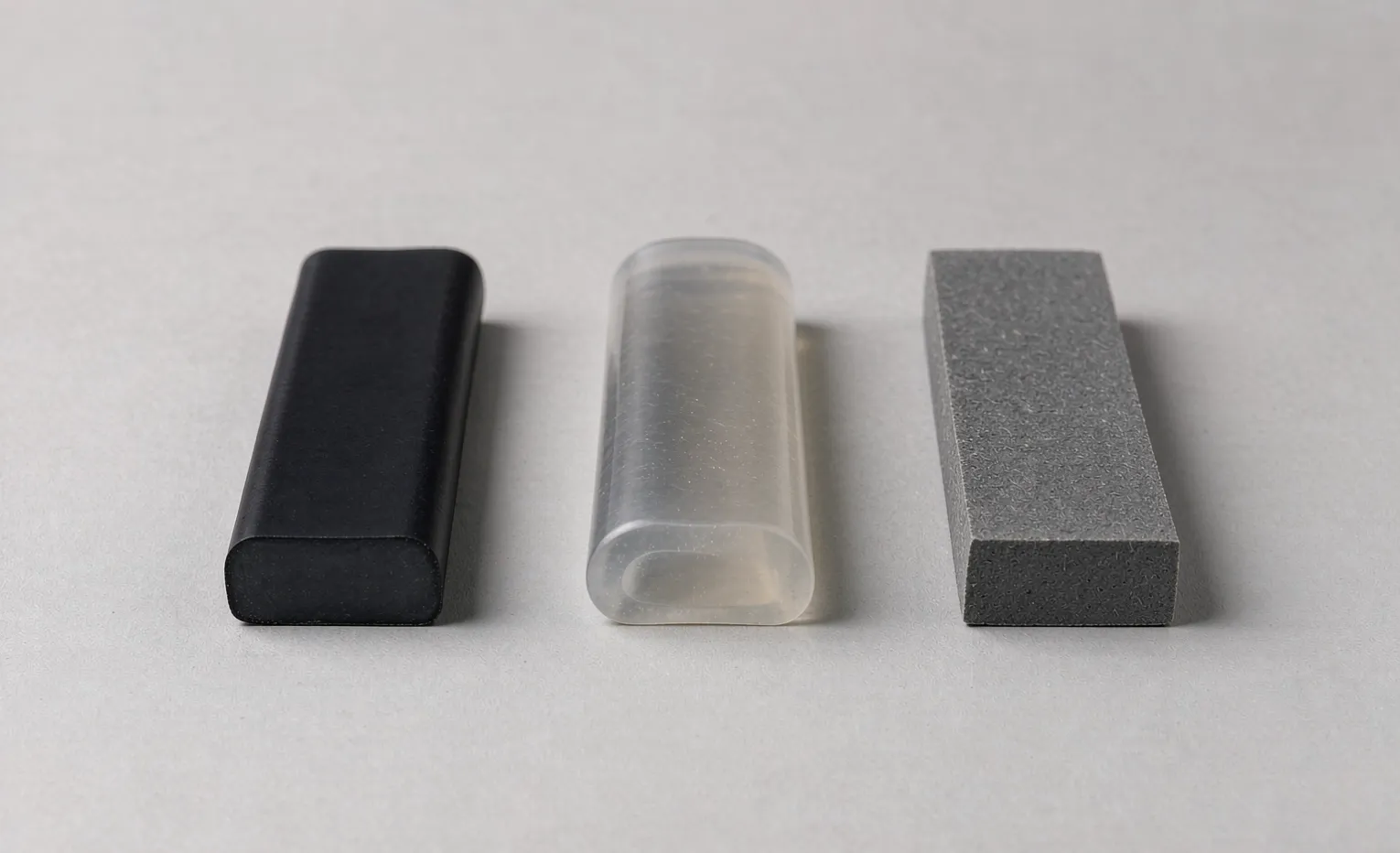
When to step up to fluorocarbon (FKM)
If the environment includes aggressive solvents, fuel, or sustained high temperature above 150 °C, step up to FKM (Viton-type). It is a specialist material with a specialist price, so we reserve it for chemical, petrochemical, and some food-adjacent duty rather than general panels.
Material comparison at a glance
Attribute | EPDM | Silicone | Neoprene (CR) | FKM |
|---|---|---|---|---|
Temp range | −40 to 120 °C | −60 to 200 °C | −40 to 100 °C | −20 to 200 °C |
Weather / UV | Excellent | Excellent | Good | Excellent |
Oil resistance | Poor | Poor | Moderate | Excellent |
Compression set | Good | Very good | Fair | Good |
Relative cost | $ | $$ | $$ | $$$$ |
Best use | General outdoor | High heat / clean | Light oil mist | Solvents / fuel |
How to read a gasket spec before you order
A one-line "EPDM gasket" on a quotation tells you almost nothing. These are the three numbers that actually matter.
Durometer (Shore A) — don't over-specify hardness
Durometer is hardness. Most enclosure gaskets land between 40 and 70 Shore A. Softer seals need less closure force and tolerate imperfect flanges; harder seals resist compression set and mechanical damage. Specifying 70 Shore A when 50 would do just makes the door harder to close and the latch work harder.
Compression deflection and closure force
The gasket should compress to roughly 25–35% of its free height under the door's natural closure — not more. Over-compression accelerates set; under-compression leaves a gap. This is a build-shop tolerance issue as much as a material issue, which is why we review the door section, not just the bill of materials.
Adhesion method: self-adhesive vs groove
Pressure-sensitive adhesive (PSA) backing is cheap and fine for static indoor panels, but PSA loses grip with heat cycling and oil. For anything outdoors or washdown, specify a gasket that sits in a machined groove (poured or pre-formed) so the seal is held mechanically, not by glue.
Buyer Decision — For outdoor or NEMA 4X duty, refuse PSA-only gaskets. Ask for a grooved or mechanically retained profile. It is the difference between a seal that lasts and one that peels at the corner in year three.
Gasket geometry: where it sits matters more than what it's made of
Knock-out / pour-on vs pre-formed profile
A poured (dispensed) gasket follows the exact door contour and avoids joints, but quality depends entirely on the application. A pre-formed extruded profile is more consistent and easier to replace in the field. For a panel you may service for 15 years, pre-formed with a clean corner joint usually wins.
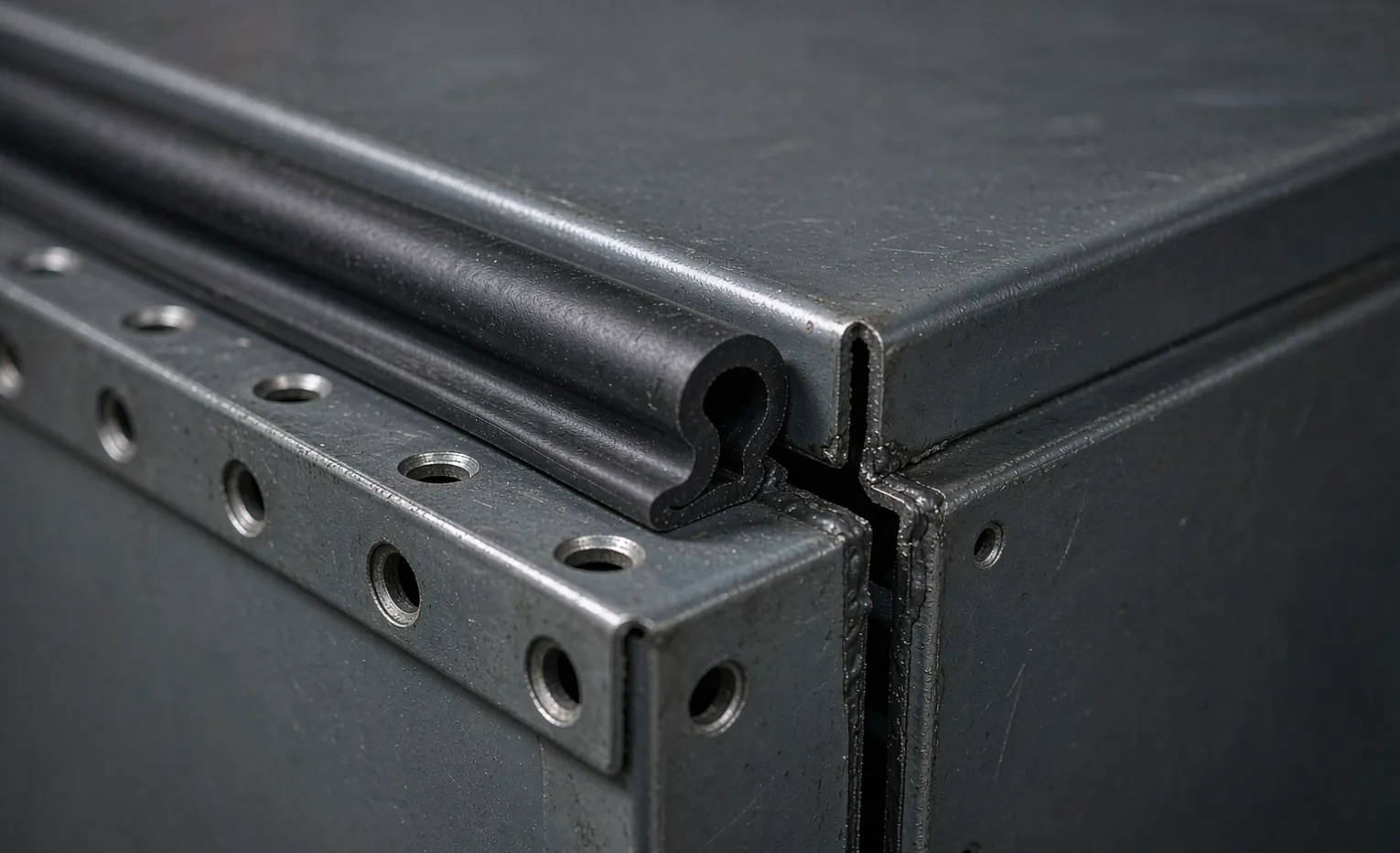
Continuous vs butt-joined corners
The corner is where most leaks start. A continuous molded corner or a well-executed mitered joint holds; a simple butt joint where two ends meet almost always opens first. If the quotation says "butt joint," ask what holds it — adhesive alone is not enough outdoors.
Matching the gasket to the environment
Outdoor, UV, and temperature swing
For a cabinet exposed to sun and seasonal swing, EPDM is the default and silicone the upgrade where heat is extreme. Either way, specify a UV-stable compound and a grooved profile. This pairs directly with the material choice in our outdoor cabinet materials guide and the 304 vs 316 stainless discussion.
Washdown, chemical, and food zones
Washdown and chemical exposure push you toward silicone (clean, heat-stable) or FKM (solvents). If the panel enters a food or pharmaceutical skid, confirm the compound is rated for that zone and that the groove design survives frequent high-pressure cleaning.
Hazardous and oil-laden areas
Oil mist points to neoprene; solvents or fuel point to FKM. For any hazardous-area panel, the gasket is only one part of the enclosure certification — confirm the whole assembly carries the right rating from a UL-listed build shop (see UL 50E) rather than treating the seal in isolation.
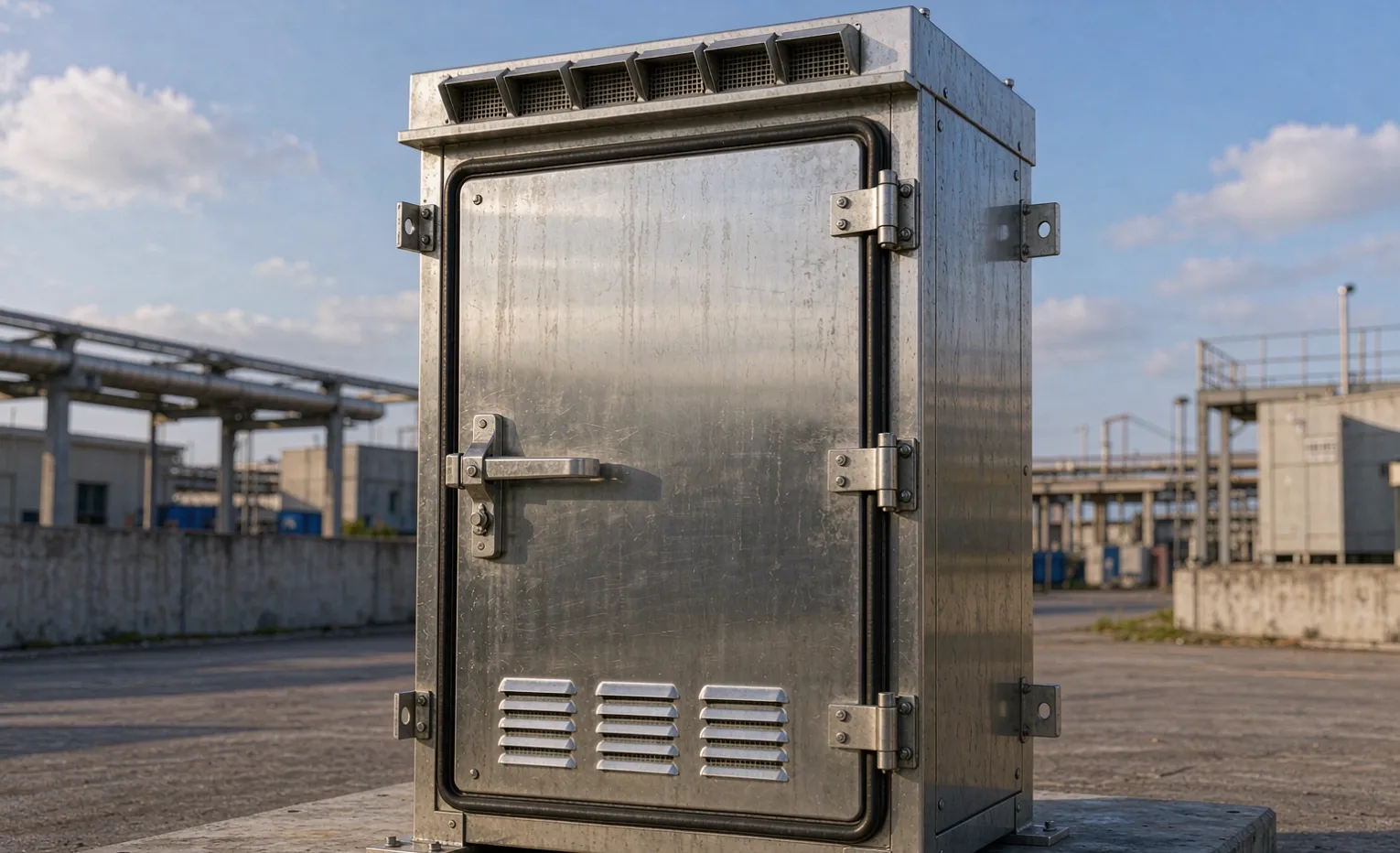
Environment → material matrix
Environment | Recommended material | Why |
|---|---|---|
Temperate outdoor, no oil | EPDM | Cheapest, weatherproof, UV-stable |
Hot region / near heat source | Silicone | Holds flexibility at high temp |
Light oil mist / hydraulics | Neoprene (CR) | Moderate oil resistance |
Solvents / fuel / aggressive chemical | FKM | Only elastomer that holds |
Washdown / food zone | Silicone or FKM | Clean, chemical-stable |
Installation and field-replacement mistakes
Engineering Note — Most gasket failures in the field are installation failures, not material failures. The seal was fine; the person who fitted the replacement stretched it.
Stretching the gasket
A gasket stretched around a corner loses cross-section and never recovers. Cut it to length, don't pull it. Train the technician who services the panel, not just the one who builds it.
Mixing adhesives with incompatible surfaces
If you must use PSA for a temporary fix, match the adhesive to the coated surface. PSA on a powder-coated flange often releases within a season. For a lasting repair on outdoor panels, re-groove or use a mechanically retained profile.
Frequently asked questions
1. Does the gasket material affect my IP or NEMA rating? Yes — directly. The rating describes the sealed seam. A correct, well-compressed EPDM or silicone groove earns IP65/NEMA 4X; a degraded or wrong seal loses it even on a perfect steel body.
2. Can I use the same gasket for indoor and outdoor panels? Not ideally. Indoor static panels can use PSA-backed EPDM. Outdoor or washdown panels need a grooved, UV-stable profile. Using the indoor spec outside is the single most common cause of early seam failure.
3. EPDM or silicone — which should I default to? Default to EPDM for general outdoor duty (cost and weather resistance). Choose silicone when sustained heat, extreme cold, or a clean / food zone matters more than price.
4. How long should an enclosure gasket last? A properly specified and installed EPDM groove typically serves 10+ years in temperate outdoor duty; silicone lasts longer under heat. PSA-only indoor seals may need replacement inside 3–5 years.
5. Should I worry about the gasket for UL or NEMA 4X projects? Yes. The gasket is part of the certified enclosure system. For UL-rated work we source from UL-listed build shops on a per-order basis, and the seal specification is reviewed as part of the enclosure, not separately. See the UL-listed enclosure sourcing guide for the full flow.
6. Do you supply the enclosure with the gasket already fitted? Yes. Enclosures are delivered with the specified gasket installed and verified at our incoming check, so the seam rating is confirmed before the panel leaves the build shop. Typical build window is about 15 days for a 5-unit minimum order, while component lead times run 3–5 days.
Engineering Takeaway
The gasket is the cheapest part of your enclosure and the most expensive to get wrong. Spec the material to the environment (EPDM default, silicone for heat, neoprene for light oil, FKM for solvents), insist on a grooved or mechanically retained profile for anything outdoors, and confirm the corner joint is continuous or properly mitered. Do that, and the IP65/NEMA 4X rating you paid for will still be there in year ten — not just on the certificate.
Ready to spec the seal as carefully as the steel? Upload your drawing and we will review the door section, gasket profile, and closure tolerance as part of an engineering review — then return concrete suggestions before you order.