
Aug 23, 2026Buying Guides
Top 10 Outdoor Electrical Cabinet Design Features Buyers Should Check
A buyer-focused drawing review guide for outdoor electrical cabinets, covering IP/NEMA rating, gasket compression, cable entry, heat control, layout, hardware, lifting, and documentation.
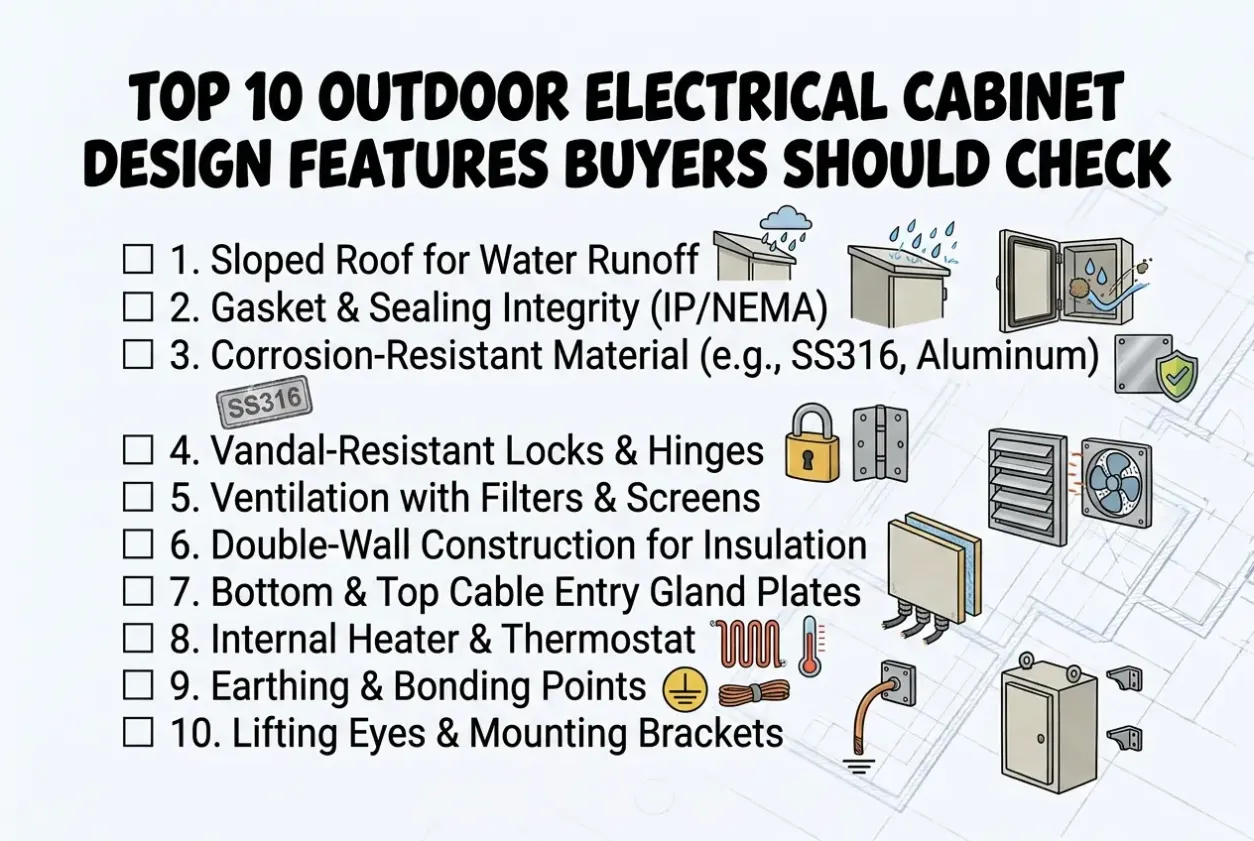
Before I Sign the Drawing: Top 10 Outdoor Electrical Cabinet Design Features Buyers Should Check
I once reviewed three outdoor cabinet drawings in one afternoon. All three specified IP66. All three used stainless steel. Only one was ready for production.
The difference was not the cabinet shell. It was the details nobody noticed.
A cabinet rarely fails because of one big mistake. It usually fails because ten small details were approved together.
Number 10: Documentation
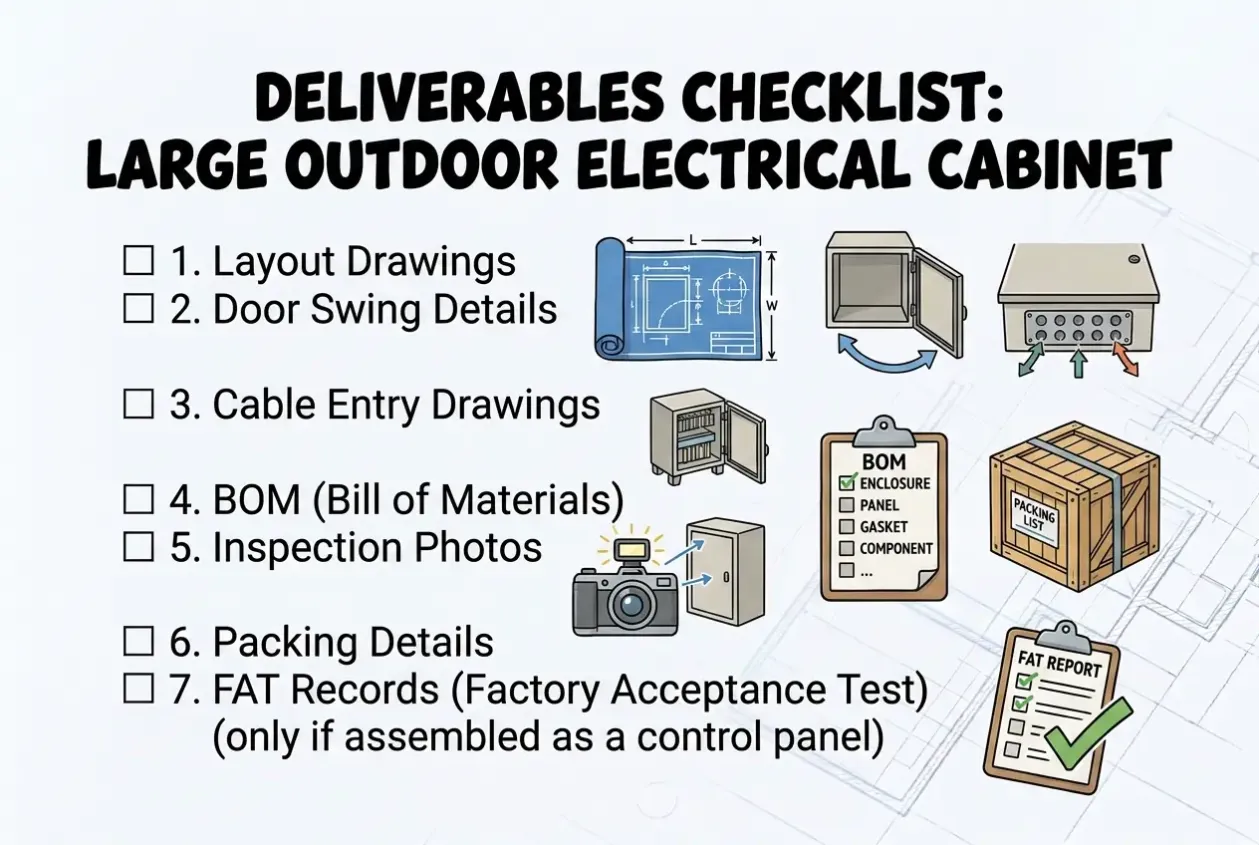
Before checking the cabinet body, I check what the supplier will deliver with it. A large outdoor electrical cabinet should have layout drawings, door swing details, cable entry drawings, BOM, inspection photos, packing details, and FAT records if it is assembled as a control panel.
Without documents, approval becomes guesswork.
Number 9: Mounting and Lifting
Large cabinets need to be moved, lifted, installed, and sometimes serviced in difficult site conditions. Lifting lugs, plinths, base frames, wall brackets, or floor stands should be confirmed before production. This is not a small logistics detail. Poor lifting design can damage a good cabinet before it even reaches the site.
Number 8: Roof and Rain Protection
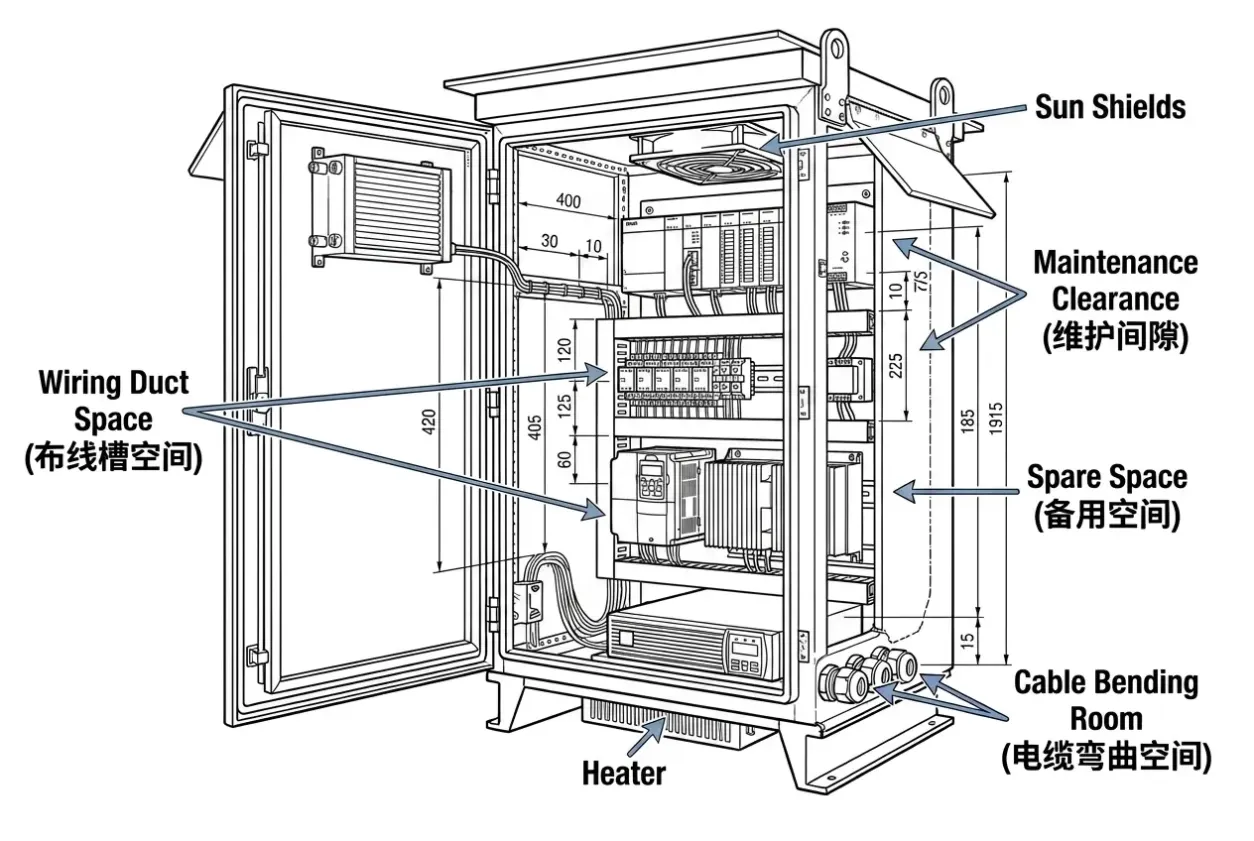
Flat tops are often underestimated. If water can sit on the roof, collect around accessories, or run toward the door seal, the cabinet is already carrying risk. A sloped roof, rain hood, sun shield, or canopy may solve more problems than buyers expect.
Number 7: Internal Layout
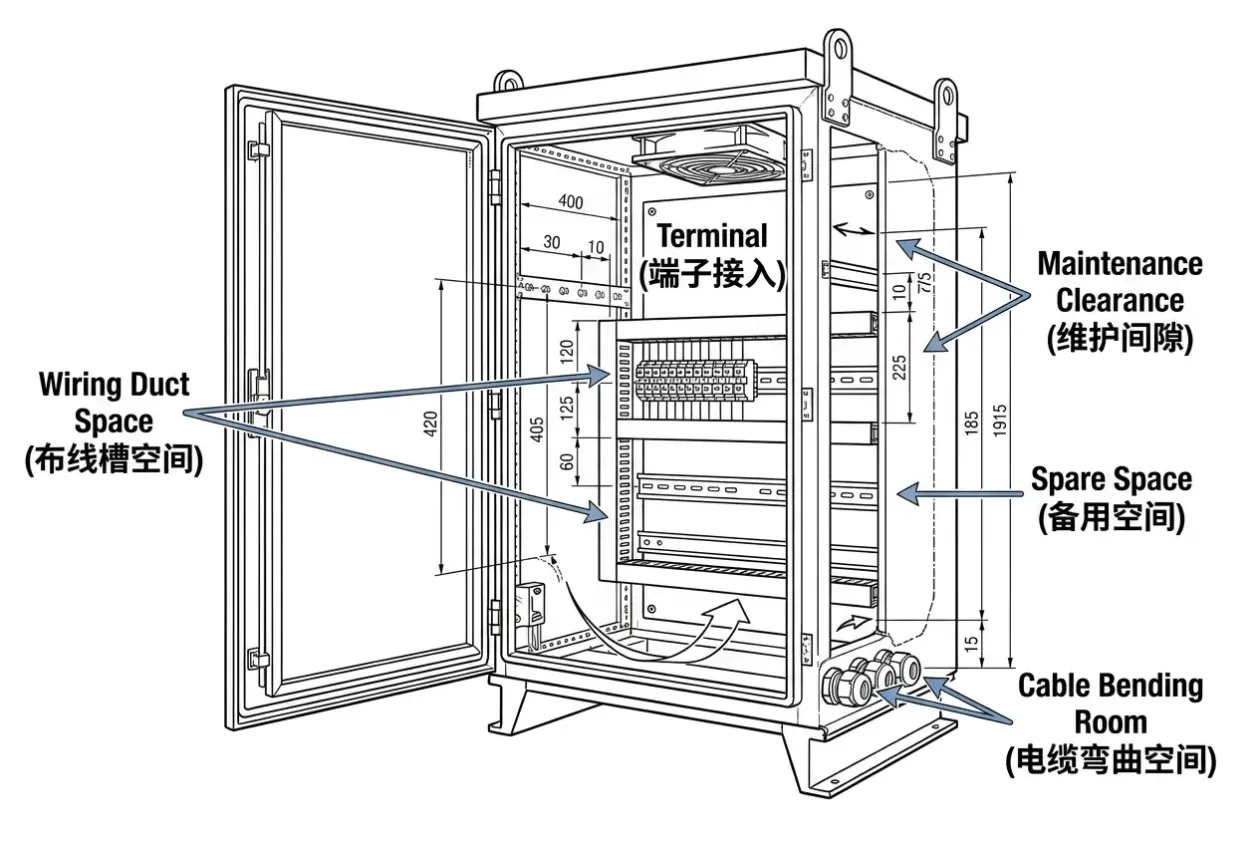
A cabinet drawing should show more than component positions. It should show wiring duct space, terminal access, maintenance clearance, spare space, and cable bending room. A cabinet that looks neat in CAD can still be painful to service if every terminal is crowded.
One extra 50 mm of wiring space can save hours during maintenance.
Number 6: Hardware
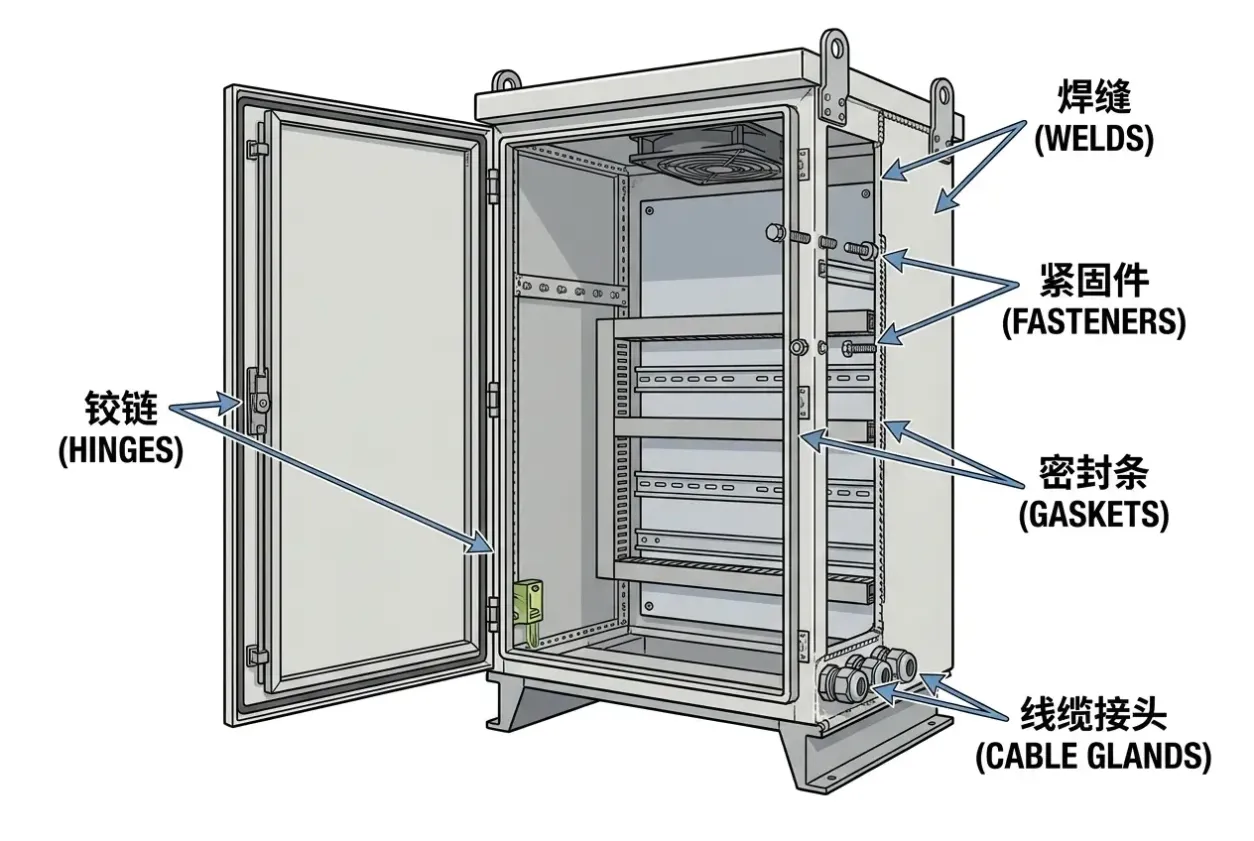
Hinges, locks, screws, brackets, gland plates, and mounting feet often fail before the cabinet body. For coastal, wastewater, food, or chemical sites, hardware quality matters as much as the stainless steel grade.
I have seen stainless cabinets develop rust marks because the fasteners were the weak point.
Number 5: Cable Entry
Most outdoor water problems begin after the cable enters the cabinet. Bottom entry is usually safer, but it still needs the correct gland plate, cable glands, sealing method, and field installation discipline. The top or side entry should be reviewed carefully because one poor opening can defeat the rating of the whole cabinet.
Number 4: Thermal Control
The VFD is not always faulty. Sometimes it is simply too hot.
Before approving the cabinet, buyers should review heat load from PLCs, VFDs, power supplies, UPS units, relays, transformers, and communication devices. Fans, filters, heat exchangers, heaters, sun shields, or air conditioners should be selected after the heat risk is known, not after the cabinet overheats.
Number 3: Door Gasket and Compression
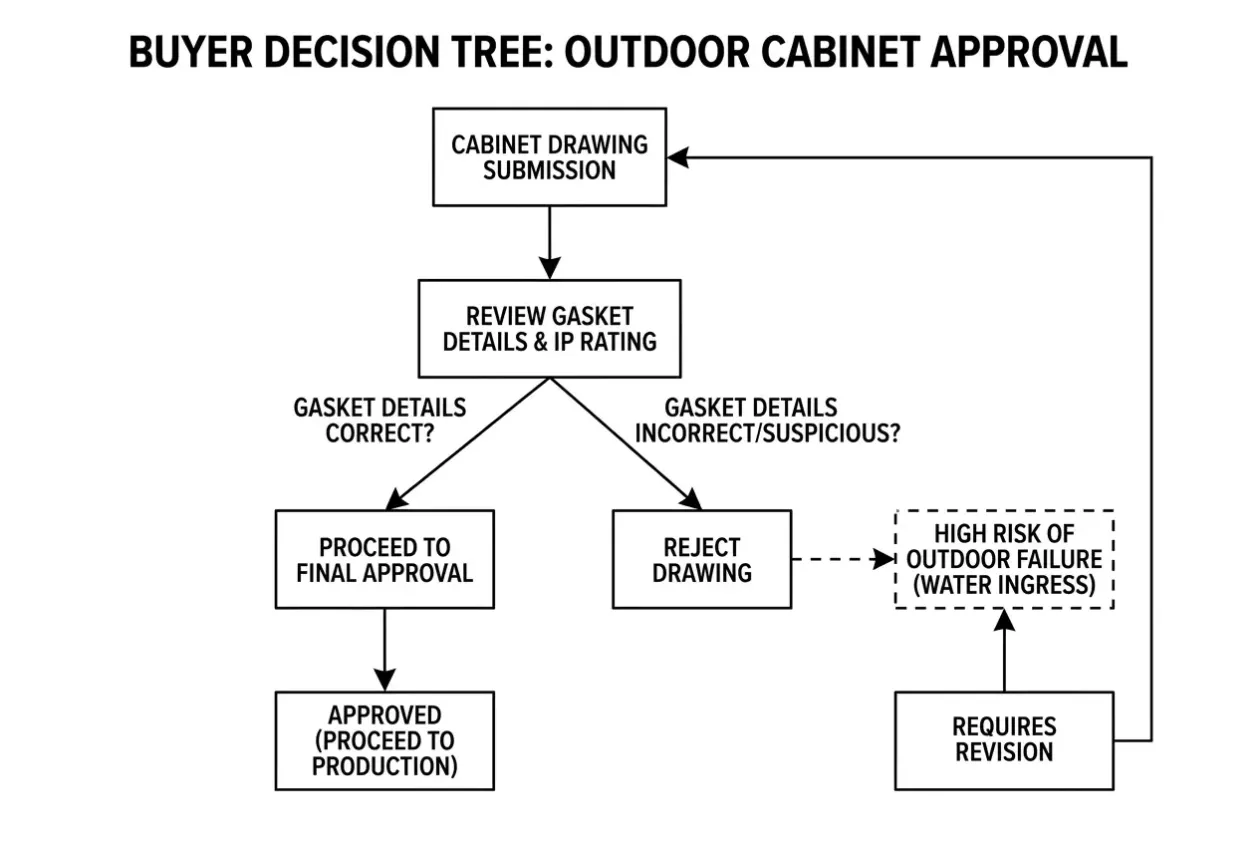
I have seen large doors pass factory inspection and still leak because the compression was uneven. For tall outdoor cabinets, one lock point is often not enough. The gasket, hinge structure, door stiffness, and number of compression points should all support the required sealing level.
Number 2: Material
Painted steel, 304 stainless steel, and 316 stainless steel all have a place. The correct choice depends on salt air, humidity, chemical exposure, wastewater gas, cleaning method, UV, and expected service life. Material should follow the environment, not habit.
Number 1: IP or NEMA Rating
Most buyers stop after seeing “IP66.”
I usually keep asking. What about the cable glands? What about the fan or filter unit? What about the push buttons, indicator lamps, roof cutouts, and cable entry plate? Only after those details are clear does the rating itself become meaningful.
IEC 60529 defines IP protection against dust and water ingress, while NEMA 250 is commonly used for enclosure-type requirements such as NEMA 4 and NEMA 4X. If the cabinet is built as an industrial control panel, UL 508A may also be relevant depending on the project market.
The important buyer lesson is this: an IP66 enclosure with a non-rated fan filter, poor cable glands, or weak roof cutouts is no longer an IP66 system in real use.
If I Could Only Check Three Things
If time is limited, I check gasket compression, cable entry, and thermal design first. These three details cause many outdoor cabinet problems because they are easy to underestimate during purchasing and expensive to fix after installation.
UniRegal Engineering Note
At UniRegal, we have rejected cabinet drawings because of gasket details, even when the enclosure material and IP rating were correct. That may sound strict, but outdoor cabinets usually fail at the details buyers approve too quickly.
We review outdoor electrical cabinets as complete project enclosures: rating, material, gasket, cable entry, heat, layout, hardware, mounting, documentation, and maintenance access.
Good cabinet design starts with site risk, not with a longer specification sheet.
Final Recommendation
Before signing the drawing, do not only ask whether the cabinet is IP66 or stainless steel. Ask whether the full cabinet system can survive the site, protect the components, support maintenance, and arrive with the documents your project needs.
A serious outdoor electrical cabinet supplier should help you find the weak details before the field finds them for you. Contact UniRegal Team for more details.
Related guides