
Aug 23, 2026Buying Guides
Stainless Steel 304 vs 316 for Outdoor Electrical Enclosures
A myth-vs-reality guide to choosing 304 or 316 stainless steel for outdoor electrical enclosures, focusing on corrosion sources, environment, accessories, and buyer decision risks.
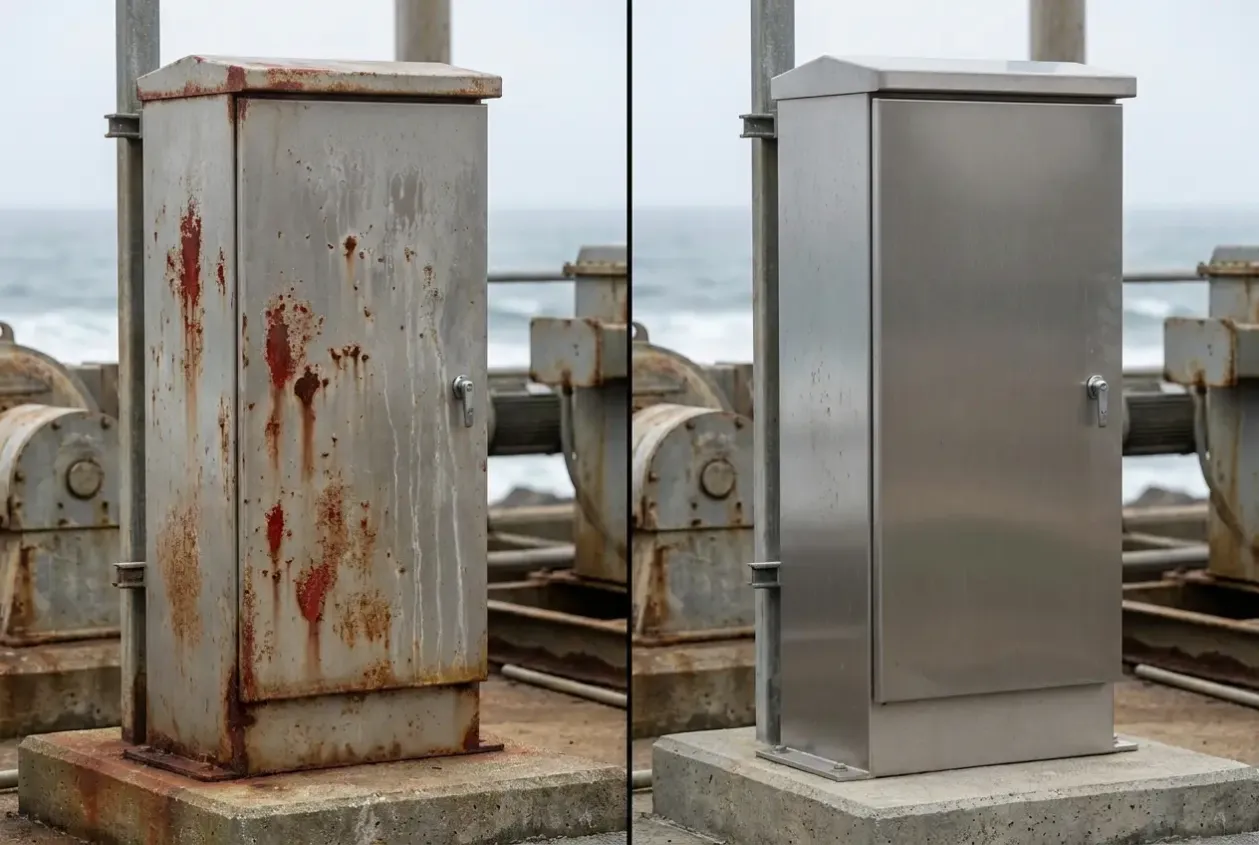
Stainless Steel 304 vs 316 for Outdoor Electrical Enclosures: Myth vs Reality
I have seen buyers reject a quotation because it used 304 stainless steel. Six months later, another buyer in a similar city accepted 304 without hesitation and made the right decision.
Both projects were approved by experienced engineers. Both buyers believed they were making the safer decision.
Who was right? Surprisingly, both were.
That is why 304 vs 316 should not be treated as a simple “good vs better” material debate. For outdoor electrical enclosures, the real question is not which stainless steel grade sounds stronger. The real question is, what will attack the enclosure first?
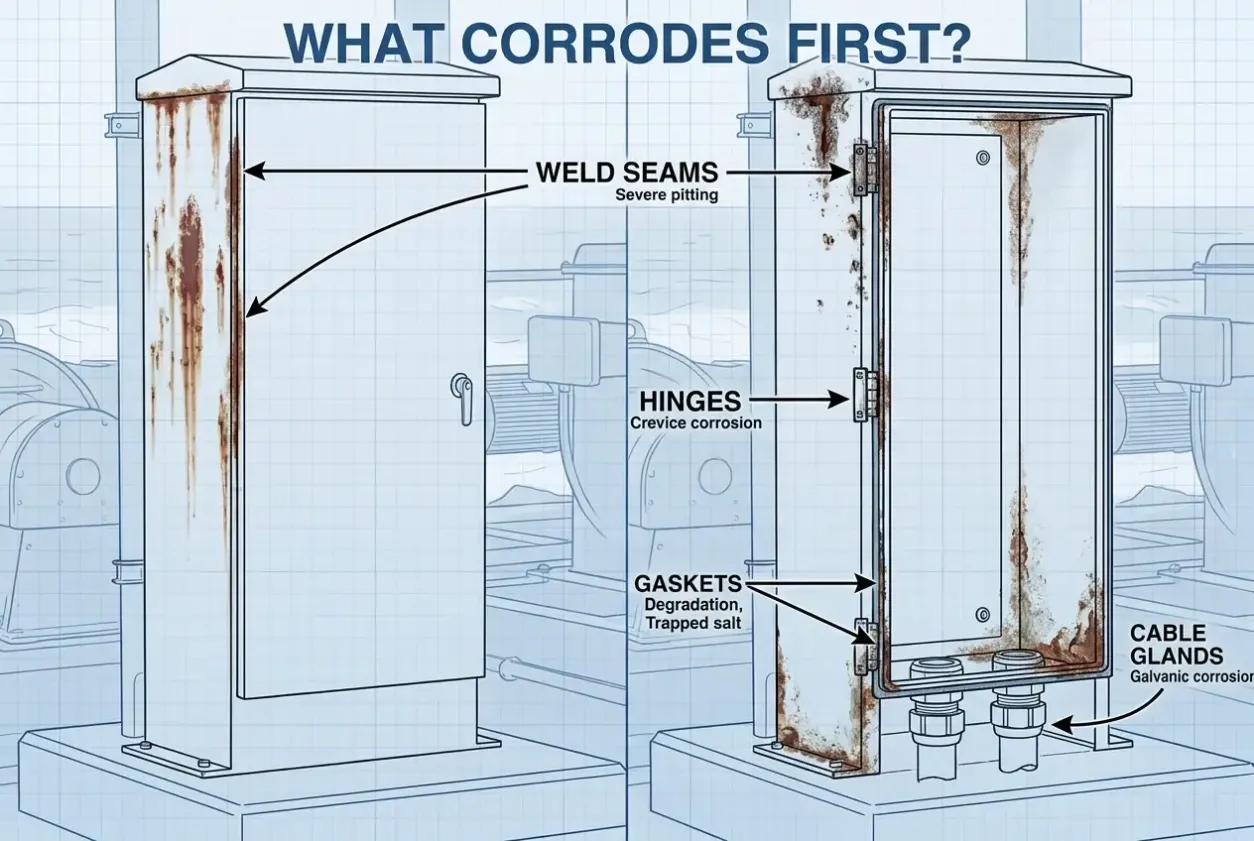
Salt air? Chemical washdown? Wastewater gas? Humidity? Poor drainage? Low-grade fasteners? Untreated welds?
That is where the decision starts.
Myth 1: “304 Stainless Steel Rusts Outdoors”
Reality: Sometimes it does. Sometimes it does not.
304 stainless steel is widely used for outdoor electrical cabinets, especially in general factory areas, inland utility sites, building service areas, and moderate outdoor environments. If the cabinet is not near salt air, chemical spray, wastewater vapor, or aggressive washdown, 304 can be a practical and cost-effective choice.
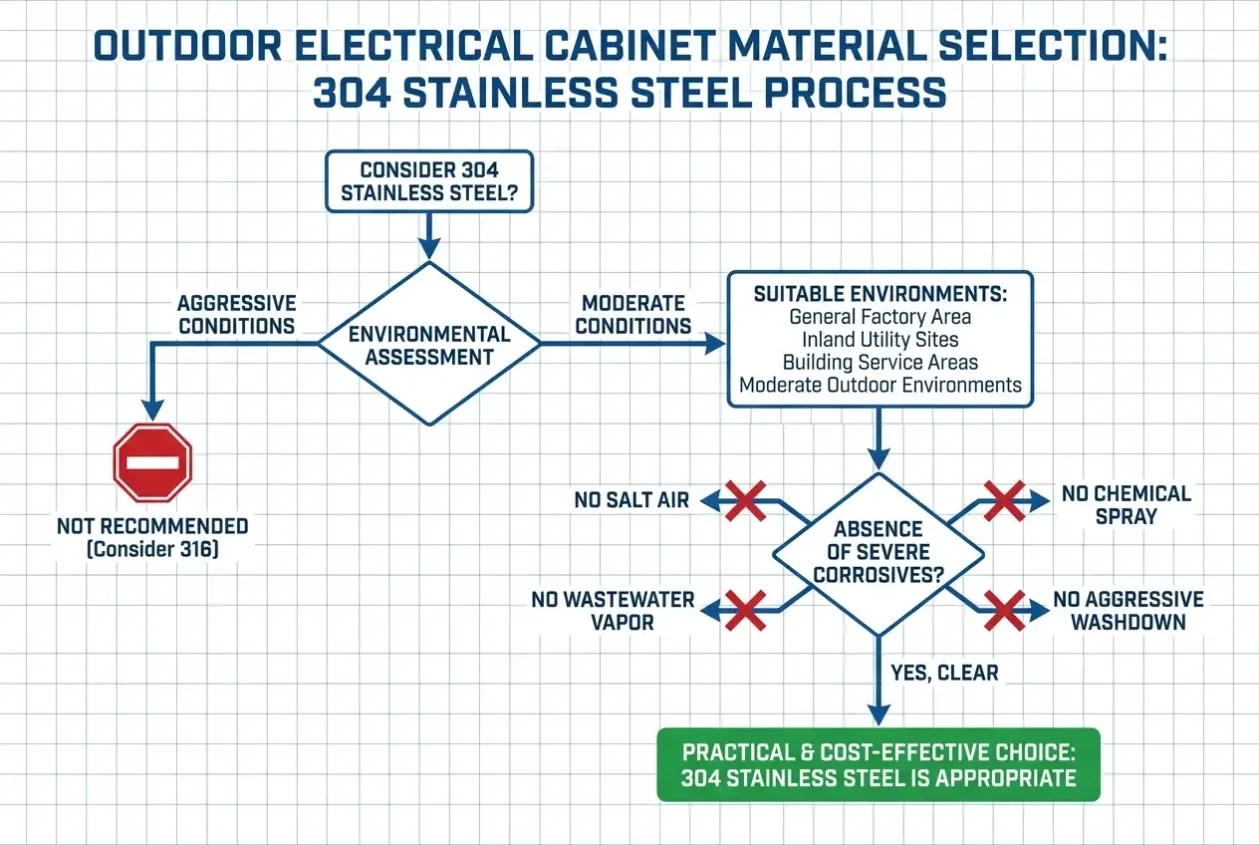
If 304 failed in one outdoor project, it does not mean 304 is wrong for every outdoor project. It usually means the environment was harsher than the material selection allowed.
Stainless steel does not mean stain-proof. It means corrosion-resistant within the right environment.
Myth 2: “Outdoor Means 316”
Reality: Not necessarily.
If that were true, every outdoor traffic signal cabinet would already be made from 316 stainless steel. If stainless steel alone solved corrosion, maintenance engineers would have much easier jobs.
316 stainless steel is a stronger choice when chloride exposure or chemical corrosion is expected. I would review 316 first for coastal sites, marine facilities, wastewater treatment plants, chemical areas, food washdown zones, and locations where corrosion history is already known.
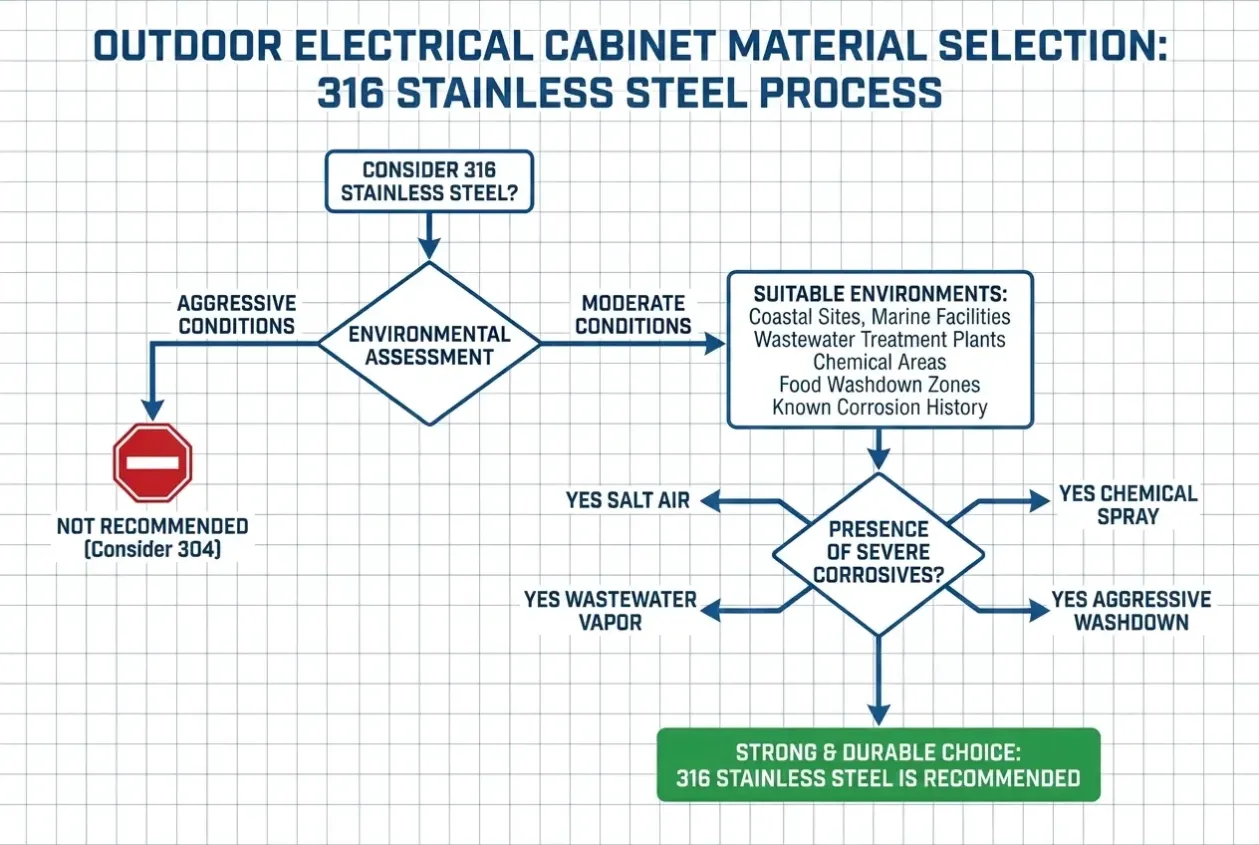
But if the cabinet is installed inland, under partial shelter, and maintained properly, 316 may add cost without solving a real problem. In procurement, “better material” is not always better value.
316 stainless steel has a loyal fan club. Unfortunately, corrosion does not read material specifications.
Myth 3: “316 Solves the Corrosion Problem”
Reality: Only if the whole enclosure is built correctly.
I have seen buyers specify 316 stainless steel and then overlook the parts that corrode first: screws, hinges, locks, mounting feet, weld areas, cable glands, and untreated cut edges. We once found rust around a cabinet that was fully specified as 316. Every visible stain came from carbon-steel fasteners.
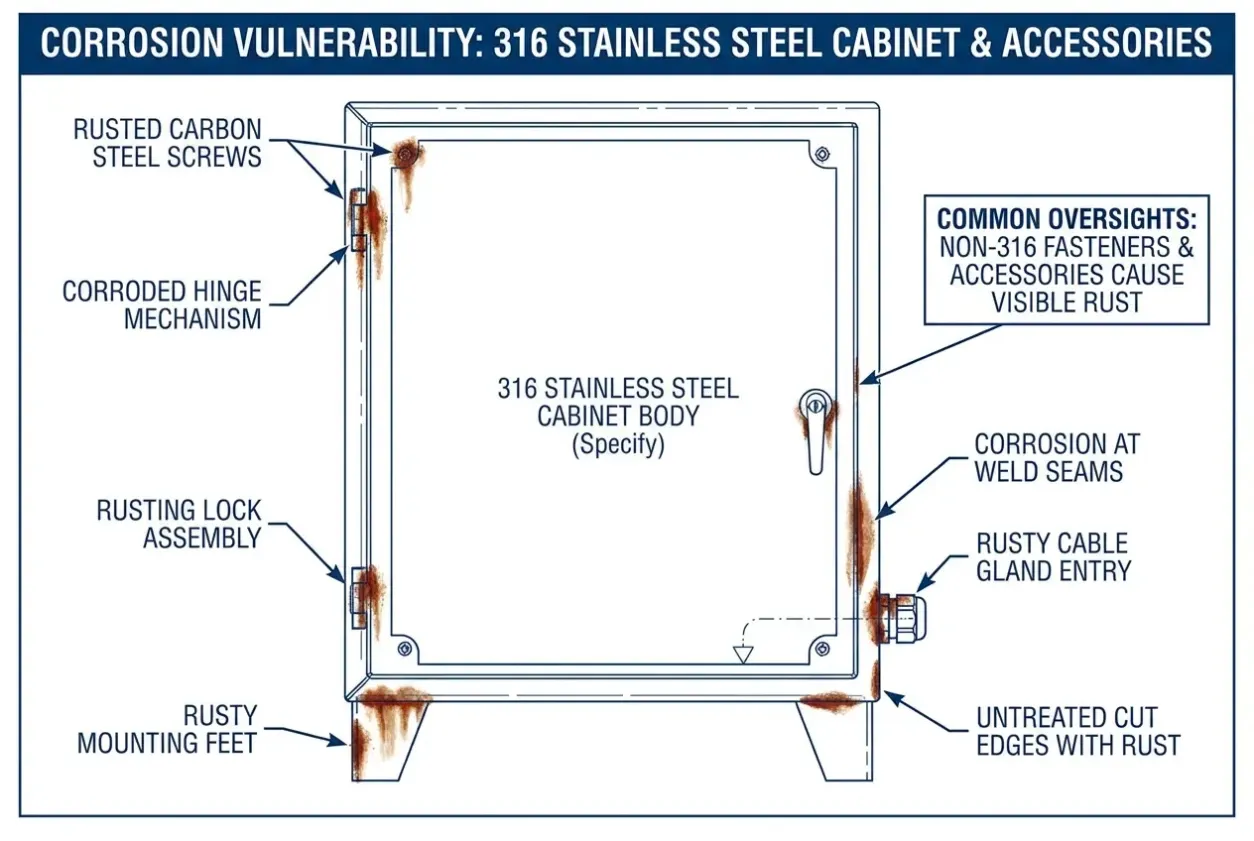
The stainless grade matters, but it is not the whole cabinet. Surface finish, welding quality, passivation, gasket material, drainage, fasteners, and installation method all affect service life.
An enclosure fails at its weakest detail, not at the line item with the best material name.
The Wrong Question Buyers Often Ask
Most RFQs ask, "What is the price for 304 and 316?”
That is useful but incomplete.
The better RFQ question is
“What environment must this enclosure survive, and which part will corrode first?”
If the risk is normal rain and humidity, 304 may be enough. If the risk is salt air, chloride, chemical washdown, wastewater vapor, or high corrosion consequence, 316 becomes easier to justify.
If This Were My Project
- If the enclosure is for a general outdoor factory area, I would usually start with 304 and check the accessory quality.
- If it is for a coastal pump station, I would review 316 first.
- If it is for wastewater treatment, I would be careful with 304 unless the exposure is clearly mild.
- If it is for food washdown, I would usually look at 316 together with surface finish, gasket design, and cleaning method.
- If it is for a chemical site, I would not decide by stainless grade alone. I would ask what chemicals are present, how often cleaning happens, and whether fumes or spray can reach the cabinet.
Buyer Conversation I Hear Often
Buyer: “We always use 316.”
Engineer: “Why?”
Buyer: “Because it is better.”
Engineer: “Better for what?”
That last question is the useful one. Better for salt? Better for washdown? Better for wastewater gas? Better for long maintenance intervals? Better for avoiding downtime? Once the reason is clear, the material decision becomes much easier.
UniRegal Buyer Advice
At UniRegal, we have seen more unnecessary 316 upgrades than unnecessary 304 upgrades. That does not mean 316 is overused everywhere. It means many buyers upgrade material before they review the real corrosion source.
For outdoor electrical enclosures, we prefer to review the environment first: salt air, rain, humidity, UV, cleaning method, chemical exposure, mounting position, fasteners, hinges, cable glands, weld quality, surface finish, and expected service life.
A good supplier should not simply quote two prices. They should help you decide which material protects the project without wasting budget.
We review corrosion before we review material.
FAQ
Is 316 stainless steel always required outdoors?
No. Many outdoor electrical enclosures work well with 304 stainless steel when the site is inland, moderately exposed, and maintained properly.
When is 316 stainless steel worth the extra cost?
316 is worth considering for coastal sites, wastewater plants, chemical areas, food washdown zones, marine facilities, and projects where corrosion-related downtime would be expensive.
Can 304 stainless steel be used near the coast?
It can be risky. Distance from the sea, wind direction, salt exposure, cleaning frequency, and maintenance all matter. For exposed coastal installations, 316 is usually safer.
What should buyers check besides stainless steel grade?
Check weld quality, surface finish, passivation, gasket material, fasteners, hinges, locks, cable glands, mounting feet, drainage, and whether the enclosure will be cleaned or exposed to chemicals.
Final Recommendation
Do not choose 304 because it is cheaper. Do not choose 316 because it sounds safer.
Choose the stainless steel grade based on what will attack the enclosure first.
For general outdoor electrical enclosures, 304 stainless steel is often enough. For coastal, chemical, wastewater, marine, or food washdown environments, 316 is usually the safer specification. The best buyer decision comes from reviewing the full enclosure system, not only the stainless steel label.