
Aug 24, 2026Buying Guides
IP65 vs IP66 for Outdoor Electrical Cabinets: Which Rating Should You Specify?
IP65 vs IP66 outdoor electrical cabinets: what the ratings really mean, when each is enough, and how material and cooling choices affect outdoor reliability.
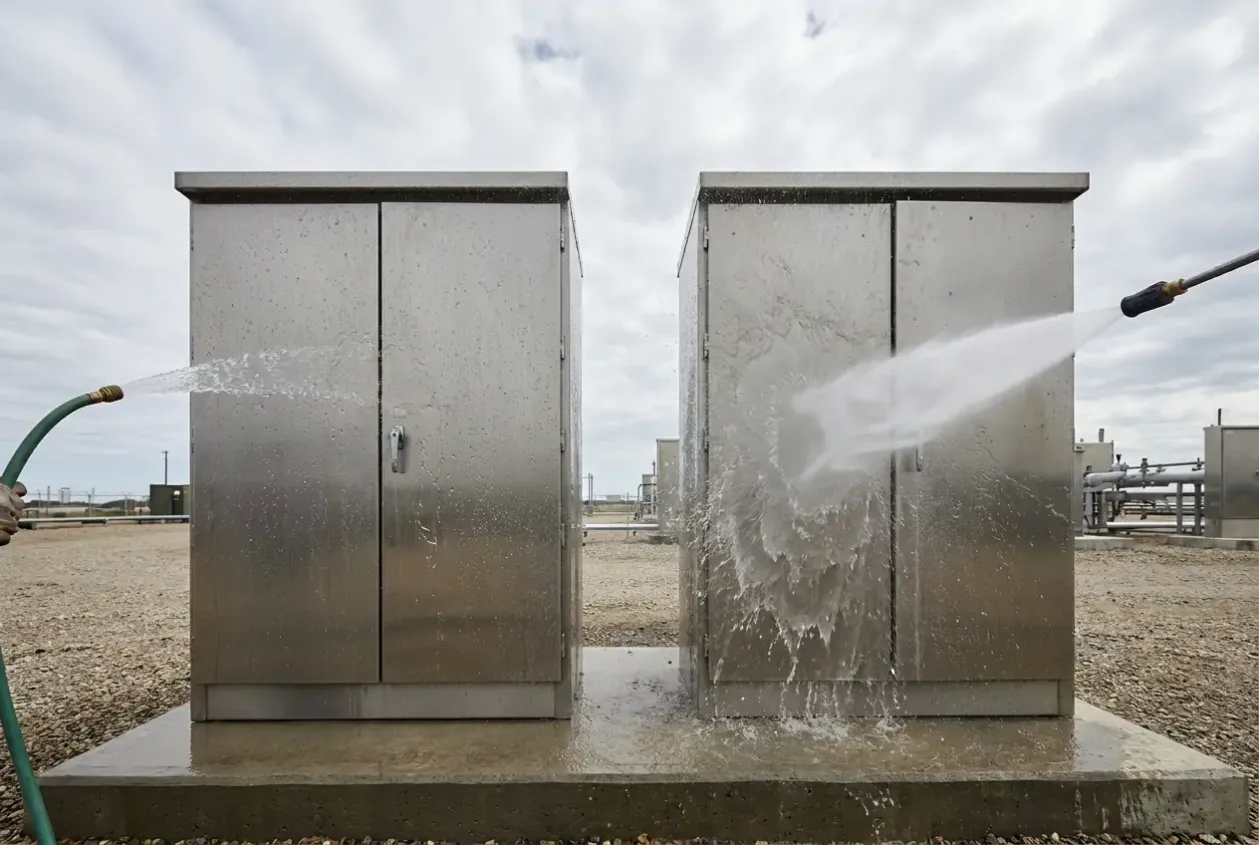
IP65 vs IP66 for Outdoor Electrical Cabinets: Which Rating Should Buyers Specify Before Ordering?
For outdoor electrical cabinets, the choice between IP65 and IP66 should not be made by rating alone. Both ratings are defined under the IEC 60529 IP code system, which classifies protection against dust and water ingress. In practical cabinet sourcing, the real question is, how much water pressure, weather exposure, and installation risk will the cabinet face?
Rating | Best For | Don’t Choose If... | Buyer Risk |
|---|---|---|---|
IP65 | Outdoor cabinets under partial shelter, normal rain, utility walls, pump controls, sensor junction boxes | The cabinet will face direct washdown, strong water jets, or fully exposed harsh weather. | Can fail if cable glands, vents, or gasket compression are weak |
IP66 | Fully exposed outdoor cabinets, wind-driven rain, washdown areas, water treatment sites, coastal or high-humidity locations | The cabinet needs forced ventilation without a suitable IP-rated cooling solution. | Higher cost and stricter accessory selection are required. |
IP65 is usually enough when the cabinet faces normal outdoor rain and is not directly washed down. I would consider it for PLC cabinets under a canopy, small pump control panels, lighting control boxes, or junction cabinets with limited heat load.
IP66 is the safer choice when the cabinet has no shelter, faces stronger water jets, sits near process equipment, or protects equipment that would stop production if water entered. For water treatment, outdoor utilities, coastal sites, and exposed pump stations, I usually review IP66 first.
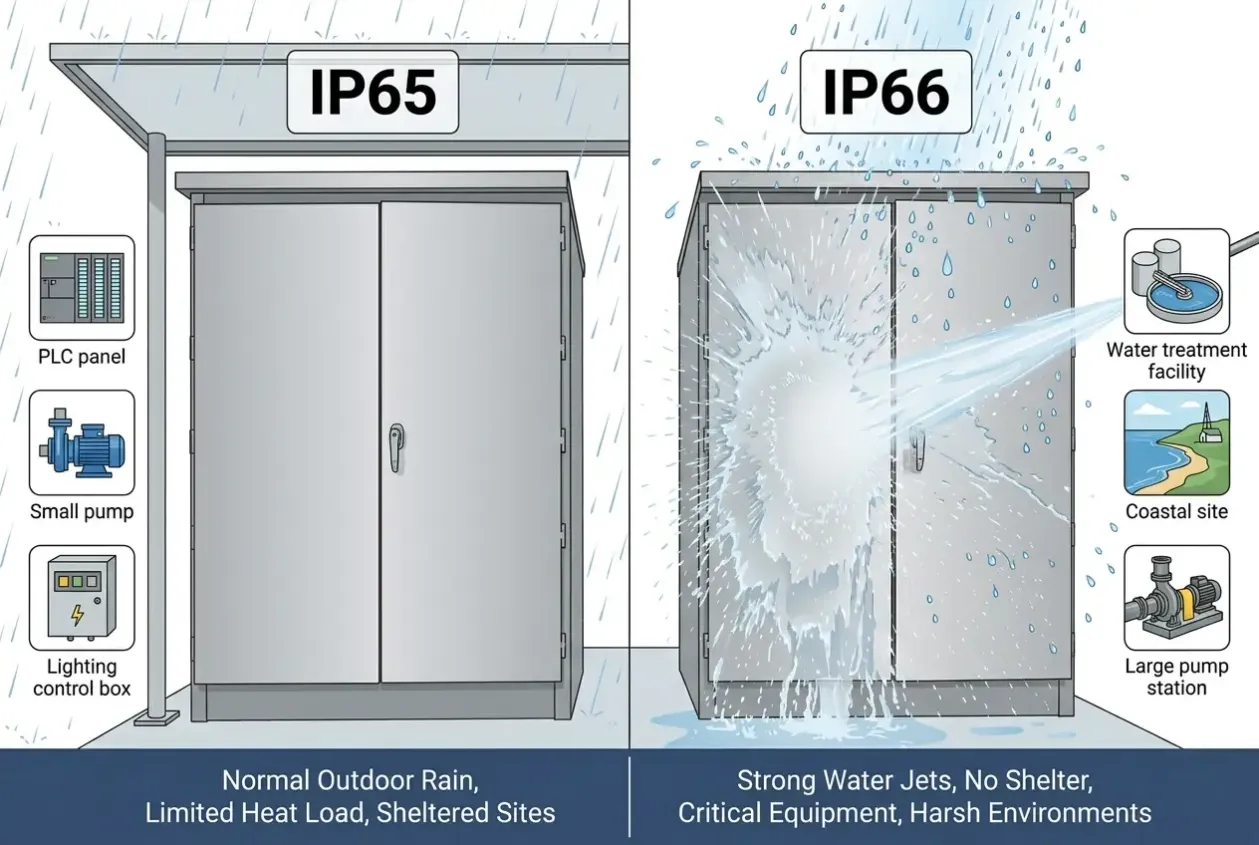
A municipal water plant once specified IP65 for an outdoor PLC cabinet. During commissioning, the cabinet body remained dry, but water entered through an incorrectly selected cable gland during high-pressure cleaning near the skid. The enclosure met the written specification. The complete cabinet system did not.
The weak point is rarely the cabinet shell. It is usually the accessories: cable glands, fan filters, push buttons, indicator lamps, door locks, hinges, roof cutouts, or a badly compressed gasket. An IP66 enclosure with a non-rated vent or poorly sealed cable entry is no longer an IP66 system in real use.
Buyer Comparison: What to Check Before Approval
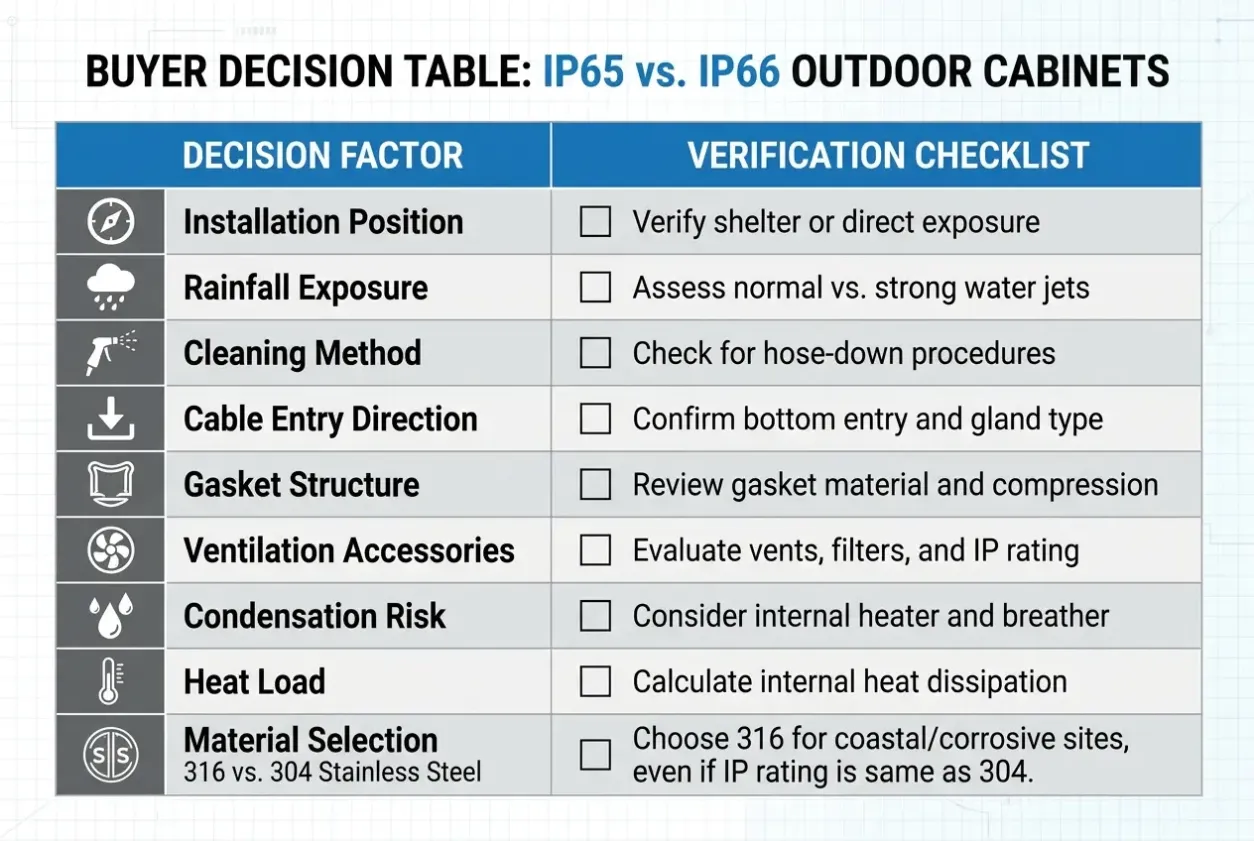
Before approving IP65 or IP66, buyers should verify the installation position, rainfall exposure, cleaning method, cable entry direction, gasket structure, ventilation accessories, condensation risk, heat load, and material selection. Stainless steel grade also matters. For coastal or corrosive sites, 316 stainless may be more suitable than 304, even if the IP rating is the same.
Questions I Ask Before Quoting
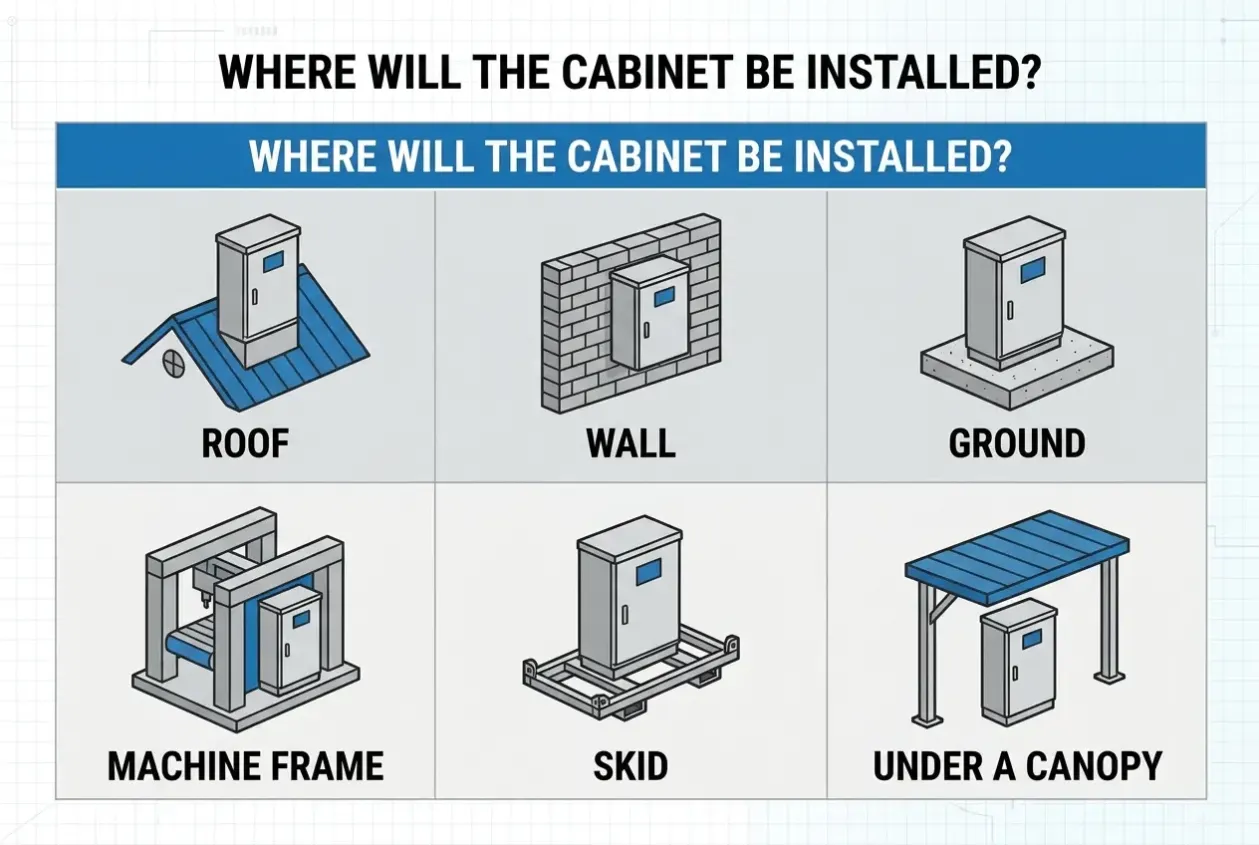
Before quoting an outdoor electrical cabinet, I normally ask where the cabinet will be installed: roof, wall, ground, machine frame, skid, or under a canopy. I also ask whether it faces rain only, wind-driven rain, washdown, sun exposure, coastal air, dust, or high humidity.
Cable entry is another important point. Bottom entry is usually safer outdoors, but some projects require top or side entry because of site layout. In that case, glands, sealing, rain protection, and drainage need more attention.
I also check whether the cabinet needs natural ventilation, fan cooling, air conditioning, breather valves, anti-condensation heaters, or sun shields. These details often decide whether the selected IP rating will still be valid after the cabinet is assembled.
UniRegal Engineering Note
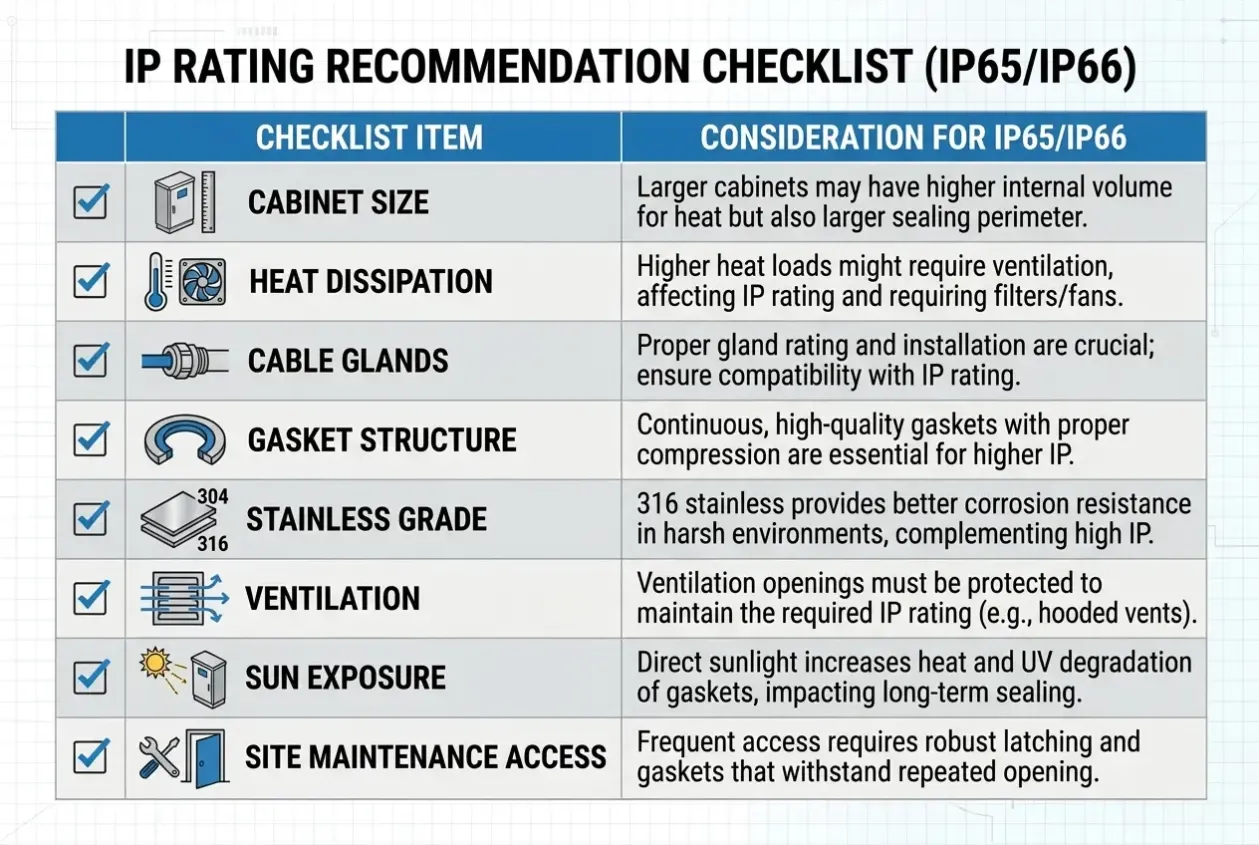
For custom outdoor electrical cabinets, UniRegal treats the IP rating as one part of the full enclosure design. We review cabinet size, heat dissipation, cable glands, gasket structure, stainless grade, ventilation, sun exposure, and site maintenance access before recommending IP65 or IP66.
FAQ
Is IP66 always better than IP65?
Not always. IP66 gives stronger water protection, but it may increase cost and require stricter accessory control. For sheltered outdoor cabinets, IP65 may be enough.
Can an IP65 cabinet be used in heavy rain?
Yes, if the cabinet is properly installed and sealed. For wind-driven rain or direct water jets, IP66 is usually safer.
Does IP rating stop condensation?
No. IP rating addresses external dust and water ingress. Condensation needs separate design, such as breather valves, heaters, drainage strategy, or thermal review.
Final Recommendation
Specify IP65 for normal outdoor protection. Specify IP66 when the cabinet is fully exposed, washed down, or protecting critical equipment. The best buyer decision is not choosing the higher number automatically but confirming whether the whole cabinet system can maintain that rating after cutouts, cables, accessories, and installation.
Related guides
Specifying outdoor enclosures? We source IP65/IP66 cabinets in carbon steel or 304/316 stainless from Foshan suppliers, with cooling built in. Talk to our team about your project.
Standards & compliance
Specify enclosures to recognized standards: NEMA 250 (Enclosure Types) and UL 508A for Industrial Control Panels.