
Oct 20, 2026Control Panels
Control Panel Terminal Blocks and Branch Protection: What to Put in Your RFQ
Every outgoing circuit in a control panel needs protection sized to its wire. Here is how to spec terminal blocks and fusing so your panel passes first time.
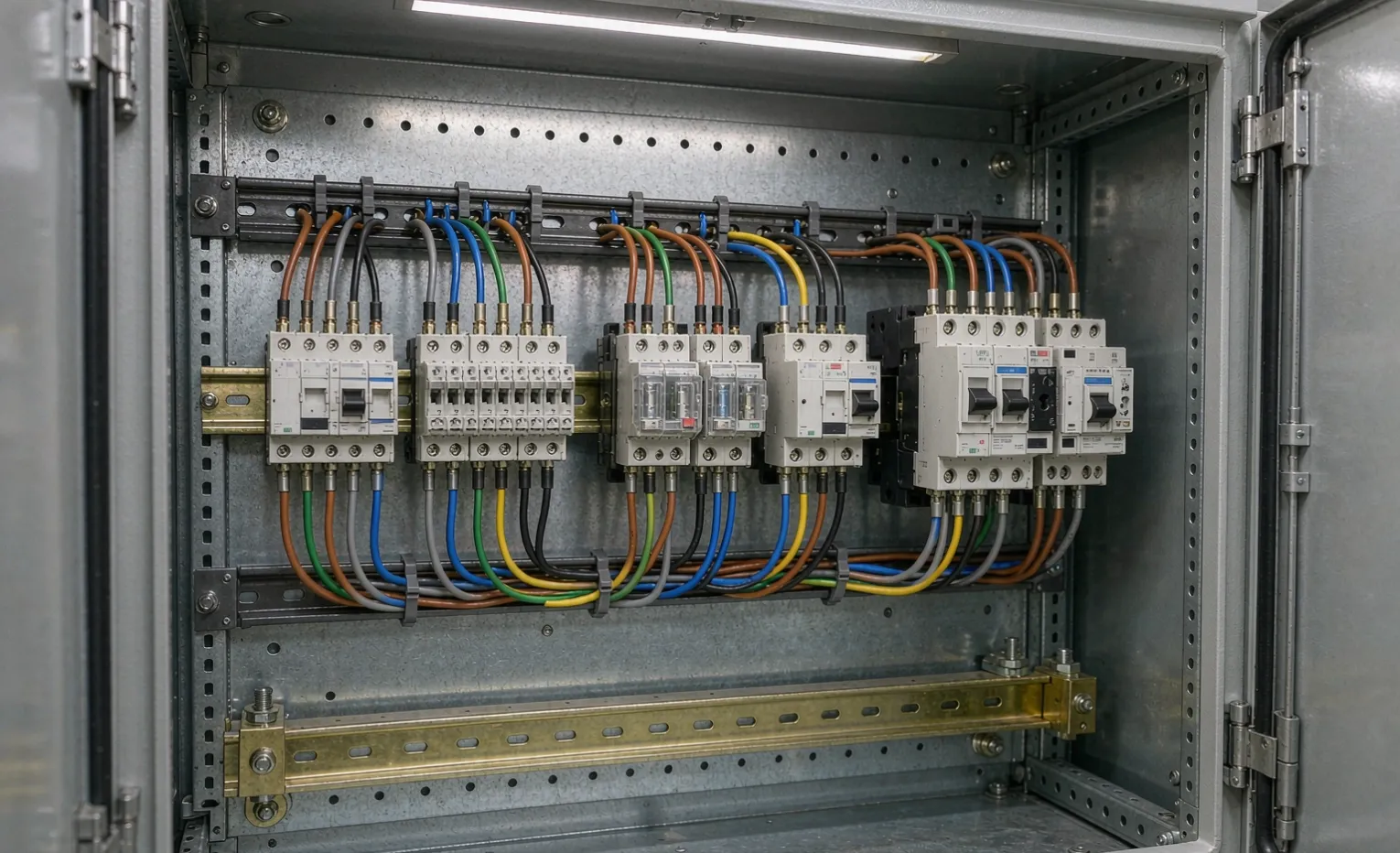
The line item that hides the most risk
You open a control panel quote, and there it is: "terminal blocks." One line, a few dollars, easy to skim past. But behind that line is the single most common reason a panel fails inspection or lets a fault escalate—unprotected outgoing circuits. This guide is for the buyer writing the RFQ, so you can specify terminal blocks and branch protection in a way that passes the first time and protects the field wiring you cannot see from the office.
What a terminal block is actually doing
A terminal block is the landing point where field wires meet the panel. It is where your motor, sensor, or valve cable connects to the controlled circuit inside. Done well, it gives you isolation, a clean disconnect point for troubleshooting, and a barrier between the high-current panel internals and the wire running out to the floor. Done poorly, it is where a short turns into a melted bundle and a weekend outage.
The protection rule most RFQs skip
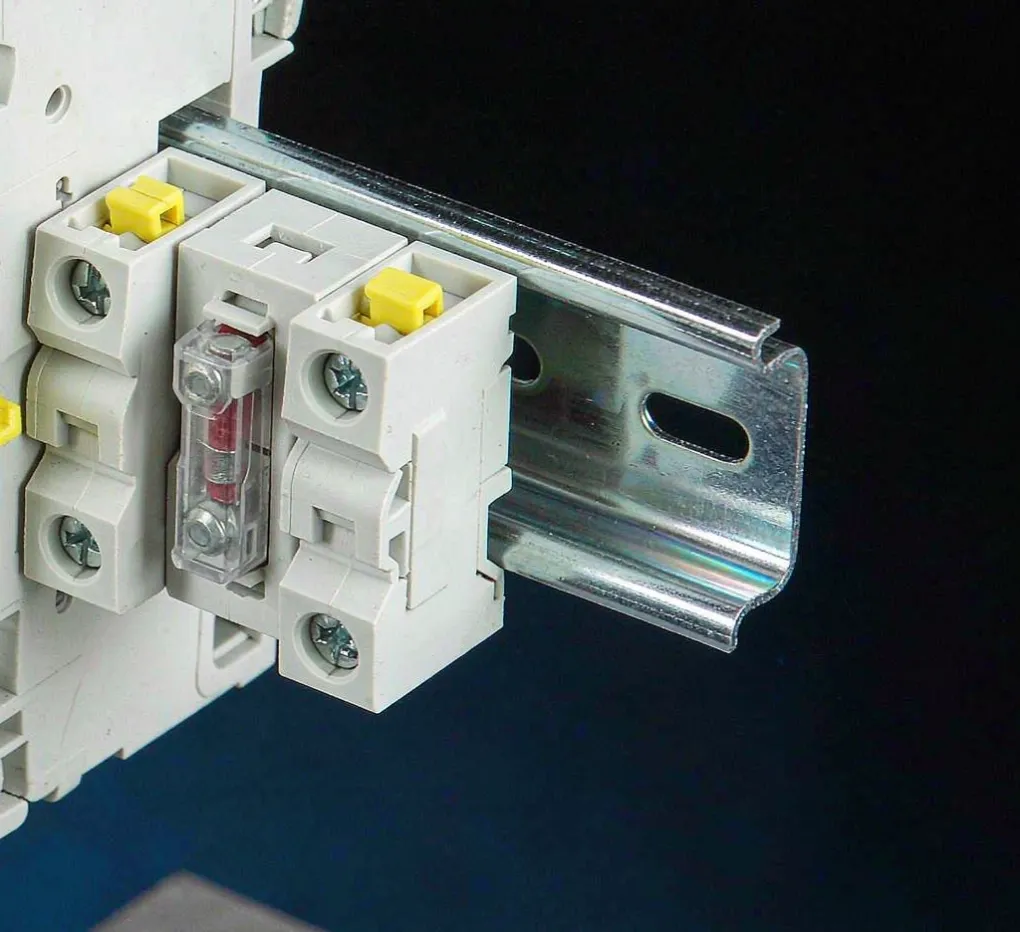
Here is the rule that gets missed: every outgoing circuit must be protected to the ampacity of the wire it feeds. A 2.5 mm² conductor can only carry so much before it becomes the fuse—and a wire acting as a fuse is a fire path, not a safeguard. In the North American market this lands under UL 508A section 409.1 and the NEC branch-circuit rules; internationally it traces to IEC60204-1. The point is not the citation—it is that each circuit leaving the panel needs its own overcurrent device, sized to its wire.
Fuse versus miniature circuit breaker
A fuse is cheap, compact, and fast. It needs replacing after it blows. A miniature circuit breaker (MCB) trips and resets, costs more, and takes more space. For field circuits that fault rarely, fuses are common; for circuits your operators toggle often, breakers save a truck roll.
Per-circuit versus grouped protection
Grouping several small loads behind one fuse is tempting on cost, but it means one fault kills everything in that group—including the device you needed to diagnose the fault. Per-circuit protection costs a little more and saves a lot of troubleshooting time.
Option | Cost | Reset | Best for |
|---|---|---|---|
Fuse, per circuit | Low | Replace | Rare-fault field circuits |
MCB, per circuit | Higher | Reset | Frequently toggled loads |
Grouped fuse | Lowest | Replace | Non-critical, bundled loads |
How to size it without an engineering degree
Buyer Decision: Size the protection to the smallest wire in the circuit, not the breaker feeding the whole panel. The branch device is there to save the field cable, and the cable is the weak link.
The short version: take the field wire's ampacity, apply any derating for temperature or bundling, and pick the protection device at or just below that number. A 24 V DC solenoid circuit and a 230 V AC motor circuit size completely differently, so the RFQ should state the voltage and the wire the installer will run—do not let the builder assume.
Terminal block types you will actually be quoted.
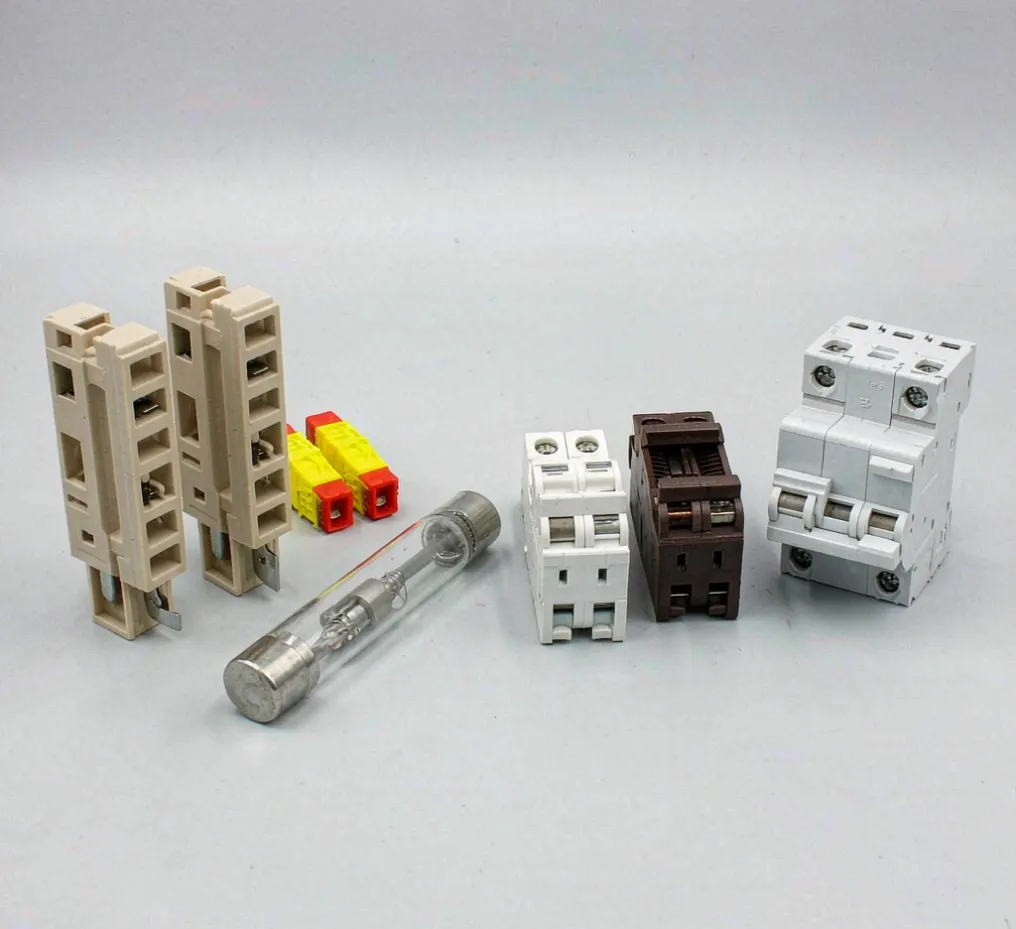
Engineering Note: The block type decides how fast a future fault gets isolated and how easy the next technician's job is. Specifying "screw terminals" by default misses the spring and push-in options that hold up better under vibration — exactly the condition most panels live in.
- Screw terminals—familiar, but loosening under vibration is the classic failure.
- Spring (cage-clamp) terminals—resist loosening; common in vibrating or mobile equipment.
- Push-in terminals—fast wiring, good for high channel counts.
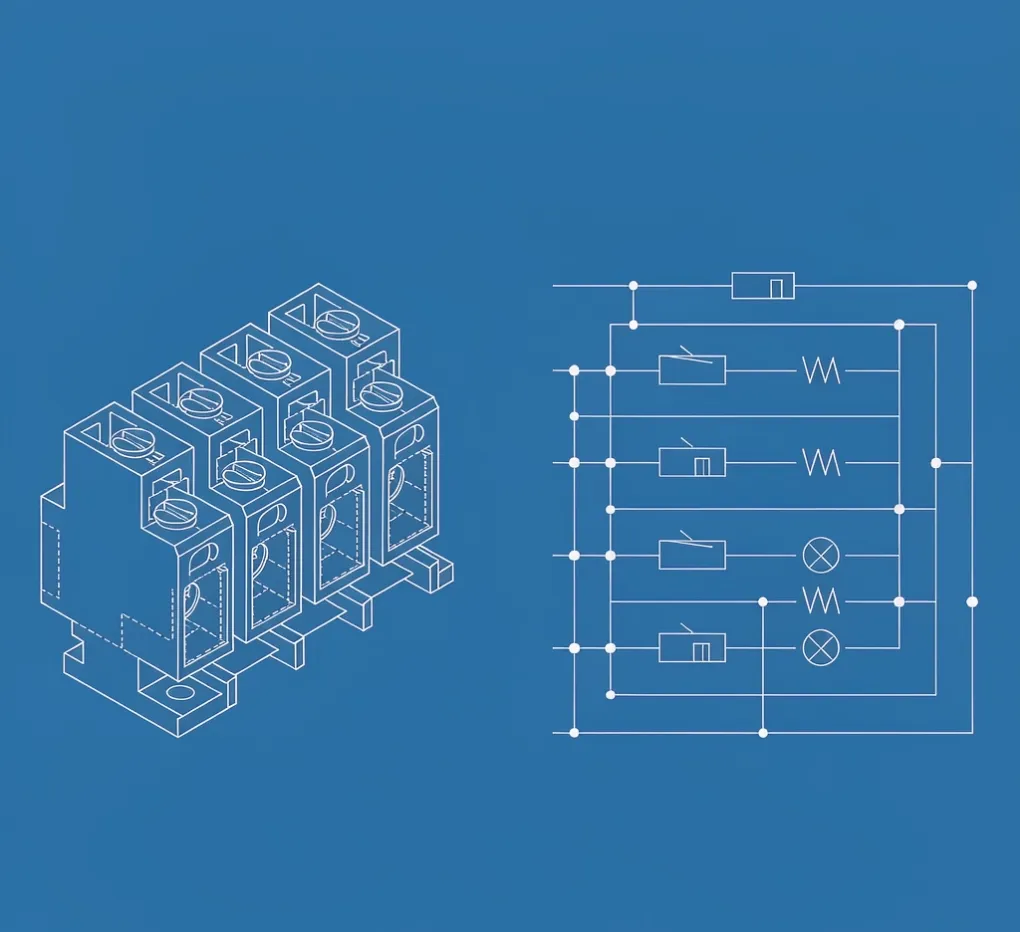
- Fuse-holder terminals—a block and a fuse in one footprint, the tidy way to do per-circuit protection.
- DIN-rail mounting—standard, so blocks and breakers share one rail and one spare-parts bin.
Two mistakes we keep seeing
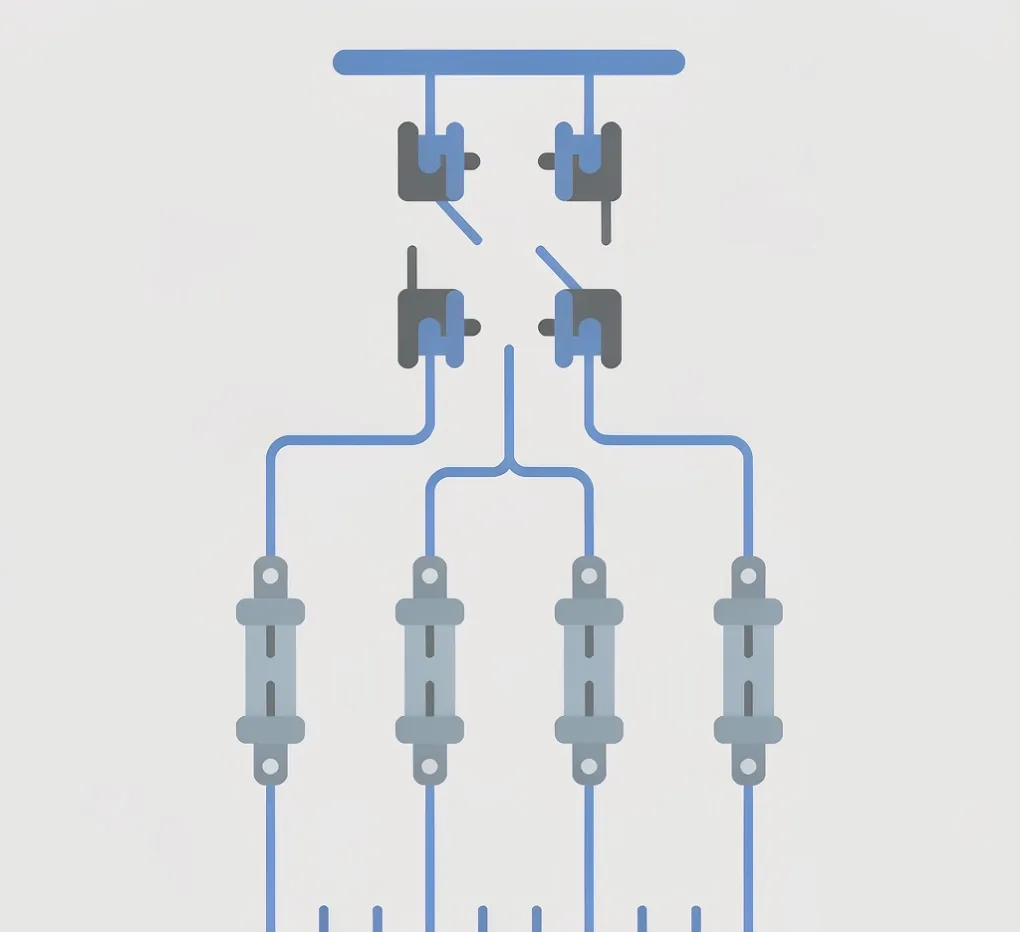
One main disconnect: zero branch fusing.
A main disconnect satisfies the "can I kill power" question but says nothing about "can a single field short take down the whole panel. " We review panels where the main is perfect and every outgoing circuit is bare. The disconnect protects the technician; branch protection protects the machine. You need both.
Mixing AC and DC on adjacent blocks without spacing
AC and DC faults behave differently, and a 24 V DC arc can sit next to a 230 V AC landing if nobody planned the layout. Separate them, label them, and keep clearance—or accept nuisance trips and confusing troubleshooting later.
Standards and why they protect you
- UL 508A—the industrial control panel standard; branch-circuit protection lives in section 409.
- IEC 60204-1—the international machinery electrical safety standard; its overcurrent rules mirror the intent above.
- NEMA—application guidance and ratings that sit behind most North American panel specs.
A supplier quoting to these is not doing you a favor; they are doing the minimum that keeps your panel inspectable and safe.
How we build it
We are a sourcing partner and panel-build shop, not a panel manufacturer in the brand sense—we assemble to your spec using components from the brands you trust, including Mitsubishi, Siemens, and ABB for the control elements. If you want to supply your own components, that works too; customer-supplied parts are a normal part of our build. Component lead times are typically 3–5 days, so the terminal and protection decisions should be fixed in the drawing before we start. If the RFQ is still vague on branch protection, that is the first thing our engineering review flags.
Frequently asked questions
Do I really need a fuse on every outgoing circuit?
For inspectable, safe panels, yes—each circuit leaving the enclosure should be protected by its wire. Grouped protection is acceptable for bundled non-critical loads, but you trade isolation for cost.
Fuse or breaker for field wiring?
Fuses for circuits that rarely fault and where cost matters; breakers where operators reset often or a truck roll is expensive. Neither is ""wrong"—the mistake is leaving the circuit unprotected entirely.
Can I supply my own terminal blocks and fuses?
Yes. Customer-supplied components are common in our builds. Send the parts with the drawing, and we integrate and test them as one assembly.
What voltage details belong in the RFQ?
State the voltage and the wire the installer will run for each circuit—24 V DC and 230 V AC size completely differently, and the builder cannot assume correctly every time.
How is branch protection checked before shipment?
At FAT. Each protected circuit is exercised to confirm the device trips or blows at the rated point and that the right load sits behind it. Ask for it in the FAT checklist.
Does this affect UL 508A listing?
It is part of it. A panel built to UL 508A with proper branch protection is far more likely to pass inspection without rework—which is where the real cost saving is.
Buyer Takeaway
Terminal blocks and branch protection are the quiet part of a control panel quote, and they are where shortcuts turn into field failures. Specify per-circuit protection sized to the field wire, pick block types that survive vibration, separate AC from DC, and make FAT prove it. A panel that protects its own wiring protects your uptime.
Ready to turn a vague RFQ into a build-ready drawing? Upload your drawing for an engineering review, and we will return suggestions on terminal layout, branch protection, and FAT checks—usually within one business day.
Related guides
Building custom panels where protection is designed in, not added later? See our custom control panels and the China sourcing guide.