
Oct 17, 2026Buying Guides
Buying an Industrial UPS from China
Industrial UPS quotes vary when buyers only ask for kVA. A clear load list, runtime, site condition, bypass, and certificates make quotes easier to compare.
Buying an Industrial UPS from China?
Send the Load List Before You Ask for the Price
A buyer once messaged me: “Natalie, can you quote a 10 kVA industrial UPS?”
I asked what the UPS needed to protect. He replied, “The control system.”
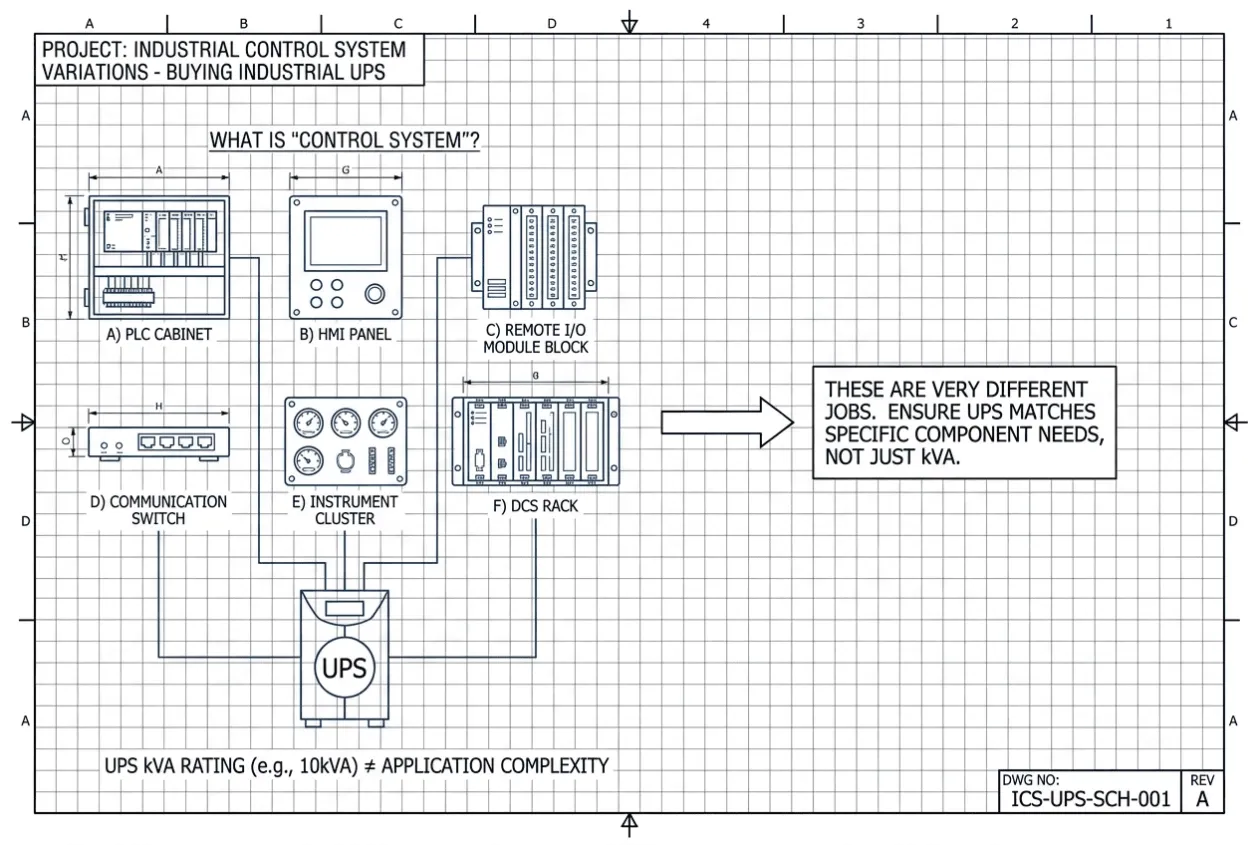
That answer was honest, but it was still not enough for a quotation. In industrial projects, “control system” may mean one PLC cabinet, one HMI, remote I/O, communication switches, instruments, a DCS rack, or safety control. These are very different jobs, even if the UPS label says the same kVA.
Before comparing quotes, pin down autonomy time and battery type; the industrial UPS systems page lists the inputs we need to size and price a unit.
This is where many UPS inquiries go sideways. The buyer asks for a price, the supplier sends a model, and nobody talks enough about the load. Later, when the UPS cannot hold the system long enough, everyone opens the quotation and tries to find the missing sentence. Usually, it was never written.
For industrial UPS sourcing, load, runtime, topology, environment, battery type, and compliance matter more than the first kVA number.
The Question I Ask Before Price
Before I quote an industrial UPS, I want to know one thing first: what must stay alive when power fails?
Not the whole plant. Not the biggest motor. Not every device in the cabinet. Only the load that cannot blink.
Critical Load | Usually Protected? |
|---|---|
PLC | ✓ |
HMI | ✓ |
24VDC power supply | ✓ |
Remote I/O | ✓ |
Industrial Ethernet switch | ✓ |
Field instruments | ✓ |
Alarm system | ✓ |
Safety PLC or DCS controller | ✓ |
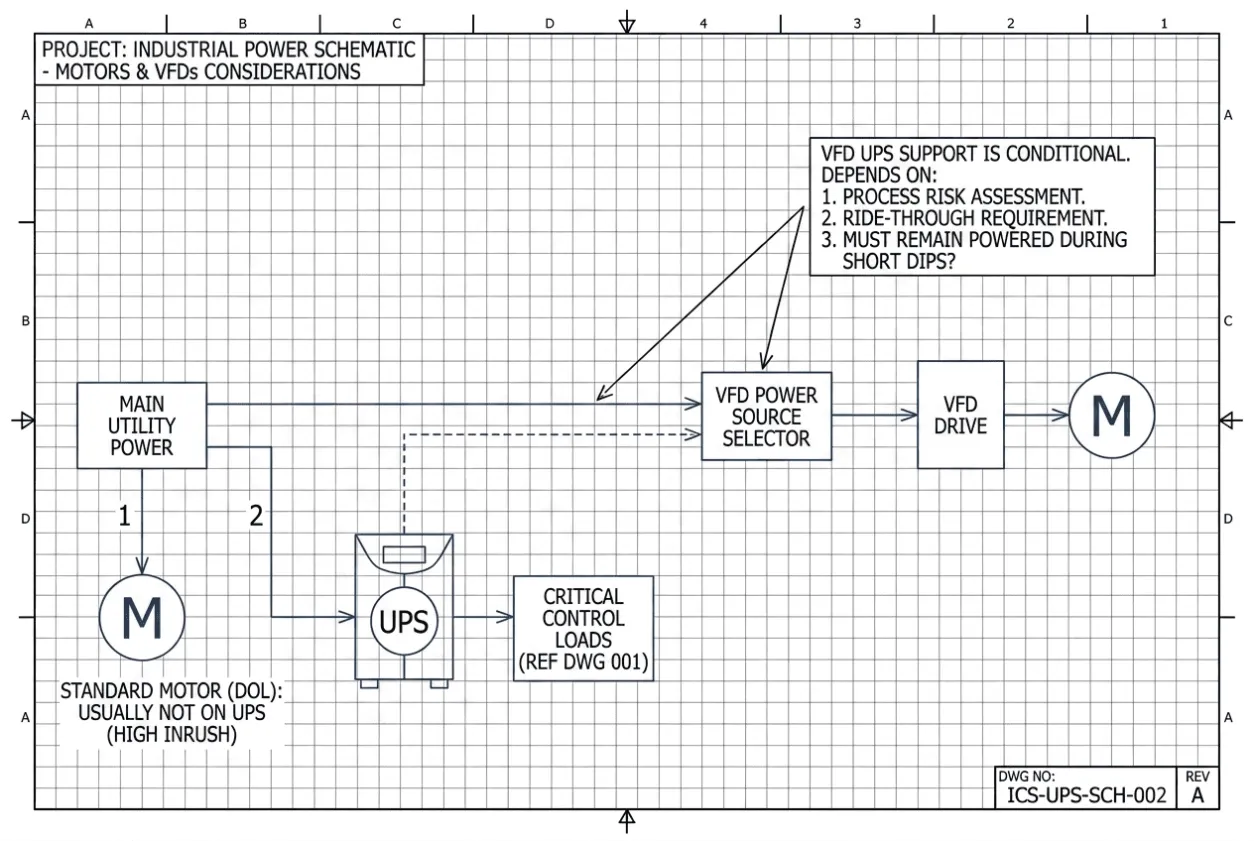
VFD | Sometimes |
Motors | Usually no |
This table changes the buying conversation immediately. Many buyers think they need to back up the whole machine, but often the UPS only needs to protect the control power, communication, and instruments. Motors usually need a different discussion. VFDs are a “sometimes,” depending on process risk, ride-through requirement, and whether the drive must remain powered during a short dip.
That is why I do not like quoting only from “10 kVA.” It may be too large, too small, or simply protecting the wrong thing.
A Small Case I Still Remember
One factory had short power dips every few weeks. The power came back quickly, so management did not treat it as a major electrical problem. The lights blinked, production paused for a moment, and everyone moved on.
The PLC did not move on.
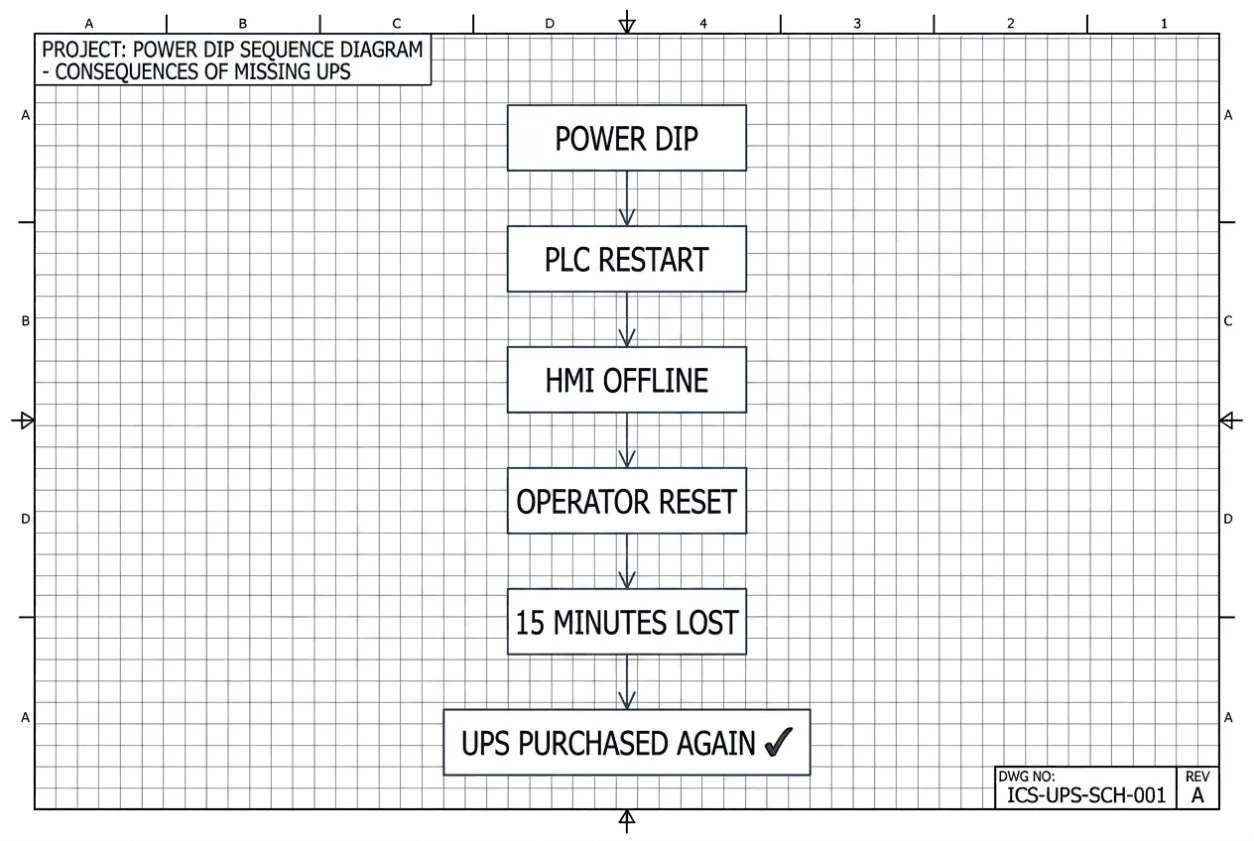
The first UPS had been bought by KVA. Nobody had asked whether transfer time mattered. Nobody had separated critical control loads from non-critical loads. The supplier sold a UPS, but the plant needed a ride-through.
That is the difference. A UPS is not bought because batteries are interesting. It is bought because restarting a process is annoying, expensive, and sometimes risky.
The Five Lines I Want in an RFQ
A good industrial UPS inquiry does not need to be a thick technical document. Most of the time, five clear lines are enough to let a supplier quote responsibly.
Tell the supplier the protected load, estimated kW or kVA, required runtime, site condition, and target market requirement. If you do not know the exact load, send component photos, cabinet drawings, or a rough device list. It is much better than asking the supplier to guess.
A simple RFQ could say:
Please quote an industrial UPS for PLC cabinet backup. Protected load includes PLC, HMI, 24VDC power supply, Ethernet switch, remote I/O, and instruments. Estimated load is 6 kW. Runtime required: 15 minutes before generator supply. Indoor industrial room, ambient up to 40°C. Please include battery sizing, bypass option, inspection, packing, and certification documents if available.
This is not complicated. It is just clear enough to stop the supplier from selling the wrong thing.
Buyer Decision Matrix
Before I compare UPS quotes, I like to match the load situation with the information the supplier needs. This keeps the discussion practical and prevents a quote from looking cheaper only because half the scope is missing.
Situation | Tell Supplier | Why It Matters |
|---|---|---|
PLC + HMI only | Load list and runtime | Prevents oversizing |
PLC + remote I/O + instruments | 24VDC load and device list | Protects real control power |
DCS or safety controller | Criticality and topology requirement | Usually pushes the discussion toward online UPS |
Generator backup | Generator start time | Decides battery runtime |
Outdoor or hot installation | Ambient temperature and enclosure | Affects battery life |
Export project | UL, IEC, CE, or project documents | Avoids certificate problems after approval |
This table is not meant to make buying complicated. It is meant to stop a bad shortcut. In UPS sourcing, the shortcut is usually asking for kVA before explaining the load.
Why Two 10 kVA Quotes Look So Different
Two suppliers may both quote a 10 kVA industrial UPS, but the scope can be miles apart. This is where buyers need to look past the first price.
Supplier A | Supplier B |
|---|---|
UPS unit only | UPS + batteries |
5-minute runtime | 30-minute runtime |
No bypass | Maintenance bypass included |
Basic indoor use | Industrial environment reviewed |
No inspection detail | Pre-shipment inspection included |
No documents listed | FAT report and certificates included |
Both are 10 kVA.
Only one is a complete scope.
This is why a low UPS price does not always mean a better deal. Sometimes it only means the expensive parts of the decision are hiding outside the quotation.
10 kVA is a rating. It Is Not a Specification.
I understand why buyers ask for kVA first. It feels like the easiest way to compare prices.
But “10 kVA” without runtime is only half a sentence. A 10 kVA UPS with a five-minute runtime and a 10 kVA UPS with a sixty-minute runtime are not the same purchase. Add online topology, battery chemistry, bypass cabinet, enclosure, temperature rating, inspection, and certification, and the difference becomes even larger.
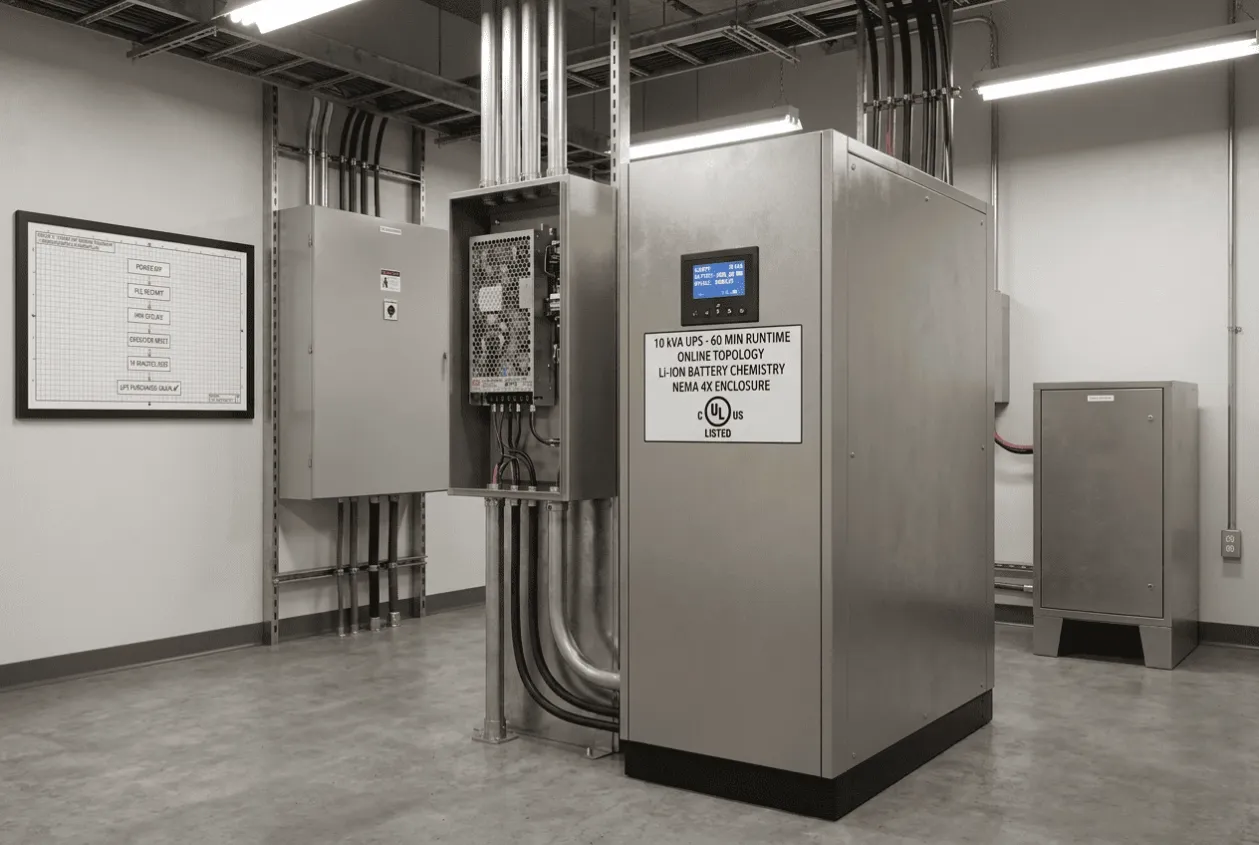
That is not a bargain. That is hide-and-seek with project cost.
When I Stop Comparing Price
I do not recommend the most expensive UPS every time. That would be lazy selling.
But when the UPS protects PLC, DCS, safety control, communication, or instruments that cannot reset during a power dip, I stop comparing only price and start comparing downtime risk. At that point, online double-conversion usually enters the discussion, because critical control loads often care less about how long the blackout lasts and more about whether the voltage disappears even for a moment.
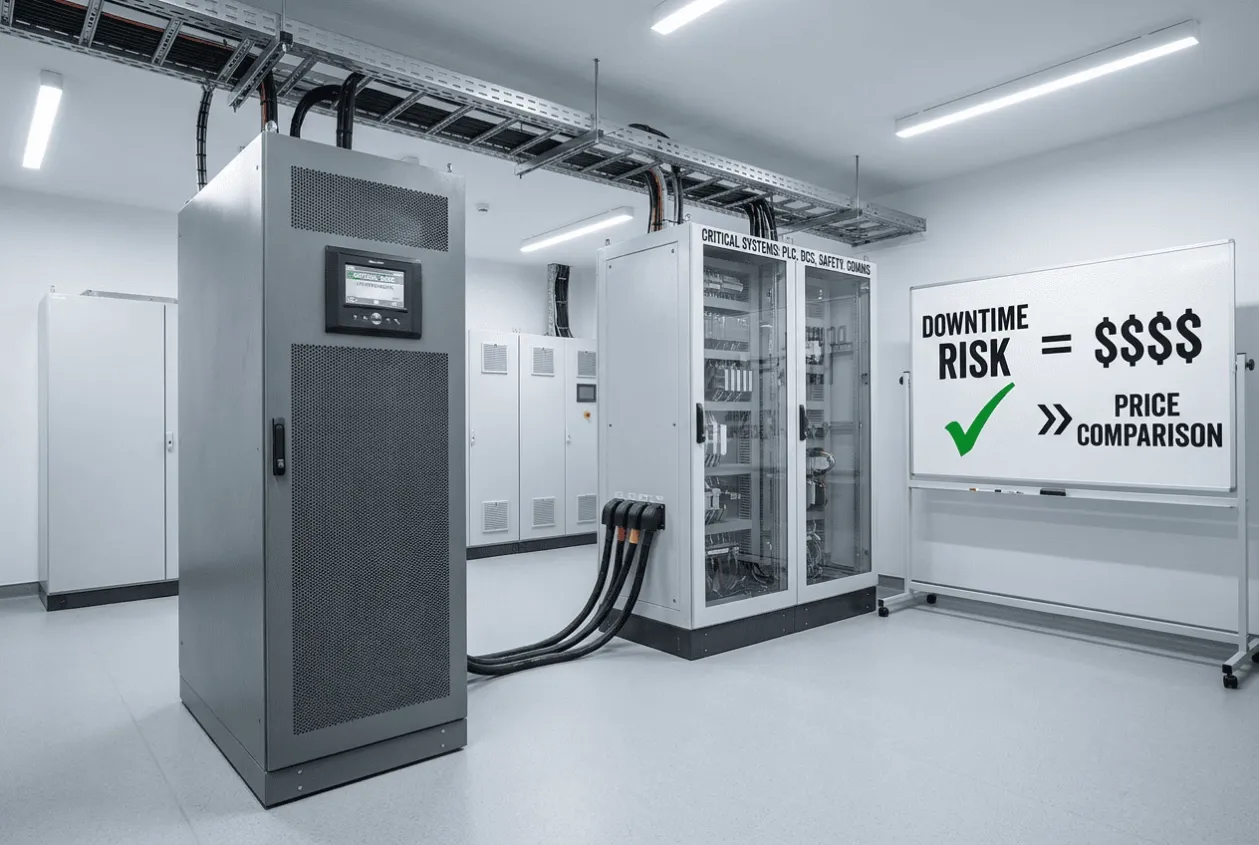
For less critical loads, line-interactive UPS may still be acceptable. The buyer should first answer one uncomfortable question: what happens if this load shuts down for ten seconds?
If the answer is “nothing serious,” the quotation can stay simple. If the answer is “the line stops, alarms flood the HMI, and operators have to restart the process,” then this is no longer a small accessory purchase. It is protection for production.
What We Usually Clarify Before Quoting
When buyers send UniRegal an industrial UPS inquiry, we usually clarify the protected load, runtime, installation environment, battery preference, topology, certification need, and whether the UPS will be installed alone or integrated into a control panel.
Sometimes the buyer has only cabinet photos.
That is enough to start.
We can review what devices are inside, estimate the protected load, and ask the missing questions before quotation. A perfect load list is helpful, but a practical conversation is often how the real specification begins.
Send the load list, runtime target, site condition, and delivery requirement. We can help turn that into a quote that is easier to compare and safer to approve.
FAQ
What is the first thing I should send for an industrial UPS quote?
Send the protected load list. The supplier needs to know what must stay powered, such as PLC, HMI, 24VDC power supply, instruments, Ethernet switch, remote I/O, or alarm system.
Is kVA enough for the UPS quotation?
No. kVA is important, but it is not enough. Runtime, load type, topology, battery size, site temperature, bypass, certification, and installation method can all change the final price.
Do I always need an online double-conversion UPS?
Not always. For critical control systems, DCS, safety control, or PLC loads that cannot reset during power dips, online UPS is usually safer to review first. For non-critical loads, line-interactive UPS may be acceptable if the process can tolerate the transfer.
Final Thought
A UPS is not selected by its rating. It is selected by the equipment you refuse to let go dark.
Buy the load first. The UPS comes second.
About UniRegal
The UniRegal sourcing team supports system integrators and OEMs with industrial UPS sizing, battery-string calculation, and control-panel power integration — matching critical loads to double-conversion systems and building inspected, export-ready shipments from a Foshan sourcing base.
Related Guides
Related Solutions
Need help specifying or sourcing this for your project? Request a quote - we reply within 1-2 working days with a technical review.