
Power Distribution Panels
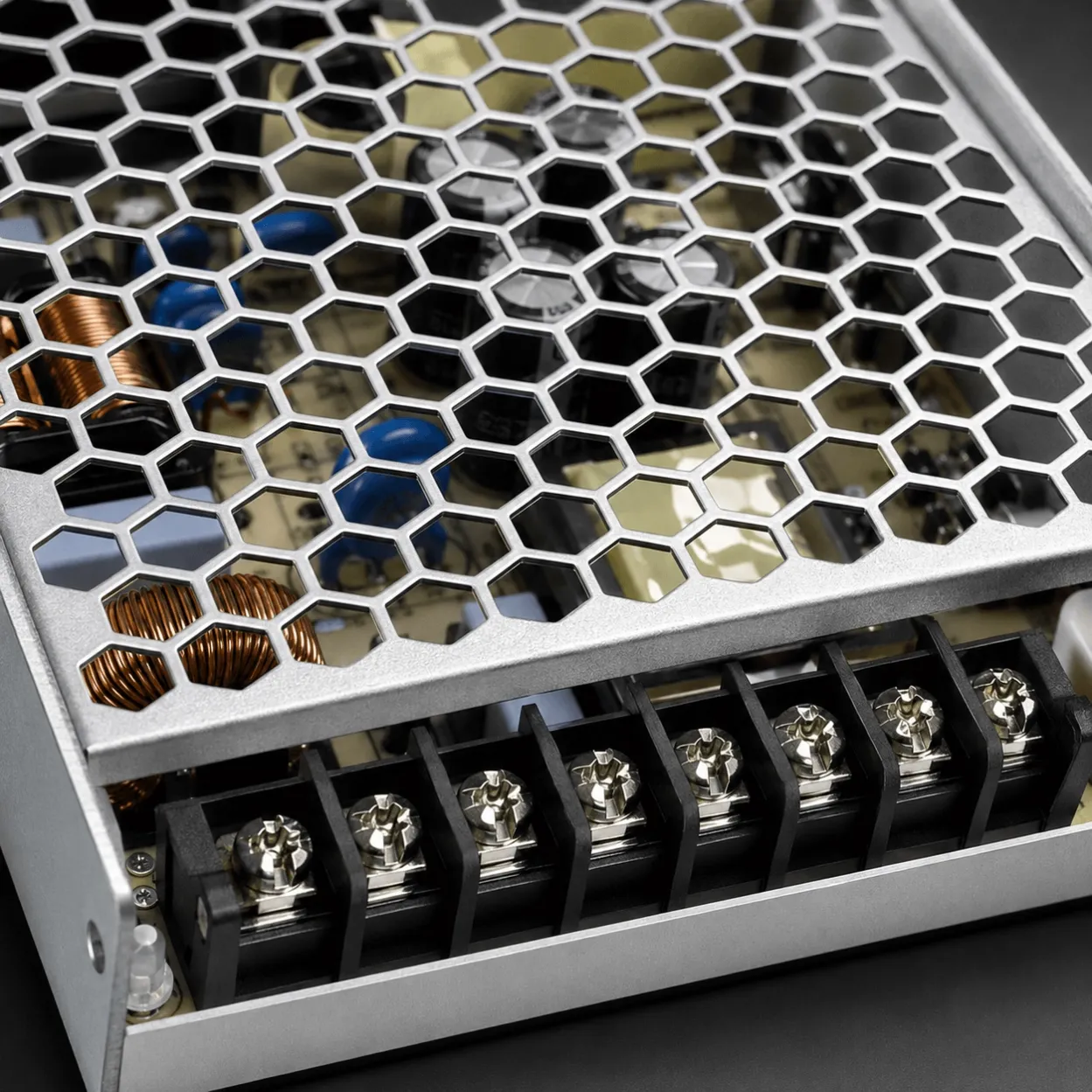
Switching Power Supplies
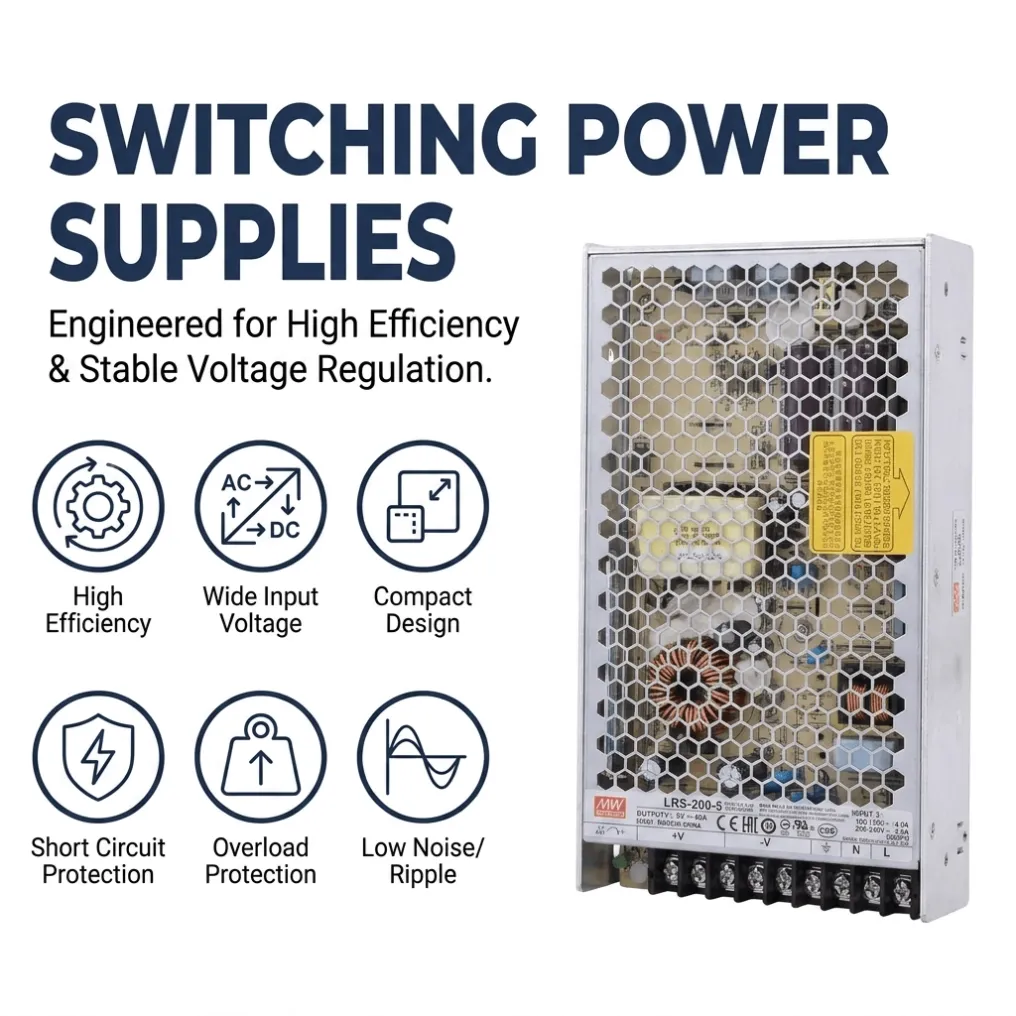
Source switching power supplies for industrial automation, PLC cabinets and control systems. Select 5V, 12V, 24V or 48V AC-DC and DC-DC models.
Specifications
- Switching Power Supply
- 5V
- Switching Power Supplies
- 12 V
- Switch Model Power Supply
- 24 V
- Switching Model Power Supply
- 48 V
- Switching mode Power Supply
- DIN-Rail
- AC-DC Switching Power Supply
- AC-DC
- DC-DC Switching Power Supply
- DC-DC
Industrial Switching Power Supplies for Automation, Control Panels, and Electronic Equipment
UniRegal supplies switching power supplies for industrial automation, control cabinets, PLC systems, instrumentation, communication equipment, LED systems, and other electronic applications that require regulated DC power.
Available configurations may include AC-DC and DC-DC switching power supplies, DIN-rail power supplies, enclosed power supplies, panel-mount units, and compact control-cabinet models.
Common output options include 5V, 12V, 24V, 36V, and 48V DC, subject to the selected model. The correct power supply is determined by input voltage, output voltage, required current, power rating, installation method, operating temperature, protection requirements, and load behavior.
[Request a Switching Power Supply Quote]
Quick Answer: What Is a Switching Power Supply?
A switching power supply, also called a switched-mode power supply or SMPS, converts electrical power into a regulated output by switching electronic devices at high frequency.
Compared with a traditional linear power supply, a switching power supply is usually more compact and efficient. However, the switching process can create ripple and electromagnetic noise, so filtering, grounding, shielding, and correct installation must be considered for sensitive equipment.
Choose the Right Switching Power Supply
Requirement | Typical selection |
|---|---|
PLC or control cabinet | 24V DC DIN-rail switching power supply |
Sensors and instrumentation | 12V or 24V regulated DC supply |
Industrial network equipment | 24V or 48V DIN-rail power supply |
Compact electronic equipment | Enclosed AC-DC switching power supply |
Battery or DC bus conversion | DC-DC switching power supply |
Low-voltage control circuit | 5V, 12V, or 24V output supply |
Outdoor or harsh installation | Industrial enclosure with suitable temperature and protection rating |
Space-limited cabinet | Slim DIN-rail or panel-mount power supply |
The output voltage must match the equipment requirement. The output current should be selected with enough margin for continuous load, startup current, and future expansion.
Switching Power Supply Voltage Options
5V Switching Power Supply
5V DC power supplies are used for electronic control circuits, communication devices, embedded systems, displays, sensors, and other low-voltage equipment.
When selecting a 5V switching power supply, check:
- Output current
- Ripple and noise
- Connector or terminal arrangement
- Short-circuit protection
- Cooling method
- Required isolation
12V Switching Power Supply
12V switching power supplies are commonly used for instrumentation, communication equipment, LED systems, security devices, and control circuits.
The product selection should confirm the continuous current, peak load, input range, mounting method, and required protection functions.
24V Switching Power Supply
24V DC is widely used in PLC cabinets, industrial automation, sensors, relays, contactors, remote I/O, and control panels.
A 24V switching power supply should be checked for:
- Rated output current
- DC voltage adjustment range
- DIN-rail compatibility
- DC OK relay contact
- Overload behavior
- Operating temperature
- Parallel or redundant operation, where required
48V Switching Power Supply
48V switching power supplies are used for industrial network equipment, telecom-related systems, PoE equipment, communication cabinets, and selected automation applications.
The buyer should confirm the exact output voltage, current capacity, grounding method, insulation requirement, and communication-equipment compatibility before ordering.
AC-DC and DC-DC Switching Power Supplies
AC-DC Switching Power Supply
An AC-DC switching power supply converts AC input into a regulated DC output.
Typical selection information includes:
- AC input voltage range
- Frequency
- DC output voltage
- Output current
- Rated power
- Efficiency
- Power factor
- Protection functions
- Mounting arrangement
DC-DC Switching Power Supply
A DC-DC switching power supply converts one DC voltage into another DC voltage.
It may be used for:
- Battery-powered equipment
- Vehicle and mobile systems
- Remote control panels
- DC distribution systems
- Industrial communication equipment
- Isolated control circuits
- Backup power arrangements
For DC-DC applications, input voltage variation and output isolation must be confirmed before model selection.
How Does a Switching Power Supply Work?
A typical switching power supply operates through several stages:
- The input is rectified and filtered when the source is AC.
- A switching device rapidly controls the energy flow.
- A high-frequency transformer or inductor changes the voltage level.
- The output is rectified, filtered, and regulated.
- A feedback circuit adjusts the switching duty cycle as the load changes.
This design allows the power supply to use smaller magnetic components and achieve higher power density than many linear designs.
Switching Power Supply vs Linear Power Supply
Comparison point | Switching power supply | Linear power supply |
|---|---|---|
Efficiency | Generally higher for comparable power levels | Generally lower because excess voltage becomes heat |
Size and weight | More compact | Larger transformer and heat sink may be required |
Heat generation | Usually lower, depending on efficiency and load | Usually higher |
Output noise | Requires attention to ripple and high-frequency EMI | Usually lower noise |
Input range | Often supports a wider input range | Frequently designed around a specific input |
Higher-power applications | Usually more practical | Can become large and inefficient |
Noise-sensitive measurement | May require additional filtering | Often preferred when very low noise is essential |
A switching power supply is not automatically the best choice for every circuit. For PLC cabinets, automation systems, and general industrial control, efficiency, size, protection, and availability are often important. For precision analog, RF, or laboratory measurement, noise performance may have a greater influence on the decision.
Key Specifications to Check Before Purchase
Input Voltage
Confirm whether the model accepts:
- 85–264V AC
- 100–240V AC
- 180–550V AC
- 12V, 24V, 48V, or another DC input
- Single-phase or three-phase input
Do not assume that a model designed for 230V AC will accept a three-phase industrial supply.
Output Voltage and Current
Check the nominal voltage, adjustable range, continuous current, peak current, and output power.
For example, a 24V 5A supply provides approximately 120W of rated output power. The actual model must still be checked for temperature derating and peak-load performance.
Installation Method
Common formats include:
- DIN-rail mounting
- Panel mounting
- Enclosed chassis
- Open-frame mounting
- Rack or cabinet installation
The available space, cable entry, ventilation clearance, and service access should be checked before final selection.
Protection Functions
Depending on the model, protection may include:
- Short-circuit protection
- Overload protection
- Overvoltage protection
- Over-temperature protection
- Input surge protection
- Reverse-polarity protection for DC-DC models
Protection terminology and recovery behavior vary between models, so the datasheet should be reviewed rather than relying on a general product description.
Cooling and Temperature
Cooling may use free-air convection, an internal fan, or an external thermal-management arrangement.
Ambient temperature, cabinet temperature, installation spacing, and load derating should be considered together. A power supply that works correctly in an open test environment may require a lower operating load inside a hot control cabinet.
Switching Power Supply Noise and Ripple
High-frequency switching can produce electrical noise and ripple. This does not mean every switching power supply is unsuitable for automation equipment, but the installation must be planned correctly.
Noise-related design points include:
- Input and output filtering
- Proper protective earthing
- Cable separation
- Shielded signal wiring
- Short DC wiring paths
- Correct cabinet grounding
- Sufficient spacing from analog signals
- Load-specific ripple requirements
If the power supply is being used for a sensitive analog instrument, medical circuit, audio circuit, or communication system, provide the required ripple and noise limits before quotation.
Switching Power Supplies for Industrial Automation
Industrial switching power supplies are commonly used in:
- PLC control panels
- MCC and motor-control cabinets
- Machinery control systems
- Process-control panels
- Water-treatment systems
- HVAC control panels
- Industrial Ethernet cabinets
- Sensors and transmitters
- Relay and contactor circuits
- Building automation
- Security and communication systems
- LED and signage systems
For a control-panel application, the power supply should be selected together with the PLC, I/O modules, relays, contactors, solenoid valves, sensors, and communication equipment. The total load is more important than the current rating of one individual device.
Why Switching Power Supply Prices Differ
The price of a switching power supply depends on more than output voltage.
Main cost factors include:
- Output power
- Output current
- Input voltage range
- DIN-rail or enclosed construction
- Efficiency
- Temperature range
- Protection functions
- Redundancy or parallel operation
- Communication or DC OK contact
- Safety and EMC requirements
- Brand and model availability
- Quantity
- Stock condition
- Required delivery time
When comparing suppliers, request the complete model number and datasheet. “24V power supply” is not enough information for a technical comparison.
How UniRegal Helps With Switching Power Supply Sourcing
When you send a model number, datasheet, photograph, or electrical requirement, UniRegal can help verify:
- Whether the model matches the required output
- Whether the input voltage is suitable
- Whether the output current is sufficient
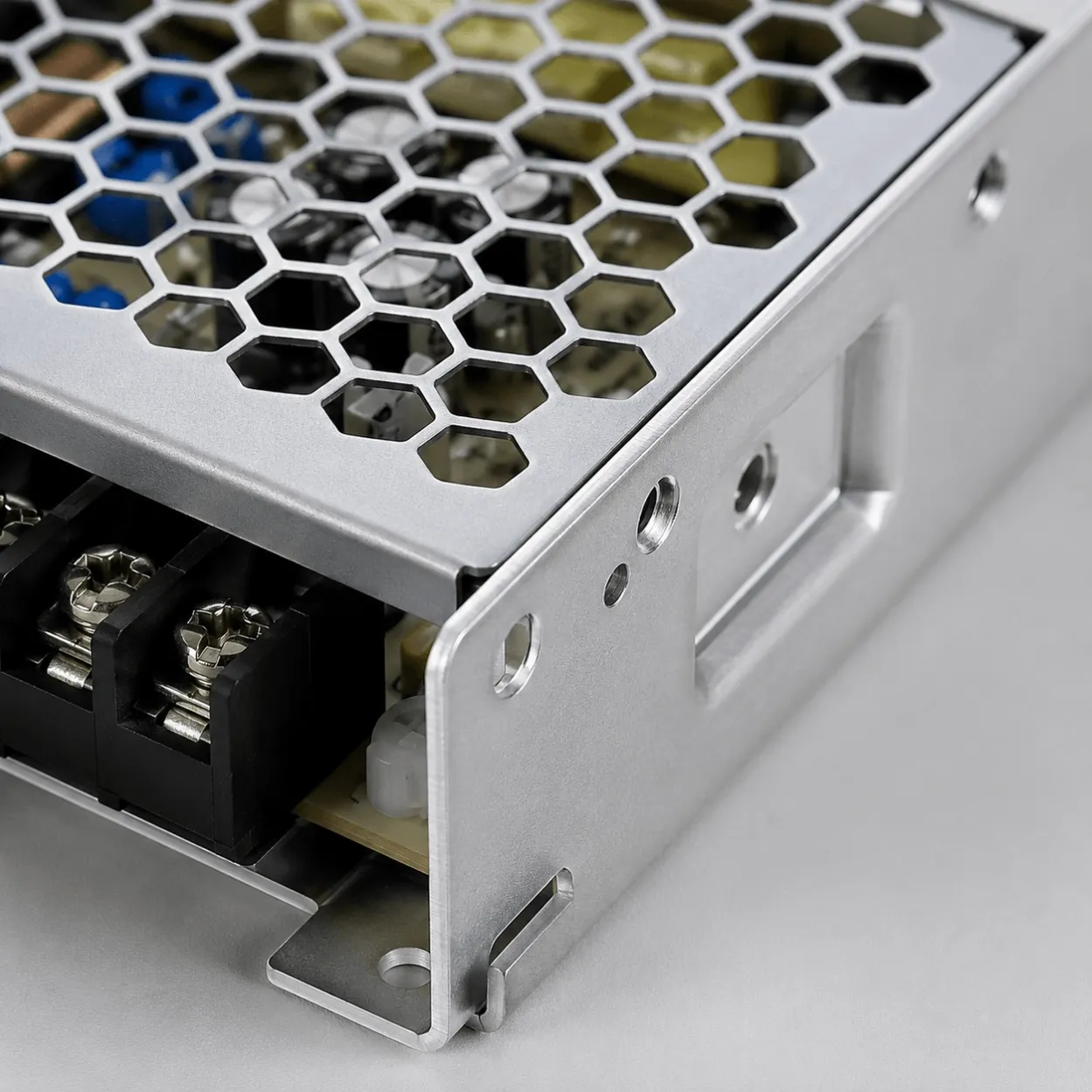
- Whether the mounting method fits the cabinet
- Whether a replacement model is compatible
- Whether the requested model is current, discontinued, or project-specific
- Whether the available supply route meets the required delivery schedule
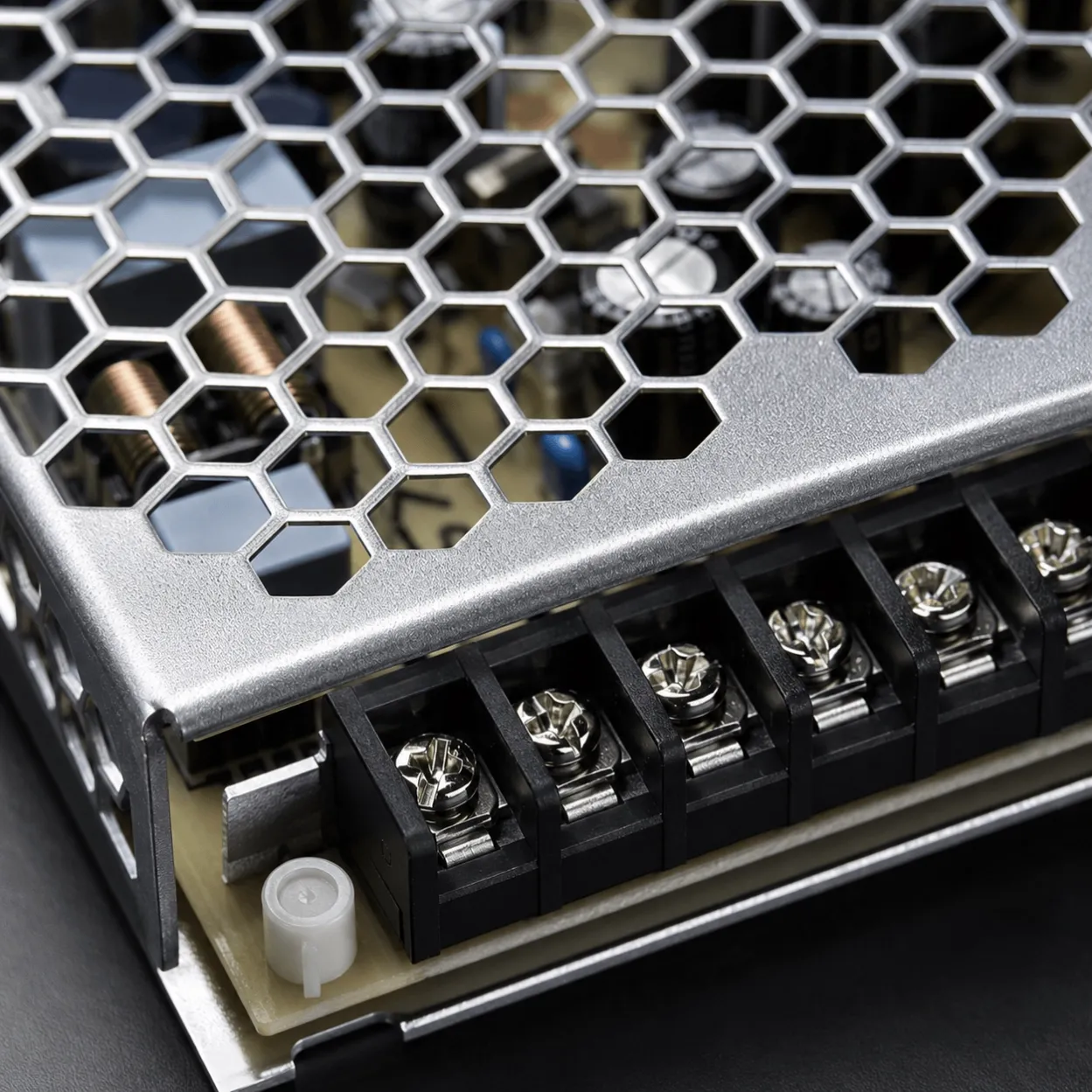
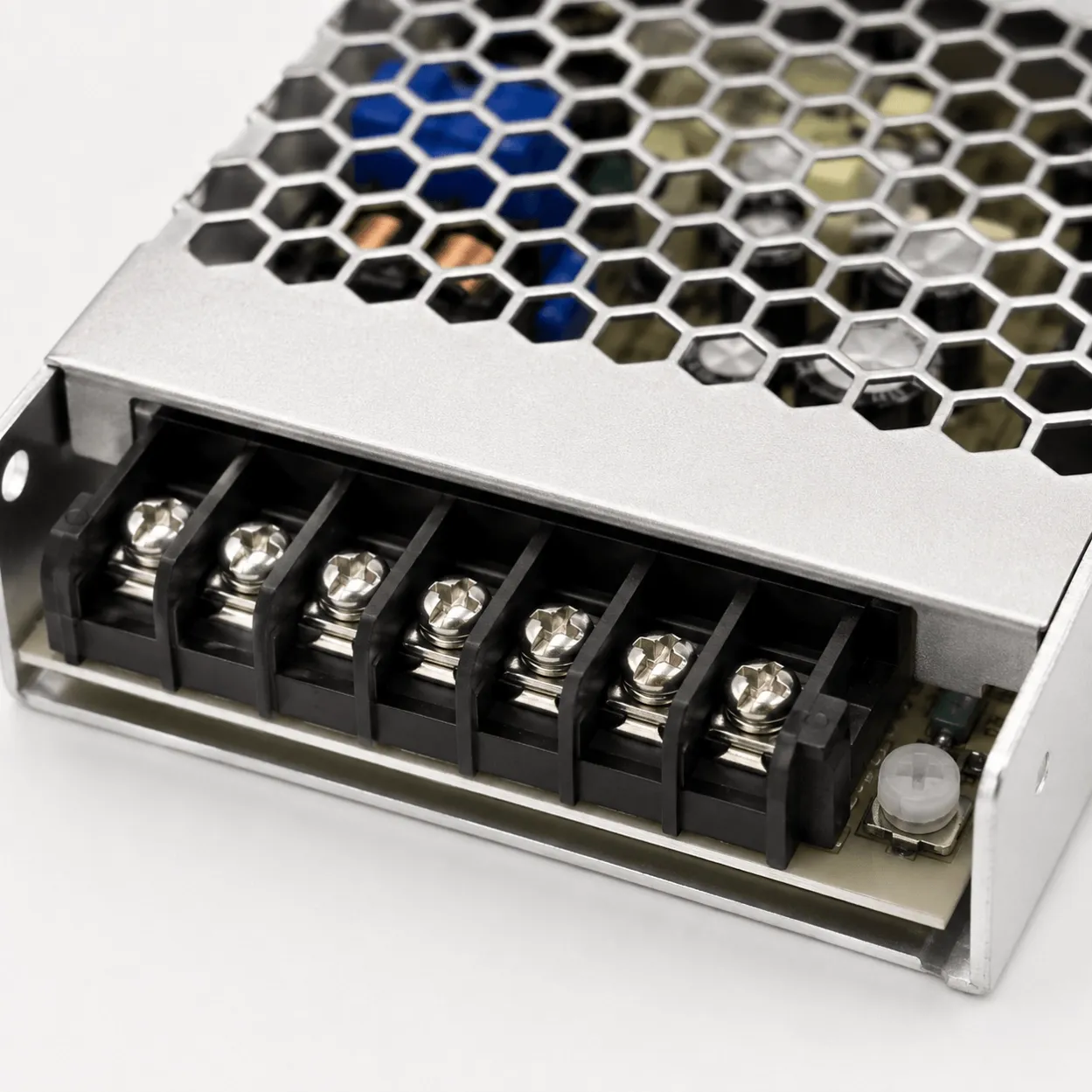
For replacement requests, please provide the original model label and a photograph of the terminal arrangement whenever possible. Similar-looking power supplies may have different terminals, output adjustments, protection behavior, or mounting dimensions.
Information Needed for a Switching Power Supply Quote
Please send any available information:
- Original model number
- Required input voltage
- Required output voltage
- Continuous output current
- Rated power
- AC-DC or DC-DC requirement
- DIN-rail or panel-mount requirement
- Operating temperature
- Application equipment
- Quantity
- Destination country
- Required delivery time
- Datasheet or product photograph
If you are unsure which model is suitable, send the equipment nameplate and the original power-supply label for review.
Frequently Asked Questions
1. What is a switching power supply?
A switching power supply is an electronic power converter that uses high-frequency switching to regulate voltage and deliver a controlled AC or DC output.
2. What is the difference between a switching power supply and a switch-mode power supply?
They are different names for the same general technology. SMPS, switched-mode power supply, switch-mode power supply, and switching power supply are commonly used terms.
3. How does a switching power supply work?
It rectifies and filters the input, switches the energy at high frequency, changes the voltage through a transformer or inductor, and regulates the output through feedback control.
4. How do I choose a 24V switching power supply?
Confirm the total 24V load current, startup demand, required power margin, input voltage, mounting method, operating temperature, and protection functions.
5. Can I use a switching power supply in a PLC cabinet?
Yes. DIN-rail 24V switching power supplies are commonly used in PLC and automation cabinets, provided the output current, temperature, grounding, ripple, and protection requirements are suitable.
6. Why does my switching power supply make noise?
Noise may come from magnetic components, switching operation, burst mode, mechanical vibration, or sudden load changes. Check the datasheet, installation, load level, grounding, and ventilation before replacing the unit.
7. Is a switching power supply better than a linear power supply?
It depends on the application. Switching power supplies are usually more compact and efficient, while linear power supplies may be preferred for very low-noise measurement or precision analog circuits.
8. How do I know whether a replacement switching power supply is compatible?
Compare input range, output voltage, current, power, terminal layout, polarity, mounting dimensions, protection behavior, and required certifications. The original model label and datasheet provide the most reliable basis for verification.
Request a Switching Power Supply Quote
Send UniRegal the model number, required voltage, output current, quantity, or a photograph of the original unit.
We can help you identify the correct AC-DC, DC-DC, 5V, 12V, 24V, 48V, DIN-rail, or enclosed switching power supply for your equipment and application.
Related Products: