
Oct 24, 2026Buying Guides
Industrial UPS Battery Selection: VRLA vs Lithium-Ion in 2026
The battery decides your UPS runtime and your 10-year cost more than the inverter does. Here is the VRLA vs lithium-ion decision, in plain buyer terms.
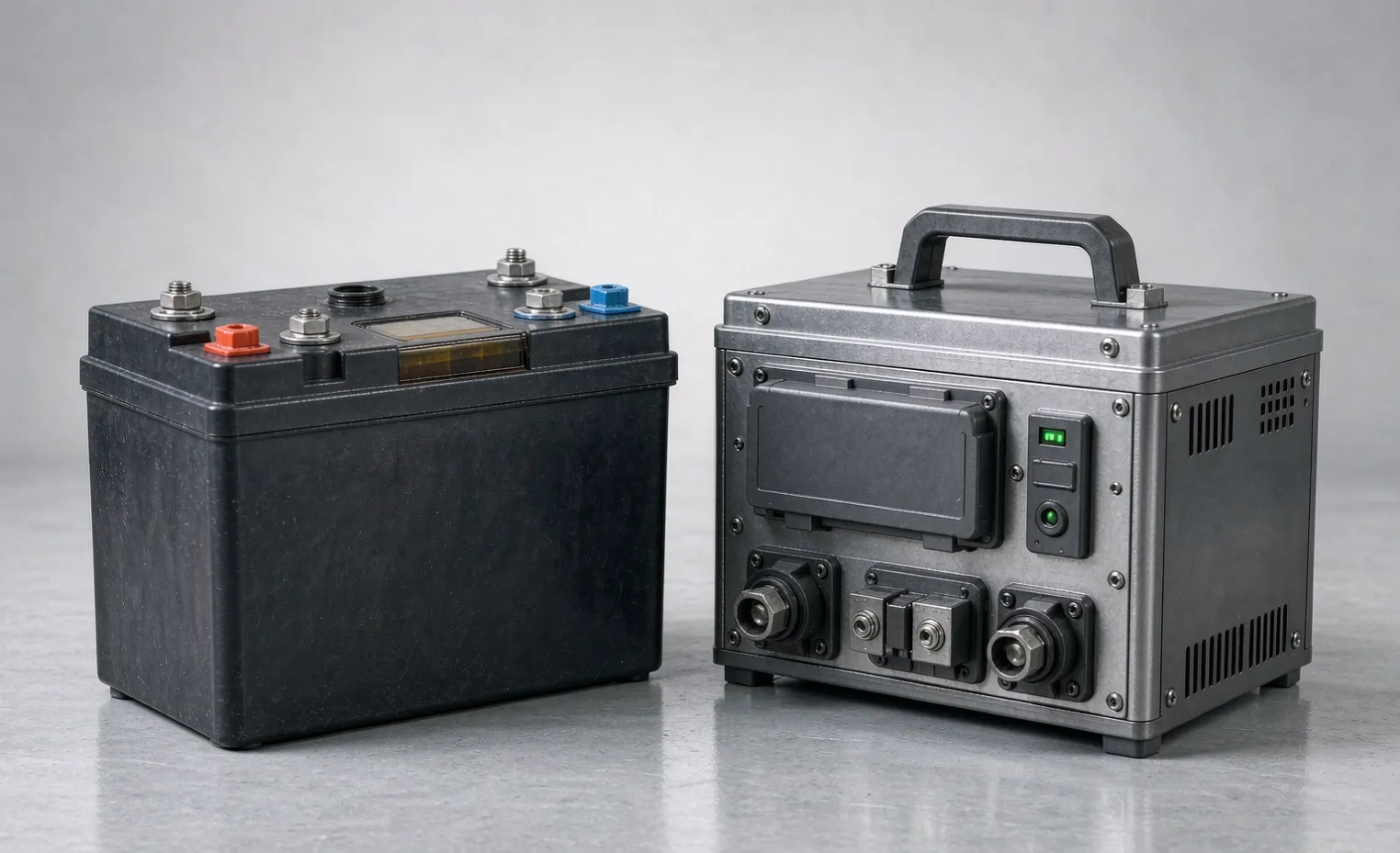
Why the battery — not the UPS — decides your runtime
When you buy an industrial UPS, most buyers fixate on the inverter, the topology, and the brand. But the part that actually fails first, costs the most over ten years, and decides whether your critical load stays up during a blackout is the battery. If you are comparing options from our 2026 ranking of the leading industrial UPS brands, the battery chemistry underneath each unit is the variable that changes your total cost of ownership more than any other single choice.
Buyer Decision: Before you ask "which UPS?", ask "which battery chemistry, and for how many years do I need it to perform without surprises?" That answer reframes the whole specification.
This guide is the engineering companion to that brand ranking. Here we go deep on the real decision every buyer faces in 2026: valve-regulated lead-acid (VRLA) versus lithium-ion — not as a sales pitch, but as a procurement and lifecycle decision you can defend to your plant manager.
One note on who we are: we are a sourcing partner, not a cell maker. We help you specify, source, and integrate the right cells into a cabinet built to your enclosure and listing requirements; we do not make the cells ourselves.
VRLA (valve-regulated lead-acid): the default for a reason
VRLA is the workhorse behind the majority of industrial UPS systems shipping today. "Valve-regulated" means the cells are sealed and recombine most of the gas internally; a pressure-relief valve only opens in a fault. For you, that means a battery you can install in a normal ventilated cabinet without dedicated acid-ventilation infrastructure.
What "valve-regulated" actually means for you
- No routine watering. The electrolyte is immobilized in AGM (absorbent glass mat) or gel.
- Can be installed in most orientations (check the build shop's mounting rules).
- Operates inside a standard IP65 / NEMA 4X enclosure when the cabinet is specified for it — which is how we build outdoor units.
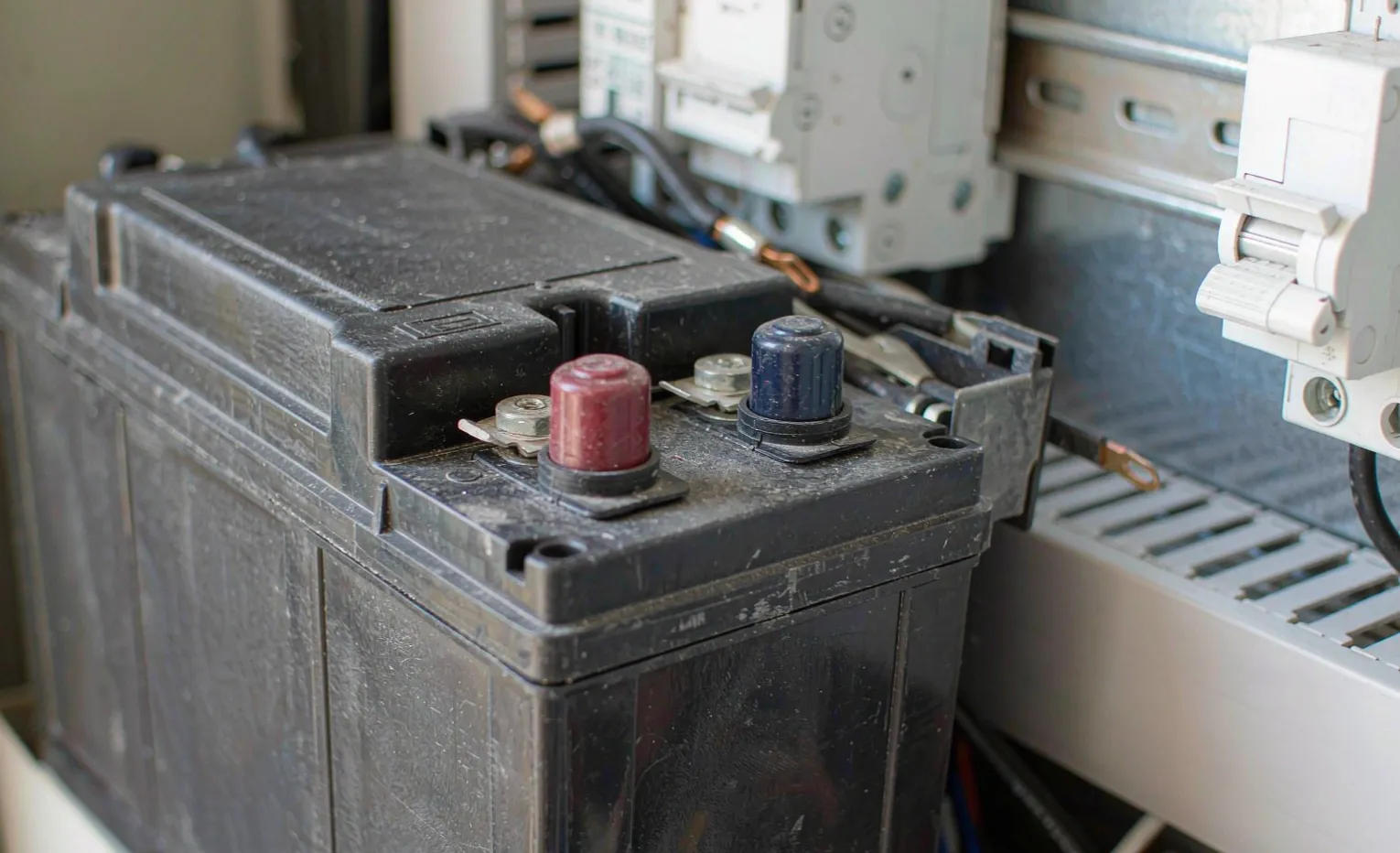
Where VRLA wins
- Lowest upfront cost by a wide margin — often 30–50% of the entry price of a comparable lithium pack.
- Mature, universally serviced technology. Any qualified technician can test and replace a VRLA block.
- Predictable failure mode: it degrades gradually and tells you via rising internal resistance, so you can plan the swap.
Where VRLA bites you
- Cycle life is limited. A typical VRLA block delivers 200–500 full cycles and 3–5 years of float life at 25 °C. In hot cabinets, that collapses.
- Temperature sensitivity. Every 8–10 °C above 25 °C roughly halves service life. A cabinet sitting at 40 °C in a tropical switchroom may kill VRLA in 18 months.
- Replacement labor. You will swap the whole string at least once, probably twice, over a 10-year UPS life — and each swap is a coordinated shutdown of your critical load.
Lithium-ion: the higher-entry-cost alternative
Lithium-ion (typically LiFePO₄ — lithium iron phosphate — for stationary UPS) entered the industrial UPS space because it removes the two weaknesses of VRLA: short life and temperature fragility.
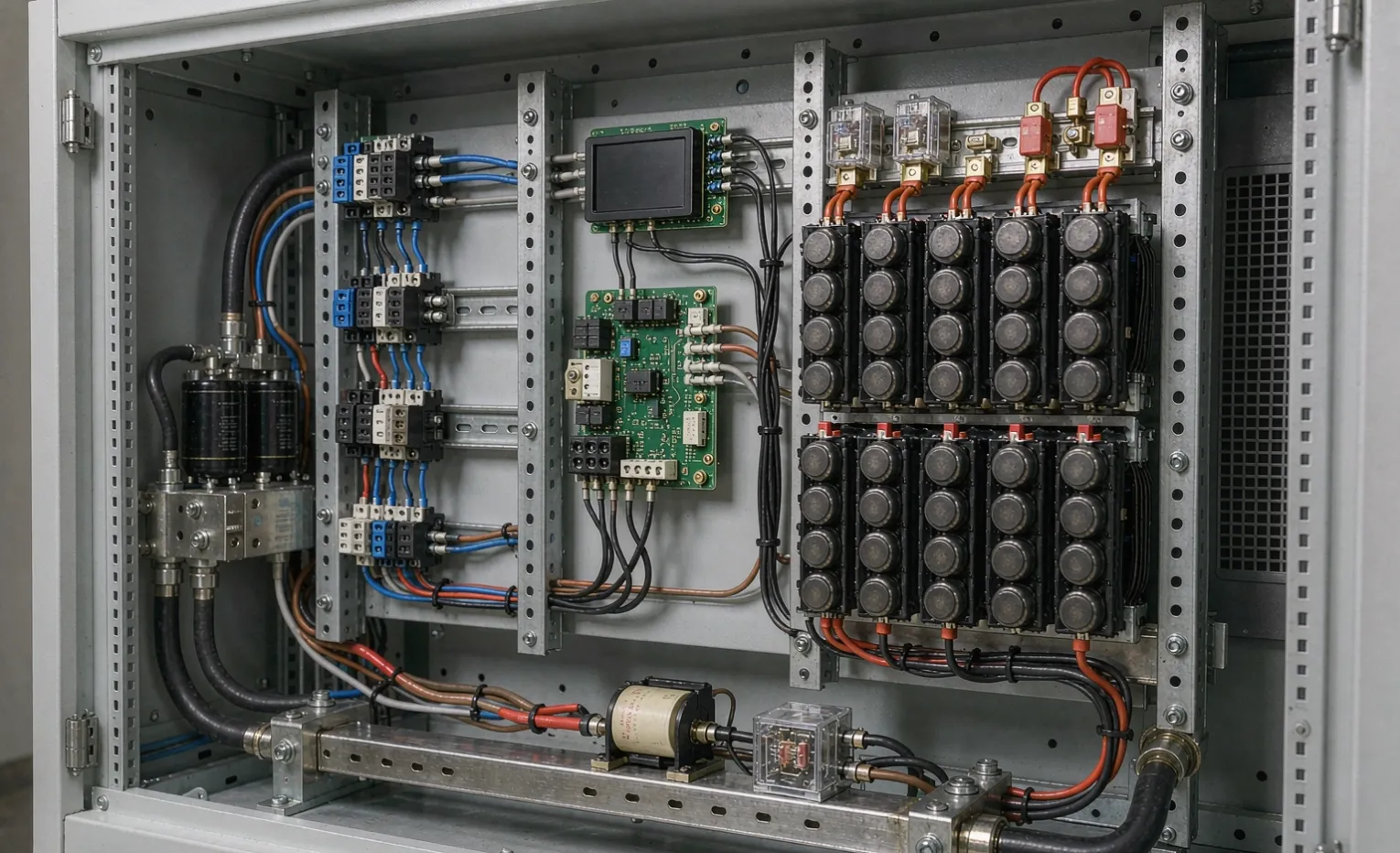
What changes when you go Li-ion
- Cycle life jumps to 2,000–5,000 cycles and 8–10+ years of service life, often matching or outlasting the UPS inverter itself.
- Tolerates heat better. LiFePO₄ stays happy to ~45–50 °C ambient far better than VRLA, with a battery management system (BMS) actively balancing cells.
- Half the weight, half the footprint for the same energy — which matters when you are squeezing batteries into a wall-mount control panel.
Where Li-ion wins
- Remote sites where a battery swap means a flight and a site visit.
- Hot environments that would cook VRLA.
- Applications needing frequent cycling (not just standby): solar buffering, peak shaving, generator start.
Where Li-ion still needs care
- Upfront cost is 2–4× VRLA for the same nameplate capacity.
- Needs a BMS and certified cells (we source to UL 1973 / IEC 62619 where the market requires). A poorly specified Li-ion pack is a thermal and compliance risk, not a saving.
- Recycling and end-of-life handling differ by region — budget for it.
The decision matrix: VRLA vs lithium-ion at a glance
Attribute | VRLA (lead-acid) | Lithium-ion (LiFePO₄) |
|---|---|---|
Upfront cost | Low (baseline) | 2–4× VRLA |
Service life @25 °C | 3–5 years | 8–10+ years |
Full cycles | 200–500 | 2,000–5,000 |
Hot environment (40 °C+) | Degrades fast | Tolerates well |
Weight / footprint | High | ~50% lower |
Replacement labor | 1–2 swaps / 10 yr | Usually none in life |
Serviceability | Universal | Specialist + BMS |
Best fit | Stable temp, cost-led | Remote, hot, cycled |
Engineering Note: The matrix is not "lithium is better." It is "lithium is cheaper per operating year when the site is hot, remote, or cycled — and VRLA is cheaper when the cabinet is climate-controlled and the spec is cost-led." Pick by duty, not by brochure.
Cost and lifecycle: what you actually pay over 10 years
Buyers compare the sticker price and stop. That is the mistake. Spread the cost over the UPS service life and the picture flips.
Upfront vs total cost of ownership
A VRLA pack might cost you less on day one, but over a 10-year run you replace it once or twice — each swap is cells plus labor plus a planned shutdown of your critical load. A lithium pack costs more up front and is then silent for the life of the system.
In our experience sourcing both chemistries for buyers in Southeast Asia and the Gulf, the crossover point is usually year 4–5 for hot or remote sites: after the second VRLA swap, lithium has already paid for its premium.
The mistake we see most often is treating the battery as a commodity line item. It is not. It is the one subsystem in the UPS that ages whether you use it or not — float life runs out on the calendar, not on the runtime clock. A lithium pack that sits idle for eight years is still a lithium pack; a VRLA string that sits idle for five years is a replacement project waiting for a convenient outage that never comes.
The replacement-labor cost
This is the line item buyers forget. A VRLA swap on a 20 kVA UPS string is a half-day coordinated job. If your site is a remote water-treatment plant or an offshore-adjacent skid, that "cheap" battery just became a logistics project.
Buyer Decision: Ask your supplier for a 10-year total-cost number, not a unit price. If they can only give you the unit price, you are comparing the wrong thing.
Thermal and environmental reality
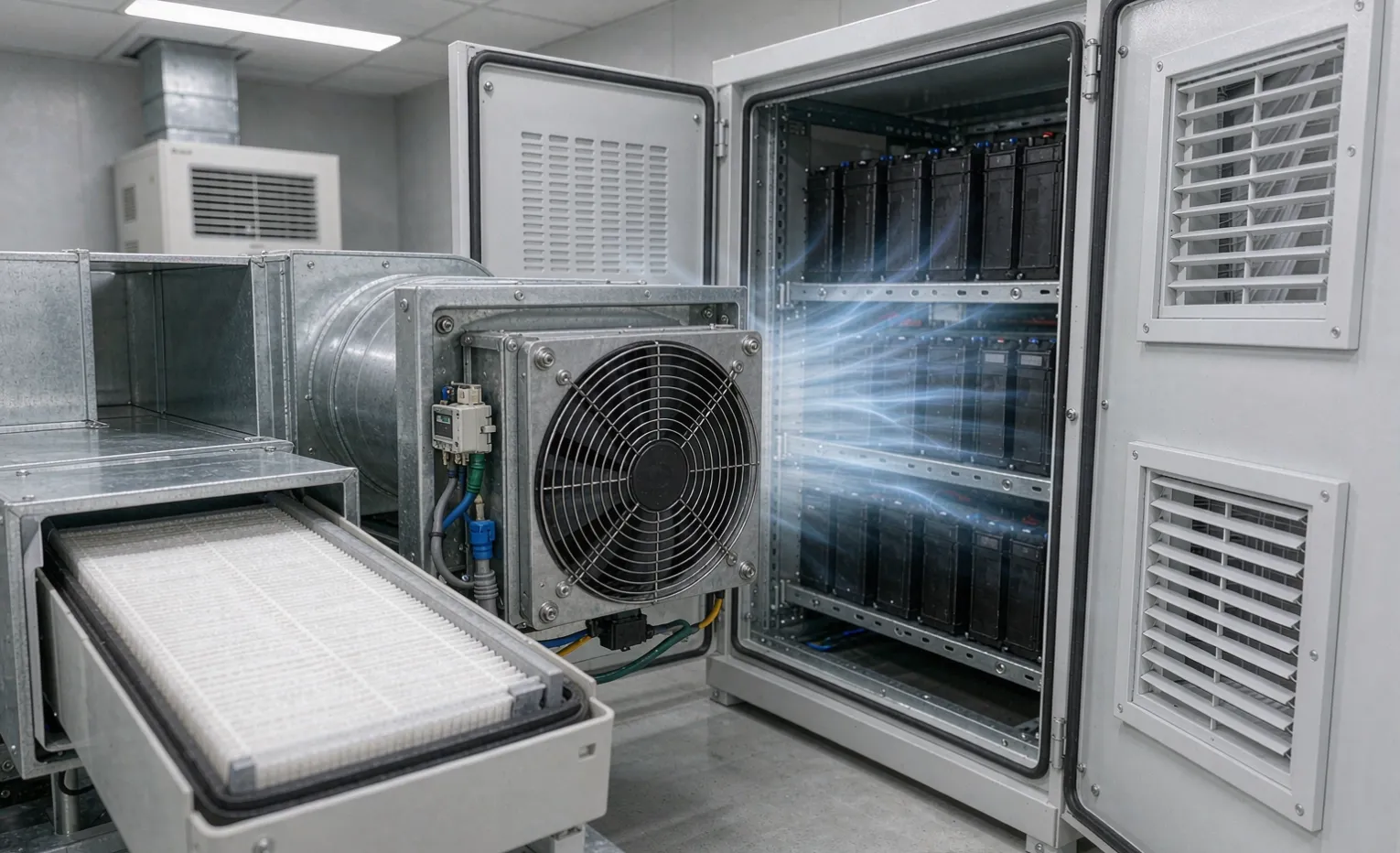
Temperature and battery life
This is the single biggest lever on battery life, for both chemistries, but it punishes VRLA far more. Keep the battery compartment between 20–25 °C and VRLA gives you its full 3–5 years. Let it ride at 40 °C and you may get 18 months.
Ventilation and enclosure rating
- The battery section needs its own air path. We separate the battery bay from the inverter bay so heat from the inverter does not cook the cells.
- For outdoor units, the whole cabinet is built to IP65 / NEMA 4X — no aluminum in our build (we use carbon steel, 304/316 stainless, or galvanized), because aluminum does not meet the mechanical and corrosion profile our buyers need in coastal and chemical plants.
- Where the market requires, we source the enclosure through a UL-listed partner build shop per order — we are a sourcing partner, so the listing is carried by the certified build, not by us.
- Battery placement matters as much as battery type. We keep the battery bay at the bottom of the cabinet, away from heat-rising inverter sections, and we specify the ventilation path before we specify the cells — because the enclosure is what protects the chemistry, not the other way around.
Field failures we see (and how to avoid them)
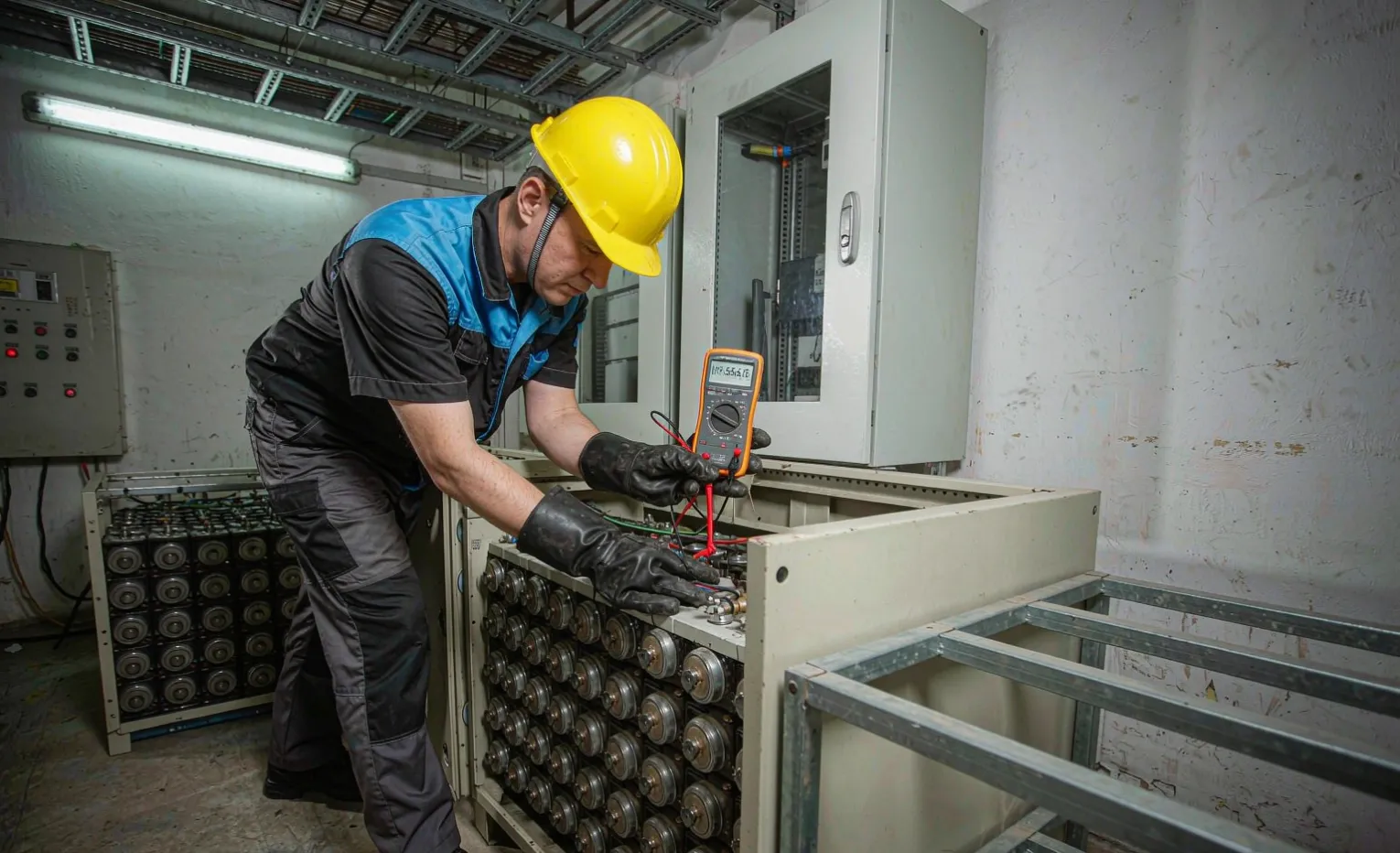
Engineering Note: In years of field follow-ups, the UPS battery failures we are called to fix are rarely "the battery was bad." They are specification and environment failures — wrong chemistry for the heat, no temperature compensation, or a string sized for nameplate instead of real load.
The three most common battery failures
- Heat-killed VRLA in a sealed cabinet. Fix: separate battery bay + active cooling, or move to Li-ion.
- Undersized string. The load grew, the runtime shrank, and nobody re-sized. Fix: size the string to the actual worst-case load, not the nameplate.
- No monitoring. A VRLA string fails silently until the outage. Fix: resistance trending or a BMS alarm that reaches your maintenance team.
Wiring and integration basics
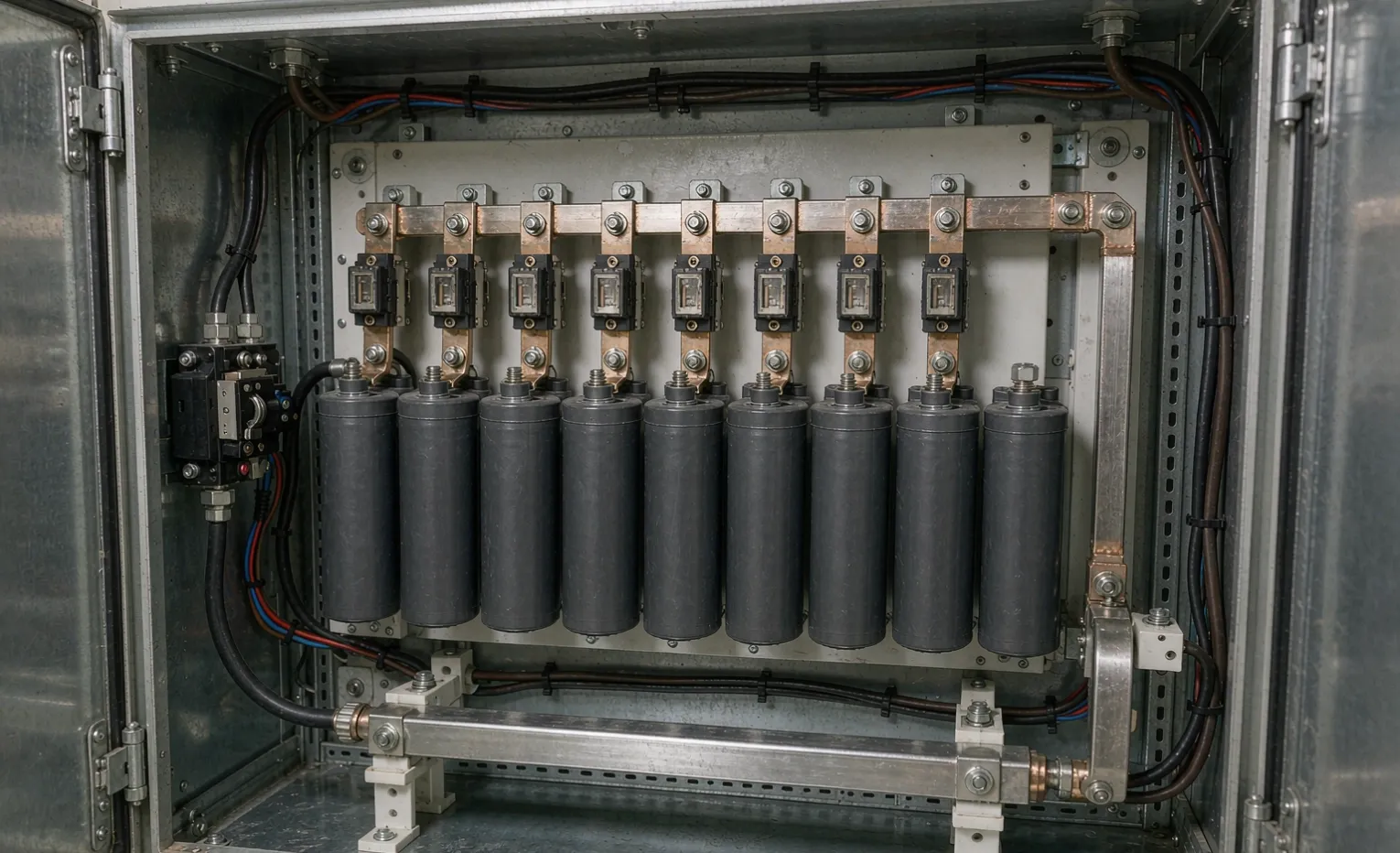
Series strings, fusing, and DC busbars
UPS batteries are wired in series to reach the DC bus voltage (commonly 240 V or 480 V DC for industrial units). Every string needs: - A fused battery disconnect at the cabinet wall. - Properly rated DC busbars and torque-controlled terminations. - Clear labeling so the next technician does not bridge the wrong nodes.
Sizing the string to the load
Runtime = (battery capacity × voltage × efficiency) ÷ load. We size to the real load with a margin, then confirm against the runtime your process actually needs — not the marketing "XX minutes at full load" that assumes a load you will never draw.
If you are building the UPS into a larger control panel, the battery bay, the inverter, and the switchgear all live in one enclosure we source as a package. That is where working with a single sourcing partner for electrical enclosures pays off: one drawing, one FAT, one shipment — instead of three vendors and three interfaces.
How we help you specify it
We are a sourcing partner that helps you choose the chemistry, size the string, and integrate it into a cabinet built to your site — carbon steel, 304/316 stainless, or galvanized; IP65 / NEMA 4X; UL-listed build per order where required. Cabinets run a MOQ of 5 units with about a 15-day lead time; the component-level pieces — PLC, VFD, HMI from brands like Mitsubishi, Siemens, and ABB — typically ship in 3–5 days so integration is never the long pole.
For the full picture of how a UPS fits your control system, see our industrial UPS systems solution page.
FAQ
Q: Is lithium-ion always worth the extra cost for an industrial UPS? No. If your cabinet is climate-controlled and the spec is cost-led, VRLA is the rational choice. Lithium pays off when the site is hot, remote, or regularly cycled — that is where its 8–10-year life beats two VRLA swaps.
Q: Can I mix VRLA and lithium in the same UPS? No. The charger profile, BMS, and safety envelope are different. A UPS is designed for one chemistry. Mixing voids the warranty and the safety case.
Q: How long does a VRLA UPS battery really last in a hot cabinet? At 25 °C, 3–5 years. At 40 °C, often 18 months or less. Temperature is the dominant life driver — more than brand.
Q: Do I need a special enclosure for lithium-ion UPS batteries? You need a BMS-backed pack and a cabinet that manages heat. LiFePO₄ tolerates heat better than VRLA, but it still wants separation from inverter heat and, for outdoor use, an IP65 / NEMA 4X build. We do not use aluminum; carbon steel, stainless, or galvanized only.
Q: What standards should the battery meet? For lithium stationary packs, look for UL 1973 (and IEC 62619 in many markets); the cabinet rating references NEMA and IEC enclosure standards. We source certified cells and carry UL listing through a per-order partner build shop — see UL for the 1973 scope.
Q: How do I know when to replace a VRLA string before it fails? Trend the internal resistance and string voltage; most failures announce themselves weeks ahead through rising resistance. Pair that with a yearly capacity test and you replace on a plan, not during an outage.
Engineering Takeaway
The UPS inverter is the easy part. The battery is the decision. VRLA wins on upfront cost and universal serviceability for stable, climate-controlled sites; lithium-ion (LiFePO₄) wins on life, heat tolerance, and weight for hot, remote, or cycled duty — and usually crosses over to cheaper by year 4–5. Size the string to your real load, separate the battery bay from inverter heat, and carry the right certification (UL 1973 / IEC 62619, UL-listed build where required). Specified that way, the battery stops being the thing that fails and becomes the thing you forget about — which is exactly what a backup power source should be.
Related guides
Get an engineering review
Send us your single-line diagram and the runtime your process actually needs. We will return a battery chemistry recommendation, a string size, and an enclosure build — sourced as one package.
Upload Drawing → Engineering Review → Receive Suggestions
Need help specifying or sourcing this for your project? Request a quote - we reply within 1-2 working days with a technical review.