
Oct 16, 2026Buying Guides
The Enclosure RFQ Template That Stops Suppliers From Guessing
An enclosure RFQ with gaps gets filled with assumptions — and cost. Use this template to send every supplier one spec that quotes apples-to-apples.
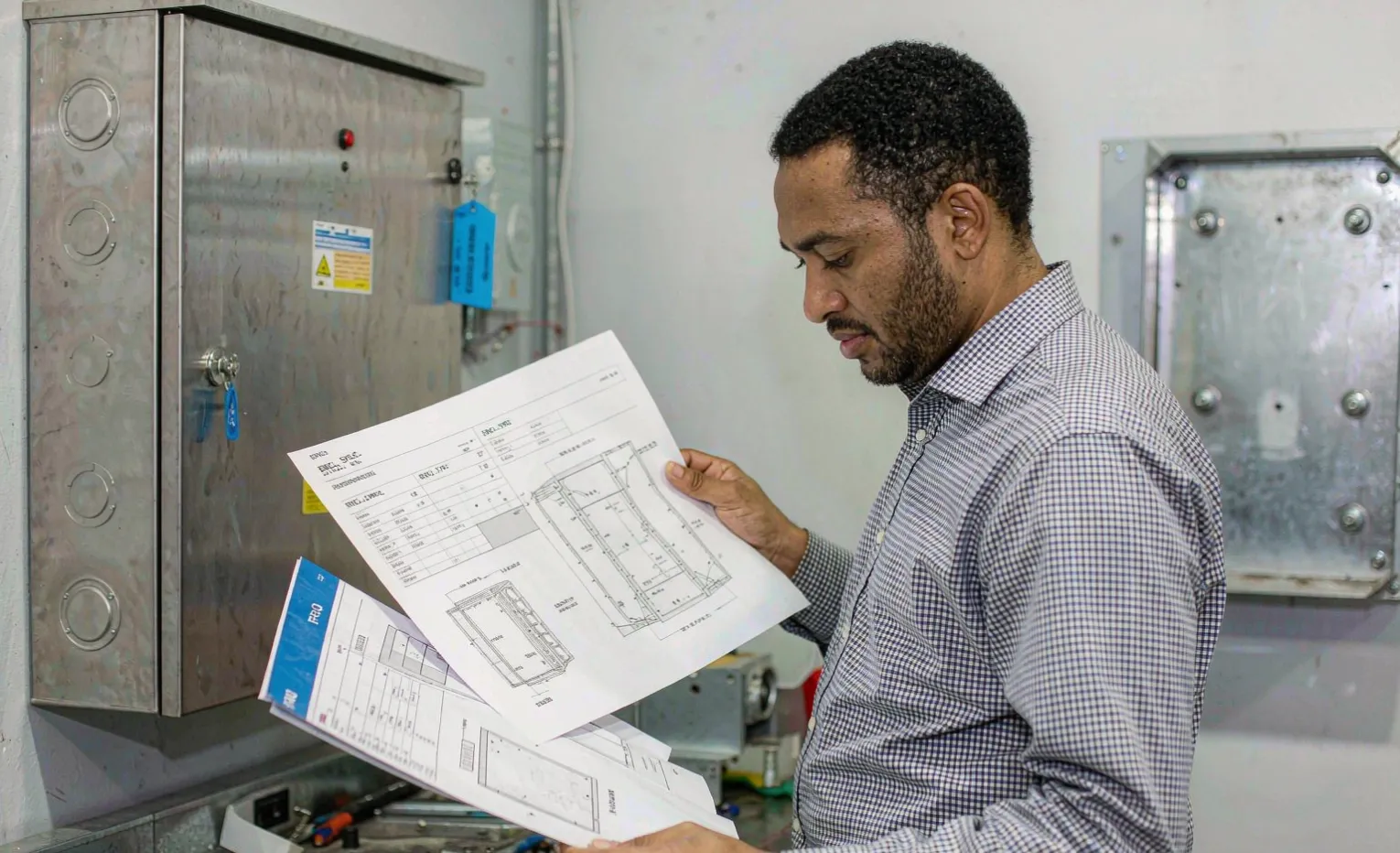
The three quotes that didn't match
You send a one-line RFQ: "stainless enclosure, IP65, about 800×600×250. "Three suppliers come back. One quotes carbon steel with a stainless look, one forgot the cable glands, and one included a space heater you never asked for—and the prices are 40% apart with no way to tell why. The gap wasn't the suppliers. It was the RFQ.
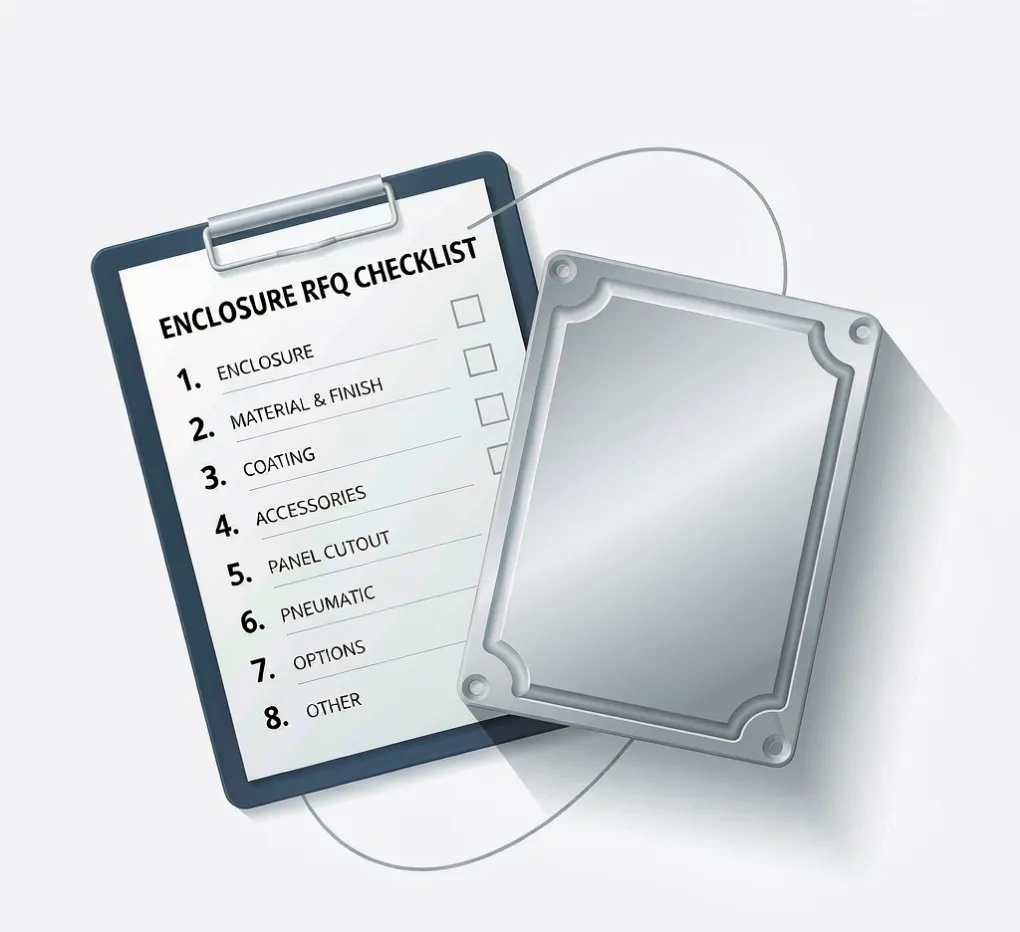
This is the enclosure RFQ template we wish every buyer would send us first. Fill these fields and you turn three wild guesses into three comparable quotes.
Buyer Decision: An RFQ that leaves a field blank gets filled with the supplier's cheapest assumption. Every blank is a future change order.
The fields every enclosure RFQ needs
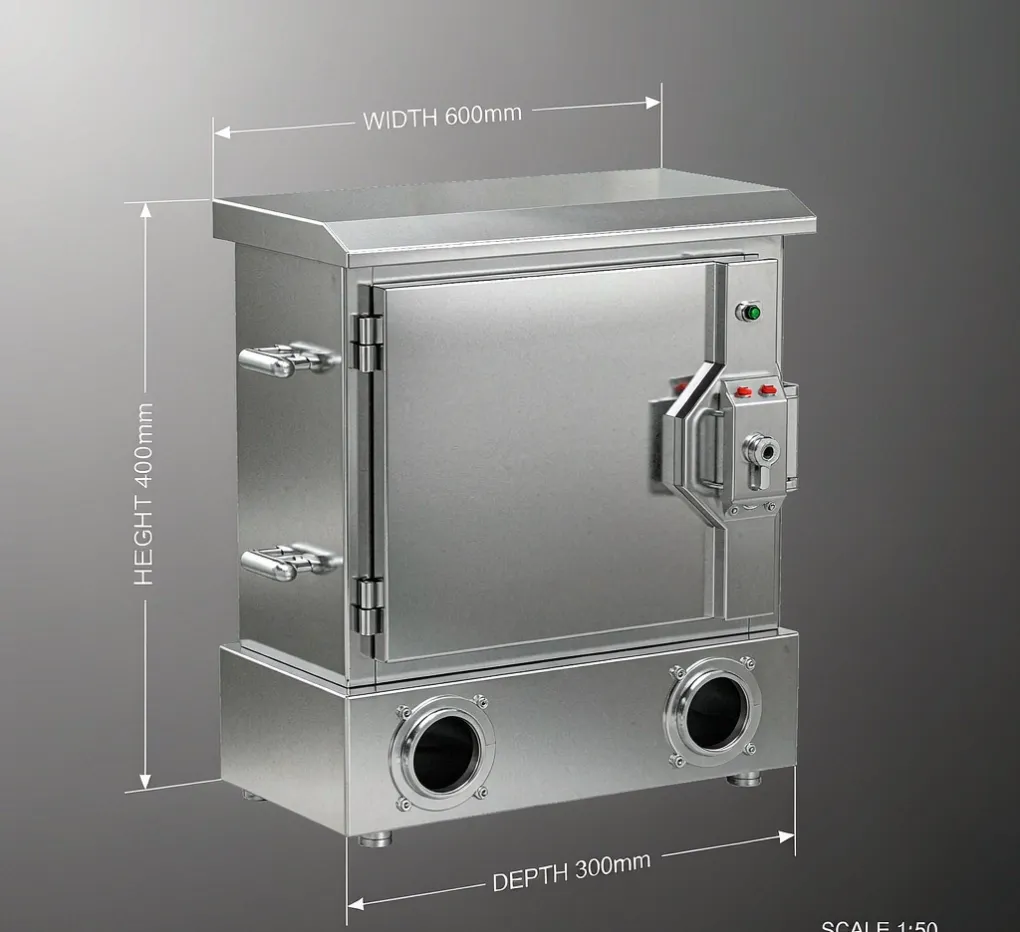
Envelope: size, mounting, and rating
State the external dimensions, wall-mount vs floor-standing, and the ingress rating in both IP and NEMA terms. "IP65" and "NEMA 4X" are close but not identical, and a coastal or corrosive site may need NEMA 4X specifically. If you only write "waterproof," you've left the most expensive decision to someone else.
Material and finish
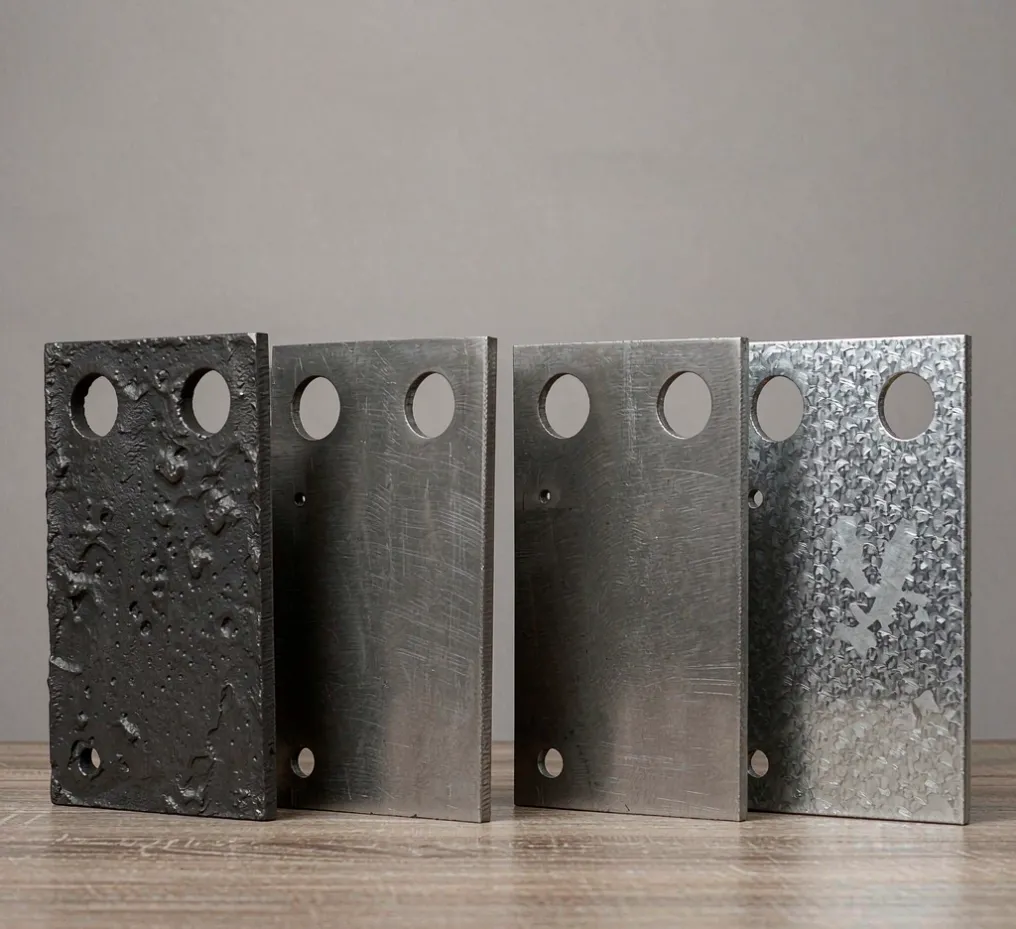
Be explicit: cold-rolled carbon steel with powder coat, hot-dip galvanized, 304 stainless, or 316 stainless. We do not offer aluminum enclosures—for most industrial sites 304 or 316 stainless or galvanized carbon steel is the right call, and 316 earns its premium only in coastal or chemical exposure. Name the grade, and you stop suppliers quietly from downgrading to 201 or plain carbon.
Thermal and ventilation
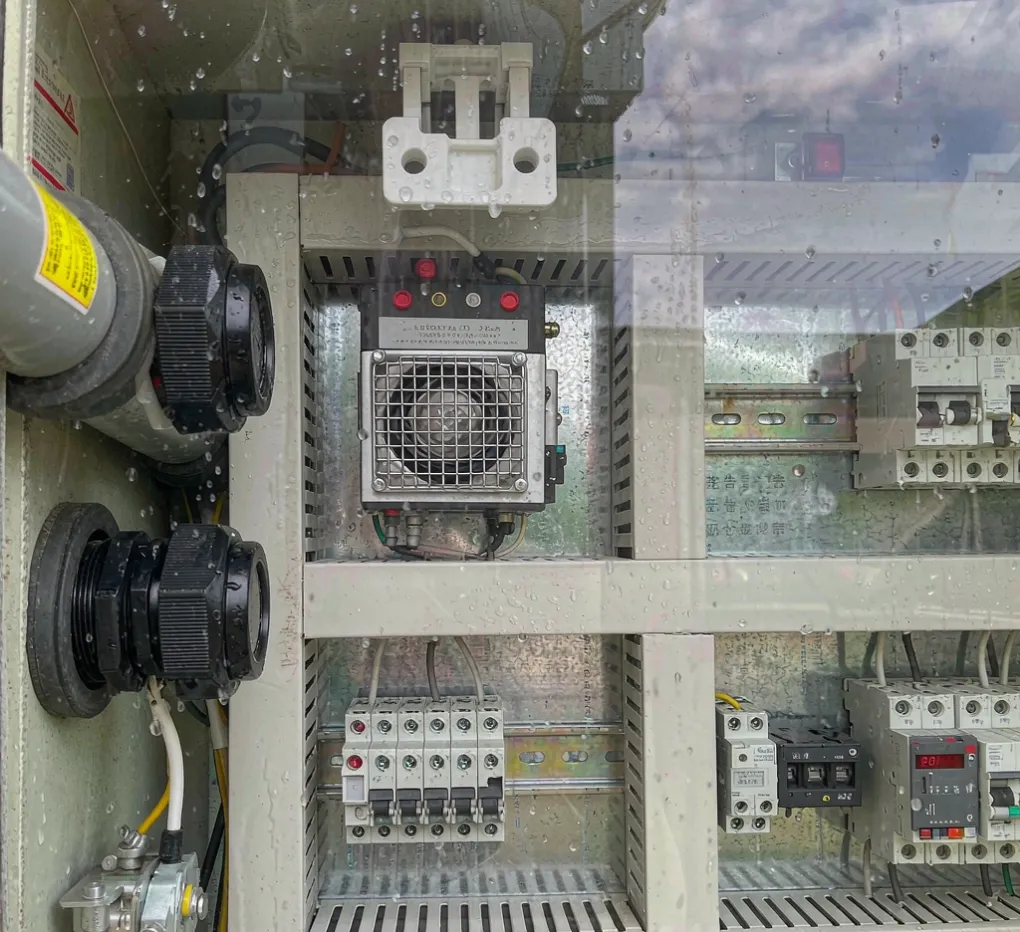
Does the gear inside shed heat? Specify a vent/breather, a thermostat-controlled anti-condensation heater, or an air conditioner. Leaving this blank is how you get condensation on the terminals six months later.
Accessories
Glands (type and thread), window, door lock, hinge style, mounting plate, DIN rails. List them. Each one unpriced in the RFQ is a line item added later at the supplier's margin.
Cutouts and drawing
Attach a drawing with cutout positions, or accept that the supplier will lay them out their way. A PDF or STEP file turns "about here" into "exactly here."
Documentation and certification
State what you need: UL 50E listing (per scope), IP test report, material mill certificate, FAT record. If you don't ask, you won't get it—and you'll discover the gap at customs or commissioning.
RFQ field | Specify this. | Why it moves the price |
|---|---|---|
Material grade | 304 / 316 / galvanized / carbon | 316 can cost 2–3× carbon; silent downgrades are common. |
Ingress rating | IP and NEMA | NEMA 4X adds gasket and corrosion specs. |
Thermal | heater / vent / AC | AC is a large add; the heater is small. |
Accessories | glands, lock, window, rails | Each unpriced item becomes a change order. |
Certs | UL 50E / mill cert / FAT | Adds testing and documentation costs. |
Drawing | PDF/STEP with cutouts | Removes layout guesswork and rework. |
Engineering Note: A mill certificate is the only proof you actually got 304 or 316. If the RFQ doesn't require it, assume the supplier will skip it — and a "stainless" box that's really 201 will rust where you can't see it.
The mistakes that blow up the price later
- Vague rating. "Outdoor" is not a rating. Without IP/NEMA and a corrosion note, you get a box that survives shipping and fails in year two. Our harsh-environment enclosure RFQ guide lists what to add for coastal and washdown sites.
- No internal layout. Suppliers size the box by guess, then charge to resize when your gear doesn't fit.
- Forgetting the thermal load. The single most common field-site failure we see is condensation or overheating from a thermal spec that was never written.
- Assuming MOQ and lead time. Our empty enclosures run a 5-unit minimum and about 15 days; component orders ship in 3–5 days. Put your date in the RFQ so the quote reflects reality, not a hope.
How to read the returned quotes
Line the three quotes up against this template, field by field. If supplier A is 30% under the others, find the blank they filled with the cheap option—almost always material grade, glands, or certs. The lowest quote is rarely the lowest cost; it's the one with the most assumptions you haven't reviewed yet.
Buyer Decision: Compare quotes by the template, not by the total. The total hides which field was quietly cheapened.
Our RFQ checklist, as a sourcing partner
We are a sourcing partner and panel-build shop, not a manufacturer, so our incentive is a clean spec that quotes true—not a low number we have to claw back later. When you send us an RFQ using this template, we:
- Confirm material grade and mill-cert requirement up front
- Flag thermal and ingress gaps before we quote, not after
- Build to UL 50E where listing is required, against IEC 60529 IP grades and NEMA ratings
- Return a FAT record with the enclosure so you can verify before it ships
For the enclosure-level decisions behind this template, our China electrical-enclosure sourcing guide goes deeper on material and rating trade-offs. Browse our electrical enclosures for the full range.
FAQ
What rating should I put for an outdoor enclosure?
Name both IP and NEMA. For most outdoor industrial sites, NEMA 4X with IP66 is the safe baseline; coastal or chemical sites should call out 316 stainless explicitly.
Do I need a mill certificate?
If the enclosure is "stainless," yes. It's the only way to prove 304 vs 201 vs 316. Require it in the RFQ or don't assume you got what you paid for.
What's the minimum order and lead time? Empty enclosures: 5-unit minimum, about 15 days. Component and accessory orders typically ship in 3–5 days once specified.
Should I send a drawing? Always, if you have cutouts. A PDF or STEP removes layout guesswork and the rework charges that follow from it.
Why are three quotes 40% apart for the "same" box? Because they aren't the same box—different material grade, glands, certs, or thermal kit—most are left blank in the RFQ. The template forces them to be comparable.
UL 50E or UL 508A? UL 50E covers the enclosure as a box. UL 508A covers a panel built inside it. If you're buying an empty enclosure, you want 50E; if you're buying a built panel, 508A.
Buyer Takeaway
A good enclosure RFQ is a filled-in template, not a sentence. Lock the six fields—envelope, material, thermal, accessories, drawing, and certs—and three suppliers will quote the same box, so you can actually compare. Require the mill cert, name the rating in IP and NEMA, and put your date and MOQ in writing. Send us the template and we'll return a quote you can line up against the others without deciphering it.
Related guides
Send us your filled template. Upload the drawing and spec sheet, and we'll return an engineering review and a comparable quote — no obligation. Submit your requirements.