
Oct 2, 2026
Electrical Enclosure EMC Shielding: Block EMI at the Panel Wall
Stainless steel alone won't stop EMI. Learn how seams, conductive gaskets, bonding, and filtered penetrations make an electrical enclosure truly EMC-rated — and how to specify one without overspending

A panel we built last year passed every electrical test at FAT: insulation resistance, continuity, protective earth, PLC logic, HMI. Clean. Two weeks later the customer called — the VFD on the adjacent machine ramped up, and the panel's analog temperature loop started swinging 20 °C every time the drive hit full speed. The steel was 2 mm thick. The problem was never the steel.
It was the seam.
This is the part most buyers get wrong about EMC shielding. You don't make an enclosure "EMC-rated" by picking a material. You make it by closing every path EMI uses to get in or out: the door seam, the removable panel joint, every cable that crosses the wall, and every vent you cut to keep it cool.
If you read one sentence: EMI doesn't care how thick your enclosure is. It cares whether the shield is continuous.
Buyer Decision: You don't buy an EMC enclosure by specifying "stainless." You buy it by specifying continuity — a low-impedance conductive path that wraps the whole box with no gaps wider than a fraction of the wavelength you're trying to block.
What EMI actually does to a control panel
Electromagnetic interference shows up two ways. Conducted EMI rides along your power and signal cables — a VFD's switched output leaks onto the supply, and your 4–20 mA sensor line picks it up. Radiated EMI is the field itself: a contactor chopping, a switched-mode power supply, a nearby radio or welder. Both land in the same places — spurious PLC resets, dropped Modbus/Profibus frames, noisy analog readings, false trips on a safety input.
The expensive version isn't the one you see in the workshop. It's the one that appears three months after commissioning, on a different machine, on a humid Tuesday, and nobody believes it's the panel.
Engineering Note: A 37 kW VFD with no output filtering, routed 300 mm from an unshielded RTD cable, will wreck that RTD reading. Move the cable 1 m away or shield and bond it, and the noise drops below the sensor's own resolution. The fix was never the enclosure metal — it was the path.
Where EMI enters: the three leak paths
Most enclosures fail EMC at the same three spots. Get these right and you're 80% of the way there.
Seams and joints
The door flange is the longest aperture on the box. A painted, un-gasketed seam is, electrically, a slot antenna — long, thin, and very good at leaking RF. Removable side panels and bolted flanges are the same problem in a different shape. The fix is a continuous conductive gasket compressed across the full joint, plus a bond that beats paint.
Penetrations
Every hole you cut is an antenna: conduit entries, cable glands, viewing windows, cooling vents, the gap around a hinged door. A standard cable gland seals against water (IP) but does nothing for EMI. A standard vent breathes but radiates.
The shield-termination gap
This is the most common and most overlooked mistake. You buy a shielded cable, run it into the panel — and the shield stops at the connector block, never bonded to the enclosure wall. The cable is now a whip antenna feeding noise straight onto your electronics. The shield has to be terminated to the panel at the point of entry, 360°, no pigtail.
Leak path | What it leaks | Frequency behavior | The fix that actually works |
|---|---|---|---|
Door / panel seam | Radiated RF in and out | Worst at UHF / VFD harmonics | Conductive gasket + paint-break bond |
Cable penetration | Conducted + radiated | All bands | EMC cable gland or filtered feedthrough |
Shield not terminated | Conducted onto electronics | Low–mid RF | 360° shield bond at entry, no pigtail |
Vent / window | Radiated | Wideband | Honeycomb vent / EMC mesh window |
How a real EMC enclosure is built
The parts that matter are small, cheap relative to the panel, and easy to skip if nobody is checking.
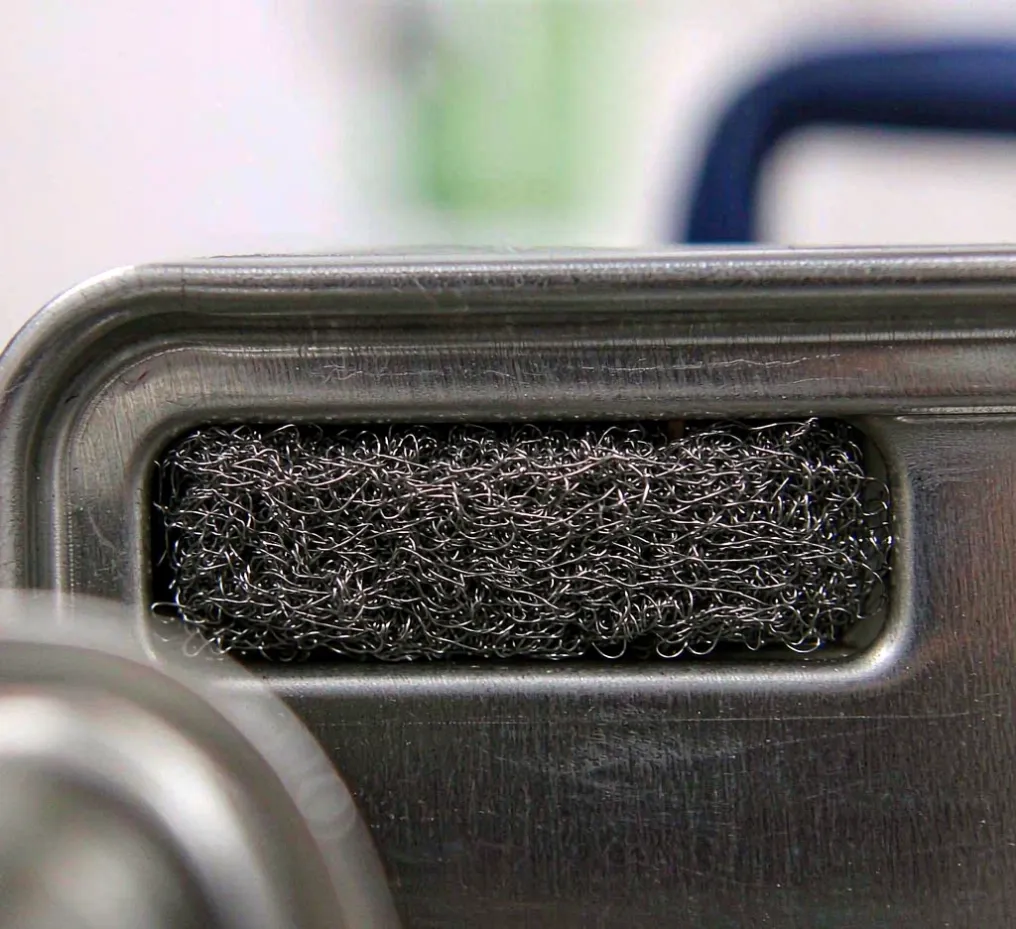
Conductive gaskets
A gasket only helps EMI if it conducts. Foam weatherstrip seals water and does nothing for RF. The three that work:
- Knitted wire mesh (stainless or tinned copper) — robust, handles compression and vibration, the workhorse for door flanges.
- Fingerstock (beryllium copper strips) — excellent spring contact for doors that open often, but fragile and needs a clean mating surface.
- Conductive fabric-over-foam — light, good for lower frequencies and lighter doors, less abuse-tolerant.
Bonding and continuity
The gasket is half the job. The other half is making sure the two flanges it sits between are electrically one piece. Paint and powder coating are insulators — a painted seam with a "conductive" gasket still has a painted gap. You break the paint at the joint (scratch or conductive washer), or you use EMC tooth washers that bite through the coating when torqued. Bonding points need to be frequent enough that the path stays low-impedance across the whole seam.
Filtered penetrations
- EMC cable glands keep the shield continuous through the wall while preserving the IP seal.
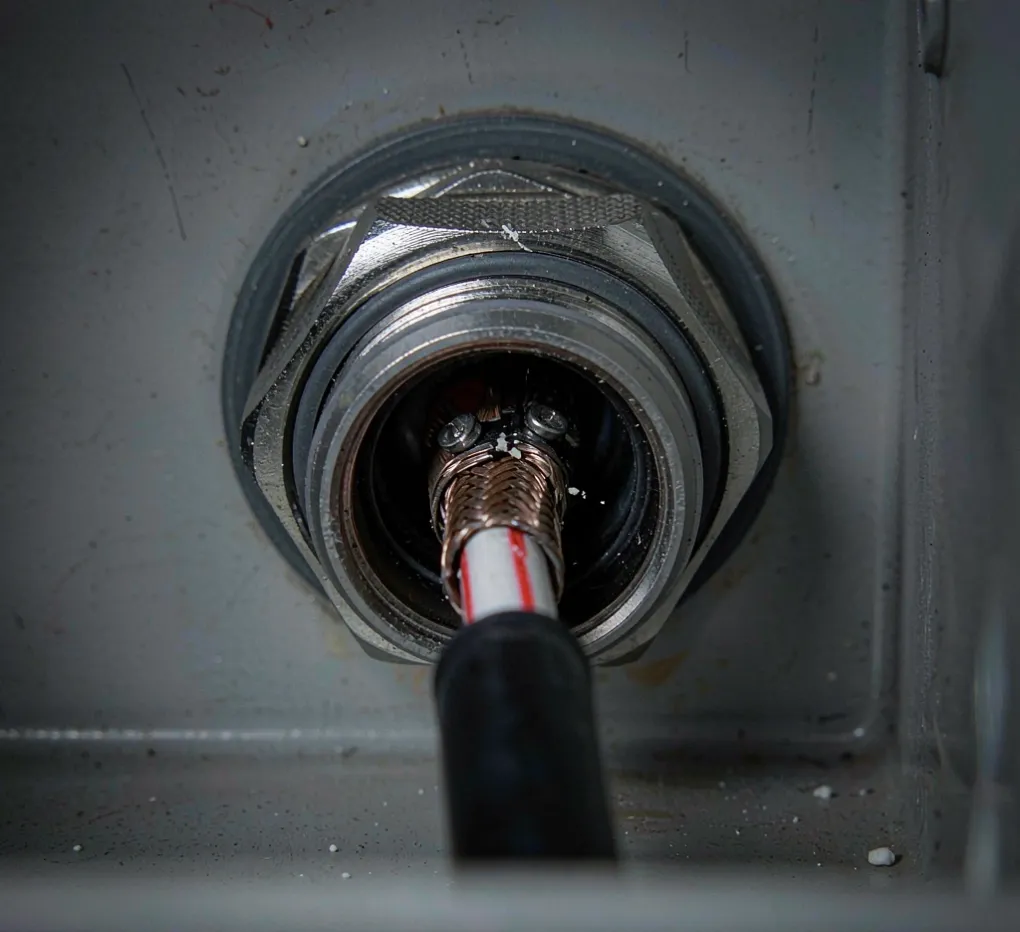
- Feedthrough filters (capacitor or filtered D-sub) pass the signal but block RF — used where a cable must cross and you can't shield it.
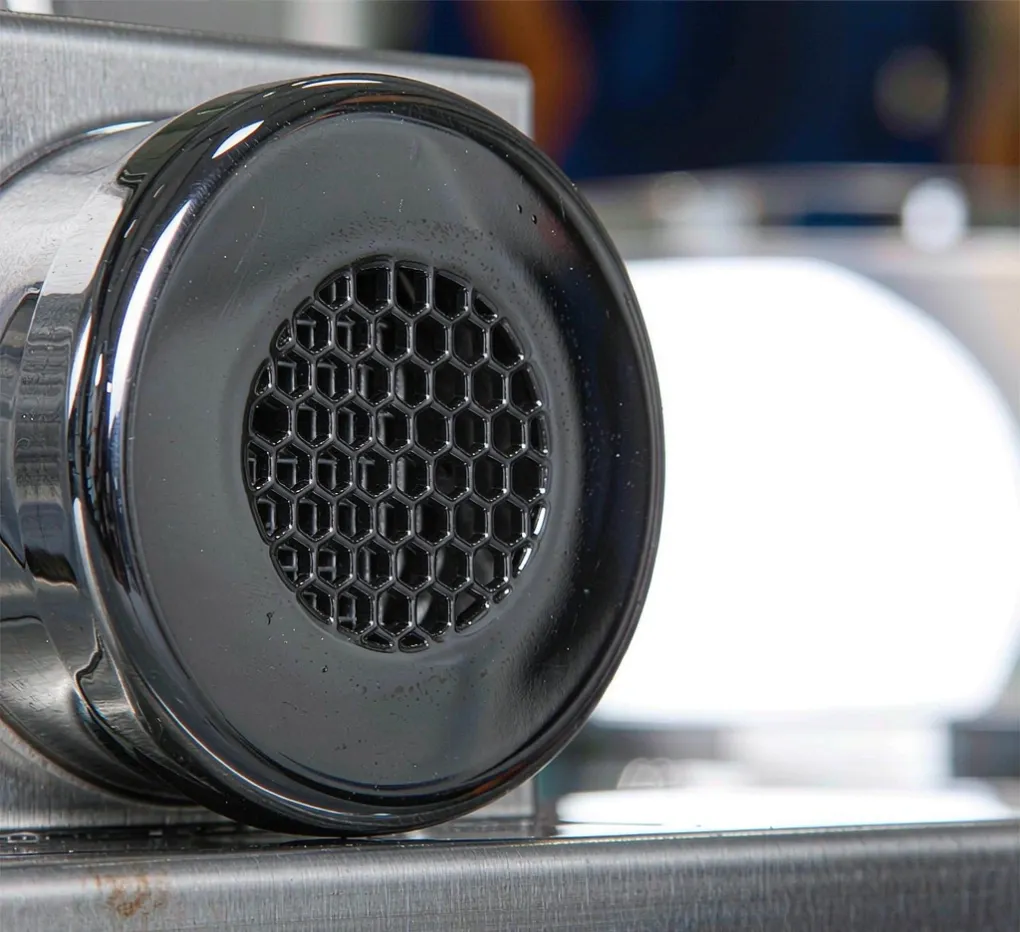
- Honeycomb vents let air through but present a near-solid conductive wall to RF — the only vent that keeps both cooling and shielding.
Gasket / penetration type | Best for | Cost | Watch-out |
|---|---|---|---|
Knitted wire mesh | Door flanges, general use | Low–mid | Needs consistent compression |
Fingerstock | Frequently opened doors | Mid | Fragile, clean surface required |
Fabric-over-foam | Light doors, low freq | Mid | Less abuse-tolerant |
Honeycomb vent | Cooling + shielding | High | Bulky, one direction of flow |
EMC cable gland | Shielded cable entry | Mid | Must be torqued to spec |
IP rating vs EMI: the trade you have to manage
Here's the conflict buyers keep walking into. You need an IP66 / NEMA 4X enclosure to keep water and dust out — and NEMA 4X paint is an insulator. Painted flanges block water but also block your bond. A vent that breathes for cooling destroys shielding unless it's a honeycomb. A viewing window is a hole unless it's laminated with EMC mesh.
You can have both. You just have to spend the money on the right parts: paint-break washers at the seams, a honeycomb vent instead of a plain one, an EMC mesh window instead of bare polycarbonate.
Engineering Note: We've seen "NEMA 4X stainless" panels fail radiated emissate tests purely because the door flange was painted and the gasket sat on top of the paint. Scrape the flange or use EMC washers, retest, pass. The enclosure didn't change material — the continuity did.
For the rating language: NEMA 250 defines the mechanical and ingress ratings (NEMA 250); the enclosure construction standard is UL 50E (UL 50E); and the EMC behavior of mechanical structures is covered by IEC 61587-3, with machinery EMC handled under IEC 60204-1 (IEC). None of those say "stainless = shielded." They say "prove the shield is continuous."
Specifying EMC for your panel: a 5-step checklist
- State the actual threat. VFDs? Welders nearby? Radio/comms gear? Sensitive analog? You can't spec a shield against a ghost.
- Pick the rating you must meet. Machinery EMC (IEC 60204-1), a specific emission/immunity level, or just "don't let it trip the neighbor." The bar sets the budget.
- Close the seams. Conductive gasket on every opening + paint-break bond. This is the backbone.
- Filter every crossing. EMC glands or filtered feedthroughs on cables; honeycomb vents; EMC mesh windows. No plain hole.
- Terminate shields at the wall. 360° bond at entry, documented on the build sheet, checked at FAT.
Common mistakes buyers make
- "Stainless is shielded." No. Stainless is corrosion-resistant, not RF-tight. An un-gasketed stainless box leaks exactly like an un-gasketed carbon-steel one.
- "A gasket is enough." Only if it conducts and the flanges it touches are bonded. Paint between them = no shield.
- "Any vent will do." A plain breather vents and radiates. If EMI matters, it's a honeycomb or nothing.
- "We'll add shielding later." Retrofitting is possible (gasket + bond + filtered glands) but you're fighting a box that was never designed for it, and you can't always reach the seams. Spec it in.
How we build EMC-rated panels
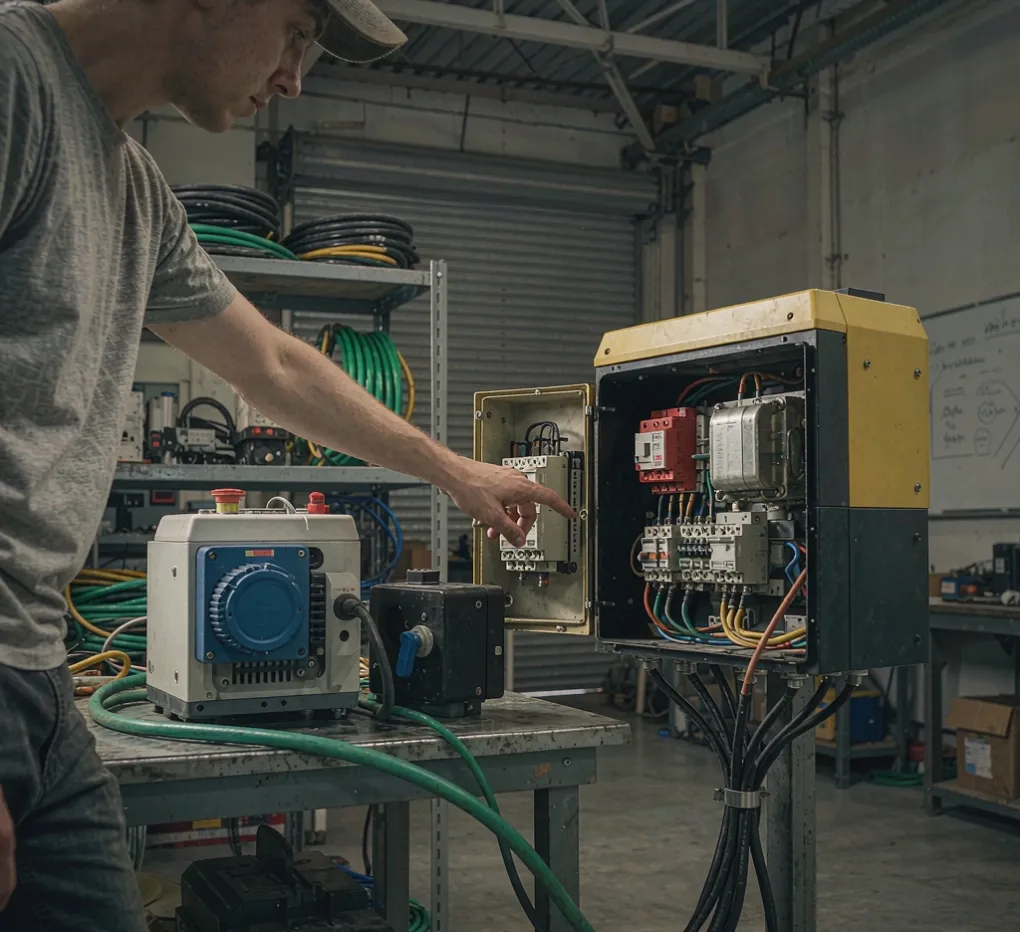
We're a sourcing partner and panel-build shop, not a steel mill and not one of the enclosure brands — we don't make the enclosure, we source it and assemble the panel to your EMC requirement, then prove it at FAT. When a job needs a listed enclosure we work with a UL-listed shop on a per-order basis rather than claiming a mark we don't hold.
That split matters for your budget: enclosures we source typically run from 5 units with about a 15–20 day build, while the components we drop in — Mitsubishi, Siemens, ABB drives and PLCs among them — usually ship in 3–5 days. Telling us the EMI threat up front lets us put the knitted-mesh gasket and honeycomb vent on the BOM the first time, instead of reworking the box after it fails on site.
For the wider enclosure sourcing picture — materials, ratings, and how we handle UL listing on a per-order basis — see our electrical enclosure supplier's guide to sourcing from China. If you're scoping a cabinet or a full panel, start at our electrical enclosures solution page.
Disclosure: We are a sourcing partner, not one of the enclosure manufacturers ranked in third-party lists. This guide is written to help you specify, not to position us as a steel supplier.
FAQ
Does a stainless enclosure automatically meet EMC? No. Stainless resists corrosion; it does nothing for RF unless the seams are gasketed and bonded and every penetration is filtered. An un-gasketed stainless box leaks EMI like any other.
Can I add EMI shielding to an existing enclosure? Often yes — retrofit a conductive gasket on the door, break the paint at the bond, swap plain glands for EMC glands, and fit a honeycomb vent. Limits apply: you can't always reach internal seams, and you're adding to a box not designed for it. For a new build, spec it in.
What standard defines EMC for enclosures? IEC 61587-3 covers EMC requirements for mechanical structures; machinery EMC is handled under IEC 60204-1. Ingress ratings come from NEMA 250 (NEMA) and IEC 60529 (IP); enclosure construction from UL 50E. None equate material with shielding.
How much does EMC shielding add to the cost? Typically a small fraction of the panel — conductive gaskets, EMC glands, and honeycomb vents are cheap next to the electronics they protect. The cost spikes only if you retrofit after a failure, or chase a very high immunity level.
Do I need EMC shielding for a VFD panel? If the VFD is near sensitive analog, comms, or other controllers, yes — at least shielded cable with proper termination and a gasketed, bonded enclosure. Standalone drives in open space with no neighbors may not need the full treatment. State the neighbors and we'll size it.
Vents vs shielding — can I have both? Yes, with a honeycomb vent: it passes airflow but presents a near-solid conductive wall to RF. A plain breather gives you cooling and a leak. If EMI is in scope, it's honeycomb or accept the trade.
Engineering Takeaway
EMC shielding is not a material you buy — it's a continuity you maintain. Close the seams with a conductive gasket, break the paint so the bond is real, filter or honeycomb every penetration, and terminate every cable shield at the wall. Do those four things and the enclosure rating follows. Skip any one and the thickest stainless in the catalog still leaks.
Related guides - Electrical enclosure gasket selection guide — which gasket seals water vs which one actually blocks RF - Electrical enclosure cable gland guide — IP seals vs EMC glands, and when you need both - Galvanized vs stainless enclosure cost comparison — material cost over a 10-year lifecycle, EMI aside - NEMA 4X enclosure buying guide — what NEMA 4X does and does not promise - Why outdoor enclosures fail prematurely — site-vs-spec mismatches that kill enclosures early - Top 10 electrical enclosure types — the enclosure forms and where EMC fits each
Want a second opinion on your panel before it's built? Upload your drawing for an engineering review — we'll flag the EMI leak paths and tell you what the BOM needs, then send suggestions back.