
Sep 22, 2026Buying Guides
Electrical Enclosure Cable Gland Selection Guide: Metric vs NPT, Brass vs Stainless vs Nylon
Choose the right cable gland for your electrical enclosure. Compare metric vs NPT threads, brass vs stainless vs nylon, and sealing inserts for IP65/NEMA 4X duty.
Electrical Enclosure Cable Gland Selection Guide: Metric vs NPT, Brass vs Stainless vs Nylon
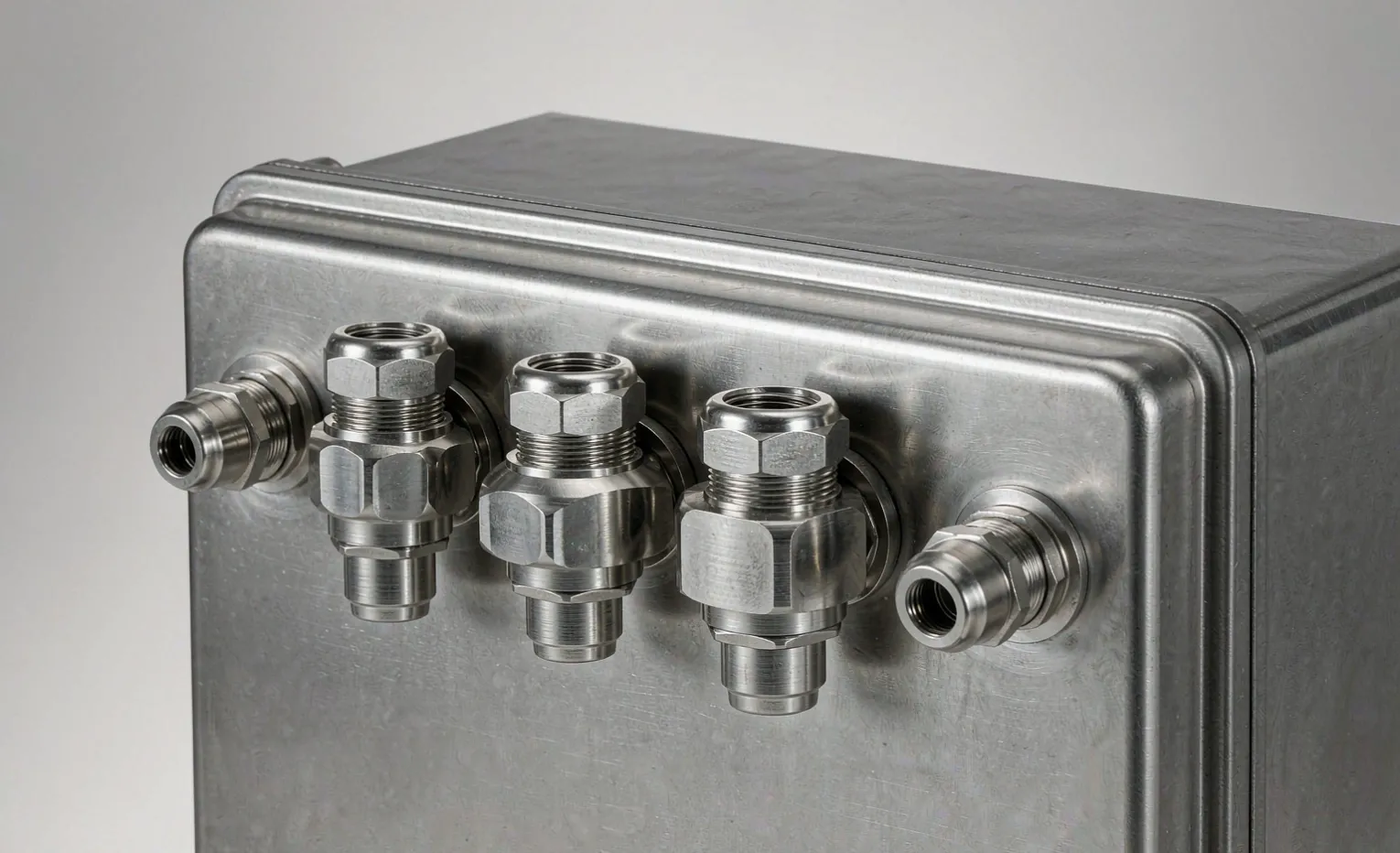
You can pay for a flawless 316 stainless body and a perfect IP66 door seal, then lose the whole rating at a cable entry—the one place a cable punches through the wall. In our incoming checks, a surprising share of "leaky enclosure" complaints trace back not to the cabinet, but to the wrong cable gland on the side wall. The gland is the smallest line item on the bill of materials and the easiest to get wrong.
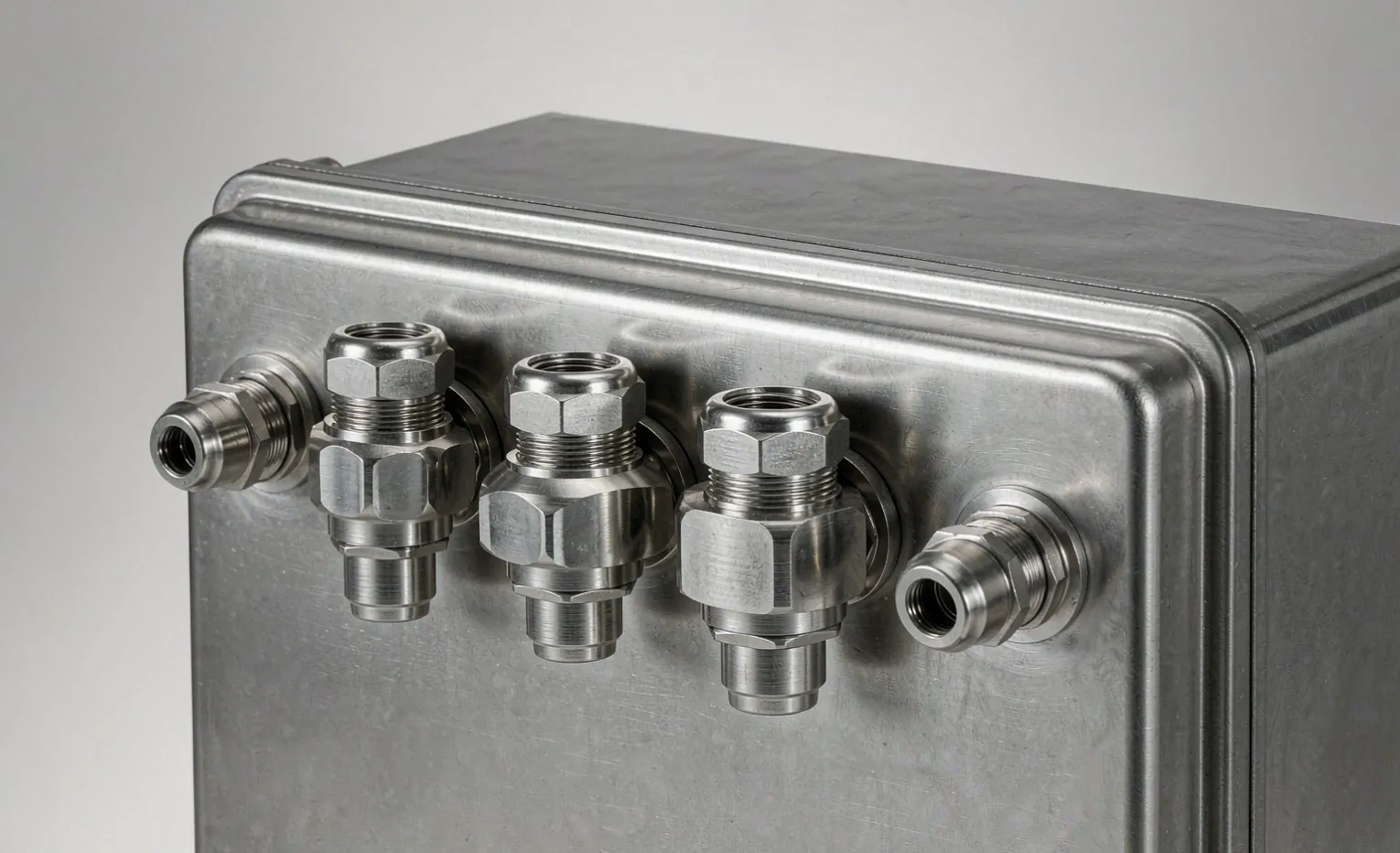
Cable entry is the decision we fold into our enclosure type comparison, because the type you pick and the glands you seal it with are decided together—not separately. It is also one of the design features that separate a cabinet that survives outdoors from one that weeps in year two. Here we go one level deeper: what a gland actually does, how to read the thread and material spec, and how to match the seal to the cable and the environment.
Buyer Decision — If you remember one thing: the gland has its own IP/NEMA rating, and a perfect enclosure wall means nothing if the gland on it is rated lower. Match the gland rating to the enclosure rating — never below.
What a cable gland is actually doing
A cable gland (sometimes called a cord grip) is the fitting that clamps a cable as it passes through the enclosure wall. A good one does four jobs at once, and a cheap one quietly drops one or more of them.
Four jobs a gland must do
- Seal the entry. The inner grommet closes around the cable jacket so water, dust, and insects cannot track along the cable into the panel.
- Strain relief. It stops the cable from being pulled out or flexing at the termination when someone tugs the loom.
- Hold the rating. A rated gland keeps the enclosure's IP or NEMA class at that penetration point.
- Ground or shield (when needed). A metallic or EMC gland maintains continuity from the enclosure to the cable armor or shield.
Most failures are not "the gland broke." They are "the gland was the wrong thread, the wrong material, or sized to the wrong cable "diameter"—three quiet mistakes that only show up after the cabinet is mounted and it rains.
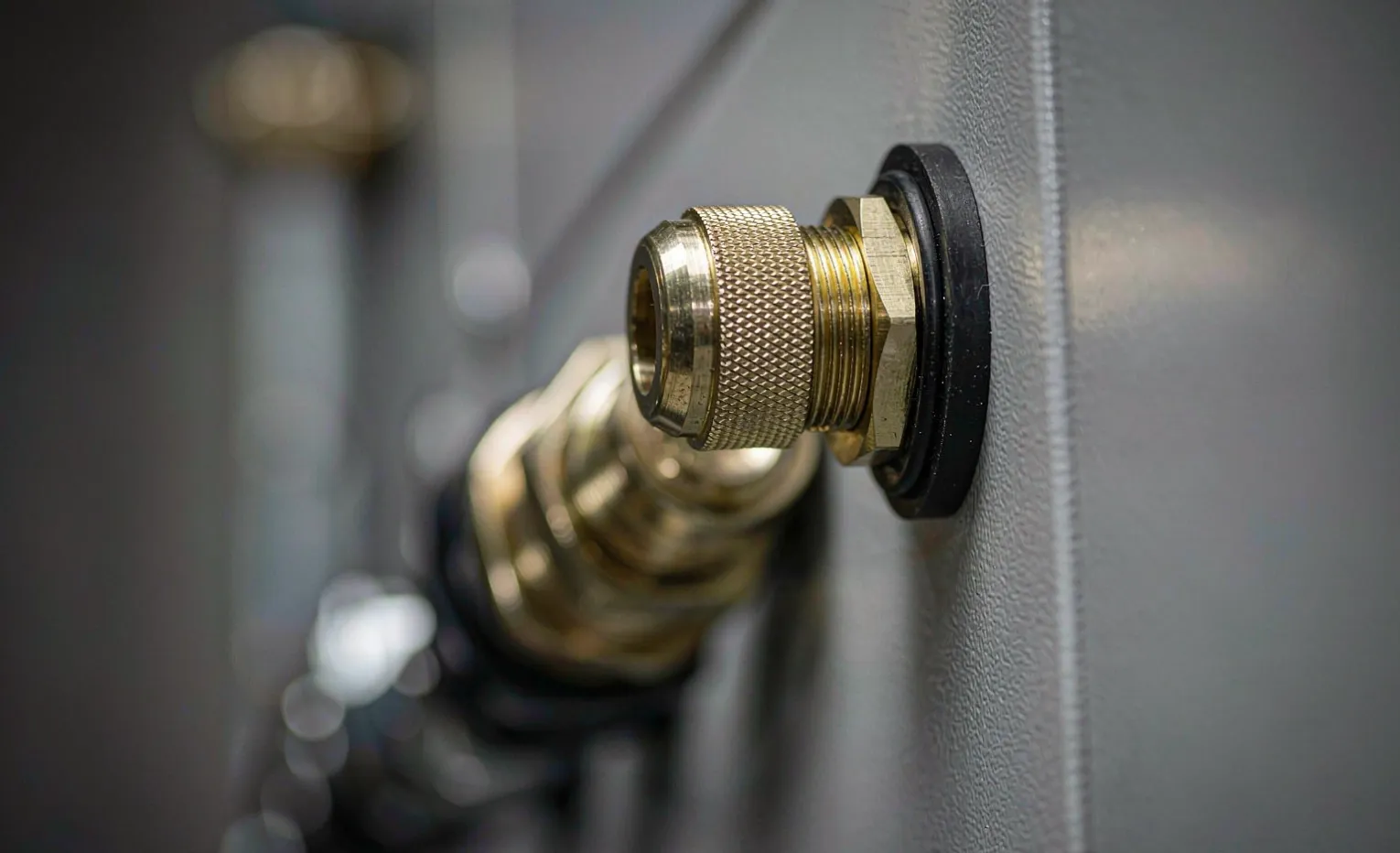
Engineering Note — The gland rating and the enclosure rating are independent. A NEMA 4X cabinet with a gland rated only IP54 at the cable entry is, in practice, an IP54 cabinet at that point. We review the gland rating as part of the enclosure review, not as an afterthought.
Thread standard: the first decision you have to get right
Before you argue about brass versus stainless, you have to agree on the thread. Mixing threads is the most common field error we see, because panels, glands, and enclosures are often sourced from different regions.
Metric (M) vs. NPT vs. PG
- Metric (M threads)—the global default for new industrial panels, including most IEC-driven projects. Sized by the thread diameter in millimeters (M20, M25, M32).
- NPT (National Pipe Taper)—the standard on North American panels and many NEMA-rated enclosures. Tapered, so it seats with thread sealant. You cannot simply screw an NPT gland into a metric hole.
- PG (Panzergewinde)—a legacy German metric-ish standard still found on older European equipment. Visually close to metric but not interchangeable.
If your enclosure is tapped metric and your gland is NPT, it will not seal—and forcing it cracks the thread. Confirm the enclosure thread before you buy glands, not after.
Thread standard at a glance
Attribute | Metric (M) | NPT | PG (legacy) |
|---|---|---|---|
Region | Global / IEC | North America | Older EU equipment |
Shape | Parallel | Tapered | Parallel |
Seal method | O-ring / grommet + nut | Taper + sealant | Grommet + nut |
Interchangeable? | No (with NPT/PG) | No | No |
Typical use | New panels | NEMA enclosures | Retrofit / old stock |
Material: brass vs stainless vs nylon
The body material sets the price, the corrosion behavior, and where the gland is allowed to go. Three materials cover almost every panel we build.
Brass—the default workhorse
Brass (often nickel-plated) is the most common gland body for good reason: it is strong, conducts well for EMC/grounding, resists most industrial atmospheres, and costs little. For a typical indoor or light-outdoor panel with no aggressive chemical exposure, nickel-plated brass is the safe default.
- Strong against: general industrial air, mechanical stress, EMC continuity
- Weak against: coastal salt spray, heavy chemical washdown (unless heavily plated)
Stainless steel (304 / 316)—harsh and coastal duty
When the panel lives near the sea, in a food skid, or under frequent washdown, step up to stainless. We source enclosures in 304 and 316 stainless and hot-dip galvanized carbon steel—never aluminum—and the gland should match the environment. 316 is the call for coastal or chloride exposure; 304 suits cleaner indoor stainless duty.
- Strong against: salt, washdown, corrosion
- Weak against: price (highest of the three)
Nylon (plastic)—light and low-cost
Glass-filled nylon glands are light, cheap, and non-corroding, which makes them attractive for indoor or lightly loaded panels. They are also non-conductive, so they do not help EMC grounding. They soften under sustained heat and UV, so we keep them out of outdoor and high-temperature duty.
- Strong against: cost, weight, corrosion (no metal to rust)
- Weak against: heat, UV, EMC, mechanical abuse
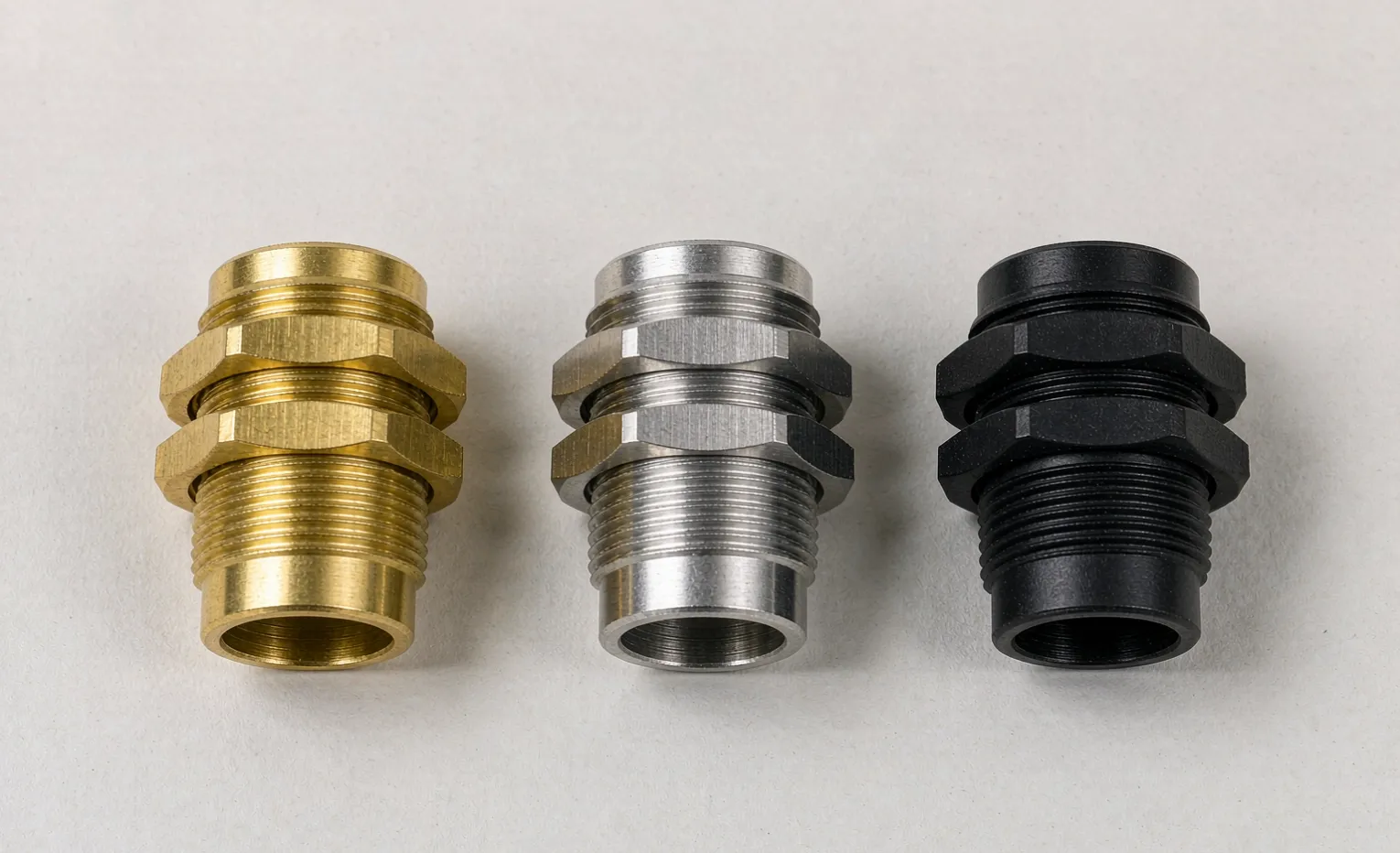
Material comparison
Attribute | Brass (Ni-plated) | Stainless 316 | Nylon |
|---|---|---|---|
Relative cost | $ | $$$ | $ |
Corrosion (coastal) | Fair | Excellent | Good (no rust) |
Temperature | Good | Excellent | Poor (softens) |
EMC / grounding | Yes. | Yes. | No |
Best use | General duty | Harsh / washdown | Indoor light |
The inner seal: the grommet does the real work.
Buyers fixate on the body metal and forget the insert. The grommet—the elastomer that squeezes the cable—is what actually earns the IP rating. The body just holds it in place.
Neoprene, silicone, and TPE
Most glands ship with a neoprene (CR) or TPE grommet, which is fine for general duty. For heat or washdown, specify silicone. The same logic we apply to door gaskets applies here: the insert material has to match the environment, or the seal ages out before the metal does.
Buyer Decision — Ask for the grommet material by name, not "standard seal." A gland quoted with an unspecified insert is a gland someone can fill with the cheapest compound. For outdoor or NEMA 4X duty, name silicone or a rated TPE.
Rating the gland to the enclosure
A gland carries its own ingress rating under IEC 60529 and maps to NEMA 250 classes. The number on the gland must meet or beat the number on the enclosure.
IP and NEMA on the gland
A gland marked IP68 is over-specified for an IP65 enclosure and costs more; a gland marked only IP54 under an IP66 enclosure is a leak waiting to happen. Match them. For NEMA 4X outdoor duty, the gland should be rated to the same 4X expectation (often IP66/IP68 with a corrosion-resistant body).
UL and hazardous areas
For UL-rated work, we source from UL-listed build shops on a per-order basis, and the gland is reviewed as part of the certified assembly, not in isolation — see UL 50E. In a hazardous (Ex) area, the gland itself must carry the correct explosion-protected certification; a standard industrial gland is not a substitute.
EMC shielded glands: when you need the spring
If your cable carries a shield that must stay tied to the enclosure ground—for noise immunity in drives, instrumentation, or comms—a plain nylon or non-contact gland breaks that path. An EMC gland has a spring contact ring that bites the shield and bonds it to the metal enclosure.
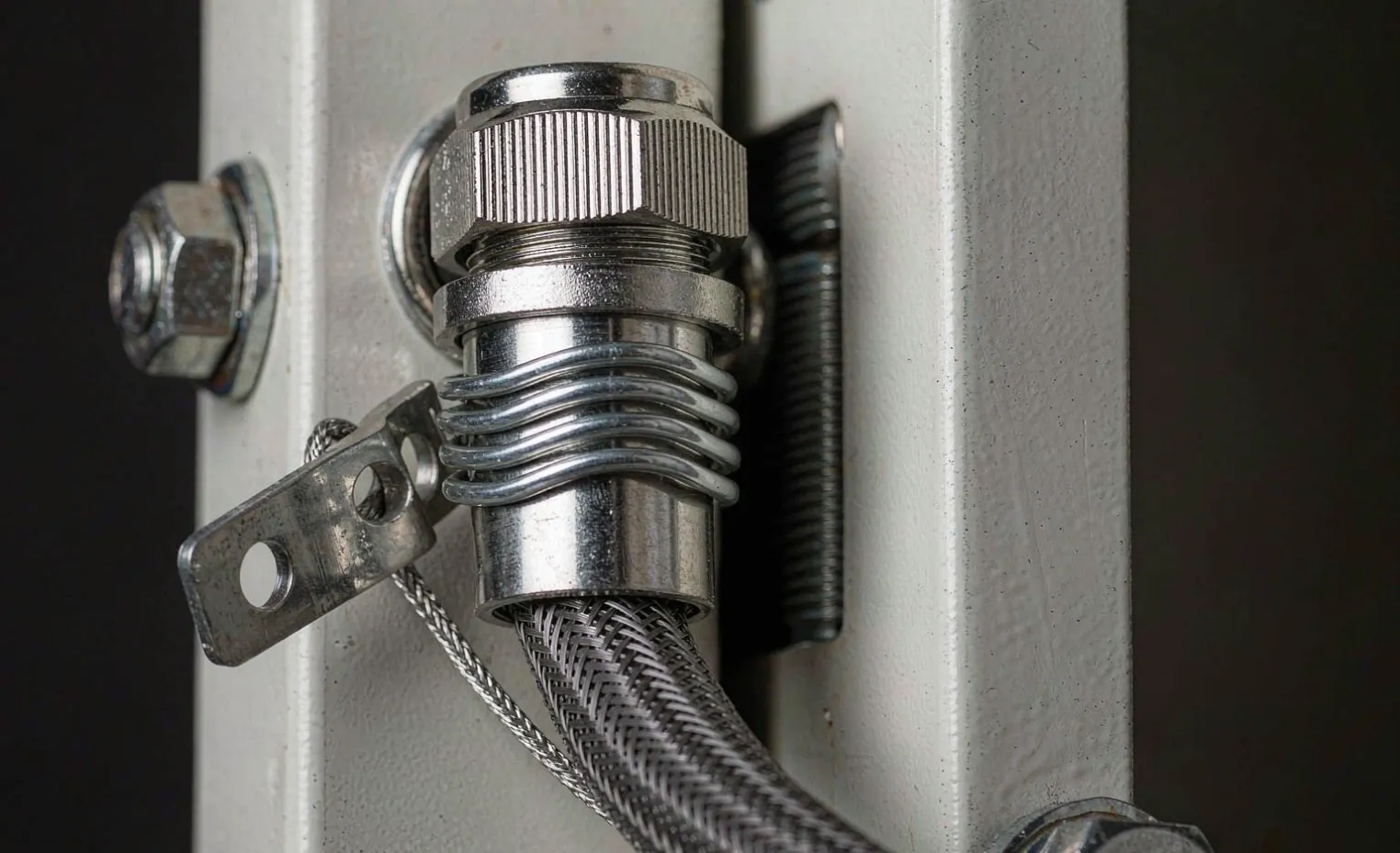
- Use EMC glands wherever the shield continuity matters (VFDs, analog signals, Ethernet in noisy panels).
- They must be metallic bodies—nylon cannot carry the bond.
- The spring must seat on the bare shield, not on the jacket, or the grounding is cosmetic.
Sizing: match the gland to the cable, not the hole.
A gland is sized by the cable outer diameter it clamps, not by the enclosure hole. Every gland lists a clamp range (for example, 6–12 mm). Pick a gland whose range centers on your cable OD with margin on both sides.
How many entries, and what size
Count your cables, group them by diameter, and plan entries so you are not cramming two cables through one gland (you cannot — each gland takes one cable) or drilling the wall on site. Field-drilling an enclosure wall destroys the coating and the rating; the entries should be planned at the build shop, not with a step bit in the field.
Engineering Note — Over-tightening the sealing nut is its own failure mode. Crush the grommet and it loses spring-back; under-tighten and the cable pulls. The correct torque is "snug until the grommet bulges evenly," typically a modest figure from the gland maker — we set it at incoming check rather than leaving it to feel.
Installation mistakes that sink an otherwise good panel
Engineering Note — Most gland leaks are installation errors, not product defects. The gland was correct; the person fitting it cross-threaded it or left the locknut loose.
Cross-threading mixed standards
The classic: an NPT gland forced into a metric hole. It appears to seat, then weeps. Confirm the thread standard at the enclosure, then buy glands to match.
Loose locknut
The locknut on the inside holds the gland against the wall. A loose locknut lets the gland rotate and slowly works the grommet off the cable. Snug it, then verify after the cable is pulled.
Wrong grommet for the cable
A gland sized for 10–14 mm clamped onto a 6 mm cable never seals—there is too much gap. Match the clamp range to the actual cable OD, including the jacket, not the conductor size.
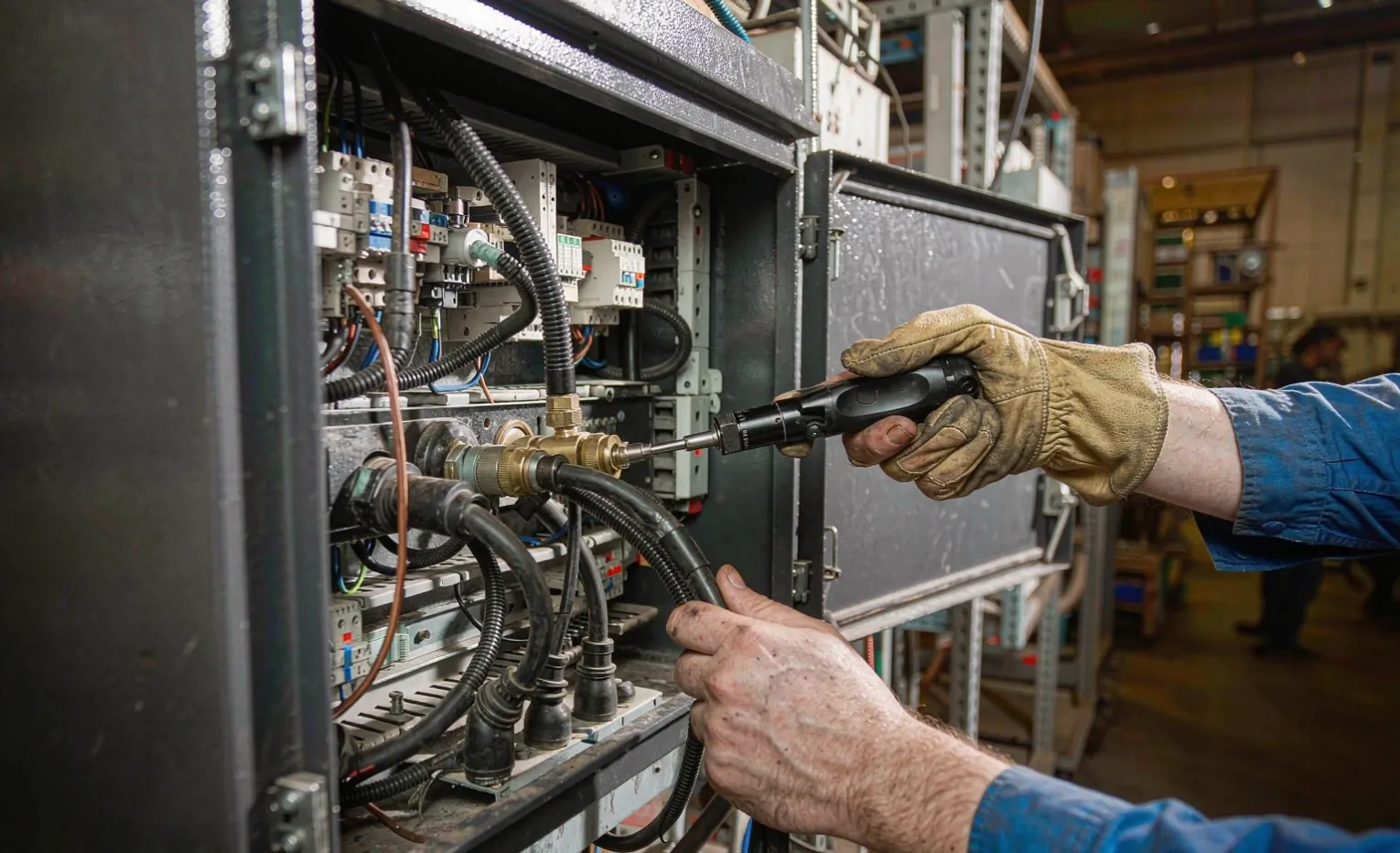
Field-drilling the wall
Drilling a new entry on site strips the coating and opens a corrosion path. Plan entries up front. For a custom panel, we lay out every penetration before the first hole is punched, so the coating and rating stay intact.
Blank unused holes, and keep one spare.
Every gland hole you do not use must be sealed with a matching blanking plug of the same thread and rating—an open tapped hole is just a leak you forgot to install. Plan one spare entry per panel for future cables; a spare sealed with a rated plug today is far cheaper than a field-drilled wall tomorrow. The spare and its plug should carry the same IP/NEMA class as the enclosure, or they become the weak point you were trying to avoid.
Frequently asked questions
1. Does the cable gland affect my IP or NEMA rating?
Yes—directly, at the penetration point. The enclosure rating describes the whole assembly; a lower-rated gland pulls that point down to the gland's rating. Match them.
2. Can I mix metric glands with an NPT-tapped enclosure?
No. Metric and NPT threads do not seat; forcing them cracks the thread and breaks the seal. Confirm the enclosure thread first, then buy glands to match.
3. Brass or stainless—which should I default to? Default to nickel-plated brass for general indoor and light-outdoor duty (cost and strength). Choose 316 stainless for coastal, washdown, or food-zone panels where corrosion will otherwise win.
4. When do I need an EMC shielded gland?
Whenever the cable shield must stay bonded to the enclosure ground—VFDs, analog instrumentation, and Ethernet in noisy panels. Use a metallic EMC gland; nylon cannot carry the bond.
5. How do I size a gland to my cable?
By the cable's outer diameter, not the hole. Pick a gland whose clamp range centers on your cable OD with margin. One cable per gland; plan the number of entries before building.
6. Do you supply the enclosure with glands already fitted? Yes. Enclosures are delivered with the specified glands installed and verified at the incoming check, so the entry rating is confirmed before the panel leaves the build shop. The typical build window is about 15 days for a 5-unit minimum order, while component lead times run 3–5 days.
Engineering Takeaway
The cable gland is the cheapest part of your enclosure and the easiest place to lose the rating you paid for. Match the thread to the enclosure (metric to metric, NPT to NPT), match the body to the environment (brass default, 316 stainless for harsh duty, nylon only indoors), name the grommet material, rate the gland to the enclosure, and size it to the cable OD—not the hole. Do that, and the IP65/NEMA 4X class holds at every cable entry, not just on the certificate.
Ready to spec the entries as carefully as the steel? Upload your drawing and we will review the enclosure type, gland thread, material, and clamp ranges as part of an engineering review—then return concrete suggestions before you order.