
Why a Control Panel Breaker Trips on First Start (And Why the Breaker Is Rarely to Blame)
Panel passes bench test, then trips on first motor start. The breaker is usually correct — the trip curve is wrong. Here is the diagnostic order and the RFQ line that stops it.
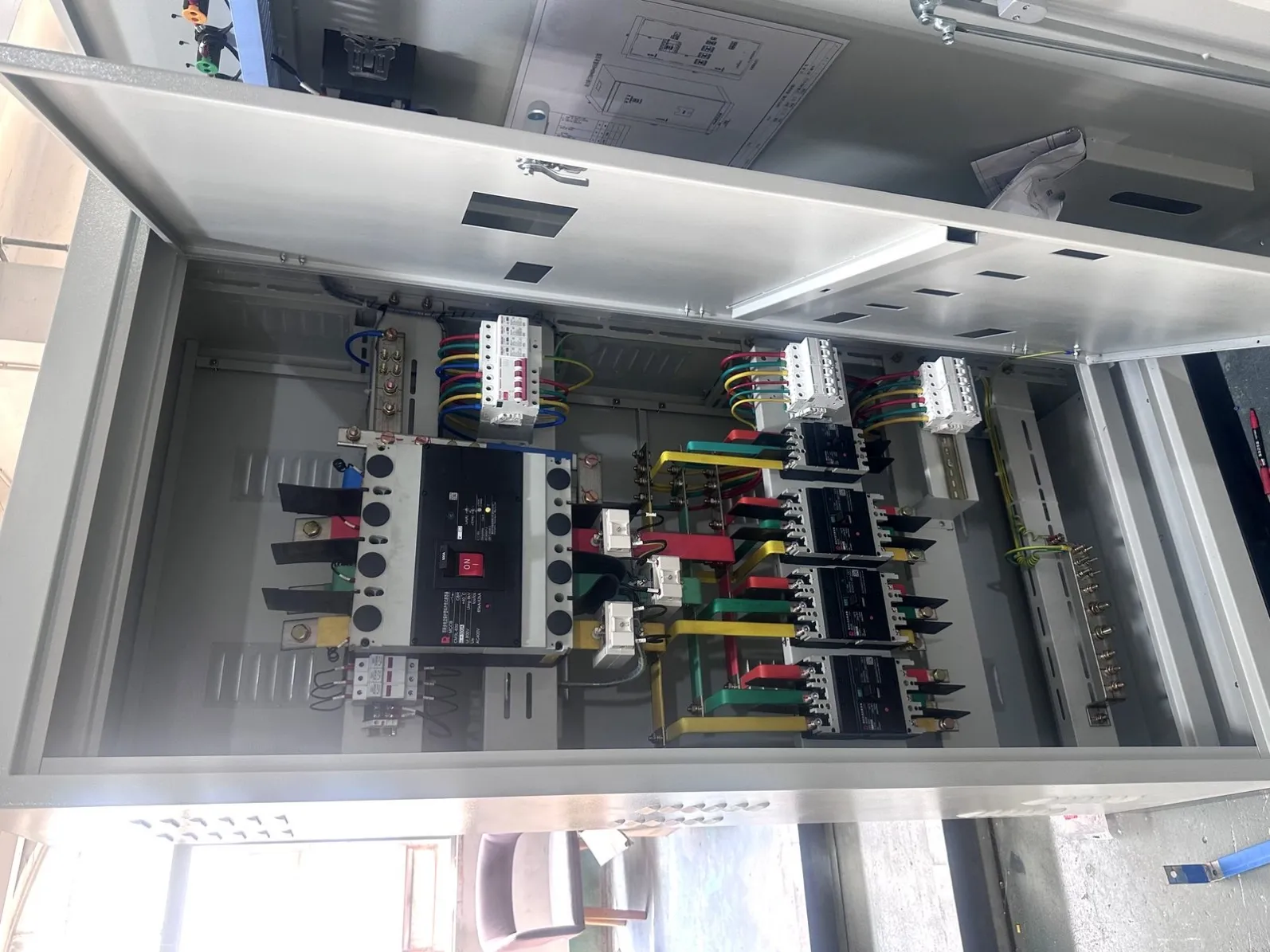
A 7.5 kW motor starts across the line. The main breaker — a 16 A unit with a B curve — opens in the first half-second. The team fits a fresh 16 A breaker. It opens again. By the third swap someone is blaming the panel build. The breaker is doing exactly what it was told to do; the instruction was wrong.
Here is the idea worth carrying out of this article: a breaker that opens is almost never a broken breaker. It is a correctly functioning device responding to a mismatch between its trip curve and what the load actually draws at start-up. That idea travels further than any single motor — to transformers, switch-mode supplies, capacitor banks, any circuit where "it trips, so replace it" is the reflex. Change the reasoning, not the part. If you are still deciding who builds the panel, our Electrical Enclosure Supplier China Sourcing Guide covers the sourcing decision; this article is about what to specify so the breaker holds once the panel is live.
The number on the handle is only half the specification
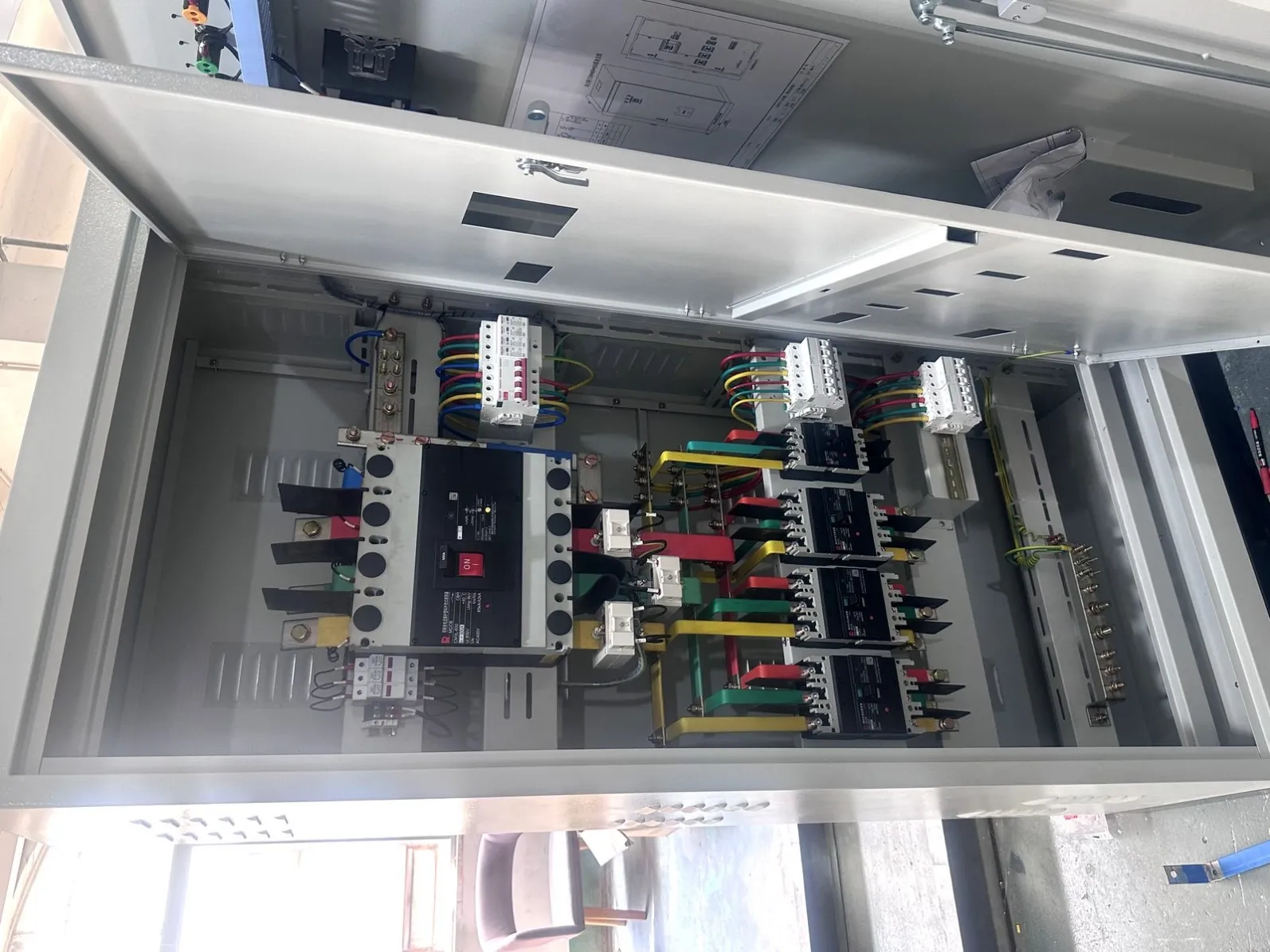
Buyers specify breakers by rated current — 16 A, 32 A, 63 A. The rated current sets the thermal overload point and must match the cable's current-carrying capacity. It says nothing about the short, violent current spike at switch-on. That spike is governed by the magnetic (instantaneous) trip band, and the band is set by the curve letter.
Under IEC 60898-1 and IEC 60947-2, the common bands are roughly B = 3–5×In, C = 5–10×In, D = 10–20×In, with K reserved for inductive loads. A 7.5 kW motor at 400 V draws about 15 A running, but 6–8× that on a direct start — 90 to 120 A for a fraction of a second. A 16 A B-curve device trips magnetically somewhere between 48 and 80 A, so the start lands well inside its trip zone. A 16 A C-curve device does not begin to trip until around 80 A and may hold. Same handle rating, opposite outcome, decided entirely by a letter most RFQs never mention. The figures here are illustrative; the load's published starting current is the number that decides a real circuit.
What IEC 60204-1 actually says — two clauses people read backwards
The machinery standard is explicit about this failure mode. IEC 60204-1:2016+A1:2021, Clause 7.2.7, requires transformers to be protected "avoiding tripping due to transformer magnetizing inrush currents." The standard treats nuisance tripping on inrush as a design defect to be engineered out, not an operating condition to tolerate. Clause 7.2.9 goes further: the rated short-circuit breaking capacity (Icn) must be at least the prospective fault current at the point of installation, and additional currents from motors and power-factor-correction capacitors must be taken into account. A breaker chosen only on running current ignores both.
The clause that stops the usual quick fix is 7.2.10: the overcurrent setting is to be selected "as low as possible, but adequate for anticipated overcurrents," with the conductor's current-carrying capacity as the limiting factor. The reasoning chain for a buyer is direct. If the trips are inrush-driven, the correct lever is the curve letter (or a soft starter), not a larger rated current. Raise the rating while leaving the cable size unchanged and the cable loses the protection it had — the standard's own sizing logic is broken to silence a symptom. For the wire-sizing arithmetic behind that constraint, see our Control Panel Wire Sizing Guide.
Four causes that impersonate a bad breaker
Inrush against the curve is the most common, but three others produce the same "it just trips" report and need a different fix.
A loose terminal or degraded contact creates a high-resistance point. Normal load current heats that joint, the heat conducts into the breaker's thermal element, and the device opens on what looks like an overload while the measured current sits under the rating. The classic tell is a trip that appears only after the panel has been running hot for a while. Torque the terminations to the manufacturer's figure; an under-tightened lug and an over-tightened one both raise resistance.
Panel ambient temperature shifts the thermal calibration. Miniature breakers are calibrated around 30 °C. Inside a sealed panel in a hot plant, ambient can reach 50 °C, and a 16 A device may start opening at 13–14 A. The breaker is within its reference conditions; the reference conditions are not the conditions in your panel. This is why "it trips in the afternoon" is a real diagnostic clue rather than an anecdote.
An under-voltage release coil wired to a phase that dips when a large motor starts opens the breaker on every start. Maintenance goes hunting for an overload that does not exist. Checking which phase feeds the release coil takes five minutes and settles it.
Diagnose in this order
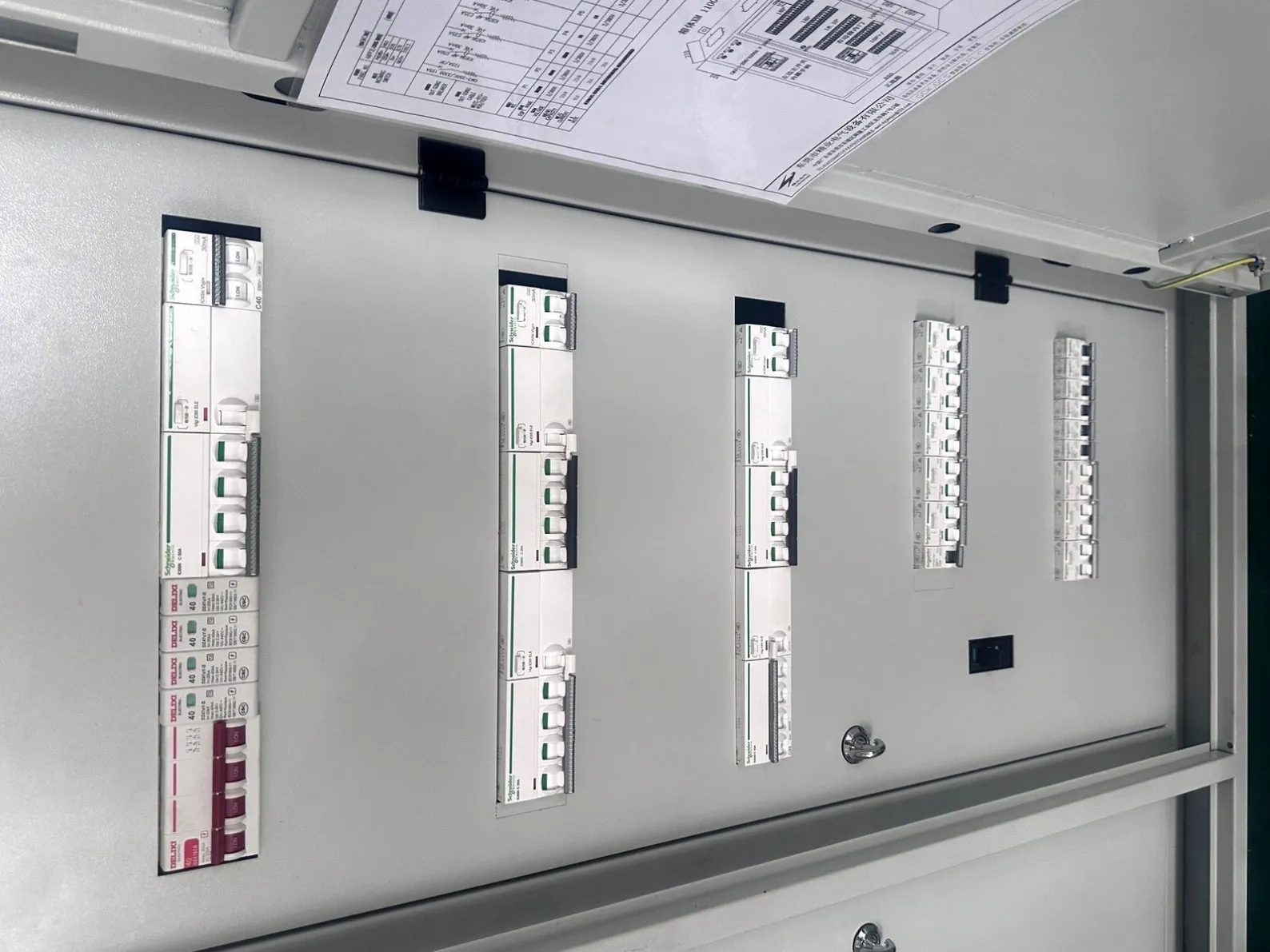
Sequence matters — each test removes a group of causes so the next result means something.
What you see | Likely cause | Check that settles it |
|---|---|---|
Opens in the first half-second of every start | Inrush against too-sensitive a curve | Compare published starting current with the curve band |
Opens only after running hot for a while | Loose terminal or contact heating | Re-torque terminations; thermal-image the circuit |
Opens on hot afternoons, holds when cool | Ambient derating | Measure panel internal temperature against the 30 °C reference |
Opens exactly when one large motor starts, no current rise | Under-voltage release on a dipping phase | Trace the release coil supply |
Trips below rating after insulation checks are clean | Aged thermal or magnetic mechanism | Substitute a known-good unit of identical rating and curve |
An insulation test belongs early in that sequence: healthy low-voltage wiring reads in the high megohms, and a reading near or below 1 MΩ needs investigation before the breaker goes back in service. Do this with the circuit isolated and confirmed dead.
The panel that passes every bench test and still trips on site is a known pattern, covered from the acceptance angle in Why a Control Panel Passes FAT but Fails on Site. The distinction matters: the build can be sound and the installed specification still wrong.
Paste this into the RFQ and the PO
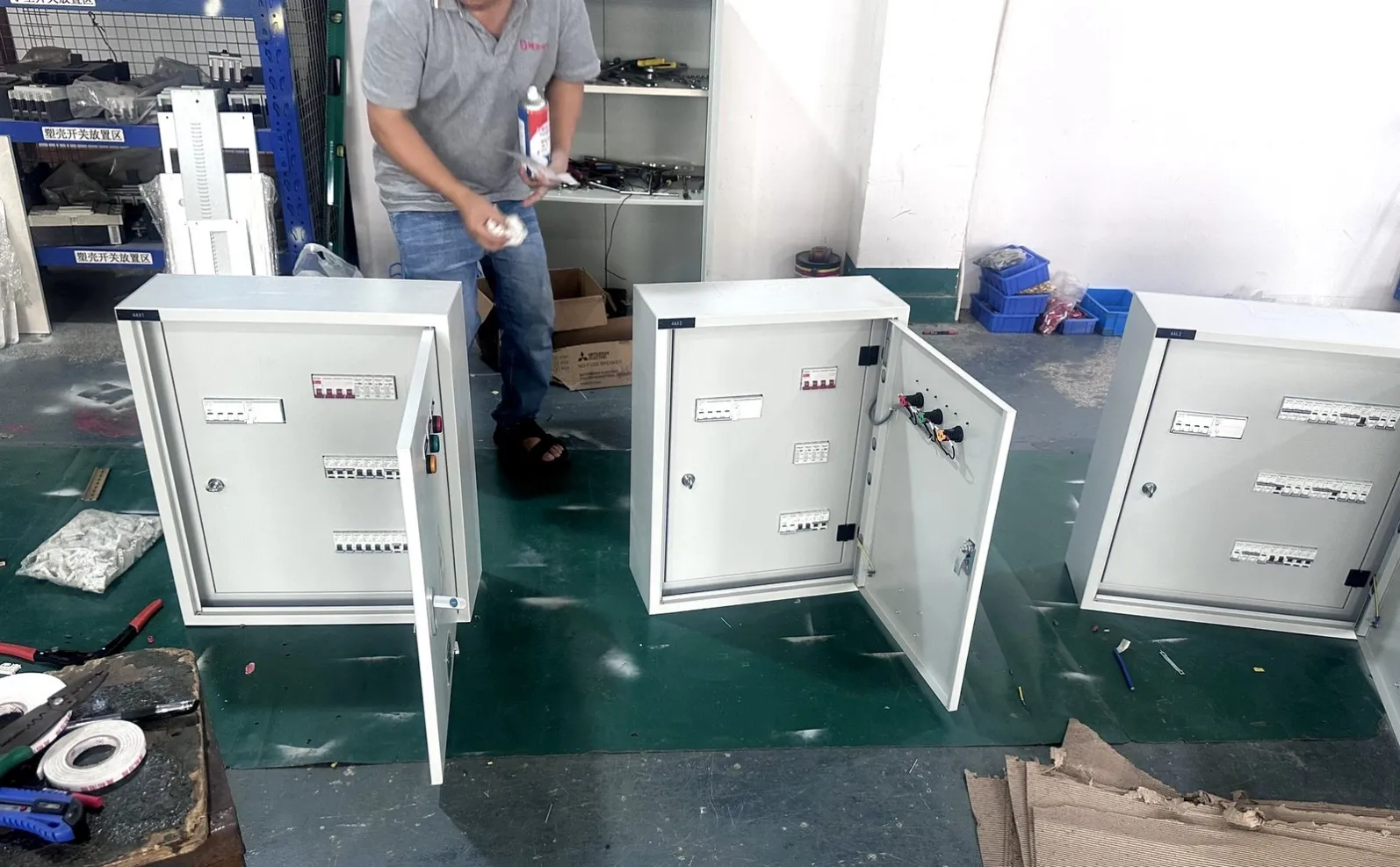
The clauses below turn the diagnosis into language a supplier can price and a commissioning engineer can verify.
RFQ spec line — protection coordination: Each outgoing circuit shall state breaker rated current, trip curve (B/C/D/K per IEC 60898-1 or IEC 60947-2), rated breaking capacity, and the basis for the selection. For circuits feeding motors, transformers, or switch-mode supplies, supplier shall show that the curve's magnetic band accommodates the published starting current without nuisance tripping, and shall state the conductor ampacity used to set the rated current per IEC 60204-1 Clause 7.2.10.PO submittal line: Supply with the panel: (a) breaker schedule listing In, curve letter, Icn, and prospective fault current at each bus; (b) confirmation that Icn ≥ prospective fault current including motor and PFC contributions per IEC 60204-1 Clause 7.2.9; (c) the conductor cross-section paired with each protective device.Commissioning trip log (copy into the site sheet): Date/time — circuit ID — ambient at panel — which loads were starting — time from start to trip — measured current at trip — breaker position after trip — action taken. Five consecutive entries settle most nuisance-trip cases without a single part swap.
The honest limit
A curve change does not rescue an undersized cable, and a bigger breaker does not cure a loose joint. If the log shows clean insulation, correct torque, moderate ambient, and a start current inside the curve band, the breaker itself deserves a look — last, not first. That ordering is the whole method.
Our position
We are a sourcing partner, not a panel manufacturer. We source components across brands and have panels built to a stated protection schedule in our Foshan supplier network. For a nuisance-trip problem we work from the load data and the curve schedule rather than from a parts bin, and we hand over the breaker schedule with the panel so the reasoning is auditable. We are the wrong fit if you want a single-brand badge with no coordination data; we are a useful fit when you want one party accountable for the specification as well as the build.
Frequently Asked Questions
Can I just move a B-curve breaker to C and stop the trips?
Often, yes — the rated current and the cable protection stay the same, only the magnetic band widens. But confirm the load's starting current first, and confirm the new band still clears a genuine short circuit within the conductor's withstand rating.
Does a higher Icu fix tripping at switch-on?
No. Icu is the fault level the device can safely interrupt, not the threshold at which it trips. Buying breaking capacity you do not need changes nothing about inrush behaviour.
Why does the panel trip only in summer?
Thermal elements respond to ambient as well as current. A breaker calibrated near 30 °C can open early in a 50 °C panel. Check internal temperature before replacing devices.
Should every motor circuit get a D curve?
No. A D curve is for high-inrush loads such as transformers and large motors. Using it broadly can leave a low-magnitude fault sitting inside the band until the thermal element eventually responds.
Is it safe to retorque terminals with the panel energised?
No. Isolate, confirm dead at the load, and use a torque screwdriver at the manufacturer's specified value. Both under- and over-tightening raise contact resistance.
Related Guides
Request a quote or engineering review
Send the motor and transformer schedule with starting currents and we will quote a panel with a breaker schedule that holds on start — curve letter, rated current, and breaking capacity stated per circuit against IEC 60204-1. Upload your drawing for an engineering review.
Produced with AI-assisted drafting and reviewed by the Uni Regal team before publication.