Oct 29, 2026Buying Guides
NEMA Ratings for Buyers: Which Enclosure Type Do You Actually Need
NEMA 1, 3R, 4, 4X, 12, 13 — what each rating protects against, the IP equivalents buyers actually use, and a 5-question matrix to stop over-specifying your enclosure.
NEMA Ratings for Buyers: Which Enclosure Type Do You Actually Need
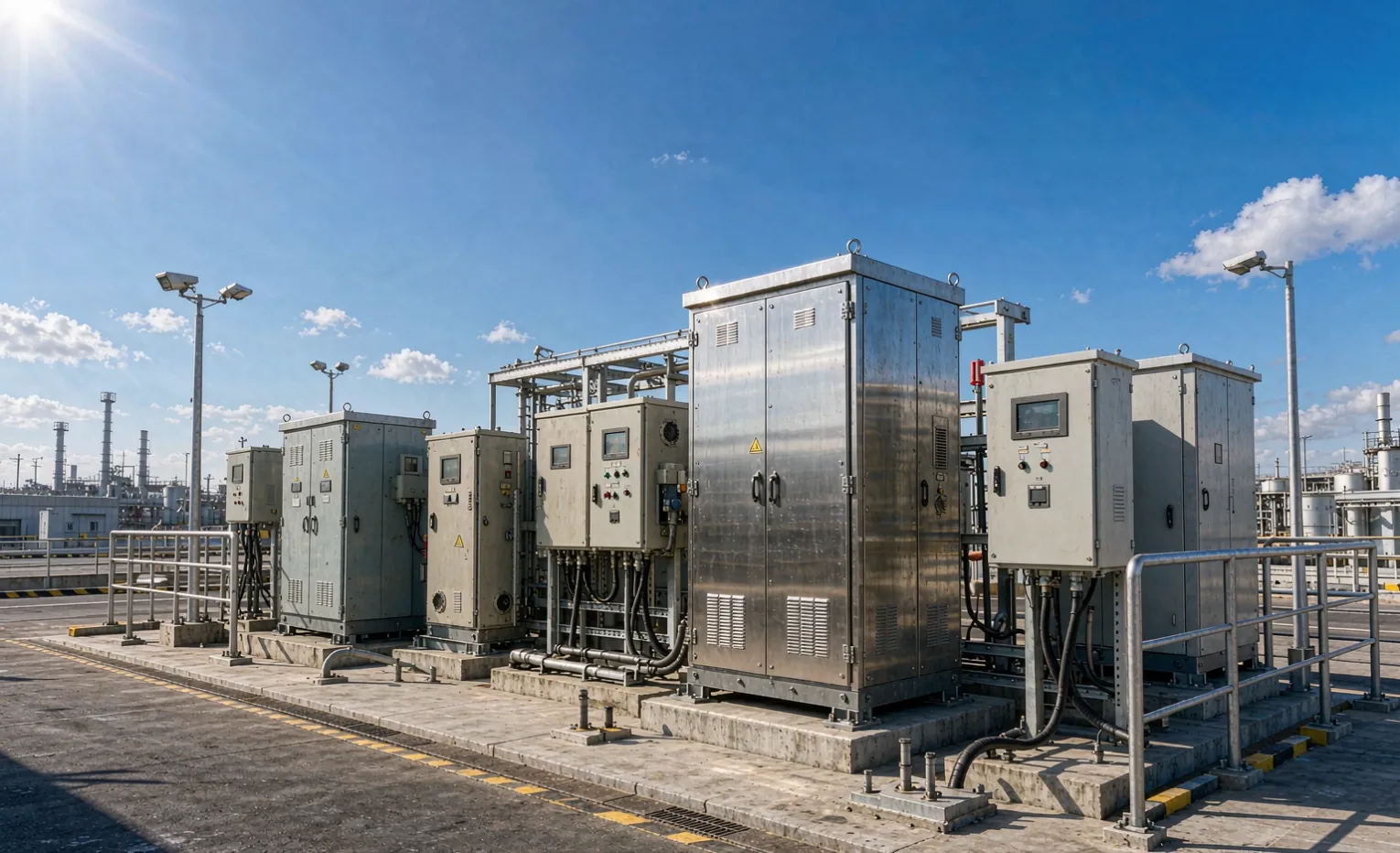
A supplier quotes you an enclosure rated "NEMA 4X" and the price jumps. Before you pay for the rating, you should know exactly what it buys you—and whether your application would have been fine with NEMA 4, or even 3R. Most buyers over-specify the enclosure and quietly pay for corrosion protection they will never use, or under-specify and watch the first storm take out the install. This guide gives you the decision framework.
Written from a sourcing partner perspective: we help buyers specify and source enclosures and panels built in China, and we are not one of the enclosure brands you might be comparing. Our interest is that you specify the right type the first time, so the build you receive matches the environment it lives in.
If you are pairing this with an outdoor install, our outdoor enclosure UV-resistance guide covers the coating side of the same problem—NEMA 4X protects against corrosion mechanisms, but the paint still has to survive the sun. Read both before you finalize. For the enclosures and panels we actually source and build, see our electrical enclosures solutions.
Buyer Decision: A NEMA rating is a list of hazards the enclosure is tested against, not a quality grade. NEMA 4X is not "better" than NEMA 3R in every sense; it is tested against more hazards. If your site has none of those extra hazards, you are paying for a test you don't need.
What a NEMA rating actually certifies
NEMA (National Electrical Manufacturers Association) publishes standard NEMA 250, which defines enclosure types by the environmental hazards they protect against: indoor dust, outdoor rain, hose-directed water, corrosion, oil, and so on. The rating is a performance envelope, not a material specification. A NEMA 4X enclosure can be 304 stainless, 316 stainless, or painted carbon steel with the right coating—the rating tells you what it survives, not what it is made of.
Rating vs. material: the split buyers miss
That distinction matters for buyers because it separates two decisions that get lumped together:
- Which hazards your site presents (drives the NEMA type).
- Which material resists those hazards over time (drives the steel grade and coating).
The NEMA → IP translation buyers actually use
International buyers work in IP (Ingress Protection, IEC 60529) codes. There is no official one-to-one NEMA-to-IP map because the two standards test different things, but the practical equivalents below are what engineers quote when a spec mixes both.
NEMA type | Typical IP equivalent | Protects against | Common use |
|---|---|---|---|
NEMA 1 | IP20 | Indoor, limited dust | Office panels, clean indoor |
NEMA 3R | IP24 | Rain, outdoor, no hose | Rooftop, outdoor wall, no washdown |
NEMA 4 | IP66 | Hose-directed water, outdoor | Light washdown, outdoor exposed |
NEMA 4X | IP66 + corrosion | 4 plus corrosion resistance | Coastal, chemical, food washdown |
NEMA 12 | IP54 | Dust, dripping, non-corrosive | Factory floor, indoor industrial |
NEMA 13 | IP54 + oil | 12 plus oil mist | Machinery cabinets, oily shops |
Engineering Note: Treat the IP column as "at least this good," not exact. NEMA 4X also implies a gasket and finish rated for corrosion that IP66 alone does not guarantee. If a supplier says "IP66 equals 4X," ask what corrosion test backs the claim.
The buyer's decision matrix: 5 questions
Pick the lowest NEMA type that covers every "yes" below. Over-specifying costs material and lead time; under-specifying costs the install.
Question | If yes → minimum type |
|---|---|
Indoors, clean, no washdown? | NEMA 1 (or 12 for dusty floor) |
Outdoor, rain only, no hose/washdown? | NEMA 3R |
Hose washdown or frequent water exposure? | NEMA 4 |
Corrosive atmosphere (coastal, chemical, food acid)? | NEMA 4X |
Oily or misty machinery environment? | NEMA 12 or 13 |
Worked example: two sites
A rooftop telecom cabinet in a dry climate: outdoor rain only, no washdown → NEMA 3R is correct, and 4X would be a wasted spend. A seafood processing line hosed with sanitizer daily: corrosive plus washdown → NEMA 4X in 316 stainless, not painted 4X. The same word, "enclosure," with two completely different right answers.
NEMA 4X: when you truly need it
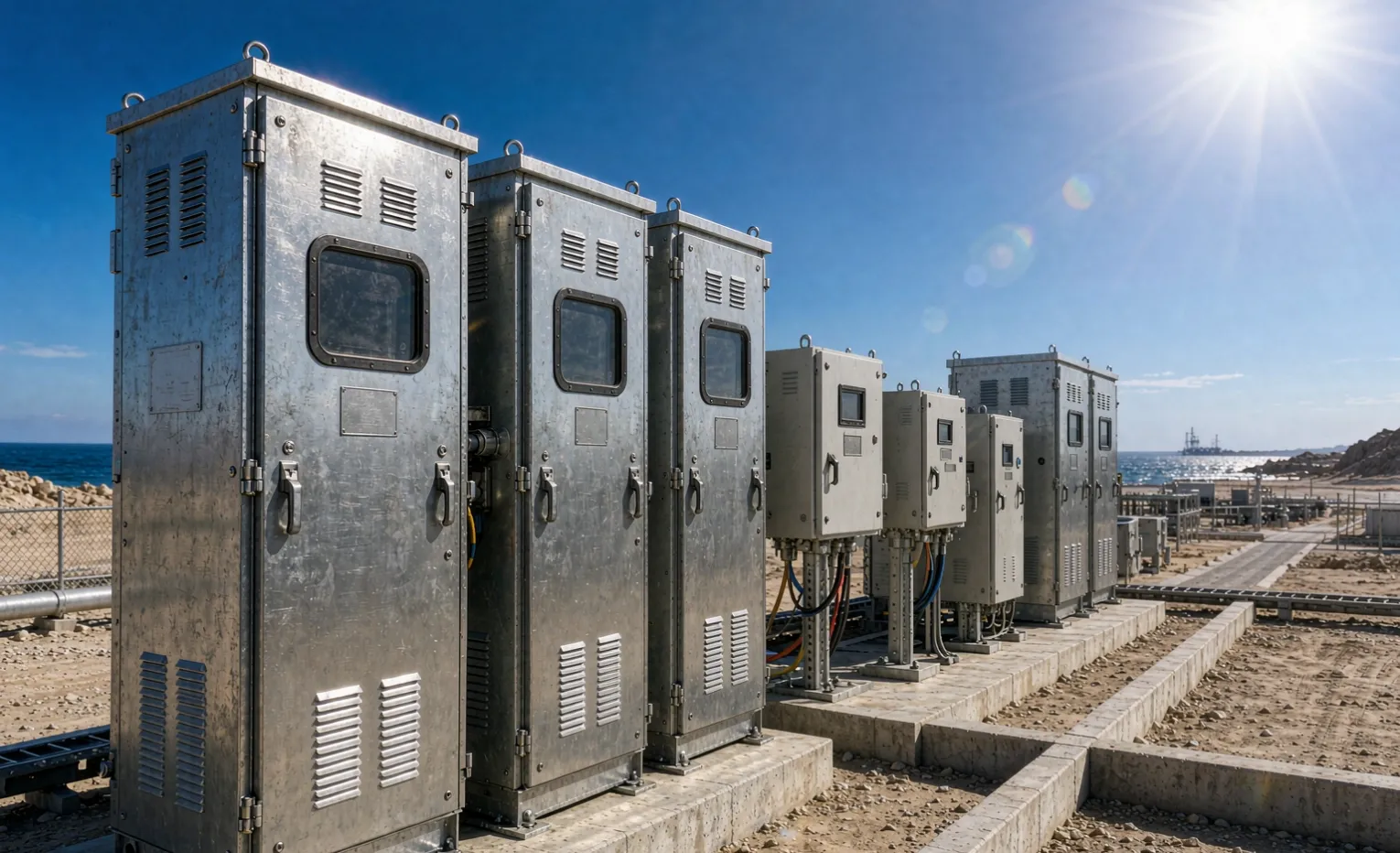
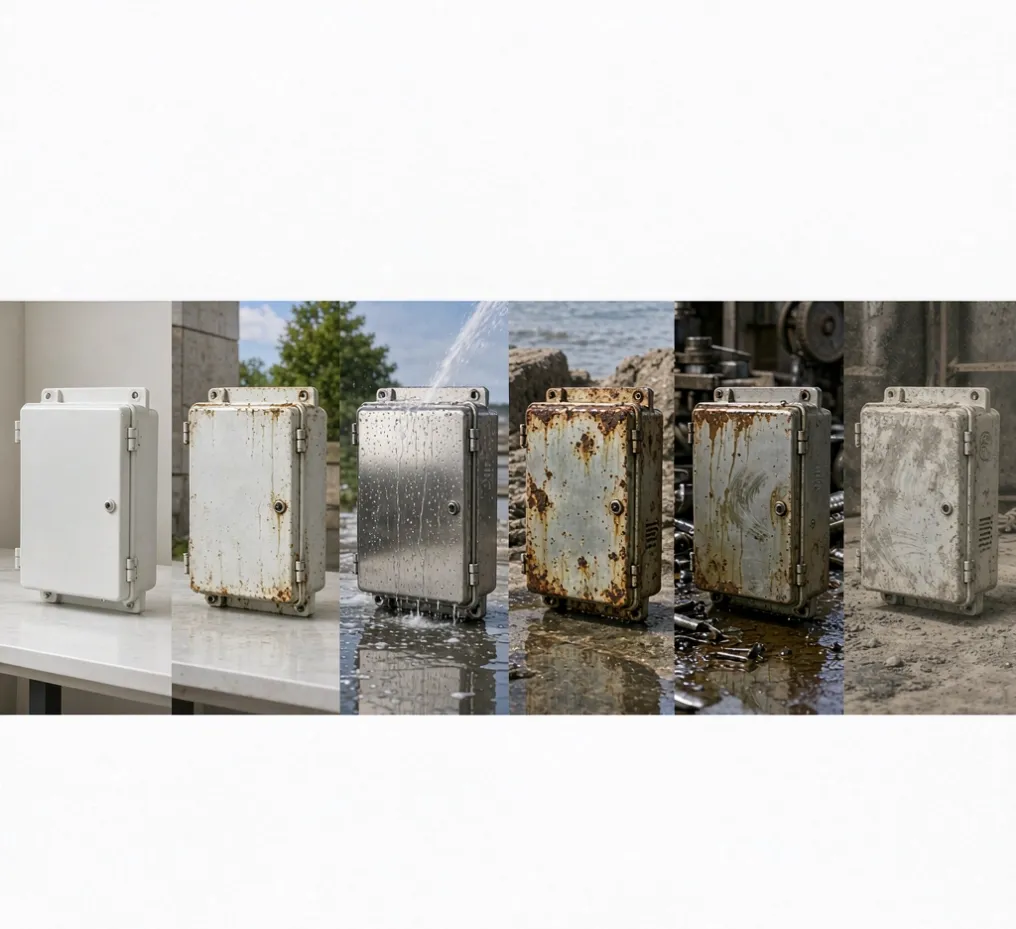
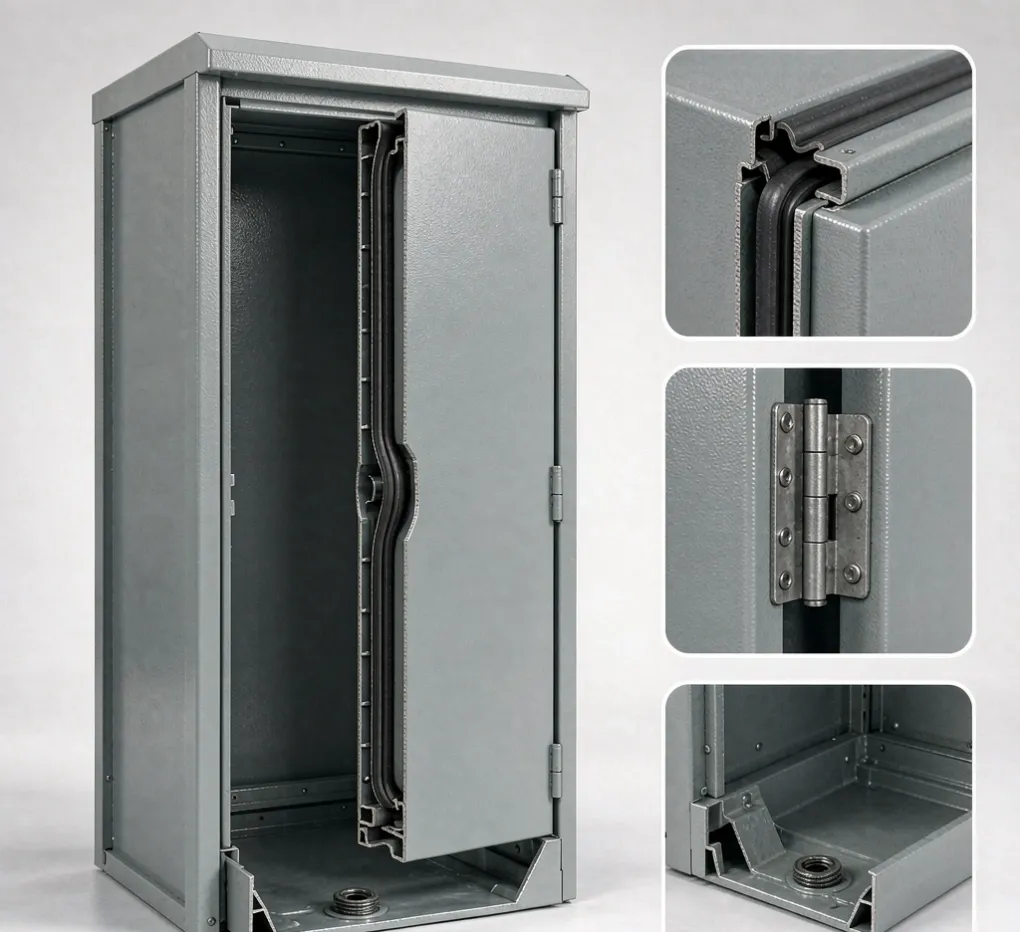
NEMA 4X adds corrosion resistance to the NEMA 4 envelope. You need it when the enclosure lives where metal actually corrodes: within a few km of the coast, in chemical or wastewater plants, or in food and beverage lines where daily washdown uses caustic or acidic cleaners. In those sites, a plain-painted carbon-steel NEMA 4 will eventually fail at the seams even if the rating "passed" in a lab.
Material choice inside 4X
This is where material and coating meet the rating. A 316 stainless NEMA 4X resists chloride better than 304; a painted carbon-steel 4X relies entirely on the coating system surviving the environment—which is the exact problem our UV and solar coating guide addresses. Pick the rating for the hazard, then pick the material for the decade.
The two mistakes buyers make
Over-specifying. A buyer quotes NEMA 4X for an indoor clean-room panel because "4X is the safe choice." It is not unsafe, but it adds a stainless or premium coating cost and lead time for zero benefit. NEMA 1 or 12 would have been correct.
Under-specifying. A buyer specs NEMA 3R for an outdoor pump station that gets hosed during maintenance. Three months in, the gasket wicks water and the drive fails. The "savings" cost a shutdown.
Buyer Decision: Spec the rating to the worst routine condition, not the average. Maintenance hose-down counts even if daily operation is dry.
How suppliers quote NEMA types (and the red flags)
What a clean quote contains!
When you request a NEMA 4X enclosure, the quote should state the basis: which standard (NEMA 250), which material grade (e.g., 304 or 316), and which finish or coating system. Red flags:
- The quote says "IP66" but never mentions NEMA 250 or a test basis.
- "4X" with no material grade—paint-only 4X is a different risk profile from stainless 4X.
- No reference to a third-party listing (such as UL) when your end customer requires one.
We source enclosures through a sourcing partner model: you give us the NEMA type, the material, and the environment, and we match a panel-build shop and a coating system, then verify against the rating before shipment. We are not an enclosure manufacturer, so we have no incentive to upsell you to 4X when 4 would do—and we will tell you when 4X is genuinely required.
FAQ
Q: Is NEMA 4X always better than NEMA 4? No. 4X adds corrosion resistance to the 4 envelope. If your site has no corrosive hazard, 4X adds cost without benefit. "Better" depends on the hazard, not the number.
Q: Can I use an IP66 enclosure wherever NEMA 4X is specified? Not safely by equivalence alone. IP66 covers water ingress; NEMA 4X also requires corrosion resistance and a specific gasket and finish. If the spec demands 4X, confirm the supplier meets NEMA 250 corrosion testing, not just IP66.
Q: Does NEMA 4X mean stainless steel? No. NEMA 4X can be 304, 316, or painted carbon steel with a corrosion-rated coating. Stainless is the common choice for harsh sites, but the rating is about performance, not material.
Q: My enclosure is indoors in a mildly dusty factory. What do I need? Usually NEMA 12 (dust- and drip-tight, non-corrosive). NEMA 1 is enough only if the space is genuinely clean. Avoid 4X here—it is unnecessary cost.
Q: How do I verify a supplier actually meets the NEMA rating? Ask for the test basis (NEMA 250) and, for listed installations, the UL file number in writing. A credible supplier states material grade and coating system on the quote, not just the type number.
Q: Does the NEMA type change my UL listing requirement? The NEMA type and the UL listing are separate. Many enclosures carry a NEMA type from the builder but need a UL listing (for example UL 508A for industrial control panels) for the final assembly. Confirm which your end customer requires.
Buyer Takeaway
Specify the NEMA type to the worst routine hazard, not the average. Translate to IP only with the corrosion caveat in mind. Separate the rating (hazard) from the material (longevity). And when a supplier pushes 4X on an indoor panel, ask what corrosion test justifies it.
If you want a second opinion on your enclosure specification before you buy, send us the environment, the NEMA type you are considering, and the material—we will tell you whether you are over- or under-specifying and source the build accordingly.
Get Your Enclosure Specified Right
Tell us what your enclosure actually faces—drawings, the NEMA type you are considering, the material grade, and a photo of the install site—and we will confirm whether you are over- or under-specifying, then source the build. We reply within one business day.
- Email: info@uniregal.com
- Submit requirements: Upload your drawing for engineering review · Contact form
Lead times: complete custom panel from 1 unit (drawing + BOM review, 35–40 days); empty enclosure or shell MOQ 5, about 15 days; in-stock components ship in 3–5 days.