
Oct 26, 2026
Food & Beverage Control Panels: Washdown and IP69K Buyer's Guide
Washdown-rated F&B control panels live or die on the seal, not the PLC. Here is the buyer's checklist for IP69K, NEMA 4X, 304/316 stainless, gaskets, and FAT before it ships.
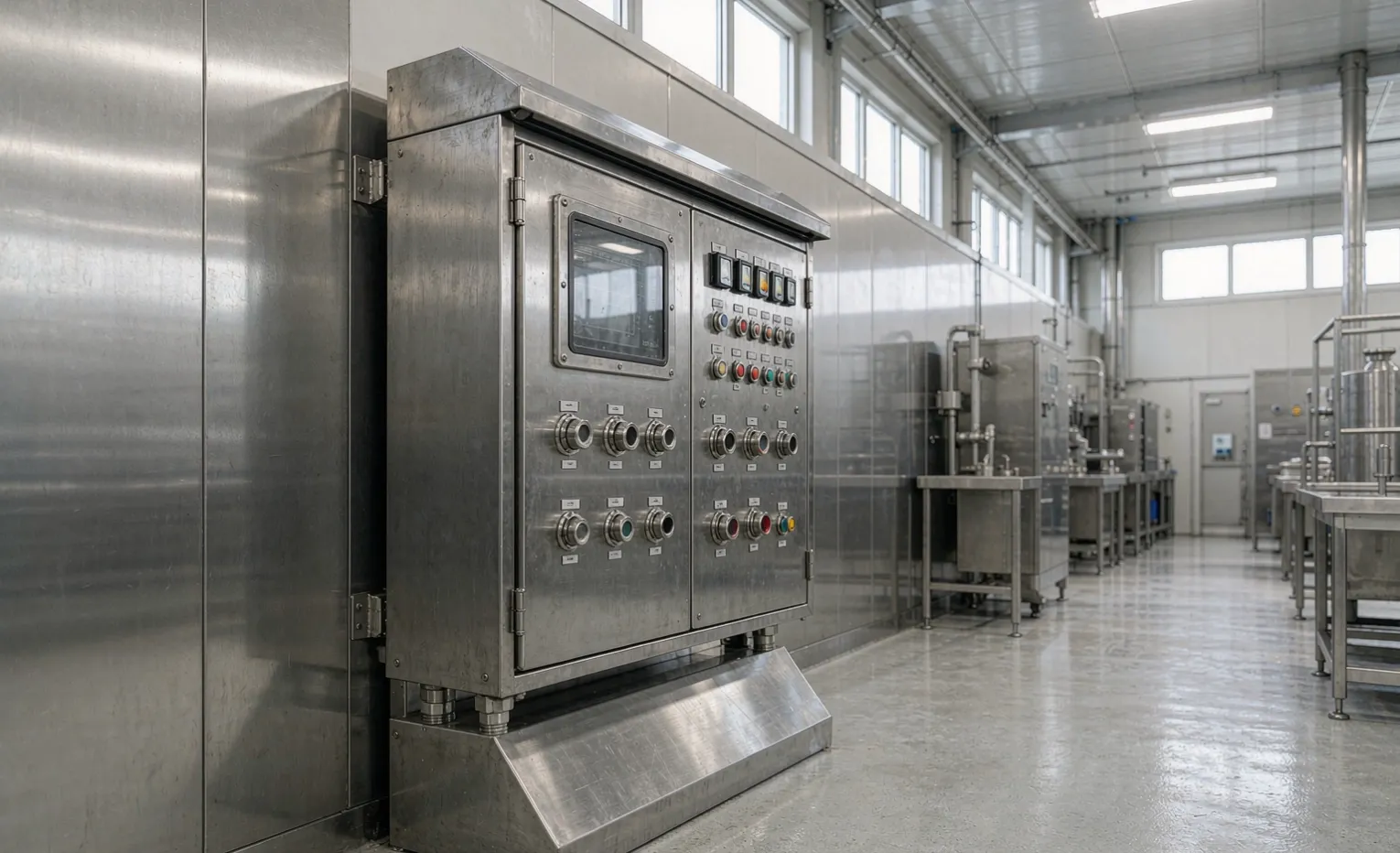
Food & Beverage Control Panels: Washdown and IP69K Buyer's Guide
You can spec the fastest PLC and the best VFD on the market, and still have a panel that fails its first sanitation shift. In a food and beverage (F&B) cell, the enclosure — not the controller — is usually the weakest link. High-pressure, high-temperature washdown, caustic cleaners, and tight hygiene audits punish every seam, gasket, and cable entry point a panel has.
This guide is written from a sourcing partner point of view: we help buyers specify, source, and verify washdown-rated control panels from China, and we are not one of the OEMs you are comparing. Our job here is to give you the decision framework so the panel you receive actually survives the washdown bay — and the audit.
If you are scoping the wider enclosure and panel program, our electrical enclosure sourcing guide covers supplier qualification end to end. If you only read one section here, read the rating decision matrix and the FAT checklist. Those two are where most washdown panel projects go wrong.
Buyer Decision: Stop asking "is it waterproof?" Waterproof is not a rating. Ask "what IP and NEMA code, tested to what standard, on the whole assembled panel — not just the empty enclosure?"
Why F&B panels are different
A control panel on a packaging line in a dry warehouse and a panel bolted above a poultry scald tank are two different products that happen to share a name. The difference is environmental load:
- Washdown pressure and temperature. Sanitation uses pressurised water (often 60–80 °C) and chemical foam. IP69K testing jets water at 80–100 bar and up to 80 °C from multiple angles.
- Chemical attack. Caustic (NaOH), acid sanitizers, and chlorine degrade cheap gaskets and uncoated carbon steel fast.
- Hygiene geometry. Auditors (3-A, EHEDG, customer food-safety teams) look for ledges, crevices, and dead pockets where biofilm hides.
- Thermal cycling. A hot wash followed by a cold rinse pulls moisture through any imperfect seal by differential pressure.
Engineering Note: The single most common failure we see in returned or reworked F&B panels is a perfect enclosure mated to a poorly sealed penetration — a conduit gland, a window, or a door hinge that was rated for the box but not for the assembled, wired panel.
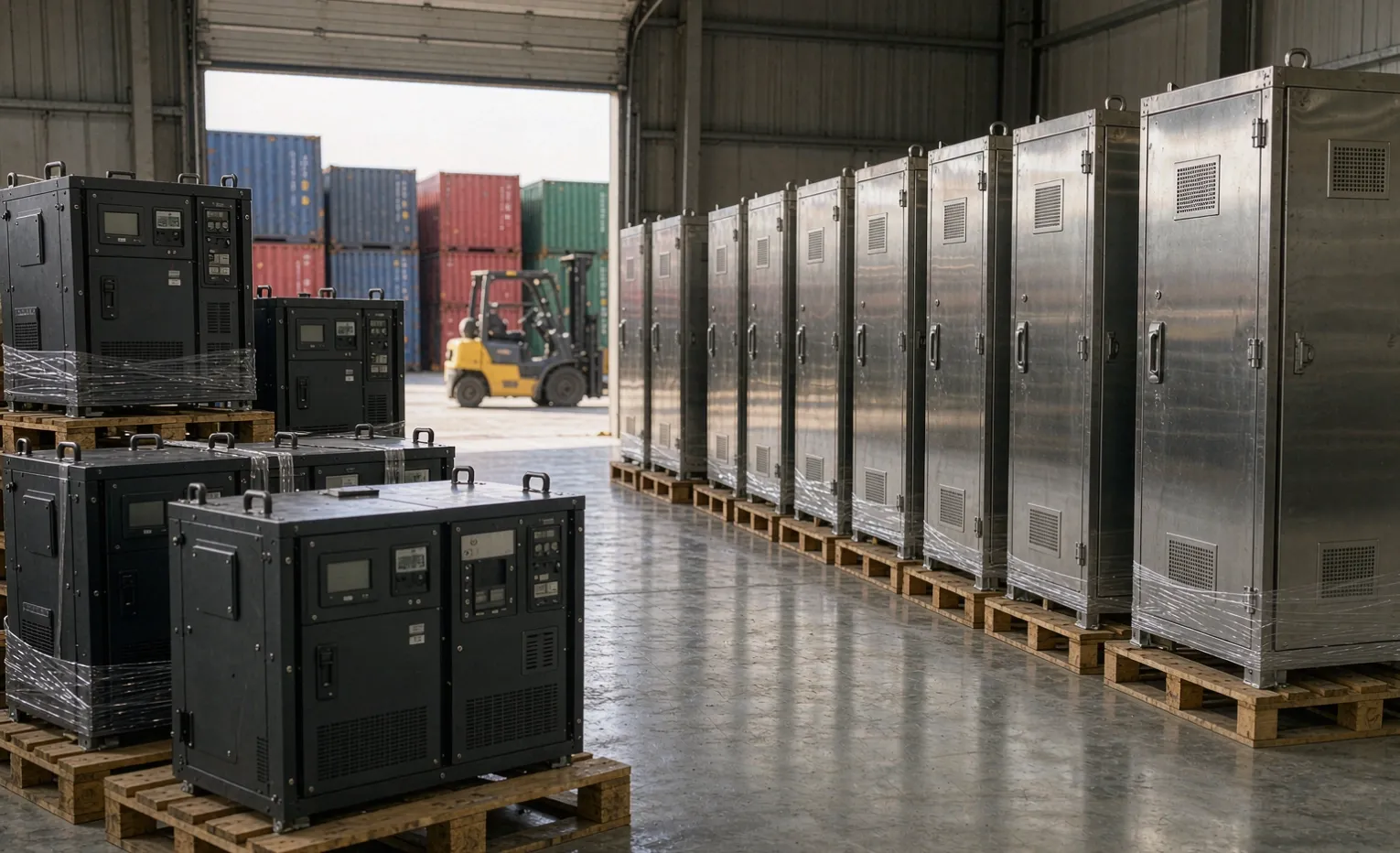
Washdown vs. weatherproof — the rating gap
A panel rated IP65 keeps out dust and low-pressure jets. That is a weatherproof rating. It is not a washdown rating. The jump from "won't die in the rain" to "survives daily high-pressure sanitation" is the whole point of this guide.
Rating | What it survives | Typical F&B use |
|---|---|---|
IP65 / IP66 | Dust-tight; jets at 12.5–100 L/min, 30–100 kPa | Dry-ish areas, ingredient rooms |
NEMA 4X | Hose-down, corrosion-resistant (often 304/316) | General washdown, splash zones |
IP67 / IP68 | Temporary / continuous immersion | Submerged sensors, not panels |
IP69K | High-pressure (80–100 bar), high-temp (to 80 °C) jetting from 4 angles | Direct, intense washdown bays |
The trap: a supplier quotes "IP66 enclosure" and the buyer assumes the panel is washdown-rated. It is not, until the assembled unit — with every gland, window, and hinge — is proven to that rating.
What IP69K actually tests
IP69K (per IEC 60529, as extended by ISO 20653 for high-pressure) is not a marketing word. The test fixes a 0.7 mm nozzle 100–150 mm from the surface and sweeps it:
- Water at 80–100 bar, 14–16 L/min, temperature up to 80 °C.
- Four angles (0°, 30°, 60°, 90°) and three panel orientations.
- The enclosure must keep water out of the internals throughout.
If a vendor claims IP69K, ask for the test on the assembly, not just the empty shell. An empty 316 box can pass while the same box with a bargain conduit gland fails.
Hygienic design principles
Beyond the rating number, F&B auditors want geometry that does not harbor bacteria:
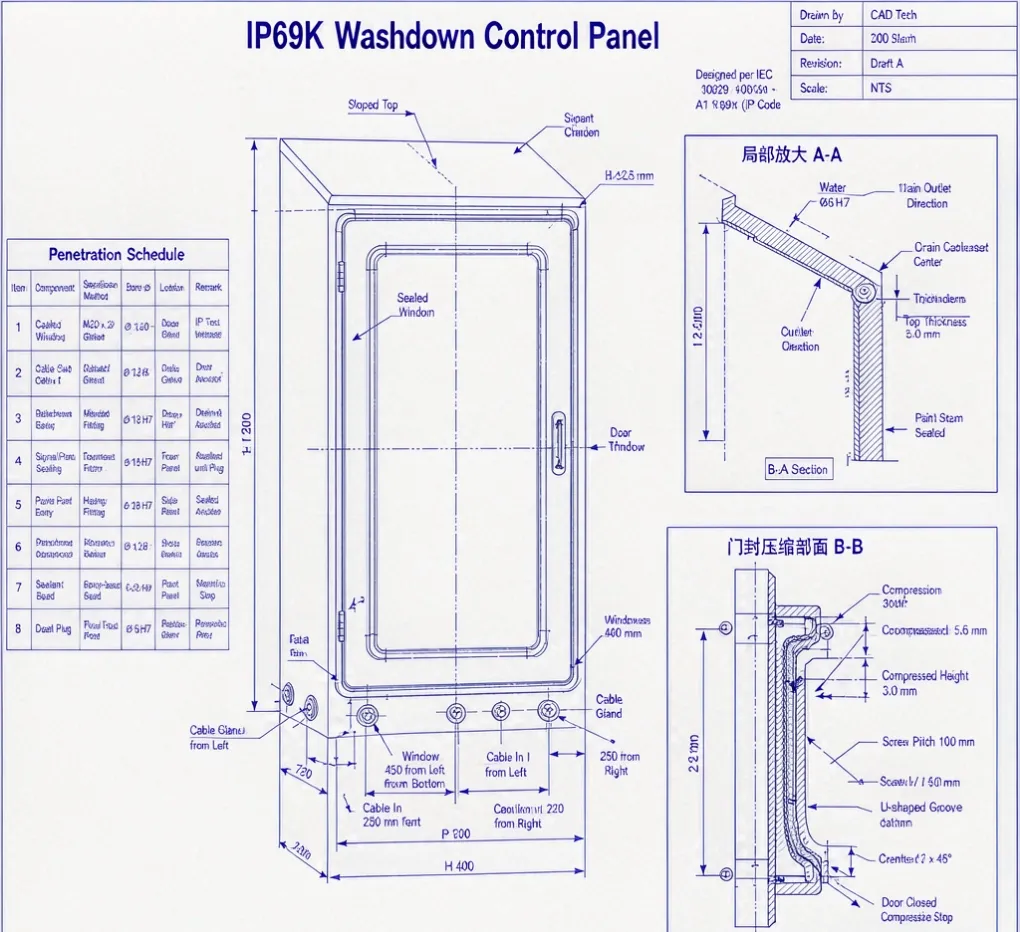
- Sloped tops (no flat ledges collecting rinse water and product).
- Crevice-free welds; external fasteners minimized or covered.
- No exposed threads in the wash zone.
- Drains or weep holes positioned so the panel does not pool water.
- Smooth, polished surfaces (see finish below) for cleanability.
These are design choices a buyer specifies up front. They are far cheaper to build in than to retrofit after a failed audit.
Material selection for a washdown environment
You are choosing a material that resists both corrosion and the cleaner doing the corroding. The realistic field is stainless; carbon steel and aluminum are usually the wrong answer here.
304 vs. 316 stainless (and why not carbon steel or aluminum)
- 304 stainless: the default food-grade shell. Resists most food acids and cleaners. Fine for the majority of washdown zones.
- 316 stainless: adds molybdenum for chloride resistance. Use it where brine, salt, or aggressive sanitizers are routine (seafood, cured meat, some dairy). Costs more but outlasts 304 in chloride environments.
- Carbon steel (even painted): rejected in direct washdown. Paint chips; under-film corrosion starts. Not food-grade.
- Aluminum: we do not build washdown panels in aluminum. It reacts badly with many alkaline cleaners and does not give you the NEMA 4X/316 story auditors expect.
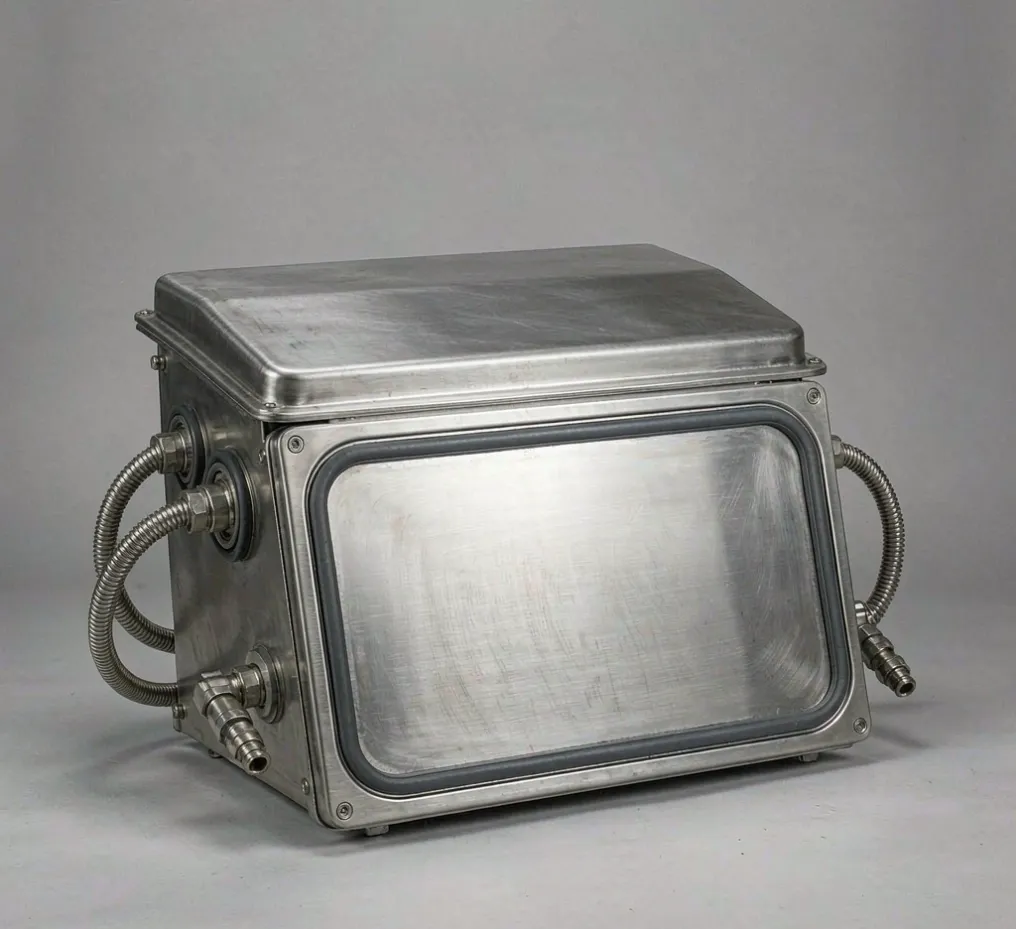
Buyer Decision: Specify the grade and the finish. "304 stainless" with a rough weld and a 2B mill finish is less hygienic and harder to sanitize than a polished 304 with crevice-free seams.
Surface finish
Finish is rated by roughness average (Ra). Lower Ra = smoother = cleaner:
- 2B mill finish: standard, acceptable in low-risk zones, harder to clean.
- Brushed / #4 finish: common, improves cleanability.
- Electropolished / mirror (Ra ≤ 0.8 µm): preferred in high-care and dairy; fastest to sanitize, least biofilm adhesion.
Material scorecard
Use this to force a documented choice rather than a default:
Criterion | 304 SS | 316 SS | Carbon (painted) | Aluminum |
|---|---|---|---|---|
Washdown corrosion resistance | Good | Excellent | Poor | Poor (cleaner attack) |
Food-grade acceptance | Yes | Yes (high-care) | No | Limited |
NEMA 4X story | Yes | Yes | No | Weak |
Cost | Baseline | +15–30% | Lowest | Low–mid |
When to pick | Most zones | Brine/chloride | Never in washdown | Not for washdown |
Enclosure rating decision — IP69K, NEMA 4X, and what you actually need
Not every F&B panel needs IP69K. Over-specifying wastes money; under-specifying fails audits. Match the rating to the cell.
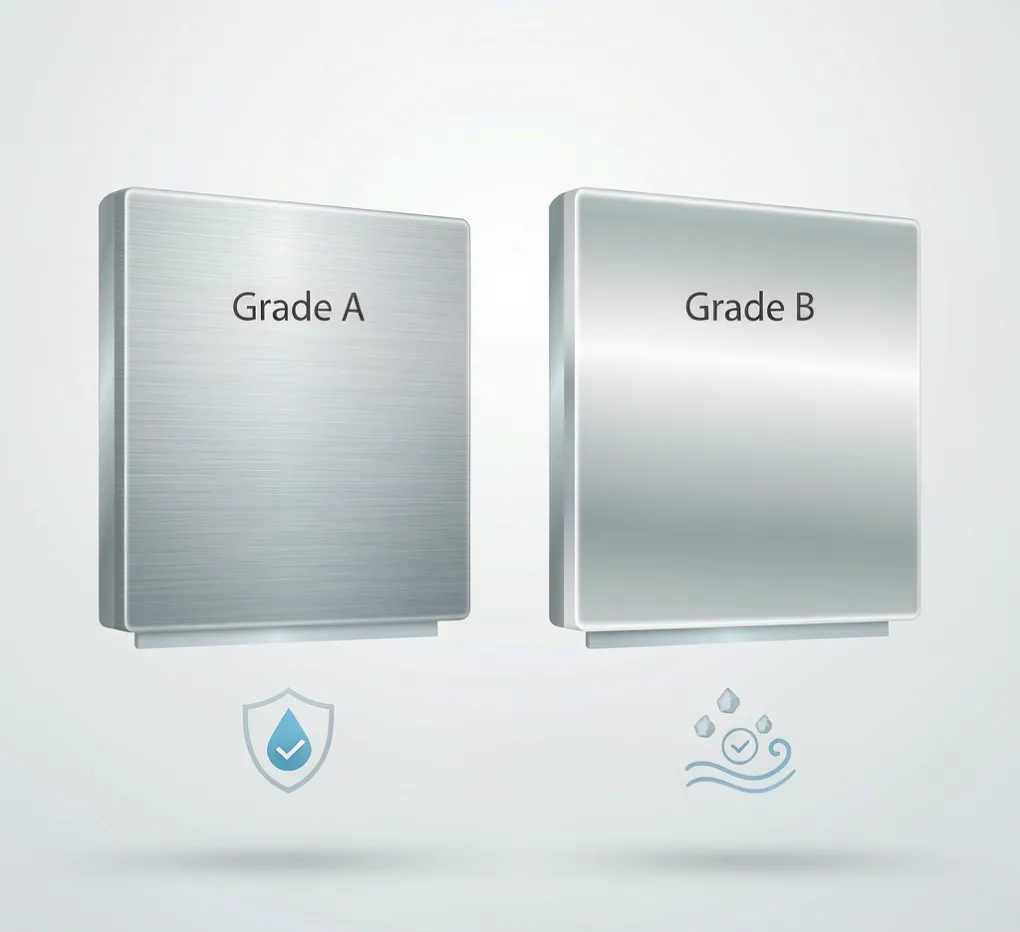
Rating decision matrix
Your cell | Minimum sensible rating | Notes |
|---|---|---|
Dry ingredient / weigh room | IP54–IP65 | Dust + occasional wipe |
Splash zone, no direct jetting | NEMA 4X / IP66 | Hose-down OK, not high-pressure |
Direct washdown, hot caustic | IP69K + NEMA 4X | Require tested assembly |
High-pressure, high-temp, daily | IP69K + 316 | Dairy / meat / seafood |
Outdoor F&B (loading, brew) | IP66 + UV-stable | Different failure mode (sun, not just water) |
Engineering Note: If your sanitation team uses a lance at close range, IP66 is not enough — you are in IP69K territory whether the spec sheet says so or not. Buy to the worst cleaning method, not the average.
Sealing, gaskets, and penetration details
The rating is won or lost at the seams. Three areas cause most leaks.
Gasket material
- Silicone (FDA-grade): wide temperature range, food-safe, good compression set resistance. Common default for washdown.
- EPDM: excellent weather/ozone and heat, but verify food-contact grade.
- FKM (Viton): best chemical resistance to aggressive cleaners, higher cost.
- Polyurethane / cheaper foam: avoid in direct washdown; breaks down fast under heat and chemicals.
The gasket must be continuous and compression-limited — over-tightening the door deforms it and creates a leak path. Ask how the build controls compression (captive channel, defined torque).
Cable entry, windows, doors, hinges
- Cable glands: use IP69K-rated, stainless, food-grade sealed glands. A standard PG gland is a leak and biofilm path.
- Windows / HMI cutouts: bonded, sealed sight-glass assemblies rated to the panel code — not a screwed-on bezel.
- Hinges and locks: external 316 hardware; internal hinge pins hidden from the wash face. No exposed fasteners in the wash zone.
- Conduit: sealed conduit entries with certified fittings; avoid field-drilled holes after coating.
Buyer Decision: Request a penetration schedule — every hole, gland, window, and vent in the panel, each with its rated seal method. If a supplier cannot produce one, the seal is unspecified.
Component and cooling considerations in a wet, dirty cell
Cooling without compromising the seal
You cannot punch a fan grille into an IP69K panel. Cooling options that keep the rating:
- Closed-loop air-to-air heat exchangers: transfer heat without letting washdown water in. Preferred for sealed washdown panels.
- Air conditioning (NEMA 4X rated): for high heat loads; unit must carry the same rating as the panel.
- Derating / oversizing: run components cooler by spec headroom instead of forced cooling.
Open vents, filtered fans, and "just drill a hole for cooling" are disqualifying in a washdown cell.
VFDs, PLCs, HMIs in washdown
- VFDs: often mounted inside the sealed panel with closed-loop cooling; remote HMI outside if the operator needs it.
- HMIs: use sealed, IP69K-rated touch units, or place a rated window over a standard HMI.
- PLC / I/O: standard DIN-rail hardware lives happily inside a properly sealed, cooled panel — the enclosure does the protecting.
Certifications and compliance you'll be asked for
F&B buyers are usually answering to a customer audit, not just their own plant. Expect these:
- IEC 60529 (IP codes) — the rating standard; reference the test, not just the number. (iec.ch)
- NEMA 250 (NEMA 4X) — North American enclosure rating. (nema.org)
- UL 50 / UL 50E — enclosure environmental performance; relevant for the US market. (ul.com)
- Food-specific: 3-A, EHEDG, and customer food-safety specs govern hygienic design — they are design expectations layered on top of the IP/NEMA rating, not a substitute for it.
Engineering Note: A UL listing on the enclosure is not the same as a UL-listed panel. If your market needs a UL-listed control panel, that is a separate, panel-level certification with its own file and marking.
UL path through a partner UL file shop
If your project requires a UL-listed panel, we route it through a partner UL file shop — a facility that already holds the UL file — and the file number is provided in writing before build. We are a sourcing partner; we do not hold the UL file ourselves, and we will not imply otherwise.
Sourcing from China — what a buyer should verify
Sourcing a washdown panel from China is mostly about verification discipline, not price. The cheap quote is the one that fails the first audit.
Drawing, BOM, and I/O list handoff
Send, at minimum:
- Enclosure drawing with dimensions, material grade, and finish.
- Bill of materials with component makes/models (or approved equivalents).
- I/O list and panel layout.
- Hygiene/rating spec (IP69K? NEMA 4X? which standard?).
- Site photos if retrofitting an existing cell.
What to verify before it ships
A washdown panel should pass FAT (Factory Acceptance Test) before it leaves the dock. Your FAT checklist:
- Rating proof — IP/NEMA test evidence on the assembled panel, not just the shell.
- Gasket and penetration schedule — every seal method documented.
- Hygiene geometry — sloped top, no ledges, crevice-free welds, verified by photo.
- Cooling validation — heat exchanger/AC rated and tested under load.
- Function test — PLC logic, VFD ramp, I/O, HMI, per your test plan.
- Documentation pack — drawings as-built, BOM, certs, FAT record, shipping marks.
Buyer Decision: If a supplier ships "FAT available on request" instead of "FAT included, here is the record," treat that as a red flag for a washdown panel. You want the evidence, not the option.
Lead-time reality (three tiers)
Realistic build windows from a China sourcing partner:
- Complete custom panel: from 1 unit, after drawing + BOM review — about 35–40 days.
- Empty enclosure / shell: MOQ 5 units, about 15 days.
- Loose components: 3–5 days shipment from stock.
Washdown panels are almost always the complete custom tier — the sealing and hygiene work is the value, and that takes the 35–40 day window.
Price anchor
For budgeting, benchmark the empty enclosure body. A standard IP66 outdoor cabinet commonly lands in the $180–$650 band depending on size and finish. A washdown-grade 304/316 stainless IP69K shell sits above that band because of material, finish, and sealing — expect the shell to scale with grade (316 > 304) and with polish level. The fully built panel then scales with component count and any UL file-shop routing. Always compare quotes on the same shell spec, or the numbers are meaningless.
HS classification for a built control panel is typically 8537.10 (boards, panels, consoles with apparatus for control — confirm with your broker per the exact build).
Where we sit as your sourcing partner
To be transparent: Uni Regal is a sourcing partner, not one of the panel manufacturers you might rank or audit. We do not claim to be an OEM. Our role is to help you specify the washdown requirement correctly, source the build through qualified build shops (including UL file-shop routing where required), and verify the panel against your FAT before it ships. We are a fit when you need a specified, verified panel built to your drawings — and not the right call if you are looking for a proprietary branded enclosure line. If you want to see what a built-to-spec panel program looks like, start from our custom control panel solutions.
Decision checklist (scorecard)
Before you release a PO, confirm each:
- [ ] Rating matched to worst cleaning method (IP69K + NEMA 4X where jetted)
- [ ] Material grade specified (304 baseline, 316 for chloride) and finish (Ra target)
- [ ] Gasket material food-grade and compression-controlled
- [ ] Penetration schedule covers every gland, window, hinge
- [ ] Cooling keeps the seal (closed-loop / rated AC, no open vents)
- [ ] FAT on the assembled panel with documented record
- [ ] UL path defined (partner file shop + written file number, if required)
- [ ] Lead time and shell price benchmark aligned to the tiers above
FAQ
Q: Do I really need IP69K, or is NEMA 4X enough? If your sanitation uses a high-pressure lance (common in meat, dairy, seafood), NEMA 4X alone is not enough — you need IP69K tested on the assembled panel. For splash-only zones, NEMA 4X / IP66 often suffices. Match the rating to the worst cleaning method.
Q: Can I use a standard IP66 enclosure and just add a better gasket? The enclosure rating is a system result. A better gasket helps, but IP69K also depends on door geometry, hinge sealing, window bonds, and gland ratings. Buy the tested assembly, not a parts hope.
Q: Is 304 stainless good enough, or do I need 316? 304 covers most washdown zones. Choose 316 where brine, salt, or aggressive chlorinated sanitizers are routine — shellfish, cured meats, some dairy. The cost premium is modest versus the failure cost of corrosion in audit.
Q: How do I know the panel was actually washdown-tested? Require the test evidence on the assembled, wired panel (not the empty shell) and a penetration schedule. If the supplier cannot show both, assume it was not.
Q: What does a washdown panel cost versus a standard panel? Benchmark the shell: an IP66 outdoor cabinet typically runs $180–$650; a washdown 304/316 IP69K shell sits above that band, and the built panel scales with components and any UL routing. Compare quotes on identical shell specs.
Q: What lead time should I plan for? A complete custom washdown panel runs about 35–40 days after drawing + BOM review (from 1 unit). Empty shells: 5-unit MOQ, ~15 days. Loose components ship in 3–5 days. Plan washdown builds in the 35–40 day tier.
Engineering Takeaway
A washdown F&B control panel is an enclosure engineering problem first and a controls problem second. Win it with a matched rating (IP69K + NEMA 4X where jetted), a specified material and finish (304 baseline, 316 for chloride), a documented seal and penetration plan, closed-loop cooling that preserves the rating, and a FAT on the assembled panel before it ships. Price-shop the shell against a real benchmark, define the UL path up front, and you get a panel that passes both the washdown bay and the audit.
Related guides
- Food Processing Control Panel Buying Guide — the wider procurement view for F&B panels.
- NEMA 4X Enclosure Buying Guide — why 4X is the washdown baseline in North America.
- 304 vs 316 Stainless Outdoor Electrical Enclosures — material grade decision for wet, corrosive cells.
- Electrical Enclosure Gasket Selection Guide — the seal that makes or breaks an IP69K claim.
- NEMA vs IP Ratings: What's the Difference — read the two systems side by side before you specify.
- Control Panel Spec Checklist — the full handoff list to send your build shop.
Get your washdown panel built
Send us your washdown requirement — enclosure drawing, BOM, I/O list, target rating (IP69K / NEMA 4X), and any food-safety or UL spec — and we will return a quoted, verified build with the FAT record mapped before it leaves the dock. Single custom panels from one unit (drawing and BOM review, then ~35–40 days), empty enclosures from five units (~15 days), and loose components in 3–5 days; UL-listed builds run through a partner UL file shop with the file number in writing.
- WhatsApp: message us with your slug — we reply within 1 business day.
- Email: info@uniregal.com with your drawings attached.
- Form: submit your requirements and we will route it to the right build shop. Or use the contact form to reach us directly.
We are a sourcing partner, not a manufacturer — our job is to get your specified, verified panel built and documented, not to sell you our own branded line.