
Oct 22, 2026Buying Guides
Enclosure Equipotential Bonding: Why Your Ground Strap Is Load-Bearing
Equipotential bonding ties the door, plate, and cable glands to the enclosure frame. Skip it and the ground path breaks, EMC fails
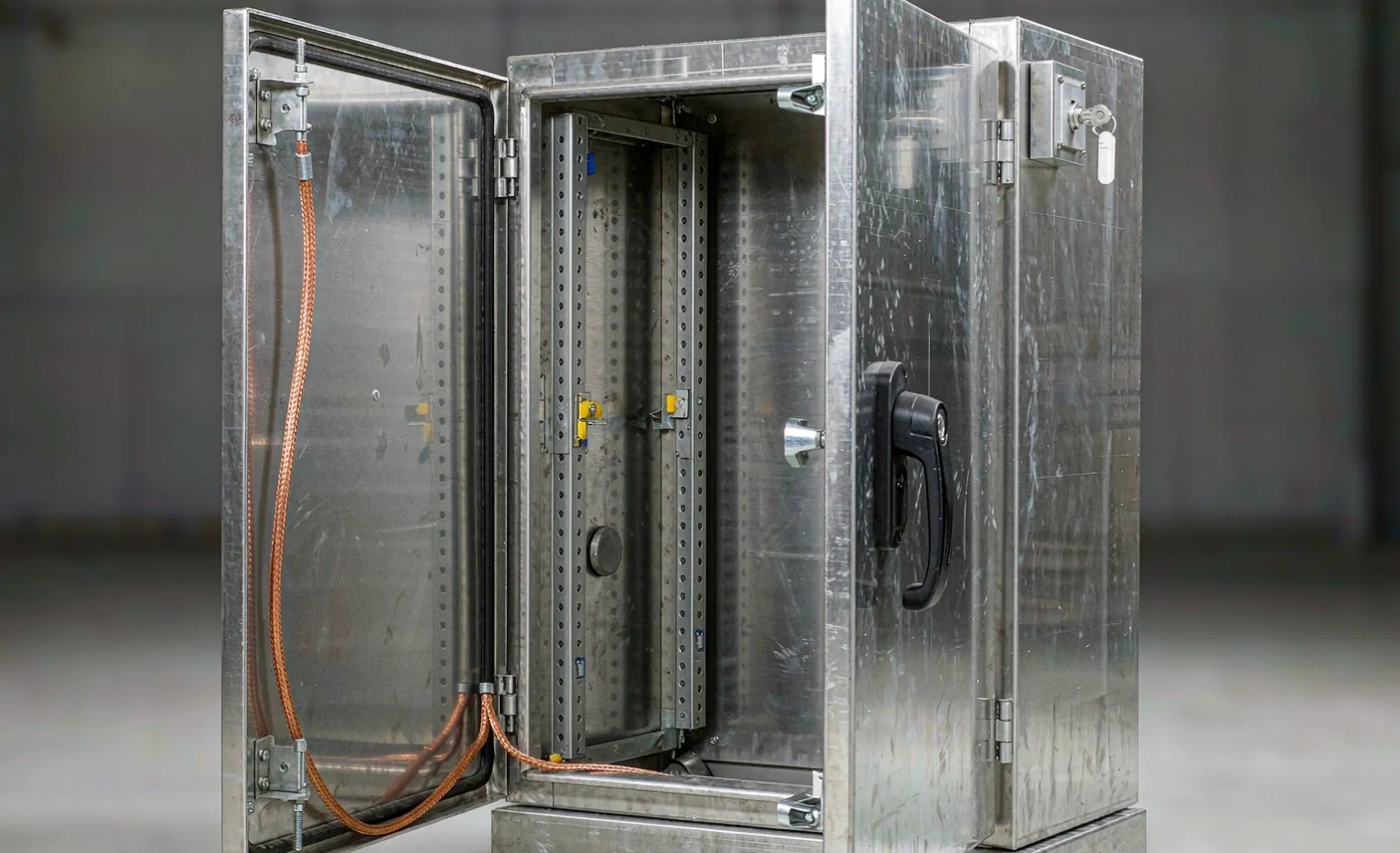
Leave the door unbonded, and the first real fault finds the technician, not the breaker. Equipotential bonding is the low-impedance link that makes every metal part of an enclosure sit at the same electrical potential—door, mounting plate, cable glands, fan frames, everything. It is not decoration. It is what lets a fault clear and what keeps a stray voltage from biting the person who opens the box.
We are a sourcing partner and panel-build shop, not a manufacturer, so we do not set your plant's earthing design. But we review a lot of enclosure drawings, and bonding is the item most often assumed rather than specified. Here is what to actually put on the drawing.
What bonding does (and what it is not)
Grounding is the path from the system to earth. Bonding is the path between all the exposed conductive parts so none of them can float above the others. You need both, but they are different lines on the drawing.
A bonded enclosure means the door, the internal mounting plate, every cable gland, and any metal fan or filter frame are all tied back to the enclosure body with a verified low-resistance connection. If a live conductor ever touches the door, the bond gives the fault current a path back to the source so the breaker trips. No bond, no trip—just a live door waiting for a hand.
Engineering Note: Bonding is load-bearing. A painted hinge that "looks connected" is not bonded. Continuity only counts when the metal actually touches metal.
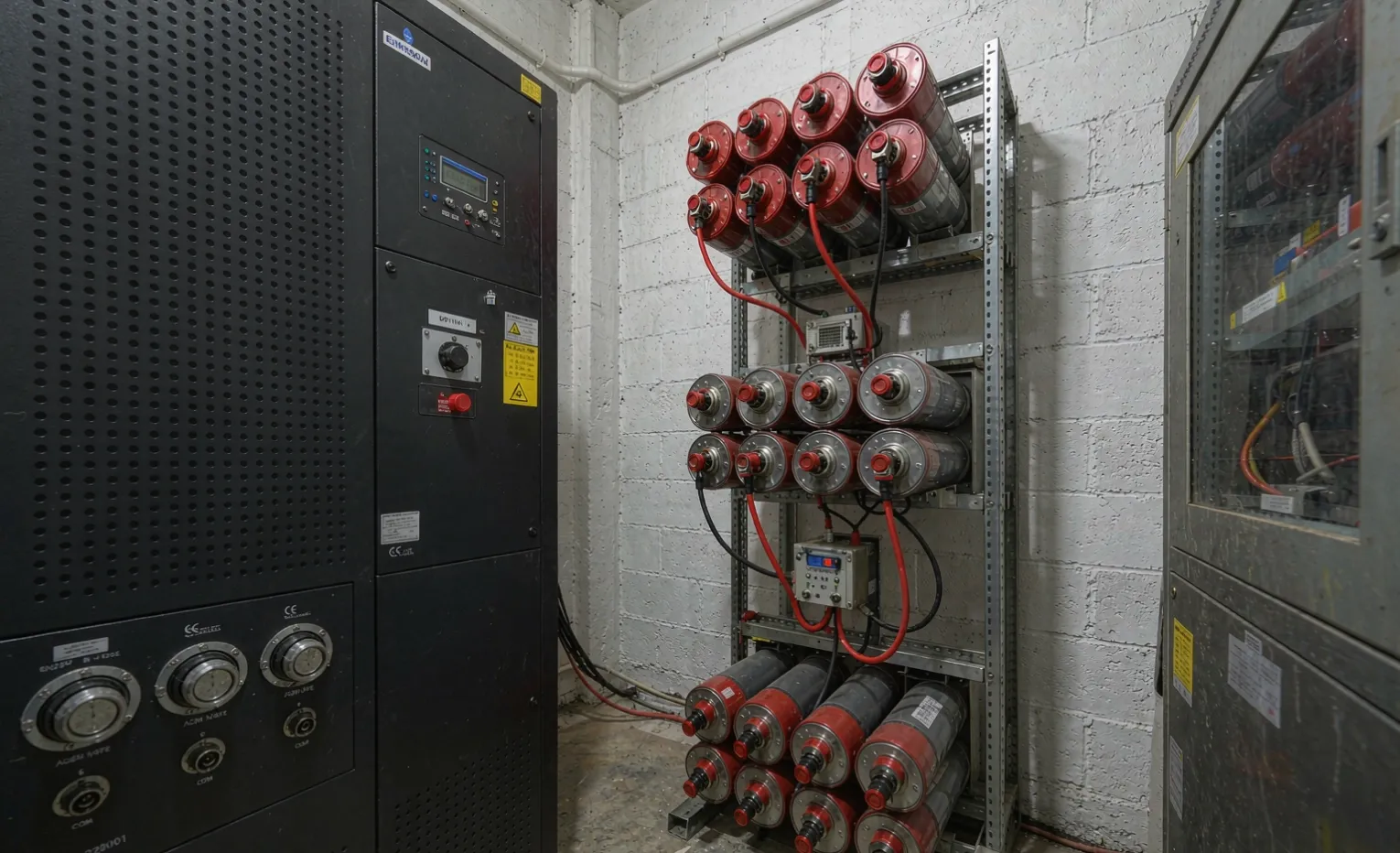
The four points you must bond
Most enclosure standards assume these are handled. They are not, by default, unless you call them out.
- The door. A hinged door is insulated from the frame by its paint and its hinge bearings. Bond it with a braided strap or a bonded hinge with the contact surfaces stripped.
- The mounting plate. The back plate almost always sits on standoffs or powder coat. A single bonded stud is not enough if the plate is large; use two diagonally opposed bonds.
- Cable glands and conduit. Every metallic entry must be bonded to the body. A plastic press-fit gland is an insulator by design—if you use one, the cable shield inside still needs its own bond.
- Fan, filter, and window frames. Any metal accessory bolted to the wall is a floating plate until you bond it. Plastic-bodied accessories are the exception, not the rule.
Component | Common assumption | What actually happens | What to specify |
|---|---|---|---|
Door | "The hinge grounds it." | Paint and bearings break continuity. | Bonded strap or stripped hinge, both sides |
Mounting plate | "Bolts hold it down." | Standoffs and coating insulate it. | Two diagonal bond studs to frame |
Cable gland | "Metal gland = grounded." | Only if seated on bare metal | Gland on bare pad or bonded plate |
Fan / filter frame | "It's just a cover." | Becomes a floating metal plate | Bond frame to body. |
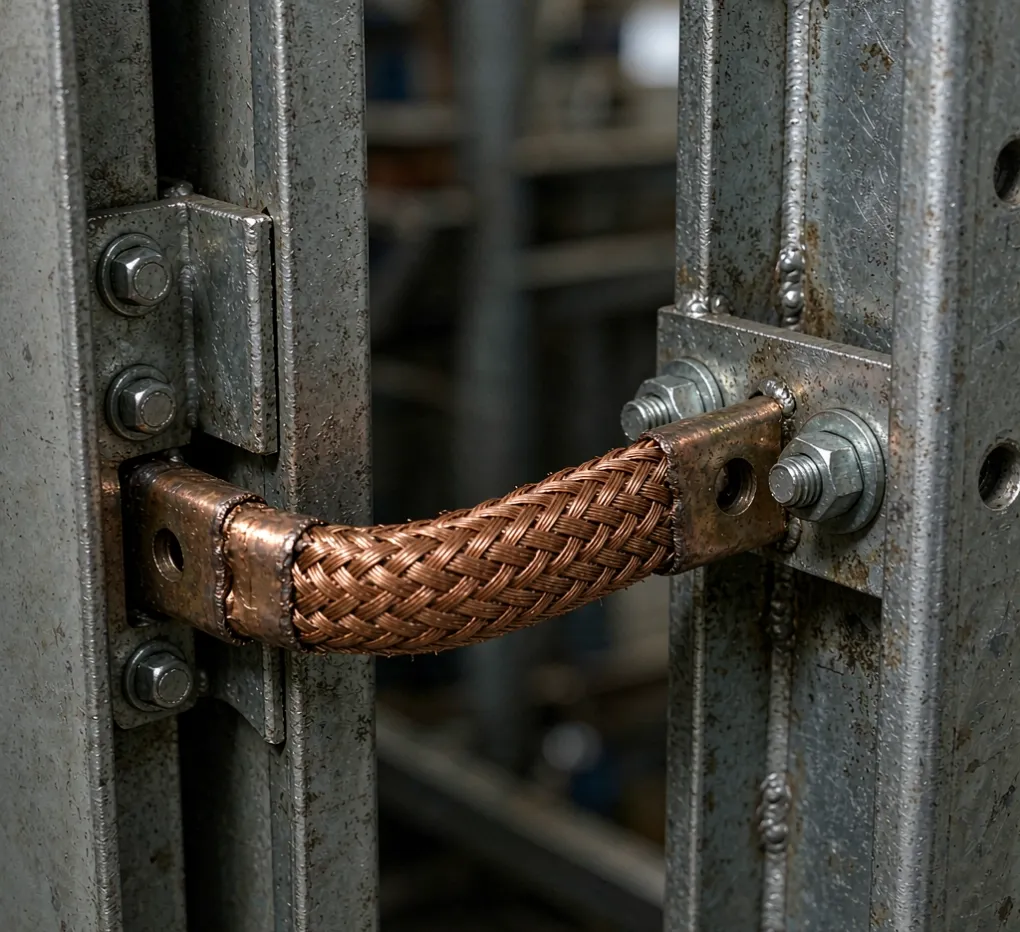
Where real builds break the bond
The failure is rarely a missing strap. It is a strap landing on a surface that is no longer conductive.
- Powder coat between the lug and the steel. The assembler torqued the bond down tight—onto paint. Tight and insulated.
- A hinge painted after assembly. The door bonds through the hinge, but the final coat sealed the joint.
- A gland plate isolated by its own gasket. The plate is bonded, but it sits on a non-conductive gasket, and the glands land on the plate, not the frame.
- A repaired panel. Someone resprayed a touched-up section and broke the only bond path on that face.
None of these show up on a visual inspection. They show up when a fault current looks for a way home and finds the technician instead.

How to specify it so it actually gets built
Put the requirement in the RFQ in plain language, and reference the standard so the shop cannot wave it off:
- Call out continuity: "All exposed conductive parts bonded to the enclosure frame; measured continuity ≤ 0.1 Ω between any two bonded points."
- Reference the basis: IEC 61439-1 for low-voltage assemblies, and the bonding provisions in UL 508A for panels built to the North American listing.
- Require a continuity check at Factory Acceptance Test (FAT) — not a paper sign-off, but a measured reading.
If you only write "grounded enclosure," you will get a green wire to the frame and a door that floats. Name the parts.
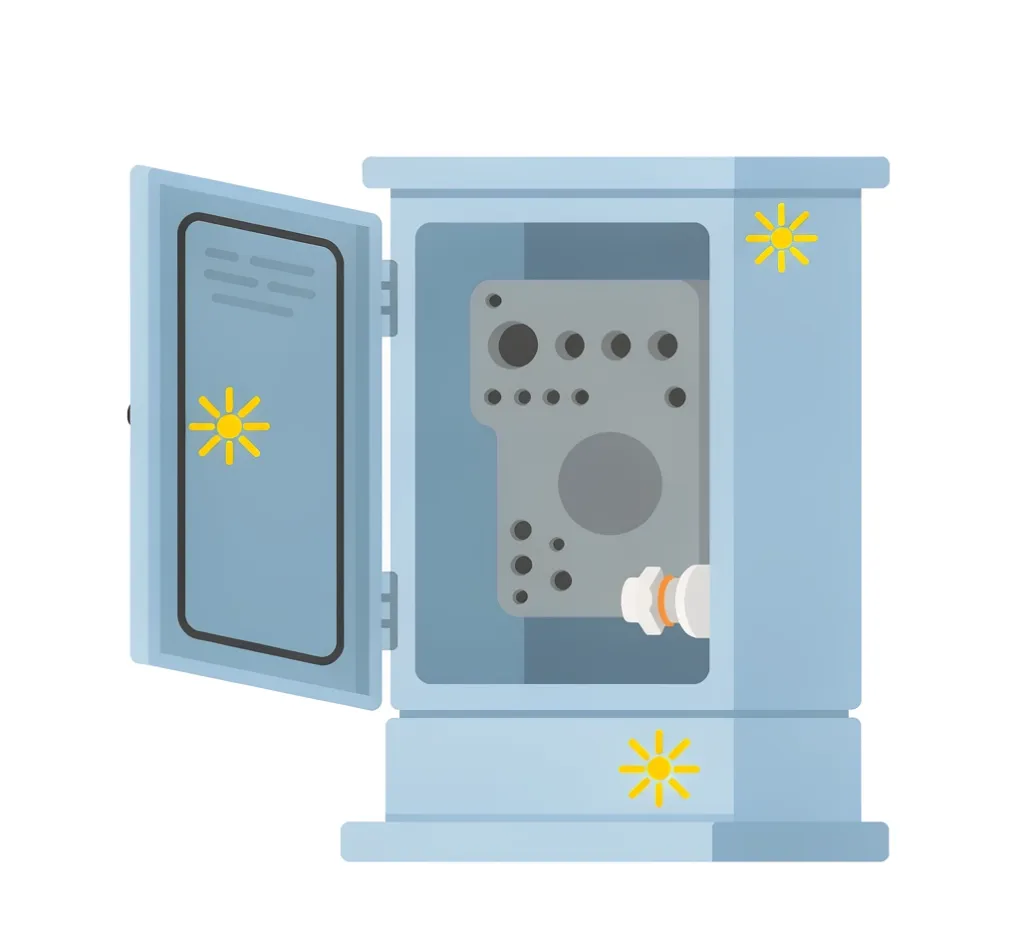
EMC rides on the same bond.
If your panel carries sensitive signal or communications wiring, the bond is also your shield. A shielded cable that lands on a floating gland plate loses its shield continuity at the box wall, and your EMC effort dies at the entry. The same bond that protects the technician is the one that keeps the noise out. We cover the shield-side detail in our enclosure EMC shielding guide.
The facts that belong on the drawing
A few things we confirm on every enclosure we source, so you can drop them straight into the RFQ:
- Material: carbon steel, 304, or 316 stainless, or hot-dip galvanized. We do not build in aluminum—it does not survive the coastal and washdown sites our buyers run.
- Rating: IP65 or NEMA 4X for outdoor, washdown, and coastal duty. They are not the same test; ask for both callouts.
- Lead time: empty enclosures typically run a 5-unit minimum and about 15 days. A full control panel built around the enclosure starts from one unit after drawing and bill-of-materials review, roughly 35–40 days. Component orders ship in 3–5 days.
- Certification: we find a UL-listed shop per order when a UL 508A listing is required—we are not one ourselves.
FAQ
Is bonding the same as grounding?
No. Grounding is the path to earth; bonding connects all the metal parts of the enclosure to each other so none can float. You need both, and bonding is the one most often left to chance.
How much bond continuity is "good enough"?
For enclosure bonding, we treat ≤ 0.1 Ω between any two bonded points as the line. Below that, a fault will develop enough current to trip the protection. Above it, the path is too weak to trust.
My enclosure has a metal hinge—doesn't that bond?
Only if the hinge contact surfaces are bare metal and unpainted, and they actually clamp steel-to-steel. Most painted or coated hinges are insulators. Verify, don't assume.
Do plastic glands break the bond?
A plastic gland is an insulator, so it does not bond the cable entry. If the cable carries a shield or a protective conductor, that conductor still needs its own bond to the frame inside the box.
Should the internal mounting plate be bonded in more than one spot?
Yes, for any plate of real size. Use two diagonally opposed bonds. A single stud can loosen or land on the coating and leave the whole plate floating.
What standard backs this up?
IEC 61439-1 covers bonding and continuity for low-voltage assemblies; UL 508A covers it for listed industrial control panels. Require a measured continuity check at FAT.
Engineering Takeaway
Bonding is not a green wire you add at the end—it is part of the structure. Name the door, the plate, the glands, and the accessories on the drawing, require a measured continuity check at FAT, and the enclosure protects the technician and the signal instead of surprising them. The enclosure sourcing guide covers the rest of the spec; the electrical enclosures solution page shows what we build around.
Upload your drawing for an engineering review—we will flag bond paths that land on paint before the box is cut, not after. Send your requirements here.