Buying Guides
Enclosure Finish & Coating Selection Guide for Buyers (2026)
Powder coat, galvanized, 304 or 316L stainless, or painted — choose the right enclosure finish for your site. A 2026 buyer's decision guide with a scoring matrix, RFQ specs, and real cost impact.
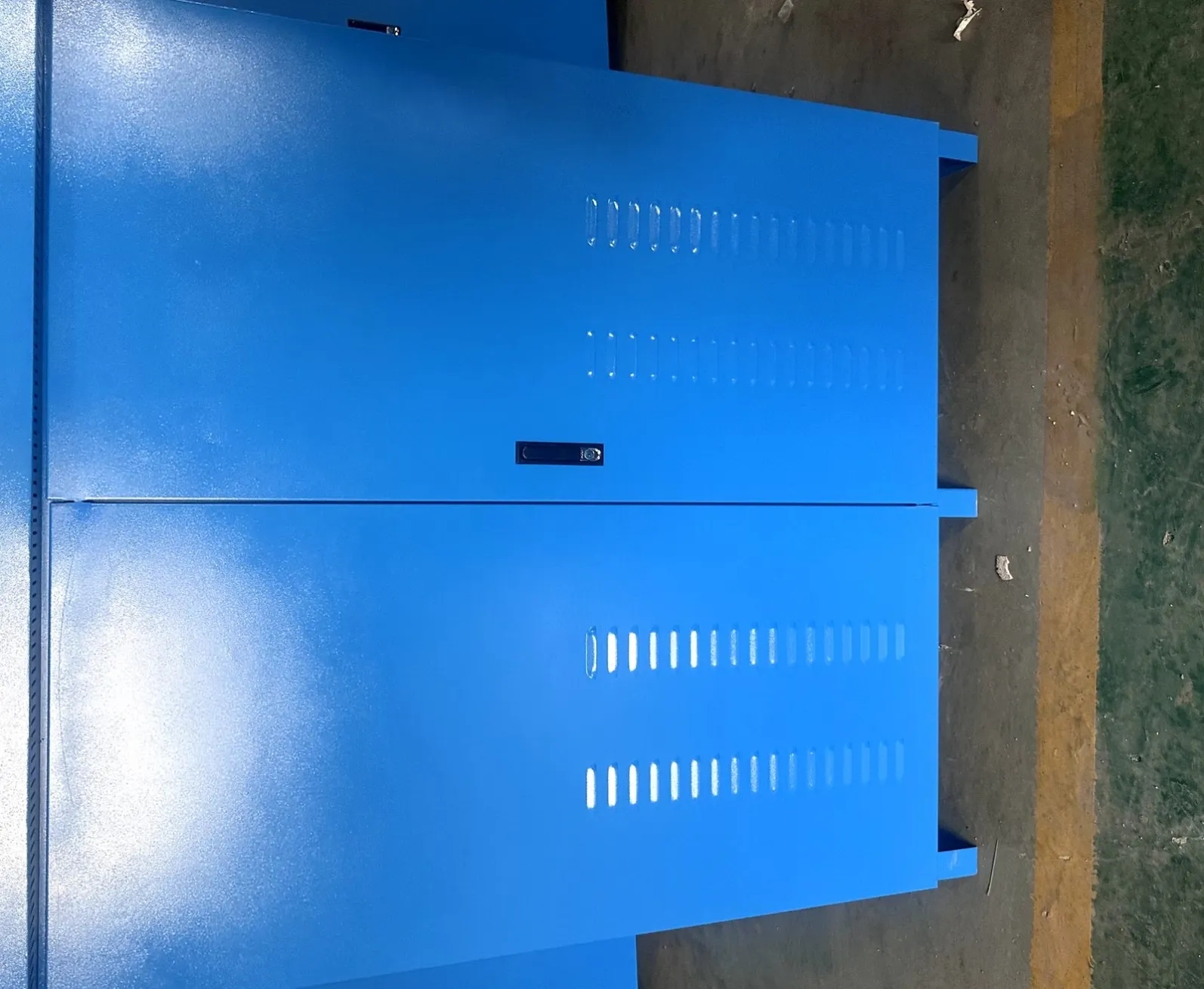
You have picked the enclosure size, the rating, and the material. Then the drawing asks for "finish," and the box is blank again. Pick a finish that is too light, and the cabinet rusts through in two years on a coastal site. Pick a finish that is too heavy, and you have paid for 316L-grade surface treatment on a dry indoor wall. As a China-based sourcing partner for electrical enclosures, we quote finishes every day, and the single most common mistake we see is treating "paint" and "coating" as the same line item.
This guide walks you through choosing an enclosure finish the way a buyer should—by matching the surface treatment to the environment you actually have, not the cheapest line on the supplier's quote.
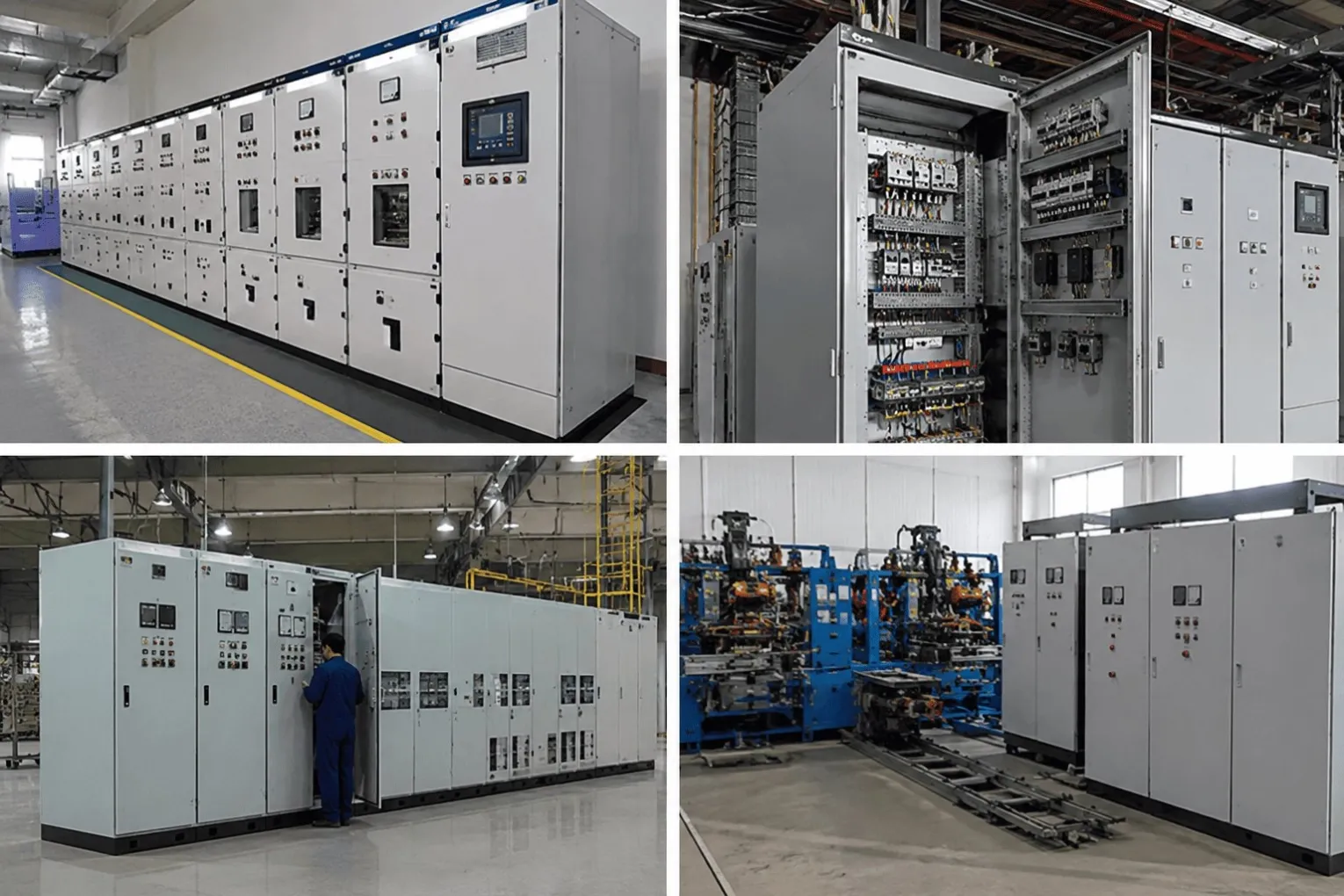
Why the finish matters as much as the material
The enclosure material resists impact and holds shape. The finish is what stands between the bare metal and the environment. A carbon-steel box with a poor coating will fail faster than a well-coated box in the same spot. Two buyers can order the same "IP66 carbon steel enclosure" and get wildly different field lives purely on the finish spec.
The catch: most buyers only discover the finish was wrong after the first rust bloom. By then the panel is wired, installed, and out of warranty discussion. Specifying the finish up front is one of the highest-leverage decisions in the whole enclosure package.
Buyer Decision: Treat the finish as a separate line on your specification, not a default. Ask the supplier what pretreatment, coating type, film thickness, and salt-spray hours they guarantee — in writing.
The four finish families you will actually choose between
For the enclosures we source, the realistic field of options narrows to four. Here is what each one is and where it earns its money.
Finish | Best for | Typical field life* | What it is |
|---|---|---|---|
Powder-coated carbon steel | Indoor, mild outdoor, most general panels | 8–15 yrs (clean site) | Electrostatic polyester powder, baked, 60–80 µm |
Hot-dip galvanized steel | Outdoor structures, non-aesthetic, corrosive air | 15–25+ years | Zinc coating (~45–85 µm) per ASTM A123 |
304 stainless (bare / brushed) | Food, pharma, general washdown | 15–30 yrs | 18/8 Cr-Ni alloy, corrosion-resistant |
316L stainless | Coastal, marine, chemical splash | 25–40+ years | 304 + molybdenum for chloride resistance |
*Field life is a typical range for the stated environment, not a guarantee. Site-specific factors (cleaning chemicals, abrasion, temperature cycling) move it.
We do not offer aluminum enclosures. For the environments above, steel or stainless beats aluminum on strength and weldability, and the cost gap is rarely worth it.
The decision matrix: score your own site
Before you ask a supplier for a quote, score your site on four factors. This is the same matrix our engineering review uses on every finish enquiry.
Factor | Weight | What to check |
|---|---|---|
Corrosion risk | 35% | Inland dry, coastal salt, or chemical splash? |
Aesthetic / hygiene need | 20% | Hidden structure, or visible food-grade surface? |
Mechanical wear | 20% | Frequent washdown, abrasion, or static? |
Budget / volume | 25% | One panel, or 200 across a plant? |
Add the weighted scores and you get a profile. A site scoring high on corrosion but low on aesthetics (an outdoor pump house) lands on galvanized or 316L. A visible, clean, dry control room lands on powder-coated carbon steel. The matrix stops you from paying 316L money for a $40 problem.
Powder coating specs buyers should put in the RFQ
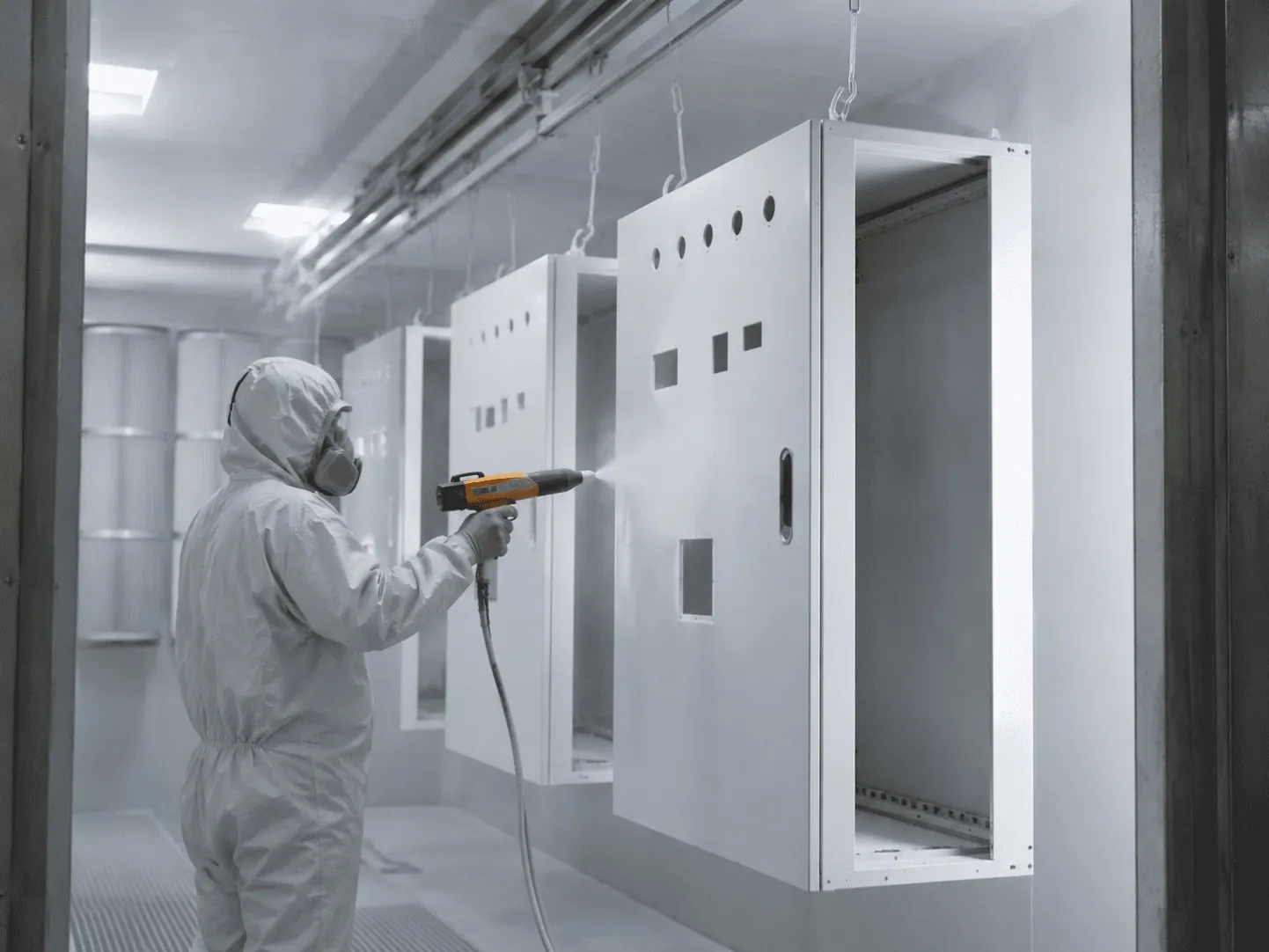
Powder coat is the default for most panels, but "powder coated" on a drawing tells you nothing. Put these four items in your RFQ so quotes are comparable:
- Pretreatment—a zinc-phosphate or nano-ceramic conversion layer before powder. Skipping this is the #1 cause of early coating failure.
- Film thickness—specify 60–80 µm (roughly 2.0–3.0 mil) for outdoor; thinner fails faster.
- Salt-spray resistance—reference ASTM B117 hours. A standard polyester gives ~500–1000 h; ask for the number, not "corrosion-resistant."
- Color and standard—RAL number plus a durability class (e.g., ISO 12944 C3/C4/C5-M for the corrosivity category of your site).
Engineering Note: ISO 12944 is the honest language here. If your site is C5-M (high coastal or industrial), a standard indoor powder will not hold. Specify the corrosivity class and let the supplier match the coating system to it.
When galvanized, it beats powder coat (and when it doesn't).
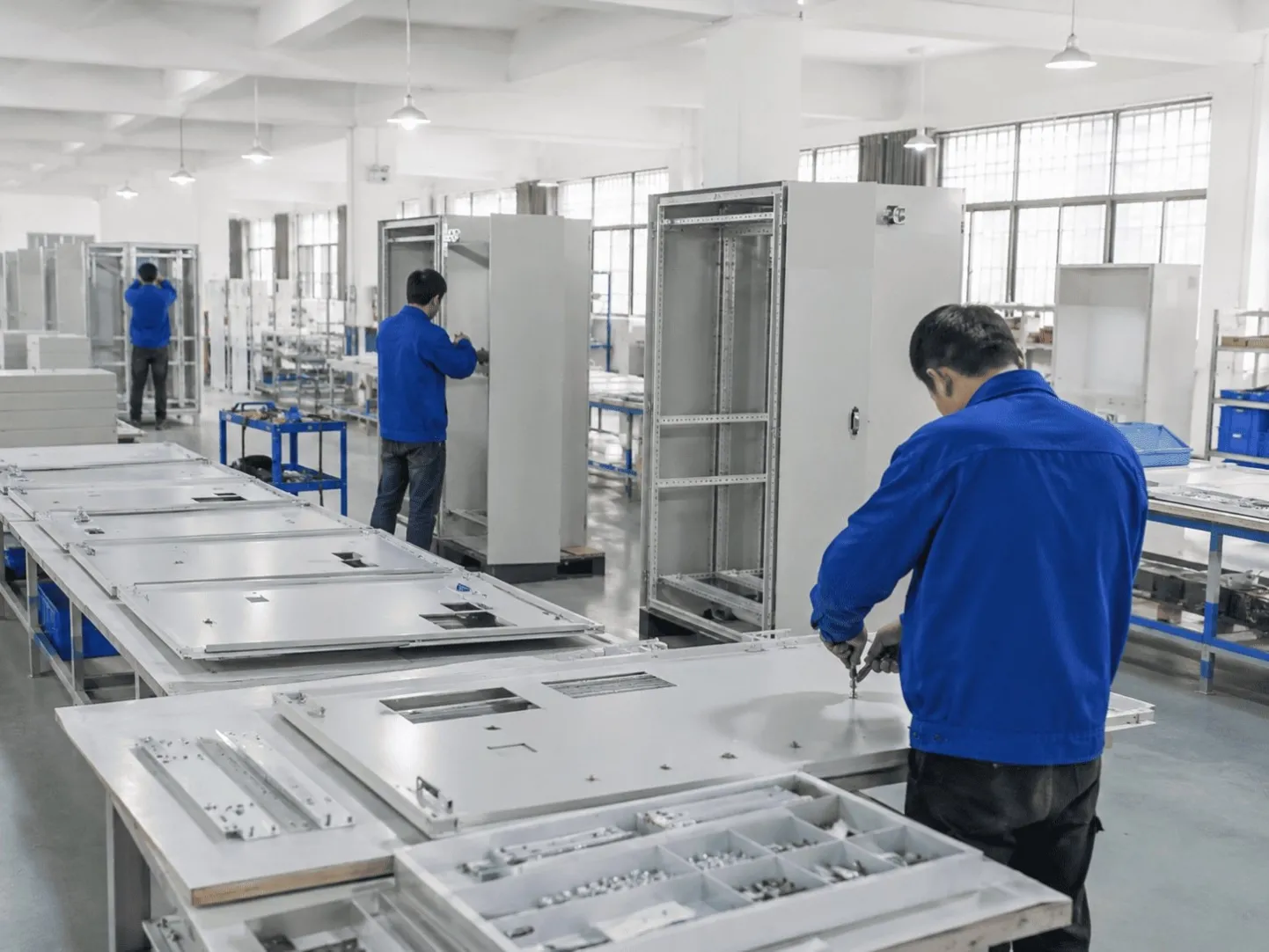
Hot-dip galvanizing shines on outdoor, non-aesthetic structures—cable trays, support frames, and large freestanding enclosures where looks do not matter but life does. The zinc layer sacrifices itself to protect the steel and keeps working even if scratched.
It does not beat powder coat when appearance or hygiene matters. A galvanized surface is dull and uneven, and it is a poor base for labels and touch-up. For a visible control panel in a clean room, powder-coated steel or stainless reads better and cleans easier.
The right move is sometimes both: galvanize the internal structure and powder-coat the visible outer skin. We see this on large floor-standing enclosures where the frame lives outside the weather path.
Stainless: 304 vs. 316L—the corrosion call
Within stainless, the decision is almost always 304 vs. 316L.
- 304 stainless is the workhorse for food and pharma washdown and most indoor corrosive sites. It shrugs off most cleaners and humidity.
- 316L stainless adds molybdenum, which is what survives salt and chemical splash. If the panel sits within a few kilometers of the coast or sees chlorides, 316L is the safer long-term call.
The cost step from 304 to 316 L is real but modest compared to a full rebuild after a 304 box fails in a marine site. We source both through our network and provide material certificates on request.
The coating is only as good as the pretreatment.
A buyer can specify 316L and still get a failure if the surface prep is wrong. Two things to confirm:
- Surface preparation—abrasive blast or chemical conversion before any coating. Bare steel with powder on top is a countdown timer.
- Edge coverage—cut edges and welds are where rust starts. Ask whether edges are sealed or re-coated after fabrication.
We see more finish failures from skipped pretreatment than from the wrong coating choice. Treat the prep line on the quote as non-negotiable.
The cost impact of getting the finish wrong
Two failure modes cost buyers money:
Under-specifying—a powder-coated carbon-steel box on a coastal site rusts through in 18–36 months. The "saving" of a few dollars per box becomes a full panel rebuild plus downtime. We have seen this on water-treatment skids more than anywhere else.
Over-specifying—a 316L enclosure with marine coating on a dry indoor wall can cost 2–4× the powder-coated carbon steel it needs. Across a 40-panel order that is real capital spent on protection nobody uses.
For reference, a standard IP66 outdoor carbon-steel cabinet from our network typically lands in the $180–650 range depending on size, sheet thickness, and coating—before components. Use the matrix above to decide whether you are in that band or need to move up to stainless or galvanized.
Common mistakes buyers make
Buyer Decision: Watch for these when you write or review a finish spec: 1. Writing "powder coated" with no thickness, standard, or salt-spray hours. 2. Specifying 304 stainless for a coastal or chlorinated site (use 316L). 3. Trusting a painted box in a washdown area — paint is not a coating system. 4. Forgetting pretreatment — the coating is only as good as the base. 5. Galvanizing a visible panel that needs labels and a clean look. 6. Assuming colour is cosmetic only — specify the RAL and the durability class.
A 30-second rule of thumb
If you remember nothing else: dry indoor means powder-coated carbon steel. Mild outdoor means powder-coated carbon steel with a C3/C4-rated system; corrosive or coastal air means 316L stainless; and an outdoor structure that no one looks at means galvanized. Then confirm the pretreatment, the film thickness, and the salt-spray hours in writing—because the finish is a system, not a default.
Where we sit as your sourcing partner
We are a sourcing partner, not a coating or finish manufacturer. We do not make paint or run a galvanizing line; we specify and source the right finish through our vetted production network and hold suppliers to the spec you put in the RFQ. That means we will tell you when powder coat is enough and when 316L is the only safe call—even when the cheaper option is what you asked for. Send us the site conditions, and we will quote the finish that fits the environment, with the pretreatment and certificate backing it.
Engineering Takeaway
Pick the finish from the environment, not the price column. Score corrosion, aesthetics, wear, and budget; let the matrix tell you the band; then choose the coating system that matches an ISO 12944 corrosivity class. Powder-coated carbon steel covers most sites, galvanized wins on hidden outdoor structures, 304 covers most washdowns, and 316L is non-negotiable whenever salt or chemicals are in the air. Always specify pretreatment, film thickness, and salt-spray hours in writing, and treat the coating as a system with the material—not a default line. Send us the site conditions and we will quote the finish that fits the environment, with certificates on request.
Frequently Asked Questions
Is powder coating good enough for outdoor enclosures?
For most mild-outdoor sites under a roof or sun shield, yes—provided you specify a C3/C4-rated polyester system with correct pretreatment and 60–80 µm film. For coastal or heavy-industrial (C5-M) sites, move to 316L stainless or a specialist coating.
Do I need 316L, or is 304 stainless enough?
304 covers most food, pharma, and indoor corrosive sites. Choose 316L when the panel sees salt air (coastal/marine) or chlorides/chemical splash. The cost step is modest next to a premature failure.
What salt-spray hours should I specify?
Reference ASTM B117. A standard polyester powder gives roughly 500–1000 h. For corrosive sites, ask the supplier for the actual tested number rather than a vague "corrosion-resistant" claim, and tie it to an ISO 12944 class.
Is galvanized better than powder coated?
Neither is universally better. Galvanized wins on hidden outdoor structures where life matters more than looks. Powder coat wins on visible panels needing labels, color, and easy cleaning. Large enclosures sometimes use both.
Does the pretreatment really matter that much?
Yes. Most finish failures start from skipped or poor pretreatment, not the wrong top coat. Require a documented conversion layer (zinc-phosphate or nano-ceramic) and edge sealing after fabrication.
Can I just specify an RAL color and call it done?
Color alone is cosmetic. Always pair the RAL with a durability/ISO 12944 class and salt-spray hours, or two "same-colour" quotes will describe completely different coating systems.
Will you provide material and coating certificates?
Yes. For stainless we provide material certificates, and for coated enclosures we can supply the coating specification and test references on request. A serious supplier quotes the standard and the certificate, not just a label.
Related Guides
Get a Quote
Tell us your site conditions and we will quote the right material and finish — usually within one business day. Send: - Enclosure drawings or panel layout - Bill of materials (BOM) and I/O list - A photo of the mounting environment
Lead time at a glance: - Complete custom panel: from 1 unit, quoted after drawing + BOM review — 35–40 days - Empty enclosure / shell: MOQ 5, 15–20 days - Stock components: 3–5 days dispatch