
The Nameplate Rating Is a Sea-Level Rating: Altitude Derating for Panels Sent to High-Site Projects
A panel rated at sea level is not the same panel at 3,000 m. Altitude changes insulation and cooling at once; both must be declared before the build, not discovered at commissioning.
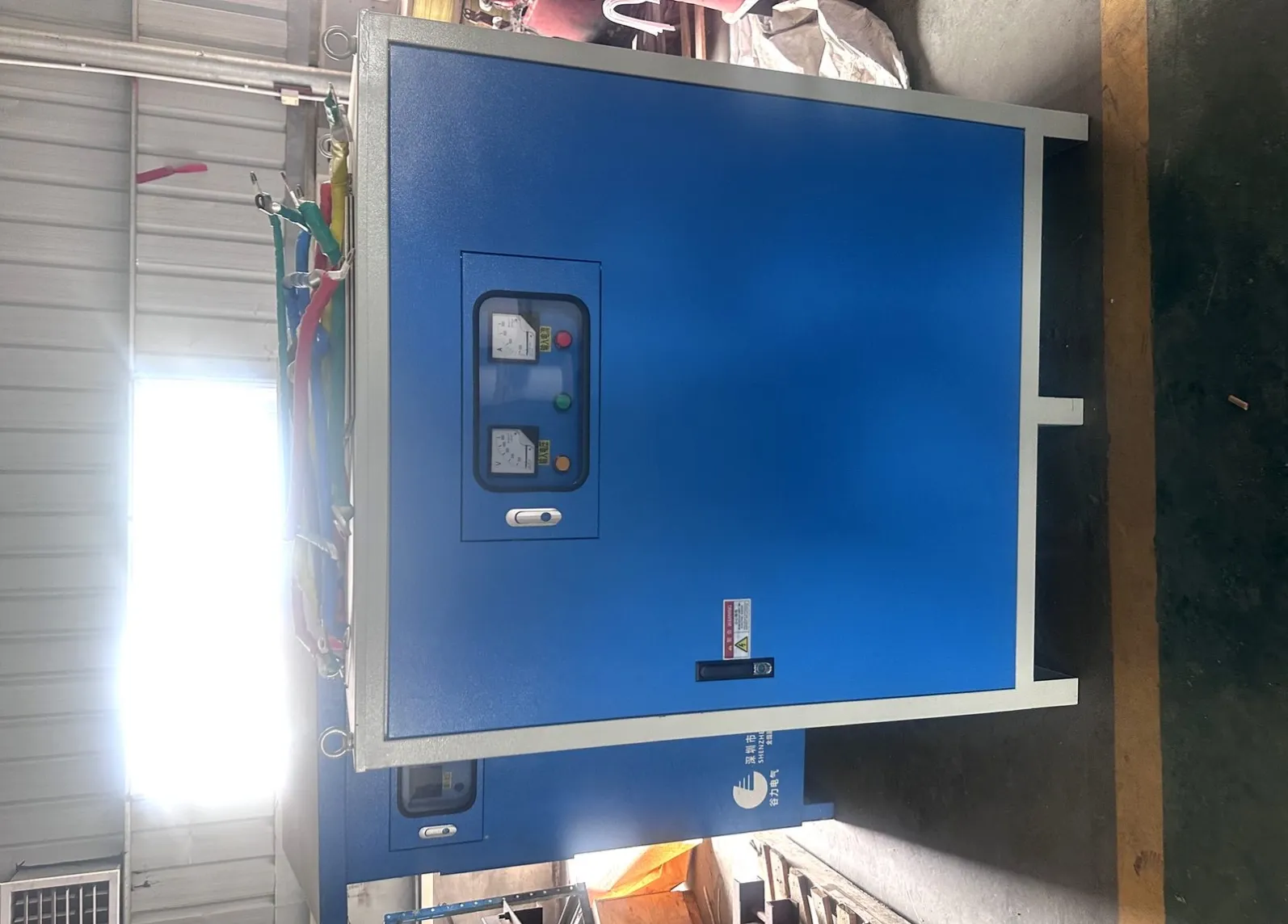
A 400 V control panel leaves the test bench with a clean temperature-rise record and a 690 V insulation rating. It is trucked to a mine site at 3,400 m and commissioned there. The insulation test that passed at 80 kPa now fails at roughly 62 kPa, and the breaker that ran at 60 C internally at the coast runs hotter on the plateau. Nothing on the drawing changed; nothing was assembled wrong. The air changed, and a nameplate written for one atmosphere does not travel well.
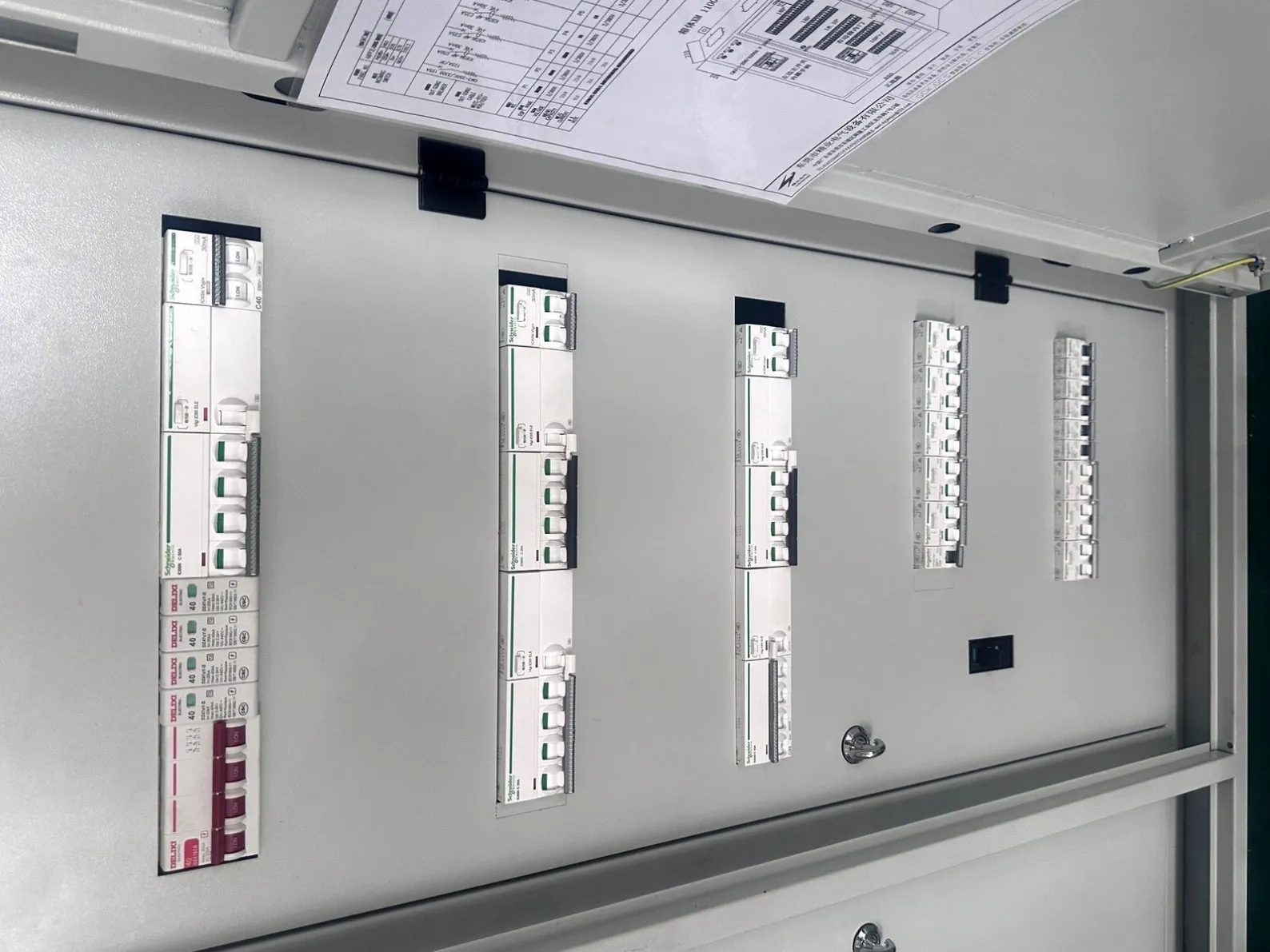
The lesson generalizes: a rated value is not a property of the enclosure. It is a property of the enclosure at a declared set of service conditions. Change the altitude and you have a different electrical product, even if the steel, the devices and the wire list are identical. Buyers who treat the rating as a fixed attribute pay for the difference at commissioning, when the fix is a rebuild rather than a clause in the RFQ.
We are a sourcing partner, not a control panel manufacturer. We do not own the design verification file for another shop's assembly, and do not adopt their ratings as ours. That is why the declaration matters: the altitude has to be stated by the party who specifies the site, before the assembly is designed to it.
What the 2,000 m line actually means
IEC 61439-1:2020 treats altitude the way it treats ambient temperature and humidity. Clause 7.1.4 defines a normal service condition as a site of installation not exceeding 2,000 m. Clause 7.2 puts everything outside that envelope under special service conditions, to be agreed between supplier and user and recorded in the technical file. The 2,000 m figure is not a performance claim. It is the boundary of the default assumption.
This distinction matters commercially. If a buyer never states the site altitude, the assembly is understood to be verified for normal conditions only. A supplier who ships to a 3,400 m site without a declared altitude has not promised performance there. The gap is not a defect in the panel; it is a missing input. Putting the altitude in the enquiry turns it from an assumption into a design parameter, worth more than most of the optional extras buyers negotiate. The same logic sits behind our electrical enclosure supplier sourcing guide: the specification has to travel with the enquiry, not after it.
The neighboring clause is worth reading too. IEC 61439-1:2020 Cl.7.1.1 caps indoor ambient at +40 C with a 24-hour average of +35 C, and Cl.7.1.3 sets pollution degree 3 as the industrial indoor default. High-altitude sites often break the temperature assumption at the same time — thinner air means a wider day-to-night swing and weaker convective cooling. Altitude is rarely the only special condition on a plateau project; it is usually the one nobody wrote down.
Effect one: thin air stops insulating like air
The first consequence is dielectric. Air clearance is set by impulse withstand voltage, and the withstand of a given air gap falls with pressure. IEC 60664-1 Annex A, Table A.2 publishes the multiplication factors for clearances above 2,000 m: 1.00 at 2,000 m, 1.14 at 3,000 m, 1.29 at 4,000 m and 1.48 at 5,000 m, each against the standard barometric pressure at that altitude. A 5.5 mm clearance specified at sea level becomes roughly 6.3 mm at 3,000 m and 7.1 mm at 4,000 m if the same impulse withstand is to be kept.
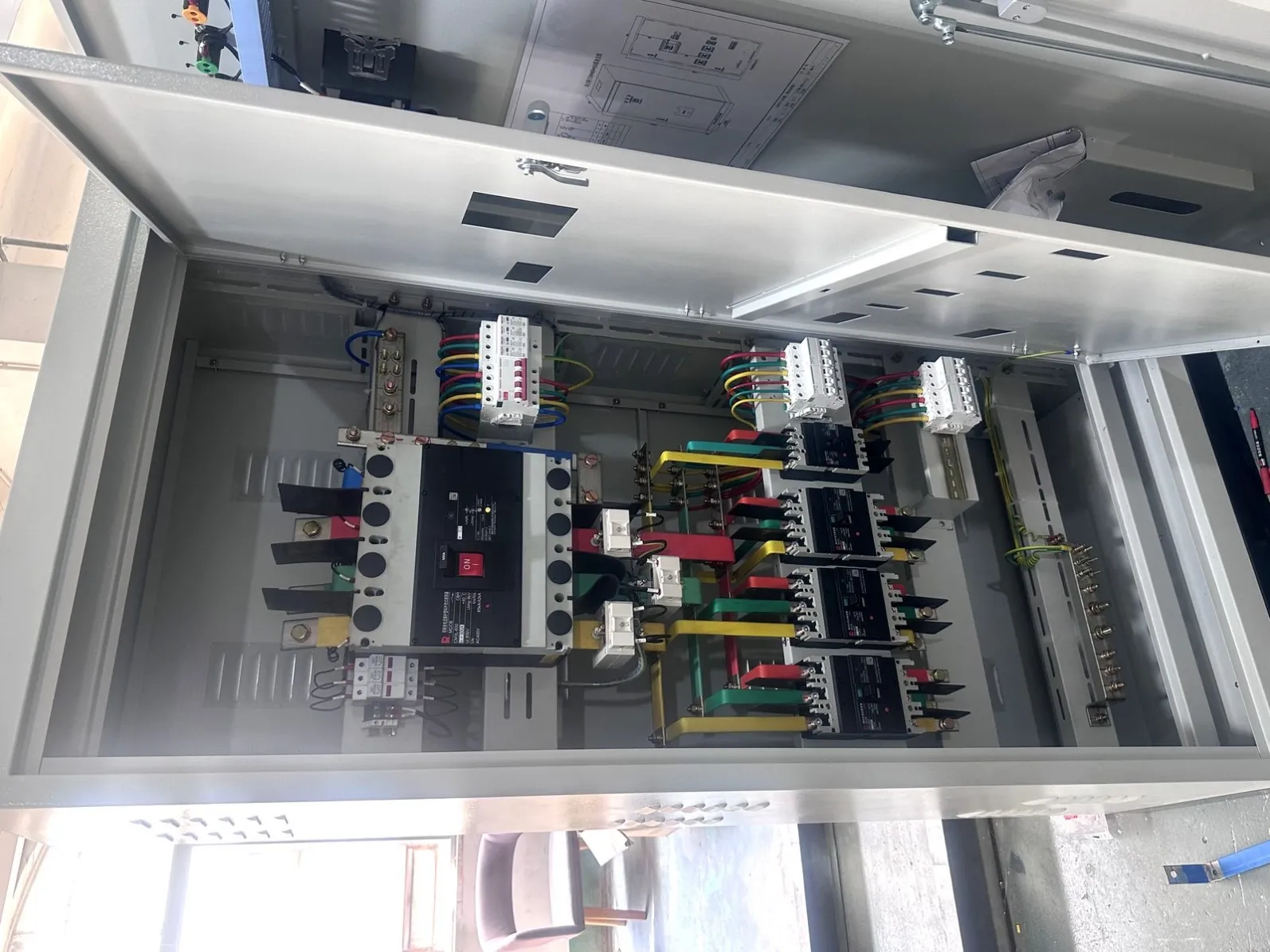
The reasoning chain is straightforward. Thinner air has lower dielectric strength, so the same gap breaks down at a lower voltage. The standard answers this by scaling the clearance, not by re-labelling the voltage. Therefore the buyer's job is not to ask whether the panel is 690 V rated; it is to ask what clearance the builder used and whether the altitude factor was applied to the internal spacing of terminal blocks, contactors, busbar supports and device-to-device gaps. Those are geometry decisions, made on the drawing, and expensive to change after the panel is wired.
There is a second-order effect that is easy to miss. Some device families reduce their maximum rated operational voltage at altitude even where the clearance is adequate, because transient recovery after a fault behaves differently in thin air. A breaker rated 690 V at sea level may carry a lower voltage rating at 3,000 m in the same frame. If the project fault level was calculated against the sea-level figure, the interrupting assumption needs re-checking. That is a supplier-side calculation, but the buyer has to trigger it by declaring the site.
Effect two: thin air stops cooling like air
The second consequence is thermal and independent of the first. A unit volume of air at 62 kPa carries less heat than the same volume at 80 kPa. At constant current, temperature rise goes up. Device catalogues typically answer with a current correction on the order of half a percent per 100 m above 2,000 m; the exact figure is manufacturer-specific and belongs in their datasheet. For rotating machines, IEC 60034-1 likewise requires power derating above 1,000 m, which matters whenever the project includes a generator or a large drive motor specified at sea-level output.
The practical chain: lower air density reduces convective heat transfer, so the internal temperature rises for the same losses, so the rated current has to fall or the cooling has to be increased. Shrinking the clearance at the same time would make both problems worse, which is why the two effects cannot be solved with one number.
This is where a different kind of mistake shows up. A buyer who has heard that altitude affects cooling will sometimes ask for a larger enclosure or a bigger fan and consider the matter closed. A larger enclosure helps the thermal side and does nothing for the dielectric side, because the internal clearances are set by the devices and their mounting, not by the volume of the box. Conversely, specifying extra clearance does not lower the temperature rise. Two mechanisms, two verifications, one declaration. Our enclosure thermal load sizing guide covers the heat side separately; altitude adds a correction on top of it rather than replacing it.
For the thermal side, the reference point is IEC 61439-1:2020 Cl.10.10 on temperature rise verification: the rated current is validated inside the assembly, at the declared conditions, not in free air. A plate current copied from a device datasheet is not the assembly rating once the enclosure, grouping and altitude are taken together.
Why the two effects must be bought together
Here is the judgment worth carrying into any high-site project: altitude is a service condition, not a product option. You cannot add it to a finished panel the way you add a door lock or a heater. It changes the geometry of the insulated system and the thermal balance of the assembly at the same time, and both changes have to be present in the design record before verification is run.
That makes it a pre-order decision with a hard cutoff. Once the panel is built, the clearance is fixed by where the components sit, and the rating is fixed by what was verified. A request to "confirm suitability for 3,500 m" after shipment is not a question that can be answered with a letter. It requires a redesign or a formally derated nameplate, and neither is available at the original price.
A significant share of panels leaving China go to plateau and highland markets — mining in the Andes, municipal water projects on the Mexican plateau, industrial sites in East African highlands. In those projects the buyer usually knows the altitude precisely, because it is on the civil drawing. It simply never makes it into the electrical enquiry. One line in the RFQ moves the problem to the correct stage, and it is the first thing we ask for when a control panel build is headed for a high-site destination.
The specification block to copy into the RFQ
The following is illustrative procurement text. Adapt the numbers to the actual site and let the supplier confirm the correction factors from device catalogues rather than assuming these values.
That last line is not decorative. IEC 61439-1 requires special service conditions to be declared in the documentation, and the rating plate has to carry the values they affect. If the plate says 400 A and the technical file says 400 A at 2,000 m, those are two different statements.
What to check at incoming inspection
This checklist is illustrative and belongs in the receiving procedure, alongside the dimensional and cosmetic checks.
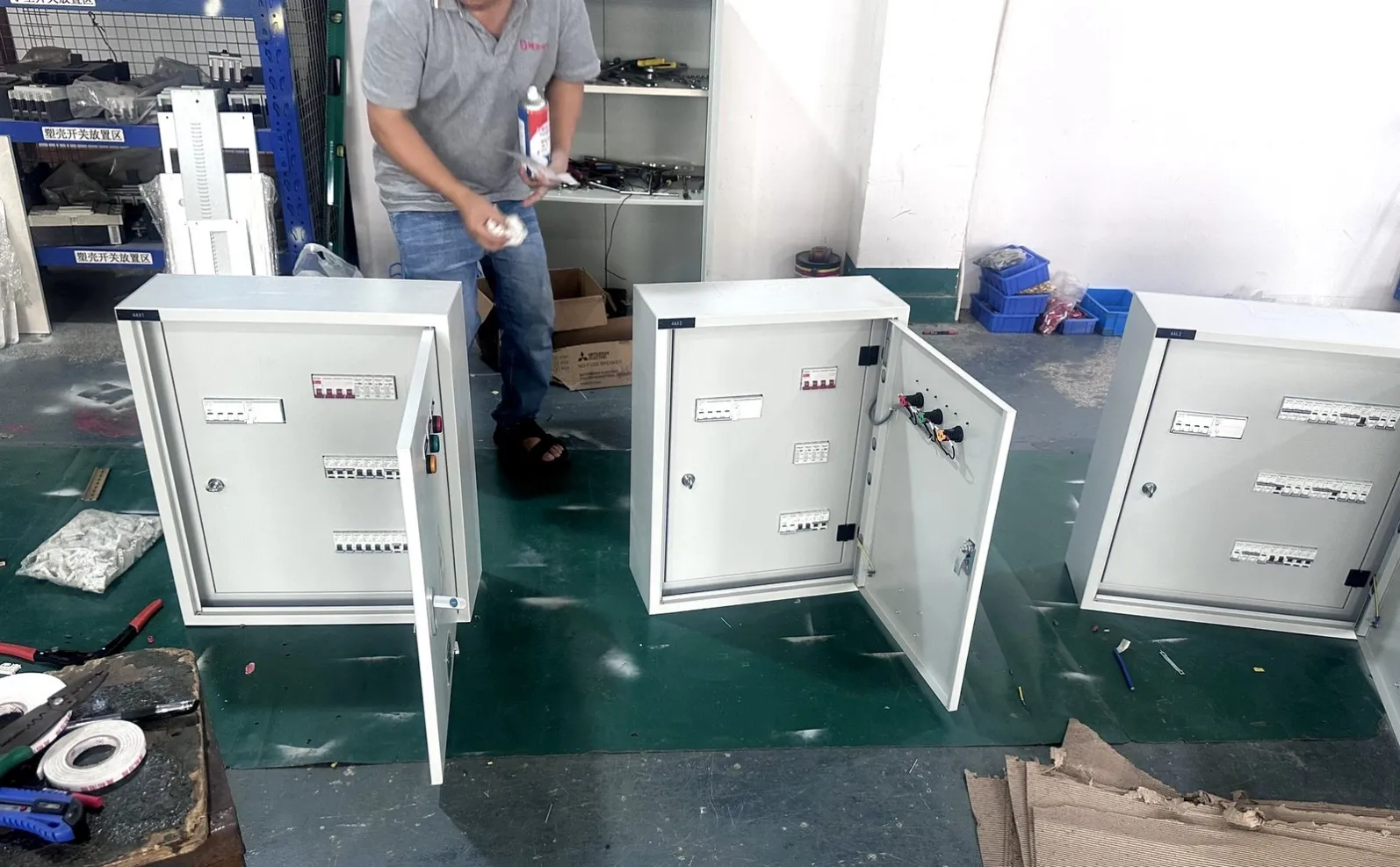
Seven lines, none requiring a laboratory. They only require that the supplier did the work at the design stage and documented it. A supplier who cannot produce the correction calculation is telling you the altitude was never designed in, whatever the quotation says.
Frequently asked questions
Can a standard panel rated for 2,000 m simply be installed at 3,000 m? It can be installed, but the ratings no longer describe the conditions. Clearances and current-carrying capacity both need correction, and the corrected values belong on the plate and in the technical file. Without that, the assembly is only verified for the default envelope.
Does a bigger enclosure solve the altitude problem? It helps the thermal side by giving heat more volume to move into, but it does nothing for dielectric clearance. Clearance is set by the spacing of live parts and the insulation system, not by the size of the box. Both effects need separate verification.
Which standard gives the altitude correction factors? IEC 60664-1 Annex A, Table A.2 gives multipliers for clearances above 2,000 m — 1.14 at 3,000 m and 1.29 at 4,000 m are the commonly used figures. IEC 61439-1 Cl.7.1.4 and Cl.7.2 define the 2,000 m normal-condition boundary and the special-condition route.
Do the corrections apply to the enclosure itself or only to what is inside? Mostly to what is inside. Air-insulated live parts, busbar supports, terminal blocks and devices drive the clearance and temperature-rise calculations. The enclosure material and IP rating are selected for the environment, but they do not restore dielectric strength lost to lower air density.
At what altitude does this start to matter? At any declared installation above 2,000 m under IEC 61439-1. Some individual devices begin derating earlier — rotating machines under IEC 60034-1 from 1,000 m — so the device list needs checking independently of the assembly threshold.
What if the site altitude is not known at enquiry? Then it is a project input that is still missing. Give the supplier the best figure available and mark it as preliminary; a nominal value used for quoting is very different from no value at all, because it at least triggers the special-condition review.
Related guides
Talk to an engineer about your site conditions
Send the altitude, ambient range and pollution degree with your enquiry and we will route them to the build partner for a documented correction before anyone commits to a rating.
Produced with AI-assisted drafting and reviewed by the Uni Regal team before publication.