
Why a Panel Passes Its IP Test and Still Condenses
Condensation is a dew-point problem, not a sealing defect. Learn what IEC 61439 and IEC 60721 actually say, and the RFQ lines that specify moisture out of a panel order.
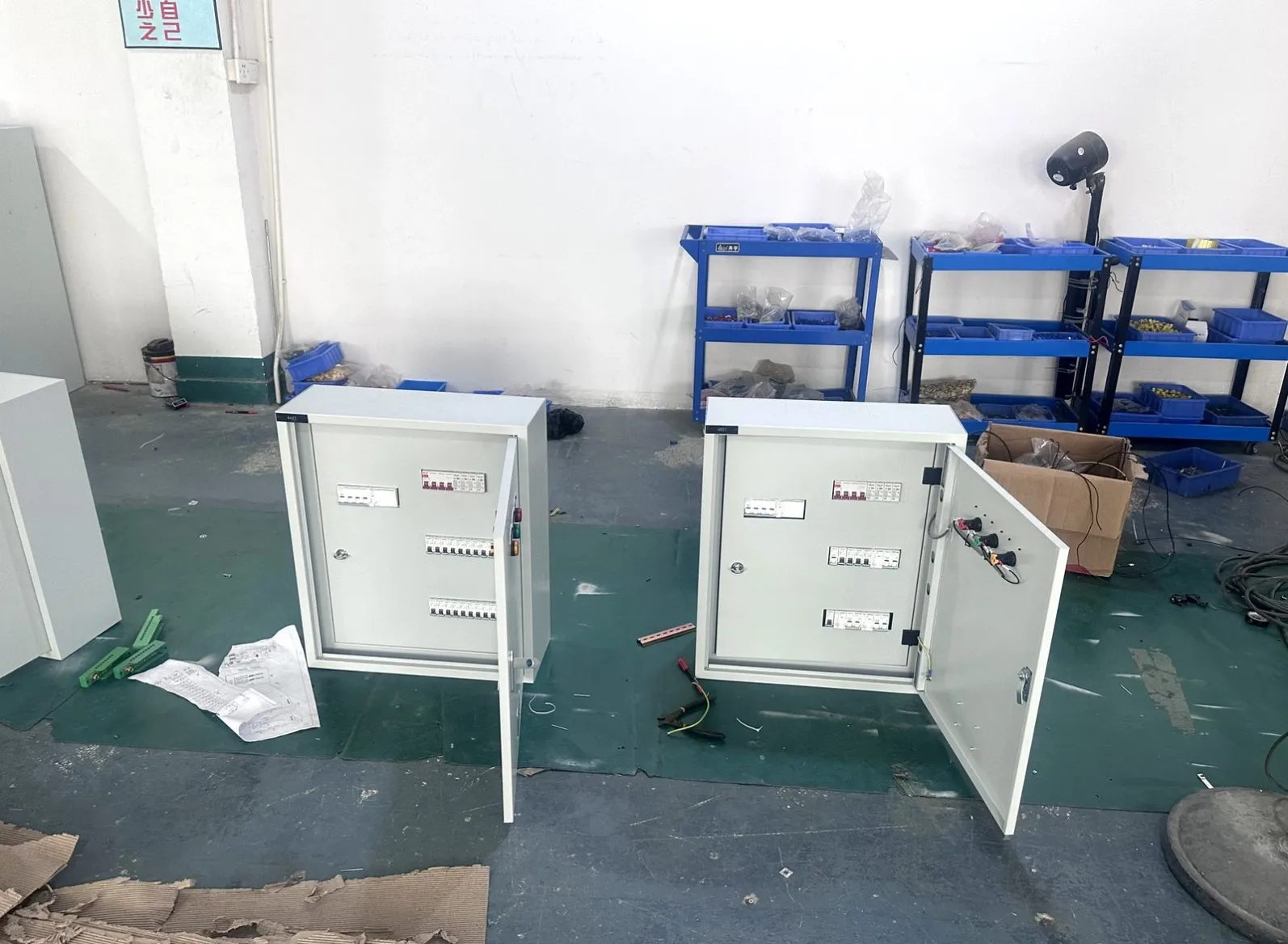
On a coastal wastewater site, the panel had passed every documented check. It carried an IP65 rating, the door gasket was continuous, and it arrived on its plinth with the desiccant packet still sealed. Three weeks later, after the first clear cold night, the maintenance contractor found tracking marks along the bottom of a terminal strip and an earth-fault alarm that cleared by mid-morning. Nothing had leaked. The air inside the cabinet had cooled past its dew point.
That distinction is the whole answer. Condensation in a control panel is usually not a sealing failure; it is a dew-point event — warm air holding water vapour meets a surface that has fallen below the temperature at which that air can keep the water as vapour. Treat it as a sealing problem and you will buy a higher IP number and still get the tracking. Treat it as a dew-point problem and you can specify it out at enquiry and check it before shipment. One boundary up front: we source and coordinate panels and enclosures; PLC or SCADA programming and site commissioning stay with your system integrator.
For the supplier-selection decision that comes before this, see the electrical enclosure supplier China sourcing guide. This article starts with the panel already specified.
The IP number answers a different question
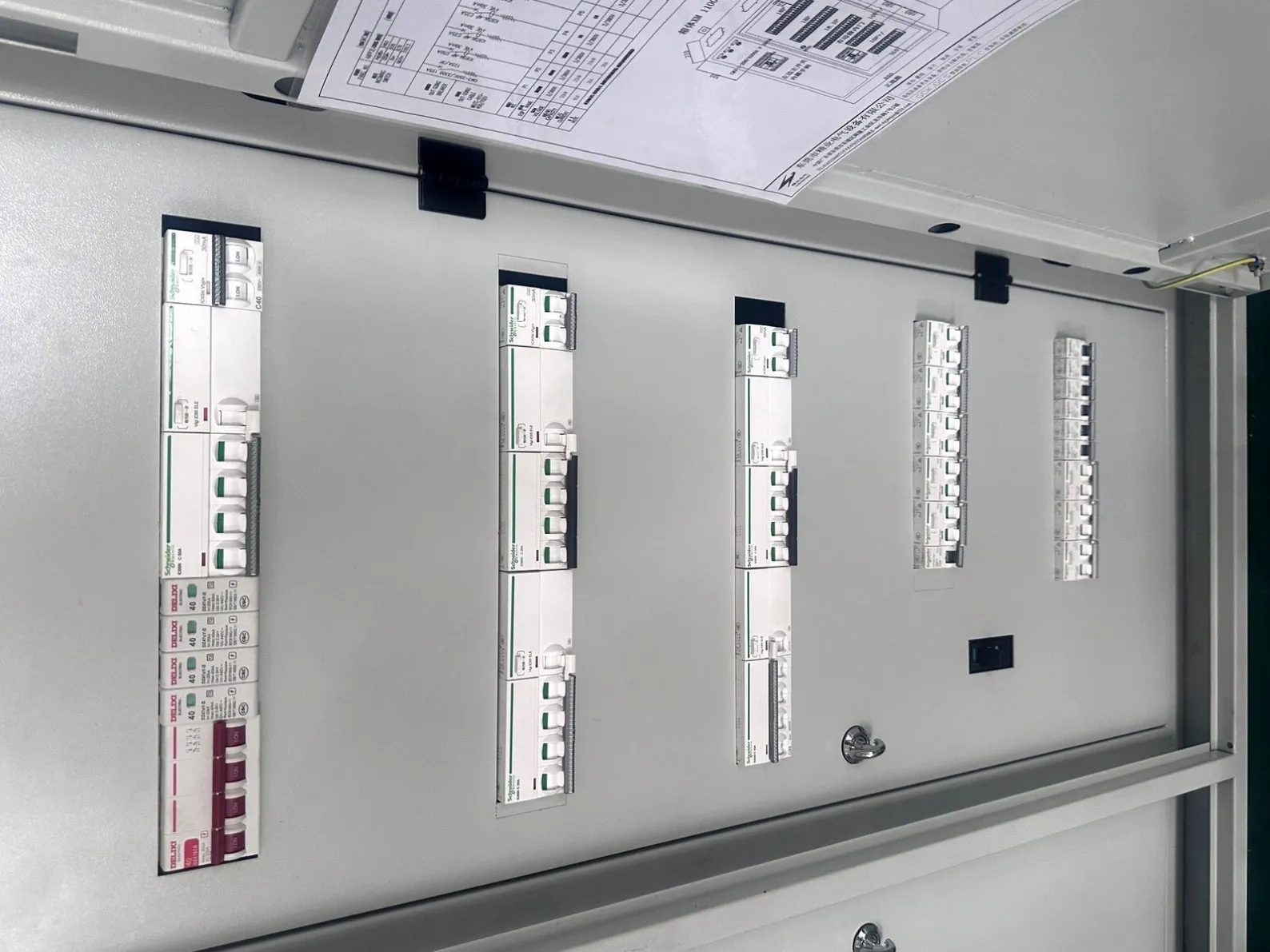
The IP code rates protection against solid objects and water ingress under defined test conditions — droplets, sprays, temporary immersion. It does not rate resistance to water vapour, and it says nothing about what happens when the air trapped inside a cabinet cools overnight. IEC 61439-1:2020 makes that boundary explicit in its service conditions. Clause 7.1.2.1 sets indoor relative humidity at no more than 50% at 40 °C, permits higher values at lower temperatures (90% at 20 °C is the standard's example), and adds that moderate condensation should be borne in mind because it may occasionally occur as temperature varies. Clause 7.2 then lists applications where temperature or air pressure changes fast enough that exceptional condensation is liable to occur inside the assembly as a special service condition, to be agreed between supplier and user.
Read that as a buying instruction. The standard does not promise a permanently dry cabinet; it promises a cabinet that tolerates occasional, moderate condensation inside bounded limits. A coastal site with a large day–night swing sits outside those bounds. So the task at enquiry is to declare the swing and the humidity range, not to assume the IP number covers them. A panel ordered to IP65 with no humidity declaration has been specified against the wrong part of the standard — and no amount of gasket quality changes that.
The humidity class nobody puts on the RFQ
Most panels are bought with an IP rating and nothing at all about the air they will breathe. IEC 60721-3-3:2019 is the classification that component datasheets actually use. For stationary use at weather-protected locations, class 3K3 covers 5–85% relative humidity, caps absolute humidity at 25 g/m³, and prohibits condensation. The class is defined on a climatogram — a temperature/humidity envelope — which is the important part: high humidity and high temperature are not independent variables. A drive or PLC datasheet will state a climate class; an enclosure datasheet usually states only IP. Those are two different promises, and the second one says nothing about moisture in the air.
The reasoning chain is short. If your specification lists IP but no climate class, you have bounded dust and liquid water while leaving the moisture envelope undefined. The remedy is one extra line, not a longer document: state the site class next to the IP rating, and state the design basis for anything beyond it. When a supplier cannot say which climate class the internal devices are rated to, the panel was assembled to a drawing rather than to an environment. Our enclosure heater selection guide covers the hardware side of that decision.
Three ways a sealed cabinet gets wet inside
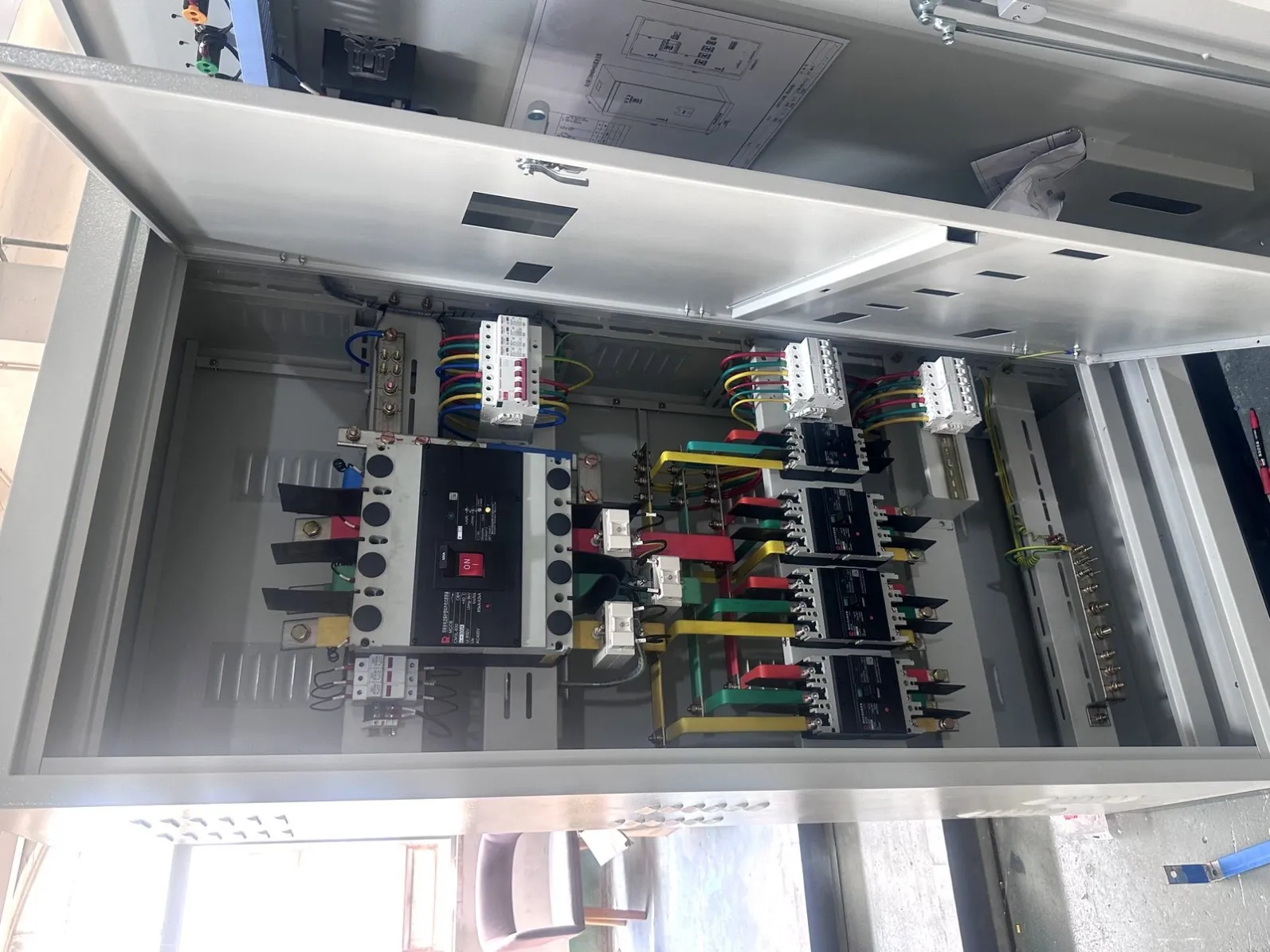
Night cooling after daytime heat. Solar gain on a dark enclosure — or simply a loaded panel warming through the day — raises internal air temperature and the amount of water it can hold. After sunset the shell radiates heat away quickly; internal surfaces drop below the dew point of the air now sitting against them. Diagnostic: log internal temperature and relative humidity over several days. If humidity climbs toward saturation only after dusk, this is the mechanism. Then check whether an anti-condensation heater exists and whether a hygrostat controls it rather than a clock.
Humid air drawn in through cable entries. Conduit and gland penetrations are the usual route. As a warm cabinet cools, internal pressure falls and outside air is pulled through any imperfect seal, bringing in moisture that then condenses on the coolest surface — often the bottom of a terminal strip. Diagnostic: inspect the bottom entry plate and gland seals for a dust or salt trail. The deposit marks the air path. This is why cable entry planning and correctly sized glands matter more here than the door gasket.
A heater that is fitted but never switched. Anti-condensation heaters are often specified, then landed on a terminal with no hygrostat, or set below the site dew point. A heater helps only when it holds internal surfaces a few degrees above the dew point of the air inside. Diagnostic: at the pre-shipment check, energise the heater, warm the enclosure slightly, and confirm the hygrostat opens and closes at the documented set points. A heater on the wrong setting is a line item, not a solution.
What can actually be verified
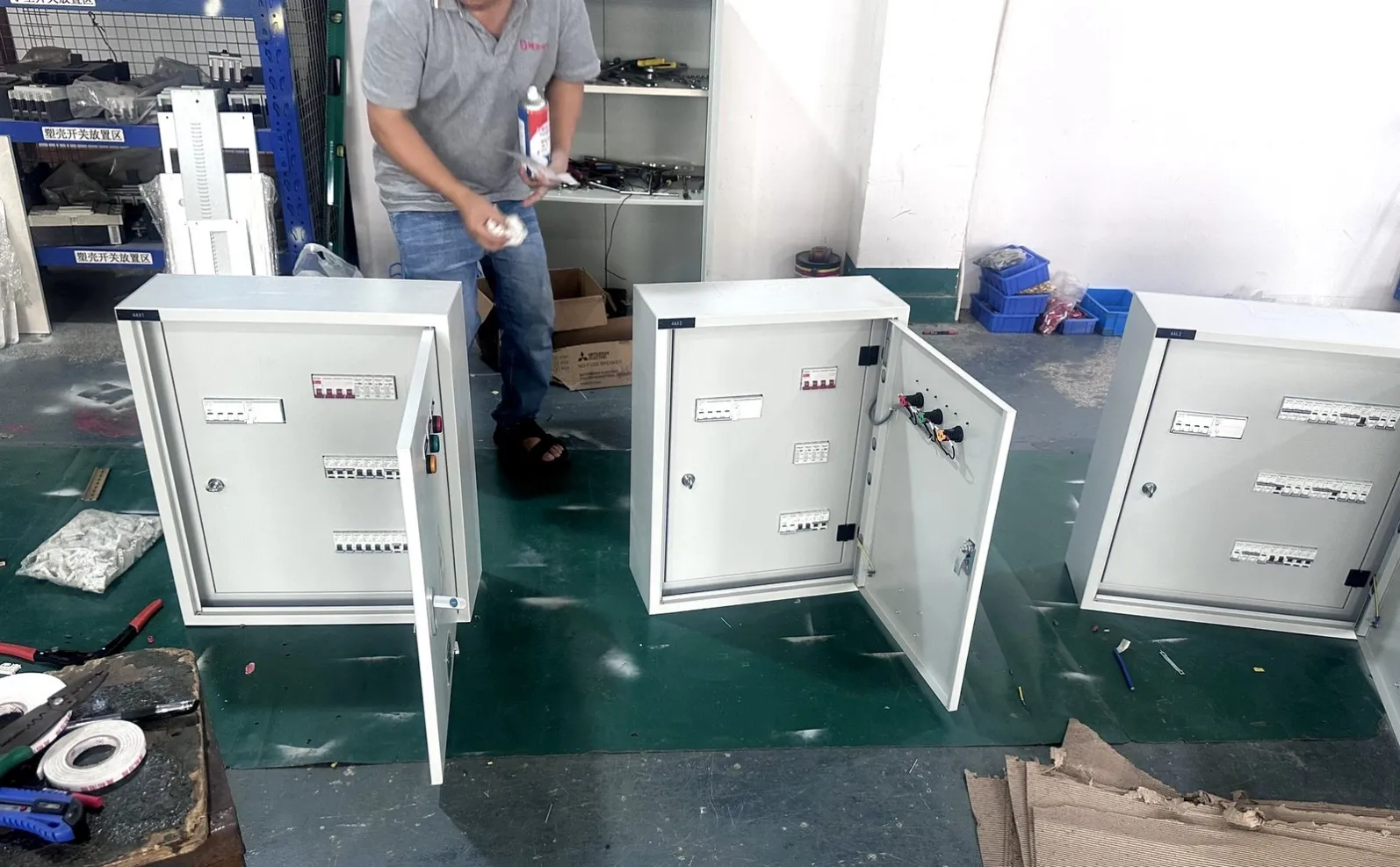
Damp-heat resistance is a testable property, not a sales claim. IEC 61439-1:2020 Clause 10.2.2.2 calls for six 24-hour cycles of damp heat to IEC 60068-2-30:2005 (Test Db) at 40 ± 2 °C for ferrous indoor enclosures and internal ferrous parts, followed by a salt-mist sequence where relevant; Clause 10.2.2.3 covers outdoor enclosures. That is a concrete verification route rather than a general assurance.
The reasoning: if condensation were purely an installation problem, no product standard would require the assembly itself to be cycled in a humidity chamber before it ships. Because it does, you can ask which verification was applied to the enclosure and its internal metalwork, and treat an answer of "IP65" as incomplete. For coastal or chemical sites, ask for the corrosion-class basis at the same time — the two questions belong together, and the vent and breather selection guide explains how pressure equalisation interacts with both.
Text you can paste into the enquiry and the order
The following is illustrative starting language. Align it with your own contract terms and have your commercial or legal team adapt it.
RFQ environment line: Site location [country/region]; indoor weather-protected / outdoor (circle one). Ambient range [min] to [max] °C; maximum documented day–night swing [ ] °C; design relative humidity [ ] % at [ ] °C. Required enclosure rating IP[ ]; internal component climate class per IEC 60721-3-3 [ ] or agreed equivalent. State whether the declared service conditions include occasional condensation and, if not, state the special-service-condition basis.Moisture-control clause: The enclosure shall include an anti-condensation heater controlled by a hygrostat with documented set points. Set points shall sit above the dew point corresponding to the declared design temperature and relative humidity. Heater and hygrostat shall appear in the bill of materials with ordering codes and shall be functionally tested together before dispatch.Arrival check (buyer side): Log internal and external temperature and relative humidity over at least three consecutive days including a night cycle. Record whether internal relative humidity approaches saturation at any point. Inspect cable entries and the bottom gland plate for moisture trails. Verify heater operation against hygrostat set points and record any corrective action before accepting the installation.
The idea worth carrying away: IP describes what the shell keeps out; dew point describes what the air inside does. Specify both, verify both, and a coastal-installation callback becomes a line on the RFQ instead of a site visit.
Our position
We are a sourcing partner, not a control panel manufacturer. We coordinate enclosure selection, heater and hygrostat specification, cable-entry hardware and the pre-shipment check across our Foshan supplier network. We are the wrong fit if you need PLC or SCADA programming or on-site commissioning — those stay with your system integrator.
Frequently Asked Questions
Will IP66 stop condensation forming inside the cabinet? No. The IP code is tested against dust and liquid water under set conditions. Moisture that is already in the internal air condenses according to surface temperature, regardless of how well the door seals.
Is a desiccant packet enough for a sealed enclosure? It absorbs a finite quantity and, in a cabinet with a daily heating and cooling cycle, is eventually spent. It is a transit measure, not a design basis for a site with a repeating swing.
Where should the hygrostat be mounted? On the internal air, away from the heater's direct radiant path and away from a door or gland draught, so it senses the bulk cabinet atmosphere rather than a local hot or humid pocket.
Can we just drill a drain hole in the bottom? That changes the enclosure's ingress rating and its internal pollution degree. Treat it as a design change, re-review the IP basis and the component climate class, and record the revision rather than modifying a delivered cabinet in the field.
Who decides the climate class — the buyer or the supplier? The buyer declares the site conditions; the supplier states what the enclosed devices are rated to. A mismatch is resolved on paper before the order, not during the first cold night on site.
Related guides
- Sizing the hardware that keeps internal air above dew point: enclosure heater selection guide
- The prevention checklist for outdoor cabinets: how to prevent condensation inside an outdoor electrical cabinet
- Where humid air actually enters: enclosure cable entry planning guide
- Pressure equalisation, breathers and seals: enclosure vent and breather guide
- When moisture turns into corrosion at the weld: stainless enclosure weld rust failure analysis
- The build and shipment scope behind these specifications: custom control panels
Talk to us
Send your site conditions and enclosure specification for review: Upload Drawing → Engineering Review. You can also message us on WhatsApp with this page's reference or email an RFQ. Our contact form is here if you prefer to start there.
Produced with AI-assisted drafting and reviewed by the Uni Regal team before publication.