
Oct 6, 2026Case Studies
Electrical Enclosure Thermal Load Sizing: Will Your Panel Overheat?
Learn why an electrical enclosure may fit the components but still overheat, and what buyers should check before approving cooling design.
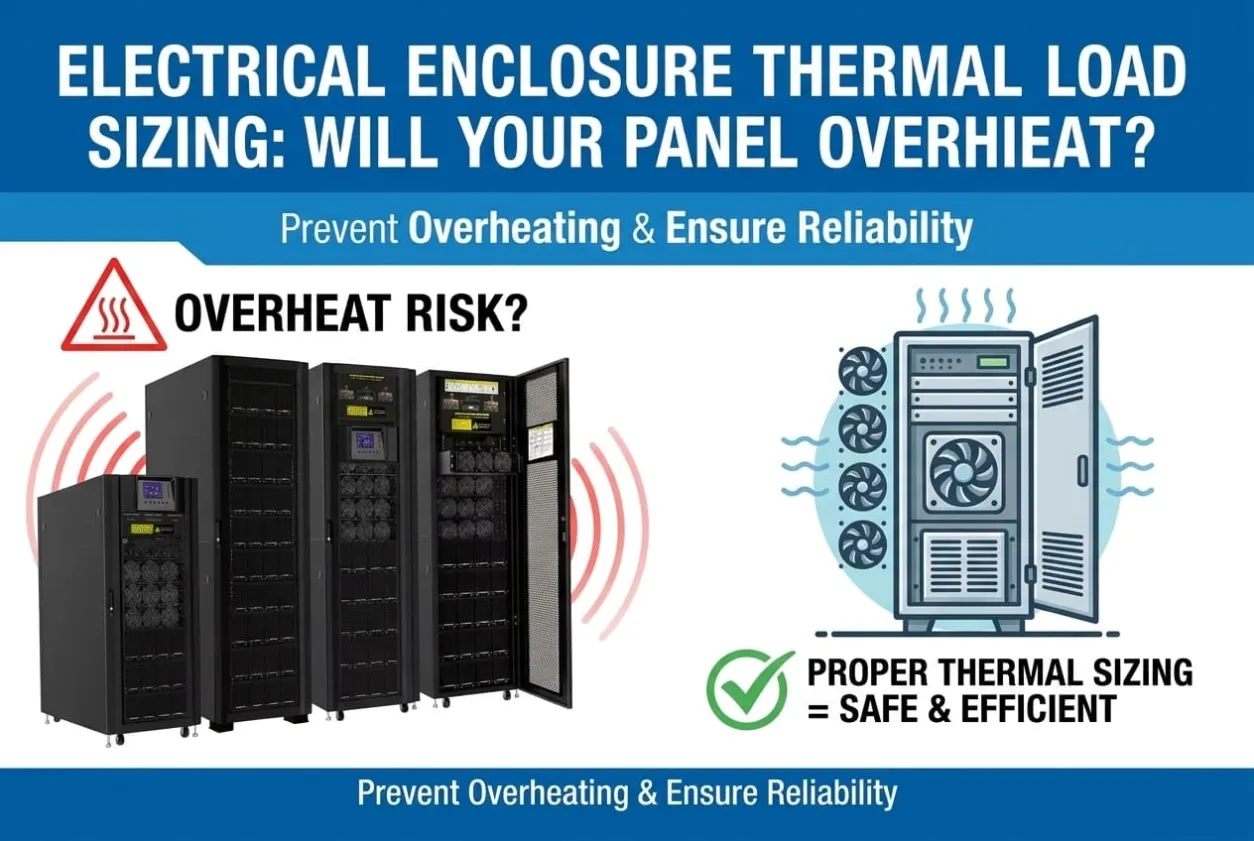
Your electrical enclosure may be big enough—but is it cool enough?
A customer once sent me a photo of a control panel after the first hot week of summer. The wiring looked clean, the VFD had enough clearance, and the enclosure was not crowded. From a layout point of view, nothing looked obviously wrong. Then he sent the alarm history. The VFD had tripped on over-temperature three afternoons in a row, always when the workshop was hottest. Morning production was fine, and the night shift had no trouble. The problem only appeared after lunch, which is usually when heat problems stop hiding.
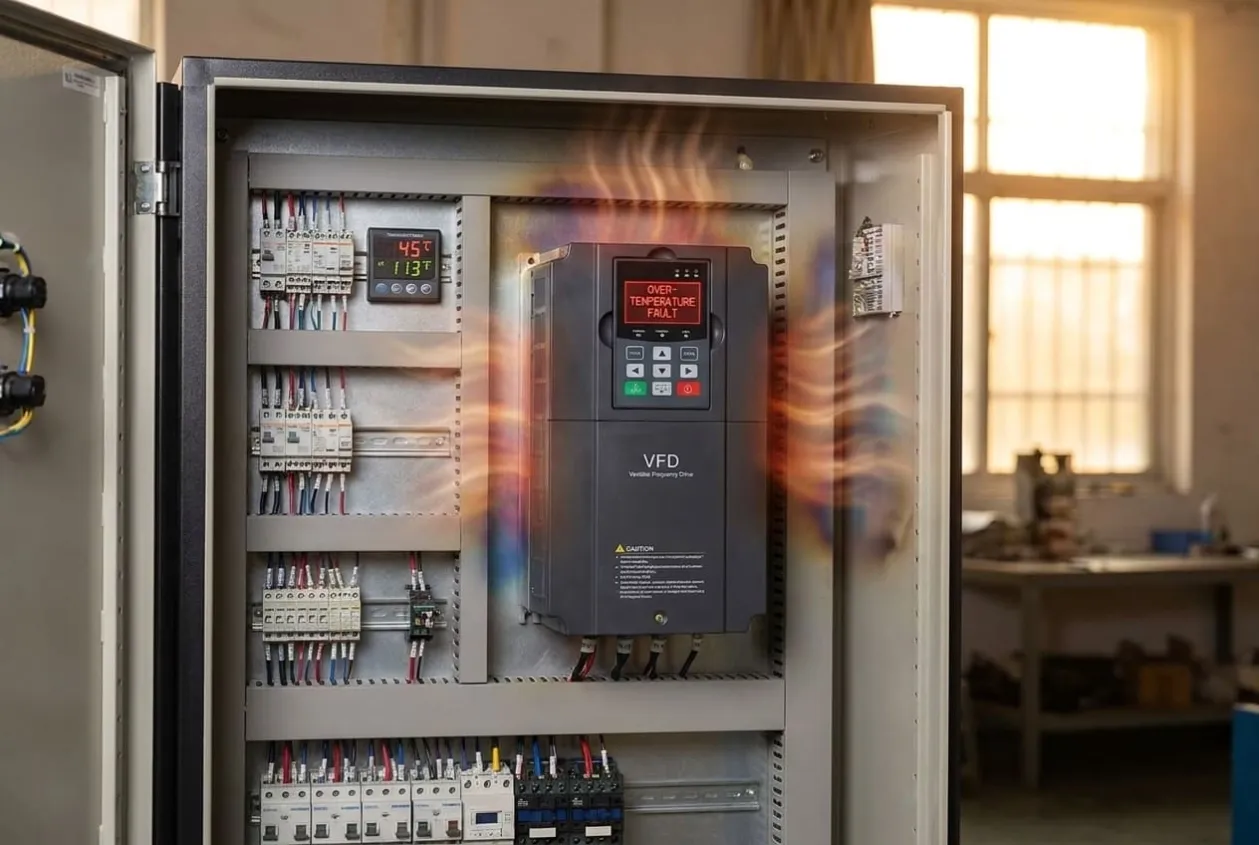
I asked whether the panel was installed outdoors, whether it had a fan, and whether anyone had calculated the heat load before the enclosure was selected. There was a short silence on the call. That silence told me more than the photo, because nobody had really looked at the panel as a thermal system. Everyone had treated it as a wiring project.
At that point, I was no longer thinking about the VFD first. I was thinking about the enclosure.
The Real Buyer Question
Most buyers ask whether the enclosure is large enough, and I understand why. The drawing shows components, cable duct, terminals, and clearances, so it feels natural to judge the cabinet by whether everything fits. That question matters, but it is not enough.
A control panel can have enough space for the VFD, PLC, transformer, power supply, terminals, and wiring duct while still becoming too hot once the door is closed. Heat does not care how tidy the layout looks. It only cares how many watts are being produced inside the cabinet and how easily those watts can leave.
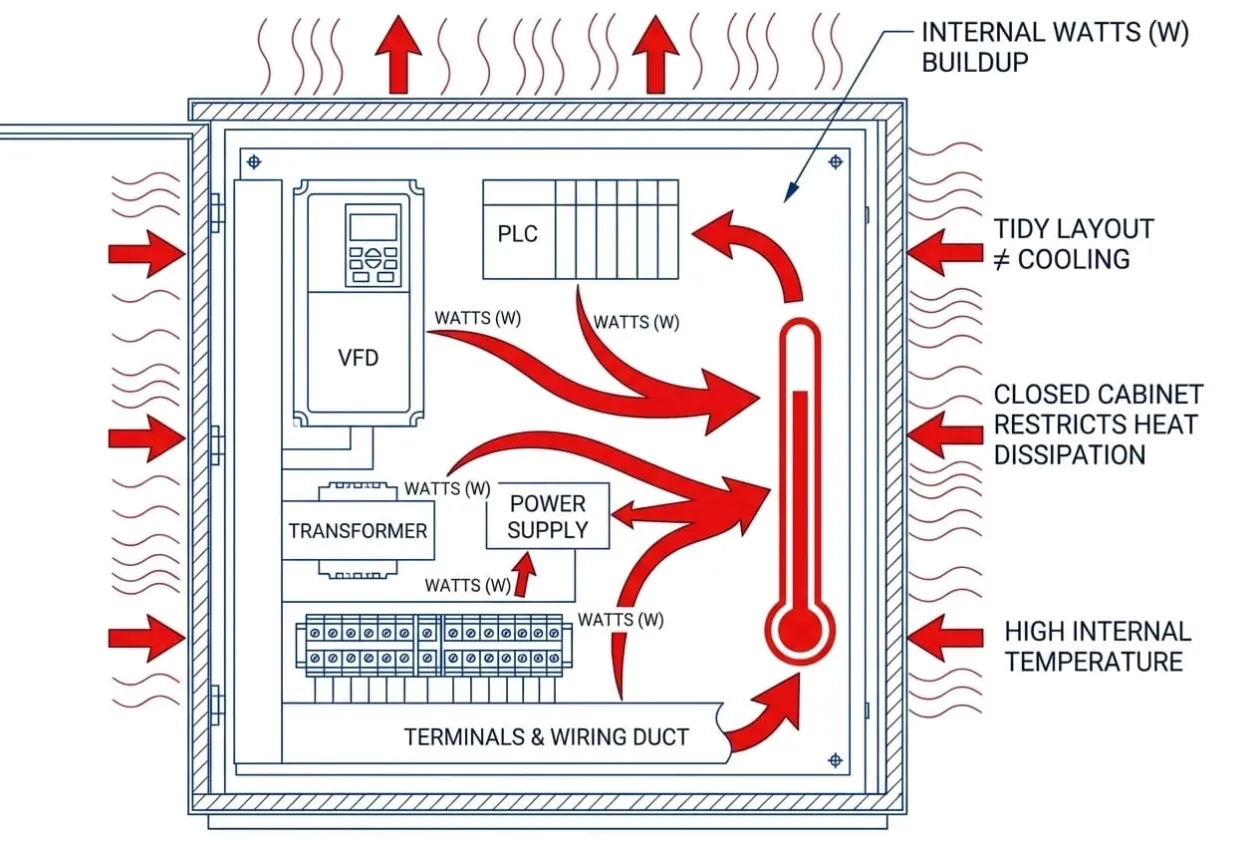
That is why I rarely approve a quotation based on enclosure dimensions alone. Before approval, I want to know the maximum site temperature, whether the panel is indoors or outdoors, whether it must remain sealed, what the main heat sources are, what cooling method is proposed, and who will maintain that cooling method after commissioning. Buyers do not need to perform the calculation themselves. They just need to know someone has.
Supplier A Measured Space. Supplier B Measured Heat.
In quotation reviews, this difference appears more often than people expect. The first supplier looked at the drawing and said the cabinet was large enough. The second supplier started asking about the weather.
That was enough to make me pay attention.
To be fair, the first supplier had checked the layout and confirmed that the components could be mounted. From a fabrication point of view, the enclosure looked acceptable. The missing part was the heat discussion. For a low-load PLC cabinet in a clean room, that may not matter much. For a VFD panel installed outdoors or near a hot production area, it can become the reason operators spend summer afternoons resetting drives.
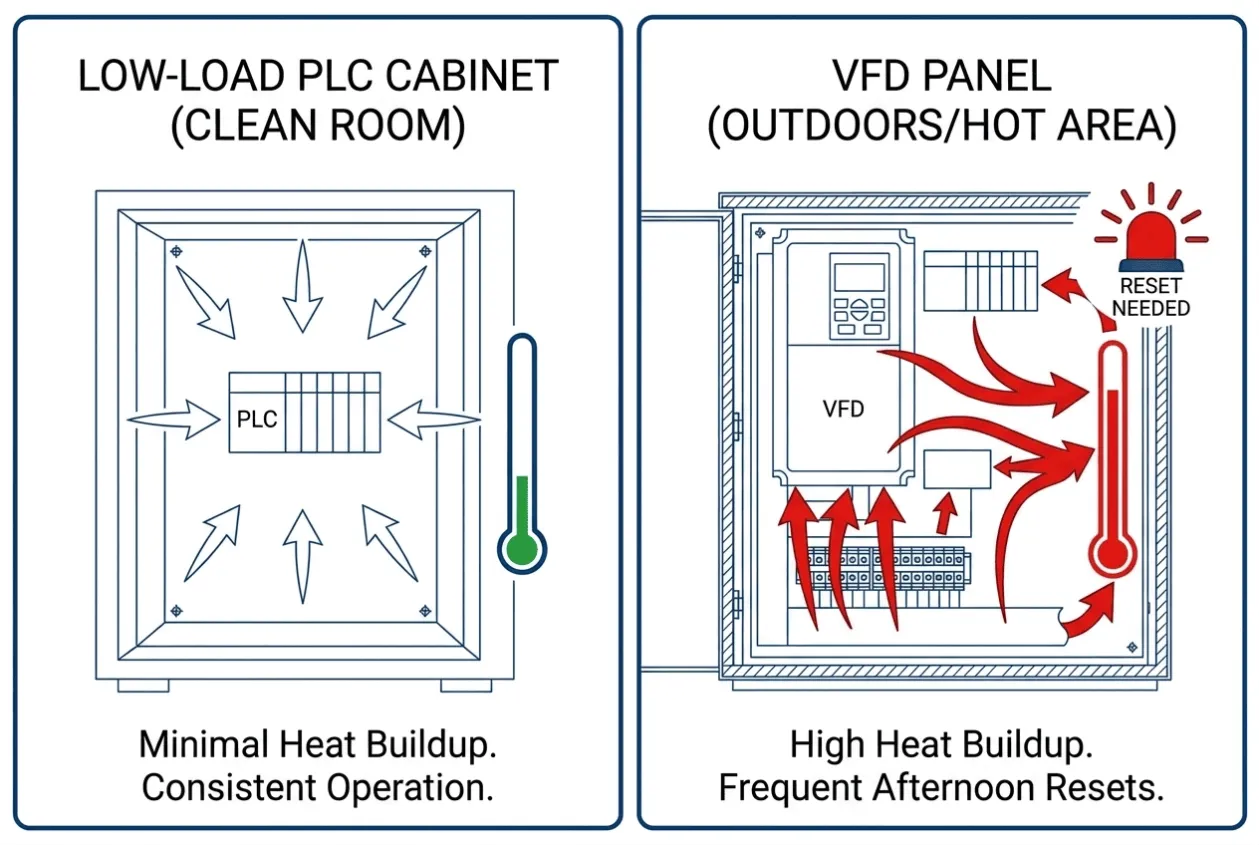
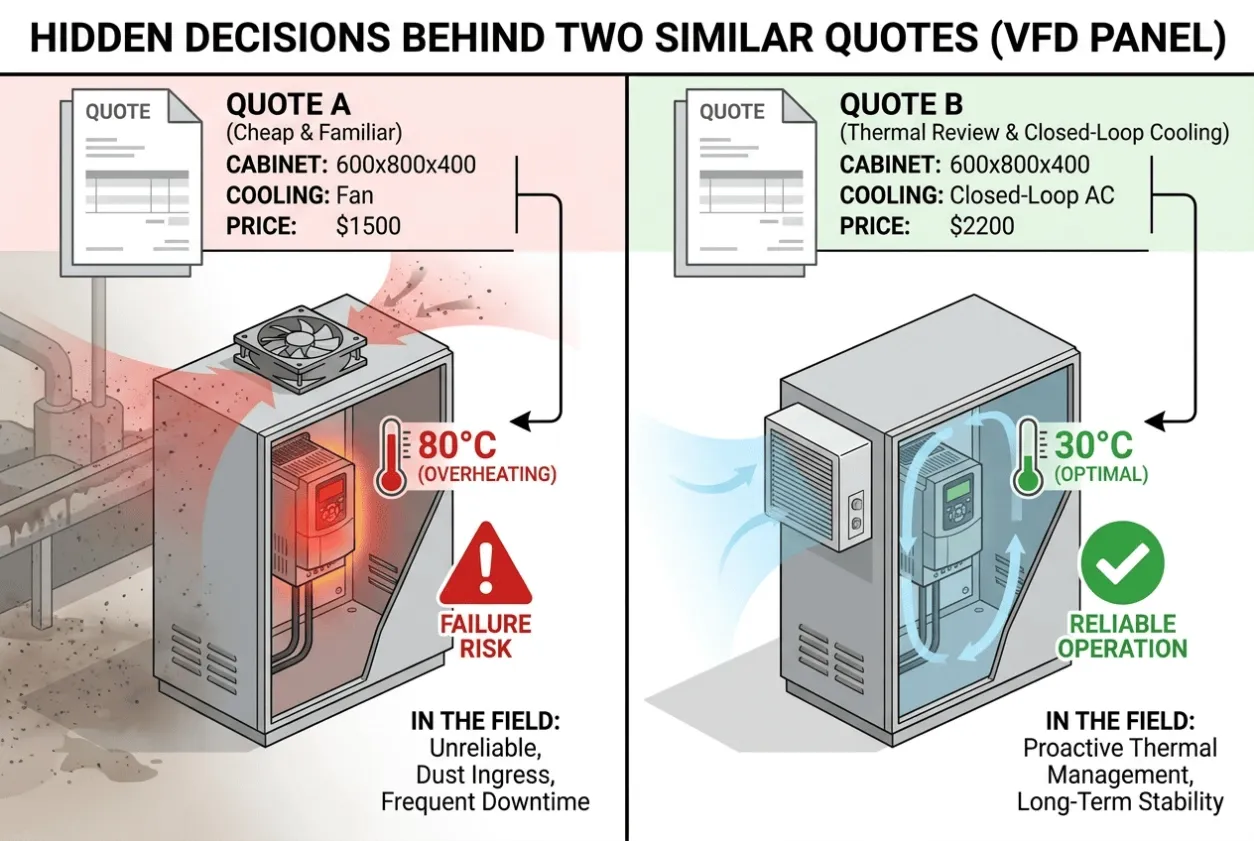
The strange thing is that both quotations may show the same enclosure size. One includes a real cooling assumption; the other only says “fan included.” Those two quotations should not be treated as equal.
What I Expect the Supplier to Calculate
I do not expect a purchasing manager to calculate every watt inside a control panel. I do expect the supplier to explain the assumptions behind the enclosure and cooling selection. For a VFD panel, that usually means checking the drive loss, transformer loss, power supply loss, UPS loss if there is one, and any braking resistor or dense power section that may add heat.
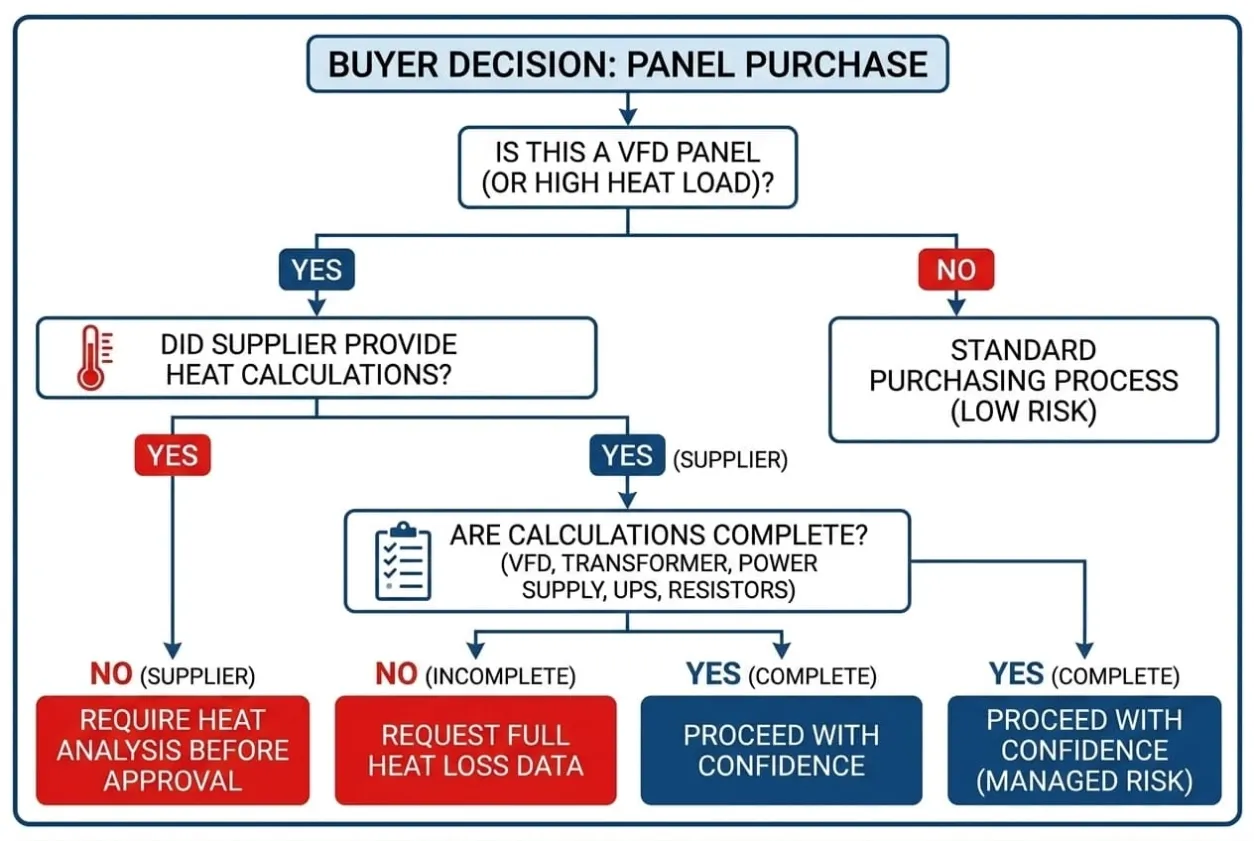
I do not expect pages of thermal calculations. I just want to know someone has done them.
When the quotation starts with “we will add a fan,” I usually ask what problem the fan is solving and whether the site can actually accept airflow through the cabinet. A fan may be the right answer in a clean indoor room, but it should not be selected before anyone knows the heat load, site temperature, or sealing requirement.
Why Fans Are Often Misunderstood
Fans are useful in the right environment. In a clean indoor electrical room, a filtered fan can be a simple and economical way to move heat out of a cabinet. I have approved plenty of panels where a fan was the right answer. The trouble starts when a fan is treated as a universal cooling solution.
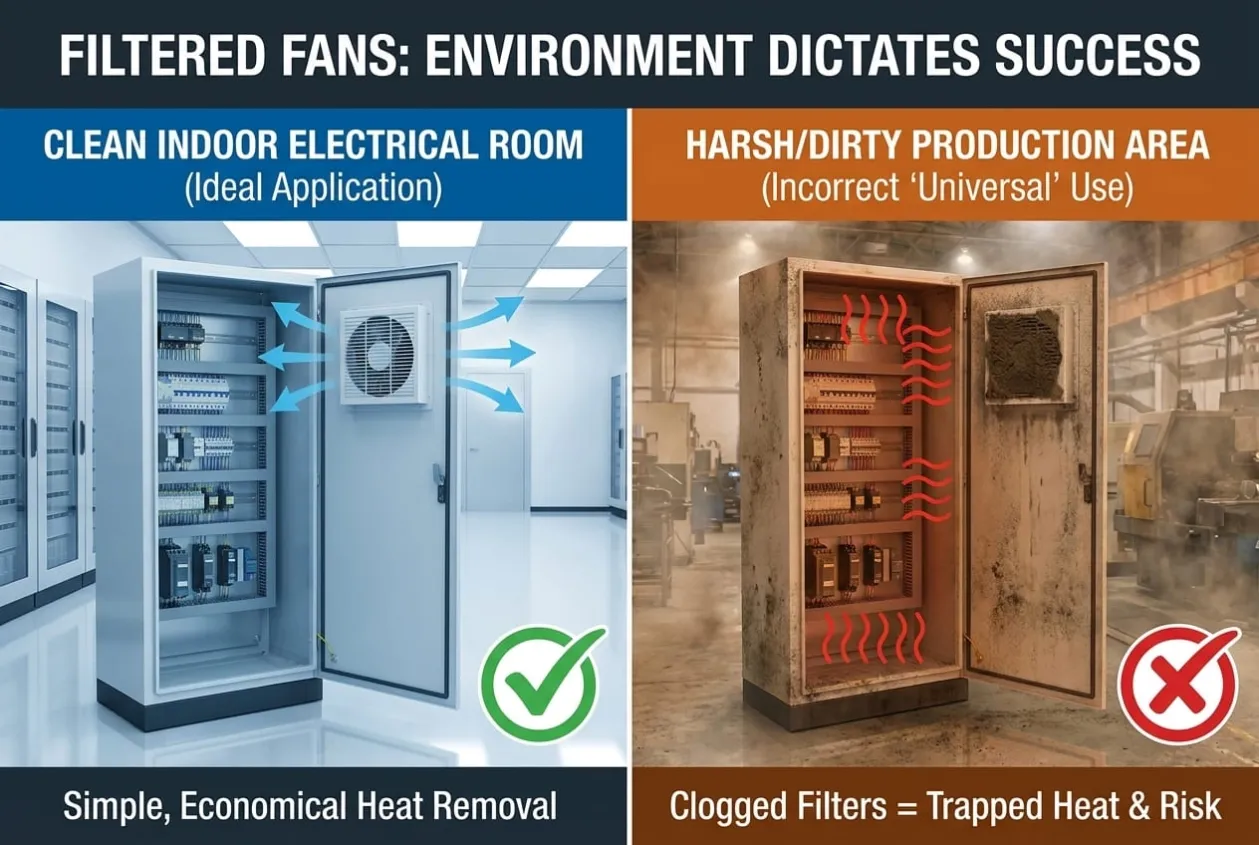
If the panel needs to remain sealed, adding an ordinary fan changes the protection strategy. If the site is dusty, the filter becomes a maintenance item. If the cabinet is outdoors in humid conditions, uncontrolled airflow may not solve the real problem and may introduce new ones.
I once heard a maintenance technician describe an old cabinet fan as “a dust subscription service.” He was joking, but only a little.
For sealed outdoor panels, washdown areas, wastewater sites, or hot rooms with poor air quality, I usually want a more serious conversation about closed-loop air conditioning, heat exchangers, cabinet size, internal airflow, or relocating high-heat components. Sometimes the answer is not expensive. Sometimes it is simply better layout and more realistic temperature assumptions.
The VFD Usually Tells the Truth First
When a thermal design is weak, the VFD is often the first device to complain. That does not always mean the drive is defective. It may simply be the most temperature-sensitive device in the cabinet.
Replacing the VFD would have been easy. Understanding why it complained took a little longer.
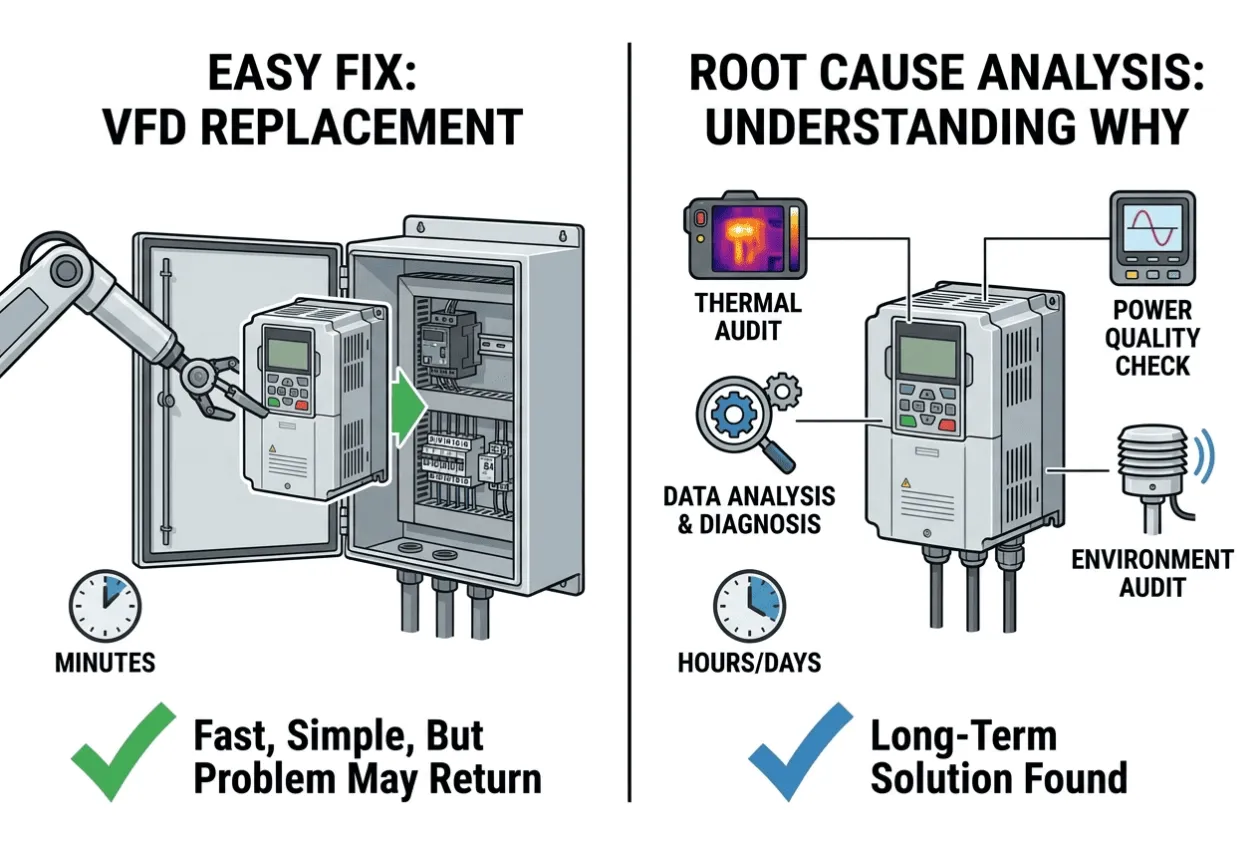
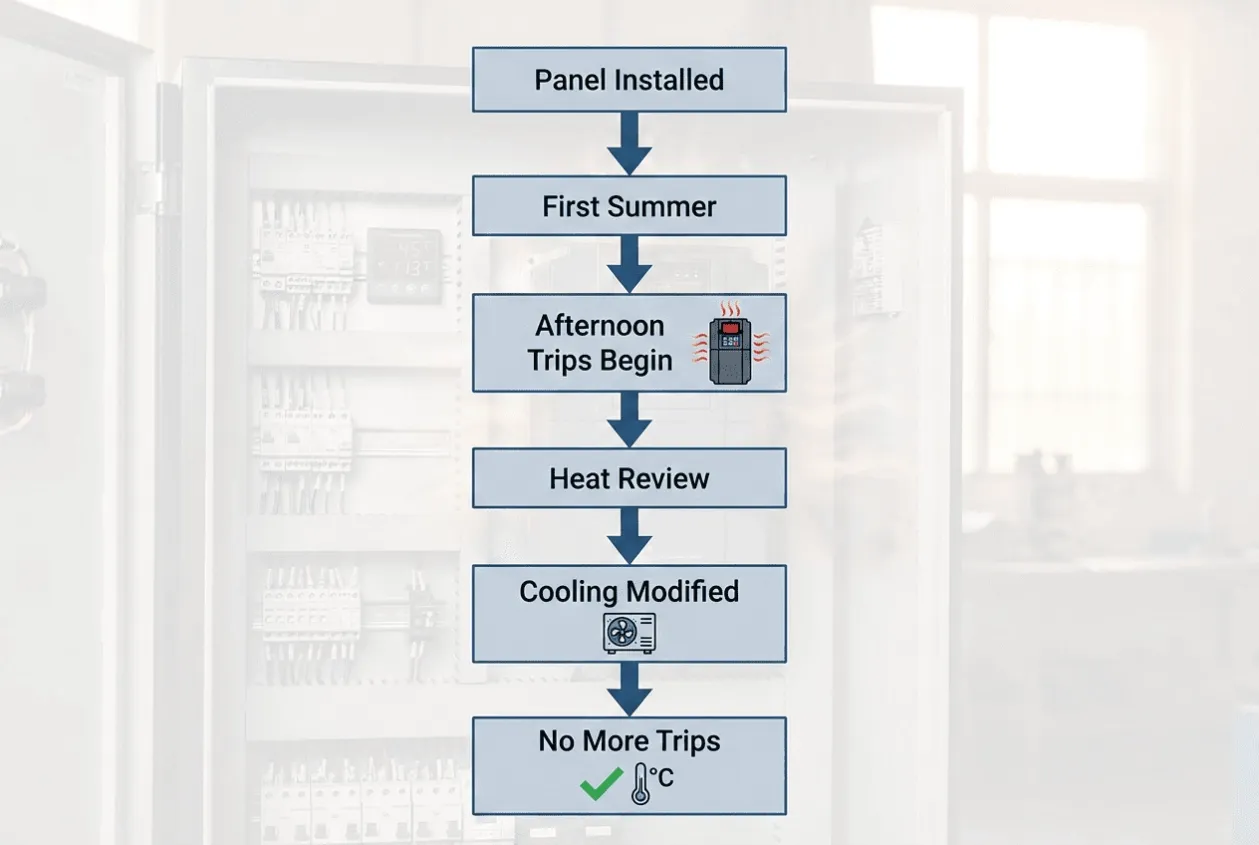
In the summer case I mentioned earlier, the final fix was not a larger drive. The supplier reviewed the internal heat, confirmed the afternoon ambient temperature, and added a properly sized closed-loop cooling solution. They also adjusted the internal airflow so the hot zone around the drive did not sit there all afternoon like bad news waiting to happen. After that, the trips stopped.
The VFD was not the first thing to fix. It was simply the first thing honest enough to complain about.
How UniRegal Reviews Thermal Design
That is also how we review enclosure projects at UniRegal. We normally look at enclosure size and thermal design together. If a supplier only confirms that the components fit, we keep asking about heat until the cooling assumption is clear.
For buyers sourcing from China, this is useful because two quotations can show the same cabinet dimensions while hiding very different decisions. One may include thermal review and closed-loop cooling. Another may rely on a fan because it is cheap and familiar. On a purchasing sheet, those two options can look close. In the field, they may behave very differently.
Two months later, the customer emailed again. Same panel, same production, and no more afternoon trips. That is usually the best kind of feedback after a thermal problem has been fixed.
Questions Buyers Often Ask Me
“How do I know if my electrical enclosure will overheat?”
Ask the supplier for the estimated internal heat loss, maximum ambient temperature, expected internal cabinet temperature, and cooling method. If they cannot explain those assumptions, the enclosure has not really been thermally reviewed.
“Can I just buy a bigger enclosure?”
Sometimes it helps, but it is not a complete answer. More space may improve airflow and slow the temperature rise, but if heat cannot leave the cabinet, the panel can still overheat.
“Can I use a fan in an IP65 or IP66 enclosure?”
A standard fan needs air openings, so it can affect the enclosure’s ingress protection. For sealed, outdoor, dusty, or washdown applications, a closed-loop air conditioner or heat exchanger is often safer.
“Why does my VFD trip only in summer afternoons?”
That usually means the panel is operating near its thermal limit. When the ambient temperature rises, the cabinet temperature can cross the VFD’s protection threshold.
“What should I send before requesting a quotation?”
Send the component list, VFD rating, transformer size, UPS details, maximum ambient temperature, enclosure location, IP or NEMA requirement, sun exposure, and whether the panel must remain sealed.
Final Thought
After enough projects, I have stopped asking only whether everything will fit. Now I also ask where the heat will go, because components do not care how much space they have; they care how hot that space becomes.
Related guides
Get a panel that stays cool.
Tell us the devices going inside—especially any VFDs and their ratings—and the environment the panel will sit in, and we will size the enclosure and cooling together so it does not overheat in the field. Start on our requirementspage, and we will return a matched enclosure and cooling proposal from Foshan-area suppliers with the component brands you use.
Need help specifying or sourcing this for your project? Request a quote - we reply within 1-2 working days with a technical review.