
Sep 12, 2026
Control Panel Buying Guide: How to Specify and Source an Automation Panel
How to buy a control panel—define scope, specify the controller and enclosure, compare quotes like-for-like, and choose a sourcing model that fits your volume, certification, and lead time.
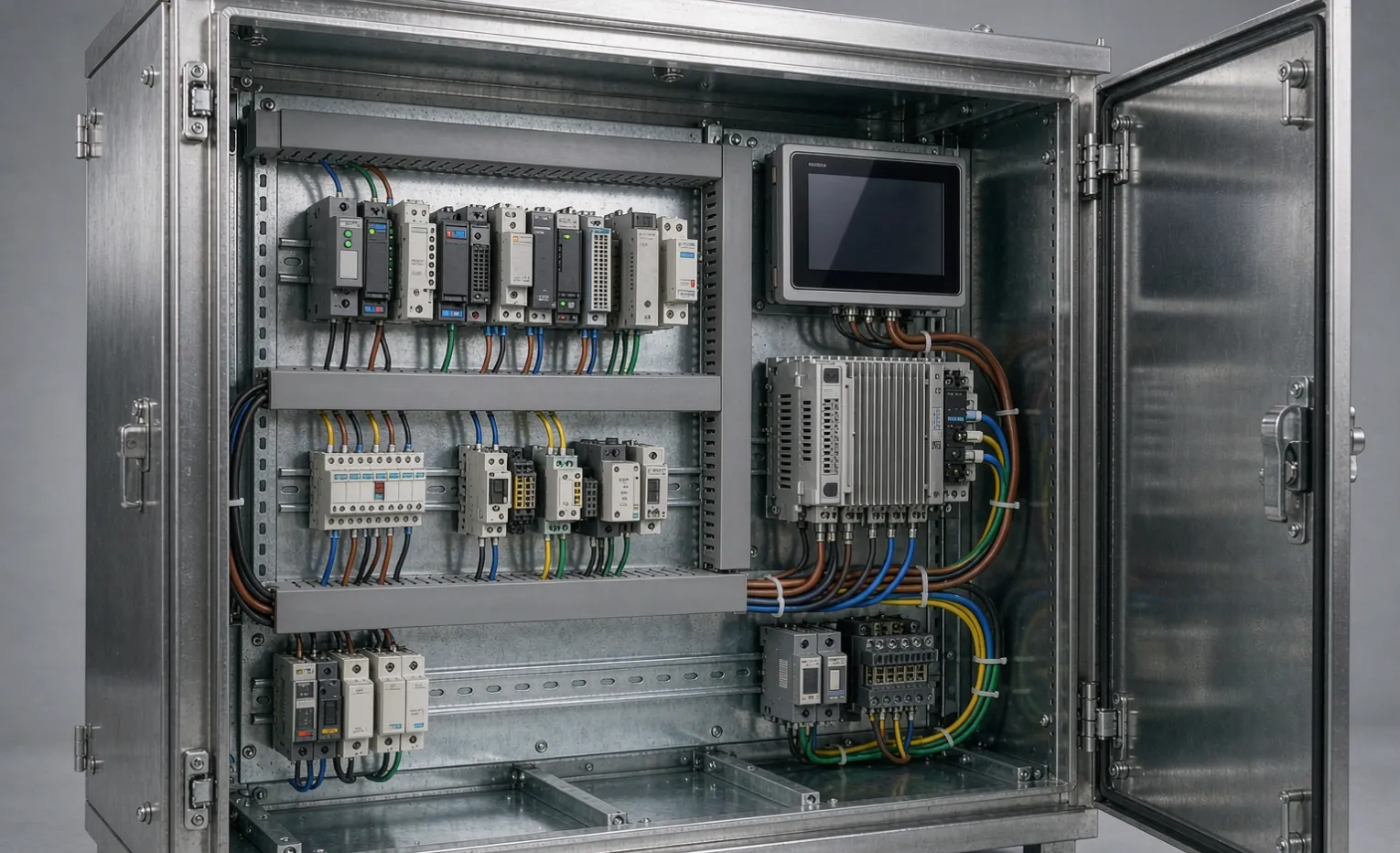
What you are actually buying
A control panel looks like one product, but it is three purchases stacked together: the enclosure, the components inside it, and the labour to lay them out, wire them, and test them. Most buyers who say "send me a panel quote" have only priced the third. The quote you get back varies by thousands of dollars depending on which of those three you hand to the supplier — and which you keep.
This guide walks through how to specify an automation control panel, the sourcing models available, and how to compare quotes so you are not picking the cheapest number for a different scope. If you already know your enclosure rating, our enclosure sourcing guide covers the box itself.
Buyer decision: Decide build-only versus turnkey before you ask for a quote. The answer changes every line item that follows.
Define the scope: build-only vs turnkey
There are two ways to buy a panel, and mixing them up is the number-one cause of bad comparisons.
- Build-only (fabricate and wire): You supply the components, the supplier builds the enclosure and wires to your drawing. You carry the sourcing risk and the brand matching.
- Turnkey: The supplier sources the components, builds, wires, and tests. You get one accountable party and one quote that includes the distribution parts.
We operate as a sourcing partner for custom control panels, which means turnkey is our default — but build-only is available if you already hold the components.
The specification checklist
A panel quote is only as good as the spec behind it. Cover these six areas.
1. Controller platform
Name the PLC and HMI brands you want: Mitsubishi, Siemens, ABB, Omron, Schneider, and others are all components we supply as a distributor, not brands we build. The platform decides the wiring conventions, the spare-part pool, and your team's familiarity. Pick it before the quote, not during commissioning.
2. Power and protection
State the supply voltage, the total load, and the protection devices (breakers, contactors, surge protection). This decides the busbar size and the enclosure volume. Underspecify it and the panel runs hot in year two.
3. Enclosure and environment
The box follows the site: carbon steel, galvanized, 304, or 316; IP65 or NEMA 4X. Outdoor and washdown panels default to NEMA 4X. Our top-10 control panel suppliers in China compares sourcing options if you are weighing where to buy.
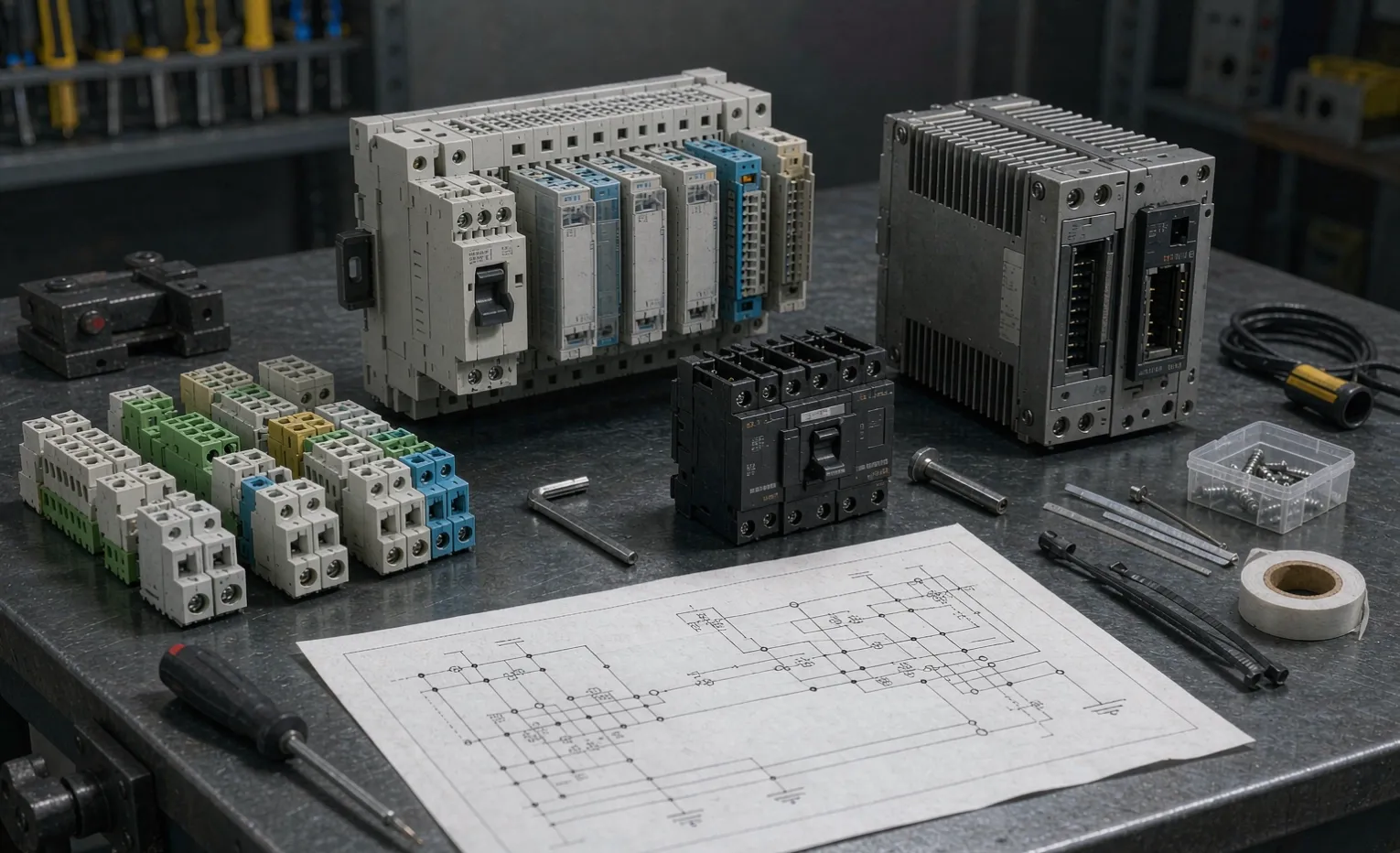
4. Cooling
Drives and power supplies shed real heat. Size cooling to the load — fan filter, heat exchanger, or air conditioner. Our enclosure cooling selection guide applies directly to panels. A sealed NEMA 4X box with no cooling plan is a warranty claim waiting to happen.
5. Certifications
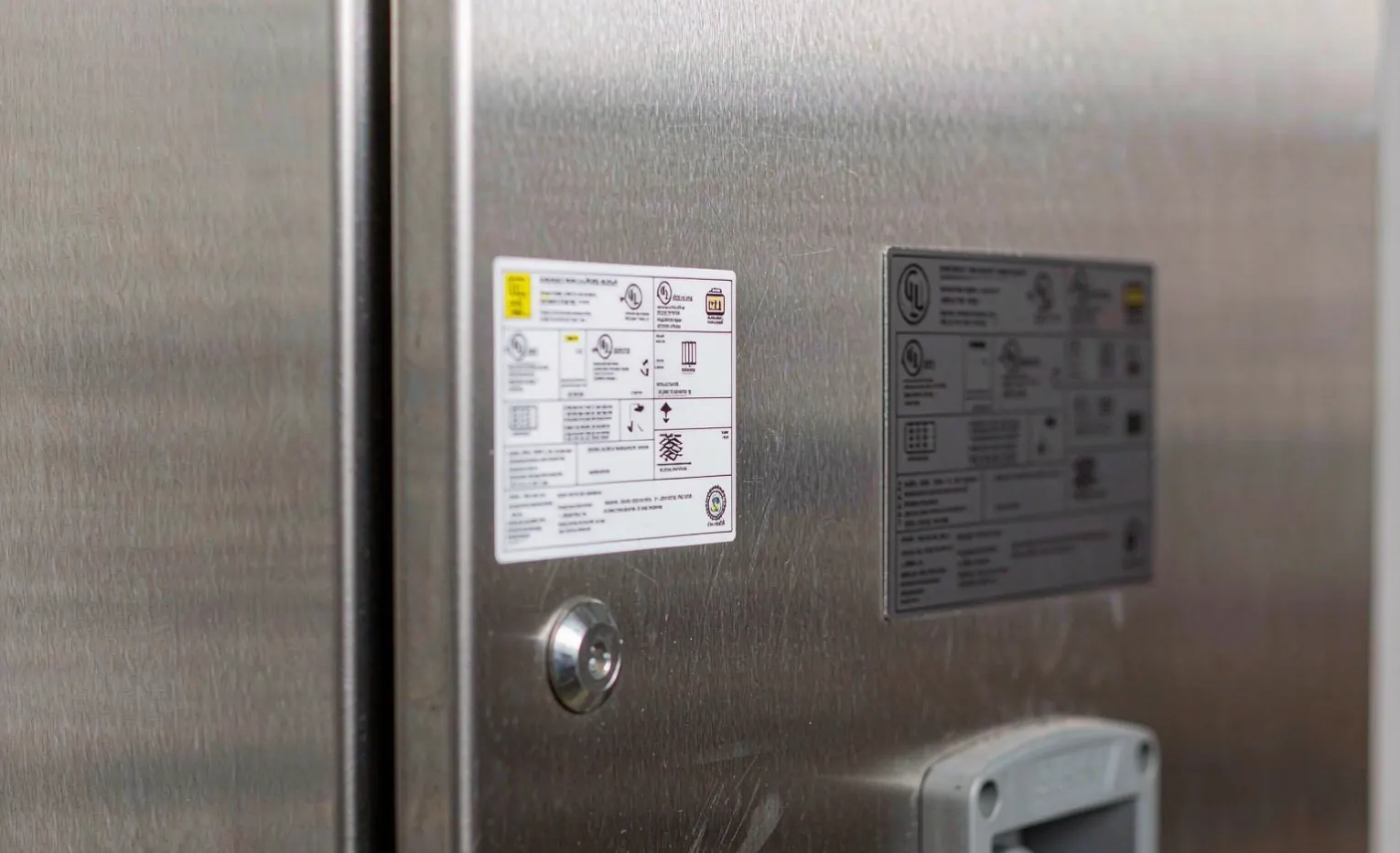
UL 508A is the panel standard buyers ask for most. We source UL-listed build shops per order, so name UL 508A up front. CE is the alternative for many export markets. Certifications are a per-project match, not a catalogue line — they belong in the RFQ, not the follow-up email. For the standard itself, see UL 508A on ul.com.
6. Documentation
Require as-built drawings, a bill of materials, and a factory test record (FAT). Our control panel documentation checklist lists what to demand before the panel ships. See also what a realistic build lead time looks like.
Sourcing models compared
Model | Who sources parts | Best for | Trade-off |
|---|---|---|---|
Distributor (parts only) | You | You have an integrator | You own integration risk |
Panel builder (build-only) | You | You hold components | Cheapest build labour |
Sourcing partner (turnkey) | Supplier | OEM / system integrator | One accountable quote |
OEM direct | Supplier | High volume, fixed design | Long lead, less flex |
Engineering note: For runs of five to a few hundred, a turnkey sourcing partner usually beats OEM-direct on lead time and beats build-only on accountability — you get one party for the whole panel.
How to compare quotes like-for-like
When three quotes come back at different prices, the gap is almost always scope, not margin. Before you pick, confirm all three include the same:
- The same component brands and grades.
- The same enclosure material and rating.
- The same cooling method.
- The same certification (UL 508A vs none).
- The same documentation package.
If quote B is 30% lower, it usually dropped the certification or substituted the enclosure material. Our PLC control panel specification guide gives a deeper checklist for PLC-centred panels.

Lead time and minimum order
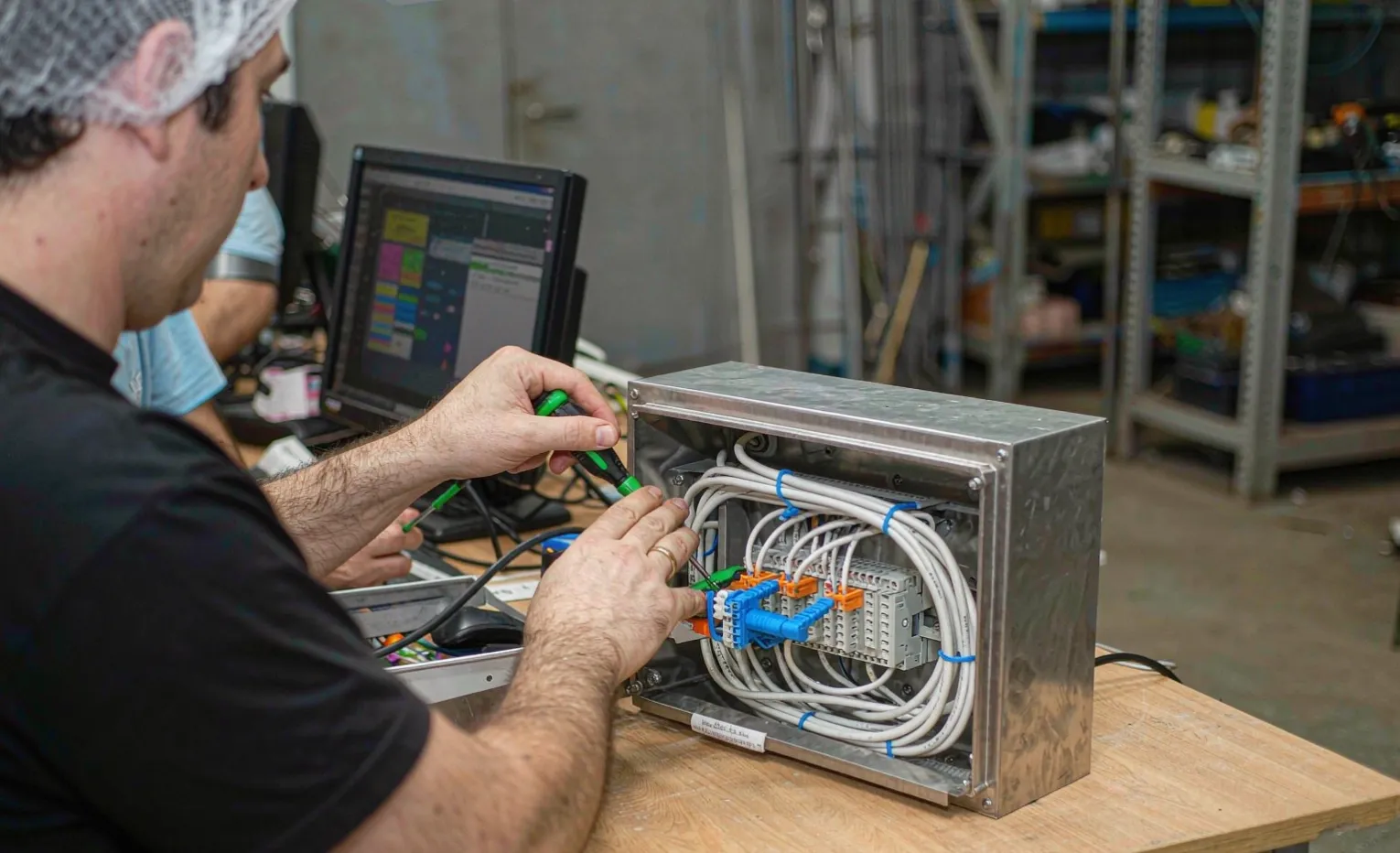
Panel builds run about 15 days from a locked spec. The components inside — PLC, drives, HMI — ship from our distribution stock in 3–5 days, so the build, not the parts, sets the schedule. Minimum order is five panels. Below that, the quote reflects one-off setup cost.
Mistakes that inflate panel cost
- No controller brand named. The supplier picks one — often not the one your team knows.
- CE assumed when UL is required. Re-certification after build is a full re-do.
- Cooling omitted. Retrofit cooling means cutting the door and re-testing.
- Documentation "later". Recreating as-built drawings after delivery costs more than specifying them up front.
- Comparing build-only against turnkey. Different scopes, not different prices.
What drives the panel price
A panel quote is five cost blocks added together. Reading them tells you whether a low number is a good deal or a missing line.
Components
The PLC, drives, HMI, and protection devices are the largest block for a typical automation panel. Brands set the price band — a Mitsubishi or Siemens PLC costs more than a no-name controller, but it also costs less to support. We supply the major brands as a distributor, so the quote lists them by name, not by "equivalent".
Enclosure
Carbon steel, galvanized, 304, or 316; IP65 or NEMA 4X. The box scales with size and rating, and a NEMA 4X stainless unit is the top of the range. The enclosure sourcing guide breaks down the material trade-off.
Cooling
A fan filter is cheap; a sealed heat exchanger mid; an air conditioner the most. Cooling is a line item you can size with our enclosure cooling selection guide.
Build labour
Layout, wiring, and testing scale with complexity and with how clean your drawing is. A marked-up schematic builds once; a blank request builds twice.
Certification and docs
UL 508A adds a per-project match to a listed build shop. As-built drawings and a FAT record are small line items that save large rework later.
Engineering note: If quote B is 30% lower, walk the five blocks. It almost always dropped certification, substituted the enclosure material, or omitted the docs — not the margin.
Build-only vs turnkey: the cost you do not see
Build-only looks cheaper because the fabrication line is lower. What it does not show is the cost you carry: sourcing the components, matching brands, and owning integration risk. For a one-off, that may be fine — you already hold the parts. For runs of five to a few hundred, turnkey usually wins on total cost, because one party prices the whole panel and one party answers when it does not power on. If you already hold the components and have an integrator on staff, build-only is the honest cheaper choice — the point is to pick with eyes open, not to assume one model is always lower.
Common panel types and what changes in the spec
Buyers rarely ask for "a panel" — they ask for a type, and each type shifts which field matters most.
PLC control panel
Centred on the controller and I/O. The spec lives or dies on the I/O count, the communication bus, and the spare capacity. Our PLC control panel specification guide walks the I/O and bus decisions in detail.
VFD / drive panel
Drives shed heat and generate electrical noise, so cooling and shielding dominate the spec. Undersize either and the panel trips or ages early. The enclosure rating matters less than the drive layout.
Motor control centre (MCC)
Multi-bay, multi-motor. The spec is about coordination and protection across bays, not a single controller. This is where UL 508A and the build shop's listing matter most.
HVAC / pump panel
Cyclic loads and external sensors. The spec leans on the enclosure rating and the seal more than on the controller, because the panel lives outdoors or in a plant with washdown.
Buyer decision: Name the panel type in the RFQ. It tells the supplier which five fields to confirm first, and it keeps the quote in the right scope.
The one line that prevents a bad quote
If you remember nothing else, remember this: a panel quote is only comparable when the scope is identical. Before you compare two numbers, confirm the brand, the box, the cooling, the certification, and the documents match. A lower number with a dropped line is not a saving — it is a change order waiting to happen at commissioning. Name the panel type, name the brand, name UL 508A, and let the supplier price the rest.
FAQ
Do I need to supply a full CAD drawing? No. A marked-up schematic and a component list are enough to quote. A CAD file speeds it up but is not required to start.
Can I use my own PLC and drives? Yes. Build-only is available — we fabricate the enclosure and wire to your drawing; your components integrate into the 15-day build.
What certification should I ask for? UL 508A for the North American market, CE for much of the rest. Name it in the RFQ so the build shop is matched per order.
What is the minimum order and lead time? Five panels minimum, about 15 days to build. Component supply adds 3–5 days from distribution stock.
Build-only or turnkey — which is cheaper? Build-only has the lower fabrication line, but you carry parts sourcing and integration risk. Turnkey prices the whole panel in one accountable quote and is usually lower total cost for runs of five to a few hundred.
How do I compare three panel quotes fairly? Line up brand, enclosure, cooling, certification, and documentation across all three. A lower number almost always means a dropped item, not a better margin.
Engineering takeaway
Buying a control panel is buying three things — enclosure, components, and build labour. Name the controller brand, the enclosure rating, the cooling, and the certification before you quote, and decide build-only versus turnkey so you compare like for like. For runs of five to a few hundred, a turnkey sourcing partner gives one accountable quote and a 15-day build against components that ship in 3–5 days. Upload your spec for an engineering review and you will see the gaps before they become change orders.
Related guides
Get a quote
Upload your panel spec for an engineering review. We return a like-for-like quote and a build schedule — turnkey or build-only, your call.