
Oct 22, 2026Buying Guides
Top 10 Control Panel Suppliers in China (2026): A Sourcing Partner's Shortlist
A practical shortlist of China control panel suppliers for 2026 — sourcing models, certifications, lead times, and red flags — from a sourcing partner
Quick Answer
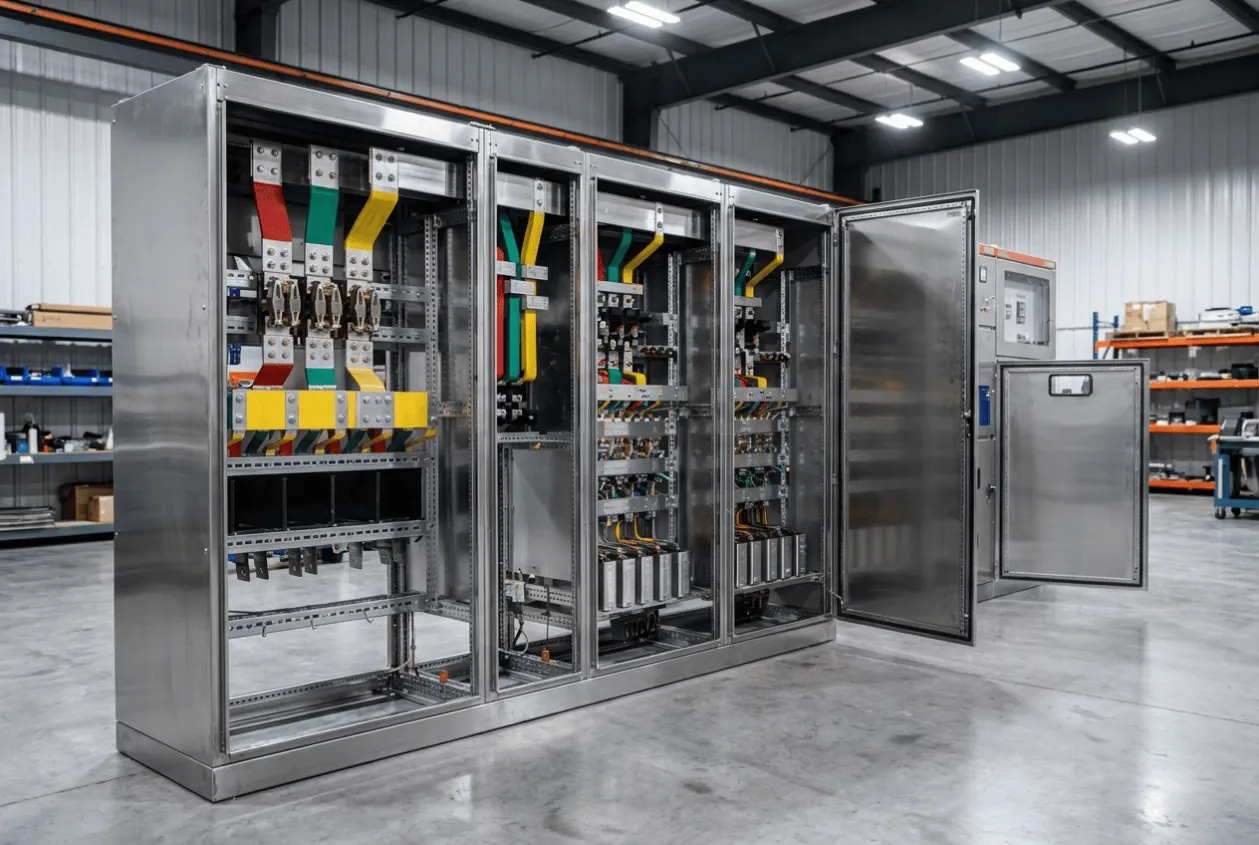
If you need a control panel supplier in China for export or domestic projects, the market splits into three groups: dedicated panel builders (strongest engineering, higher MOQ), enclosure-plus-panel houses (fastest one-stop turnaround), and sourcing partners (low MOQ, multi-shop comparison). The right choice depends on your drawing maturity, certification needs, and how much coordination you want to handle yourself.
Buyer Decision: Before you read the list, decide whether you need a build-to-print partner (you own the design) or a design-assist partner (you need schematic help). That single decision eliminates half the field.
How this list was built
We evaluated suppliers on what actually matters to industrial buyers:
- Certification scope: UL 508A, IEC 61439, CE, CCC, and whether the shop holds the listing or outsources it.
- Build model: Own shop vs. coordinated partner network vs. pure trading house.
- Export track record: North America, Southeast Asia, Middle East, and EU project references.
- MOQ and lead time: Realistic minimums and whether they match small-batch OEM needs.
- Component transparency: Do they use new, traceable PLCs, VFDs, breakers, and terminal blocks?
Disclosure: UniRegal is a sourcing partner and component supplier, not one of the ranked companies below. We source panels, enclosures, and automation parts from multiple Foshan and Guangdong partners.
Top 10 control panel suppliers in China
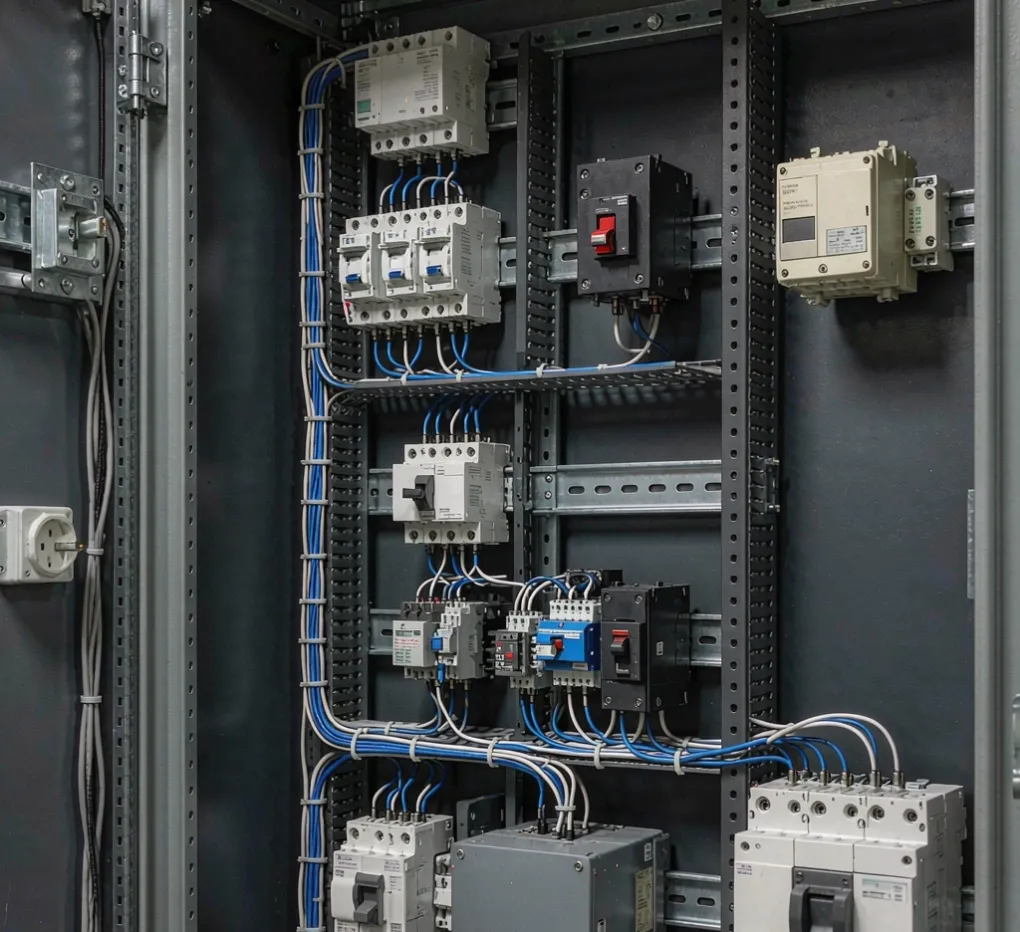
1. Huier Electrical (Qingdao)
A UL 508A-focused panel builder with strong visibility in North American export search.
- Strengths: Established UL listing, export documentation experience, industrial and commercial panels.
- Typical fit: Buyers who need a listed shop for U.S./Canada AHJ acceptance.
- Watch-out: Lead times and MOQ reflect a dedicated UL shop; less flexible for very small batches. Verify the listing at UL Product iQ before quoting.
2. E-Abel (Foshan)
Enclosure and panel builder with 27+ years in the market, covering UL, IEC, CE, and CCC.
- Strengths: One-stop from enclosure fabrication to complete panel assembly; multi-standard certifications.
- Typical fit: Projects that need the cabinet and the panel from one accountable source.
- Watch-out: Larger OEM/ODM commitments may be expected for design-assist work.
3. Wiringo (Asia-based OEM/ODM)
Quoted by sourcing guides as a cost-effective UL 508A builder for harsh and remote environments.
- Strengths: UL 508A + ISO 9001, manufacturability review, stainless NEMA 4X capability.
- Typical fit: Harsh-duty outdoor or coastal panels where corrosion resistance matters.
- Watch-out: Offshore production requires clear logistics and import-duty planning.
4. ABB Electrification (China operations)
Global brand with local manufacturing and system-partner integration for large infrastructure.
- Strengths: Deep component integration (breakers, drives, PLCs), global warranty, standards alignment.
- Typical fit: Large utilities, data centers, and process plants with ABB-specified architectures.
- Watch-out: Premium pricing; smaller OEMs may find the process slower than local builders.
5. Siemens Solution Partner panels (China)
Siemens-certified panel builders using Siemens components and TIA Portal engineering workflows.
- Strengths: Tight integration with Siemens PLC, HMI, and VFD families; consistent documentation.
- Typical fit: Machine builders and system integrators standardized on Siemens.
- Watch-out: Best value when the component stack is already Siemens; less flexible for mixed brands.
6. Chint / CHINT Electrics (Wenzhou/Yueqing)
Massive domestic brand with CCC-certified panels and broad distribution across China and emerging markets.
- Strengths: Cost-competitive, fast domestic delivery, extensive low-voltage component portfolio.
- Typical fit: Projects inside China, Africa, Southeast Asia, and South Asia where CCC/local acceptance matters.
- Watch-out: Export certification coverage (UL/IEC) varies by product line; verify per project.
7. Delixi Electric (China)
Schneider Electric-aligned brand with panel integration capability and strong commercial/industrial presence.
- Strengths: Schneider component access, nationwide service network, competitive lead time.
- Typical fit: Commercial buildings, factories, and infrastructure projects using Schneider-compatible design.
- Watch-out: Confirm whether the panel scope is built in-house or subcontracted regionally.
8. local Foshan panel build shops
Dozens of small-to-mid shops around Foshan build custom panels for export trading companies and regional OEMs.
- Strengths: High flexibility, low MOQ, fast quoting, willingness to work from rough drawings.
- Typical fit: Prototyping, small-batch OEM panels, and buyers who want a sourcing partner to coordinate multiple builds.
- Watch-out: Certification and quality consistency vary shop by shop; audit is essential.
9. Rittal China panel integration partners
Rittal supplies the enclosure; certified partners build the completed panel inside Rittal cabinets.
- Strengths: Premium enclosure quality, global spare-parts availability, clean thermal and cable management.
- Typical fit: High-spec panels where cabinet quality is as important as wiring.
- Watch-out: Enclosure cost is higher; best justified when IP/NEMA ratings and thermal design are critical.
10. Schneider Electric (China operations)
Schneider Electric runs multiple manufacturing sites and a certified panel-partner network across China, with local inventory for low-voltage distribution and industrial control components.
- Strengths: Broad component availability, established local service and logistics network, standardized documentation.
- Typical fit: Projects that already specify Schneider components or need a large vendor's supply and support footprint.
- Watch-out: Builds usually run through their partner channel rather than a single custom shop; small or mixed-brand panel scopes may fit a specialist better.
Beyond the Top 10: UniRegal (Foshan sourcing partner)
We coordinate control panel builds across vetted Foshan shops, with component sourcing for PLC, VFD, HMI, servo, and UPS.
- Strengths: Low MOQ from 5 panels, ~15-day lead for standard builds, multi-shop comparison, single point of contact, mixed-brand component stacks.
- Typical fit: Buyers who want a China-based partner to compare shops, manage components, and handle export packing.
- Watch-out: We are a sourcing partner, not a single build shop; we add value through coordination and component access.
Decision table: which supplier type fits your project?
Your priority | Best-fit supplier type | Why |
|---|---|---|
UL 508A listing for North America | Dedicated UL-listed shop | AHJs and insurers expect a current shop listing, not a one-off panel certificate. |
One-stop enclosure + panel | Enclosure-plus-panel house | Reduces hand-off risk between cabinet maker and panel builder. |
Low MOQ / prototype run | Sourcing partner + small Foshan shop | Smaller shops accept 5–10 unit runs; a partner vets them. |
Siemens-only component stack | Siemens-certified partner | Tight engineering and warranty alignment. |
Mixed-brand PLC/VFD/HMI | Independent builder or sourcing partner | Less lock-in, more flexibility on component brands. |
Harsh/coastal environment | UL 508A builder with NEMA 4X experience | Material and sealing choices matter as much as wiring. |
Red flags that should stop you
- No current listing number. If a supplier claims UL 508A, ask for the listing number and cross-check on UL Product iQ.
- No FAT procedure. A shop that cannot describe its FAT procedure is not ready for export work.
- Vague component sourcing. Refurbished or gray-market PLCs and breakers are common; demand traceability.
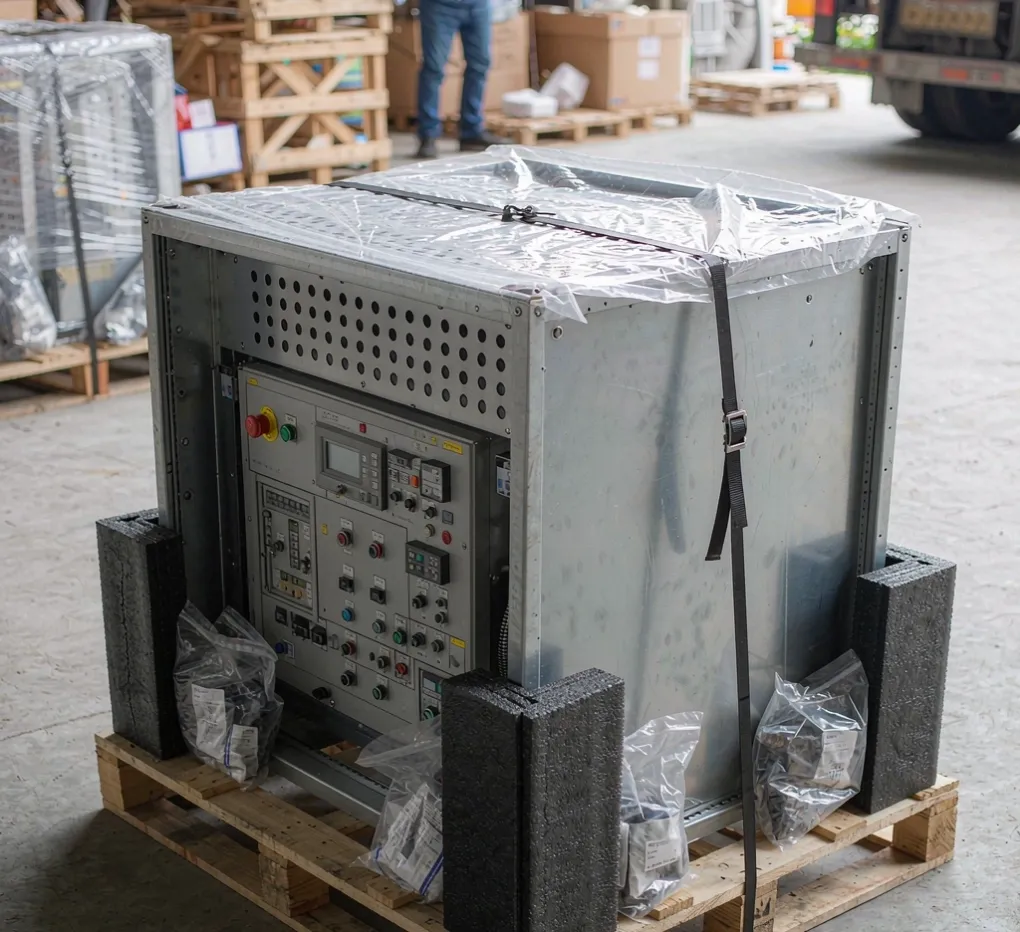
- Zero export packing experience. Panels shipped without desiccant, bracing, and terminal protection arrive damaged.
- No drawing revision control. If they cannot track your drawing rev, expect field surprises.
Certification map: which standard for which market?
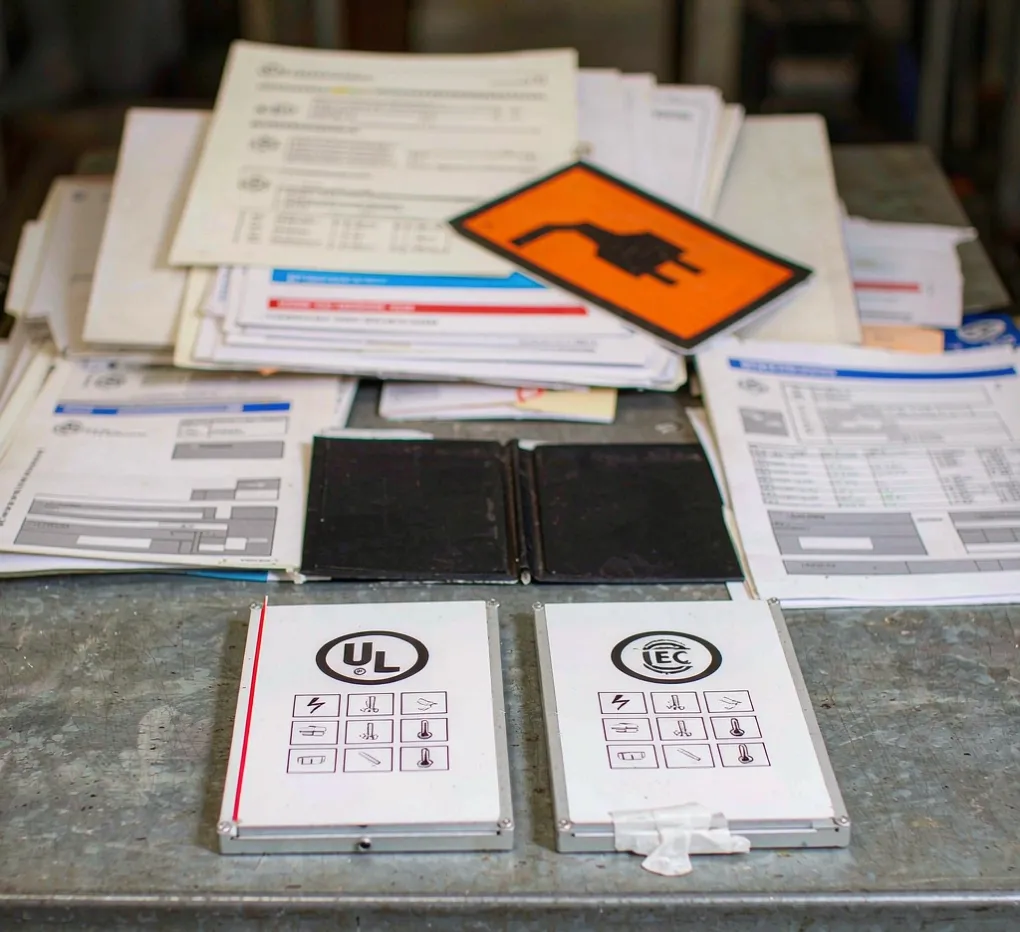
Target market | Required standard | What it proves |
|---|---|---|
United States / Canada | UL 508A | Industrial control panel safety and construction acceptability. |
European Union | IEC 61439 / EN 61439 | Low-voltage switchgear and controlgear assemblies. |
China domestic | CCC / GB 7251 | Mandatory for many low-voltage assemblies sold in China. |
Hazardous locations | UL 698A / ATEX / IECEx | Panels used in classified explosive atmospheres. |
Marine / offshore | IEC 60092 or BV/LR/DNV rules | Salt, vibration, and fire-resistance requirements. |
Always ask whether the supplier holds the certification itself or whether it subcontracts the listed build. A subcontracted listed build is valid, but the coordination and documentation must be explicit. IEC assembly standards are published by IEC and adopted as EN 61439 in Europe.

How to run a supplier qualification call
A 30-minute video call will tell you most of what you need to know. Ask:
- "What is your current certification scope and listing number?" — then verify it independently.
- "Walk me through your FAT process." — Listen for a documented sequence: visual inspection, continuity, insulation resistance, functional test, and packing check.
- "Who supplies the major components, and are they new and traceable?" — Gray-market components are a common source of field failure.
- "Show me a panel similar to mine that you shipped in the last six months." — Photos, test reports, and packing photos are fair to request.
- "What happens if a drawing revision arrives after production starts?" — Revision discipline separates professional shops from informal traders.
Engineering Note: We always request a shop tour or video walkthrough before routing a first order through a new partner. Layout cleanliness, wire storage, test-equipment calibration labels, and component inventory discipline are visible signs of process control.
Engineering Note: why MOQ and lead time move together
A shop with its own assembly line prefers longer runs because setup, wire prep, and testing amortize across more units. That is why dedicated builders often quote 20–50 panels for best pricing. A coordinated partner model can split a 5-panel order across a shop that specializes in small batches, then move repeat orders to a higher-volume shop once the design stabilizes.
Real business fact: We typically see control panel MOQ start at 5 units and standard lead time around 15 days after drawing approval, assuming components are in stock. Component lead time — especially for imported PLC or VFD modules — often drives the schedule more than the panel build itself.
Frequently asked questions
What is the difference between a UL-listed panel shop and a UL-certified panel? A UL-listed shop holds a UL 508A listing covering its manufacturing process. A certified panel only proves that single build. For export, prefer a listed shop or a sourcing partner who routes the build through one.
How do I verify a supplier's certifications? Ask for the listing or certificate number, then check it on the issuing body's database (UL Product iQ, IEC test reports, or CCC public query). Do not accept a PDF at face value.
What MOQ is realistic for a custom control panel in China? Build-to-print panels can start at 5 units with smaller shops or sourcing partners. Dedicated builders often prefer 20+ for competitive pricing.
Can I mix brands like Siemens PLC, ABB VFD, and Schneider breakers in one panel? Yes, but only if the builder has experience with mixed-brand integration and can supply proper communication and protection coordination. This is where independent builders or sourcing partners often outperform single-brand houses.
Should I visit the supplier before first order? For orders above $50,000 or safety-critical panels, yes. If travel is not practical, request a video shop tour, FAT witness, and third-party inspection report.
What drawings do I need to send for a quote? At minimum: single-line diagram, I/O list, panel layout, component schedule, and environmental requirements (IP/NEMA, temperature, humidity). The more complete the package, the more accurate the quote.
Pricing signals: when a quote is too good to be true
If one quote is 30% below the others, dig before you celebrate. Common explanations include:
- Refurbished or gray-market components: New PLCs and breakers have traceable serial numbers and original packaging.
- Omitted tests: A lower quote may skip FAT, insulation testing, or continuity checks.
- Thin enclosure or hardware: A panel rated for NEMA 4X needs proper gasket and hardware; substitutions matter.
- No export packing: Panels shipped loose in a container arrive with bent doors and missing parts.
A realistic quote includes materials, labor, testing, packing, and a defined drawing-approval cycle. Anything missing is a change order waiting to happen. We recommend requesting itemized quotes from at least three suppliers so you can compare scope rather than just headline price.
Engineering takeaway
The best supplier is not the biggest name — it is the one whose certification, MOQ, lead time, and component flexibility match your project. Start by confirming the certification scope, then ask how they handle FAT, component traceability, and export packing. If your project is small-batch or multi-brand, a sourcing partner often delivers more flexibility than a single large builder.
Related guides
Get a buildable quote
Upload your drawing and I/O list. We'll review panel feasibility, match the build to a vetted shop, and return a material-and-labor quote with lead time.
Need help specifying or sourcing this for your project? Request a quote - we reply within 1-2 working days with a technical review.