Oct 6, 2026Buying Guides
Custom Control Panel Documentation: The 6 Documents You Should Receive Before Shipment
Custom control panel documentation helps buyers avoid commissioning delays by confirming drawings, BOM, I/O list, FAT report, and manuals before shipment.
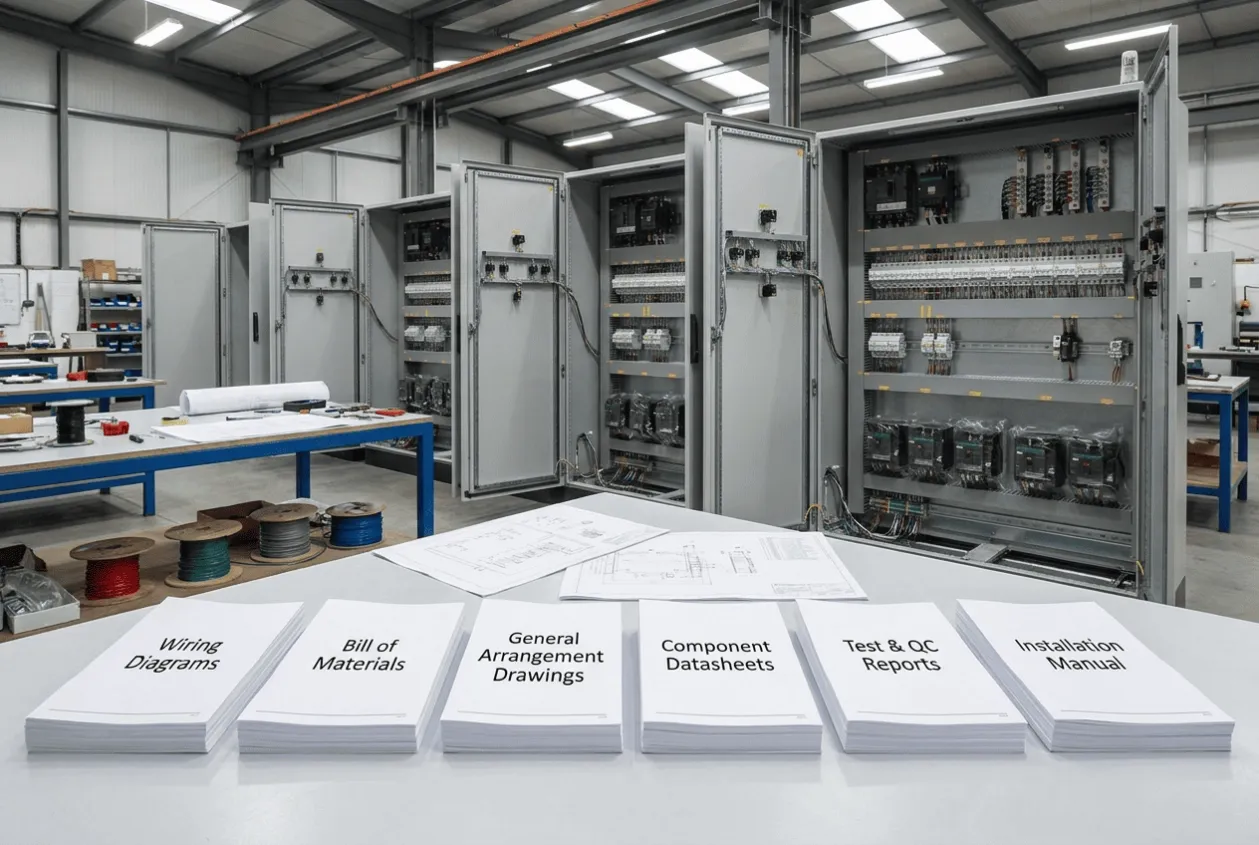
Custom Control Panel Documentation: The 6 Documents You Should Receive Before Shipment
A buyer once asked whether we could ship a finished control panel first and send the documents later.
I understood why he asked. The project was already late, the cabinet looked good in the workshop photos, and everyone wanted the freight booked before the weekend. From a purchasing point of view, holding shipment because of “paperwork” felt a little painful.
Then I asked him what the electricians would use when they opened the cabinet on site.
That changed the conversation.
A control panel does not arrive on site as a silent metal box. It arrives with questions:
- Where does this cable land?
- Which terminals are spare?
- Which PLC input belongs to this level switch?
- What changed after the last drawing revision?
- Was the bypass sequence tested or only wired?
If the documentation is missing or outdated, commissioning becomes a guessing game. And guessing is not cheap when the contractor is billing by the day.
The Mistake Buyers Often Make
Many buyers ask suppliers, “Do you provide drawings?”
Most suppliers will say yes, and they are not necessarily lying. The problem is that “drawings included” can mean very different things. It may mean a preliminary layout, an old schematic, a PDF with no editable source, or a drawing package that has not been updated after production changes.
The better question is, "Which documents will I receive before shipment, and will they match the actual panel?”
That last part matters more than buyers sometimes realize. A good-looking document package can still be useless if it belongs to an earlier version of the build.
The Six Documents I Want Before Shipment
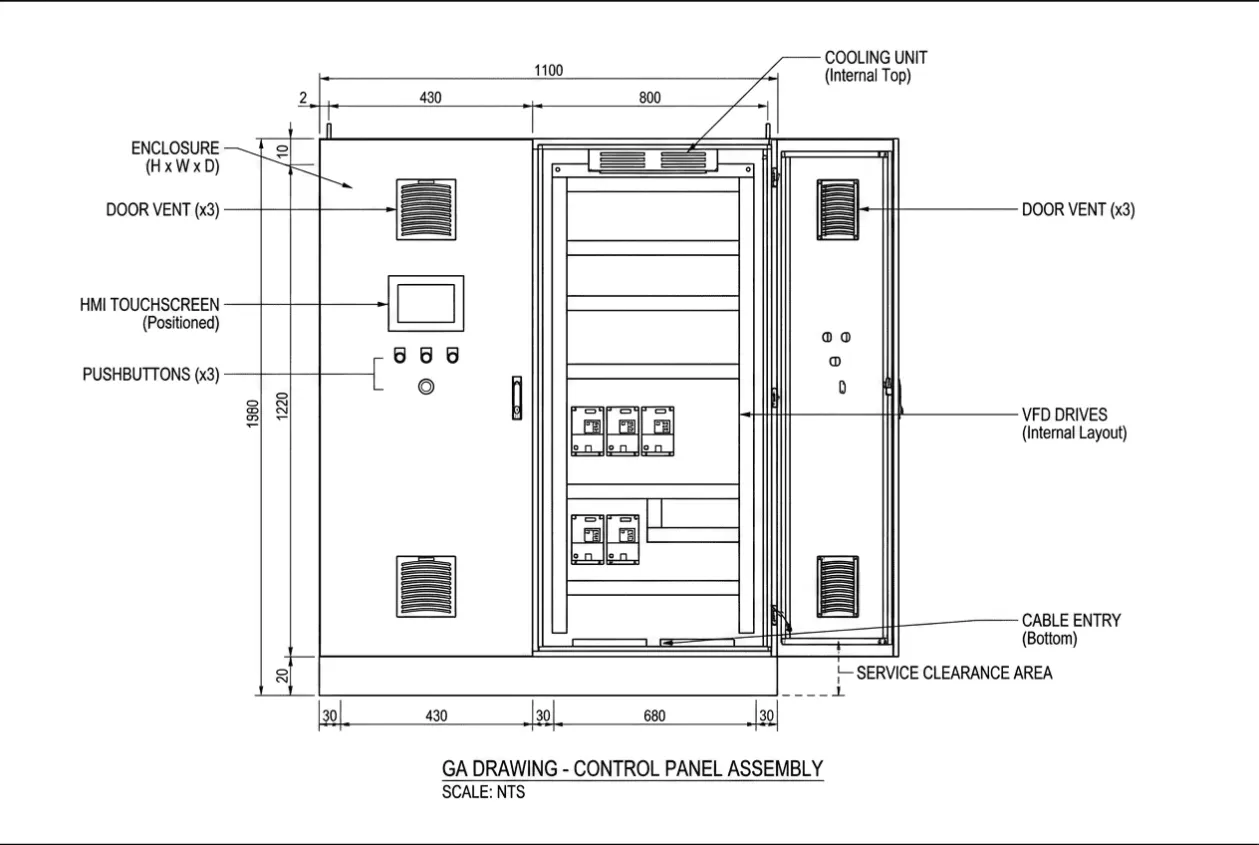
The GA drawing is the cheapest place to discover a mistake. Door cutouts, cable entry, HMI position, cooling layout, enclosure size, and service clearance are all much easier to correct before fabrication starts. Once the enclosure is cut, every change becomes slower, more awkward, and usually more expensive.
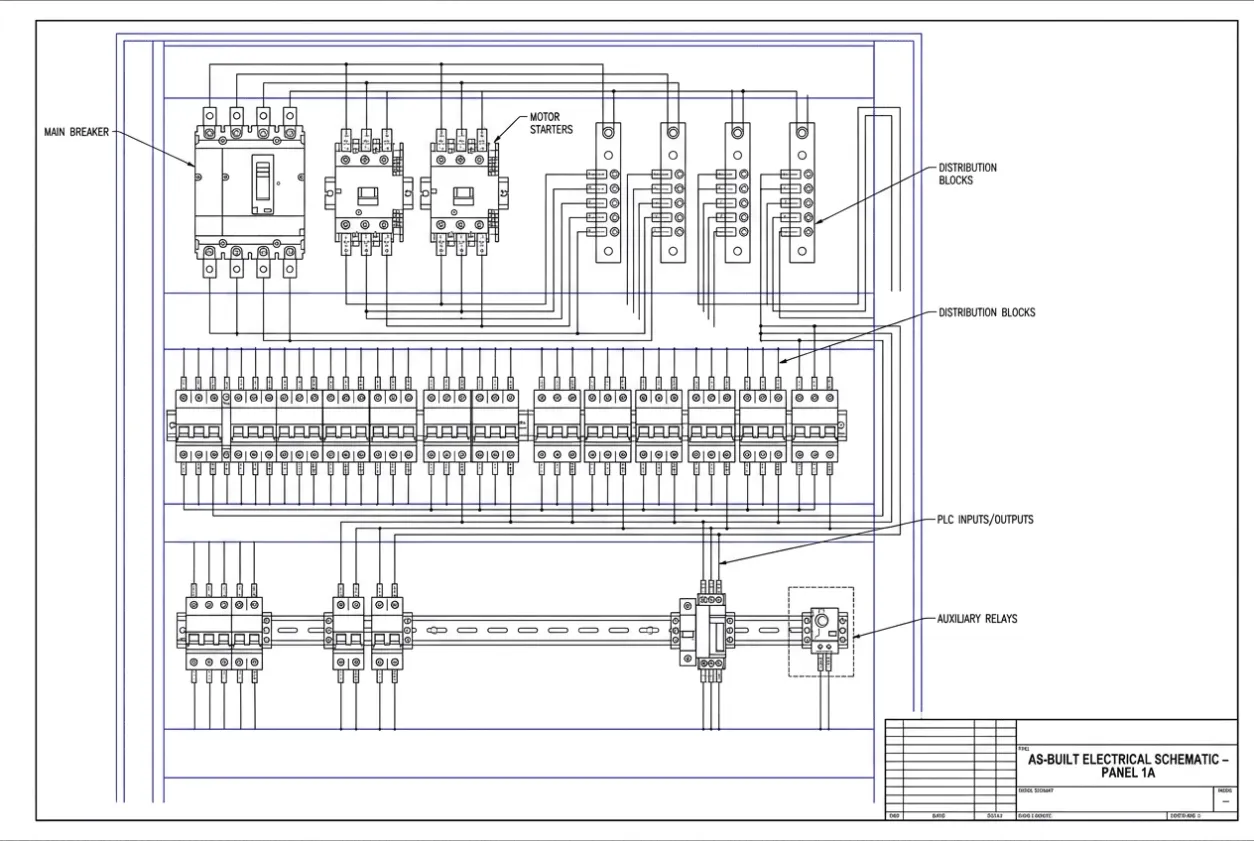
The electrical schematic is the document electricians trust most when the panel reaches site. If they only get one useful document, this is usually the one. It should show power distribution, control circuits, terminal numbers, wire numbers, device tags, and logic connections clearly enough that someone who did not build the panel can still troubleshoot it later.
The BOM is the document nobody opens during FAT, and everybody opens when something fails. A useful BOM lists the real brand, model number, rating, quantity, and approved substitutions. A BOM that only says “breaker” or “relay” is not a BOM; it is a clue left for someone else to solve later.
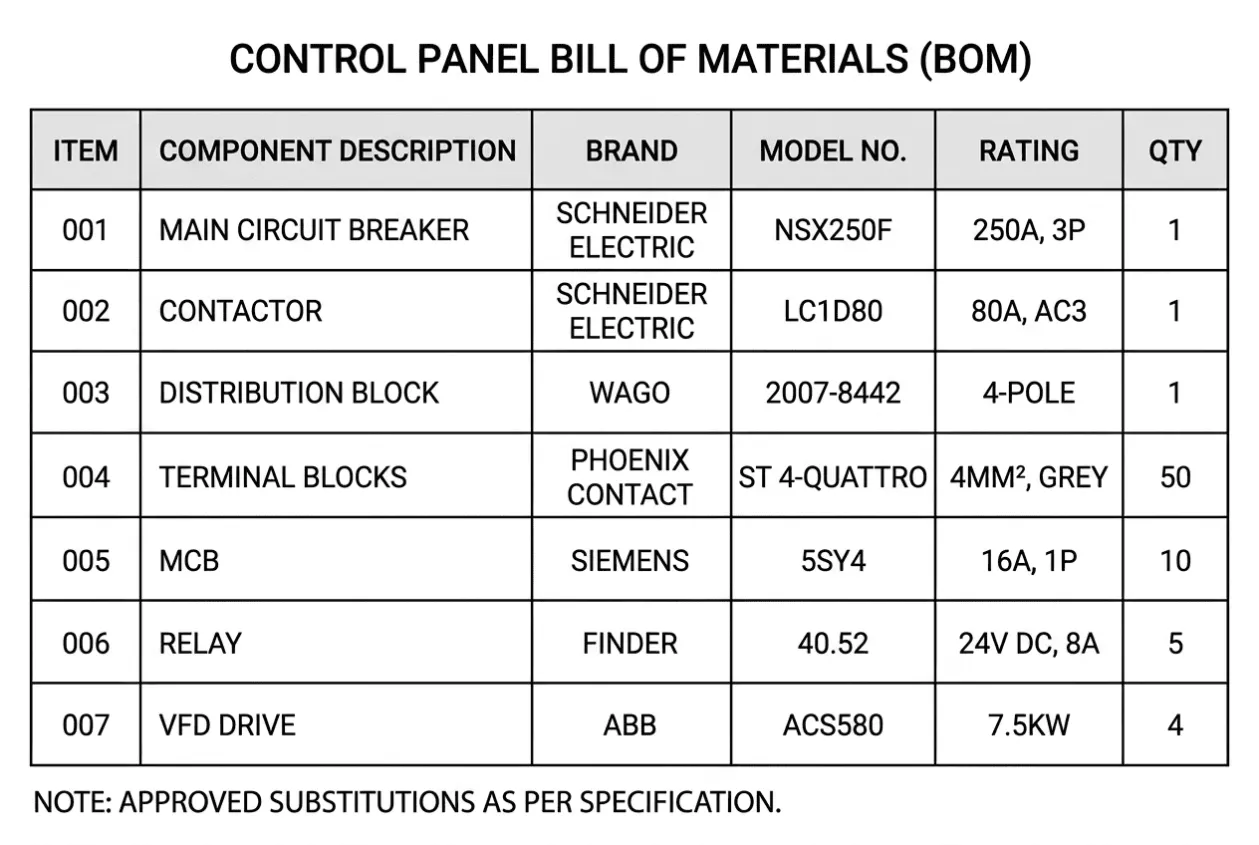
The I/O list is where PLC commissioning either speeds up or starts to wobble. It connects the field device, signal type, terminal number, and PLC address in one place. Electricians and programmers can both be doing their jobs correctly and still waste hours if this list is missing or wrong.
The FAT report should prove what was tested on the actual panel before shipment. A stamp saying “tested OK” may look comforting, but I prefer to see power-up checks, continuity, I/O simulation, HMI screens, alarms, communication, safety or interlock logic, and any deviations recorded against the project or serial number.
The O&M manual is for the person who gets the call after everyone else has left the project. It should explain operation, fault reset, safe isolation, maintenance points, consumables, spare parts, and practical troubleshooting. It does not need to be beautiful. It needs to be useful at 2 a.m.
The Drawing Was Right. The Panel Was Different.
One commissioning case still annoys me when I think about it.
The electrician spent almost three hours tracing a cable that was already shown clearly on the drawing. At first, everyone thought it was a site wiring mistake. Then someone checked the drawing title block more carefully.
The drawing belonged to Revision B.
The panel had been built to Revision D.
Nobody had updated the document package before shipment.
The electrician was not the problem. The drawing was not even “wrong” in the usual sense. It was simply no longer the drawing for that panel. That afternoon probably cost more than producing the correct as-built documentation in the first place.
This is why I do not like hearing “we will send the final documents later.” Later usually means after the site team has already needed them.
What Makes Me Nervous Before Shipment
Three things make me slow down before a panel leaves the workshop.
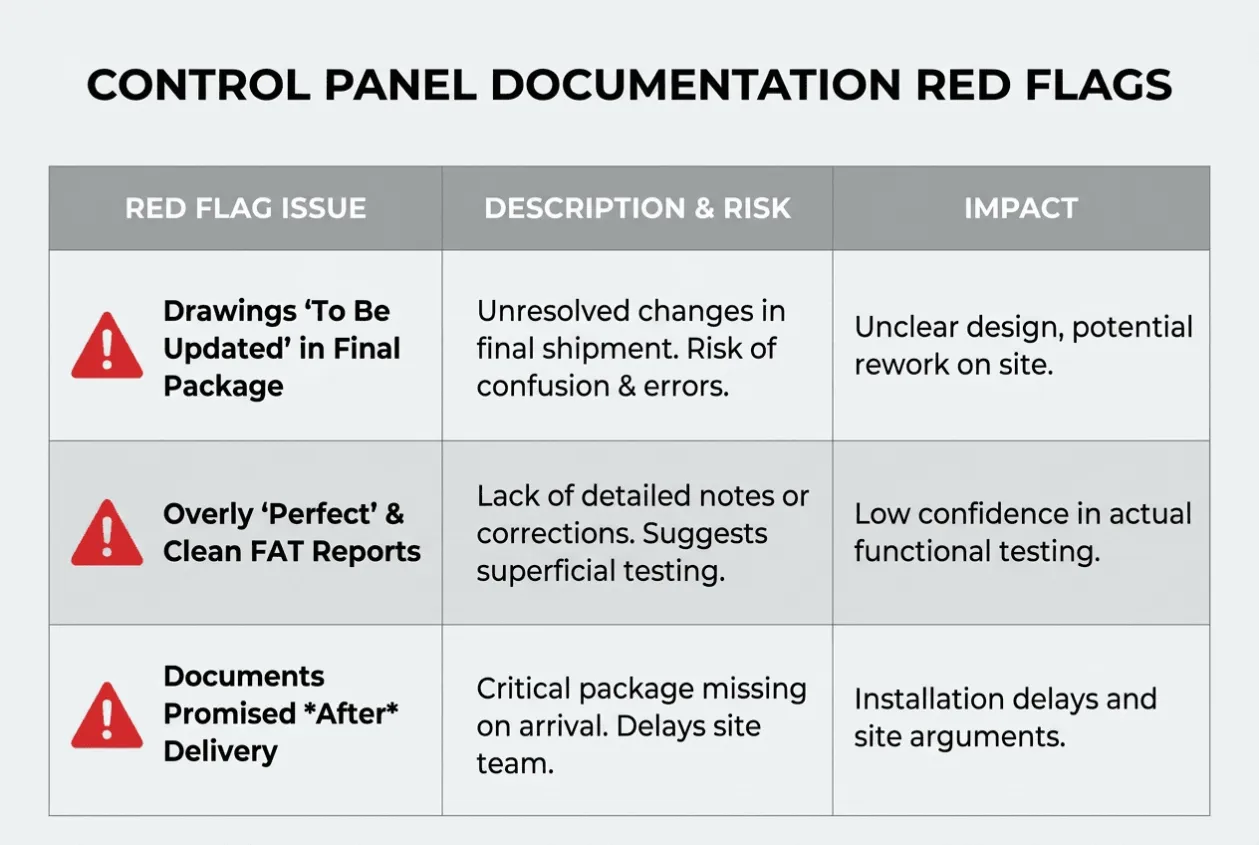
The first is any drawing marked “to be updated.” That may be acceptable during design review, but it should not be sitting in the final shipment package unless everyone understands what is still open.
The second is an FAT report that looks too clean. Real testing usually creates notes, small corrections, retests, or at least enough detail to prove someone actually checked the functions. A perfect one-page report with no substance does not give me much confidence.
The third is a supplier promising documents after delivery. Sometimes there is a reasonable reason, but for a custom control panel, the site team needs the package when the panel arrives, not after the first argument on site.
Before I Approve Shipment
Before shipment, I want the documentation checked against the real cabinet, not the first quotation or the first design idea. In a normal project, small changes happen during production. Components are substituted, terminals move, a spare I/O point is added, or a cable entry changes because the installation team finally confirms the route. None of that is a disaster if the final documents follow the final build.
Here is the buyer review I normally prefer:
Document | What I Check Before Shipment |
|---|---|
GA drawing | Does the layout match the final panel photos and installation needs? |
Electrical schematic | Do terminal numbers, wire numbers, and circuits match the cabinet? |
BOM | Are brands, models, ratings, quantities, and substitutions recorded? |
I/O list | Can the programmer and electrician commission without guessing? |
FAT report | Does it show what was tested on this specific panel? |
O&M manual | Can maintenance operate, reset, isolate, and service the panel safely? |
The buyer does not need to create these documents. The buyer needs to require them clearly in the RFQ and confirm them before shipment. That is a very different job.
A Simple RFQ Line That Helps
For a custom control panel inquiry, I suggest writing the documentation requirement directly into the RFQ or PO instead of discussing it casually by email.
A practical line could be:
“Supplier shall provide GA drawing, electrical schematic, BOM, I/O list, FAT report, and O&M manual before shipment. Final documents must match the as-built panel and be provided in PDF, with editable files where required.”
That one sentence makes quotations easier to compare. One supplier may include proper as-built documentation, while another may only include a basic drawing package. If both prices are placed side by side without checking documentation scope, the cheaper offer may not be cheaper for the site team.
How UniRegal Helps Buyers With This
When we quote custom control panels at UniRegal, we like to confirm the documentation scope before production starts. For PLC, HMI, VFD, pump, and automation panels, we normally discuss drawings, BOM, I/O list, test records, language, file format, and as-built updates as part of the deliverable.
This helps buyers compare the real package, not only the cabinet price. A panel with proper documents is easier to install, easier to inspect, easier to maintain, and easier to support when something changes later.
For an inquiry, send the panel function, control requirements, preferred components, wiring standard, project language, FAT expectation, and documentation format. We can include the document package clearly in the quotation so there is no “we thought that was extra” conversation later.
Questions Buyers Often Ask Me
“Do I need all six documents for every control panel?”
For a very simple local starter panel, the package can be lighter. For PLC, HMI, VFD, remote I/O, communication, safety, or process panels, I would not skip the core documents.
“When should I receive the GA drawing?”
Before fabrication starts. Layout, cutouts, cable entry, cooling position, and service access are much easier to adjust before the enclosure is produced.
“Should I ask for editable files?”
For many industrial projects, yes. PDF is useful for records, but editable drawings, BOMs, and I/O lists help with future changes, spare parts, and maintenance.
“What is the biggest documentation risk?”
The biggest risk is receiving documents that do not match the final panel. An outdated schematic can waste more time than no schematic because people trust it.
“What should I write in the RFQ?”
State clearly that the supplier must provide GA drawing, electrical schematic, BOM, I/O list, FAT report, and O&M manual before shipment, in the required language and file format.
Final Thought
A control panel without documentation may be finished for the factory. It is not finished for the customer.
The workshop finishes building the panel. The documentation is what allows the customer to start using it.
Related guides
Get panels that arrive with the right document scope,
Tell us your panel scope, and we will include the full documentation package—GA drawing for review before build, schematics, BOM, I/O list, factory test report, and O&M manual—sourced from Foshan-area suppliers with the component brands you use. Start on our requirements page, and we will return a coordinated proposal with lead time.
Need help specifying or sourcing this for your project? Request a quote - we reply within 1-2 working days with a technical review.