
Aug 14, 2026Buying Guides
Wall-Mount vs Floor-Standing Enclosure: Which Mounting Do You Need? | UniRegal
Wall-mount enclosures save floor space and suit small control panels; floor-standing (free-standing) enclosures hold larger assemblies, more heat, and heavier loads. Choose by space, size, and service
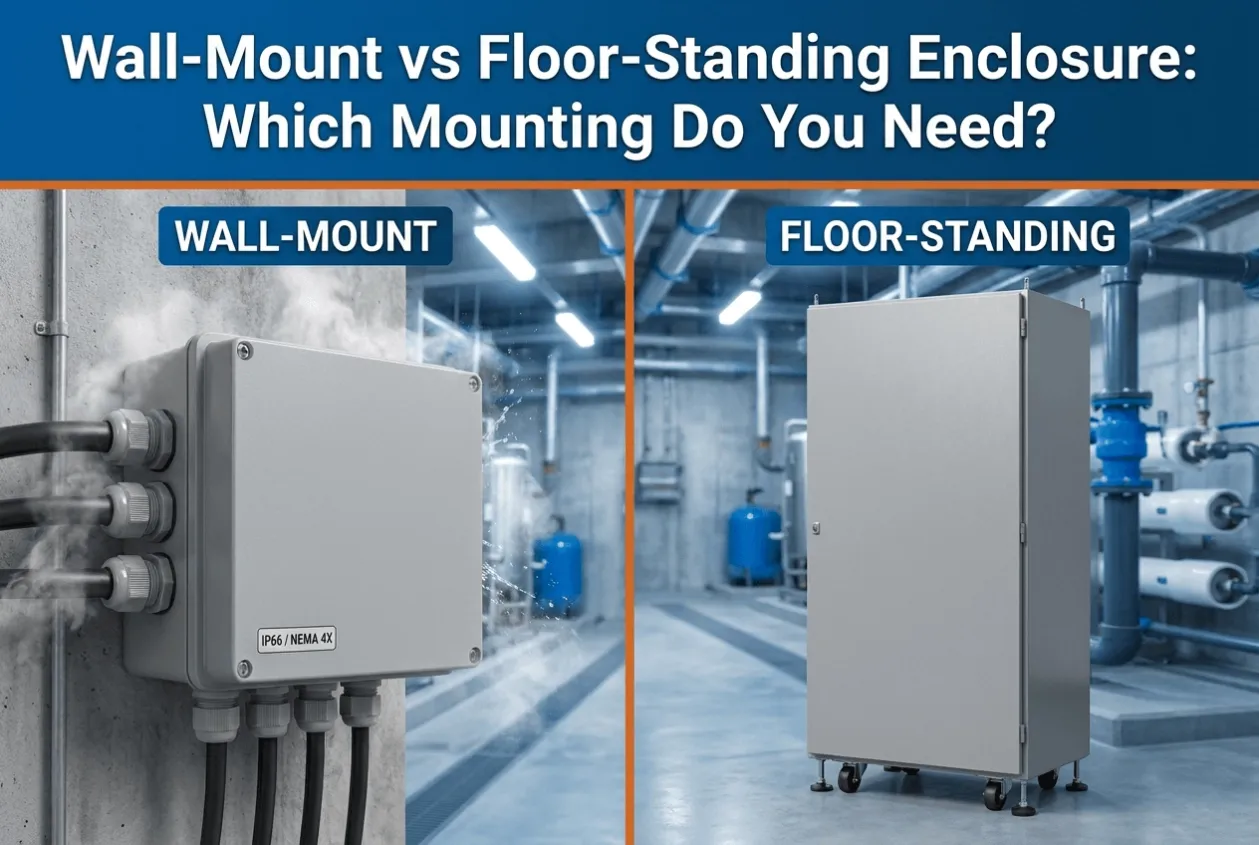
Wall-Mount vs Floor-Standing Enclosure: Which One Do You Need?
Choosing between a wall-mount enclosure and a floor-standing enclosure is mainly a question of how much equipment the panel must carry, how much heat it produces, where the cables enter, and how technicians will work on it after installation.
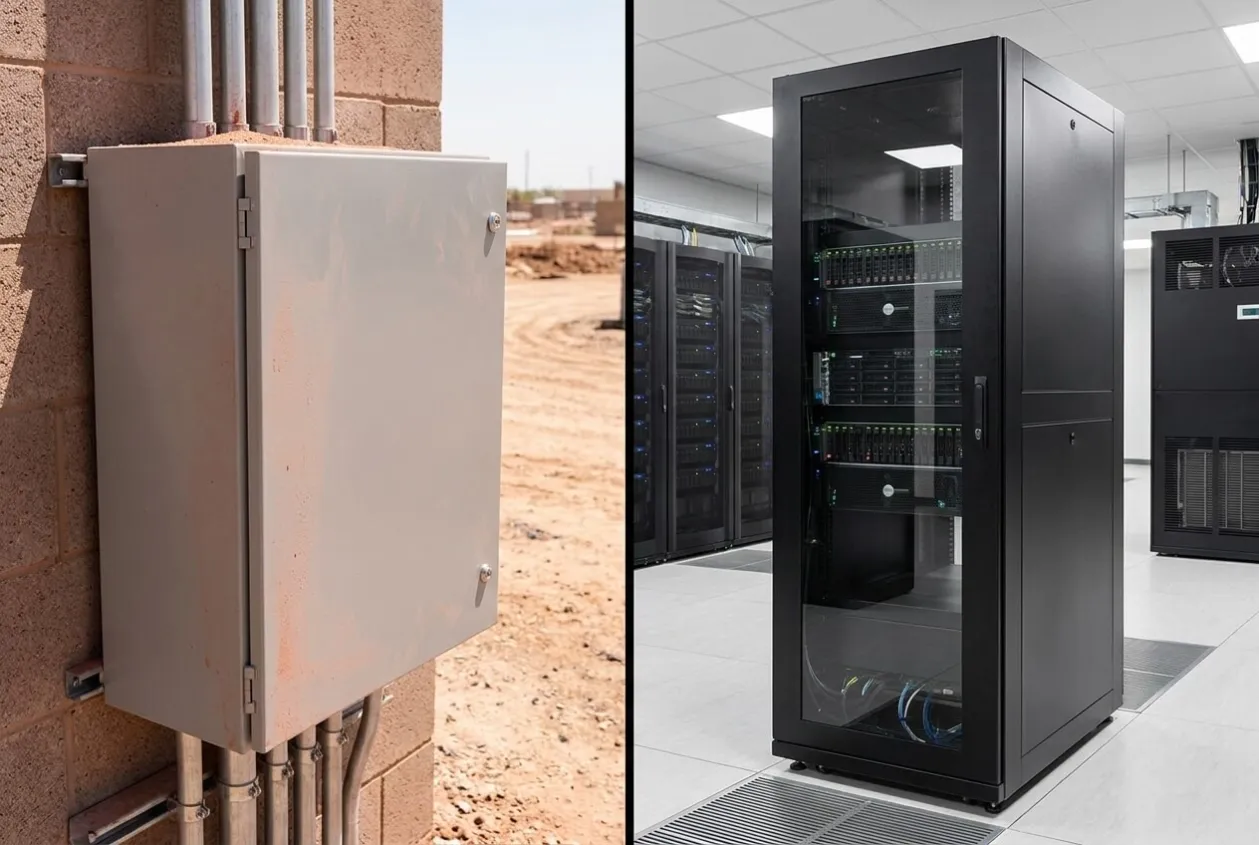
A wall-mount enclosure is usually the better choice for compact PLC, instrumentation, junction and small motor-control panels where weight is moderate and front access is sufficient.
A floor-standing enclosure becomes more practical when the assembly contains multiple VFDs, large power components, transformers, batteries or extensive terminal wiring, particularly when the panel needs more working space or easier maintenance access.
The useful question is not:
Can all of these components physically fit inside the box?
It is:
Can they fit with enough space for wiring, heat dissipation, installation and future maintenance?
That difference prevents a lot of undersized control panels.
Quick Decision Matrix
For most industrial projects, this matrix provides a good starting point.
Project Condition | Recommended Type | Why |
|---|---|---|
Small PLC / instrumentation panel | Wall-mount | Compact and economical |
Limited plant floor space | Wall-mount | Keeps equipment off the floor |
Light equipment with front access only | Wall-mount | Simple installation and maintenance |
Small machine control panel | Wall-mount | Easy to mount close to equipment |
Multiple VFDs or large power devices | Floor-standing | More space for heat management and cable routing |
Heavy transformers or batteries | Floor-standing | Weight is transferred to the floor rather than the wall |
Large MCC / process control assembly | Floor-standing | More usable mounting area and expansion capacity |
Large number of field cables | Floor-standing | Easier segregation and termination |
Frequent maintenance access | Floor-standing | More room to work inside the panel |
Future expansion expected | Floor-standing | Easier to reserve usable panel space |
The matrix is useful, but the final decision should be made from the installed equipment layout, not from cabinet dimensions alone.
When a Wall-Mount Enclosure Makes Sense
Wall-mount electrical enclosures work particularly well when the control system is relatively compact.
A typical panel may contain a PLC, power supply, relays, terminals, a small HMI and perhaps one small drive or motor starter. When the total installed weight remains reasonable and technicians only need access from the front, there is usually little reason to occupy valuable floor space with a larger cabinet.
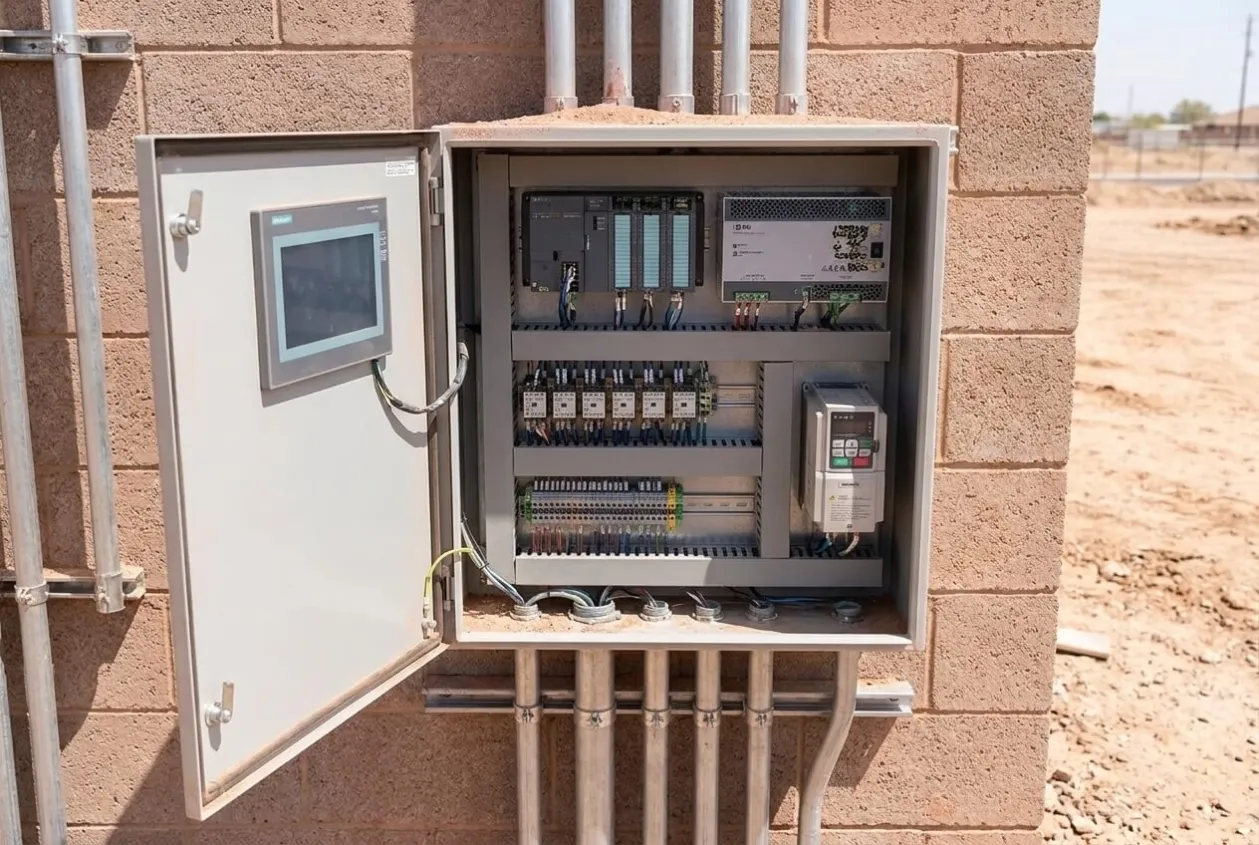
Wall-mount designs are commonly used for:
- PLC control panels
- Pump local control panels
- Instrumentation panels
- Junction boxes
- Small machine-control systems
- Remote I/O panels
- Network and communication boxes
The main limitation appears when a compact enclosure begins carrying more equipment than it was originally intended to handle.
A layout may look acceptable on CAD because every component fits on the mounting plate. Once wiring ducts, cable bending radius, terminals, grounding, heat-producing devices and service clearance are added, the enclosure becomes difficult to build and even harder to maintain.
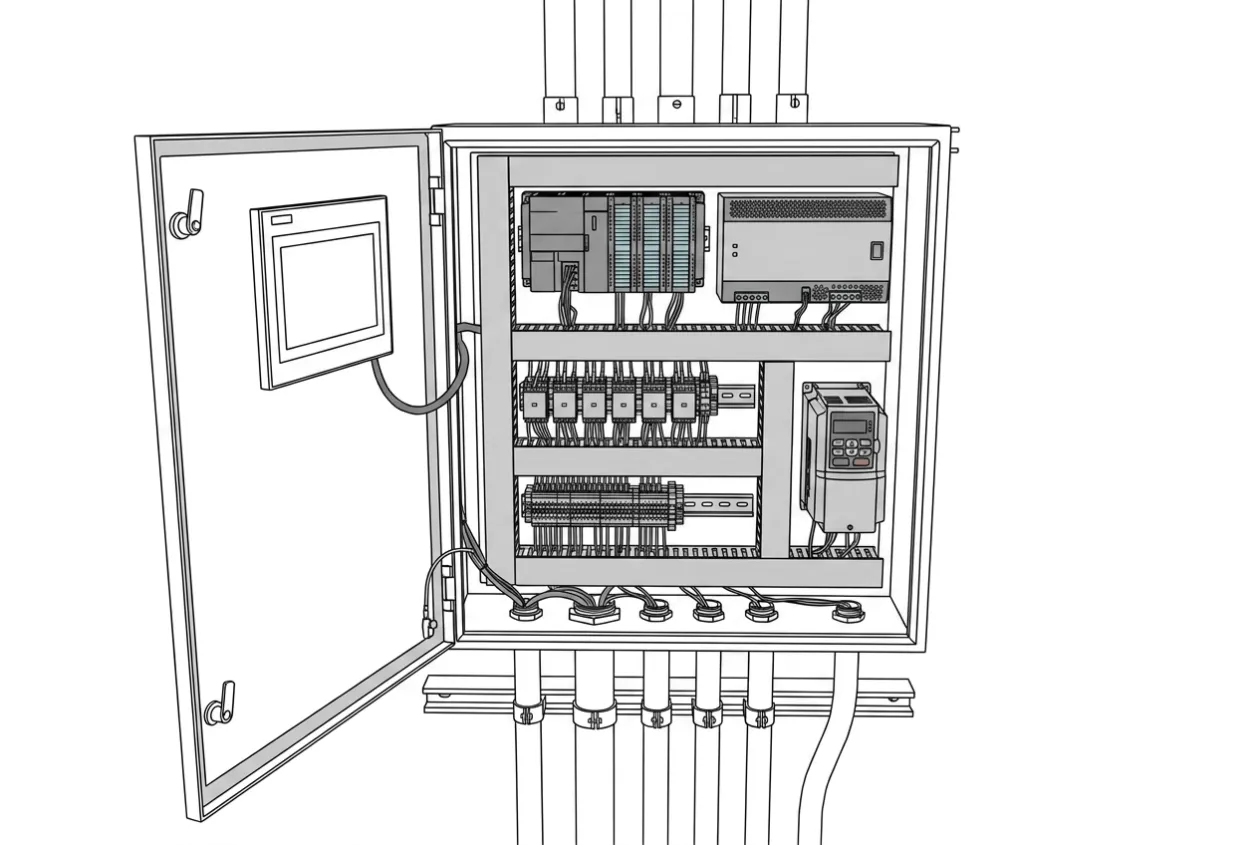
This is where buyers should be careful about approving the smallest possible box simply because it reduces enclosure cost.
A slightly larger wall enclosure is often better than a tightly packed one.
When Floor-Standing Becomes the Better Choice
Floor-standing enclosures are normally selected when the panel becomes too large, heavy or thermally demanding for a practical wall installation.
The obvious examples are cabinets containing several VFDs, large contactors, transformers, power supplies, UPS systems or extensive power-distribution equipment.
But weight is only part of the decision.
A floor-standing cabinet also gives the panel builder more freedom to separate power and control wiring, create vertical cable routes, reserve space for future additions and maintain reasonable distances around heat-producing equipment.
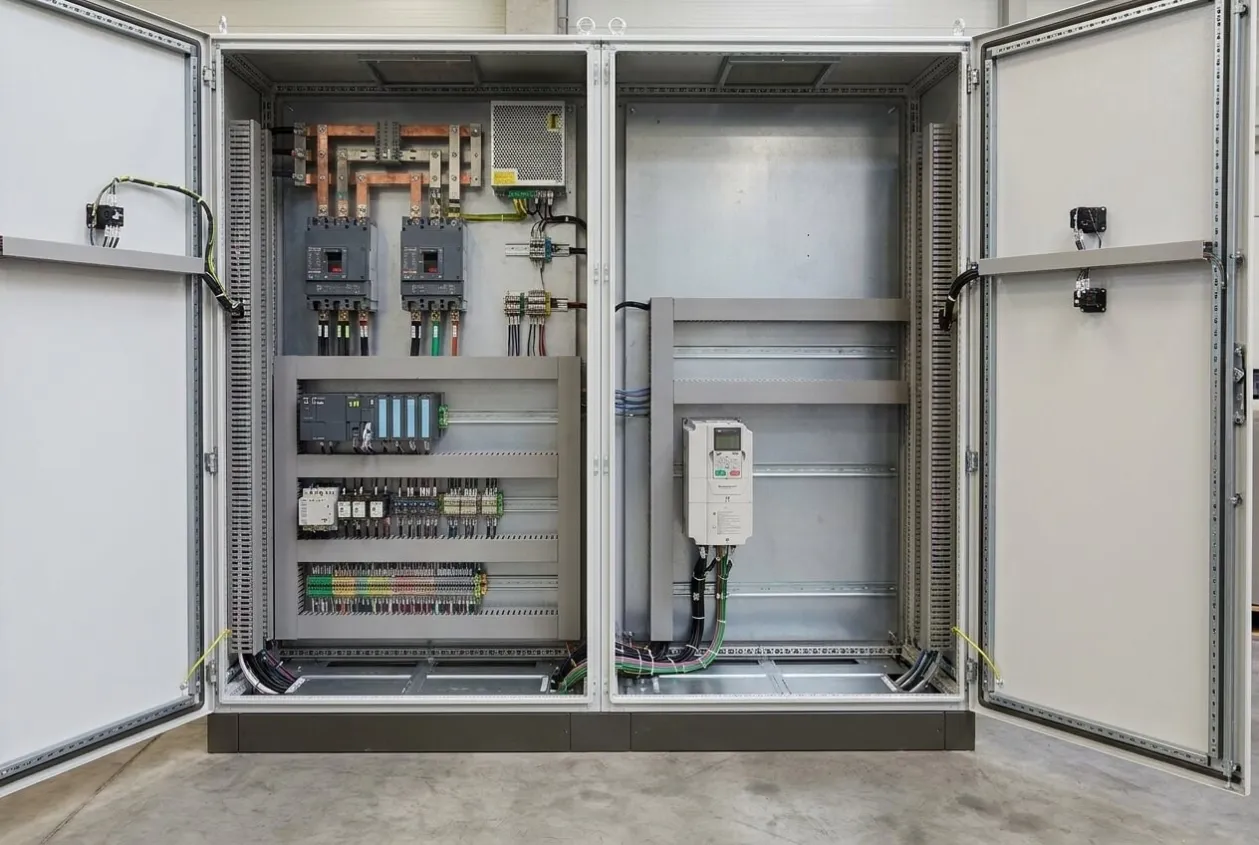
That matters during commissioning.
A tightly packed wall enclosure may be perfectly functional when it leaves the workshop, yet every later wiring change becomes difficult because terminals, cable ducts and devices are already occupying nearly all available space.
With a larger floor-standing design, the cabinet can be arranged around how technicians will actually install and maintain it.
For a project expected to operate for ten or fifteen years, that working space has real value.
Do Not Choose From Cabinet Size Alone
One of the most common mistakes is comparing enclosure dimensions without reviewing the internal layout.
For example, a buyer might ask whether an 800 × 600 × 300 mm wall box is sufficient.
There is no reliable answer until we know what will be installed inside.
A panel containing a PLC, several relays and terminal blocks may fit comfortably.
The same enclosure containing two VFDs, a transformer, circuit breakers and thirty field cables may be technically possible but poor engineering.
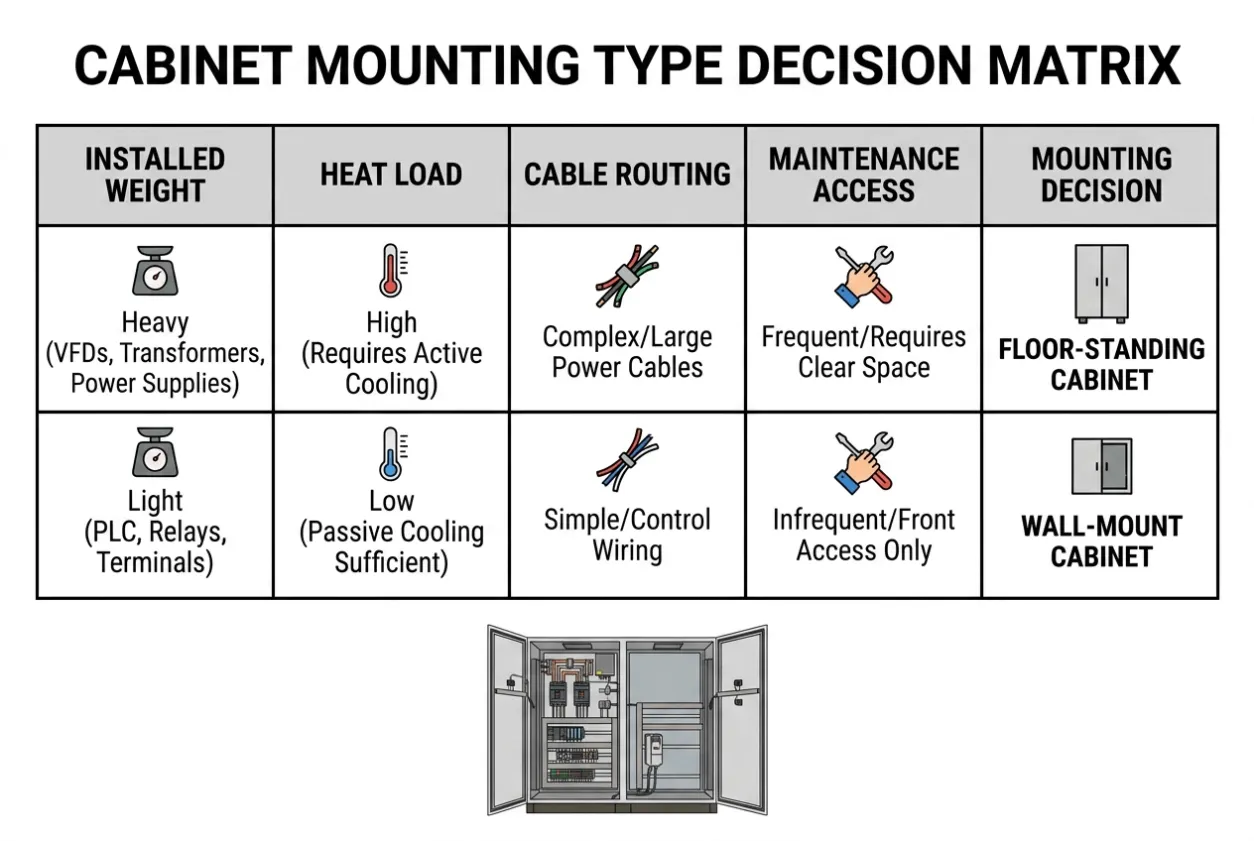
Before selecting the mounting type, review four things together:
Installed weight. Heavy components can make wall mounting impractical even when they physically fit.
Heat load. VFDs, transformers and power supplies generate heat that must leave the enclosure without pushing internal temperatures beyond component limits.
Cable routing. Large power cables need bending space and should not be forced through crowded control wiring.
Maintenance access. Technicians need enough room to test terminals, replace devices and trace wiring without dismantling unrelated equipment.
These four factors usually make the mounting decision clearer than enclosure dimensions alone.
What About VFDs?
A wall-mount enclosure can contain a VFD.
The presence of a drive does not automatically mean the panel must become floor-standing.
The real issue is the total heat load and available installation space.
A small drive used in a simple pump panel may fit comfortably inside a wall enclosure if the cabinet dimensions and thermal design are adequate.
Several drives are different.
Once multiple VFDs are installed together, the cabinet needs more room around the drives, larger cable routes and a more deliberate thermal-management strategy. At that point, a floor-standing enclosure often becomes easier to engineer and maintain.
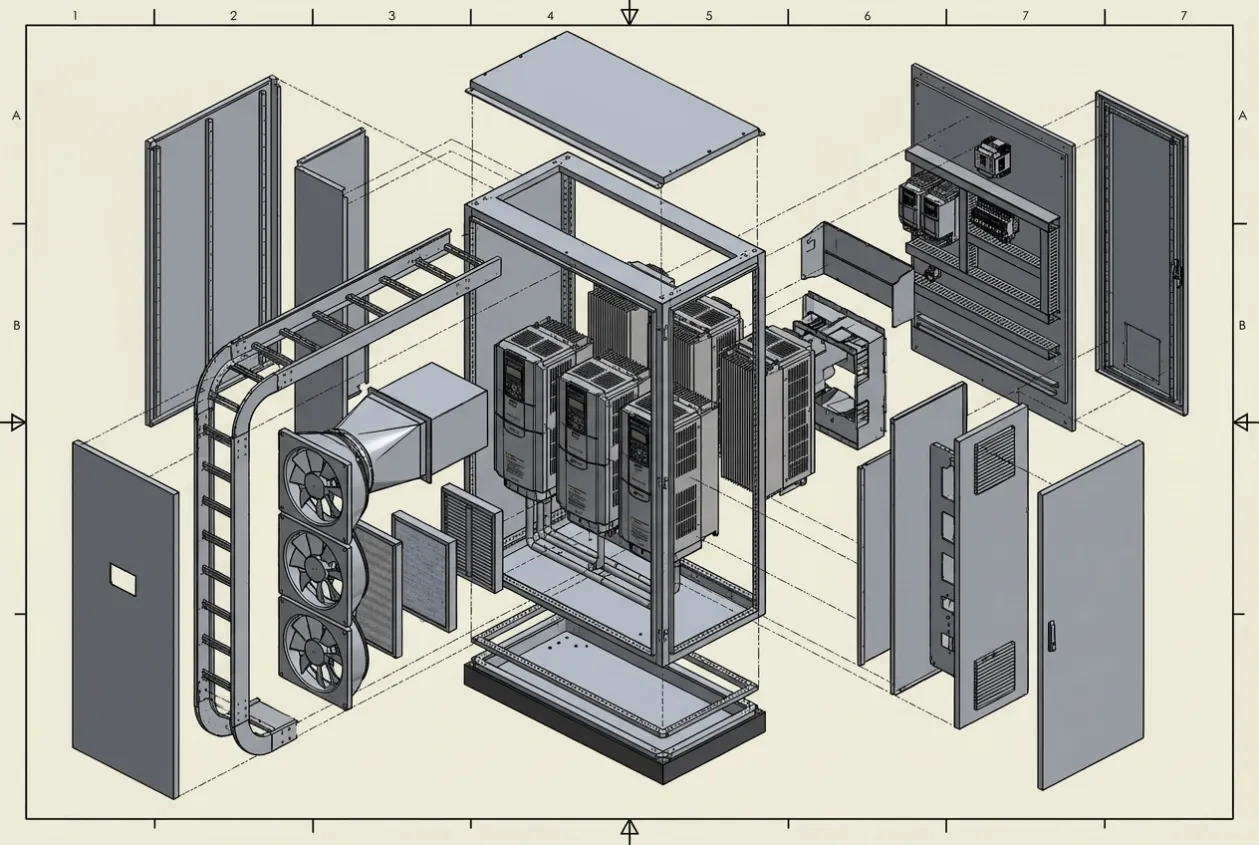
The correct decision should come from the equipment heat losses and permitted internal temperature rather than from a rule such as “VFD = fan” or “VFD = floor cabinet.”
In an outdoor IP66 enclosure, for example, adding an ordinary ventilation fan may compromise the environmental protection that the buyer originally specified. Thermal management needs to be considered as part of the complete enclosure design.
Example: Pump Control Panel That Outgrew the Wall
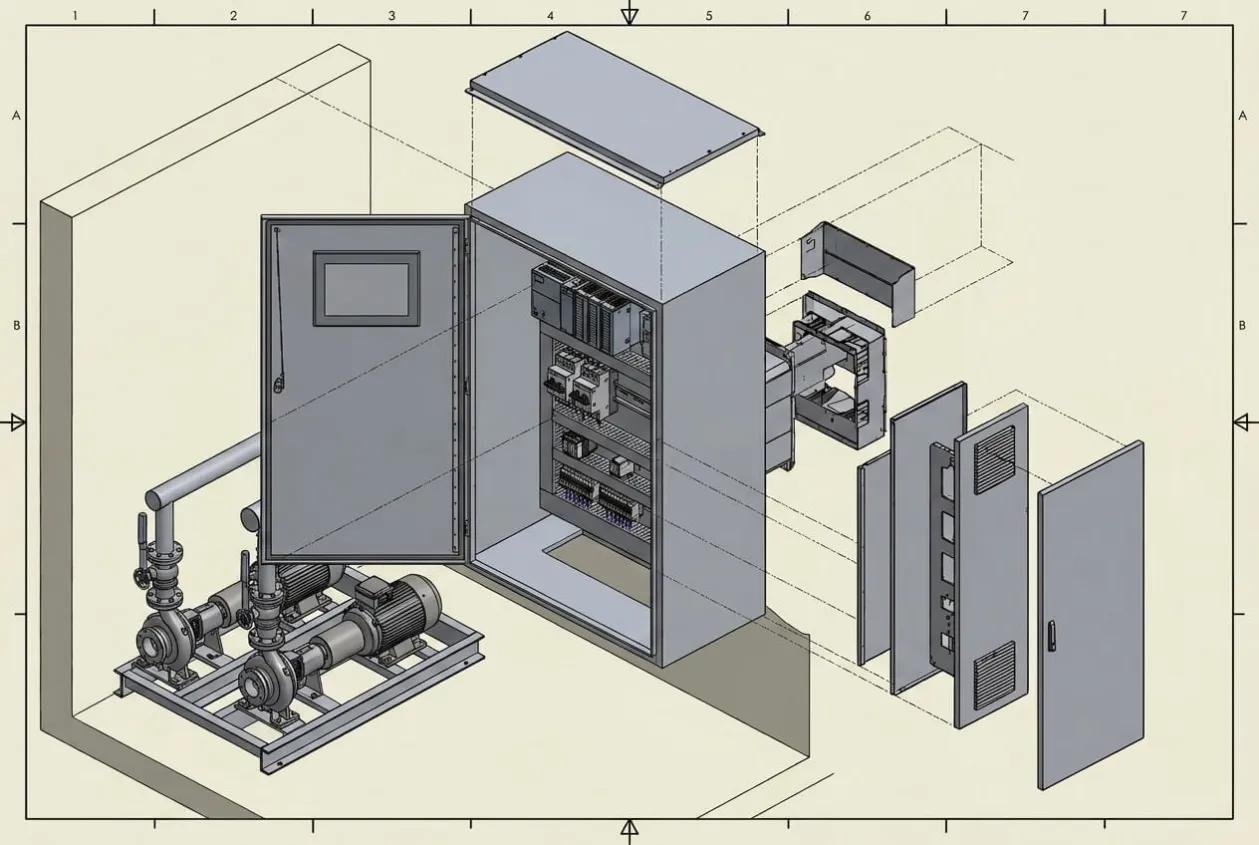
A wastewater pumping project originally called for a wall-mounted control panel.
The first equipment list was simple: one PLC, an HMI, motor protection, relays and terminals for two pumps. A wall-mounted cabinet made sense and kept the panel clear of the limited floor area around the pump skid.
During the electrical review, however, the scope changed.
Two VFDs were added so the pumps could be speed-controlled. The buyer also requested an isolation transformer, additional surge protection and more field terminals for level instruments and remote signals.
Everything could still be made to fit inside a large wall enclosure.
That was not the problem.
Once the mounting plate was laid out properly, there was very little room left between the drives, wiring ducts and power terminals. The incoming motor cables also needed more bending space than the original drawing allowed, while the additional drive losses increased the internal heat load.
The panel was changed to a floor-standing enclosure.
The final design provided separate areas for power and control wiring, more space around the VFDs and a clearer bottom-entry cable arrangement. It also left enough room for technicians to replace a drive without removing adjacent equipment.
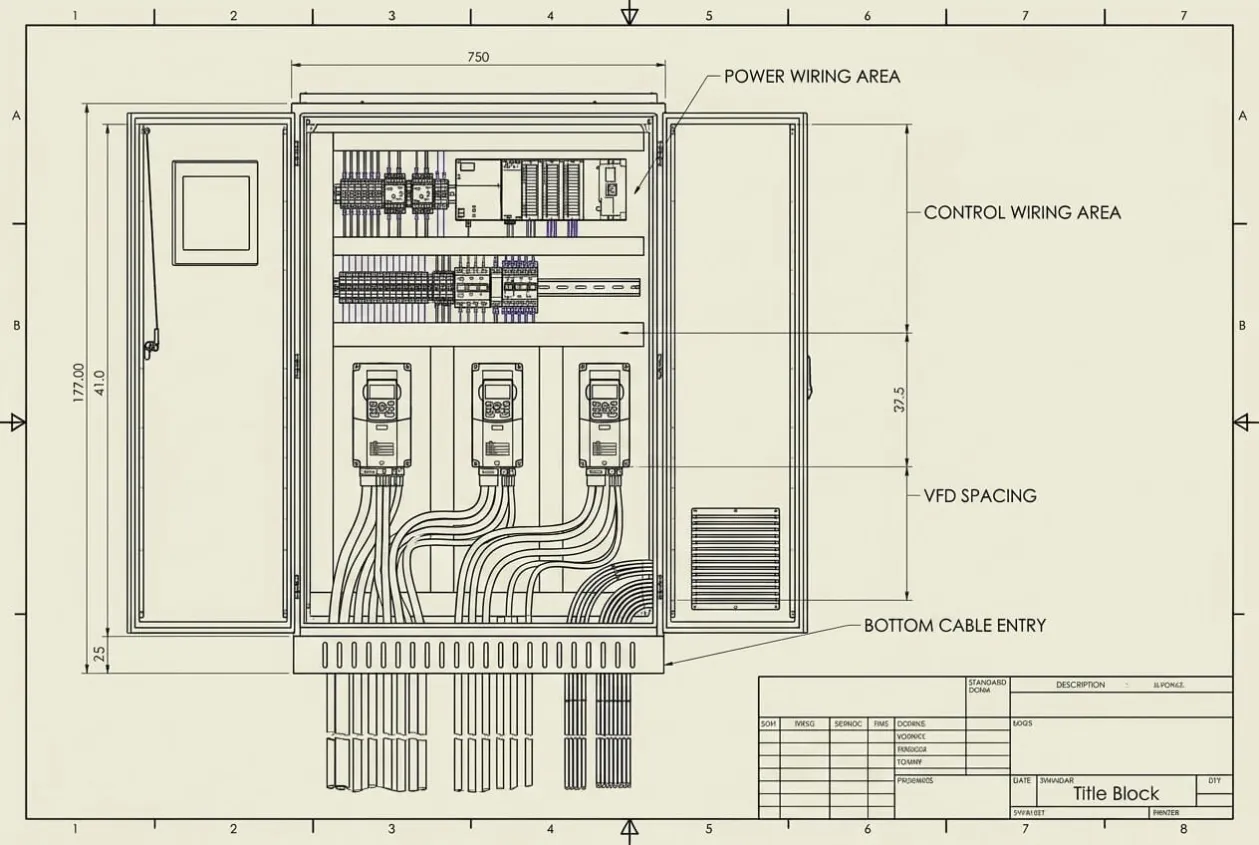
The change was not made because floor-standing cabinets are inherently better.
It was made because the electrical system had outgrown the assumptions behind the original wall-mounted design.
That is exactly when the mounting type should change.
Mounting Type Does Not Decide IP Rating or Material
Another point worth separating is the installation method from the environmental specification.
A wall-mount enclosure can be:
- Painted steel
- 304 stainless steel
- 316 stainless steel
- FRP
- IP54
- IP65
- IP66
- NEMA Type 4X
A floor-standing enclosure can use the same range of materials and environmental ratings.
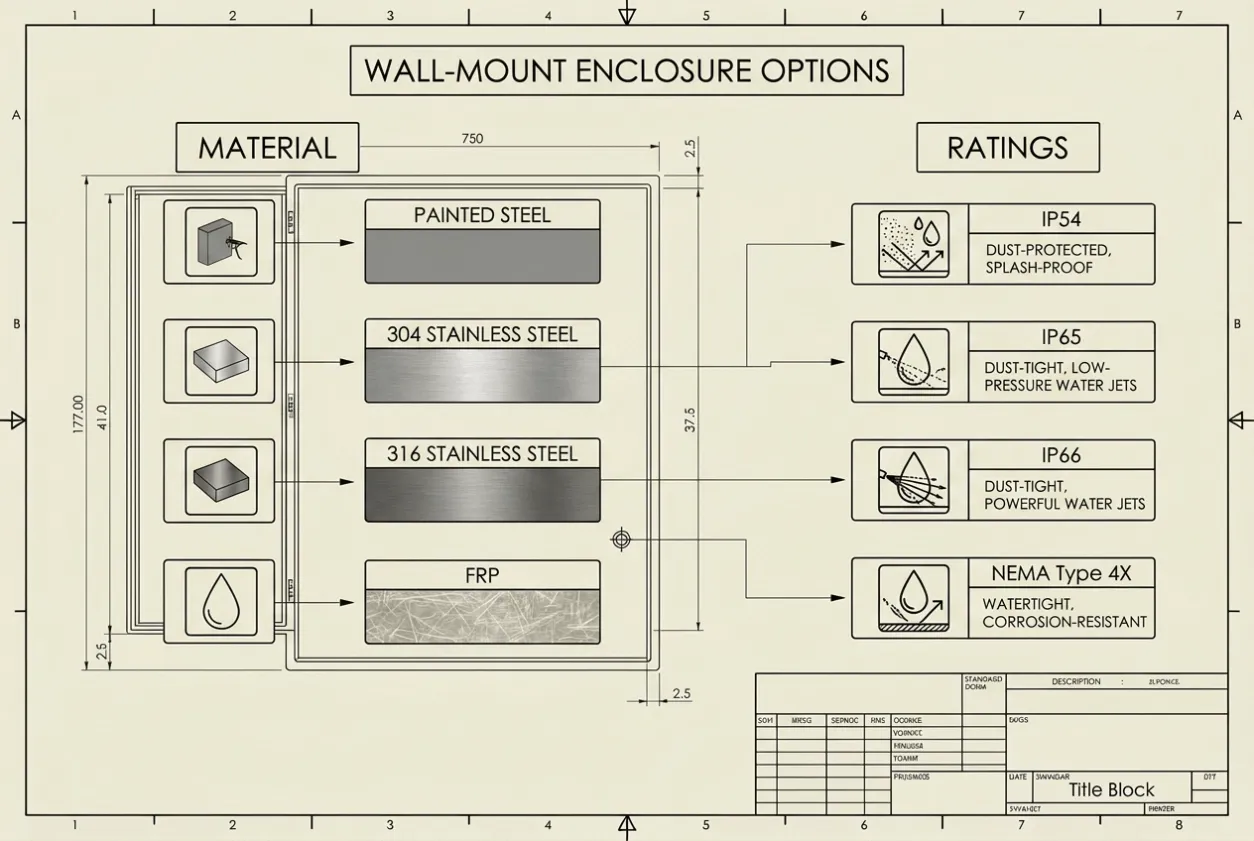
The mounting type answers:
How will the cabinet be supported and serviced?
The material and enclosure rating answer:
What environment must the cabinet survive?
Those decisions should not be mixed together.
An outdoor wall-mounted pump panel may need 316 stainless steel and IP66 protection, while a large floor-standing cabinet inside a dry electrical room may only require painted steel with a less demanding ingress rating.
A Practical Rule for Buyers
If you are still deciding between the two, review the panel in this order:
Wall-mount is usually appropriate when the equipment is compact, the installed weight is moderate, heat generation is manageable and front access is sufficient.
Floor-standing becomes the stronger choice when the panel is large, heavy, thermally demanding, cable-intensive or expected to require frequent maintenance and future expansion.
Do not force a wall-mount design simply because it costs less.
But do not specify a floor-standing cabinet for a small PLC panel simply because it looks more substantial.
The better enclosure is the one that gives the electrical assembly enough space to operate and be maintained properly.
FAQ
Can a wall-mount enclosure contain a VFD?
Yes. Small VFD applications can work well in wall-mount panels when adequate space and thermal management are provided. Multiple or large drives often make a floor-standing enclosure more practical.
Is a floor-standing enclosure better for heat dissipation?
Not automatically, but its larger volume and additional layout space usually make thermal management easier. The actual design should still be checked against equipment heat losses and ambient temperature.
Can a large wall-mount cabinet carry heavy equipment?
Possibly, but the wall structure, mounting brackets, cabinet construction and installed weight all need to be checked. Heavy transformers, batteries and large drives often make floor mounting the safer solution.
Do floor-standing cabinets always need rear access?
No. Many are designed for front access only. Rear access should be provided only when the wiring arrangement, busbars or maintenance strategy requires it.
Does wall-mount vs floor-standing affect IP66 or NEMA ratings?
No. Mounting arrangement and environmental protection are separate design decisions. Either enclosure type can be designed for outdoor or washdown environments when the construction is appropriate.
Engineering Takeaway
The wall-mount versus floor-standing decision should not be based on appearance or nominal cabinet size.
Look at the equipment weight, usable mounting space, heat load, cable routing and maintenance access.
If the electrical assembly remains compact and serviceable, wall mounting usually saves space and cost.
When the panel becomes heavy, hot, crowded or difficult to maintain, moving to a floor-standing enclosure is usually the better engineering decision.
Common Mistakes
❌ Choosing a wall-mount enclosure simply because all components can physically fit inside.
❌ Ignoring the final installed weight, especially when transformers, batteries or large power components are added.
❌ Adding VFDs without recalculating the cabinet heat load and required clearance.
❌ Leaving too little space for cable bending, field terminals and future wiring changes.
❌ Assuming a floor-standing enclosure automatically needs rear access.
❌ Choosing the mounting type before reviewing how technicians will install, troubleshoot and replace components.
❌ Comparing wall-mount and floor-standing quotations only by enclosure price instead of considering wiring, cooling, installation and maintenance access.
Not Sure Which Enclosure Size or Mounting Type You Need?
Send UniRegal your equipment list, panel layout or electrical drawing.
We can review the installed components, heat-producing equipment, cable-entry requirements and available site space before recommending a wall-mount or floor-standing enclosure.
If you are sourcing the complete control panel, we can also integrate the enclosure with the PLC, HMI, VFD, power distribution and project-specific environmental requirements.
Send Your Panel Layout for an Enclosure Review
Related guides
Sources
- NEMA 250 standard — National Electrical Manufacturers Association
- UL 508A for industrial control panels — UL Standards Catalog